

Lipid compound and lipid nanoparticle composition
By combining lipid compounds with other lipid components to form lipid nanoparticles, the problem of low permeability and degradation sensitivity of nucleic acid therapeutic agents is solved, effective nucleic acid delivery is achieved, and its effectiveness in treatment and prevention is improved.
Patent Information
- Application Number
- PCT/CN2024/084097
- Authority / Receiving Office
- WO · WO
- Patent Type
- Applications
- Current Assignee / Owner
- Priority Date
- 2023-03-28
- Filing Date
- 2024-03-27
- Publication Date
- 2024-10-03
AI Technical Summary
Nucleic acid therapeutics face low cell permeability and high sensitivity to degradation of certain nucleic acid molecules, including RNA, limiting their extracellular or intracellular delivery effects.
Develop lipid compounds combined with other lipid components to form lipid nanoparticles to deliver therapeutic agents such as locked nucleic acids (LNA), peptide nucleic acids (PNA), and nucleic acid mimetics such as morpholino cyclic oligonucleotides to improve their Delivery efficiency in vivo and in vitro.
Through the use of lipid nanoparticles, the cell permeability and stability of nucleic acid therapeutic agents are improved, their effectiveness in treatment and prevention is enhanced, and they are suitable for a variety of therapeutic purposes including vaccination.
Smart Images
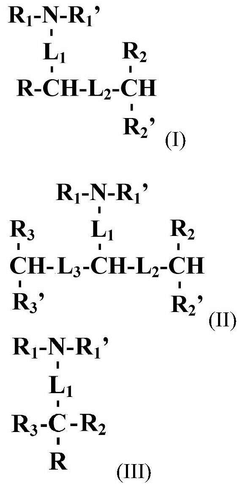
Figure PCTCN2024084097-FTAPPB-I100001 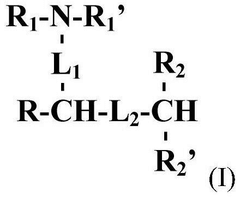
Figure PCTCN2024084097-FTAPPB-I100002 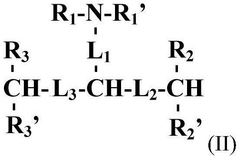
Figure PCTCN2024084097-FTAPPB-I100003
Abstract
Description
Lipid compounds and lipid nanoparticle compositions Technical Field
[0001] The present invention generally relates to a lipid compound that can be used in combination with other lipid components (e.g., neutral lipids, cholesterol, and polymer-conjugated lipids) to form lipid nanoparticles for the intracellular and extracellular delivery of therapeutic agents (e.g., nucleic acid molecules, including nucleic acid mimetics such as locked (LNA), peptide nucleic acid (PNA), and morpholino oligonucleotides) for therapeutic or preventive purposes including vaccination. Background Art
[0002] Therapeutic nucleic acids have the potential to revolutionize vaccination, gene therapy, protein replacement therapy, and other genetic disease therapies. Since the first clinical studies of therapeutic nucleic acids began in the 2000s, significant progress has been made through improvements in the design of nucleic acid molecules and their delivery methods. However, nucleic acid therapeutics still face several challenges, including low cell permeability and high sensitivity to degradation of certain nucleic acid molecules (including RNA). Therefore, there is a need to develop new nucleic acid molecules and related methods and compositions to facilitate their extracellular or intracellular delivery for therapeutic and / or preventive purposes.
[0003] Summary of the Invention
[0004] In one embodiment, lipid compounds are provided herein, including pharmaceutically acceptable salts or stereoisomers thereof, which can be used alone, or with other lipid components such as neutral lipids, charged lipids, steroids (including, for example, all sterols) and / or their analogs, and / or with polymer-conjugated lipids, and / or polymer combinations to form lipid nanoparticles for use in delivering therapeutic agents (e.g., nucleic acid molecules, including nucleic acid mimics such as locked nucleic acids (LNA), peptide nucleic acids (PNA), and morpholino oligonucleotides). In some cases, lipid nanoparticles are used to deliver nucleic acids, such as antisense and / or messenger RNA. Methods for treating various diseases or conditions (such as diseases or conditions caused by infectious entities and / or protein deficiencies) using such lipid nanoparticles are also provided.
[0005] In one embodiment, provided herein are compounds represented by formula (I), (II) or (III):
[0006] or a pharmaceutically acceptable salt or stereoisomer thereof, wherein R1, R1', R2, R2', R3, R3', R, L1, L2, L3 are as defined herein or elsewhere.
[0007] In one embodiment, the present invention provides a nanoparticle composition comprising a compound provided herein and a therapeutic or prophylactic agent. In one embodiment, the therapeutic or prophylactic agent comprises at least one mRNA encoding an antigen or a fragment or epitope thereof.
[0008] It is obvious to those skilled in the art that the present invention has been described in detail for specific embodiments, however, it should be understood that it is given in an illustrative manner rather than a restrictive manner, and various changes and modifications within the scope of the invention will be obvious to those skilled in the art. BRIEF DESCRIPTION OF THE DRAWINGS
[0009] Figure 1 is a graph of the total flux of various compounds;
[0010] FIG2 is a diagram showing the distribution of LNP12 in the heart, liver, spleen, lung, kidney, brain, and bone marrow;
[0011] Figure 3 is a graph showing the liver / spleen distribution ratios of different compounds.
[0012] FIG4 is a graph showing the total flux of various compounds after intramuscular administration;
[0013] Figure 5 is a graph showing neutralizing antibody titers for compounds 12 and 25;
[0014] FIG6 is a graph showing the ALT and AST test results of compound 12. DETAILED DESCRIPTION
[0015] General Technology
[0016] The techniques and methods described or cited in the present invention include conventional methods that are generally easily understood or commonly used by those skilled in the art, such as the methods described in Molecular Cloning: A Laboratory Manual (3d ed. 2001); Current Protocols in Molecular Biology (Ausubel et al. eds., 2003).
[0017] the term
[0018] Unless otherwise described, all technical and scientific terms used herein have the same meaning as commonly understood by those of ordinary skill in the art. For the purpose of interpreting this specification, the following terminology will be used, and where appropriate, terms used in the singular will also include the plural, and vice versa. The disclosures of all patents and other publications cited herein are incorporated herein by reference in their entirety. In the event that any description or interpretation of a term herein conflicts with any document incorporated herein by reference, the description and interpretation of the following terminology shall prevail.
[0019] Unless otherwise specified herein, the term "lipid" refers to a group of organic compounds that include, but are not limited to, esters of fatty acids and are characterized by generally having poor solubility in water but being soluble in many non-polar organic substances. Although lipids generally have poor solubility in water, certain classes of lipids (e.g., lipids modified with polar groups such as DMG-PEG2000) have limited water solubility and can be dissolved in water under certain conditions. Known types of lipids include biomolecules such as fatty acids, waxes, sterols, fat-soluble vitamins, monoglycerides, diglycerides, triglycerides, and phospholipids. Lipids can generally be divided into at least three categories: (1) "simple lipids," which include fats and oils as well as waxes; (2) "compound lipids," which include phospholipids and glycolipids (such as DMPE-PEG2000); and (3) "derivatized lipids," such as steroids. In addition, as used herein, lipids also include lipid-like compounds. The term "lipid-like compound," also referred to as "lipidoid," refers to lipid-like compounds such as amphiphilic compounds that have the physical properties of lipids.
[0020] The term "lipid nanoparticle" or "LNP" refers to a particle with nanometer scale (nm) (e.g., 1nm to 1,000nm) comprising one or more types of lipid molecules. LNP provided herein can further include at least one non-lipid payload molecule (e.g., one or more nucleic acid molecules). In some embodiments, LNP comprises a non-lipid payload molecule partially or completely encapsulated in a lipid shell. In particular, in some embodiments, wherein payload is a negatively charged molecule (e.g., mRNA encoding a viral protein), and the lipid component of LNP comprises at least one cationic lipid. It is contemplated that cationic lipids can interact with negatively charged payload molecules and promote payload incorporation and / or encapsulation into LNP during LNP formation. As provided herein, other lipids that can form a part for LNP include but are not limited to neutral lipids and charged lipids, such as steroids, polymer-conjugated lipids and various zwitterionic lipids. In certain embodiments, LNP according to the present invention comprises the lipid of one or more formula (I) as described herein (and its subformula).
[0021] The term "cationic lipid" refers to a lipid that is positively charged under any pH value or hydrogen ion activity of its environment, or a lipid that can respond to the pH value or hydrogen ion activity of its environment (such as its intended use environment) and is positively charged. Therefore, the term "cationic lipid" encompasses the scope of "permanent cations" and "cationizable". In certain embodiments, the positive charge in the cationic lipid is derived from the presence of a quaternary nitrogen atom. In certain embodiments, the cationic lipid includes a zwitterionic lipid that is positively charged in the environment (such as, at physiological pH) in which it is intended to be used. In certain embodiments, the cationic lipid is a lipid of one or more formulas (I) (and subformulas thereof) as described herein.
[0022] The term "polymer-conjugated lipid" or "polymer-conjugated lipid" refers to a molecule that comprises both a lipid portion and a polymer portion. An example of a polymer-conjugated lipid is a pegylated lipid (PEG-lipid), wherein the polymer portion comprises polyethylene glycol.
[0023] The term "neutral lipid" encompasses any lipid molecule that exists in an uncharged form or a neutral zwitterionic form at a selected pH. In some embodiments, the selected useful pH value or range corresponds to the pH conditions of the environment in which the lipid is intended to be used, e.g., physiological pH. As non-limiting examples, neutral lipids that can be used in conjunction with the present disclosure include, but are not limited to, phosphatidylcholines, such as 1,2-distearoyl-sn-glycero-3-phosphocholine (DSPC), 1,2-dipalmitoyl-sn-glycero-3-phosphocholine (DPPC), 1,2-dimyristoyl-sn-glycero-3-phosphocholine (DMPC), 1-palmitoyl-2-oleoyl-sn-glycero-3-phosphocholine (POPC), 1,2-dioleoyl-sn-glycero-3-phosphocholine (DOPC), phosphatidylethanolamines such as 1,2-dioleoyl-sn-glycero-3-phosphoethanolamine (DOPE), 2-(((2,3-bis(oleoyloxy)propyl))dimethylammoniumphosphate)ethylhydrogen (DOCP), sphingomyelin (SM), ceramides, steroids such as sterols and their derivatives. Neutral lipids can be synthetic or derived (isolated or modified) from natural sources or compounds.
[0024] The term "charged lipid" encompasses any lipid molecule present in a positively charged or negatively charged form within a selected pH value or range. In some embodiments, the selected pH value or range correspond to the pH conditions of the intended use environment of lipid, such as physiological pH. As a non-limiting example, the charged lipid that can be used in combination with the present disclosure includes but is not limited to phosphatidylserine, phosphatidic acid, phosphatidylglycerol, phosphatidylinositol, sterol hemisuccinate, dialkyltrimethylammonium-propane (such as DOTAP, DOTMA), dialkyldimethylaminopropane, ethylphosphocholine, dimethylaminoethanecarbamoylsterol (such as DC-Chol), 1,2-dioleoyl-sn-glycero-3-phospho-L-serine sodium salt (DOPS-Na), 1,2-dioleoyl-sn-glycero-3-phospho-(1'-rac-glycerol) sodium salt (DOPG-Na) and 1,2-dioleoyl-sn-glycero-3-phospho-sodium salt (DOPA-Na). The charged lipids provided herein can be synthetic or derived (isolated or modified) from natural sources or compounds.
[0025] As used herein, unless otherwise indicated, the term "alkyl" refers to a straight or branched hydrocarbon chain group consisting solely of saturated carbon and hydrogen atoms. In one embodiment, an alkyl group has, for example, 1 to 24 carbon atoms (C1-C 24 alkyl), 4 to 20 carbon atoms (C4-C 20 alkyl), 10 to 20 carbon atoms (C 10 -C 20 alkyl), 6 to 16 carbon atoms (C6-C 16 alkyl), six to nine carbon atoms (C6-C9 alkyl), one to fifteen carbon atoms (C1-C 15 alkyl), one to twelve carbon atoms (C1-C 12 The alkyl group is a C1-C8 alkyl group, a C1-C6 alkyl group, a C1-C8 alkyl group, or a C1-C6 alkyl group, and is connected to the rest of the molecule by a single bond. Examples of alkyl groups include, but are not limited to, methyl, ethyl, propyl, 1-methylethyl (isopropyl), n-butyl, n-pentyl, 1,1-dimethylethyl (tert-butyl), 3-methylhexyl, 2-methylhexyl, and the like. Unless otherwise indicated, alkyl groups are optionally substituted.
[0026] As described herein, unless otherwise indicated, the term "alkenyl" refers to a straight or branched hydrocarbon chain group consisting solely of carbon and hydrogen atoms, containing one or more carbon-carbon double bonds. As understood by those of ordinary skill in the art, the term "alkenyl" also includes groups with "cis" and "trans" configurations, or "E" and "Z" configurations. In one embodiment, an alkenyl group has, for example, 2 to 24 carbon atoms (C2-C 24 alkenyl), 4 to 20 carbon atoms (C4-C 20alkenyl), 6 to 16 carbon atoms (C6-C 16 alkenyl), six to nine carbon atoms (C6-C9 alkenyl), two to fifteen carbon atoms (C2-C 15 alkenyl), two to twelve carbon atoms (C2-C 12 Alkenyl groups are groups of two to eight carbon atoms (C2-C8 alkenyl), or two to six carbon atoms (C2-C6 alkenyl), and are attached to the rest of the molecule by a single bond. Examples of alkenyl groups include, but are not limited to, vinyl, prop-1-enyl, but-1-enyl, pent-1-enyl, pent-1,4-dienyl, and the like. Unless otherwise specified, alkenyl groups are optionally substituted.
[0027] As used herein, unless otherwise indicated, the term "alkynyl" refers to a straight or branched hydrocarbon chain radical consisting solely of carbon and hydrogen atoms, containing one or more carbon-carbon triple bonds. In one embodiment, an alkynyl group has, for example, 2 to 24 carbon atoms (C2-C 24 Alkynyl), 4 to 20 carbon atoms (C4-C 20 Alkynyl), 6 to 16 carbon atoms (C6-C 16 Alkynyl), six to nine carbon atoms (C6-C9 alkynyl), two to fifteen carbon atoms (C2-C 15 Alkynyl), two to twelve carbon atoms (C2-C 12 Alkynyl groups are substituted with two to eight carbon atoms (C2-C8 alkynyl) or two to six carbon atoms (C2-C6 alkynyl) and are connected to the rest of the molecule by a single bond. Examples of alkynyl groups include, but are not limited to, ethynyl, propynyl, butynyl, pentynyl, and the like. Unless otherwise indicated, alkynyl groups are optionally substituted.
[0028] As used herein, unless otherwise indicated, the term "alkylene" or "alkylene chain" refers to a straight or branched divalent hydrocarbon chain connecting the remainder of the molecule to a group consisting solely of saturated carbon and hydrogen. In one embodiment, an alkylene group has, for example, 1 to 24 carbon atoms (C1-C 24 alkylene), 1 to 15 carbon atoms (C1-C 15 alkylene), 1 to 12 carbon atoms (C1-C 12 C1-C8 alkylene), 1 to 6 carbon atoms (C1-C6 alkylene), 2 to 4 carbon atoms (C2-C4 alkylene), 1 to 2 carbon atoms (C1-C2 alkylene). Examples of alkylene groups include, but are not limited to, methylene, ethylene, propylene, n-butene, and the like. The alkylene chain is connected to the rest of the molecule by a single bond and to the free radical group by a single bond. The connection of the alkylene chain to the rest of the molecule and to the free radical group can be through one carbon or any two carbons in the chain. Unless otherwise indicated, the alkylene chain is optionally substituted.
[0029] As used herein, unless otherwise indicated, the term "alkenylene" refers to a straight or branched divalent hydrocarbon chain connecting the remainder of the molecule to a radical group consisting solely of carbon and hydrogen, the radical group containing one or more carbon-carbon double bonds. In one embodiment, an alkenylene group has, for example, 2 to 24 carbon atoms (C2-C 24 alkenyl), 2 to 15 carbon atoms (C2-C 15 alkenyl), 2 to 12 carbon atoms (C2-C 12 Alkenylene is a 2- to 8-carbon-atom (C-C alkenylene), 2 to 6 carbon atoms (C-C alkenylene) or 2 to 4 carbon atoms (C-C alkenylene). Examples of alkenylene include, but are not limited to, vinylene, propenylene, n-butenyl, etc. Alkenylene is connected to the rest of the molecule by a single bond or a double bond and to the free radical group by a single bond or a double bond. The connection of alkenylene to the rest of the molecule and to the free radical group can be through one carbon or any two carbons in the chain. Unless otherwise indicated, alkenylene is optionally substituted.
[0030] As used herein, unless otherwise indicated, the term "cycloalkyl" refers to a saturated, non-aromatic, monocyclic or polycyclic hydrocarbon radical consisting solely of carbon and hydrogen atoms. Cycloalkyl groups may include fused or bridged ring systems. In one embodiment, a cycloalkyl group has, for example, 3 to 15 ring carbon atoms (C3-C 15 cycloalkyl), 3 to 10 ring carbon atoms (C3-C 10 Cycloalkyl) or 3 to 8 ring carbon atoms (C3-C8 cycloalkyl). Cycloalkyl is connected to the rest of the molecule by a single bond. Examples of monocyclic cycloalkyls include, but are not limited to, cyclopropyl, cyclobutyl, cyclopentyl, cyclohexyl, cycloheptyl, and cyclooctyl. Examples of polycyclic cycloalkyl groups include, but are not limited to, adamantyl, norbornyl, decahydroalkyl, 7,7-dimethyl-bicyclo[2.2.1]heptyl, etc. Unless otherwise indicated, cycloalkyl is optionally substituted.
[0031] As used herein, unless otherwise specified, the term "cycloalkylene" is a divalent cycloalkyl group. Unless otherwise specified, a cycloalkylene group is optionally substituted.
[0032] As used herein, unless otherwise indicated, the term "cycloalkenyl" refers to a non-aromatic monocyclic or polycyclic hydrocarbon radical consisting solely of carbon and hydrogen atoms and including one or more carbon-carbon double bonds. Cycloalkenyl groups may include fused rings or bridged ring systems. In one embodiment, a cycloalkenyl group has, for example, 3 to 15 ring carbon atoms (C3-C 15 cycloalkenyl), 3 to 10 ring carbon atoms (C3-C 10The cycloalkenyl group is optionally substituted with 1 to 8 carbon atoms (C3-C8 cycloalkenyl). The cycloalkenyl group is connected to the rest of the molecule by a single bond. Examples of monocyclic cycloalkenyl groups include, but are not limited to, cyclopropenyl, cyclobutenyl, cyclopentenyl, cyclohexenyl, cycloheptenyl, cyclooctenyl, etc. Unless otherwise indicated, a cycloalkenyl group is optionally substituted.
[0033] As used herein, unless otherwise specified, the term "cycloalkenylene" is a divalent cycloalkenyl group. Unless otherwise specified, a cycloalkenylene group is optionally substituted.
[0034] As used herein, unless otherwise indicated, the term "heterocyclyl" refers to a non-aromatic monocyclic or polycyclic moiety containing one or more (e.g., one, one or two, one to three, or one to four) heteroatoms independently selected from nitrogen, oxygen, phosphorus, and sulfur. The heterocyclyl group may be attached to the main structure at any heteroatom or carbon atom. The heterocyclyl group may be a monocyclic, bicyclic, tricyclic, tetracyclic, or other polycyclic ring system, wherein the polycyclic ring system may be a fused ring, a bridged ring, or a spiro ring system. The heterocyclic polycyclic ring system may include one or more heteroatoms in one or more rings. The heterocyclyl group may be saturated or partially unsaturated. A saturated heterocycloalkyl group may be referred to as a "heterocycloalkyl" group. If the heterocyclyl group contains at least one double bond, a partially unsaturated heterocycloalkyl group may be referred to as a "heterocycloalkenyl" group; if the heterocyclyl group contains at least one triple bond, it may be referred to as a "heterocycloalkynyl" group. In one embodiment, the heterocyclyl group has, for example, 3 to 18 ring atoms (3 to 18-membered heterocyclyl), 4 to 18 ring atoms (4 to 18-membered heterocyclyl), 5 to 18 ring atoms (5 to 18-membered heterocyclyl), 4 to 8 ring atoms (4 to 8-membered heterocyclyl), or 5 to 8 ring atoms (5 to 8-membered heterocyclyl). In this article, whenever a numerical range such as "3 to 18" appears, it refers to each integer in the given range. For example, "3 to 18-membered heterocyclyl" means that the heterocyclyl group can be composed of 3 ring atoms, 4 ring atoms, 5 ring atoms, 6 ring atoms, 7 ring atoms, 8 ring atoms, 9 ring atoms, 10 ring atoms, up to 18 ring atoms, etc. Examples of heterocyclic groups include, but are not limited to, imidazolyl, imidazolidinyl, oxazolyl, oxazolidinyl, thiazolyl, thiazolidinyl, pyrazolidinyl, pyrazolyl, isoxazolidinyl, isoxazolyl, isothiazolidinylpyrrolyl, isothiazolyl, furanyl, furanyl, piperidinyl, quinolyl and isoquinolyl. Unless otherwise specified, heterocyclic groups are optionally substituted.
[0035] As used herein, unless otherwise specified, the term "heterocyclylene" is a divalent heterocyclyl group. Unless otherwise specified, a heterocyclylene group is optionally substituted.
[0036] As described herein, unless otherwise indicated, the term "aryl" refers to a monocyclic aromatic group and / or a polycyclic monovalent aromatic group comprising at least one aromatic hydrocarbon ring. In certain embodiments, the aryl group has 6 to 18 ring carbon atoms (C6-C18 aryl), 6 to 14 ring carbon atoms (C6-C14 aryl) or 6 to 10 ring carbon atoms (C6-C10 aryl). Examples of aryl groups include, but are not limited to, phenyl, naphthyl, fluorenyl, azulenyl (azulenyl), anthracenyl, phenanthrenyl, pyrenyl (pyrenyl), biphenyl and terphenyl. The term "aryl" also refers to a bicyclic, tricyclic or other polycyclic hydrocarbon ring, wherein at least one ring is aromatic, and the other rings can be saturated, partially unsaturated or aromatic, such as dihydronaphthyl, indenyl, indanyl or tetrahydronaphthyl (tetrahydronaphthyl). Unless otherwise indicated, aryl is optionally substituted.
[0037] As used herein, unless otherwise specified, the term "arylene" is a divalent aromatic group. Unless otherwise specified, an arylene group is optionally substituted.
[0038] As used herein, unless otherwise indicated, the term "heteroaryl" refers to a monocyclic aromatic group and / or a polycyclic aromatic group containing at least one aromatic ring, wherein at least one aromatic ring contains one or more heteroatoms independently selected from O, S and N, one to three or one to four heteroatoms. The heteroatom in the heteroaryl group can be attached to the main structure at any carbon atom. In certain embodiments, the heteroaryl group has 5 to 20, 5 to 15 or 5 to 10 ring atoms. The term "heteroaryl" also refers to a bicyclic, tricyclic or other polycyclic ring, wherein at least one ring is aromatic, and the other rings can be saturated, partially unsaturated or aromatic, wherein at least one aromatic ring contains one or more monocyclic heteroaryl examples, including but not limited to, pyrrolyl, pyrazolyl, pyrazolinyl, imidazolyl, oxazolyl, isoxazolyl, thiazolyl, thiadiazolyl, isothiazolyl, furyl, thienyl, oxadiazolyl, pyrazinyl, pyrimidinyl, pyridazinyl and triazinyl. The example of bicyclic heteroaryl includes but is not limited to indolyl, benzothiazolyl, benzoxazolyl, benzothienyl, quinolyl, tetrahydroisoquinolyl, isoquinolyl, benzimidazolyl, benzopyranyl, indolizinyl, benzofuranyl, isobenzofuranyl, oxynaphthyl, furopyridinyl, thienopyridinyl, dihydroisoindolyl and tetrahydroquinolyl. The example of tricyclic heteroaryl includes but is not limited to carbazolyl, benzindolyl, phenanthroline base, acridinyl, phenanthridinyl and xanthine. Unless otherwise indicated, heteroaryl is optionally substituted.
[0039] As used herein, unless otherwise specified, the term "heteroarylene" is a divalent heteroaryl group. Unless otherwise specified, a heteroarylene group is optionally substituted.
[0040] When groups described herein are "substituted," they may be substituted with any suitable substituent(s). Illustrative examples of substituents include, but are not limited to, those shown in the exemplary compounds and embodiments provided herein, as well as: halogen atoms such as F, Cl, Br, or I; cyano; oxo (=O); hydroxyl (-OH); alkyl; alkenyl; alkynyl; cycloalkyl; aryl; -(C=O)OR'; -O(C=O)R'; -C(=O)R'; -S(O); x R';-S-SR';-C(=O)SR';-SC(=O)R';-NR'R';-NR'C(=O)R';-C(=O)NR'R';-NR'C(=O)NR'R';-OC(=O)NR'R';-NR'C(=O)OR';-NR'S(O) x NR'R';-NR'S(O) x R'; and -S(O) x NR'R', wherein R' is independently H, C1-C 15 alkyl or cycloalkyl, and x is 0, 1 or 2. In some embodiments, the substituent is C1-C 12 In other embodiments, the substituent is a cycloalkyl group. In other embodiments, the substituent is a halogen group, such as a fluoro group. In other embodiments, the substituent is an oxo group. In other embodiments, the substituent is a hydroxyl group. In other embodiments, the substituent is an alkoxy group (-OR'). In other embodiments, the substituent is a carboxyl group. In other embodiments, the substituent is an amino group (-NR'R').
[0041] As used herein, unless otherwise indicated, the term "optional" or "optionally" (e.g., optionally substituted) means that the subsequently described event or circumstances may or may not occur, and that the description includes instances where the event or circumstances occurs and instances where the event or circumstances does not occur. For example, "optionally substituted alkyl" means that the alkyl group may or may not be substituted, and that the description includes both substituted alkyl groups and unsubstituted alkyl groups.
[0042] "Prodrug" refers to a compound that can be converted into a biologically active compound under physiological conditions or by solvolysis. Therefore, the term "prodrug" refers to a metabolic precursor of a pharmaceutically acceptable biologically active compound. When administered to a subject in need, the prodrug may be inactive, but is converted into the biologically active compound of the present invention in vivo. Prodrugs are generally rapidly converted in vivo to obtain the parent biologically active compound of the present invention, for example, by hydrolysis in the blood. Prodrug compounds generally provide advantages of solubility, tissue compatibility or delayed release in mammalian organisms (see Bundgard, H., Design of Prodrugs (1985), pp.7-9, 21-24 (Elsevier, Amsterdam)). A discussion of prodrugs is provided in Higuchi, T., et al., ACSSymposium Series, Vol. 14, and Bioreversible Carriers in Drug Design, Ed. Edward B. Roche, American Pharmaceutical Association and Pergamon Press, 1987.
[0043] In some embodiments, the term "prodrug" is also meant to include any covalently bonded carriers that release the active compound of the invention in vivo when such prodrug is administered to a mammalian subject. Prodrugs of the compounds of the invention can be prepared by modifying functional groups present in the compound in such a way that the modifications are cleaved, either by routine manipulation or in vivo, to the parent compound of the invention. Prodrugs include compounds of the invention wherein a hydroxyl, amino, or sulfhydryl group is bonded to any group that, when the prodrug of the compound of the invention is administered to a mammalian subject, cleaves to form a free hydroxyl, free amino, or free sulfhydryl group, respectively.
[0044] Examples of "prodrugs" include, but are not limited to, acetate, formate and benzoate derivatives of amide derivatives of alcohol or amine functional groups in the compounds provided herein, and the like.
[0045] As used herein, unless otherwise indicated, the term "pharmaceutically acceptable salt" includes both acid addition salts and base addition salts.
[0046] Examples of "pharmaceutically acceptable acid addition salts" include, but are not limited to, hydrochloric acid, hydrobromic acid, sulfuric acid, nitric acid, phosphoric acid, and the like, and organic acids such as, but not limited to, acetic acid, 2,2-dichloroacetic acid, adipic acid, alginic acid, ascorbic acid, aspartic acid, benzenesulfonic acid, benzoic acid, 4-acetamidobenzoic acid, camphoric acid, camphor-10-sulfonic acid, capric acid, hexanoic acid, caprylic acid, carbonic acid, cinnamic acid, citric acid, cycloamic acid, dodecylsulfuric acid, ethane-1,2-disulfonic acid, ethanesulfonic acid, 2-hydroxyethanesulfonic acid, formic acid, fumaric acid, galactonic acid, gentisic acid, glucoheptanoic acid, , gluconic acid, glucuronic acid, glutamic acid, glutaric acid, 2-oxoglutaric acid, glycerophosphate, glycolic acid, hippuric acid, isobutyric acid, lactic acid, lactobionic acid, lauric acid, maleic acid, malic acid, malonic acid, mandelic acid, methanesulfonic acid, mucic acid, naphthalene-1,5-dicarboxylic acid, naphthalene-2-sulfonic acid, 1-hydroxy-2-naphthoic acid, nicotinic acid, oleic acid, orotic acid, oxalic acid, palmitic acid, palmitic acid, propionic acid, pyroglutamic acid, pyruvic acid, salicylic acid, 4-aminosalicylic acid, sebacic acid, stearic acid, succinic acid, tartaric acid, thiocyanic acid, p-toluenesulfonic acid, trifluoroacetic acid, undecylenic acid, etc.
[0047] Examples of "pharmaceutically acceptable base addition salts" include, but are not limited to, salts prepared by adding an inorganic base or an organic base to a free acid compound. Salts derived from inorganic bases include, but are not limited to, sodium salts, potassium salts, lithium salts, ammonium salts, calcium salts, magnesium salts, iron salts, zinc salts, copper salts, manganese salts, aluminum salts, and the like. Preferably, the inorganic salts are ammonium salts, sodium salts, potassium salts, calcium salts, and magnesium salts. Salts derived from organic bases include, but are not limited to, salts of primary, secondary, and tertiary amines, substituted amines (including naturally occurring substituted amines), cyclic amines, and basic ion exchange resins such as ammonia, isopropylamine, trimethylamine, diethylamine, triethylamine, tripropylamine, diethanolamine, ethanolamine, dealcoholization, 2-dimethylaminoethanol, 2-diethylaminoethanol, lysine, arginine, histidine, caffeine, procaine, hydrazine, choline, betaine, benethamine, benzathine, ethylenediamine, glucosamine, methylglucamine, theobromine, triethanolamine, purine, piperazine, piperidine, N-ethylpiperidine, polyamine resins, and the like. Preferably, the organic base is isopropylamine, diethylamine, ethanolamine, trimethylamine, dicyclohexylamine, choline, and caffeine.
[0048] The compounds provided herein may contain one or more asymmetric centers and thus may produce enantiomers, diastereomers and other stereoisomeric forms, which, for amino acids, may be defined in terms of absolute stereochemistry as (R)- or (S)-, or as (D)- or (L)-. Unless otherwise indicated, the compounds provided herein are intended to include all of these possible isomers, as well as their racemic and optically pure forms. Optically active (+) and (-), (R)- and (S)- or (D)- and (L)- isomers may be prepared using chiral synthons or chiral reagents, or resolved using conventional techniques, such as chromatography and fractional crystallization. Conventional techniques for preparing / isolating single enantiomers include chiral synthesis from suitable optically pure precursors or resolution of racemates (or racemates of salts or derivatives) using, for example, chiral high pressure liquid chromatography (HPLC). When the compounds described herein contain olefinic double bonds or other geometric asymmetric centers, unless otherwise indicated, the compounds are intended to include E and Z geometric isomers. Likewise, all tautomeric forms are also intended to be included.
[0049] As used herein, and unless otherwise indicated, the term "isomer" refers to different compounds with the same molecular formula. "Stereoisomers" are isomers that differ only in the arrangement of their atoms in space. "Atropisomers" are stereoisomers in which the rotation of atoms about single bonds is hindered. "Enantiomers" are a pair of stereoisomers that are non-superimposable mirror images of each other. A mixture of a pair of enantiomers in any ratio is referred to as a "racemic" mixture. "Diastereomers" are stereoisomers that have at least two asymmetric atoms but are not mirror images of each other.
[0050] "Stereoisomers" may also include E and Z isomers or mixtures thereof, and cis and trans isomers or mixtures thereof. In certain embodiments, the compounds described herein are isolated as E or Z isomers. In other embodiments, the compounds described herein are mixtures of E and Z isomers.
[0051] "Tautomers" refer to isomeric forms of a compound that are in equilibrium with each other. The concentrations of the isomeric forms will vary depending on the environment in which the compound is located, and may depend on whether the compound is a solid or in an organic or aqueous solution.
[0052] The compounds described herein may contain unnatural isotopes of atoms at one or more atoms. For example, the compounds may be radiolabeled with radioactive isotopes, such as tritium 3( 3 H), iodine-125( 125 I), sulfur 35( 35 S) or carbon 14 ( 14 C), or it may be deuterium ( 2 H), carbon 13 (13 C) or nitrogen 15( 15 N) isotopically enriched. As used herein, an "isotope" is an isotopically enriched compound. The term "isotopically enriched" refers to an atom having an isotopic composition that is different from the natural isotopic composition of the atom. "Isotopically enriched" can also refer to a compound containing at least one atom whose isotopic composition is different from the natural isotopic composition of the atom. The term "isotopic composition" refers to the amount of each isotope present in a given atom. Radiolabeled and isotopically enriched compounds can be used as therapeutic agents, such as cancer therapeutics, research reagents (such as binding assay reagents) and diagnostic agents (such as in vivo imaging agents). All isotopic variants of the compounds described herein, whether radioactive or not, are intended to be included within the scope of the embodiments provided herein. In some embodiments, isotopes of the compounds described herein are provided, for example, the isotopes are enriched in deuterium, carbon-13 and / or nitrogen-15. As used herein, "deuterated" refers to a compound in which at least one hydrogen (H) is replaced by a deuterium (as D or 2 H represents) substituted compounds, i.e., the compounds are deuterium-enriched at at least one position.
[0053] It should be noted that if there is a discrepancy between a structure described herein and the name of the structure, the described structure should have greater weight.
[0054] As used herein, unless otherwise indicated, the term "pharmaceutically acceptable carrier, diluent or excipient" includes, but is not limited to, any adjuvant, carrier, excipient, glidant, sweetener, diluent, preservative, dye / colorant, flavoring agent, surfactant, wetting agent, dispersant, suspending agent, stabilizer, isotonic agent, solvent or emulsifier approved by the U.S. Food and Drug Administration for use in humans or veterinary medicine.
[0055] The term "composition" is intended to encompass a product containing specified ingredients (eg, mRNA molecules), optionally in specified amounts.
[0056] The terms "polynucleotide" or "nucleic acid" are used interchangeably herein and refer to polymers of nucleotides of any length, including, for example, DNA and RNA. Nucleotides can be deoxyribonucleotides, ribonucleotides, modified nucleotides or bases and / or their analogs, or can be any substrate that is incorporated into a polymer by DNA polymerase or RNA polymerase or by a synthetic reaction. Polynucleotides may contain modified nucleotides, such as methylated nucleotides and their analogs. Nucleic acids may be in single-stranded or double-stranded form. As described herein and unless otherwise indicated, "nucleic acid" also includes nucleic acid mimics, such as locked nucleic acids (LNA), peptide nucleic acids (PNA) and morpholino oligonucleotides. As used herein, "oligonucleotide" refers to a short synthetic polynucleotide, typically but not necessarily less than about 200 nucleotides in length. The terms "oligonucleotide" and "polynucleotide" are not mutually exclusive. The above description of polynucleotides is equally and fully applicable to oligonucleotides. Unless otherwise indicated, the left end of any single-stranded polynucleotide sequence disclosed herein is the 5' end; the left direction of a double-stranded polynucleotide sequence is referred to as the 5' direction. The direction of addition of nascent RNA transcripts from 5' to 3' is called the transcription direction; the sequence region on the DNA chain with the same sequence as the RNA transcript located from 5' to the 5' end of the RNA transcript is called the "upstream sequence"; the sequence region on the DNA chain with the same sequence as the RNA transcript located from 3' to the 3' end is called the "downstream sequence".
[0057] "Isolated nucleic acid" refers to nucleic acid, for example, it can be RNA, DNA or mixed nucleic acids, which are essentially separated from other genomic DNA sequences and proteins or complexes (such as ribosomes and polymerases) by nature, comprising native sequences. "Isolated" nucleic acid molecules are nucleic acid molecules isolated from other nucleic acid molecules in natural sources. In addition, when produced by recombinant technology, "isolated" nucleic acid molecules (such as mRNA molecules) can be substantially free of other cellular materials or culture medium, or can be substantially free of chemical precursors or other chemicals when chemically synthesized. In a specific embodiment, one or more nucleic acid molecules encoding antigens described herein are separated or purified. The term includes nucleic acid sequences removed from their naturally occurring environment, and includes recombinant or cloned DNA or RNA isolates and chemically synthesized analogs or analogs biosynthesized by heterologous systems. Substantially pure molecules can include isolated forms of molecules.
[0058] The term "coding nucleic acid" or its grammatical equivalents includes: (a) nucleic acid molecules that, in their native state or when manipulated by methods well known to those skilled in the art, can be transcribed to produce mRNA that can be translated into peptides and / or polypeptides, and (b) the mRNA molecules themselves. The antisense strand is the complementary sequence of the nucleic acid molecule, and the coding sequence can be inferred therefrom. The term "coding region" refers to the portion of a coding nucleic acid sequence that is translated into a peptide or polypeptide. The term "untranslated region" or "UTR" refers to the portion of a coding nucleic acid that is not translated into a peptide or polypeptide. This depends on the orientation of the UTR relative to the coding region of the nucleic acid molecule. If the UTR is located at the 5' end of the coding region, the UTR is referred to as a 5'-UTR; if it is located at the 3' end of the coding region, the UTR is referred to as a 3'-UTR.
[0059] As described herein, the term "mRNA" refers to a messenger RNA molecule comprising one or more open reading frames (ORFs), which can be translated by a cell or organism to produce one or more peptides or protein products. The region comprising one or more ORFs is referred to as the coding region of an mRNA molecule. In certain embodiments, an mRNA molecule also comprises one or more untranslated regions (UTRs).
[0060] In certain embodiments, mRNA is a monocistronic mRNA comprising only one ORF. In certain embodiments, a monocistronic mRNA encodes a peptide or protein comprising at least one epitope of a selected antigen (e.g., a pathogenic antigen or a tumor-associated antigen). In other embodiments, mRNA is a polycistronic mRNA comprising two or more ORFs. In certain embodiments, a polycistronic mRNA encodes two or more peptides or proteins that are identical or different from each other. In certain embodiments, each peptide or protein encoded by a polycistronic mRNA comprises at least one epitope of a selected antigen. In certain embodiments, different peptides or proteins encoded by a polycistronic mRNA each comprise at least one epitope of a different antigen. In any embodiment described herein, at least one epitope can be at least 2, at least 3, at least 4, at least 5, at least 6, at least 7, at least 8, at least 9, or at least 10 epitopes of an antigen.
[0061] The term "nucleobase" encompasses purines and pyrimidines, including the natural compounds adenine, thymine, guanine, cytosine, uracil, inosine, and natural or synthetic analogs or derivatives thereof.
[0062] As used herein, the term "functional nucleotide analogue" refers to a modified form of a canonical nucleotide A, G, C, U or T that (a) retains the base pairing properties of the corresponding canonical nucleotide and (b) comprises at least one chemical modification of any combination of (i) to (iii) of (i) a core base, (ii) a sugar group, (iii) a phosphate group or (iv) a corresponding natural nucleotide. As described herein, base pairs not only encompass standard Watson-Crick AT, AU or CG base pairs, but also include base pairs formed between a canonical nucleotide and a functional nucleotide analogue or between a pair of functional nucleotide analogues, wherein the arrangement of hydrogen bond donors and hydrogen bond acceptors allows hydrogen bonds to be formed between the modified core base and the standard core base or between two complementary modified core base structures. For example, a functional analogue of guanosine (G) retains the ability to base pair with a functional analogue of cytosine (C) or cytosine. An example of such non-canonical base pairing is base pairing between a modified nucleotide inosine and adenine, cytosine or uracil. As described herein, functional nucleotide analogs can be naturally occurring or non-naturally occurring. Thus, nucleic acid molecules comprising functional nucleotide analogs can have at least one modified nucleobase, sugar group, or internucleoside bond. Exemplary chemical modifications of the nucleobase, sugar group, or internucleoside bond of nucleic acid molecules are provided herein.
[0063] As used herein, the terms "translation enhancing element," "TEE," and "translation enhancer" refer to a region in a nucleic acid molecule that functions to promote translation of a nucleic acid coding sequence into a protein or peptide product, for example, through cap-dependent or cap-independent translation. TEEs are typically located in the UTR region of a nucleic acid molecule (such as an mRNA) and are capable of enhancing the translation level of a coding sequence located upstream or downstream. For example, a TEE in the 5'-UTR of a nucleic acid molecule can be located between the promoter and the start codon of the nucleic acid molecule. Various TEE sequences are known in the art (Wellensiek et al. Genome-wide profiling of human cap-independent translation-enhancing elements, Nature Methods, 2013 Aug; 10(8): 747–750; Chappell et al. PNAS June 29, 2004 101(26) 9590-9594). Certain TEEs are known to be conserved across multiple species (Pánek et al. Nucleic Acids Research, Volume 41, Issue 16, 1 September 2013, Pages 7625–7634).
[0064] As used herein, the term "stem-loop sequence" refers to a single-stranded polynucleotide sequence having at least two regions that are complementary or substantially complementary to each other when read in opposite directions to form at least one double helix and a non-complementary loop. The resulting loop structure is called a stem-loop structure, hairpin, or hairpin loop, which is also a secondary structure present in many RNA molecules.
[0065] As used herein, the term "peptide" refers to a polymer containing 2-50 amino acid residues linked by one or more covalent peptide bonds. The term applies to naturally occurring amino acid polymers as well as amino acid polymers in which one or more amino acid residues is a non-natural amino acid (e.g., an amino acid analog or a non-natural amino acid).
[0066] The terms "polypeptide" and "protein" are used interchangeably herein to refer to polymers having more than fifty amino acid residues linked by covalent peptide bonds. That is, a description of a polypeptide applies equally to a description of a protein, and vice versa. The term applies to naturally occurring amino acid polymers as well as amino acid polymers in which one or more amino acid residues is a non-naturally occurring amino acid (e.g., an amino acid analog). As used herein, the term encompasses amino acid chains of any length, including full-length proteins (e.g., antigens).
[0067] The term "antigen" refers to a substance that can be recognized by a subject's immune system (including the adaptive immune system) and that can produce an immune response (including an antigen-specific immune response) in the subject upon contact with the antigen. In certain embodiments, the antigen is a protein associated with a diseased cell (e.g., a cell infected by a pathogen or neoplastic cell) (e.g., a tumor-associated antigen (TAA)).
[0068] In the context of a peptide or polypeptide, the term "fragment" refers to a peptide or polypeptide that contains less than the full-length amino acid sequence. Such fragments can result from N-terminal truncation, C-terminal truncation, and / or deletion of residues within the amino acid sequence. Fragments can be generated by alternative RNA splicing or by in vivo proteases. In certain embodiments, a fragment is a polypeptide comprising a sequence of at least 5 consecutive amino acid residues, at least 10 consecutive amino acid residues, at least 15 consecutive amino acid residues, at least 20 consecutive amino acid residues, at least 25 consecutive amino acid residues, at least 30 consecutive amino acid residues, at least 40 consecutive amino acid residues, at least 50 consecutive amino acid residues, at least 60 consecutive amino acid residues, at least 70 consecutive amino acid residues, at least 80 consecutive amino acid residues, at least 90 consecutive amino acid residues, at least 100 consecutive amino acid residues, at least 125 consecutive amino acid residues, at least 150 consecutive amino acid residues, at least 175 consecutive amino acid residues, at least 200 consecutive amino acid residues, at least 250, at least 300, at least 350, at least 400, at least 450, at least 500, at least 550, at least 600, at least 650, at least 700, at least 750, at least 800, at least 850, at least 900, or at least 950 consecutive amino acid residues. In a specific embodiment, a fragment of a polypeptide retains at least one, at least two, at least three, or more functions of the polypeptide.
[0069] "Epitope" is a site on the surface of an antigen molecule to which a specific antibody molecule binds, for example, a localized area on the surface of an antigen that is capable of binding to one or more antigen-binding regions of an antibody, has antigenic or immunogenic activity in animals, such as mammals (e.g., humans), and is capable of eliciting an immune response. An epitope with immunogenic activity is a portion of a polypeptide that elicits an antibody response in an animal. An epitope with antigenic activity is a portion of a polypeptide to which an antibody binds, as determined by any method known in the art, including, for example, by immunoassay. An antigenic epitope does not necessarily have to be immunogenic. An epitope is typically composed of a collection of chemically active surface groups of a molecule, such as amino acids or sugar side chains, and typically has specific three-dimensional structural characteristics, as well as specific charge characteristics. Antibody epitopes can be linear epitopes or conformational epitopes. Linear epitopes are formed by continuous sequences of amino acids in a protein. Conformational epitopes are formed by discontinuous amino acids in a protein sequence, but bind together when the protein folds into its three-dimensional structure. When the three-dimensional structure of a protein is in an altered configuration, such as after activation or binding by another protein or ligand, an induced epitope is formed. In certain embodiments, an epitope is a three-dimensional surface feature of a polypeptide. In other embodiments, an epitope is a linear feature of a polypeptide. Typically, an antigen has several or many different epitopes and can react with many different antibodies.
[0070] As used herein, the term "genetic vaccine" refers to a therapeutic or preventive composition comprising at least one nucleic acid molecule encoding an antigen associated with a target disease (such as an infectious disease or a neoplastic disease). Peptides or proteins are encoded and produced by administering a vaccine (vaccination) to a subject, thereby triggering an immune response against the target disease in the subject. In certain embodiments, the immune response includes an adaptive immune response, such as the production of antibodies against the encoded antigen, and / or immune cells capable of activating and proliferating for the specific elimination of diseased cells expressing the antigen. In certain embodiments, the immune response also includes an innate immune response. According to the present invention, the vaccine can be administered to the subject before or after the onset of clinical symptoms of the target disease. In some embodiments, vaccination of healthy or asymptomatic subjects makes the subject of the vaccination immune or less sensitive to the target disease process. In some embodiments, vaccination of subjects with disease symptoms can improve the disease condition of the vaccination subject or treat the disease.
[0071] The terms "innate immune response" and "innate immunity" are well-known in the art and refer to nonspecific defense mechanisms initiated by the human immune system upon recognition of pathogen-associated molecules. These mechanisms involve various forms of cellular activity, including cytokine production and cell death via various pathways. As described herein, the innate immune response includes, but is not limited to, increased production of inflammatory cytokines (e.g., type I interferon or IL-10 production), activation of the NFκB pathway, increased proliferation, maturation, differentiation, and / or survival of immune cells, and, in some cases, induction of apoptosis. Activation of innate immunity can be detected using methods known in the art, such as by measuring (NF)-κB activation.
[0072] The terms "adaptive immune response" and "adaptive immunity" are well known in the art and refer to antigen-specific defense mechanisms initiated by the human immune system after recognizing a specific antigen, including humoral responses and cell-mediated responses. As described herein, the adaptive immune response includes cellular responses triggered and / or enhanced by a vaccine composition (such as a genetic composition as described herein). In some embodiments, the vaccine composition comprises an antigen that is the target of an antigen-specific adaptive immune response. In other embodiments, the vaccine composition, after administration, allows the production of an antigen in the immunized subject that is the target of an antigen-specific adaptive immune response. The activation of the adaptive immune response can be detected using methods known in the art, such as by monitoring the production of antigen-specific antibodies or monitoring the level of antigen-specific cell-mediated cytotoxicity.
[0073] The term "antibody" is intended to include polypeptide products secreted by effector B cells, which are composed of two identical pairs of polypeptide chains, each pair of polypeptide chains having a heavy chain (about 50-70 kDa) and a light chain (about 25 kDa). The N-terminal portion of each chain comprises a variable region of about 100 to about 130 or more amino acids, and the C-terminal portion of each chain comprises a constant region that is capable of binding to a specific molecular antigen. Immunoglobulins are not limited to antibodies. For example, see Antibody Engineering (Borrebaeck ed., 2d ed. 1995) and Kuby, Immunology (3d ed. 1997). In certain embodiments, the specific molecular antigen comprises a polypeptide, fragment, or epitope thereof that can bind to the antibodies described herein. Antibodies also include, but are not limited to, synthetic antibodies, recombinantly produced antibodies, camelized antibodies, intracellular antibodies, anti-Id antibodies, and functional fragments of these antibodies. Functional fragments of antibodies are functional polypeptide fragments separated from the heavy or light chains of the aforementioned antibodies that retain some or all of their binding activity. Some non-limiting examples of functional fragments include single-chain antibodies (scFv) (including monospecific, bispecific, etc.), Fab fragments, F(ab') fragments, F(ab)2 fragments, F(ab')2 fragments, disulfide-stabilized antibodies (dsFv), Fd fragments, Fv fragments, diabodies, triabodies, tetrabodies and minibodies. In particular, the antibodies described herein include immunoglobulin molecules and immunologically active portions of immunoglobulin molecules, such as antigen-binding domains or molecules containing antigen-binding sites (such as one or more CDRs of an antibody). Such antibody fragments can be those described in Harlow and Lane, Antibodies: A Laboratory Manual (1989); Mol. Biology and Biotechnology: A Comprehensive Desk Reference (Myers ed., 1995); Huston et al., 1993, Cell Biophysics 22: 189-224; Plückthun and Skerra, 1989, Meth. Enzymol. 178: 497-515; and Day, Advanced Immunochemistry (2d ed. 1990). The antibodies provided herein can be of any type (e.g., IgG, IgE, IgM, IgD, and IgA) or any subclass (e.g., IgG1, IgG2, IgG3, IgG4, IgA1, and IgA2) of immunoglobulin molecules.
[0074] The term "administer" refers to the act of delivering an in vitro substance (such as a lipid nanoparticle composition described herein) to a patient, for example, via a mucosal, intramuscular / subcutaneous injection, intravenous injection, or other physical means known in the art. When used to treat a disease, disorder, condition, or symptom thereof, the substance is typically administered after the onset of the disease, disorder, condition, or symptom. When used to prevent a disease, disorder, condition, or symptom, the substance is typically administered before the onset of the disease, disorder, condition, or symptom.
[0075] "Chronic" administration refers to administration in a continuous mode (e.g., over a period of time, such as days, weeks, months, or years), as opposed to an acute mode of administration, to maintain the initial therapeutic effect (activity) over an extended period of time. "Intermittent" administration is not continuous but rather periodic, without interruption of treatment.
[0076] The term "targeted delivery" or the verb "target" refers to a process in which the agent being delivered (e.g., the therapeutic payload molecule in the lipid nanoparticle composition described herein) reaches a specific organ, tissue, cell, and / or intracellular compartment (referred to as a target location) so that the target location is delivered more than any other organ, tissue, cell, or intracellular compartment (referred to as a non-target location). Targeted delivery can be detected by methods known in the art, such as by comparing the concentration of the agent delivered in the target cell population after systemic administration with the concentration of the agent delivered in the non-target cell population. In certain embodiments, targeted delivery results in a concentration at least 2 times higher at the target location compared to the non-target location.
[0077] An "effective amount" is generally an amount sufficient to reduce the severity and / or frequency of symptoms, eliminate symptoms and / or underlying causes, prevent the occurrence of symptoms and / or their causes, and / or ameliorate or remedy the damage. Diseases caused by or associated with a disease, disorder, or condition include infections and tumor formation, among others. In some embodiments, an effective amount is a therapeutically effective amount or a prophylactically effective amount.
[0078] As used herein, the term "therapeutically effective amount" refers to an amount of an agent (such as a vaccine composition) sufficient to reduce and / or improve the severity and / or duration of symptoms associated with a given disease, disorder or condition (such as an infectious disease caused by a viral infection, or a neoplastic disease such as cancer). The "therapeutically effective amount" of a substance / molecule / agent of the present disclosure (such as a lipid nanoparticle composition described herein) may vary depending on factors such as the disease state, age, sex, and weight of the individual, as well as the ability of the substance / molecule / agent to elicit a desired response in the individual. A therapeutically effective amount includes an amount in which any toxic or deleterious effects of the substance / molecule / agent are offset by the beneficial effects of the treatment. In certain embodiments, the term "therapeutically effective amount" refers to an amount of a lipid nanoparticle composition or a therapeutic or prophylactic agent (such as a therapeutic mRNA) contained therein that is effective to "treat" a disease, disorder, or condition in a subject or mammal.
[0079] A "prophylactically effective amount" is an amount that, when administered to a subject, will have the intended prophylactic effect, for example, the amount of a pharmaceutical composition that prevents, delays, or reduces the likelihood of onset (or recurrence) of a disease, disorder, and related symptoms (e.g., infectious diseases caused by viral infections or neoplastic diseases such as cancer). Conditions or related symptoms. Typically, but not necessarily, a prophylactic dose is used in a subject before or at an earlier stage of a disease, disorder, or condition, so the prophylactic effective amount may be less than the therapeutically effective amount. A complete therapeutic or prophylactic effect does not necessarily occur by administering one dose, but may only occur after administering a series of doses. Thus, a therapeutic or prophylactic effective amount may be administered in one or more administrations.
[0080] The term "prevent" or "preventing" refers to reducing the likelihood of developing a disease, disorder, condition, or associated symptoms, such as an infectious disease, eg, infection by a virus, or a neoplastic disease, eg, cancer.
[0081] The term "management" refers to a beneficial effect that a subject obtains from a treatment (e.g., a prophylactic or therapeutic agent) that does not result in a cure of the disease. In certain embodiments, one or more therapies (e.g., prophylactic or therapeutic agents, such as the lipid nanoparticle compositions described herein) are administered to a subject to "manage" one or more symptoms of an infectious or neoplastic disease, thereby preventing progression or worsening of the disease.
[0082] The term "prophylactic agent" refers to any agent that can completely or partially inhibit the development, recurrence, onset, or spread of a disease and / or symptoms associated therewith in a subject.
[0083] The term "therapeutic agent" refers to any drug useful in treating, preventing, or alleviating a disease, disorder, or condition, including any drug useful in treating, preventing, or alleviating one or more symptoms of a disease, disorder, or condition and associated symptoms.
[0084] The term "therapy" refers to any regimen, method, and / or agent that can be used to prevent, manage, treat, and / or ameliorate a disease, disorder, or condition. In certain embodiments, the term "therapy" refers to biological therapy, supportive therapy, and / or other therapies known to those skilled in the art, such as medical personnel, that can be used to prevent, manage, treat, and / or ameliorate a known disease, disorder, or condition.
[0085] A "prophylactically effective serum titer" is a serum titer of antibodies in a subject (eg, a human) that fully or partially inhibits the development, recurrence, onset, or spread of a disease, disorder, or condition and symptoms associated therewith.
[0086] In certain embodiments, a "therapeutically effective serum titer" is a serum titer of antibodies in a subject (e.g., a human) that reduces the severity, duration, and / or symptoms associated with a disease, disorder, or condition.
[0087] The term "serum titer" refers to the average serum titer from a subject across multiple samples (e.g., at multiple time points) or in a population of at least 10, at least 20, at least 40 subjects, up to about 100, 1000, or more subjects.
[0088] The term "side effect" encompasses the undesirable and / or adverse effects of a therapy (such as a preventive or therapeutic agent). Harmful effects are not necessarily unfavorable. The adverse effects of a treatment (such as a preventive or therapeutic agent) may be harmful, uncomfortable, or risky. Examples of side effects include diarrhea, cough, gastroenteritis, wheezing, nausea, vomiting, anorexia, abdominal cramps, fever, pain, weight loss, dehydration, alopecia, dyspnea, insomnia, dizziness, mucositis, nerve and muscle effects, fatigue, dry mouth, loss of appetite, rash or swelling at the administration site, flu-like symptoms such as fever, chills, tiredness, digestive tract problems, and allergic reactions. Other undesirable effects experienced by patients are known in the art and are described in Physician's Desk Reference (68th ed. 2014).
[0089] The terms "subject" and "patient" can be used interchangeably. As described herein, in certain embodiments, the subject is a mammal, such as a non-primate (such as a cow, pig, horse, cat, dog, rat, etc.) or a primate (such as a monkey and a human). In specific embodiments, the subject is a human. In one embodiment, the subject is a mammal (such as a human) suffering from an infectious disease or a neoplastic disease. In another embodiment, the subject is a mammal (such as a human) at risk of developing an infectious disease or a neoplastic disease.
[0090] The term "detectable probe" refers to a composition that provides a detectable signal. The term includes, but is not limited to, any fluorophore, chromophore, radiolabel, enzyme, antibody or antibody fragment that provides a detectable signal through its activity.
[0091] The term "detectable agent" refers to a substance that can be used to determine the presence of a desired molecule in a sample or subject, such as an antigen encoded by an mRNA molecule as described herein. A detectable agent can be a substance that can be visualized, or a substance that can be determined and / or measured (e.g., by quantification).
[0092] By "substantially all" is meant at least about 60%, at least about 65%, at least about 70%, at least about 75%, at least about 80%, at least about 85%, at least about 90%, at least about 95%, at least about 98%, at least about 99%, or about 100%.
[0093] As used herein, unless otherwise indicated, the terms "about" or "approximately" refer to an acceptable error for a particular value as determined by one of ordinary skill in the art, which depends in part on how the value is measured or determined. In certain embodiments, the terms "about" or "approximately" refer to within 1, 2, 3, or 4 standard deviations. In certain embodiments, the terms "about" or "approximately" refer to within 20%, 15%, 10%, 9%, 8%, 7%, 6%, 5%, 4%, 3%, 2%, 1%, 0.5%, 0.05%, or less of a given value or range.
[0094] As used herein, the singular terms "a," "an," and "the" include plural referents unless the context clearly dictates otherwise.
[0095] All publications, patent applications, accession numbers, and other references cited in this specification are incorporated herein by reference in their entirety, and each individual publication or patent application is expressly and individually incorporated by reference. The disclosed publications discussed herein are publications disclosed prior to the filing date of this application. Nothing herein should be construed as an admission that the present invention is not entitled to preempt such publications by virtue of prior invention. In addition, the publication date provided herein may differ from the actual publication date, which may require independent confirmation.
[0096] The present invention has been described in a number of embodiments. However, it will be appreciated that various modifications can be made without departing from the spirit, concept, and scope of the present invention. Therefore, the descriptions in the experimental section and examples are intended to illustrate, but not to limit, the scope of the invention described in the claims.
[0097] lipid compounds
[0098] In one embodiment, provided herein are compounds represented by formula (I), (II) or (III):
[0099] or a pharmaceutically acceptable salt or stereoisomer thereof, wherein:
[0100] R1 is selected from alkyl or cycloalkyl, the alkyl or cycloalkyl is optionally substituted by OH, SH, alkyl or cycloalkyl, the alkyl is C1, C2, C3, C4, C5, C6, C7, C8, C9, C 10 、C 11 or C 12 Alkyl, the cycloalkyl is C3, C4, C5, C6, C7, C8, C9 or C 10 Cycloalkyl;
[0101] R1' is selected from alkyl, alkenyl, alkynyl, cycloalkyl, aryl, heteroaryl, or heterocyclyl, optionally substituted with OH, SH, halogen, nitro, alkyl, alkyloxy, cycloalkyl, aryl, heteroaryl or heterocyclyl optionally substituted with nitro or alkyl, wherein the alkyl is C1, C2, C3, C4, C5, C6, C7, C8, C9, C 10 、C 11 or C 12 Alkyl; the alkenyl or alkynyl is C2, C3, C4, C5, C6, C7, C8, C9, C 10 、C 11 or C 12 alkenyl or alkynyl; the cycloalkyl group is C3, C4, C5, C6, C7, C8, C9 or C 10 Cycloalkyl;
[0102] R2, R2', R3 and R3' are each independently selected from C6, C7, C8, C9, C 10 、C 11 、C 12 、C 13 、C 14 、C 15 、C 16 、C 17 、C 18 、C 19 or C 20Alkyl, wherein one or more methylene groups are independently replaced by -O-, -S-, -C(O)- or -NH-, optionally, wherein one or more -CH2-CH2- are independently replaced by -CH=CH- or -C≡C-, for example, the "one or more" in the aforementioned "one or more methylene groups" or "one or more -CH2-CH2-" refers to one, two, three, four, five, six, seven, eight, nine, ten or more;
[0103] R is selected from C 10 、C 11 、C 12 、C 13 、C 14 、C 15 、C 16 、C 17 、C 18 、C 19 、C 20 、C 21 、C 22 、C 23 、C 24 、C 25 、C 26 、C 27 、C 28 、C 29 or C 30 Alkyl, wherein one or more methylene groups are independently replaced by -O-, -S-, -C(O)- or -NH-, optionally, wherein one or more -CH2-CH2- are independently replaced by -CH=CH- or -C≡C-; for example, the "one or more" in the aforementioned "one or more methylene groups" or "one or more -CH2-CH2-" refers to one, two, three, four, five, six, seven, eight, nine, ten or more;
[0104] L1, L2 and L3 are each independently selected from C4, C5, C6, C7, C8, C9, C 10 、C 11 、C 12 、C 13 、C 14 、C 15 、C 16 、C 17 、C 18 、C 19 or C 20 Alkylene, wherein one or more methylene groups are independently replaced by -O-, -S-, -C(O)-, or -NH-;
[0105] wherein the alkyl, alkenyl, alkynyl, alkyloxy, alkylene, cycloalkyl, aryl, heteroaryl or heterocyclic group is optionally substituted independently by one or more substituents; preferably, the substituents are selected from (C1-C6) alkyl, (C2-C6) alkenyl, (C2-C6) alkynyl, (C3-C6) 10 )cycloalkyl, (C3-C 10 )cycloalkenyl, hydroxy, mercapto, amino, halogen, cyano, nitro, heterocyclyl, aryl or heteroaryl.
[0106] In one embodiment, R2, R2', R3 and R3' are each independently selected from -C 0-6 Alkylene-CH2-OC(O)-(C5, C6, C7, C8, C9, C 10 、C 11 、C 12 、C 13 、C 14 、C 15 、C 16 or C 17 )alkyl, or -C 0-6 Alkylene-O-(C7, C8, C9, C 10 、C 11 、C 12 、C 13 、C 14 、C 15 、C 16 、C 17 、C 18 or C 19 ) alkyl, for example, the aforementioned C 0-6 The alkylene group is absent or is methylene, ethylene, n-propylene, isopropylene, n-butylene, n-pentylene or n-hexylene.
[0107] In one embodiment, R is selected from -C 0-6 Alkylene-CH2-OC(O)-(C7, C8, C9, C 10 、C 11 、C 12 、C 13 、C 14 、C 15 、C 16 、C 17 、C 18 、C 19 、C 20 、C 21 or C 22 )alkyl, -C 1-6 Alkylene-OC(O)-C 1-6 Alkylene-C(O)-OC 1-6 Alkylene-SSC 1-20Alkyl, -C 1-6 Alkylene-OC(O)-C 1-6 Alkylene-C(O)-NH-C 1-6 Alkylene-SSC 1-20 Alkyl, or -C 0-6 Alkylene-CH2-OC(O)-(C7, C8, C9, C 10 、C 11 、C 12 、C 13 、C 14 、C 15 、C 16 、C 17 、C 18 、C 19 、C 20 、C 21 or C 22 ) alkenyl or dialkenyl or alkynyl or dialkynyl, for example, the aforementioned C 0-6 The alkylene group is absent, or is methylene, ethylene, n-propylene, isopropylene, n-butylene, n-pentylene, or n-hexylene.
[0108] In one embodiment, L1 is selected from *-C 0-6 Alkylene-NH-C(O)-(C2, C3, C4, C5, C6, C7, C8, C9, C 10 、C 11 、C 12 、C 13 、C 14 、C 15 、C 16 、C 17 or C 18 )alkylene, *-C 0-6 Alkylene-CH2-OC(O)-NH-(C1, C2, C3, C4, C5, C6, C7, C8, C9, C 10 、C 11 、C 12 、C 13 、C 14 、C 15 or C 16 )alkylene, *-C 0-6 Alkylene-CH2-OC(O)-(C1, C2, C3, C4, C5, C6, C7, C8, C9, C 10 、C 11 、C 12 、C 13 、C 14 、C 15 、C 16 or C 17 )alkylene, *-C0-6 Alkylene-NH-C(O)-O-(C1, C2, C3, C4, C5, C6, C7, C8, C9, C 10 、C 11 、C 12 、C 13 、C 14 、C 15 、C 16 or C 17 )alkylene, *-C 0-6 Alkylene-OC(O)-(C2, C3, C4, C5, C6, C7, C8, C9, C 10 、C 11 、C 12 、C 13 、C 14 、C 15 、C 16 、C 17 or C 18 )alkylene, *-C 0-6 Alkylene-CH2-OC(O)-O-(C1, C2, C3, C4, C5, C6, C7, C8, C9, C 10 、C 11 、C 12 、C 13 、C 14 、C 15 or C 16 )alkylene, *-C 0-6 Alkylene-OC(O)-O-(C1, C2, C3, C4, C5, C6, C7, C8, C9, C 10 、C 11 、C 12 、C 13 、C 14 、C 15 、C 16 or C 17 ) alkylene, * represents the point of connection with C in formula (I) or (II), for example, the aforementioned C 0-6 The alkylene group is absent, or is methylene, ethylene, n-propylene, isopropylene, n-butylene, n-pentylene, or n-hexylene.
[0109] In one embodiment, L2 or L3 are each independently selected from *-C 0-6 Alkylene-CH2-OC(O)-(C1, C2, C3, C4, C5, C6, C7, C8, C9, C 10 、C 11 、C 12 、C 13 、C 14 、C 15 、C16 or C 17 )alkylene, *-C 0-6 Alkylene-CH2-NH-C(O)-(C1, C2, C3, C4, C5, C6, C7, C8, C9, C 10 、C 11 、C 12 、C 13 、C 14 、C 15 、C 16 or C 17 ) alkylene, * represents the point of connection with C in formula (I) or (II), for example, the aforementioned C 0-6 The alkylene group is absent, or is methylene, ethylene, n-propylene, isopropylene, n-butylene, n-pentylene, or n-hexylene.
[0110] In one embodiment, the aryl group is phenyl, and / or the heteroaryl group is selected from pyridyl, pyrrolyl, pyrazolyl, pyrazolinyl, imidazolyl, oxazolyl, isoxazolyl, thiazolyl, thiadiazolyl, isothiazolyl, furyl, thienyl, oxadiazolyl, pyrazinyl, pyrimidinyl, pyridazinyl or triazinyl, and / or the heterocyclic group is selected from (C3-C 10 ) a monocyclic cycloalkyl group, wherein the heteroatom is selected from oxygen, nitrogen or sulfur.
[0111] In one embodiment, the alkyl, alkenyl, alkynyl or alkylene group is linear or branched, and / or the cycloalkyl, aryl, heteroaryl or heterocyclyl group is monocyclic.
[0112] The “one or more” mentioned in this disclosure may be one, two, three, four, five, six, seven, eight, nine, ten or more.
[0113] In one embodiment, the compound is selected from:
[0114] It should be understood that any embodiment of the compounds provided herein, as described above, and any specific substituents and / or variables of the compounds provided herein, as described above, can be independently combined with other embodiments and / or substituents and / or various variables of the compounds to form embodiments that are not specifically set forth. In addition, where a list of substituents and / or variables is listed for any particular group or variable, it should be understood that each individual substituent and / or variable can be deleted from the specific embodiment and / or claim, and the remaining list of substituents and / or variables will be considered to be within the scope of the embodiments provided herein.
[0115] It is understood that in this specification, combinations of substituents and / or variables of the described chemical formulas are permissible only if such combinations result in stable compounds.
[0116] Nanoparticle compositions
[0117] In one aspect, described herein are nanoparticle compositions comprising a lipid compound described herein. In a specific embodiment, the nanoparticle composition comprises a compound according to formula (I) (and subformulae thereof) described herein.
[0118] In some embodiments, the nanoparticle compositions provided herein have a maximum dimension of 1 μm or less (e.g., ≤1 μm, ≤900 nm, ≤800 nm, ≤700 nm, ≤600 nm, ≤500 nm, ≤400 nm, ≤300 nm, ≤200 nm, ≤175 nm, ≤150 nm, ≤125 nm, ≤100 nm, ≤75 nm, ≤50 nm or less) when measured by dynamic light scattering (DLS), transmission electron microscopy, scanning electron microscopy or other methods. In one embodiment, the lipid nanoparticles provided herein have at least one dimension within the range of about 40 to about 200 nm. In one example, at least one dimension is within the range of about 40 to about 100 nm.
[0119] Nanoparticle compositions that can be used in conjunction with the present invention include lipid nanoparticles (LNPs), nanolipoprotein particles, liposomes, lipid vesicles and lipid complexes. In some embodiments, the nanoparticle composition comprises a vesicle of one or more lipid bilayers. In some embodiments, the nanoparticle composition comprises two or more concentric bilayers separated by an aqueous compartment. The lipid bilayers can be functionalized and / or cross-linked to each other. The lipid bilayers can include one or more ligands, proteins or channels.
[0120] The properties of a nanoparticle composition can depend on its components. For example, a nanoparticle composition comprising cholesterol as a structural lipid can have different properties than a nanoparticle composition comprising a different structural lipid. Similarly, the properties of a nanoparticle composition can depend on the absolute or relative amounts of its components. For example, a nanoparticle composition comprising a higher mole fraction of phospholipid can have different properties than a nanoparticle composition comprising a lower mole fraction of phospholipid. These properties can also vary depending on the method and conditions used to prepare the nanoparticle composition.
[0121] Nanoparticle compositions can be characterized by a variety of methods. For example, microscopy (transmission electron microscopy or scanning electron microscopy, etc.) can be used to detect the morphology and size distribution of nanoparticle compositions. Dynamic light scattering or potentiometric methods (e.g., potentiometric titration) can be used to measure zeta potential. Dynamic light scattering can also be used to determine particle size. Instruments such as the Zetasizer Nano ZS (Malverm Instruments Ltd, Malvern, and Worcestershire, UK) can also be used to measure multiple characteristics of nanoparticle compositions, such as particle size, polydispersity index, and zeta potential.
[0122] Dh (size): The average size of the nanoparticle composition can be between 10s nm and 100s nm. For example, the average size can be between about 40 nm and about 150 nm, such as about 40 nm, 45 nm, 50 nm, 55 nm, 60 nm, 65 nm, 70 nm, 75 nm, 80 nm, 85 nm, 90 nm, 95 nm, 100 nm, 105 nm, 110 nm, 115 nm, 120 nm, 125 nm, 130 nm, 135 nm, 140 nm, 145 nm, or 150 nm. In some embodiments, the average size of the nanoparticle composition can be from about 50 nm to about 100 nm, from about 50 nm to about 90 nm, from about 50 nm to about 80 nm, from about 50 nm to about 70 nm, from about 50 nm to about 60 nm, from about 60 nm to about 100 nm, from about 60 nm to about 90 nm, from about 60 nm to about 80 nm, from about 60 nm to about 70 nm, from about 70 nm to about 70 nm 100 nm, from about 70 nm to about 90 nm, from about 70 nm to about 80 nm, from about 80 nm to about 100 nm, from about 80 nm to about 90 nm, or from about 90 nm to about 100 nm. In certain embodiments, the average size of the nanoparticle composition can be from about 70 nm to about 100 nm. In some embodiments, the average size can be about 80 nm. In other embodiments, the average size can be about 100 nm.
[0123] PDI: The composition of the nanoparticles can be relatively uniform. The polydispersity index can be used to indicate the uniformity of the nanoparticle composition, for example, the particle size distribution of the nanoparticle composition. A small polydispersity index (e.g., less than 0.3) generally indicates a narrow particle size distribution. The nanoparticle composition can have a polydispersity index of about 0 to about 0.25, for example, 0.01, 0.02, 0.03, 0.04, 0.05, 0.06, 0.07, 0.08, 0.09, 0.10, 0.11, 0.12, 0.13, 0.14, 0.15, 0.16, 0.17, 0.18, 0.19, 0.20, 0.21, 0.22, 0.23, 0.24, or 0.25. In some embodiments, the polydispersity index of the nanoparticle composition can be about 0.10 to about 0.20.
[0124] Encapsulation efficiency: The encapsulation efficiency of a therapeutic and / or prophylactic agent represents the amount of the therapeutic and / or prophylactic agent encapsulated or associated with the nanoparticle composition after preparation, relative to the amount initially provided. High encapsulation efficiencies (e.g., approaching 100%) are desirable. Encapsulation efficiency can be measured by comparing the amount of the therapeutic and / or prophylactic agent contained in the nanoparticle composition before dissolution with one or more organic solvents or detergents and after dissolution in solution. Fluorescence can be used to measure the amount of free therapeutic and / or prophylactic agent (e.g., RNA) in solution. For the nanoparticle compositions described herein, the encapsulation efficiency of the therapeutic and / or prophylactic agent can be at least 50%, such as 50%, 55%, 60%, 65%, 70%, 75%, 80%, 85%, 90%, 91%, 92%, 93%, 94%, 95%, 96%, 97%, 98%, 99%, or 100%. In some embodiments, the encapsulation efficiency can be at least 80%. In certain embodiments, the encapsulation efficiency can be at least 90%.
[0125] Apparent pKa: The zeta potential of a nanoparticle composition can be used to indicate the electromotive force of the composition. For example, the zeta potential can describe the surface charge of a nanoparticle composition. It is generally desirable for nanoparticle compositions to have relatively low positive or negative charges, as higher-charged materials may interact adversely with cells, tissues, and other elements of the human body. In some embodiments, the zeta potential of a nanoparticle composition can range from about -10 mV to about +20 mV, from about -10 mV to about +15 mV, from about -10 mV to about +10 mV, or about -10 mV. to about +5mV, about -10mV to about 0mV, about -10mV to about -5mV, about -5mV to about +20mV, about -5mV to about +15mV, about -5mV to about +10mV, about -5mV to about +5mV, about -5mV to about 0mV, about 0mV to about +20mV, about 0mV to about +15mV, about 0mV to about +10mV, about 0mV to about +5mV, about +5mV to about +20mV, about +5mV to about +15mV or about +5mV to about +10mV.
[0126] In another embodiment, self-replicating RNA can be formulated in liposomes. As a non-limiting example, self-replicating RNA can be formulated in liposomes as described in International Publication No. WO20120067378, which is incorporated herein by reference in its entirety. On the one hand, liposomes can include lipids that are conducive to the delivery pKa value of mRNA. On the other hand, liposomes can have a substantially neutral surface charge at physiological pH, and therefore can be effectively used for immunization (see, for example, the liposomes described in International Publication No. WO20120067378, which is incorporated herein by reference in its entirety).
[0127] In some embodiments, the nanoparticle composition comprises a lipid component comprising at least one lipid, such as a compound according to Formula (I) (and subformulae thereof) as described herein. For example, in some embodiments, the nanoparticle composition can include a lipid component comprising one of the compounds provided herein. The nanoparticle composition can further include one or more other lipid or non-lipid components as described below.
[0128] Cationic / ionizable lipids
[0129] As described herein, in some embodiments, the nanoparticle compositions provided herein comprise, in addition to the lipids according to formula (I) (and its subformulae), one or more charged or ionizable lipids. It is contemplated that certain charged or zwitterionic lipid components of the nanoparticle compositions are similar to lipid components in cell membranes, thereby improving cellular uptake of the nanoparticles. Exemplary charged or ionizable lipids that can form part of the nanoparticle compositions of the present invention include, but are not limited to, 3-(docosylamino)-N1,N1,4-triadecyl-1-piperazineethylamine (KL10), N1-[2-(docosylamino)ethyl]-N1,N4,N4-triadecyl-1,4-piperazinedienamide (KL22), 14,25-triadecyl-15,18,21,24-tetraazaoctaconane (KL25), 1,2-dilinoleoyloxy-N,N-dimethylamino Propane (DLinDMA), 2,2-dilinoleyl-4-dimethylaminomethyl-[1,3]-dioxolane (DLin-K-DMA), heptatriaconta-6,9,28,31-tetraen-19-yl 4-(dimethylamino)butyrate (DLin-MC3-DMA), 2,2-dilinoleoyl-4-(2-dimethylaminoethyl)-[1,3]-dioxolane (DLin-KC2-DMA), 1,2-dioloxy-N,N-dimethylamino octyl-CLinDMA), (2R)-2-({8-[(3β)-cholest-5-en-3-yloxy]octyl}oxy)-N,N-dimethyl-3-[[(9Z,12Z)-octadeca-9,12-dien-1-yloxy]propan-1-amine (octyl-CLinDMA), (2R)-2-({8-[(3β)-cholest-5-en-3-yloxy]octyl}oxy)-N,N-dimethyl-3-[[(9Z,12Z)-octadeca-9,12-dien-1-yloxy]propan-1-amine (octyl-CLinDMA), DMA(2R)), (2S)-2-({8-[(3β)-cholest-5-en-3-yloxy]octyl}oxy)-N,N-dimethylethyl-3-[((9Z-,12Z)-octadec-9,12-dien-1-yloxy]propan-1-amine (octyl-CLinDMA(2S)), (12Z,15Z)-N,N-dimethyl-2-nonyldocosanyl-12,15-den-1-amine, N,N-dimethyl-1-{((1S,2R)-2-octylcyclopropyl}heptadecan-8-amine.Additional exemplary charged or ionizable lipids (such as lipid 5) that can form part of the nanoparticle compositions of the present invention include those described in Sabnis et al. "A Novel Amino Lipid Series for mRNA Delivery: Improved Endosomal Escape and Sustained Pharmacology and Safety in Non-human Primates", Molecular Therapy Vol. 26 No 6, 2018, the entire contents of which are incorporated herein by reference.
[0130] In some embodiments, suitable cationic lipids include N-[1-(2,3-dioleyloxy)propyl]-N,N,N-trimethylammonium chloride (DOTMA); N-[1-(2,3-dioleyloxy)propyl]-N,N,N-trimethylammonium chloride (DOTAP); 1,2-dioleoyl-sn-glycero-3-ethylphosphocholine (DOEPC); 1,2-dilauroyl-sn-glycero-3-ethylphosphocholine (DLEPC); 1,2-dimyristoyl-sn-glycero-3-ethylphosphocholine (DMEPC); 1,2-dimyristoleoyl-sn-glycero-3-ethylphosphocholine (14:1); N1-[2-((1S)-1-[(3-aminopropyl)amino]- 4-[Bis(3-aminopropyl)amino]butylformamido)ethyl]-3,4-di[oleyloxy]-benzamide (MVL5); dioctadecylamino-glycyl spermine (DOGS); 3b-[N-(N',N'-dimethylaminoethyl)carbamoyl]cholesterol (DC-Chol); dioctadecyldimethylammonium bromide (DDAB); SAINT-2, N-methyl-4-(dioleyl)methylpyridine; 1,2-dimyristyloxypropyl-3-dimethylhydroxyethylammonium bromide (DMRIE); 1,2-dioleoyl-3-dimethyl-hydroxyethylammonium bromide (DORIE); 1,2-dioleoyloxypropyl-3-dimethylhydroxyethylammonium chloride (DORI); di-alkylated amino acids (DILA 2)(e.g., C18:1-norArg-C16); dioleyldimethylammonium chloride (DODAC); 1-palmitoyl-2-oleoyl-sn-glycero-3-ethylphosphocholine (POEPC); 1,2-dimyristoleoyl-sn-glycero-3-ethylphosphocholine (MOEPC); (R)-5-(dimethylamino)pentane-1,2-diyl dioleate hydrochloride (DODAPen-Cl); (R)-5-guanidinopentane-1,2-diyl dioleate hydrochloride (DOPen-G); and (R)-N,N,N-trimethyl-4,5-bis(oleoyloxy)pentan-1-ammonium chloride (DOTAPen). Cationic lipids with charged head groups at physiological pH, such as primary amines (e.g., DODAG N', N'-dioctadecyl-N-4,8-diaza-10-aminodecanoylglycine amide) and guanidinium head groups (e.g., bis-guanidinium-spermidine-cholesterol (BGSC), bis-guanidinium trisaminoethylamine-cholesterol (BGTC), PONA, and (R)-5-guanidinopentane-1,2-diyl dioleate hydrochloride (DOPen-G)) are also suitable. Another suitable cationic lipid is (R)-5-(dimethylamino)pentane-1,2-diyl dioleate hydrochloride (DODAPen-Cl). In certain embodiments, the cationic lipid is a specific enantiomer or racemic form, and includes various salt forms (e.g., chlorides or sulfates) of the above cationic lipids. For example, in some embodiments, the cationic lipid is N-[1-(2,3-dioleoyloxy)propyl]-N,N,N-trimethylammonium chloride (DOTAP-Cl) or N-[1-(2,3-dioleoyloxy)propyl]-N,N,N-trimethylammonium sulfate (DOTAP-sulfate). In some embodiments, the cationic lipid is an ionizable cationic lipid, such as (for example) dioctadecyldimethylammonium bromide (DDAB); 1,2-dilinoleyloxy-3-dimethylaminopropane (DLinDMA); 2,2-dilinoleyl-4-(2-dimethylaminoethyl)-[1,3]-dioxolane (DLin-KC2-DMA); hepta-triacontane-6,9,28,31-tetraen-19-yl 4-(dimethylamino)butyrate (DLin-MC3-DMA); 1,2-dioleoyloxy-3-dimethylaminopropane (DODAP); 1,2-dioleyloxy-3-dimethylaminopropane (DODMA); and morpholino cholesterol (Mo-CHOL). In certain embodiments, the lipid nanoparticles include a combination of two or more cationic lipids (e.g., two or more cationic lipids as above).
[0131] Additionally, in some embodiments, the charged or ionizable lipid that can form part of the present nanoparticle composition is a lipid that includes a cyclic amine group. Additional cationic lipids suitable for use in the formulations and methods disclosed herein include those described in WO2015199952, WO2016176330, and WO2015011633, the entire contents of which are incorporated herein by reference in their entirety.
[0132] Polymer-conjugated lipids
[0133] In some embodiments, the lipid component of nanoparticle composition can include the lipid (polymer conjugated lipid) that one or more polymers are put together, for example PEGylated lipid (PEG lipid).It is expected that the polymer conjugated lipid component in nanoparticle composition can improve colloidal stability and / or reduce the protein absorption of nanoparticle.Exemplary cationic lipids that can be used in conjunction with the present disclosure include but are not limited to the diacylglycerol, dialkyl glycerol and mixtures thereof of the phosphatidylethanolamine, phosphatidic acid, ceramide, PEG-modified dialkylamine, PEG-modified that PEG modifies.For example, PEG lipid can be PEG-c-DOMG, PEG-DMG, PEG-DLPE, PEG-DMPE, PEG-DPPC, PEG-DSPE, ceramide-PEG2000 or Chol-PEG2000.
[0134] In one embodiment, the polymer-conjugated lipid is a pegylated lipid. Some embodiments include pegylated diacylglycerol (PEG-DAG), such as 1-(monomethoxy-polyethylene glycol)-2,3-dimyristyl glycerol (PEG-DMG), pegylated phosphatidylethanolamine (PEG-PE), PEG succinic acid diacylglycerol (PEG-S-DAG), such as 4-O-(2', 3'-di-tetradecanoyloxy)propyl-1-O-(ω-methoxy(polyethoxy)ethyl)succinate (PEG-S-DMG), pegylated ceramide (PEG-cer), or PEG dialkoxypropylcarbamate, such as ω-methoxy(polyethoxy)ethyl-N-(2,3-di-tetradecyloxy)propyl)carbamate or 2,3-di-tetradecyloxy)propyl-N-(ω-methoxy)(polyethoxy)ethyl)carbamate.
[0135] In one embodiment, the polymer-conjugated lipid is present at a molar concentration of 1.0 to 2.5%. In one embodiment, the polymer-conjugated lipid is present at a molar concentration of about 1.7%. In one embodiment, the polymer-conjugated lipid is present at a molar concentration of about 1.5%.
[0136] In one embodiment, the molar ratio of cationic lipid to polymer-conjugated lipid is about 35:1 to about 25: 1. In one embodiment, the molar ratio of cationic lipid to polymer-conjugated lipid is about 100:1 to about 20:1.
[0137] In one embodiment, the PEGylated lipid has the formula:
[0138] or a pharmaceutically acceptable salt, tautomer or stereoisomer thereof, wherein:
[0139] R 12 and R 13 each independently a linear or branched saturated or unsaturated alkyl chain containing from 10 to 30 carbon atoms, wherein the alkyl chain is optionally interrupted by one or more ester linkages; and
[0140] The average value of w is between 30 and 60.
[0141] In one embodiment, R 12 and R 13 Each independently is a linear saturated alkyl chain containing 12 to 16 carbon atoms. In other embodiments, w averages from 42 to 55, for example, w averages 42, 43, 44, 45, 46, 47, 48, 49, 50, 51, 52, 53, 54, or 55. In a specific embodiment, the average w is about 49.
[0142] In one embodiment, the PEGylated lipid has the formula:
[0143] The average value of w is about 49.
[0144] Structured lipids
[0145] In some embodiments, the lipid component of nanoparticle compositions may include one or more structural lipids. It is contemplated that structural lipids can stabilize the amphipathic structure of nanoparticles, such as, but not limited to, the lipid bilayer structure of nanoparticles. Exemplary structural lipids that can be used in conjunction with the present disclosure include, but are not limited to, cholesterol, non-sterols, sitosterol, ergosterol, campesterol, stigmasterol, brassicasterol, tomatine, tomatine, ursolic acid, alpha-tocopherol, and mixtures thereof. In certain embodiments, the structural lipid is cholesterol. In some embodiments, the structural lipid includes cholesterol and a corticosteroid (e.g., prednisolone, dexamethasone, prednisone, and hydrocortisone) or a combination thereof.
[0146] In one embodiment, the lipid nanoparticles provided herein comprise a steroid or steroid analog. In one embodiment, the steroid or steroid analog is cholesterol. In one embodiment, the steroid is present at a molar concentration range of 39-49%, 40-46%, 40-44%, 40-42%, 42-44% or 44-46%. In one embodiment, the steroid is present at a molar concentration of 40, 41, 42, 43, 44, 45 or 46%.
[0147] In one embodiment, the molar ratio of the cationic lipid to the steroid is from 1.0:0.9 to 1.0:1.2, or from 1.0:1.0 to 1.0:1.2. In one embodiment, the molar ratio of the cationic lipid to the cholesterol is from about 5:1 to 1:1. In one embodiment, the steroid is present at a molar concentration of 32-40% of the steroid.
[0148] phospholipids
[0149] In some embodiments, the lipid component of the nanoparticle composition can include one or more phospholipids, such as one or more (poly)unsaturated lipids. It is contemplated that the phospholipids can assemble into one or more lipid bilayer structures. Exemplary phospholipids that can form part of the present nanoparticle compositions include, but are not limited to, 1,2-distearoyl-sn-glycero-3-phosphocholine (DSPC), 1,2-dioleoyl-sn-glycero-3-phosphoethanolamine (DOPE), 1,2-dioleoyl-sn-glycero-3-phosphocholine (DLPC), 1,2-dimyristoyl-sn-glycerophosphocholine (DMPC), 1,2-dioleoyl-sn-glycero-3-phosphocholine (DOPC), 1,2-dipalmitoyl-sn-glycero-3-phosphocholine (DPPC), 1,2-heneicosanoyl-sn-glycerophosphocholine (DUPC), 1-palmitoyl-2-oleoyl-sn-glycero-3-phosphocholine (POPC), 1,2-di-O-octadecenyl-sn-glycero-3-phosphocholine (18:0 Diether PC), 1-oleyl-2-cholesteryl hemisuccinyl-sn-glycero-3-phosphocholine (OChemsPC), 1-hexadecyl-sn-glycero-3-phosphocholine (C16 Lyso PC), 1,2-dilinoleoyl-sn-glycero-3-phosphocholine, 1,2-diachidonoyl-sn-glycero-3-phosphocholine, 1,2-docosahexaenoyl-sn-glycero-3-phosphocholine, 1,2-diphytanoyl-sn-glycero-3-phosphoethanolamine (ME In some embodiments, the nanoparticle composition comprises DSPC. In some embodiments, the nanoparticle composition comprises DOPE. In some embodiments, the nanoparticle composition comprises DSPC and DOPE.
[0150] Other exemplary neutral lipids include dipalmitoylphosphatidylglycerol (DPPG), palmitoyloleoyl-phosphatidylethanolamine (POPE) and dioleoyl-phosphatidylethanolamine 4-(N-maleimidomethyl)-cyclohexane-1 carboxylate (DOPE-mal), dipalmitoylphosphatidylphosphatidylethanolamine (DPPE), distearoyl-phosphatidylethanolamine (DSPE), 16-O-monomethyl PE, 16-O-dimethyl PE, 18-1-trans PE, 1-stearoyl-2-oleoylphosphatidylethanolamine (SOPE) and 1,2-dipentanoyl-sn-glycero-3-phosphoethanolamine (transDOPE). In one embodiment, the neutral lipid is 1,2-distearoyl-sn-glycero-3-phosphocholine (DSPC). In one embodiment, the neutral lipid is selected from DSPC, DPPC, DMPC, DOPC, POPC, DOPE and SM.
[0151] In one embodiment, the neutral lipid is phosphatidylcholine (PC), phosphatidylethanolamine (PE), phosphatidylserine (PS), phosphatidic acid (PA) or phosphatidylglycerol (PG).
[0152] Additional phospholipids that may form part of the nanoparticle compositions of the present invention also include those described in WO2017 / 112865, the entire contents of which are incorporated herein by reference in their entirety.
[0153] Therapeutic payload
[0154] Nanoparticle compositions as described herein may further comprise one or more therapeutic and / or prophylactic agents. These therapeutic and / or prophylactic agents are sometimes referred to as "therapeutic payloads" or "payloads" in this disclosure. In some embodiments, nanoparticles can be used as delivery vehicles to administer therapeutic payloads in vivo or in vitro.
[0155] In some embodiments, the nanoparticle composition comprises a small molecule compound (e.g., a small molecule drug) as a therapeutic payload, for example, antineoplastic agents (e.g., vincristine, doxorubicin, mitoxantrone, camptothecin, cisplatin, bleomycin, cyclophosphamide, methotrexate, and streptozotocin), antitumor agents (e.g., actinomycin D, vincristine, vinblastine, cytarabine, anthracyclines, alkylating agents, platinum compounds, antimetabolites, and nucleoside analogs such as methotrexate, purine and pyrimidine analogs), anti-infective agents, local anesthetics (e.g., dibucaine and chlorpromazine), beta-adrenergic blocking agents (e.g., propranolol, timolol and labetalol), antihypertensive drugs (such as clonidine and hydralazine), antidepressants (such as imipramine, amitriptyline and doxepin), anticonvulsants (such as phenytoin), antihistamines (such as diphenhydramine, chlorpheniramine and promethazine), antibiotics / antibacterials (such as gentamicin, ciprofloxacin and cefoxitin), antifungals (such as miconazole, terconazole, econazole, isoconazole, butoconazole, clotrimazole, itraconazole, nystatin, naftifine and amphotericin B), antiparasitic drugs, hormones, hormone antagonists, immunomodulators, neurotransmitter antagonists, antiglaucoma agents, anesthetics and imaging agents.
[0156] In some embodiments, the therapeutic payload comprises a cytotoxin, a radioactive ion, a chemotherapeutic agent, a vaccine, a compound that elicits an immune response, and / or another therapeutic and / or prophylactic agent. Cytotoxins or cytotoxic agents include any substance that may be harmful to cells. Examples include, but are not limited to, paclitaxel, cytochalasin B, gramicidin D, ethidium bromide, emetine, mitomycin, etoposide, teniposide, vincristine, vinblastine, colchicine, doxorubicin, daunorubicin, dihydroxyanthraquinone, ketomethasone, 1-nortestosterone, oryzalin, glucocorticoids, procaine, tetracaine, lidocaine, propranolol, puromycin, maytansinoids, maytansinol, racletamycin (CC-1065), and analogs or homologs thereof. Radioactive ions include, but are not limited to, iodine (such as iodine-125 or iodine-131), strontium-89, phosphorus, palladium, cesium, iridium, phosphate, cobalt, yttrium-90, samarium-153, and praseodymium.
[0157] In other embodiments, the therapeutic payload of the present nanoparticle compositions can include, but are not limited to, therapeutic and / or prophylactic agents such as antimetabolites (e.g., methotrexate, 6-mercaptopurine, 6-thioguanine, cytarabine, 5-fluorouracil, dacarbazine), alkylating agents (e.g., mechlorethamine, chlorambucil, racletane (CC-1065), melphalan, carmustine (BSNU), lomustine (CCNU), cyclophosphamide, busulfan, dibromomannitol, streptozotocin, mitomycin C, and cis-dichlorodiamineplatinum (II) (DDP) cisplatin), anthracyclines (e.g., daunorubicin (formerly daunomycin) and doxorubicin), antibiotics (e.g., dactinomycin (formerly actinomycin), bleomycin, mithramycin, and anthramycin (AMC)), and antimitotic agents (e.g., vinblastine, vincristine, paclitaxel, and maytansine alkaloids).
[0158] In some embodiments, the nanoparticle compositions contain biomolecules, such as peptides and polypeptides, as therapeutic payloads. The biomolecules forming part of the nanoparticle compositions can be of natural or synthetic origin. For example, in some embodiments, the therapeutic payloads of the nanoparticle compositions can include, but are not limited to, gentamicin, amikacin, insulin, erythropoietin (EPO), granulocyte colony-stimulating factor (G-CSF), granulocyte-macrophage colony-stimulating factor (GM-CSF), factor VIR, luteinizing hormone-releasing hormone (LHRH) analogs, interferon, heparin, hepatitis B surface antigen, typhoid vaccine, cholera vaccine, and peptides and polypeptides.
[0159] Nucleic Acids
[0160] In some embodiments, the nanoparticle compositions comprise one or more nucleic acid molecules (e.g., DNA or RNA molecules) as therapeutic payloads. Exemplary forms of nucleic acid molecules that can be included in the present nanoparticle compositions as therapeutic payloads include, but are not limited to, deoxyribonucleic acid (DNA), ribonucleic acid (RNA), including messenger mRNA (mRNA), and hybrid forms thereof, RNAi inducers, RNAi agents, siRNA, shRNA, miRNA, antisense RNA, ribozymes, catalytic DNA, RNA that induces triple helix formation, aptamers, vectors, and the like. In certain embodiments, the therapeutic payload comprises RNA. RNA molecules that can be included in the present nanoparticle compositions as therapeutic payloads include, but are not limited to, short isomers, agonists (agomirs), antagonists (antagomirs), antisense molecules, ribozymes, small interfering RNA (siRNA), asymmetric interfering RNA (aiRNA), microRNA (miRNA), dicer-substrate RNA (dsRNA), small hairpin RNA (shRNA), transfer RNA (tRNA), messenger RNA (mRNA), and other forms of RNA molecules known in the art. In certain embodiments, the RNA is mRNA.
[0161] In other embodiments, the nanoparticle composition comprises siRNA molecules as therapeutic payloads. In particular, in some embodiments, the siRNA molecules can selectively interfere with and downregulate the expression of a target gene. In some embodiments, when a nanoparticle composition comprising siRNA is administered to a subject, the siRNA payload selectively silences genes associated with a specific disease, disorder, or condition. In some embodiments, the siRNA molecule comprises a sequence complementary to an mRNA sequence encoding a target protein product. In some embodiments, the siRNA molecule is an immunomodulatory siRNA.
[0162] In some embodiments, the nanoparticle composition comprises an shRNA molecule or a vector encoding an shRNA molecule as a therapeutic payload. In particular, in some embodiments, the therapeutic payload produces shRNA inside the target cell after administration to the target cell. Constructs and mechanisms related to shRNA are known in the art.
[0163] In some embodiments, nanoparticle compositions comprise mRNA molecules as therapeutic payloads. In particular, in some embodiments, the mRNA molecules encode a polypeptide of interest, including any naturally occurring or non-naturally occurring or modified polypeptide. The polypeptide encoded by the mRNA can be of any size and can have any secondary structure or activity. In some embodiments, the polypeptide encoded by the mRNA payload can have a therapeutic effect when expressed in a cell.
[0164] In some embodiments, the nucleic acid molecules of the present disclosure include mRNA molecules. In specific embodiments, the nucleic acid molecules include at least one coding region (such as an open reading frame (ORF)) encoding a peptide or polypeptide of interest. In some embodiments, the nucleic acid molecules further include at least one untranslated region (UTR). In specific embodiments, the untranslated region (UTR) is located upstream (5' end) of the coding region and is referred to herein as 5'-UTR. In specific embodiments, the untranslated region (UTR) is located downstream (3' end) of the coding region and is referred to herein as 3'-UTR. In specific embodiments, the nucleic acid molecules include both 5'-UTR and 3'-UTR. In some embodiments, the 5'-UTR includes a 5'-cap structure. In some embodiments, the nucleic acid molecules include a Kozak sequence (for example, in the 5'-UTR). In some embodiments, the nucleic acid molecules include a poly-A region (for example, in the 3'-UTR). In some embodiments, the nucleic acid molecules include a polyadenylation signal (for example, in the 3'-UTR). In some embodiments, the nucleic acid molecules include a conserved region (such as in the 3'-UTR). In some embodiments, the nucleic acid molecules include a secondary structure. In some embodiments, the secondary structure is a stem loop. In some embodiments, the nucleic acid molecule comprises a stem loop sequence (e.g., in a 5'-UTR and / or a 3'-UTR). In some embodiments, the nucleic acid molecule comprises one or more intron regions that can be excised during splicing. In a specific embodiment, the nucleic acid molecule comprises one or more regions selected from a 5'-UTR and a coding region. In a specific embodiment, the nucleic acid molecule comprises one or more regions selected from a coding region and a 3'-UTR. In a specific embodiment, the nucleic acid molecule comprises one or more regions selected from a 5'-UTR, a coding region, and a 3'-UTR.
[0165] Coding region
[0166] In some embodiments, nucleic acid molecules of the present disclosure include at least one coding region. In some embodiments, the coding region is an open reading frame (ORF) encoding a single peptide or protein. In some embodiments, the coding region includes at least two ORFs, each ORF encoding a peptide or protein. In embodiments where the coding region includes more than one ORF, the peptides and / or proteins encoded by the ORFs may be identical or different from one another. In certain embodiments, the multiple ORFs in the coding region are separated by non-coding sequences. In specific embodiments, the non-coding sequences separating the two ORFs include an internal ribosome entry site (IRES).
[0167] It is contemplated that an internal ribosome entry site (IRES) can serve as a unique ribosome binding site, or as one of multiple ribosome binding sites of an mRNA. An mRNA molecule containing more than one functional ribosome binding site can encode several peptides or polypeptides (such as polycistronic mRNA) that are independently translated by ribosomes. Therefore, in some embodiments, the nucleic acid molecules (such as mRNA) of the present disclosure comprise one or more internal ribosome entry sites (IRES). Examples of IRES sequences that can be used in conjunction with the present disclosure include, but are not limited to, sequences from microtumor viruses (such as FMDV), insect pest viruses (CFFV), polioviruses (PV), encephalomyocarditis virus (ECMV), hand, foot and mouth disease virus (FMDV), hepatitis C virus (HCV), classical swine fever virus (CSFV), murine leukemia virus (MLV), simian immunodeficiency virus (SIV) or paralysis virus (CrPV).
[0168] In various embodiments, the nucleic acid molecules of the present invention encode at least 1, 2, 3, 4, 5, 6, 7, 8, 9, 10 or more than 10 peptides or proteins. The peptides and proteins encoded by the nucleic acid molecules can be the same or different. In some embodiments, the nucleic acid molecules of the present disclosure encode dipeptides (such as carnosine and anserine). In some embodiments, the nucleic acid molecules encode tripeptides. In some embodiments, the nucleic acid molecules encode tetrapeptides. In some embodiments, the nucleic acid molecules encode pentapeptides. In some embodiments, the nucleic acid molecules encode hexapeptides. In some embodiments, the nucleic acid molecules encode heptapeptides. In some embodiments, the nucleic acid molecules encode octapeptides. In some embodiments, the nucleic acid molecules encode nonapeptides. In some embodiments, the nucleic acid molecules encode decapeptides. In some embodiments, the nucleic acid molecules encode peptides or polypeptides having at least about 15 amino acids. In some embodiments, the nucleic acid molecules encode peptides or polypeptides having at least about 50 amino acids. In some embodiments, the nucleic acid molecules encode peptides or polypeptides having at least about 100 amino acids. In some embodiments, the nucleic acid molecules encode peptides or polypeptides having at least about 150 amino acids. In some embodiments, the nucleic acid molecule encodes a peptide or polypeptide having at least about 300 amino acids. In some embodiments, the nucleic acid molecule encodes a peptide or polypeptide having at least about 500 amino acids. In some embodiments, the nucleic acid molecule encodes a peptide or polypeptide having at least about 1000 amino acids.
[0169] In some embodiments, the nucleic acid molecules of the present disclosure are at least about 30 nucleotides (nt) in length. In some embodiments, the nucleic acid molecules are at least about 35 nt in length. In some embodiments, the nucleic acid molecules are at least about 40 nt in length. In some embodiments, the nucleic acid molecules are at least about 45 nt in length. In some embodiments, the nucleic acid molecules are at least about 50 nt in length. In some embodiments, the nucleic acid molecules are at least about 55 nt in length. In some embodiments, the nucleic acid molecules are at least about 60 nt in length. In some embodiments, the nucleic acid molecules are at least about 65 nt in length. In some embodiments, the nucleic acid molecules are at least about 70 nt in length. In some embodiments, the nucleic acid molecules are at least about 75 nt in length. In some embodiments, the nucleic acid molecules are at least about 80 nt in length. In some embodiments, the nucleic acid molecules are at least about 85 nt in length. In some embodiments, the nucleic acid molecules are at least about 90 nt in length. In some embodiments, the nucleic acid molecules are at least about 95 nt in length. In some embodiments, the nucleic acid molecules are at least about 100 nt in length. In some embodiments, the nucleic acid molecules are at least about 120 nt in length. In some embodiments, the nucleic acid molecule is at least about 140 nt in length. In some embodiments, the nucleic acid molecule is at least about 160 nt in length. In some embodiments, the nucleic acid molecule is at least about 180 nt in length. In some embodiments, the nucleic acid molecule is at least about 200 nt in length. In some embodiments, the nucleic acid molecule is at least about 250 nt in length. In some embodiments, the nucleic acid molecule is at least about 300 nt in length. In some embodiments, the nucleic acid molecule is at least about 400 nt in length. In some embodiments, the nucleic acid molecule is at least about 500 nt in length. In some embodiments, the nucleic acid molecule is at least about 600 nt in length. In some embodiments, the nucleic acid molecule is at least about 700 nt in length. In some embodiments, the nucleic acid molecule is at least about 800 nt in length. In some embodiments, the nucleic acid molecule is at least about 900 nt in length. In some embodiments, the nucleic acid molecule is at least about 1000 nt in length. In some embodiments, the nucleic acid molecule is at least about 1100 nt in length. In some embodiments, the nucleic acid molecule is at least about 1200 nt in length. In some embodiments, the nucleic acid molecule is at least about 1300 nt in length. In some embodiments, the length of the nucleic acid molecule is at least about 1400nt. In some embodiments, the length of the nucleic acid molecule is at least about 1500nt. In some embodiments, the length of the nucleic acid molecule is at least about 1600nt. In some embodiments, the length of the nucleic acid molecule is at least about 1700nt. In some embodiments, the length of the nucleic acid molecule is at least about 1800nt. In some embodiments, the length of the nucleic acid molecule is at least about 1900nt.In some embodiments, the length of the nucleic acid molecule is at least about 2000nt. In some embodiments, the length of the nucleic acid molecule is at least about 2500nt. In some embodiments, the length of the nucleic acid molecule is at least about 3000nt. In some embodiments, the length of the nucleic acid molecule is at least about 3500nt. In some embodiments, the length of the nucleic acid molecule is at least about 4000nt. In some embodiments, the length of the nucleic acid molecule is at least about 4500nt. In some embodiments, the length of the nucleic acid molecule is at least about 5000nt.
[0170] In certain embodiments, the therapeutic payload includes a vaccine composition as described herein (such as a gene vaccine). In some embodiments, the therapeutic payload comprises a compound capable of inducing immunity to one or more target conditions or diseases. In some embodiments, the target symptoms are associated with pathogens such as coronavirus (such as 2019-nCoV), influenza, measles, human papillomavirus (HPV), rabies, meningitis, pertussis, tetanus, plague, hepatitis and tuberculosis, or infections caused by them. In some embodiments, the therapeutic payload comprises a nucleic acid sequence (such as mRNA) encoding a pathogenic protein characteristic of the pathogen or its antigenic fragment or epitope. After being inoculated into the subject, the vaccine expresses the encoded pathogenic protein (or its antigenic fragment or epitope), thereby inducing immunity to the pathogen in the subject.
[0171] In some embodiments, the target condition is associated with or caused by neoplastic growth of cells, such as cancer. In some embodiments, the therapeutic payload comprises a nucleic acid sequence (such as mRNA) encoding a tumor-associated antigen (TAA) or an antigenic fragment or epitope thereof that is characteristic of cancer. Upon administration to a vaccinated subject, the vaccine expresses the encoded TAA (or its antigenic fragment or epitope), thereby eliciting immunity in the subject against tumor cells expressing the TAA.
[0172] 5`-cap structure
[0173] It is expected that the 5'-cap structure of the polynucleotide participates in nuclear export and improves the stability of the polynucleotide, and binds to the mRNA cap binding protein (CBP) in the cell, which is responsible for the stability of the polynucleotide. The binding of CBP to the poly-A binding protein forms a mature circular mRNA, thereby acquiring translational capacity. The 5'-cap structure further assists in the removal of 5'-end introns during the mRNA splicing process. Therefore, in some embodiments, the nucleic acid molecules of the present disclosure include a 5'-cap.
[0174] Nucleic acid molecules may be 5'-terminated by the cell's endogenous transcriptional machinery, thereby generating a 5'-ppp-5'-triphosphate bond between the guanine cap terminal residue and the sense nucleotide transcribed at the 5' end of the polynucleotide. This 5'-guanylate cap is then methylated to generate an N7-methyl-guanylate residue. The ribose sugars of the terminal and / or pre-terminal transcribed nucleotides at the 5' end of the polynucleotide may also be optionally 2'-O-methylated. 5'-Decapping by hydrolysis and cleavage of the guanylate cap structure can target nucleic acid molecules, such as mRNA molecules, for degradation.
[0175] In some embodiments, the nucleic acid molecules of the present disclosure comprise one or more alterations to the native 5'-cap structure produced by endogenous processes. Modifications to the 5'-cap can increase the stability of the polynucleotide, increase the half-life of the polynucleotide, and improve the translation efficiency of the polynucleotide.
[0176] Exemplary changes to the natural 5'-cap structure include creating a non-hydrolyzable cap structure, thereby preventing decapping and increasing the half-life of the polynucleotide. In some embodiments, since hydrolysis of the cap structure requires cleavage of the 5'-ppp-5' phosphodiester bond, in some embodiments, modified nucleotides can be used during the capping reaction. For example, in some embodiments, the vaccinia capping enzyme from New England Biolabs can be used with α-thioguanosine nucleotides to generate a thiophosphate bond in the 5'-ppp-5' according to the manufacturer's instructions. Other modified guanosine nucleotides, such as α-methylphosphonate and selenophosphate nucleotides, can also be used.
[0177] Other exemplary alterations to the native 5'-Cap structure include modifications at the 2'- and / or 3'-positions of the capping guanosine triphosphate (GTP), replacement of the sugar ring oxygen (oxygen participating in the carbon ring) with a methylene moiety (CH2), modifications of the triphosphate bridge portion of the cap structure, or modifications of the nucleobase (G) portion.
[0178] Other exemplary changes to the natural 5'-cap structure include, but are not limited to, 2'-O-methylation of the 5'-end of the polynucleotide and / or the 5'-terminal nucleic acid at the 2'-hydroxyl group of the ribose sugar, which can generate a plurality of different 5'-cap structures of the polynucleotide (e.g., mRNA molecules). Additional exemplary 5'-cap structures that can be used in conjunction with the present disclosure also include those described in International Patent Publication Nos. WO2008127688, WO 2008016473, and WO 2011015347, the entire contents of which are incorporated herein by reference.
[0179] In various embodiments, the 5'-cap may comprise a cap analog. Cap analogs, also referred to herein as synthetic cap analogs, chemical caps, chemical cap analogs, or structural or functional cap analogs, are chemically distinct from the natural (i.e., endogenous, wild-type, or physiological) 5'-cap structure while retaining the function of the cap. Cap analogs can be chemically (i.e., non-enzymatically) or enzymatically synthesized and / or attached to the polynucleotide.
[0180] For example, the reverse reverse cap analog (ARCA) cap comprises two guanosines linked by a 5'-5'-triphosphate group, wherein one guanosine comprises an N7-methyl group as well as a 3'-O-methyl group (i.e., N7,3'-O-dimethyl-guanosine-5'-triphosphate-5'-guanosine, m7G-3'mppp-G, which can be equivalently referred to as 3'O-Me-m7G(5')ppp(5')G). The 3'-O atom of the other unchanged guanosine is linked to the 5'-terminal nucleotide of the capped polynucleotide (e.g., mRNA). The N7- and 3'-O-methylated guanosines provide the terminal portion of the capped polynucleotide (e.g., mRNA). Another exemplary cap structure is mCAP, which is similar to ARCA but has a 2'-O-methyl group on guanosine (i.e., N7,2'-O-dimethyl-guanosine-5'-triphosphate-5'-guanosine, m7Gm-ppp-G).
[0181] In some embodiments, the cap analog can be a dinucleotide cap analog. As a non-limiting example, a dinucleotide cap analog can be modified at different phosphate positions with a borate phosphate group or a phospho-selenate group, such as the dinucleotide cap analogs described in U.S. Patent No. 8,519,110, the entire contents of which are incorporated herein by reference.
[0182] In some embodiments, the cap analog can be an N7-(4-chlorophenoxyethyl) substituted dinucleotide cap analog known in the art and / or described herein. Non-limiting examples of N7-(4-chlorophenoxyethyl) substituted dinucleotide cap analogs include N7-(4-chlorophenoxyethyl)-G(5')ppp(5')G and N7-(4-chlorophenoxyethyl)-m3'-OG(5')ppp(5')G cap analogs (e.g., see Kore et al. Bioorganic & Medicinal Chemistry 201321:4570-4574 for various cap analogs and methods for synthesizing cap analogs, which are incorporated herein by reference). In other embodiments, the cap analog useful in the nucleic acid molecules of the present disclosure is a 4-chloro / bromophenoxyethyl analog.
[0183] In various embodiments, the cap analog may comprise a guanosine analog. Available guanosine analogs include, but are not limited to, inosine, N1-methyl-guanosine, 2'-fluoro-guanosine, 7-deaza-guanosine, 8-oxo-guanosine, 2-amino-guanosine, LNA-guanosine, and 2-azido.
[0184] It is expected that, although cap analogs allow simultaneous capping of polynucleotides in in vitro transcription reactions, up to 20% of transcripts remain uncapped. This structural difference between cap analogs and the natural 5'-cap structure of polynucleotides produced by the cell's endogenous transcriptional machinery may lead to reduced translational capacity and decreased cellular stability.
[0185] Thus, in some embodiments, the nucleic acid molecules of the present disclosure can also be capped after transcription using enzymes to produce a more realistic 5'-cap structure. As used herein, the phrase "more realistic" refers to features that closely reflect or mimic endogenous or wild-type features in structure or function. That is, "more realistic" features represent better endogenous, wild-type, natural or physiological cellular functions and / or structures than synthetic or analogs thereof of the prior art, or their performance is superior to the corresponding endogenous, wild-type, natural or physiological features in one or more aspects. Non-limiting examples of more realistic 5'-cap structures for use in conjunction with the nucleic acid molecules of the present disclosure are those with enhanced binding of cap-binding proteins, increased half-lives, reduced sensitivity to 5'. Reduced 5'-decapping by beta-endonucleases compared to synthetic 5'-cap structures known in the art (or compared to wild-type, natural or physiological 5'-cap structures). For example, in some embodiments, a recombinant vaccinia virus capping enzyme and a recombinant 2'-O-methyltransferase can generate a canonical 5'-5'-triphosphate bond between the 5'-terminal nucleotide of a polynucleotide and a guanosine cap nucleotide. The cap guanine contains an N7-methylation, while the 5'-terminal nucleotide of the polynucleotide contains a 2'-O-methyl group. This structure is referred to as a Cap1 structure. Compared to other 5' cap analog structures known in the art, for example, this cap results in higher translational capacity, cellular stability, and reduced activation of cellular proinflammatory cytokines. Other exemplary cap structures include 7mG(5')ppp(5')N,pN2p(Cap 0), 7mG(5')ppp(5')NlmpNp(Cap 1), 7mG(5')-ppp(5')NlmpN2mp(Cap 2), and m(7)Gpppm(3)(6,6,2')Apm(2')Apm(2')Cpm(2)(3,2')Up(Cap 4).
[0186] It is contemplated that the nucleic acid molecules of the present disclosure can be capped after transcription, and because the process is more efficient, nearly 100% of the nucleic acid molecules can be capped.
[0187] Untranslated regions (UTRs)
[0188] In some embodiments, the nucleic acid molecules of the present disclosure comprise one or more untranslated regions (UTRs). In some embodiments, the UTR is located upstream of the coding region of the nucleic acid molecule and is referred to as a 5'-UTR. In some embodiments, the UTR is located downstream of the coding region of the nucleic acid molecule and is referred to as a 3'-UTR. The sequence of the UTR may be homologous or heterologous to the sequence of the coding region in the nucleic acid molecule. The nucleic acid molecule may comprise multiple UTRs, which may have the same or different sequences and / or genetic origins. According to the present disclosure, any portion of the UTR in the nucleic acid molecule (including the absence thereof) may be codon optimized, and may independently comprise one or more different structural or chemical modifications, before and / or after codon optimization.
[0189] In some embodiments, the nucleic acid molecules (such as mRNA) of the present disclosure comprise UTRs and coding regions that are homologous to each other. In other embodiments, the nucleic acid molecules (such as mRNA) of the present disclosure comprise UTRs and coding regions that are heterologous to each other. In some embodiments, to detect the activity of UTR sequences, nucleic acid molecules comprising UTRs and detectable probe coding sequences can be administered in vitro (e.g., in cell or tissue culture) or in vivo (e.g., to a subject). The effects of UTR sequences (e.g., regulation of expression levels, cellular localization of the encoded product, or half-life of the encoded product) can be detected using methods known in the art.
[0190] In some embodiments, the UTR of the nucleic acid molecules (such as mRNA) of the present disclosure comprises at least one translation enhancer element (TEE), which acts to increase the polypeptide or protein yield produced from the nucleic acid molecule. In some embodiments, the TEE is located in the 5'-UTR of the nucleic acid molecule. In other embodiments, the TEE is located at the 3'-UTR of the nucleic acid molecule. In other embodiments, at least two TEEs are located at the 5'-UTR and 3'-UTR of the nucleic acid molecule, respectively. In some embodiments, the nucleic acid molecules (such as mRNA) of the present disclosure may comprise one or more copies of a TEE sequence or comprise more than one different TEE sequence. In some embodiments, the different TEE sequences in the nucleic acid molecule may be homologous or heterologous to each other.
[0191] It is known in the art that there are various TEE sequences that can be used in conjunction with the present disclosure. For example, in some embodiments, the TEE can be an internal ribosome entry site (IRES), HCV-IRES or an IRES element. Chappell et al. Chappell et al. Proc. Natl. Acad. Sci. USA 101:9590-9594, 2004; Zhou et al. Proc. Natl. Acad. Sci. 102:6273-6278, 2005.. Additional internal ribosome entry sites (IRES) that can be used in conjunction with the present disclosure include, but are not limited to, those described in U.S. Patent No. 7,468,275, U.S. Patent Publication No. 2007 / 0048776 and U.S. Patent Publication No. 2011 / 0124100 and International Patent Publication No. WO2007 / 025008 and International Patent Publication No. WO2001 / 055369, the entire contents of which are incorporated herein by reference in their entirety. In some embodiments, the TEEs may be those described in Supplementary Table 1 and Supplementary Table 2 of Wellensiek et al Genome-wide profiling of human cap-independent translation-enhancing elements, Nature Methods, 2013 Aug; 10(8):747–750, the contents of which are incorporated herein by reference in their entirety.
[0192] Additional exemplary TEEs that can be used in conjunction with the present disclosure include, but are not limited to, those disclosed in U.S. Patent No. 6,310,197, U.S. Patent No. 6,849,405, U.S. Patent No. 7,456,273, U.S. Patent No. 7,183,395, U.S. Patent Publication No. 2009 / 0226470, U.S. Patent Publication No. 2013 / 0177581, U.S. Patent Publication No. 2007 / 0048776, U.S. Patent Publication No. 2011 / 0124100, U.S. Patent Publication No. The TEE sequences disclosed in International Patent Publication No. 2009 / 0093049, International Patent Publication No. WO2009 / 075886, International Patent Publication No. WO2012 / 009644 and International Patent Publication No. WO1999 / 024595, International Patent Publication No. WO2007 / 025008, International Patent Publication No. WO2001 / 055371, European Patent No. 2610341, and European Patent No. 2610340 are all incorporated herein by reference in their entirety.
[0193] In various embodiments, the nucleic acid molecules (such as mRNA) of the present disclosure include at least one UTR, which includes at least 1, at least 2, at least 3, at least 4, at least 5, at least 6, at least 67, at least 8, at least 9, at least 10, at least 11, at least 12, at least 13, at least 14, at least 15, at least 16, at least 17, at least 18, at least 19, at least 20, at least 21, at least 22, at least 23, at least 24, at least 25, at least 30, at least 35, at least 40, at least 45, at least 50, at least 55 or more than 60 TEE sequences. In some embodiments, the TEE sequence in the UTR of the nucleic acid molecule is a copy of the same TEE sequence. In other embodiments, at least two TEE sequences in the UTR of the nucleic acid molecule have different sequences. In some embodiments, a plurality of different TEE sequences are arranged in one or more repeating patterns in the UTR region of the nucleic acid molecule. For illustration purposes only, repeat pattern can be such as ABABAB, ABABBAABBAABB, ABCABCABC etc., wherein in these exemplary patterns, each capital letter (A, B or C) represents a different TEE sequence. In some embodiments, at least two TEE sequences are continuous with each other in the UTR of nucleic acid molecules (that is, there is no spacer sequence between them). In other embodiments, at least two TEE sequences are separated by a spacer sequence. In some embodiments, UTR can include a TEE sequence-spacer sequence module, which is repeated at least once, at least twice, at least 3 times, at least 4 times, at least 5 times, at least 6 times, at least 7 times, at least 8 times, at least 9 times or more than 9 times. In any embodiment described in this paragraph, UTR can be 5'-UTR, 3'-UTR, or both 5'-UTR and 3'-UTR of nucleic acid molecules.
[0194] In some embodiments, the UTR of the nucleic acid molecule (such as mRNA) of the present disclosure comprises at least one translation inhibition element, the function of which is to reduce the amount of the polypeptide or protein produced from the nucleic acid molecule. In some embodiments, the UTR of the nucleic acid molecule comprises one or more miR sequences or fragments thereof (such as miR seed sequences) recognized by one or more microRNAs. In some embodiments, the UTR of the nucleic acid molecule comprises one or more stem-loop structures that lower the translation activity of the nucleic acid molecule. Other mechanisms of inhibiting the translation activity associated with the nucleic acid molecule are known in the art. In any embodiment described in this paragraph, the UTR can be the 5'-UTR, 3'-UTR, or both the 5'-UTR and 3'-UTR of the nucleic acid molecule.
[0195] Polyadenylation (Poly-A) region
[0196] During natural RNA processing, long stretches of adenosine nucleotides (poly-A) are often added to messenger RNA (mRNA) molecules to increase the molecule's stability. Immediately after transcription, the 3'-end of the transcript is cleaved to release the 3'-hydroxyl group. Poly-A polymerase then adds chains of adenosine nucleotides to the RNA. This process, called polyadenylation, adds a poly-A region of 100 to 250 residues in length. It is anticipated that the poly-A region can confer a variety of advantages on the nucleic acid molecules of the present invention.
[0197] Thus, in some embodiments, nucleic acid molecules (such as mRNA) of the present disclosure comprise a polyadenylation signal. In some embodiments, nucleic acid molecules (such as mRNA) of the present disclosure comprise one or more polyadenylation (poly-A) regions. In some embodiments, the poly-A region is entirely composed of adenine nucleotides or functional analogs thereof. In some embodiments, the nucleic acid molecule comprises at least one poly-A region at its 3' end. In some embodiments, the nucleic acid molecule comprises at least one poly-A region at its 5' end. In some embodiments, the nucleic acid molecule comprises at least one poly-A region at its 5' end and at least one poly-A region at its 3' end.
[0198] According to the present disclosure, in different embodiments, the poly-A region can have varying lengths. In particular, in some embodiments, the poly-A region of a nucleic acid molecule of the present disclosure is at least 30 nucleotides in length. In some embodiments, the poly-A region of a nucleic acid molecule of the present disclosure is at least 35 nucleotides in length. In some embodiments, the poly-A region of a nucleic acid molecule of the present disclosure is at least 40 nucleotides in length. In some embodiments, the poly-A region of a nucleic acid molecule of the present disclosure is at least 45 nucleotides in length. In some embodiments, the poly-A region of a nucleic acid molecule of the present disclosure is at least 50 nucleotides in length. In some embodiments, the poly-A region of a nucleic acid molecule of the present disclosure is at least 55 nucleotides in length. In some embodiments, the poly-A region of a nucleic acid molecule of the present disclosure is at least 60 nucleotides in length. In some embodiments, the poly-A region of a nucleic acid molecule of the present disclosure is at least 65 nucleotides in length. In some embodiments, the poly-A region of a nucleic acid molecule of the present disclosure is at least 70 nucleotides in length. In some embodiments, the poly-A region of a nucleic acid molecule of the present disclosure is at least 75 nucleotides in length. In some embodiments, the poly-A region of a nucleic acid molecule of the present disclosure is at least 80 nucleotides in length. In some embodiments, the poly-A region of a nucleic acid molecule of the present disclosure is at least 85 nucleotides in length. In some embodiments, the poly-A region of a nucleic acid molecule of the present disclosure is at least 90 nucleotides in length. In some embodiments, the poly-A region of a nucleic acid molecule of the present disclosure is at least 95 nucleotides in length. In some embodiments, the poly-A region of a nucleic acid molecule of the present disclosure is at least 100 nucleotides in length. In some embodiments, the poly-A region of a nucleic acid molecule of the present disclosure is at least 110 nucleotides in length. In some embodiments, the poly-A region of a nucleic acid molecule of the present disclosure is at least 120 nucleotides in length. In some embodiments, the poly-A region of a nucleic acid molecule of the present disclosure is at least 130 nucleotides in length. In some embodiments, the poly-A region of a nucleic acid molecule of the present disclosure is at least 140 nucleotides in length. In some embodiments, the poly-A region of a nucleic acid molecule of the present disclosure is at least 150 nucleotides in length. In some embodiments, the poly-A region of a nucleic acid molecule of the present disclosure is at least 160 nucleotides in length. In some embodiments, the poly-A region of a nucleic acid molecule of the present disclosure is at least 170 nucleotides in length. In some embodiments, the poly-A region of a nucleic acid molecule of the present disclosure is at least 180 nucleotides in length.In some embodiments, the poly-A region of a nucleic acid molecule of the present disclosure is at least 190 nucleotides in length. In some embodiments, the poly-A region of a nucleic acid molecule of the present disclosure is at least 200 nucleotides in length. In some embodiments, the poly-A region of a nucleic acid molecule of the present disclosure is at least 225 nucleotides in length. In some embodiments, the poly-A region of a nucleic acid molecule of the present disclosure is at least 250 nucleotides in length. In some embodiments, the poly-A region of a nucleic acid molecule of the present disclosure is at least 275 nucleotides in length. In some embodiments, the poly-A region of a nucleic acid molecule of the present disclosure is at least 300 nucleotides in length. In some embodiments, the poly-A region of a nucleic acid molecule of the present disclosure is at least 350 nucleotides in length. In some embodiments, the poly-A region of a nucleic acid molecule of the present disclosure is at least 400 nucleotides in length. In some embodiments, the poly-A region of a nucleic acid molecule of the present disclosure is at least 450 nucleotides in length. In some embodiments, the poly-A region of a nucleic acid molecule of the present disclosure is at least 500 nucleotides in length. In some embodiments, the poly-A region of a nucleic acid molecule of the present disclosure is at least 600 nucleotides in length. In some embodiments, the poly-A region of a nucleic acid molecule of the present disclosure is at least 700 nucleotides in length. In some embodiments, the poly-A region of a nucleic acid molecule of the present disclosure is at least 800 nucleotides in length. In some embodiments, the poly-A region of a nucleic acid molecule of the present disclosure is at least 900 nucleotides in length. In some embodiments, the poly-A region of a nucleic acid molecule of the present disclosure is at least 1000 nucleotides in length. In some embodiments, the poly-A region of a nucleic acid molecule of the present disclosure is at least 1100 nucleotides in length. In some embodiments, the poly-A region of a nucleic acid molecule of the present disclosure is at least 1200 nucleotides in length. In some embodiments, the poly-A region of a nucleic acid molecule of the present disclosure is at least 1300 nucleotides in length. In some embodiments, the poly-A region of a nucleic acid molecule of the present disclosure is at least 1400 nucleotides in length. In some embodiments, the poly-A region of a nucleic acid molecule of the present disclosure is at least 1500 nucleotides in length. In some embodiments, the poly-A region of a nucleic acid molecule of the present disclosure is at least 1600 nucleotides in length. In some embodiments, the poly-A region of a nucleic acid molecule of the present disclosure is at least 1700 nucleotides in length. In some embodiments, the poly-A region of a nucleic acid molecule of the present disclosure is at least 1800 nucleotides in length. In some embodiments, the poly-A region of a nucleic acid molecule of the present disclosure is at least 1900 nucleotides in length.In some embodiments, the poly-A region of a nucleic acid molecule of the present disclosure is at least 2000 nucleotides in length. In some embodiments, the poly-A region of a nucleic acid molecule of the present disclosure is at least 2250 nucleotides in length. In some embodiments, the poly-A region of a nucleic acid molecule of the present disclosure is at least 2500 nucleotides in length. In some embodiments, the poly-A region of a nucleic acid molecule of the present disclosure is at least 2750 nucleotides in length. In some embodiments, the poly-A region of a nucleic acid molecule of the present disclosure is at least 3000 nucleotides in length.
[0199] In some embodiments, the length of the poly-A region in a nucleic acid molecule can be selected based on the total length of the nucleic acid molecule or a portion thereof (e.g., the length of the coding region or the length of the open reading frame). For example, in some embodiments, the poly-A region comprises about 5%, 10%, 15%, 20%, 25%, 30%, 35%, 40%, 45%, 50%, 55%, 60%, 65%, 70%, 75%, 80%, 85%, 90%, 95% or more of the total length of the nucleic acid molecule containing the poly-A region.
[0200] It is expected that certain RNA-binding proteins can bind to the poly-A region located at the 3' end of an mRNA molecule. These poly-A binding proteins (PABPs) can regulate mRNA expression, for example, by interacting with the translation initiation machinery in the cell and / or protecting the 3'-poly-A tail from degradation. Thus, in some embodiments, the nucleic acid molecules (e.g., mRNA) of the present disclosure contain at least one binding site for a poly-A binding protein (PABP). In other embodiments, the nucleic acid molecule is conjugated or complexed with the PABP prior to loading into a delivery vehicle (e.g., a lipid nanoparticle).
[0201] In some embodiments, the nucleic acid molecules (such as mRNA) of the present disclosure comprise poly-AG tetramers. G tetramers are cyclic hydrogen-bonded arrays of four guanosine nucleotides that can be formed by G-rich sequences in DNA and RNA. In this embodiment, the G tetramers are attached to the ends of the poly-A region. The stability, protein production, and other parameters of the resulting polynucleotides (such as mRNA) can be measured, including half-life at different time points. Studies have shown that the protein yield produced by the polyA-G tetramer structure is at least 75% of the protein yield produced using the 120-nucleotide poly-A region alone.
[0202] In some embodiments, nucleic acid molecules (such as mRNA) of the present disclosure may include a poly-A region and may be stabilized by adding a 3' stabilizing region. In some embodiments, a 3' stabilizing region that can be used to stabilize nucleic acid molecules (such as mRNA) includes a poly-A or poly-AG tetramer structure, as described in International Patent Publication No. WO2013 / 103659, which is incorporated herein by reference in its entirety.
[0203] In other embodiments, 3' stabilizing regions that can be used in conjunction with the nucleic acid molecules of the present disclosure include chain terminating nucleosides such as, but not limited to, 3'-deoxyadenosine (cordycepin), 3'-deoxyuridine, 3'-deoxycytosine, 3'-deoxyguanosine, 3'-deoxythymidine, 2',3'-dideoxynucleosides, 2',3'-dideoxyadenosine, 2',3'-dideoxyuridine, 2',3'-dideoxycytosine, 2',3'-dideoxyguanosine, 2',3'-dideoxythymidine, 2'-deoxynucleosides or O-methyl nucleosides, 3'-deoxynucleosides, 2',3'-dideoxynucleosides 3'-O-methyl nucleosides, 3'-O-ethyl nucleosides, 3'-arabinoside, other alternative nucleosides described herein or known in the art.
[0204] Secondary structure
[0205] The stem-loop structure can guide RNA folding, protect the structural stability of nucleic acid molecules (such as mRNA), provide recognition sites for RNA binding proteins, and serve as substrates for enzymatic reactions. For example, the integration of miR sequences and / or TEE sequences changes the shape of the stem-loop region, which may increase and / or decrease translation (Kedde et al. A Pumilio-induced RNA structure switch in p27-3'UTR controls miR-221 and miR-222 accessibility. Nat Cell Biol., 2010 Oct; 12(10): 1014-20, the contents of which are incorporated herein by reference in their entirety).
[0206] Thus, in some embodiments, the nucleic acid molecules described herein (such as mRNA) or a portion thereof may take a stem-loop structure, such as, but not limited to, a histone stem-loop. In some embodiments, the stem-loop structure is formed by a stem-loop sequence having a length of about 25 or about 26 nucleotides, which may be, but not limited to, those described in International Patent Publication No. WO2013 / 103659, the entire contents of which are incorporated herein by reference. Other examples of stem-loop sequences include those described in International Patent Publication No. WO2012 / 019780 and International Patent Publication No. WO201502667, the contents of which are incorporated herein by reference. In some embodiments, the stem-loop sequence includes TEE as described herein. In some embodiments, the stem-loop sequence includes a miR sequence as described herein. In specific embodiments, the stem-loop sequence may include a miR-122 seed sequence. In specific embodiments, the nucleic acid molecule comprises the stem-loop sequence CAAAGGCTCTTTTCAGAGCCACCA (SEQ ID NO: 1). In other embodiments, the nucleic acid molecule comprises the stem-loop sequence CAAAGGCUCUUUUCAGAGCCACCA (SEQ ID NO: 2).
[0207] In some embodiments, the nucleic acid molecules (such as mRNA) of the present disclosure comprise a stem-loop sequence located upstream (5' end) of the nucleic acid molecule coding region. In some embodiments, the stem-loop sequence is located within the 5'-UTR of the nucleic acid molecule. In some embodiments, the nucleic acid molecules (such as mRNA) of the present disclosure comprise a stem-loop sequence located downstream (3' end) of the nucleic acid molecule coding region. In some embodiments, the stem-loop sequence is located within the 3'-UTR of the nucleic acid molecule. In some cases, the nucleic acid molecule may comprise more than one stem-loop sequence. In some embodiments, the nucleic acid molecule comprises at least one stem-loop sequence in the 5'-UTR and at least one stem-loop sequence in the 3'-UTR.
[0208] In some embodiments, the nucleic acid molecule comprising a stem-loop structure further comprises a stabilizing region. In some embodiments, the stabilizing region comprises at least one chain-terminating nucleoside, which acts to slow degradation and thereby increase the half-life of the nucleic acid molecule. Exemplary chain-terminating nucleosides that can be used in conjunction with the present disclosure include, but are not limited to, 3'-deoxyadenosine (cordycepin), 3'-deoxyuridine, 3'-deoxycytosine, 3'-deoxyguanosine, 3'-deoxythymidine, 2',3'-dideoxynucleoside, 2',3'-dideoxyadenosine, 2',3'-dideoxyuridine, 2',3'-dideoxycytosine, 2',3'-dideoxyguanosine, 2',3'-dideoxythymidine, 2'-deoxynucleoside or O-methyl nucleoside, 3'-deoxynucleoside, 2',3'-dideoxynucleoside 3'-O-methyl nucleoside, 3'-O-ethyl nucleoside, 3'-arabinoside, and other alternative nucleosides described herein or known in the art. In other embodiments, the stem-loop structure can be stabilized by altering the 3' region of the polynucleotide, which alterations can prevent and / or inhibit the addition of oligio (U) (International Patent Publication No. WO 2013 / 103659, which is incorporated herein by reference in its entirety).
[0209] In some embodiments, the nucleic acid molecules of the present disclosure comprise at least one stem-loop sequence and a poly-A region or a polyadenylation signal. Non-limiting examples of polynucleotide sequences comprising at least one stem-loop sequence and a poly-A region or a polyadenylation signal are described in International Patent Publication No. WO2013 / 120497, International Patent Publication No. WO2013 / 120629, International Patent Publication No. WO2013 / 120500, International Patent No. WO2013 / 120627, International Patent No. WO2013 / 120498, International Patent Publication No. WO2013 / 120626, International Patent Publication No. WO2013 / 120499, and International Patent Publication No. WO2013 / 120628, the entire contents of which are incorporated herein by reference in their entirety.
[0210] In some embodiments, a nucleic acid molecule comprising a stem-loop sequence and a poly-A region or a polyadenylation signal may encode a pathogen antigen or a fragment thereof, as described in International Patent Publication No. WO2013 / 120499 and International Patent Publication No. WO2013 / 120628, the contents of which are incorporated herein by reference in their entirety.
[0211] In some embodiments, a nucleic acid molecule comprising a stem-loop sequence and a poly-A region or polyadenylation signal may encode a therapeutic protein, as described in International Patent Publication No. WO 2013 / 120497 and International Patent Publication No. WO 2013 / 120629, the contents of which are incorporated herein by reference in their entireties.
[0212] In some embodiments, a nucleic acid molecule comprising a stem-loop sequence and a poly-A region or a polyadenylation signal may encode a tumor antigen or a fragment thereof, as described in International Patent Publication No. WO2013 / 120500 and International Patent Publication No. WO2013 / 120627, the contents of which are incorporated herein by reference in their entirety.
[0213] In some embodiments, the nucleic acid molecule comprising a stem-loop sequence and a poly-A region or a polyadenylation signal may encode an allergenic antigen or an autoimmune self-antigen, as described in International Patent Publication No. WO2013 / 120498 and International Patent Publication No. WO2013 / 120626, the contents of which are incorporated herein by reference in their entireties.
[0214] Functional nucleotide analogs
[0215] In some embodiments, the nucleic acid molecule comprising a stem-loop sequence and a poly-A region or a polyadenylation signal may encode an allergenic antigen or an autoimmune self-antigen, as described in International Patent Publication No. WO2013 / 120498 and International Patent Publication No. WO2013 / 120626, the contents of which are incorporated herein by reference in their entireties.
[0216] Thus, in some embodiments, the payload nucleic acid molecule comprises at least one functional nucleotide analogue described herein. In some embodiments, the functional nucleotide analogue comprises at least one chemical modification to a nucleobase, a sugar group, and / or a phosphate group. Thus, the payload nucleic acid molecule comprising at least one functional nucleotide analogue contains at least one chemical modification to a nucleobase, a sugar group, and / or a nucleoside bond. Exemplary chemical modifications to a nucleobase, a sugar group, or a nucleoside bond of a nucleic acid molecule are provided herein.
[0217] As described herein, from 0% to 100% of all nucleotides in the payload nucleic acid molecule can be functional nucleotide analogs as described herein. For example, in various embodiments, from about 1% to about 20%, from about 1% to about 25%, from about 1% to about 50%, from about 1% to about 60%, from about 1% to about 70%, about 1% to about 80%, about 1% to about 90%, about 1% to about 95%, about 10% to about 20%, about 10% to about 25%, about 10% to about 50%, about 10% to about 60%, about 10% to about 70%, about 10% to about 80%, about 10% to about 90%, about 10% to about 95%, about 10% to about 100%, about 20% to about 25%, about 20% to about 50%, about 20% to about 60%, about 20% to about 70% , about 20% to about 80%, about 20% to about 90%, about 20% to about 95%, about 20% to about 100%, about 50% to about 60%, about 50% to about 70%, about 50% to about 80%, about 50% to about 90%, about 50% to about 95%, about 50% to about 100%, about 70% to about 80%, about 70% to about 90%, about 70% to about 95%, about 70% to about 100%, about 80% to about 90%, about 80% to about 95%, about 80% to about 100%, about 90% to about 95%, about 90% to about 100% or about 95% to about 100% are functional nucleotide analogs as described herein. In any of these embodiments, functional nucleotide analogs can be present at any position of the nucleic acid molecule, including the 5'-end, the 3'-end and / or one or more internal positions. In some embodiments, a single nucleic acid molecule can contain different sugar modifications, different core base modifications and / or different types of nucleoside bonds (such as backbone structures).
[0218] As described herein, between 0% and 100% of all nucleotides of one type (e.g., all purine-containing nucleotides of one type, or all pyrimidine-containing nucleotides of one type, or all A, G, C, T, or U ranging from 0% to 100% of the payload nucleic acid molecule) can be functional nucleotide analogs as described herein. For example, in various embodiments, from about 1% to about 20%, from about 1% to about 25%, from about 1% to about 50%, from about 1% to about 60%, from about 1% to about 70%, about 1% to about 80%, about 1% to about 90%, about 1% to about 95%, about 10% to about 20%, about 10% to about 25%, about 10%% to about 50%, about 10% to about 60%, about 10% to about 70%, about 10% to about 80%, about 10% to about 90%, about 10% to about 95%, about 10% to about 100%, about 20% to about 25%, about 20% to about 50%, about 20% to about 60%, about 20% to about 70%, About 20% to about 80%, about 20% to about 90%, about 20% to about 95%, about 20% to about 100%, about 50% to about 60%, about 50% to about 70%, about 50% to about 80%, about 50% to about 90%, about 50% to about 95%, about 50% to about 100%, about 70% to about 80%, about 70% to about 90%, about 70% to about 95%, about 70% to about 100%, about 80% to about 90%, about 80% to about 95%, about 80% to about 100%, about 90% to about 95%, about 90% to about 100% or about 95% to about 100% are functional nucleotide analogs as described herein. In any of these embodiments, functional nucleotide analogs can be present at any position of the nucleic acid molecule, including the 5'-end, the 3'-end and / or one or more internal positions. In some embodiments, a single nucleic acid molecule can contain different sugar modifications, different core base modifications and / or different types of nucleoside bonds (such as backbone structures).
[0219] Base modification
[0220] In some embodiments, functional nucleotide analogs comprise non-standard nucleobases. In some embodiments, standard nucleobases (e.g., adenine, guanine, uracil, thymine, and cytosine) in a nucleotide can be modified or replaced to provide one or more functional analogs of the nucleotide. Exemplary modifications of nucleobases include, but are not limited to, one or more substitutions or modifications, including, but not limited to, alkyl, aryl, halogen, oxo, hydroxyl, alkoxy, and / or thio substitutions; one or more fused or open rings, oxidations, and / or reductions.
[0221] In some embodiments, the non-standard nucleobase is a modified uracil. Exemplary nucleobases and nucleosides with modified uracil include pseudouridine (ψ), pyridin-4-one ribonucleoside, 5-azauracil, 6-azauracil, 2-thio-5-azauracil, 2-thiouracil (s 2 U), 4-thio-uracil (s 4 U), 4-thio-pseudouridine, 2-thio-pseudouridine, 5-hydroxy-uracil (ho 5 U), 5-aminoallyl-uracil, 5-halo-uracil (e.g., 5-iodo-uracil or 5-bromouracil), 3-methyluracil (m 3 U), 5-methoxyuracil (mo 5 U), uracil 5-oxyacetic acid (cmo 5 U), uracil 5-oxyacetate (mcmo 5 U), 5-carboxymethyl-uracil (cm 5 U), 1-carboxymethyl-pseudouridine, 5-carboxyhydroxymethyl-uracil (chm 5 U), 5-carboxyhydroxymethyl-uracil methyl ester (mchm 5 U), 5-methoxycarbonylmethyluracil (mcm 5 U), 5-methoxycarbonylmethyl-2-thiouracil (mcm 5 s 2 U), 5-aminomethyl-2-thiouracil (nm 5 s 2 U), 5-methylaminomethyl-2-uracil (mnm 5 U), 5-methylaminomethyl-2-thiouracil (mnm 5 s 2 U), 5-methylaminomethyl-2-selenouracil (mnm 5 se 2 U), 5-carbamoylmethyluracil (ncm5U), 5-carboxymethylaminomethyluracil (cmnm 5 U), 5-carboxymethylaminomethyl-2-thiouracil (cmnm 5 s 2 U), 5-propynyl uracil, 1-propynyl-pseudouracil, 5-taurine methyl uracil (τm 5 U), 1-taurine methyl-pseudouridine, 5-taurine methyl-2-thiouracil (τm 5 s 2 U), 1-taurine methyl-4-thio-pseudouridine, 5-methyl-uracil (m 5 U, i.e., with the nucleobase deoxythymidine), 1-methyl-pseudoneuroside (m 1ψ), 1-ethyl-pseudoneuroside (Et 1 ψ), 5-methyl-2-thio-uracil (m 5 s 2 U), 1-methyl-4-thio-gudurine (m 1 s 4 ψ)、4-thio-1-methyl-gudurine、3-methyl-gudurine(m 3 ψ), 2-thio-1-methyl-duduridine, 1-methyl-1-deaza-pseudouridine, 2-thio-1-methyl-1-deaza-pseudouridine, dihydrouracil (D), dihydropseudouridine, 5,6-dihydrouracil, 5-methyl-dihydrouracil (m 5 D), 2-thio-dihydrouracil, 2-thio-dihydropseudouridine, 2-methoxy-uracil, 2-methoxy-4-thiouracil, 4-methoxy-pseudouridine, 4-methoxy-2-thiopseudouridine, N1-methyl-pseudouridine, 3-(3-amino-3-carboxypropyl) uracil (acp 3 U), 1-methyl-3-(3-amino-3-carboxypropyl) pseudouridine (acp 3 ψ), 5-(isopentenylaminomethyl)uracil (m 5 U), 5-(isopentenyl)aminomethyl)-2-thiouracil (m 5 s 2 U), 5,2'-O-dimethyluridine (m 5 Um), 2-thio-2'-O-methyluridine (s 2 Um), 5-methoxycarbonylmethyl-2'-O-methyluridine (mcm 5 Um), 5-carbamoylmethyl-2'-O-methyluridine (ncm 5 Um), 5-carboxymethylaminomethyl-2'-O-methyluridine (cmnm 5 Um), 3,2'-O-dimethyluridine (m 3 Um) and 5-(isopentenylaminomethyl)-2'-O-methyl-uridine (inm 5 Um), 1-thio-uracil, deoxythymidine, 5-(2-carbonylmethoxyvinyl)-uracil, 5-(carbamoylhydroxymethyl)-uracil, 5-carbamoylmethyl-2-thiouracil, 5-carboxymethyl-2-thiouracil, 5-cyanomethyluracil, 5-methoxy-2-thiouracil and 5-3-(1-E-propyleneamino)uracil.
[0222] In some embodiments, the non-standard nucleobase is a modified cytosine. Exemplary nucleobases and nucleosides with modified cytosine include 5-azacytosine, 6-azacytosine, pseudoisocytidine, 3-methylcytosine (m3C), N4-acetylcytosine (ac4C), 5-formylcytosine (f5C), N4-methyl-cytosine (m4C), 5-methyl-cytosine (m5C), 5-halo-cytosine (e.g., 5-iodo-cytosine), 5-hydroxymethyl-cytosine (hm5C), 1-methyl-pseudoisocytidine, pyridoxine, cytos ... Pyrrolocytidine, pyrrolopseudoisocytidine, 2-thiocytidine (s2C), 2-thio-5-methylcytidine, 4-thio-pseudoisocytidine, 4-thio-1-methyl-pseudoisocytidine, 4-thio-1-methyl-1-deaza-pseudoisocytidine, 1-methyl-1-deaza-pseudoisocytidine, zebularine, 5-aza-zebularine, 5-methyl -Zebularine (5-methyl-zebularine), 5-aza-2-thio-zebularine, 2-thio-zebularine, 2-methoxy-cytosine, 2-methoxy-5-methylcytosine, 4-methoxy-pseudoisocytidine, 4-methoxy-1-methyl-pseudoisocytidine, lysine (k2C), 5,2'-O-dimethylcytidine (m5Cm), N4-acetyl-2'-O-methylcytidine (ac4Cm), N4,2'-O-dimethylcytidine (m4Cm), 5-formyl-2'-O-methylcytidine (fSCm), N4,N4,2'-O-trimethylcytidine (m42Cm), 1-thiocytosine, 5-hydroxy-cytosine, 5-(3-azidopropyl)-cytosine and 5-(2-azidoethyl)-cytosine.
[0223] In some embodiments, the non-standard nucleobase is a modified adenine. Exemplary nucleobases and nucleosides having an alternative adenine include 2-aminopurine, 2,6-diaminopurine, 2-amino-6-halopurine (e.g., 2-amino-6-chloropurine), 6-halopurine (e.g., 6-chloropurine), 2-amino-6-methylpurine, 8-azidoadenine, 7-deazaadenine, 7-deaza-8-azaadenine, 7-deaza-2-aminopurine, 7-deaza-8-nitrogen-2-aminopurine, 7-deaza-2,6-diaminopurine, 7-deaza-8-nitrogen-2,6 -diaminopurine, 1-methyladenine (m1A), 2-methyladenine (m2A), N6-methyladenine (m6A), 2-methylthio-N6-methyladenine (ms2m6A), N6-isopentenyladenine (i6A), 2-methylthio-N6-isopentenyladenine (ms2i6A), N6-(cis-hydroxyisopentenyl)adenine (io6A), 2-methylthio-N6-(cis-hydroxyisopentenyl)adenine (ms2io6A), N6-glycylaminoformyl -adenine (g6A), N6-threonine methylcarbamoyl-adenine (t6A), N6-methyl-N6-threonine methylcarbamoyl-adenine (m6t6A), 2-methylthio-N6-threonine methylcarbamoyl-adenine (ms2g6A), N6, N6-dimethyl-adenine (m62A), N6-hydroxy-n-pentylcarbamoyl-adenine (hn6A), 2-methylthio-N6-hydroxy-n-pentylcarbamoyl-adenine (ms2hn6A), N6-acetyl adenine ( ac6A), 7-methyladenine, 2-methylthioadenine, 2-methoxyadenine, N6,2'-O-dimethyladenosine (m6Am), N6,N6,2'-O-trimethyladenosine (m62Am), 1,2'-O-dimethyladenosine (m1Am), 2-amino-N6-methylpurine, 1-thioadenine, 8-azidoadenine, N6-(19-amino-pentaoxadodecane)-adenine, 2,8-dimethyl-adenine, N6-formyl-adenine and N6-hydroxymethyl-adenine
[0224] In some embodiments, the non-standard nucleobase is a modified guanine. Exemplary nucleobases and nucleosides with modified guanine include inosine (I), 1-methylinosine (m1I), inosine (imG), methylinosine (mimG), 4-demethylinosine (imG-14), isotyrosine (imG2), wybutosine (yW), peroxytyrosine (o2yW), hydroxytyrosine (OHyW), undermodified hydroxytyrosine (OHyW*), 7-deazaguanine, quinone (Q), epoxyquinone (oQ), galactosylquinone (galQ), mannosylquinone, 7-cyano-7-deazaguanine (preQO), 7-aminomethyl-7-deazaguanine (preQ1), archaealoids (G+), 7-deaza8-azaguanine, 6- Thioguanine, 6-thio-7-deaza-guanine, 6-thio-7-deaza-8-aza-guanine, 7-methyl-guanine (m7G), 6-thio-7-methylguanine, 7-methyl-inosine, 6-methoxy-guanine, 1-methylguanine (m1G), N2-methylguanine (m2G), N2,N2-dimethylguanine (m22G), N2,7-dimethylguanine (m2,7G), N2,N2,7-dimethylguanine (m2,2,7G), 8-oxoguanine, 7-methyl-8-oxoguanine, 1-Methyl-6-thioguanine, N2-methyl-6-thioguanine, N2,N2-dimethyl-6-thioguanine, N2-methyl-2'-O-methyl-guanine (m2Gm), N2,N2-dimethyl-2'-O-methylguanosine (m22Gm), 1-methyl-2'-O-methylguanosine (m1Gm), N2,7-dimethyl-2'-O-methylguanosine (m2,7Gm), 2'-O-methylinosine (Im), 1,2'-O-dimethylinosine (mIm), 1-thioguanine and O-6-methylguanine.
[0225] In some embodiments, the non-standard nucleobase of the functional nucleotide analog can independently be a purine, a pyrimidine, a purine or a pyrimidine analog. For example, in some embodiments, the non-standard nucleobase can be a modified adenine, cytosine, guanine, uracil or hypoxanthine. In other embodiments, non-canonical nucleobases can also include, for example, naturally occurring and synthetic derivatives of bases, including pyrazolo[3,4-d]pyrimidine, 5-methylcytosine (5-me-C), 5-hydroxymethylcytosine, xanthine, hypoxanthine, 2-aminoadenine, 6-methyl and other alkyl derivatives of adenine and guanine, 2-propyl and other alkyl derivatives of adenine and guanine, 2-thiouracil, 2-thiothymine and 2-thiocytosine, 5-propynyluracil and cytosine, 6-azouracil, cytosine and thymine, 5-uracil (pseudouracil), 4-thiouracil, 8-halo (e.g., 8-bromo), 8-amino, 8-thiol , 8-thioalkyl, 8-hydroxy and other 8-substituted adenines and guanines, 5-halogenated, especially 5-bromo, 5-trifluoromethyl and other 5-substituted uracils and cytosines, 7-methylguanine and 7-methyladenine, 8-azaguanine and 8-azaadenine, deazaguanine, 7-deazaguanine, 3-deazaguanine, deazaadenosine, 7-deazaadenosine, 3-deazaadenosine, pyrazolo[3,4-d]pyrimidine, imidazo[1,5-a]1,3,5-triazinone, 9-deazapurine, imidazo[4,5-d]pyrazine, thiazolo[4,5-d]pyrimidine, pyrazin-2-one, 1,2,4-triazine, pyridazine, or 1,3,5-triazine.
[0226] Sugar modification
[0227] In some embodiments, the functional nucleotide analogs comprise non-standard sugar groups. In various embodiments, the non-standard sugar group can be a 5- or 6-carbon sugar (e.g., pentose, ribose, arabinose, xylose, glucose, galactose, or deoxy derivatives thereof) having one or more substituents, such as halogen, hydroxyl, thiol, alkyl, alkoxy, alkenyloxy, alkynyloxy, cycloalkyl, aminoalkoxy, alkoxyalkoxy, hydroxyalkoxy, amino, azido groups, aryl, aminoalkyl, aminoalkenyl, aminoalkynyl, etc.
[0228] Typically, RNA molecules contain a ribose group that is a five-membered ring with an oxygen. Exemplary non-limiting alternative nucleotides include replacement of the oxygen in ribose (e.g., with S, Se, or an alkylene group, such as methylene or ethylene); addition of double bonds (e.g., substitution of ribose with a cyclopentenyl or cyclohexenyl group); ring closure of ribose (e.g., forming a four-membered ring of cyclobutane or oxetane); ring expansion of ribose (e.g., forming a 6- or 7-membered ring with additional carbon atoms or heteroatoms, such as anhydrohexitol, arabitol, mannitol, cyclohexyl, cyclohexenyl, and morpholino) (also with a phosphoramidate backbone); polycyclic forms (e.g., tricyclic and "unlocked" forms, such as glycol nucleic acids (GNAs) (e.g., R-GNA or S-GNA, in which the ribose sugar is replaced by an ethylene glycol unit attached to a phosphodiester linkage), threose nucleic acids (TNA, in which the ribose sugar is replaced by an α-L-threofuranofuranosyl-(3'→2')) and peptide nucleic acids (PNA, in which a 2-amino-ethyl-glycine linkage replaces the ribose sugar and the phosphodiester backbone).
[0229] In some embodiments, the sugar group comprises one or more carbons having a stereochemical configuration opposite to that of the corresponding carbon in ribose. Thus, a nucleic acid molecule can include nucleotides containing, for example, arabinose or L-ribose as a sugar. In some embodiments, a nucleic acid molecule includes at least one nucleoside wherein the sugar is L-ribose, 2'-O-methylribose, 2'-fluororibose, arabinose, a hexitol, LNA, or PNA.
[0230] Modification of nucleoside bonds
[0231] In some embodiments, the payload nucleic acid molecules of the present disclosure may comprise one or more modified nucleoside bonds (e.g., phosphate backbones). The phosphate groups of the backbone may be altered by replacing one or more oxygen atoms with different substituents.
[0232] In some embodiments, functional nucleotide analog can comprise another nucleoside bond replacement unaltered phosphate moiety.The example of the phosphate group of substitution includes but is not limited to phosphorothioate, phosphite selenate, boric acid phosphate, boric acid phosphate, phosphonic acid hydrogen root, phosphoramidate, diamino phosphoroester, alkyl or aryl phosphonate and phosphotriester.Two non-connected oxygens of dithiophosphate are all replaced by sulfur.Also can by using nitrogen (phosphoramidate of bridging), sulfur (phosphorothioate of bridging) and carbon (methylene phosphonate of bridging) replace oxygen to connect the phosphate bond of change.
[0233] Alternative nucleosides and nucleotides include borane moieties (BH3), sulfur (thio), methyl, ethyl and / or methoxy groups in place of one or more non-bridging oxygens. As non-limiting examples, two non-bridging oxygens in the same position (such as α, β or γ position) can be replaced by sulfur (thio) and methoxy groups. By replacing one or more oxygen atoms at the position of a phosphate moiety (such as α-phosphorothioate), the stability of RNA and DNA is enhanced (for example, for exonucleases and endonucleases) by connecting to a non-natural thiophosphate backbone. Phosphorothioate DNA and RNA have enhanced nuclease resistance and therefore have a longer half-life in a cellular environment.
[0234] Other nucleoside linkages for use in accordance with the present disclosure include nucleoside linkages that do not contain a phosphorus atom.
[0235] Other examples of nucleic acid molecules (such as mRNA), compositions, formulations and / or methods related thereto that can be used in conjunction with the present disclosure are further included in WO2002 / 098443, WO2003 / 051401, WO2008 / 052770, WO2009127230, WO2006122828, WO2008 / 083949, WO2010088927, WO2010 / 037539, WO2004 / 004743, WO2005 / 016376, WO2006 / 024518, WO2007 / 095976, WO2008 / 014979, WO2008 / 077592, WO2009 / 030481, WO2009 / 095226, WO2010 1069586, WO2011026641, WO2011 / 144358, WO2012019780, WO2012013326, WO201208 9338, WO2012113513, WO2012116811, WO2012116810, WO2013113502, WO2013113501 , WO2013113736, WO2013143698, WO2013143699, WO2013143700, WO2013 / 120626, WO2013120627, WO2013120628, WO2013120629, WO2013174409 / WO2015127917, WO2015 024667, WO2015 / 024665, WO2015 / 024666, WO2015 / 024664, WO2015101415, WO2015101414, WO2015024667, WO2015062738, WO2015101416, the contents of each of which are incorporated herein in their entirety.
[0236] Dosage form
[0237] According to the present disclosure, the nanoparticle compositions described herein can include at least one lipid component and one or more other components, such as therapeutic and / or prophylactic agents. Nanoparticle compositions can be designed for one or more specific applications or goals. The elements of the nanoparticle composition can be selected based on the specific application or goal and / or based on the efficacy, toxicity, cost, ease of use, availability, or other characteristics of one or more elements. Similarly, a specific formulation of the nanoparticle composition can be selected for a specific application or goal based on the efficacy and toxicity of a specific combination of elements.
[0238] The lipid component of the nanoparticle composition can include lipids of formula (I) (and its subformulas) as described herein, phospholipids (e.g., unsaturated lipids such as DOPE or DSPC, etc.), PEG lipids, and structural lipids. The elements of the lipid component can be provided in specific ratios.
[0239] In one embodiment, provided herein are nanoparticle compositions comprising a cation provided herein or an ionizable lipid compound, a therapeutic agent, and one or more excipients. In one embodiment, the cation or ionizable lipid compound comprises a compound of formula (I) (and its subformula) as described herein, and optionally one or more other ionizable lipid compounds. In one embodiment, one or more excipients are selected from neutral lipids, steroids, and polymer-conjugated lipids. In one embodiment, the therapeutic agent is encapsulated in or associated with the lipid nanoparticles.
[0240] In one embodiment, provided herein is a nanoparticle composition (lipid nanoparticle) comprising:
[0241] i) 40 to 50 mole percent of a cationic lipid;
[0242] ii) neutral lipids;
[0243] iii) steroids;
[0244] iv) polymer-conjugated lipids; and
[0245] v) Therapeutic agents.
[0246] As used herein, "molar percentage" refers to the molar percentage of a component relative to the total moles of all lipid components in the LNP (ie, the total moles of cationic lipids, neutral lipids, steroids, and polymer-conjugated lipids).
[0247] In one embodiment, the lipid nanoparticles comprise 41 to 49 mole percent, 41 to 48 mole percent, 42 to 48 mole percent, 43 to 48 mole percent, 44 to 48 mole percent, 45 to 48 mole percent, and the cationic lipid content is 46-48 mole percent, or 47.2-47.8 mole percent. In one embodiment, the lipid nanoparticles comprise about 47.0, 47.1, 47.2, 47.3, 47.4, 47.5, 47.6, 47.7, 47.8, 47.9 or 48.0 mole percent of the cationic lipid.
[0248] In one embodiment, the neutral lipid is present at a concentration of 5 to 15 mole percent, 7 to 13 mole percent, or 9 to 11 mole percent. In one embodiment, the neutral lipid is present at a concentration of about 9.5, 10, or 10.5 mole percent. In one embodiment, the molar ratio of cationic lipid to neutral lipid is about 4.1:1.0 to about 4.9:1.0, about 4.5:1.0 to about 4.8:1.0, or about 4.7:1.0 to 4.8:1.0.
[0249] In one embodiment, the steroid is present at a concentration ranging from 39-49 mole percent, 40-46 mole percent, 40-44 mole percent, 40-42 mole percent, 42-44 mole percent, or 44-46 mole percent. In one embodiment, the steroid is present at a concentration of 40, 41, 42, 43, 44, 45, or 46 mole percent. In one embodiment, the molar ratio of the cationic lipid to the steroid is from 1.0:0.9 to 1.0:1.2, or from 1.0:1.0 to 1.0:1.2. In one embodiment, the steroid is cholesterol.
[0250] In one embodiment, the ratio of therapeutic agent to lipid in the LNP (i.e., N / P, where N represents the moles of cationic lipid and P represents the moles of phosphate present as part of the nucleic acid backbone) is from 2:1 to 2.30:1, for example, from 3:1 to 22:1. In one embodiment, N / P is from 6:1 to 20:1 or from 2:1 to 12:1. Exemplary N / P ranges include about 3:1, about 6:1, about 12:1, and about 22:1.
[0251] In one embodiment, provided herein is a lipid nanoparticle comprising:
[0252] i) cationic lipids with an effective pKa greater than 6.0;
[0253] ii) 5 to 15 mole percent neutral lipids;
[0254] iv) 30 to 45 mole percent of a steroid;
[0255] v) polymer-conjugated lipids; and
[0256] vi) a therapeutic agent or a pharmaceutically acceptable salt or prodrug thereof,
[0257] Wherein, the mole percentage is determined based on the total moles of lipid present in the lipid nanoparticles.
[0258] In one embodiment, the cationic lipid can be any of a variety of lipids with a net positive charge at a selected pH (such as physiological pH). Exemplary cationic lipids are described below. In one embodiment, the pKa of the cationic lipid is greater than 6.25. In one embodiment, the pKa of the cationic lipid is greater than 6.5. In one embodiment, the cationic lipid has a pKa greater than 6.1, greater than 6.2, greater than 6.3, greater than 6.35, greater than 6.4, greater than 6.45, greater than 6.55, greater than 6.6, greater than 6.65 or greater than 6.7.
[0259] In one embodiment, the lipid nanoparticles comprise 40 to 45 mole percent of the cationic lipids. In one embodiment, the lipid nanoparticles comprise 45 to 50 mole percent of the cationic lipids.
[0260] In one embodiment, the molar ratio of cationic lipid to neutral lipid is from about 2: 1 to about 8: 1. In one embodiment, the neutral lipid comprises 5 to 10 mole percent of the lipid in the lipid nanoparticle.
[0261] Exemplary anionic lipids include, but are not limited to, phosphatidylglycerol, dioleoylphosphatidylglycerol (DOPG), dipalmitoylphosphatidylglycerol (DPPG), or 1,2-distearoyl-sn-glycero-3-phospho-(1'-rac-glycerol) (DSPG).
[0262] In one embodiment, the lipid nanoparticles contain 1 to 10 mol% anionic lipids. In one embodiment, the lipid nanoparticles contain 1 to 5 mol% anionic lipids. In one embodiment, the lipid nanoparticles contain 1 to 9 mol%, 1 to 8 mol%, 1 to 7 mol%, or 1 to 6 mol% anionic lipids. In one embodiment, the molar ratio of anionic lipids to neutral lipids is 1:1 to 1:10.
[0263] In one embodiment, the steroid is cholesterol. In one embodiment, the molar ratio of cationic lipid to cholesterol is about 5:1 to 1:1. In one embodiment, the lipid nanoparticles contain 32 to 40 mol% of the steroid.
[0264] In one embodiment, the sum of the molar percentage of neutral lipids and the molar percentage of anionic lipids is 5 to 15 molar percentages. In one embodiment, the sum of the molar percentage of neutral lipids and the molar percentage of anionic lipids is 7 to 12 molar percentages.
[0265] In one embodiment, the molar ratio of anionic lipid to neutral lipid is from 1 : 1 to 1 : 10. In one embodiment, the sum of the mole percentages of neutral lipid and steroid is from 35 to 45 mole percent.
[0266] In one embodiment, the lipid nanoparticle comprises:
[0267] i) 45-55 mole percent of a cationic lipid;
[0268] ii) 5-10 mole percent neutral lipids;
[0269] iii) 1-5 mole percent of anionic lipids; and
[0270] iv) 32-40 mole percent of a steroid.
[0271] In one embodiment, the lipid nanoparticles contain 1.0 to 2.5 mole percent of the polymer-conjugated lipid. In one embodiment, the polymer-conjugated lipid is present at a concentration of about 1.5 mole percent.
[0272] In one embodiment, the neutral lipid is present at a concentration of 5 to 15 mole percent, 7 to 13 mole percent, or 9 to 11 mole percent. In one embodiment, the neutral lipid is present at a concentration of about 9.5, 10, or 10.5 mole percent. In one embodiment, the molar ratio of cationic lipid to neutral lipid is about 4.1:1.0 to about 4.9:1.0, about 4.5:1.0 to about 4.8:1.0, or about 4.7:1.0 to 4.8:1.0.
[0273] In one embodiment, the steroid is cholesterol. In some embodiments, the steroid is present in a concentration range of 39 to 49 mole percent, 40 to 46 mole percent, 40 to 44 mole percent, 40 to 42 mole percent, 42 to 44 mole percent, or 44 to 46 mole percent. In one embodiment, the steroid is present at a concentration of 40, 41, 42, 43, 44, 45, or 46 mole percent. In certain embodiments, the molar ratio of the cationic lipid to the steroid is 1.0:0.9 to 1.0:1.2, or 1.0:1.0 to 1.0:1.2.
[0274] In one embodiment, the molar ratio of cationic lipid to steroid is from 5:1 to 1:1.
[0275] In one embodiment, the lipid nanoparticles contain 1.0 to 2.5 mole percent of the polymer-conjugated lipid. In one embodiment, the polymer-conjugated lipid is present at a concentration of about 1.5 mole percent.
[0276] In one embodiment, the molar ratio of cationic lipid to polymer-conjugated lipid is from about 100:1 to about 20: 1. In one embodiment, the molar ratio of cationic lipid to polymer-conjugated lipid is from about 35:1 to about 25:1.
[0277] In one embodiment, the lipid nanoparticles have an average diameter of 50 nm to 100 nm, or 60 nm to 85 nm.
[0278] In one embodiment, the composition comprises a cationic lipid, DSPC, cholesterol and PEG-lipid as provided herein and mRNA. In one embodiment, the cationic lipid, DSPC, cholesterol and PEG-lipid as provided herein are in a molar ratio of about 50:10:38.5:1.5.
[0279] Nanoparticle compositions can be designed for one or more specific applications or targets. For example, nanoparticle compositions can be designed to deliver therapeutic and / or prophylactic agents (e.g., RNA) to specific cells, tissues, organs, or their systems in mammals. The physicochemical properties of nanoparticle compositions can be changed to increase selectivity for specific body targets. For example, particle size can be adjusted based on the fenestration size of different organs. The therapeutic and / or prophylactic agents contained in the nanoparticle compositions can also be selected based on one or more desired delivery targets. For example, therapeutic and / or prophylactic agents can be selected for specific indications, conditions, diseases, or disorders and / or delivered to specific cells, tissues, organs, or systems (e.g., local or specific delivery). In certain embodiments, nanoparticle compositions can include mRNA encoding an mRNA that can be translated into a polypeptide of interest within the cell. Such compositions can be specifically designed to be delivered to specific organs. In certain embodiments, compositions can be designed to be specifically delivered to the liver of a mammal.
[0280] The amount of the therapeutic and / or prophylactic agent in the nanoparticle composition can depend on the size, composition, desired target, and / or other properties of the nanoparticle composition, as well as the properties of the therapeutic and / or prophylactic agent. For example, the amount of RNA that can be used in the nanoparticle composition can depend on the size, sequence, and other characteristics of the RNA. The relative amounts of the therapeutic and / or prophylactic agent and other elements (e.g., lipids) in the nanoparticle composition can also be adjusted. In some embodiments, the wt / wt ratio of the lipid component to the therapeutic and / or prophylactic agent in the nanoparticle composition can be from about 5:1 to about 60:1, such as 5:1, 6:1, 7:1, 8:1, 9:1, 10:1, 11:1, 12:1, 13:1, 14:1, 15:1, 16:1, 17:1, 18:1, 19:1, 20:1, 25:1, 30:1, 35:1, 40:1, 45:1, 50:1, and 60:1. The wt / wt ratio of the lipid component to the therapeutic and / or prophylactic agent can be about 10: 1 to about 40: 1. In certain embodiments, the weight / weight ratio is about 20: 1. The amount of the therapeutic and / or prophylactic agent in the nanoparticle composition can be measured by absorption spectroscopy (e.g., UV-visible spectroscopy).
[0281] In some embodiments, the nanoparticle composition comprises one or more RNAs, and the one or more RNAs, lipids, and their amounts can be selected to provide a specific N:P ratio. The N:P ratio of a composition refers to the molar ratio of nitrogen atoms in the one or more lipids to the number of phosphate groups in the RNA. In some embodiments, a lower N:P ratio is selected. The one or more RNAs, lipids, and their amounts can be selected to provide an N:P ratio of about 2:1 to about 30:1, e.g., 2:1, 3:1, 4:1, 5:1, 6:1, 7:1, 8:1, 9:1, 10:1, 12:1, 14:1, 16:1, 18:1, 20:1, 22:1, 24:1, 26:1, 28:1, or 30:1. In certain embodiments, the N:P ratio can be about 2:1 to about 8:1. In other embodiments, the N:P ratio is about 5:1 to about 8:1. For example, the N:P ratio can be about 5.0: 1, about 5.5: 1, about 5.67: 1, about 6.0: 1, about 6.5: 1, or about 7.0: 1. For example, the N:P ratio can be approximately 5.67:1.
[0282] The physical properties of a nanoparticle composition can depend on its components. For example, a nanoparticle composition comprising cholesterol as a structural lipid can have different properties than a nanoparticle composition comprising a different structural lipid. Similarly, the properties of a nanoparticle composition can depend on the absolute or relative amounts of its components. For example, a nanoparticle composition comprising a higher mole fraction of phospholipids can have different properties than a nanoparticle composition comprising a lower mole fraction of phospholipids. Properties can also vary depending on the methods and conditions used to prepare the nanoparticle composition.
[0283] Nanoparticle compositions can be characterized by a variety of methods. For example, the morphology and size distribution of the nanoparticle compositions can be examined using a microscope (e.g., a transmission electron microscope or a scanning electron microscope). Dynamic light scattering or potentiometric methods (e.g., potentiometric titration) can be used to measure the zeta potential. Dynamic light scattering can also be used to determine particle size. The Zetasizer Nano ZS (Malverm Instruments Ltd, Malvern, Worcestershire, UK) can also be used to measure multiple characteristics of the nanoparticle compositions, such as particle size, polydispersity index, and zeta potential.
[0284] In various embodiments, the nanoparticle composition can have an average size between 10snm and 100snm. For example, the average size can be between about 40nm and about 150nm, such as about 40nm, 45nm, 50nm, 55nm, 60nm, 65nm, 70nm, 75nm, 80nm, 85nm, 90nm, 95nm, 100nm, 105nm, 110nm, 115nm, 120nm, 125nm, 130nm, 135nm, 140nm, 145nm, or 150nm. In some embodiments, the average size of the nanoparticle composition can be from about 50 nm to about 100 nm, from about 50 nm to about 90 nm, from about 50 nm to about 80 nm, from about 50 nm to about 70 nm, from about 50 nm to about 60 nm, from about 60 nm to about 100 nm, from about 60 nm to about 90 nm, from about 60 nm to about 80 nm, from about 60 nm to about 70 nm, from about 70 nm to about 70 nm 100 nm, from about 70 nm to about 90 nm, from about 70 nm to about 80 nm, from about 80 nm to about 100 nm, from about 80 nm to about 90 nm, or from about 90 nm to about 100 nm. In certain embodiments, the average size of the nanoparticle composition can be from about 70 nm to about 100 nm. In some embodiments, the average size can be about 80 nm. In other embodiments, the average size can be about 100 nm.
[0285] The nanoparticle composition can be relatively uniform. The polydispersity index can be used to indicate the uniformity of the nanoparticle composition, for example, the particle size distribution of the nanoparticle composition. A small (e.g., less than 0.3) polydispersity index generally indicates a narrow particle size distribution. The nanoparticle composition can have a polydispersity index of about 0 to about 0.25, such as 0.01, 0.02, 0.03, 0.04, 0.05, 0.06, 0.07, 0.08, 0.09, 0.10, 0.11, 0.12, 0.13, 0.14, 0.15, 0.16, 0.17, 0.18, 0.19, 0.20, 0.21, 0.22, 0.23, 0.24, or 0.25. In some embodiments, the polydispersity index of the nanoparticle composition can be about 0.10 to about 0.20.
[0286] The zeta potential of a nanoparticle composition can be used to indicate the electromotive force of the composition. For example, the zeta potential can characterize the surface charge of a nanoparticle composition. It is generally desirable to have a relatively low positive or negative charge on a nanoparticle composition because more highly charged materials can interact adversely with cells, tissues, and other elements of the human body. In some embodiments, the zeta potential of a nanoparticle composition can be from about -10 mV to about +20 mV, from about -10 mV to about +15 mV, from about -10 mV to about +10 mV, or from about -10 mV to about +10 mV. mV to about +5mV, about -10mV to about 0mV, about -10mV to about -5mV, about -5mV to about +20mV, about -5mV to about +15mV, about -5mV to about +10mV, about -5mV to about +5mV, about -5mV to about 0mV, about 0mV to about +20mV, about 0mV to about +15mV, about 0mV to about +10mV, about 0mV to about +5mV, about +5mV to about +20mV, about +5mV to about +15mV, or about +5mV to about +10mV.
[0287] The encapsulation efficiency of a therapeutic and / or prophylactic agent describes the amount of the therapeutic and / or prophylactic agent that is encapsulated or associated with the nanoparticle composition after preparation relative to the initial amount provided. It is desirable that the encapsulation efficiency be high (e.g., close to 100%). The encapsulation efficiency can be measured, for example, by comparing the amount of the therapeutic and / or prophylactic agent before decomposing the nanoparticle composition with one or more organic solvents or detergents and after treatment in a solution containing the nanoparticle composition. Fluorescence can be used to measure the amount of free therapeutic and / or prophylactic agent (e.g., RNA) in the solution. For the nanoparticle compositions described herein, the encapsulation efficiency of the therapeutic and / or prophylactic agent can be at least 50%, e.g., 50%, 55%, 60%, 65%, 70%, 75%, 80%, 85%, 90%, 91%, 92%, 93%, 94%, 95%, 96%, 97%, 98%, 99%, or 100%. In some embodiments, the encapsulation efficiency can be at least 80%. In certain embodiments, the encapsulation efficiency can be at least 90%.
[0288] The nanoparticle compositions may optionally include one or more coatings. For example, the nanoparticle compositions may be formulated into coated capsules, films, or tablets. The capsules, films, or tablets of the compositions described herein may have any useful size, tensile strength, hardness, or density.
[0289] Pharmaceutical composition
[0290] According to the present disclosure, nanoparticle compositions can be formulated as part or all of a pharmaceutical composition. A pharmaceutical composition can include one or more nanoparticle compositions. For example, a pharmaceutical composition can include one or more nanoparticle compositions and one or more different therapeutic agents and / or prophylactic agents. The pharmaceutical composition may further contain one or more pharmaceutically acceptable excipients or auxiliary ingredients, such as those described herein. General principles for the preparation and production of pharmaceutical compositions and formulations are described in, for example, Remington's The Science and Practice of Pharmacy, 21st Edition, A.R. Gennaro; Lippincott, Williams & Wilkins, Baltimore, Md., 2006. Conventional excipients and auxiliary ingredients can be used in any pharmaceutical composition unless they are incompatible with one or more components of the nanoparticle composition. If the excipients or auxiliary ingredients are incompatible with the components of the nanoparticle composition, their combination may result in adverse biological or harmful effects.
[0291] In some embodiments, one or more excipients or adjuvants may comprise greater than 50% of the total mass or volume of the pharmaceutical composition comprising the nanoparticle composition. For example, typically one or more excipients or adjuvants may comprise 50%, 60%, 70%, 80%, 90% or more of the pharmaceutical composition. In some embodiments, the pharmaceutically acceptable excipient is at least 95%, at least 96%, at least 97%, at least 98%, at least 99% or 100% pure. In some embodiments, the excipient is approved for human and veterinary use. In some embodiments, the excipient is approved by the U.S. Food and Drug Administration. In some embodiments, the excipient is pharmaceutical grade. In some embodiments, the excipient meets the standards of the United States Pharmacopoeia (USP), the European Pharmacopoeia (EP), the British Pharmacopoeia and / or the International Pharmacopoeia.
[0292] The relative amounts of one or more pharmaceutically acceptable excipients and / or any other ingredients in the pharmaceutical compositions of the present disclosure may be adjusted based on their characteristics, size, and other relevant conditions, and further based on the intended subject and route of administration. For example, the pharmaceutical composition may comprise 0.1% to 100% (wt / wt) of the one or more nanoparticle compositions.
[0293] In certain embodiments, the nanoparticle compositions and / or pharmaceutical compositions of the present disclosure are refrigerated or frozen for storage and transport. For example, at 4°C or lower, between about -150°C and 0°C, or at a temperature of about -80°C to about -20°C, such as about -5°C, -10°C, -15°C, -20°C, -25°C, -30°C, -40°C, -50°C, -60°C, -70°C, -80°C, -90°C, -130°C, or -150°C. Pharmaceutical compositions comprising a compound of Formula (I) and its subformulae in solution are refrigerated for storage or transport, such as at about -20°C, -30°C, -40°C, -50°C, -60°C, -70°C, or -80°C. In some embodiments, the present disclosure also relates to methods for improving the stability of nanoparticle compositions and / or pharmaceutical compositions comprising a compound of Formula (I) (and its subformulae). By storing the nanoparticle compositions and / or pharmaceutical compositions at 4°C or less, such as between about -150°C and about 0°C or between about -80°C and about -20°C, such as about -5°C, -10°C, -15°C, -20°C, -25°C, -30°C, -40°C, -50°C, -60°C, -70°C, -80°C, -90°C, -130°C, or -150°C, the nanoparticle compositions and / or pharmaceutical compositions disclosed herein are stable at 4°C or less (such as between about 4°C and -20°C) for about at least 1 week, at least 2 weeks, at least 3 weeks, at least 4 weeks, at least 5 weeks, at least 6 weeks, at least 1 month, at least 2 months, at least 4 months, at least 6 months, at least 8 months, at least 10 months, at least 12 months, at least 14 months, at least 16 months, at least 18 months, at least 20 months, at least 22 months, or at least 24 months. In one embodiment, the formulation is stable for at least 4 weeks at about 4°C. In certain embodiments, the pharmaceutical compositions of the present disclosure comprise a nanoparticle composition disclosed herein and a pharmaceutically acceptable carrier selected from one or more of Tris, acetate (e.g., acetic acid), citrate (e.g., sodium citrate), saline, PBS, and sucrose. In certain embodiments, the pH of the pharmaceutical compositions of the present disclosure is between about 7 and 8 (e.g., 6.8, 6.9, 7.0, 7.1, 7.2, 7.3, 7.4, 7.5, 7.6, 7.7, 7.8, 7.9, or 8.0, or between 7.5 and 8 or 7 and 7.8). The pharmaceutical compositions of the present disclosure comprise a nanoparticle composition disclosed herein, Tris, saline, and sucrose, and have a pH of about 7.5-8, which is suitable for storage or transportation at about -20°C. For example, the pharmaceutical compositions of the present disclosure comprise a nanoparticle composition disclosed herein and PBS, and have a pH of about 7-7.8, which is suitable for storage or transportation at temperatures such as about 4°C or lower.In the context of this disclosure, "stable" and "stability" refer to the resistance of the nanoparticle compositions or pharmaceutical compositions disclosed herein to chemical or physical changes (such as degradation, particle size changes, aggregation changes) under given manufacturing, preparation, transportation, storage and / or use conditions (such as applied stress (shear force, freeze / thaw stress, etc.)).
[0294] Nanoparticle compositions and / or pharmaceutical compositions comprising one or more nanoparticle compositions can be administered to any patient or subject, including to provide a beneficial therapeutic effect by delivering therapeutic and / or prophylactic agents to specific cells, tissues, organs, or systems thereof, such as the renal system, of the patient or subject. Although the description of nanoparticle compositions and pharmaceutical compositions comprising nanoparticle compositions herein is primarily directed to compositions suitable for administration to humans, it will be understood by those skilled in the art that such compositions are generally suitable for administration to any other mammal. Modifications to compositions suitable for administration to humans in order to make the compositions suitable for administration to various animals are well known, and veterinary pharmacists of ordinary skill can design and / or perform such modifications using only ordinary experimentation. Subjects to whom the compositions are intended to be administered include, but are not limited to, humans, other primates, and other mammals, including commercially relevant mammals such as cattle, pigs, horses, sheep, cats, dogs, mice, and rats.
[0295] Pharmaceutical compositions comprising one or more nanoparticle compositions can be prepared by any method known or later developed in the art of pharmacology. Generally, such preparation methods involve combining the active ingredient with an excipient and / or one or more other auxiliary ingredients, and if necessary, separately shaping and / or packaging the product into single or mixed forms as desired for multiple dosage units.
[0296] Pharmaceutical compositions according to the present disclosure can be prepared, packaged, and / or sold in bulk as a single unit dose and / or as a plurality of single unit doses. A "unit dose" is a discrete amount of a pharmaceutical composition containing a predetermined amount of an active ingredient (e.g., a nanoparticle composition). The amount of the active ingredient is generally equal to the dose of the active ingredient to be administered to a subject and / or a convenient fraction of such a dose, such as one-half or one-third of such a dose.
[0297] Pharmaceutical compositions can be prepared into various forms suitable for various routes and methods of administration. For example, pharmaceutical compositions can be prepared into liquid dosage forms (such as emulsions, microemulsions, nanoemulsions, solutions, suspensions, syrups and elixirs), injectable dosage forms, solid dosage forms (such as capsules, tablets, pills, powders and granules), dosage forms for topical and / or transdermal administration (such as ointments, pastes, creams, lotions, gels, powders, solutions, sprays, inhalants and patches), suspensions, powders and other forms.
[0298] Liquid dosage forms for oral and parenteral administration include, but are not limited to, pharmaceutically acceptable emulsions, microemulsions, nanoemulsions, solutions, suspensions, syrups and / or elixirs. In addition to the active ingredient, the liquid dosage form may also contain inert diluents commonly used in the art, such as water or other solvents, solubilizers and emulsifiers, such as ethanol, isopropyl alcohol, ethyl carbonate, ethyl acetate, benzyl alcohol, benzyl benzoate, propylene glycol, 1,3-butylene glycol, dimethylformamide, oils (particularly cottonseed, peanut, corn, germ, olive oil, castor and sesame oils), glycerol, tetrahydrofurfuryl alcohol, polyethylene glycol and fatty acid esters of sorbitan and mixtures thereof. In addition to inert diluents, oral compositions may contain other therapeutic and / or prophylactic agents, such as wetting agents, emulsifying and suspending agents, sweeteners, flavorings and / or flavoring agents and other preparations. In certain embodiments for parenteral administration, the composition is mixed with a solubilizing agent such as Cremophor™, alcohols, oils, modified oils, glycols, polysorbates, cyclodextrin polymers, and / or combinations thereof.
[0299] Suitable dispersants, wetting agents and / or suspending agents can be used to prepare injectable preparations according to known techniques, such as aqueous or oily suspensions that can be sterile injected. Sterile injectable preparations can be sterile injectable solutions, suspensions and / or emulsions in nontoxic parenteral acceptable diluents and / or solvents, such as solutions in 1,3-butylene glycol. Operable acceptable vehicles and solvents include water, American Ringer's solution and isotonic sodium chloride solution. Sterile fixed oils are generally used as solvents or suspending media. For this reason, any gentle fixed oil can be used, including synthetic monoglycerides or diglycerides. Fatty acids such as oleic acid can be used to prepare injections.
[0300] The injectable formulations can be sterilized by filtration through a bacteria-retaining filter and / or by incorporating sterilizing agents in the form of sterile solid compositions that can be dissolved or dispersed in sterile water or other sterile injectable medium prior to use.
[0301] The present invention discloses methods for delivering therapeutic and / or prophylactic agents to mammalian cells or organs, producing target polypeptides in mammalian cells, and treating diseases or conditions in mammals by contacting mammalian cells with nanoparticle compositions containing therapeutic and / or prophylactic agents.
[0302] Example
[0303] The examples in this section are provided by way of example only and are not limiting.
[0304] 1.1 Example 1: Preparation of starting materials and intermediates.
[0305] Preparation of compound A:
[0306] Step 1: Preparation of compound A-1
[0307] To a solution of NaOH (2.0 g, 50.3 mmol, 2.5 eq.) in water (40 mL) were added benzyl alcohol (2.18 g, 20.1 mmol, 1.0 eq.), 1,4-dibromobutane (10.0 g, 46.3 mmol, 2.3 eq.), and tetrabutylammonium hydrogen sulfate (171 mg, 0.50 mmol, 0.025 eq.). The mixture was stirred at 80° C. for 16 hours. The reaction mixture was extracted with EA. The combined organic layers were washed with brine, dried over Na2SO4, and concentrated. The residue was purified by silica gel column chromatography (PE / EA=50 / 1) to provide compound A-1 (3.3 g, 67% yield) as a colorless oil.
[0308] Step 2: Preparation of compound A-2
[0309] To a suspension of NaH (653 mg, 16.3 mmol, 1.2 eq.) in THF (60 mL) was added dimethyl malonate (3.6 g, 27.2 mmol, 2.0 eq.). A solution of compound A-1 (3.3 g, 13.6 mmol, 1.0 eq.) in THF (10 mL) was then added dropwise and the resulting mixture was stirred under reflux for 16 hours. After cooling to room temperature, the mixture was poured into water and extracted with EA. The combined organic layers were washed with brine, dried over Na2SO4 and concentrated. The residue was purified by silica gel column chromatography (PE / EA=20 / 1-5 / 1) to provide compound A-2 (3.2 g, 80% yield) as a colorless oil.
[0310] Step 3: Preparation of compound A-3
[0311] To a solution of LiAlH4 (828 mg, 21.8 mmol, 2.0 eq.) in THF (40 mL) was added dropwise a solution of compound A-2 (3.2 g, 10.9 mmol, 1.0 eq.) in THF (20 mL). The reaction mixture was stirred at room temperature for 16 hours. The reaction mixture was carefully treated with EA and water. 6 mL of 2N NaOH aqueous solution was added. The mixture was filtered through a celite pad and washed with EA. The filtrate was dried over Na2SO4 and purified by silica gel column chromatography (DCM / MeOH=30 / 1-20 / 1) to provide compound A-3 (1.6 g, 62% yield) as a colorless oil.
[0312] Step 4: Preparation of compound A-4
[0313] To a solution of compound A-3 (1.0 g, 4.2 mmol, 1.0 eq.) and octanoic acid (1.8 g, 12.6 mmol, 3.0 eq.) in toluene (40 mL) was added TsOH HO (36 mg). The mixture was stirred at reflux for 4 hours through a Dean-Stark trap. The reaction mixture was concentrated and purified by silica gel column chromatography (PE / EA=30 / 1) to provide compound A-4 (926 mg, 46% yield) as a colorless oil.
[0314] Step 5: Preparation of compound A-5
[0315] To a solution of compound A-4 (820 mg, 1.67 mmol, 1.0 eq.) in MeOH (20 mL) was added Pd / C (82 mg). The mixture was stirred at 35 ° C under H 2 for 36 hours. The mixture was filtered through a celite pad and washed with MeOH. The filtrate was concentrated to give the title compound A-5 (630 mg, 941% yield) as a colorless oil.
[0316] Step 6: Preparation of Compound A
[0317] To a solution of compound A-5 (16.0 g, 40.0 mmol, 1.0 eq.) in acetone (200 mL) was added Jones reagent (24 mL, 80 mmol, 2.0 eq.) at 0°C. The mixture was stirred at room temperature for 1 h. The reaction mixture was poured into water and extracted with EA. The combined organic layers were washed with brine, dried over Na2SO4 and concentrated. The residue was purified by silica gel column chromatography (PE / EA=4 / 1) to provide compound A (14.3 g, 86% yield) as a colorless oil.
[0318] Preparation of compound E:
[0319] A mixture of cyclopentanone (16.8 g, 200 mmol, 1.0 eq.) and 2-aminoethane-1-ol (13.4 g, 220 mmol, 1.1 eq.) and 3 drops of AcOH / MeOH (300 ml) was stirred at room temperature overnight, and then NaBH4 (8.4 g, 220 mmol, 1.1 eq.) was added to the mixture at 0 ° C. The mixture was stirred at room temperature for two hours. The mixture was quenched with water (100 ml), extracted with EA (3 × 100 mL) and dried. After concentration, the residue was purified by silica gel column chromatography (MeOH: DCM = 0% to 10%) to provide compound E (17.8 g, 49.0% yield) as a yellow oil.
[0320] Preparation of compound F:
[0321] A mixture of cyclohexanone (2.0 g, 20.0 mmol, 1.0 eq.), titanium (IV) isopropoxide (7.4 g, 26 mmol, 1.3 eq.) and 2-aminoethan-1-ol (3.66 g, 60.0 mmol, 3.0 eq.) in methanol (10.0 mL) was stirred at room temperature under argon for 5 h. Sodium borohydride (760.0 mg, 20.0 mmol, 1.0 eq.) was then added at 0° C., and the resulting mixture was stirred for an additional 2 h. The reaction was then quenched by the addition of water (10.0 mL). Stirring was continued at room temperature for 20 minutes, and the reaction mixture was then acidified with hydrochloric acid (1 M, 5 mL). After filtration on a celite pad, the mixture was washed with water and EA. The organic layer was separated and dried over Na2SO4, and the mixture was evaporated under reduced pressure and purified by FCC (PE / EA=5 / 1-0 / 1) to provide compound F (1.5 g, 52% yield) as a yellow oil.
[0322] Preparation of compound G:
[0323] A mixture of cyclobutanone (8.0 g, 114 mol, 1.0 eq.) and 2-aminoethane-1-ol (20.9 g, 342 mol, 3.0 eq.) in methanol (100 mL) was stirred at room temperature for 16 h under argon. Sodium borohydride (4.3 g, 114 mmol, 1.0 eq.) was then added at 0 ° C. and the resulting mixture was stirred for another 16 h. The reaction mixture was then concentrated under reduced pressure, water (200 mL) was added and extracted with DCM. The combined organic layers were dried over Na SO and evaporated under reduced pressure and purified by column chromatography (silica gel, 2%-10% MeOH / DCM) to provide compound G (3.9 g, 30% yield) as a light yellow oil.
[0324] Preparation of compound H:
[0325] Step 1: Preparation of compound H-2
[0326] Compound H-1 (10 g, 77.40 mmol, 1 eq.) and C8H 17 To a mixture of OH (30.2 g, 232.2 mmol, 3.0 eq.) was added PPTS (1 g, 3.870 mmol, 0.05 eq.) and stirred at 110° C. for 160 hours. The mixture was purified by FCC to give compound H-2 (10.5 g, 41.68% yield) as a yellow oil.
[0327] 1H NMR(400MHz, CDCl3)δ:0.87-0.90(m,6H),1.28-1.36(m,20H),1.54-1.61(m,4H),1.92-1 .97(m,2H),2.40-2.44(m,2H),3.40-3.46(m,2H),3.57-3.63(m,2H),4.54-4.57(m,1H).
[0328] Step 2: Preparation of Compound H
[0329] To a mixture of compound H-2 (8 g, 24.58 mmol, 1.0 eq.) in H O (70 mL) and EtOH (70 mL) was added KOH (4.1 g, 73.73 mmol, 3.0 eq.). The mixture was stirred at 110° C. overnight. The mixture was concentrated and adjusted to pH = 7 with 1M HCl, extracted with DCM, and the organic layer was concentrated to provide compound H (6 g, 70.86% yield) as a yellow oil.
[0330] 1.2 Example 2: Preparation of Compound 1.
[0331] Step 1: Preparation of compound 1-2
[0332] A mixture of compound 1-1 (3.0 g, 15.7 mmol, 1.0 eq), stearic acid (4.0 g, 14.1 mmol, 0.9 eq), EDCI (4.5 g, 23.5 mmol, 1.5 eq), DMAP (0.45 g, 3.7 mmol, 0.3 eq), and DIEA (4.8 g, 37.1 mmol, 3.0 eq) in DCM (50 mL) was stirred at 40°C overnight. TLC indicated the reaction was complete. The mixture was concentrated and purified by FCC to give the title compound (2.7 g, 37.6% yield) as a yellow oil.
[0333] Step 2: Preparation of compound 1-3
[0334] A mixture of compound 1-2 (1.0 g, 2.2 mmol, 1.0 eq), compound A (1.0 g, 2.4 mmol, 1.1 eq), EDCI (0.84 g, 4.4 mmol, 2.0 eq), DMAP (24 mg, 0.2 mmol, 0.2 eq) and DIEA (0.85 g, 6.6 mmol, 3.0 eq) in DCM (50 mL) was stirred at 40 ° C overnight. TLC showed that the reaction was complete. The mixture was concentrated and purified by FCC to give the title compound (1.7 g, 90.5% yield) as a yellow oil.
[0335] Step 3: Preparation of Compound 1-4
[0336] A mixture of compound 1-3 (1.7 g, 2.0 mmol, 1.0 eq) and TFA (1.1 g, 10.0 mmol, 5.0 eq) in DCM (10 mL) was stirred at room temperature overnight. LCMS indicated the reaction was complete. The mixture was diluted with DCM and washed with saturated aqueous NaHCO₃, water, and brine, dried, and concentrated. The residue was used in the next step without further purification to yield the title compound (1.3 g, 86.3% yield) as a yellow oil.
[0337] Step 4: Preparation of Compound 1-5
[0338] A mixture of compound 1-4 (1.3 g, 1.7 mmol, 1.0 eq), compound B (372 mg, 2.1 mmol, 1.2 eq), HATU (1.3 g, 3.4 mmol, 1.3 eq), and DIEA (438 mg, 3.4 mmol, 2.0 eq) in DCM (20 mL) was stirred at room temperature for 4 h. TLC indicated the reaction was complete. The mixture was diluted with DCM and washed with water and brine, dried, and concentrated. The residue was purified by FCC to give the title compound (826 mg, 53% yield) as a yellow oil.
[0339] Step 5: Preparation of Compound 1
[0340] To a solution of compound 1-5 (200 mg, 0.21 mmol, 1 eq) in THF (10 mL) were added compound C (32 mg, 0.42 mmol, 2 eq), DIEA (81 mg, 0.63 mmol, 3 eq) and NaI (15 mg, 0.1 mmol, 0.5 eq). The mixture was stirred at 70 ° C for 10 hours. LCMS showed that the reaction was complete. The mixture was poured into water and extracted with EA. The combined organic layer was washed with brine, dried over Na2SO4 and concentrated. The mixture was concentrated and purified by preparative HPLC to give the title compound (63 mg, 31.6% yield) as a colorless oil. (MC21-503-065).
[0341] 1H NMR (400MHz, CDCl3) δ: 0.86-0.90(m,9H),1.25-1.41(m,52H),1.61-1.69(m,8H),1.72-1.83(m,1H),1.99-2.02(m,1H),2.15-2 .35(m,14H),2.70-2.90(m,3H),3.31-3.42(m,1H),3.71-3.80(m,2H),4.07-4.24(m,9H),4.40-4.48(m,1H),6.06-6.16(m,1H).
[0342] LCMS: Rt:1.438min; MS m / z(ESI):911.8[M+H] + .
[0343] The following compounds were prepared in a similar manner to compound 1 using the corresponding starting materials.
[0344] 1.3 Example 3: Preparation of Compound 2.
[0345] Step 1: Preparation of compound 2-2
[0346] To a solution of compound 2-1 (1.06 g, 10.0 mmol, 1.0 eq.) and linoleic acid (2.08 g, 10.0 mmol, 1.0 eq.) in DCM (20 mL) was added EDCI (2.88 g, 15.0 mmol, 1.5 eq.), DIEA (1.93 g, 15.0 mmol, 1.5 eq.) and DMAP (240 mg, 2.0 mmol, 0.2 eq.). The mixture was stirred at reflux for 16 hours. The reaction mixture was concentrated and purified by silica gel column chromatography (PE / EA=1 / 1) to give the title compound (0.7 g, crude product) as a colorless oil.
[0347] Step 2: Preparation of compound 2-3
[0348] To a solution of compound 2-2 (0.533 g, 1.45 mmol, 1.0 eq.) and compound A (0.6 g, 1.45 mmol, 1.0 eq.) in DCM (20 mL) was added EDCI (0.556 g, 2.9 mmol, 2.0 eq.), DIEA (0.561 g, 4.35 mmol, 3.0 eq.) and DMAP (35 mg, 0.29 mmol, 0.2 eq.). The mixture was stirred at reflux for 16 hours. The reaction mixture was concentrated and purified by silica gel column chromatography (PE / EA=4 / 1) to give the title compound (0.4 g, 36% yield) as a colorless oil.
[0349] Step 3: Preparation of compound 2-4
[0350] To a solution of compound 2-3 (500mg, 0.65mmol) and pyridine (310mg, 3.92mmol) in DCM (20mL) was added triphosgene (100mg, 0.32mmol). The mixture was stirred at room temperature for 2 hours. Then, compound D (430mg, 1.96mmol) was added. The mixture was stirred at room temperature for 10 hours. The reaction mixture was concentrated and purified by silica gel column chromatography (PE / EA=4:1) to give the title compound (200mg, 33% yield) as a yellow oil.
[0351] Step 4: Preparation of compound 2
[0352] To a solution of compound 2-4 (200 mg, 0.21 mmol) and compound F (55 mg, 0.43 mmol) in THF (10 mL) was added DIPEA (85 mg, 0.65 mmol) and NaI (33 mg, 0.21 mmol). The mixture was stirred at 70 ° C for 10 hours. LCMS showed that the reaction was complete. The mixture was concentrated and purified by preparative HPLC to give the title compound (60 mg, 28% yield) as a yellow oil.
[0353] 1 H NMR(400MHz, CDCl3)δ: 0.86-0.91(m,9H),1.08-1.69(m,49H),2.04-2.33(m,16H),2.59-2 .77(m,6H),3.14-3.23(m,3H),3.56-3.60(m,2H),4.04-4.13(m,10H),5.31-5.46(m,5H).
[0354] LCMS: Rt:1.160min; MS m / z(ESI):977.7[M+H] + .
[0355] The following compounds were prepared in a similar manner to Compound 2 using the corresponding starting materials.
[0356] 1.4 Example 4: Preparation of Compound 9.
[0357] Step 1: Preparation of compound 9-1-2
[0358] To a stirred mixture of 9-1-1 (5.7 g, 41.9 mmol, 1 eq) in Py (30 mL) was added capryloyl chloride (13.6 g, 83.8 mmol, 2.0 eq) dropwise at 0 ° C. The mixture was stirred at room temperature for 2 hours. TLC showed that the reaction was complete. The mixture was poured into water and extracted with DCM. The combined organic layer was washed with brine, dried over Na2SO4 and concentrated. The residue was purified by silica gel column chromatography (PE / EA=2 / 1) to give the title compound 9-1-2 (5.0 g, 30.7% yield) as a colorless oil.
[0359] 1 H NMR (400MHz, CDCl3) δ: 0.86-0.90(m,6H),1.28-1.31(m,16H),1.61-1.65(m,4H),2.33-2.37(m,4H),2.73(s,4H),3.57(s,4H),4.14(s,4H).
[0360] Step 2: Preparation of compound 9-1
[0361] A mixture of 9-1-2 (5.0 g, 12.9 mmol, 1.0 eq), SM2 (3.3 g, 11.6 mmol, 0.9 eq), EDCI (3.7 g, 1934 mmol, 1.5 eq), DIEA (5.0 g, 38.7 mmol, 3.0 eq) and DMAP (476 mg, 3.9 mmol, 0.3 eq) in DCM (30 mL) was stirred under reflux overnight. TLC showed that the reaction was complete. The mixture was diluted with DCM and washed with water and brine, dried, concentrated and purified by silica gel column chromatography (PE / EA=5 / 1) to give the title compound (4.7 g, 55.6% yield) as a colorless oil.
[0362] Step 3: Preparation of compound 9-2
[0363] A solution of compound 9-1 (300 mg, 0.49 mmol) in DCM (25 mL) was added to compound B (124 mg, 0.68 mmol), EDCI (114 mg, 0.59 mmol), DIEA (177 mg, 1.36 mmol) and DMAP (16 mg, 0.13 mmol). The mixture was stirred at 40 ° C for 10 hours. TLC showed that the reaction was complete. The mixture was poured into water and extracted with DCM. The combined organic layer was washed with brine, dried over Na2SO4 and concentrated. The residue was purified by silica gel column chromatography (PE / EA=10 / 1) to give the title compound (300 mg, 80% yield) as a colorless oil.
[0364] Step 4: Preparation of compound 9
[0365] To a solution of compound 9-1 (300 mg, 0.19 mmol, 1.0 eq) and compound G (44 mg, 0.38 mmol, 2.0 eq) in THF (10 mL) was added DIPEA (74 mg, 0.57 mmol, 3.0 eq) and NaI (9 mg, 0.057 mmol, 0.3 eq). The mixture was stirred at 70 ° C for 16 hours. LCMS showed that the reaction was complete. The mixture was concentrated and purified by preparative HPLC to give the title compound (15 mg, 4.7% yield) as a colorless oil.
[0366] 1 H NMR (400MHz, CDCl3) δ: 0.86-0.89(m,9H),1.25-1.28(m,38H),1.55-1.60(m,22H),1.78- 2.01(m,3H),2.29-2.39(m,8H),3.09-3.10(m,4H),3.63-3.94(m,1H),3.96-4.01(m,8H).
[0367] LCMS: Rt:1.220min; MS m / z(ESI):852.0[M+H] + .
[0368] 1.5 Example 5: Preparation of Compound 12.
[0369] Step 1: Preparation of compound 12-2
[0370] To a stirred solution of compound 12-1 (191 mg, 1.0 mmol, 1.0 eq) and compound A (912 mg, 2.2 mmol, 2.2 eq) in DCM (20 mL) was added EDCI (575 mg, 3.0 mmol, 3.0 eq), DIPEA (646 mg, 5.0 mmol, 5.0 eq) and DMAP (61 mg, 0.5 mmol, 0.5 eq). The reaction mixture was stirred at 50 ° C for 16 hours. TLC showed that the reaction was complete. The reaction mixture was poured into water and extracted with EA. The combined organic layer was washed with brine, dried over Na2SO4 and concentrated. The residue was purified by silica gel column chromatography (PE / EA = 10 / 1) to give the title compound (930 mg, 94.51% yield) as a yellow oil.
[0371] 1H NMR(400MHz, CDCl3)δ: 0.81-0.90(m,12H),1.22-1.36(m,32H),1.39-1.48(m,12H),1.56-1 .77(m,14H),1.97-2.06(m,2H),2.26-2.39(m,11H),3.97-4.26(m,13H),4.80-4.89(m,1H).
[0372] Step 2: Preparation of compound 12-3
[0373] To a solution of compound 12-2 (500 mg, 0.51 mmol, 1.0 eq) in DCM (3 mL) was added TFA (1 mL). The reaction mixture was stirred at room temperature for 2 hours. LCMS showed that the reaction was complete. The reaction mixture was extracted with EA and Na2HCO3 solution. The organic layer was washed with brine, dried over Na2SO4 and concentrated to give the title compound (444 mg, 98.45% yield) as a yellow oil.
[0374] LCMS: Rt:1.255min; MS m / z(ESI):884.5[M+H] + .
[0375] Step 3: Preparation of compound 12-4
[0376] To a solution of compound B (272 mg, 1.5 mmol, 3.0 eq) in DCM (3 mL) was added HATU (684 mg, 1.8 mmol, 3.6 eq) and DIPEA (581 mg, 4.5 mmol, 9.0 eq). The mixture was stirred at room temperature for 1 hour. 12-3 (444 mg, 0.50 mmol, 1.0 eq) was added to the mixture. The mixture was stirred at room temperature for 16 hours. LCMS showed that the reaction was complete. The reaction mixture was poured into water and extracted with EA. The combined organic layers were washed with brine, dried over Na2SO4 and concentrated. The residue was purified by silica gel column chromatography (PE / EA=3 / 1) to obtain the title compound (227 mg, 43.32% yield) as a yellow oil.
[0377] LCMS: Rt:0.080min; MS m / z(ESI):1048.5[M+H] + .
[0378] Step 4: Preparation of compound 12
[0379] To a solution of compound 12-4 (200 mg, 0.20 mmol, 1.0 eq) and compound F (50 mg, 0.40 mmol, 2.0 eq) in THF (10 mL) was added DIPEA (70 mg, 0.60 mmol, 3.0 eq) and NaI (9 mg, 0.06 mmol, 0.3 eq). The mixture was stirred at 70 ° C for 16 hours. LCMS showed that the reaction was complete. The reaction mixture was poured into water and extracted with EA. The organic layer was washed with brine, dried over Na2SO4 and concentrated. The residue was purified by preparative HPLC to obtain the title compound (15 mg, 6.76% yield) as a colorless oil.
[0380] 1 H NMR(400MHz, CDCl3)δ: 0.79-0.86(m,12H),0.90-1.39(m,47H),1.47-1.75(m,21H),1.82-1 .95(m,3H),2.23-2.86(m,16H),3.25-3.52(m,1H),3.89-3.22(m,11H),4.33-4.44(m,1H).
[0381] LCMS: Rt:0.080min; MS m / z(ESI):1109.7[M+H] + .
[0382] The following compounds were prepared in a similar manner to compound 12 using the corresponding starting materials.
[0383] 1.6 Example 6: Preparation of Compound 13.
[0384] Step 1: Preparation of compound 13-2
[0385] To a solution of compound 13-1 (1.0 g, 5.1 mmol) and DIPEA (2.63 g, 20.38 mmol) in DCM (50 mL) was added MsCl (1.46 g, 12.74 mmol). The mixture was stirred at room temperature for 2 hours. The mixture was poured into water and extracted with DCM. The combined organic layer was washed with brine, dried over Na2SO4 and concentrated to give the title compound (1.5 g, 83% yield) as a yellow oil. It was used in the next step without further purification.
[0386] Step 2: Preparation of compound 13-3
[0387] To a solution of compound 13-2 (1.5 g, 4.26 mmol) in DMF (50 mL) was added potassium 1,3-dioxoisoindolin-2-ide (3.94 g, 21.28 mmol). The mixture was stirred at 100 ° C for 10 hours. LCMS showed that the reaction was complete. The mixture was poured into water and extracted with DCM. The combined organic layer was washed with brine, dried over Na2SO4, concentrated and purified by silica gel column chromatography (PE / EtOAc=4 / 1) to give the title compound (1.4 g, 72% yield) as a yellow oil.
[0388] LCMS: Rt:1.605min; MS m / z(ESI):455.1[M+H] + .
[0389] Step 3: Preparation of compound 13-4
[0390] To a solution of compound 13-3 (1.4 g, 3.08 mmol) in EtOH (30 mL) was added NH2NH2.H2O (1.54 g, 30.8 mmol). The mixture was stirred at 80°C for 10 hours. LCMS indicated the reaction was complete. The mixture was filtered and concentrated to afford the title compound (0.4 g, 66% yield) as a colorless oil. (MC21-505-088).
[0391] LCMS: Rt:0.417min; MS m / z(ESI):195.1[M+H] + .
[0392] Step 4: Preparation of compound 13-5
[0393] To a solution of compound 13-4 (300 mg, 1.54 mmol) in DMF (30 mL) was added compound A (1.92 g, 4.63 mmol), DIPEA (1.0 g, 7.72 mmol) and HATU (1.76 g, 4.63 mmol). The mixture was stirred at room temperature for 2 hours. The mixture was poured into water and extracted with EtOAc. The combined organic layers were washed with brine, dried over Na2SO4, concentrated and purified by silica gel column chromatography (DCM / MeOH=20 / 1) to give the title compound (700 mg, 46% yield) as a yellow oil.
[0394] Step 5: Preparation of compound 13-6
[0395] To a solution of compound 13-5 (700 mg, 0.7 mmol) in EtOAc (20 mL) was added Pd / C (500 mg). The mixture was stirred at 50 ° C under H 2 for 10 hours. The mixture was poured into water and extracted with EtOAc. The mixture was filtered and concentrated to give the title compound (400 mg, 63% yield) as a colorless oil.
[0396] Step 6: Preparation of compound 13-7
[0397] To a solution of compound 13-6 (400 mg, 0.45 mmol) and compound B (160 mg, 0.89 mmol) in DCM (20 mL) was added DIEA (180 mg, 1.34 mmol), EDCI (170 mg, 0.89 mmol) and DMAP (55 mg, 0.45 mmol). The mixture was stirred at 45 ° C for 10 hours. The reaction mixture was concentrated and purified by silica gel column chromatography (DCM / MeOH = 20 / 1) to give the title compound (0.22 g, 46% yield) as a colorless oil.
[0398] Step 7: Preparation of compound 13
[0399] To a solution of compound 13-7 (200 mg, 0.19 mmol) and compound G (45 mg, 0.38 mmol) in THF (10 mL) was added DIPEA (75 mg, 0.57 mmol) and NaI (30 mg, 0.19 mmol). The mixture was stirred at 70 ° C for 10 hours. LCMS showed that the reaction was complete. The mixture was concentrated and purified by preparative HPLC to give the title compound (25 mg, 12% yield) as a yellow oil.
[0400] 1 H NMR (400MHz, CDCl3) δ: 0.86-0.90(m,12H),1.28-1.40(m,36H),1.59-1.73(m,16H),2.01-2.04(m,8H),2.22-2 .63(m,20H),2.87-2.92(m,2H),3.15-3.20(m,1H),3.43-3.60(m,4H),4.01-4.10(m,10H),6.84-6.87(m,2H).
[0401] LCMS: Rt:0.950min; MS m / z(ESI):1094.7[M+H] + .
[0402] 1.7 Example 7: Preparation of Compound 15.
[0403] Step 1: Preparation of compound 15-2
[0404] To a solution of compound 15-1 (4.2 g, 39.61 mmol, 1.1 eq) and linoleic acid (10.1 g, 36.01 mmol, 1.0 eq) in DCM (100 mL) was added EDCI (10.4 g, 54.02 mmol, 1.5 eq), DIPEA (14 g, 108.0 mmol, 3.0 eq) and DMAP (0.44 g, 3.601 mmol, 0.1 eq). The mixture was stirred at room temperature overnight. The mixture was concentrated and purified by FCC (PE / EA=1 / 0-1 / 1) to give the title compound (4.5 g, 33.90% yield) as a yellow oil.
[0405] 1 H NMR(400MHz, CDCl3)δ: 0.87-0.91(m,3H),1.26-1.36(m,14H),1.59-1.64(m,2H),2.00-2.08(m,5H) ,2.21-2.35(m,4H),2.76-2.79(m,2H),3.72-3.82(m,4H),4.27(d,J=6.0Hz,2H),5.30-5.42(m,4H).
[0406] Step 2: Preparation of compound 15-3
[0407] To a solution of compound 15-2 (3.0 g, 8.139 mmol, 1.0 eq) and compound H (2.8 g, 8.139 mmol, 1.0 eq) in DCM (100 mL) were added EDCI (2.3 g, 12.21 mmol, 1.5 eq), DIPEA (3.2 g, 24.42 mmol, 3.0 eq), and DMAP (0.3 g, 2.442 mmol, 0.3 eq). The mixture was stirred at 35 ° C for 16 hours. The mixture was poured into water and extracted with DCM. The combined organic layers were washed with brine, dried over Na2SO4, and concentrated. The residue was purified by silica gel column chromatography to give the compound (2.57 g, 45.45% yield) as a yellow oil.
[0408] Step 3: Preparation of compound 15-4
[0409] A mixture of compound 15-3 (3 g, 4.3 mmol, 1.0 eq), Py (1.0 g, 13 mmol, 3.0 eq), and triphosgene (0.64 g, 2.2 mmol, 0.5 eq) in DCM (50 ml) was stirred at room temperature for 1 h. Compound I (1.8 g, 13 mmol, 3.0 eq) was then added. After stirring for 16 h, TLC indicated the reaction was complete. The mixture was concentrated and purified by FCC to afford the title compound (1.4 g, 37.9% yield) as a yellow oil.
[0410] Step 4: Preparation of compound 15
[0411] A mixture of compound 15-4 (300 mg, 0.35 mmol, 1.0 eq), compound G (120 mg, 1.05 mmol, 3.0 eq), K2CO3 (140 mg, 1.05 mmol, 3.0 eq), Cs2CO3 (30 mg, 0.1 mmol, 0.3 eq), and NaI (15 mg, 0.1 mmol, 0.3 eq) in ACN (10 mL) was stirred under reflux overnight. LCMS showed the reaction was complete. The mixture was concentrated and purified by Pre-HPLC to give the title compound (60 mg, 19.19% yield) as a yellow oil.
[0412] 1 H NMR (400MHz, CDCl3) δ: 0.86-0.91(m,9H),1.27-1.34(m,34H),1.54-1.67(m,12H),1.80-1.95(m,4H),2.00-2.07(m,6H),2.29-2.55(m,9 H),2.76-2.79(m,2H),3.07-3.23(m,3H),3.37-3.43(m,2H),3.53-3.59(m,4H),4.10-4.13(m,6H),4.47-4.50(m,1H),5.30-5.42(m,4H)
[0413] LCMS: Rt:0.080min; MS m / z(ESI):893.6[M+H] + .
[0414] 1.8 Example 8: Preparation of Compound 17.
[0415] Step 1: Preparation of compound 17-2
[0416] To a solution of compound 17-1 (980 mg, 5.0 mmol, 1.0 eq) in DCM (50 mL) was added compound A (4.6 g, 11.0 mmol, 2.2 eq), EDCI (2.9 g, 15.0 mmol, 3.0 eq), DIEA (3.2 g, 25.0 mmol, 5.0 eq) and DMAP (306 mg, 2.5 mmol, 0.5 eq). The mixture was stirred at reflux for 16 hours. TLC showed that the reaction was complete. The mixture was concentrated and purified by silica gel column chromatography (PE / EA=10 / 1) to give the title compound (3.0 g, 61% yield) as a colorless oil.
[0417] Step 2: Preparation of compound 17-3
[0418] To a solution of compound 17-2 (3.0 g, 3.0 mmol, 1.0 eq) in MeOH (20 mL) was added Pd / C (300 mg) and trichloroethane (480 mg, 3.6 mmol, 1.2 eq). The mixture was stirred at room temperature under H for 16 hours. TLC showed that the reaction was complete. The mixture was filtered through a celite pad and washed with MeOH. The filtrate was concentrated and purified by silica gel column chromatography (PE / EA=3 / 1) to give the title compound (2.3 g, 85% yield) as a colorless oil.
[0419] Step 3: Preparation of compound 17-4
[0420] To a solution of compound 17-3 (2.3 g, 2.56 mmol, 1.0 eq) and pyridine (810 mg, 10.24 mmol, 4.0 eq) in DCM (30 mL) was added triphosgene (380 mg, 1.28 mmol, 0.5 eq) at 0 ° C. The mixture was stirred at 0 ° C for 30 minutes. 2-bromoethylamine hydrobromide (1.0 g, 5.12 mmol, 2.0 eq) was then added. The resulting mixture was stirred at room temperature for 16 hours. TLC showed that the reaction was complete. The reaction mixture was poured into water and extracted with DCM. The combined organic layer was washed with brine, dried over Na2SO4 and concentrated. The residue was purified by silica gel column chromatography (DCM / MeOH=25 / 1) to give the title compound (740 mg, 28% yield) as a yellow oil.
[0421] 1H NMR(400MHz, CDCl3)δ: 0.86-0.89(m,12H),1.24-1.30(m,34H),1.59-1.73(m,14H),1.97-2 .05(m,3H),2.28-2.42(m,12H),3.45-3.65(m,4H),4.00-4.21(m,14H),5.16-5.24(m,1H).
[0422] Step 4: Preparation of compound 17
[0423] A mixture of compound 17-4 (200 mg, 0.19 mmol, 1.0 eq), compound G (44 mg, 0.38 mmol, 2.0 eq), and KCO (52 mg, 0.38 mmol, 2.0 eq) in ACN (5 mL) was stirred under reflux overnight. The mixture was diluted with EA and washed with water and brine, dried, and concentrated. The residue was purified by Pre-HPLC to give the title compound (18 mg, 8.7% yield) as a yellow oil.
[0424] 1 H NMR (400MHz, CDCl3) δ: 0.86-0.90(m,12H),1.28-1.43(m,47H),1.61-1.68(m,6H),1.72-1.79(m,2H),1.87-2 .08(m,4H),2.28-2.33(m,12H),2.50-2.61(m,4H),3.13-3.26(m,3H),3.52-3.60(m,2H),4.04-4.13(m,14H)
[0425] LCMS: Rt:1.000min; MS m / z(ESI):1083.7[M+H] + .
[0426] The following compounds were prepared in a similar manner to compound 17 using the corresponding starting materials.
[0427] 1.9 Example 9: Preparation of Compound 18.
[0428] Step 1: Preparation of compound 18-1
[0429] A mixture of 3-bromopropan-1-ol (96 mg, 0.69 mmol, 1.0 eq), Py (126 mg, 1.59 mmol, 3.0 eq), and triphosgene (156 mg, 0.21 mmol, 0.4 eq) in DCM (10 mL) was stirred at room temperature for 3 hours, followed by the addition of compound 1-4 (400 mg, 0.53 mmol, 1.0 eq). After stirring for 30 minutes, TLC indicated the reaction was complete. The mixture was concentrated and purified by FCC to afford the title compound (380 mg, 78% yield) as a yellow oil.
[0430] Step 2: Preparation of compound 18
[0431] A mixture of compound 18-1 (380 mg, 0.41 mmol, 1.0 eq), compound F (177 mg, 1.24 mmol, 3.0 eq), and DIEA (160 mg, 1.24 mmol, 3.0 eq) in THF (10 mL) was stirred under reflux overnight. LCMS indicated the reaction was complete. The mixture was concentrated and purified by Pre-HPLC to afford the title compound (18 mg, 4.5% yield) as a yellow oil.
[0432] 1 H NMR (400MHz, CDCl3) δ: 0.77-0.83(m,9H),1.19-1.36(m,55H),1.50-1.64(m,16H),1.82- 1.95(m,2H),2.21-2.30(m,9H),3.00-3.29(m,2H),3.97-4.10(m,10H),5.05-5.33(m,1H)
[0433] LCMS: Rt:1.305min; MS m / z(ESI):981.7[M+H] + .
[0434] 1.10 Example 10: Preparation of Compound 19.
[0435] Step 1: Preparation of compound 19-2
[0436] To a solution of compound A (2 g, 4.8 mmol, 2.2 ep) in DCM (25 mL) was added compound 19-1 (197 mg, 2 mmol, 1.0 eq), HATU (5.5 g, 14 mmol, 3.0 eq) and DIEA (6.1 g, 47 mmol, 5.0 eq). The mixture was stirred at 25 ° C for 10 hours. TLC showed that the reaction was complete. The mixture was poured into water and extracted with DCM. The combined organic layers were washed with brine, dried over Na2SO4 and concentrated. The residue was purified by silica gel column chromatography to obtain the title compound (923 mg, 21.3% yield) as a colorless oil.
[0437] Step 2: Preparation of compound 19-3
[0438] To a solution of compound 19-2 (923 mg, 1.04 mmol, 1.0 ep) in DCM (20 mL) was added compound B (565 mg, 3.12 mmol, 3.0 eq), EDCI (260 mg, 1.35 mmol, 1.3 eq), DIEA (405 mg, 3.12 mmol, 3 eq) and DMAP (38 mg, 0.31 mmol, 0.3 eq). The mixture was stirred at 40 ° C for 10 hours. TLC showed that the reaction was complete. The mixture was poured into water and extracted with DCM. The combined organic layer was washed with brine, dried over Na2SO4 and concentrated. The residue was purified by silica gel column chromatography to obtain the title compound (252 mg, 23% yield) as a colorless oil.
[0439] Step 3: Preparation of compound 19
[0440] To a solution of compound 19-2 (252 mg, 0.24 mmol, 1.0 ep) in THF (20 mL) were added compound G (55 mg, 0.48 mmol, 2.0 eq), DIEA (93 mg, 0.72 mmol, 2 eq) and NaI (17 mg, 0.12 mmol, 0.5 eq). The mixture was stirred at 70 ° C for 10 hours. TLC showed that the reaction was complete. The mixture was poured into water and extracted with EA. The combined organic layers were washed with brine, dried over Na2SO4 and concentrated. The residue was purified by preparative HPLC to obtain the title compound (20 mg, 7.6% yield) as a colorless oil.
[0441] 1H NMR (400MHz, CDCl3) δ: 0.86-0.90(m,12H),1.24-1.41(m,36H),1.58-1.69(m,19H),1.71-2.04(m,6H),2.04-2.26(m,4H),2.27- 2.29(m,12H),2.31-2.79(m,3H),2.92-3.31(m,5H),3.52-3.59(m,2H),4.00-4.11(m,8H),4.13-4.82(m,1H),7.09-7.16(m,1H)
[0442] LCMS: Rt:1.015min; MS m / z(ESI):1080.9[M+H] + .
[0443] The following compounds were prepared in a similar manner to compound 19 using the corresponding starting materials.
[0444] 1.11 Example 11: Preparation of Compound 59.
[0445] Step 1: Preparation of compound 59-4
[0446] To a solution of 17-3 (1.0 g, 1.11 mmol, 1.0 eq) and Et3N (112 mg, 1.11 mmol, 1.0 eq) in DCE (10 ml) was added CDI (198 mg, 1.22 mmol, 1.1 eq). The mixture was stirred at 50°C for 1.5 hours. Then, a mixture of 3-aminopropanol (2.0 g, 1.11 mmol, 1.0 eq) and Et3N (84 mg, 1.11 mmol, 1.0 eq) in DCE (10 mL) was added to the reaction mixture. The mixture was stirred at 50°C for 2 hours. The reaction mixture was added to H2O (50 mL), then extracted with DCM (20 mL*2), concentrated, and purified by silica gel column chromatography (PE / EA=3 / 1) to give compound 59-4 (822 mg, 74.0% yield) as a yellow oil.
[0447] Step 2: Preparation of compound 59-5
[0448] To a solution of 59-4 (822 mg, 0.82 mmol, 1.0 eq) in DCM (10 mL) was added Dess-Martin (696 mg, 1.64 mmol, 2.0 eq). The mixture was stirred at 25° C. for 1.5 hours. The mixture was then concentrated and purified by silica gel column chromatography (PE / EA=4 / 1) to afford the title compound 59-5 (620 mg, 75.4% yield) as a yellow oil.
[0449] Step 3: Preparation of compound 59
[0450] To a solution of 59-5 (620 mg, 0.62 mmol, 1.0 eq) in MeOH (5 mL) was added G (143 mg, 1.24 mmol, 2.0 eq), 2 drops of AcOH and NaBH 3 CN (77 mg, 1.24% mmol, 2.0 eq). The mixture was stirred at RT for 2 hours. The reaction mixture was quenched with water (2 mL), then concentrated and purified by silica gel column chromatography (MeOH: DCM = 5%-10%) to give the title compound 59, which was then purified by pre-HPLC to give a colorless oil (134.9 mg, 9.8% yield).
[0451] 1H NMR (400MHz, CDCl3) δ5.39-5.37(m,1H),4.12-4.00(m,13H),3.57(t,J=5.5Hz,2H),3.24-3.12(m,3H),2.57-2.48(m,4H),2.35-2.2 8(m,12H),2.07-1.97(m,4H),1.92-1.84(m,2H),1.72-1.57(m,17H),1.41-1.35(m,4H),1.31-1.28(m,34H),0.89-0.86(m,12H).MS m / z(ESI):1098.87[M+H] + .
[0452] The following compounds were prepared in a similar manner to compound 59 using the corresponding starting materials.
[0453] 1.12 Example 12: Preparation of Compound 82.
[0454] Step 1: Preparation of compound 82-1
[0455] To a solution of compound A (10.0 g, 24.12 mmol, 1.0 eq) and 2-(hydroxymethyl)propane-1,3-diol (7.7 g, 72.36 mmol, 3.0 eq) in DCM (100 ml) was added EDCI (6.94 g, 36.18 mmol, 1.5 eq) and DMAP (1.47 g, 12.06 mmol, 0.5 eq). The mixture was stirred at room temperature for 16 hours. The reaction mixture was poured into water (200 mL) and extracted with DCM (100 mL*3). The combined organic layers were washed with brine, dried over Na2SO4 and concentrated. The residue was purified by silica gel column chromatography (PE / EA=1 / 1) to give compound 82-1 (7.7 g, 63.5% yield) as a colorless oil.
[0456] Step 2: Preparation of compound 82-2
[0457] To a solution of 2-(butyldisulfanyl)ethan-1-ol (6.0 g, 36.1 mmol, 1.0 eq) and oxirane-2,7-dione (9.25 g, 72.2 mmol, 2.0 eq) in DCM (30 ml) was added DMAP (110 mg, 3.61 mmol, 0.1 eq). The mixture was stirred at 25° C. for 16 hours. The reaction mixture was concentrated and purified by silica gel column chromatography (PE:EA=25%-50%) to give the title compound 82-2 (4.4 g, 41.4% yield).
[0458] Step 3: Preparation of compound 82-3
[0459] To a solution of 82-1 (7.7 g, 15.32 mmol, 1.1 equiv) and 82-2 (4.1 g, 13.92 mmol, 1.0 equiv) in DCM (50 mL) was added EDCI (4.0 g, 20.88 mmol, 1.5 equiv) and DMAP (850 mg, 6.96 mmol, 0.5 equiv). The mixture was stirred at room temperature for 16 hours. The reaction mixture was poured into water (50 mL) and extracted with DCM (25 mL * 3). The combined organic layers were washed with brine, dried over Na2SO4 and concentrated. The residue was purified by silica gel column chromatography (PE / EA = 1 / 1) to give compound 82-3 (4.5 g, 41.5% yield) as a colorless oil.
[0460] Step 4: Preparation of compound 82-4
[0461] To a solution of 82-3 (4.5 g, 5.77 mmol, 1.0 eq) and Et3N (585 mg, 5.77 mmol, 1.0 mol) in DCE (30 ml) was added CDI (1.03 g, 6.35 mmol, 1.1 eq). The mixture was stirred at 50°C for 1.5 hours. A mixture of 3,3-diethoxypropan-1-amine (850 mg, 5.77 mmol, 1.0 eq) and Et3N (585 mg, 5.77% mmol, 1.0 eq) in DCE (30 mL) was then added to the reaction mixture. The mixture was stirred at 50°C for 2 hours. The reaction mixture was added H2O (50 mL), then extracted with DCM (20 mL*2), then concentrated and purified by silica gel column chromatography (PE / EA=1 / 1) to give the title compound 82-4 (2.12 g, 54.8% yield) as a yellow oil.
[0462] Step 5: Preparation of compound 82-5
[0463] To a solution of 82-3 (4.1 g, 4.30 mmol, 1.0 eq) in DCM (20 mL) was added TFA (5 mL) and water (3 mL). The mixture was stirred at 25° C. for 1.5 hours. The reaction mixture was added with H O (50 mL), then extracted with DCM (20 mL*2), then concentrated and purified by silica gel column chromatography (PE / EA=1 / 1) to give the title compound 22202A-4 (2.9 g, 76.8% yield) as a yellow oil.
[0464] Step 6: Preparation of compound 82
[0465] To a solution of 82-5 (223 mg, 0.25 mmol, 1.0 eq) in MeOH (5 mL) was added 2-((cyclopropylmethyl)amino)ethan-1-ol (58 mg, 0.50 mmol, 2.0 eq), 2 drops of AcOH and NaBH 3 CN (31 mg, 0.50 mol, 2.0 eq). The mixture was stirred at RT for 2 hours. The reaction mixture was quenched with water (2 mL), then concentrated and purified by silica gel column chromatography (MeOH:DCM=5%-10%) to give the title compound 82, which was then purified by pre-HPLC to give a colorless oil (49.9 mg, 20.4% yield).
[0466] 1H NMR (400MHz, CDCl3) δ5.61-5.59(m,1H),4.33(t,J=6.7Hz,2H),4.12-4.01(m,9H ),3.61(t,J=5.3Hz,2H),3.28-3.23(m,2H),2.89(t,J=6.7Hz,2H),2.72-2.61(m, 5H),2.38-2.28(m,12H),2.01-1.98(m,1H),1.70-1.59(m,18H),1.46-1.36(m,4 H),1.31-1.25(m,17H),0.94-0.86(m,9H),0.53-0.51(m,2H),0.13-0.07(m,2H).
[0467] MS m / z(ESI):978.7[M+H] + .
[0468] The following compounds were prepared in a similar manner to compound 82 using the corresponding starting materials.
[0469] 1.13 Example 13: Preparation of Compound 67.
[0470] Step 1: Preparation of compound 67-1
[0471] To a solution of 67-A (300 mg, 2.85 mmol, 1.0 eq) in MeOH (2 ml) was added SM2 (400 mg, 5.71 mmol, 2.0 eq), AcOH (1 d), and NaBH 3 CN (270 mg, 4.27 mmol, 1.5 eq) at RT and stirred for 16 hours. The mixture was concentrated and purified by silica gel column chromatography to give the title compound 67-1 (400 mg, 82% yield) as a yellow oil.
[0472] Step 2: Preparation of compound 67
[0473] A mixture of 12-9 (300 mg, 0.34 mmol, 1.0 eq) in DCM (5 ml) was added to DMAP (114 mg, 1.02 mmol, 3.0 eq) and BTC (36 mg, 0.12 mmol, 0.35 eq) and stirred at room temperature for 1 hour. 67-1 (60 mg, 0.37 mmol, 1.1 eq) was then added. The mixture was concentrated and purified by prep-HPLC to give the title compound 67 (35.6 mg, 7.36% yield) as a yellow oil.
[0474] MS m / z(ESI):1069.42[M+H] + .
[0475] 1 H NMR (400MHz, CDCl3) δ7.13-7.10(m,2H),4.69(s,1H),4.23-4.18(m,2H),4.10-4.00(m,8H) ,3.83-3.74(m,2H),3.56-3.45(s,3H),3.25-3.15(m,1H),3.10-3.04(m,2H),2.82-2.80(m ,2H),2.65-2.63(m,2H),2.31-2.20(m,12H),2.02-1.99(m,4H),1.85-1.79(m,2H),1.72-1 .66(m,4H),1.64-1.58(m,18H),1.40-1.37(m,4H),1.31-1.27(m,26H),0.89-0.86(m,12H).
[0476] The following compounds were prepared in a similar manner to compound 67 using the corresponding starting materials.
[0477] EPO expression data
[0478] Example 14: Preparation and characterization of lipid nanoparticles
[0479] In brief, cationic lipid, DSPC, cholesterol and PEG-lipid provided herein are dissolved in ethanol with a mol ratio of 50:10:38.5:1.5, and mRNA is diluted in 10 to 50mM citrate buffer (pH=4). LNP is by using microfluidic device, and total flow rate range is 9-30 ml / min, and ethanol lipid solution is mixed with the mRNA aqueous solution with a volume ratio of 1:3, and the weight ratio of total lipid and mRNA is about 10:1 to 30:1. Thus, dialysis is used to remove ethanol and replace with DPBS. Finally, lipid nanoparticles are filtered by 0.2 μm sterile filter.
[0480] The lipid nanoparticle size was determined by dynamic light scattering using a Malvern Zetasizer Nano ZS (Malvern UK) using 173° backscatter detection mode. The encapsulation efficiency of the lipid nanoparticles was determined using the Quant-it Ribogreen RNA quantification kit (Thermo Fisher Scientific, UK) according to the manufacturer's instructions.
[0481] As reported in the literature, the apparent pKa of LNP preparations is related to the in vivo delivery efficiency of LNP to nucleic acids. The apparent pKa of each preparation is determined using an assay based on 2-(p-toluidinyl)-6-naphthalenesulfonic acid (TNS) fluorescence. LNP preparations comprising cationic lipids / DSPC / cholesterol / DMG-PEG (50 / 10 / 38.5 / 1.5mol%) in PBS are prepared as described above. TNS is prepared as a 300uM stock solution in distilled water. LNP preparations are diluted to 0.1mg / ml total lipid in 3mL buffer solution containing 50mM sodium citrate, 50mM sodium phosphate, 50mM sodium borate and 30mM sodium chloride, wherein the pH range is 3 to 9. A certain amount of TNS solution is added to provide a final concentration of 0.1mg / ml, and after vortex mixing, fluorescence intensity is measured at room temperature in a Molecular Devices Spectramax iD3 spectrometer using excitation and emission wavelengths of 325nm and 435nm. A sigmoidal best-fit analysis was applied to the fluorescence data, and the pKa value was measured as the pH that produced half-maximal fluorescence intensity.
[0482] Example 15: Animal Studies
[0483] By tail vein injection with a dose of 0.5 mg / kg to 6-8 week old female ICR mice (Xipuer-Bikai, Shanghai) systemically administered lipid nanoparticles containing the compounds in the following table encapsulating human erythropoietin (hEPO) mRNA, and mouse blood samples were taken at a specific time point (e.g., 6 hours) after administration. In addition to the above-mentioned test group, lipid nanoparticles containing dilinoleylmethyl-4-dimethylaminobutyrate (DLin-MC3-DMA, usually referred to as MC3) encapsulating hEPO mRNA were similarly given to age and sex control mice at the same dose as a positive control.
[0484] After the last sampling time point, mice were sacrificed by overdose of CO 2 . Serum was separated from whole blood by centrifugation at 5000 g for 10 minutes at 4°C, quickly frozen, and stored at −80°C for analysis. ELISA assays were performed using a commercial kit (DEP00, R&D systems) according to the manufacturer's instructions.
[0485] The table below lists the characteristics of the lipid nanoparticles tested, including the relative MC3 expression levels measured from the test groups.
[0486] A:≥2
[0487] B:≥1 and <2
[0488] C: ≥0.1 and <1
[0489] D:<0.1
[0490] Luciferase expression data
[0491] Example 16: Preparation and characterization of lipid nanoparticles
[0492] In brief, cationic lipid, DSPC, cholesterol and PEG-lipid provided herein are dissolved in ethanol with a mol ratio of 50:10:38.5:1.5, and mRNA is diluted in 10 to 50mM citrate buffer (pH=4). LNP is by using microfluidic device, and total flow rate range is 9-30 ml / min, and ethanol lipid solution is mixed with the mRNA aqueous solution with a volume ratio of 1:3, and the weight ratio of total lipid and mRNA is about 10:1 to 30:1. Thus, dialysis is used to remove ethanol and replace with DPBS. Finally, lipid nanoparticles are filtered by 0.2 μm sterile filter.
[0493] The lipid nanoparticle size was determined by dynamic light scattering using a Malvern Zetasizer Nano ZS (Malvern UK) using 173° backscatter detection mode. The encapsulation efficiency of the lipid nanoparticles was determined using the Quant-it Ribogreen RNA quantification kit (Thermo Fisher Scientific, UK) according to the manufacturer's instructions.
[0494] As reported in the literature, the apparent pKa of LNP preparations is related to the in vivo delivery efficiency of LNP to nucleic acids. The apparent pKa of each preparation is determined using an assay based on 2-(p-toluidinyl)-6-naphthalenesulfonic acid (TNS) fluorescence. LNP preparations comprising cationic lipids / DSPC / cholesterol / DMG-PEG (50 / 10 / 38.5 / 1.5mol%) in PBS are prepared as described above. TNS is prepared as a 300uM stock solution in distilled water. LNP preparations are diluted to 0.1mg / ml total lipid in 3mL buffer solution containing 50mM sodium citrate, 50mM sodium phosphate, 50mM sodium borate and 30mM sodium chloride, wherein the pH range is 3 to 9. A certain amount of TNS solution is added to provide a final concentration of 0.1mg / ml, and after vortex mixing, fluorescence intensity is measured at room temperature in a Molecular Devices Spectramax iD3 spectrometer using excitation and emission wavelengths of 325nm and 435nm. A sigmoidal best-fit analysis was applied to the fluorescence data, and the pKa value was measured as the pH that produced half-maximal fluorescence intensity.
[0495] The characteristics of the lipid nanoparticles tested are listed in the table below.
[0496] Table 1
[0497] Example 17. Animal Studies
[0498] The lipid nanoparticles of the compound in the upper table comprising encapsulated luciferase encoding (luciferase) mRNA are administered to 6-8 week old female Balb / c mice (Charles River Lab, Zhejiang) with a dosage of 0.25mg / kg by tail vein injection, and after administration, a specific time point (e.g., 6 hours) is taken for mouse blood sample. Optical imaging is carried out using IVIS Spectrum CT equipment (PerkinElmer Inc., Paris, France). Luminescence level (Living Image software, PerkinElmer Inc., Paris, France) is assessed by ROI applied to the injection site area. The lipid nanoparticles of dilinoleylmethyl-4-dimethylaminobutyrate (DLin-MC3-DMA, usually abbreviated as MC3) comprising encapsulated luciferase (luciferase) mRNA are administered to the mouse group similar to age and sex with the same dose, as a positive control. The results are expressed as total flux (p / s). See Figure 1 and Table 2.
[0499] Table 2. Fluorescence expression (p / s) data of lipid-positive mice
[0500] Compared with MC3, the lipid nanoparticles of the ionizable lipids of the present invention have higher fluorescent protein expression, indicating that the lipids of the present invention have better in vivo delivery effect for mRNA and can be better used in protein replacement, tumor treatment and immunotherapy in the future.
[0501] The radiation of the heart, liver, spleen, lung, kidney, brain and bone marrow of LNP12 was collected in 6 hours, the organ of dissection was placed on the black thin slice and imaged using IVIS Spectrum CT (PerkinElmer, Hopkinton, MA). In order to quantify the bioluminescent emission signal, identical region of interest (ROI) was positioned to surround each organ region, and imaging signal was quantized to total flux (p / s). High luciferase expression was observed in the liver, and although LNP12 showed high absolute expression in the spleen, it showed slight expression in lung, kidney, brain, bone marrow. The results are shown in Figure 2.
[0502] Example 18. Effect of chemical structure on in vivo distribution
[0503] The above-mentioned animal study on luciferase expression was conducted on the compounds of the present invention as well as A, B, and C. Figure 3 is a graph showing the liver / spleen distribution ratios of different compounds.
[0504] Table 3. Fluorescence expression ratio data of liver and spleen in lipid-tested mice
[0505] The compounds containing N in the L1, L2 or L3 parts showed a reduced ratio of liver and spleen in their distribution in the body, indicating that they were more inclined to enter immune cells such as the spleen.
[0506] Example 19: Evaluation of intramuscular luciferase
[0507] The lipid nanoparticles of the luciferase (luciferase) mRNA packaged were administered intramuscularly at a dosage of 0.05 ug / to female Balb / c mice (Zhejiang Weitong Lihua Experimental Animal Co., Ltd.) aged 6-8 weeks. The total fluorescence intensity of the mice was tested for 6 hours after a single dose. The lipid nanoparticles of SM102 containing the luciferase (luciferase) mRNA packaged were administered at the same dose to a mouse group of similar age and sex as a positive control. The results are expressed as total flux (p / s) (Fig. 4).
[0508] Compared with SM102, the lipid nanoparticles of the ionizable lipids of the present invention have higher fluorescent protein expression, indicating that the lipids of the present invention have better in vivo delivery effects on mRNA and can be better used in protein replacement, tumor treatment and immunotherapy in the future.
[0509] Example 20: RSV immunogenicity assessment
[0510] RSV protein mRNA was prepared via the T7 in vitro transcription method. Nanoparticle encapsulation with ionizable compounds 12 and 25 was performed according to the preparation method of Example 16. The resulting LNP preparation was used for BALB / c mouse immunization test. Specifically, 6-8 week old female BALB / c mice, 5 mice per group, were inoculated with LNP preparations on Day 0 and Day 14 by intramuscular injection, with an injection volume of 50 μL and an injection dose of 0.5 ug / mouse. Serum was taken 21 days after the first immunization to detect RSV-A neutralizing antibody titers (Figure 5). Figure 5 shows that the lipid nanoparticles of the present invention have a higher neutralizing antibody titer than SM102, which can reduce the dose and increase the therapeutic window when treating RSV disease.
[0511] Example 21: Safety Assessment
[0512] Lipid nanoparticles containing compound 12 encapsulating NST mRNA and Lipid 5 were systemically administered at a dose of 5 mg / kg via tail vein injection to 6-8 week-old male ICR mice (Charles River Lab, Zhejiang). Twenty-four hours after a single dose, serum was collected for analysis of ALT and AST, as shown in Figure 6. As shown in Figure 6, the lipid nanoparticles prepared with compound 12 showed no significant differences in ALT and AST levels compared to those obtained with PBS injection 24 hours after intravenous administration, demonstrating a good safety profile.
Claims
1. A compound represented by formula (I), (II) or (III): or a pharmaceutically acceptable salt or stereoisomer thereof, wherein: R1 is selected from alkyl or cycloalkyl, the alkyl or cycloalkyl is optionally substituted by OH, SH, alkyl or cycloalkyl, the alkyl is C1, C2, C3, C4, C5, C6, C7, C8, C9, C 10 , C 11 or C 12 The cycloalkyl group is C3, C4, C5, C6, C7, C8, C9 or C 10 Cycloalkyl; R1' is selected from alkyl, alkenyl, alkynyl, cycloalkyl, aryl, heteroaryl, or heterocyclyl, optionally substituted with OH, SH, halogen, nitro, alkyl, alkyloxy, cycloalkyl, aryl, heteroaryl or heterocyclyl optionally substituted with nitro or alkyl, wherein the alkyl is C1, C2, C3, C4, C5, C6, C7, C8, C9, C 10 , C 11 or C 12 Alkyl; the alkenyl or alkynyl is C2, C3, C4, C5, C6, C7, C8, C9, C 10 , C 11 or C 12 alkenyl or alkynyl; the cycloalkyl is C3, C4, C5, C6, C7, C8, C9 or C 10 Cycloalkyl; R2, R2', R3 and R3' are each independently selected from C6, C7, C8, C9, C 10 , C 11 , C 12 , C 13 , C 14 , C 15 , C 16 , C 17 , C 18 , C 19 or C 20 Alkyl, wherein one or more methylene groups are independently replaced by -O-, -S-, -C(O)-, or -NH-, and optionally, wherein one or more -CH2-CH2- are independently replaced by -CH=CH- or -C≡C-; R is selected from C 10 , C 11 , C 12 , C 13 , C 14 , C 15 , C 16 , C 17 , C 18 , C 19 , C 20 , C 21 , C 22 , C 23 , C 24 , C 25 , C 26 , C 27 , C 28 , C 29 or C 30 Alkyl, wherein one or more methylene groups are independently replaced by -O-, -S-, -C(O)-, or -NH-, and optionally, wherein one or more -CH2-CH2- are independently replaced by -CH=CH- or -C≡C-; L1, L2 and L3 are each independently selected from C4, C5, C6, C7, C8, C9, C 10 , C 11 , C 12 , C 13 , C 14 , C 15 , C 16 , C 17 , C 18 , C 19 or C 20 Alkylene, wherein one or more methylene groups are independently replaced by -O-, -S-, -C(O)-, or -NH-; wherein the alkyl, alkenyl, alkynyl, alkyloxy, alkylene, cycloalkyl, aryl, heteroaryl or heterocyclic group is optionally substituted independently by one or more substituents; preferably, the substituents are selected from (C1-C6) alkyl, (C2-C6) alkenyl, (C2-C6) alkynyl, (C3-C 10 )cycloalkyl, (C3-C 10 )cycloalkenyl, hydroxy, mercapto, amino, halogen, cyano, nitro, heterocyclyl, aryl or heteroaryl.
2. The compound according to claim 1 or a pharmaceutically acceptable salt or stereoisomer thereof, wherein R2, R2', R3 and R3' are each independently selected from -C 0-6 Alkylene-CH2-OC(O)-(C5, C6, C7, C8, C9, C 10 , C 11 , C 12 , C 13 , C 14 , C 15 , C 16 or C 17 ) alkyl, or -C 0-6 Alkylene-O-(C7, C8, C9, C 10 , C 11 , C 12 , C 13 , C 14 , C 15 , C 16 , C 17 , C 18 or C 19 )alkyl.
3. The compound according to claim 1 or its pharmaceutically acceptable salt or stereoisomer, wherein R is selected from -C 0-6 Alkylene-CH2-OC(O)-(C7, C8, C9, C 10 , C 11 , C 12 , C 13 , C 14 , C 15 , C 16 , C 17 , C 18 , C 19 , C 20 , C 21 or C 22 ) alkyl, -C 1-6 Alkylene-OC(O)-C 1-6 Alkylene-C(O)-OC 1-6 Alkylene-SSC 1-20 Alkyl, -C 1-6 Alkylene-OC(O)-C 1-6 Alkylene-C(O)-NH-C 1-6 Alkylene-SSC 1-20 Alkyl, or -C 0-6 Alkylene-CH2-OC(O)-(C7, C8, C9, C 10 , C 11 , C 12 , C 13 , C 14 , C 15 , C 16 , C 17 , C 18 , C 19 , C 20 , C 21 or C 22 ) alkenyl or dialkenyl or alkynyl or dialkynyl.
4. The compound according to claim 1 or its pharmaceutically acceptable salt or stereoisomer, wherein L1 is selected from *-C 0-6 Alkylene-NH-C(O)-(C2, C3, C4, C5, C6, C7, C8, C9, C 10 , C 11 , C 12 , C 13 , C 14 , C 15 , C 16 , C 17 or C 18 ) alkylene, *-C 0-6 Alkylene-CH2-OC(O)-NH-(C1, C2, C3, C4, C5, C6, C7, C8, C9, C 10 , C 11 , C 12 , C 13 , C 14 , C 15 or C 16 ) alkylene, *-C 0-6 Alkylene-CH2-OC(O)-(C1, C2, C3, C4, C5, C6, C7, C8, C9, C 10 , C 11 , C 12 , C 13 , C 14 , C 15 , C 16 or C 17 ) alkylene, *-C 0-6 Alkylene-NH-C(O)-O-(C1, C2, C3, C4, C5, C6, C7, C8, C9, C 10 , C 11 , C 12 , C 13 , C 14 , C 15 , C 16 or C 17 ) alkylene, *-C 0-6 Alkylene-OC(O)-(C2, C3, C4, C5, C6, C7, C8, C9, C 10 , C 11 , C 12 , C 13 , C 14 , C 15 , C 16 , C 17 or C 18 ) alkylene, *-C 0-6 Alkylene-CH2-OC(O)-O-(C1, C2, C3, C4, C5, C6, C7, C8, C9, C 10 , C 11 , C 12 , C 13 , C 14 , C 15 or C 16 ) alkylene, *-C 0-6 Alkylene-OC(O)-O-(C1, C2, C3, C4, C5, C6, C7, C8, C9, C 10 , C 11 , C 12 , C 13 , C 14 , C 15 , C 16 or C 17 ) alkylene, * represents the point of connection to C in formula (I) or (II).
5. The compound according to claim 1 or its pharmaceutically acceptable salt or stereoisomer, wherein L2 or L3 are each independently selected from *-C 0-6 Alkylene-CH2-OC(O)-(C1, C2, C3, C4, C5, C6, C7, C8, C9, C 10 , C 11 , C 12 , C 13 , C 14 , C 15 , C 16 or C 17 ) alkylene, *-C 0-6 Alkylene-CH2-NH-C(O)-(C1, C2, C3, C4, C5, C6, C7, C8, C9, C 10 , C 11 , C 12 , C 13 , C 14 , C 15 , C 16 or C 17 ) alkylene, * represents the point of connection to C in formula (I) or (II).
6. The compound according to claim 1, or a pharmaceutically acceptable salt or stereoisomer thereof, wherein the aryl group is phenyl, and / or the heteroaryl group is selected from pyridyl, pyrrolyl, pyrazolyl, pyrazolinyl, imidazolyl, oxazolyl, isoxazolyl, thiazolyl, thiadiazolyl, isothiazolyl, furanyl, thienyl, oxadiazolyl, pyrazinyl, pyrimidinyl, pyridazinyl or triazinyl, and / or the heterocyclic group is selected from (C3-C4) containing one or two heteroatoms. 10 ) is a monocyclic cycloalkyl group, wherein the heteroatom is selected from oxygen, nitrogen or sulfur.
7. The compound according to claim 1 or a pharmaceutically acceptable salt or stereoisomer thereof, wherein The alkyl, alkenyl, alkynyl or alkylene group is linear or branched, and / or the cycloalkyl, aryl, heteroaryl or heterocyclyl group is monocyclic.
8. The compound according to claim 1 or a pharmaceutically acceptable salt or stereoisomer thereof, wherein the compound is selected from:
9. A composition comprising a compound according to any one of claims 1 to 8 and a therapeutic or prophylactic agent.
10. The composition of claim 9, further comprising one or more structured lipids, wherein the one or more structured lipids are DSPC, and the molar ratio of the compound to the structured lipid is in the range of about 2:1 to about 8:
1.
11. The composition of any one of claims 9 to 10, further comprising a steroid, wherein the molar ratio of the compound to the steroid is in the range of about 5:1 to about 1:
1.
12. The composition of any one of claims 9 to 11, wherein the composition further comprises one or more polymer-conjugated lipids, wherein the molar ratio of the compound to the polymer-conjugated lipid is in the range of about 100:1 to about 20:
1.
13. A composition according to any one of claims 9 to 12, wherein the therapeutic or prophylactic agent comprises at least one mRNA encoding an antigen or a fragment or epitope thereof.
14. The composition of claim 13, wherein the mRNA is a monocistronic mRNA or a polycistronic mRNA.
15. The composition according to any one of claims 13 to 14, wherein the antigen is a pathogenic antigen.
16. The composition according to any one of claims 13 to 14, wherein the antigen is a tumor-associated antigen.
17. A composition according to any one of claims 13 to 16, wherein the mRNA comprises one or more functional nucleotide analogs.
18. The composition according to claim 17, wherein the functional nucleotide analogue is one or more selected from pseudouridine, 1-methyl-pseudouridine and 5-methylcytosine.
19. A lipid nanoparticle comprising a compound according to any one of claims 1 to 8 or a composition according to any one of claims 9 to 18.
20. A pharmaceutical composition comprising a compound according to any one of claims 1 to 8, a composition according to any one of claims 9 to 18 or a lipid nanoparticle according to claim 19 and a pharmaceutically acceptable excipient or diluent.
Citation Information
Patent Citations
Ionizable amine lipids and lipid nanoparticles
CN114127044A
Nanomaterial
CN115175894A
Lipid formulations for gene editing
WO2022060871A1
Lipid nanoparticle compositions
WO2022221697A1
Cited By
Lipid compounds, compositions, and uses thereof
WO2025250730A1
Lipid compounds and lipid nanoparticle compositions
WO2026222691A1