

Acid-resistant polyurethane and method for producing same
The development of acid-resistant polyurethane using biomass-derived polytetramethylene ether glycol, produced from tetrahydrofuran and 2-methyltetrahydrofuran, addresses the need for environmentally sustainable and acid-resistant materials by maintaining physical properties post-acid treatment, enhancing both acid resistance and sustainability.
Patent Information
- Application Number
- PCT/JP2024/012315
- Authority / Receiving Office
- WO · WO
- Patent Type
- Applications
- Current Assignee / Owner
- Priority Date
- 2023-03-31
- Filing Date
- 2024-03-27
- Publication Date
- 2024-10-03
AI Technical Summary
Conventional polyurethane materials lack sufficient acid resistance and environmental sustainability, particularly when exposed to acid rain, and there is a need for materials that can be produced from bio-based raw materials to reduce environmental impact.
Development of acid-resistant polyurethane using polytetramethylene ether glycol, which is produced through copolymerization of tetrahydrofuran and 2-methyltetrahydrofuran, utilizing biomass-derived raw materials to achieve high biobased carbon content and improved acid resistance, maintaining breaking strength and elongation after acid treatment.
The resulting polyurethane exhibits excellent acid resistance with a retention rate of 100% to 200% in breaking strength and elongation, while being environmentally friendly due to its biomass-derived origin, offering improved physical properties comparable to or exceeding conventional polyurethanes.
Smart Images

Figure JPOXMLDOC01-APPB-M000001 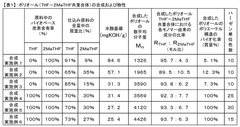
Figure JPOXMLDOC01-APPB-T000002 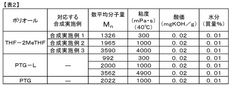
Figure JPOXMLDOC01-APPB-T000003
Abstract
Description
Acid-resistant polyurethane and method for producing same
[0001] The present invention relates to acid-resistant polyurethanes obtained by using polytetramethylene ether glycols and to methods for producing the same.
[0002] Polytetramethylene ether glycol (PTEG) is a polyol used as a raw material for polyurethane, polyester, polycarbonate, etc. Polyurethane and polyester are used in applications such as elastomers and spandex. Among PTEGs, PTEG obtained by copolymerizing tetrahydrofuran (THF) and alkyltetrahydrofuran is known to have excellent softness and elongation properties when used as a raw material for spandex (see, for example, Patent Documents 1 to 3).
[0003] Polyurethane materials are also useful resins or rubbers with a wide range of applications, including oil-based and water-based paints, adhesives, sealing and caulking materials, urethane foams such as sponges, elastomers for automobile parts, and artificial and synthetic leathers.
[0004] Polytetramethylene ether glycol has an ether bond moiety in its structural unit that is decomposable by acid. Therefore, in light of recent environmental issues such as acid rain, it is desired that polytetramethylene ether glycol and polyurethane materials using polytetramethylene ether glycol as a main raw material have improved acid resistance and environmental resistance so that physical properties such as strength and elasticity do not deteriorate when exposed to acid (Patent Documents 4 and 5).
[0005] JP 2011-162780 A Japanese Patent No. 4144656 A International Publication No. 2018 / 220983 International Publication No. 2015 / 152066 JP 2018-119107 A International Publication No. 2023 / 145554
[0006] While there is a demand for the design of polyurethane materials with excellent environmental resistance, there is also a need to design materials that impose a smaller burden on the environment. If it were possible to produce polyurethane materials from biomass raw materials, the environmental burden would be reduced. Therefore, there is a demand for materials that have environmental resistance, such as acid resistance, similar to or superior to conventional polyurethanes and that can be produced from bioraw materials. An object of the present invention is to provide an acid-resistant polyurethane obtained using polytetramethylene ether glycol and a method for producing the polyurethane.
[0007] The present invention was achieved as a result of extensive research into the above-mentioned problems, and provides the following.
[0008] [1] An acid-resistant polyurethane obtained using polytetramethylene ether glycol, which is a copolymer of tetrahydrofuran and 2-methyltetrahydrofuran, wherein the retention of breaking strength or breaking elongation before and after acid treatment is 100% or more and 200% or less.
[0009] [2] The acid-resistant polyurethane according to [1], wherein the polytetramethylene ether glycol has a number average molecular weight of 500 or more and 5,000 or less.
[0010] [3] The acid-resistant polyurethane according to [1], wherein the bio-based carbon content of the 2-methyltetrahydrofuran is 95% or more and 100% or less.
[0011] [4] The acid-resistant polyurethane according to [1], wherein the molar ratio of components derived from the respective monomers of tetrahydrofuran and 2-methyltetrahydrofuran in the polytetramethylene ether glycol is 97:3 to 88:12.
[0012] [5] The acid-resistant polyurethane according to [1], wherein the proportion of biomass-derived raw materials contained in the polytetramethylene ether glycol is 3% by mass or more and 100% by mass or less.
[0013] Polytetramethylene ether glycol containing 2-methyltetrahydrofuran as a comonomer can be used to produce a polyurethane material with excellent acid resistance. Furthermore, polytetramethylene ether glycol, which is a raw material for the polyurethane of the present invention, can be produced from raw materials derived from biomass, making it a highly environmentally friendly material from the perspective of reducing the burden on the environment.
[0014] The following describes in detail the embodiments of the present invention. However, the present invention is not limited to the following contents, and various modifications can be made within the scope of the gist of the present invention.
[0015] The "2-methyltetrahydrofuran (2MeTHF)" in the "copolymer of tetrahydrofuran and 2-methyltetrahydrofuran" of the present invention is generally produced by the furfural method or the levulinic acid method starting from biomass-derived raw materials, but the 2MeTHF in the "acid-resistant polytetramethylene glycol" of the present invention is not limited to those produced by these production methods and can be used. In order to address recent issues of petroleum resources and global warming, 2MeTHF produced from biomass-derived (plant-derived) raw materials is preferred. Furfural can be synthesized from biomass raw materials consisting of polysaccharides such as cellulose, hemicellulose, and lignin, and can be recovered from agricultural waste such as corn cobs and sugarcane pomace, making it an environmentally friendly compound.
[0016] The "biobased carbon content," which indicates the percentage of biomass-derived (plant-derived) components in a substance, is known as an index of the amount of biomass-derived (plant-derived) components in the total carbon mass of a product. This includes carbon mass derived from natural polymers such as starch powder and plant fiber. Measurement of the biobased carbon content is performed using radiocarbon (C14) measurement (ASTM D6866 standard or international standard ISO 16620 carbon isotope ratio measurement). The biobased carbon content of plant-derived 2-methyltetrahydrofuran is preferably 95% to 100%, more preferably 97% to 100%, and even more preferably 100%.
[0017] The "tetrahydrofuran" in the "copolymer of tetrahydrofuran and 2-methyltetrahydrofuran" of the present invention refers to tetrahydrofuran (THF), another raw material for the "polytetramethylene glycol" of the present invention. Specific examples include, but are not limited to, petroleum-derived, biomass-derived, and by-product tetrahydrofuran. As with 2MeTHF, THF derived from biomass-derived raw materials is preferred in order to contribute to resolving petroleum resource issues and global warming problems and achieve its intended purpose. When the tetrahydrofuran (THF) used is produced from plant-derived (or biomass-derived) raw materials, it may be produced by a known method such as the furfural method. The biobased carbon content (%) of THF is preferably 97.00 to 100%, more preferably 100%.
[0018] A method for producing the "polytetramethylene ether glycol composed of a copolymer of tetrahydrofuran and 2-methyltetrahydrofuran" of the present invention is described below. Specifically, the "polytetramethylene ether glycol" of the present invention can be produced by a copolymerization reaction of tetrahydrofuran (THF) and 2-methyltetrahydrofuran (2MeTHF). In the copolymerization reaction step, the ratio (mass ratio) of THF to 2MeTHF can be selected as desired, taking into consideration the required performance and cost (specifically, related performance and cost, such as the cost of the copolymerization reaction step, reaction time, yield, amount, physical properties of the resulting copolymerization reaction product or polytetramethylene ether glycol, and physical properties of a polyurethane resin obtained using the polytetramethylene ether glycol). However, if the ratio of 2MeTHF is extremely low, the expected performance cannot be achieved, and conversely, if the ratio is too high, the reactivity decreases, resulting in a cost disadvantage. Therefore, the ratio (mass ratio) of THF to 2MeTHF is preferably from 99:1 to 50:50, more preferably from 97:3 to 55:45, and particularly preferably from 93:7 to 60:40.
[0019] In the production method of the present invention, the copolymerization reaction of THF and 2MeTHF is preferably carried out by adding 5 to 40 mass% of a strong acid catalyst relative to the total mass of THF and 2MeTHF. From the viewpoints of good reaction conversion and good yield, the lower limit concentration of the strong acid catalyst is preferably 5 mass%, more preferably 8 mass%, and particularly preferably 15 mass%. From the viewpoints of avoiding a decrease in molecular weight at reaction equilibrium due to an increase in reactive species, the upper limit concentration of the strong acid catalyst is preferably 40 mass%, more preferably 36 mass%.
[0020] The copolymerization reaction of THF and 2MeTHF in the present invention is carried out by mixing THF and 2MeTHF in the above ratio and adding a strong acid catalyst while maintaining a temperature of 0 to 50°C. Examples of strong acid catalysts include acetic anhydride, perchloric acid, fluorosulfonic acid, and fuming sulfuric acid. As the strong acid catalyst, a single strong acid may be used, or two or more strong acids may be used in combination. When two or more strong acids are used, they may be used in several stages over a temperature range of 0 to 50°C.
[0021] The reaction product after the polymerization reaction is hydrolyzed to obtain polytetramethylene ether glycol. The hydrolysis is preferably carried out by adding 10 to 100% by mass of water to the reaction solution at a temperature of 30 to 120° C. After completion of the hydrolysis, the aqueous layer is separated from the reaction solution, and unreacted raw materials and the like are separated to obtain polytetramethylene ether glycol, which is a raw material for the polyurethane of the present invention.
[0022] The number average molecular weight (M n ) is 500 or more and 5,000 or less. If the number average molecular weight is less than 500, the polyurethane resin will become hard when molded, and the rubber elastic modulus and tensile strength will decrease. If the number average molecular weight exceeds 5,000, the elongation will be too large and the resin will not be suitable for practical use.
[0023] The ratio of components derived from each monomer (THF, 2MeTHF) in the polytetramethylene ether glycol composed of a copolymer of tetrahydrofuran (THF) and 2-methyltetrahydrofuran (2MeTHF) synthesized by the above-mentioned production method, or simply in the THF-2MeTHF copolymer, which is the synthesized polyol, can be determined by performing nuclear magnetic resonance spectroscopy (NMR measurement) of the synthesized polyol. The ratio of each monomer component (R THF :R 2MeTHF The molar ratio of the hydroxybenzoates to the hydroxybenzoates is preferably 99:1 to 50:50, more preferably 98:2 to 70:30, and particularly preferably 97:3 to 88:12.
[0024] Polytetramethylene ether glycol, a raw material for the polyurethane of the present invention, can be obtained from THF and 2MeTHF, both of which preferably contain biomass-derived raw materials. The mass content of biomass-derived raw materials in a copolymer can be evaluated by calculating the biocontent of the polymer based on the content of each comonomer and the biobased carbon content relative to the mass of the copolymer. The biocontent serves as an indicator of the proportion of biomass-derived raw materials contained in a substance. The biocontent is preferably approximately 3% by mass or more, more preferably 5% by mass or more, and even more preferably 10% by mass or more. While 100% by mass is most preferred, there is no particular upper limit. A specific method for calculating the biocontent is described below.
[0025] The acid-resistant polyurethane of the present invention can be produced by reacting polytetramethylene ether glycol, which is a copolymer of THF and 2MeTHF, with a raw material containing polyisocyanate, specifically, a main raw material such as a chain extender. Specific examples of methods for producing acid-resistant polyurethane are described below. However, the production method is not limited to the following specific examples, as long as it includes reacting polytetramethylene ether glycol with a raw material containing polyisocyanate and produces a polyurethane that does not violate the spirit of the present invention.
[0026] In the reaction for producing the acid-resistant polyurethane of the present invention, the polyisocyanate compound is one having two or more isocyanate groups in the molecule, and examples thereof include polyisocyanates such as tolylene diisocyanate (TDI), diphenylmethane diisocyanate (MDI), xylylene diisocyanate (XDI), isophorone diisocyanate (IPDI), hexamethylene diisocyanate (HDI), naphthalene diisocyanate (NDI), and hydrogenated diphenylmethane diisocyanate, and these can be used alone or in combination of two or more.
[0027] Examples of chain extenders that can be used in the reaction for producing the acid-resistant polyurethane include those having two or more hydroxyl groups or amino groups, such as ethylene glycol, 1,3-propanediol, 1,4-butanediol, 1,5-pentanediol, 1,6-hexanediol, glycerin, trimethylolpropane, ethylenediamine, propylenediamine, phenylenediamine, and diaminodiphenylmethane, which can be used alone or in combination of two or more.
[0028] In the acid-resistant polyurethane production reaction, an acid-resistant bio-based polyurethane resin material can be produced by combining biomass-derived starting materials such as 2MeTHF, biotetrahydrofuran, and biobutanediol (Patent Documents 3 and 6). When compounds are referred to with the prefix "bio," such as "biotetrahydrofuran," "biobutanediol," "biopolyol," and "biopolyether polyol," they refer to low-molecular-weight or high-molecular-weight compounds derived from biomass that have properties equivalent to those of petroleum-based compounds. Furthermore, when a "bio-based polyurethane material" is used, it refers to a material in which at least 50% by mass of the raw material is derived from biomass-derived compounds. Bio-based polyurethane materials contain 50-80% by mass of biomass-derived components relative to 100% by mass of polyurethane material. Generally, the higher the content of biomass-derived components, the more environmentally friendly the material. However, achieving 80% by mass or more requires that raw materials such as polyisocyanate compounds and chain extenders, in addition to 2MeTHF, be biomass-derived. This is a difficult level to achieve with current technology and is economically disadvantageous.
[0029] The acid-resistant polyurethane of the present invention can be produced by a known method. For example, the polytetramethylene ether glycol obtained by copolymerization of THF and 2MeTHF may be reacted with a polyisocyanate and a chain extender all at once, or the acid-resistant polytetramethylene ether glycol may be reacted with a polyisocyanate to obtain an isocyanate-terminated prepolymer, and then a chain extender may be added to carry out an elongation reaction.
[0030] In the reaction of the polyurethane material, an organometallic catalyst or the like can be added as needed. Examples of the organometallic catalyst include organotin catalysts such as dibutyltin oxide, dibutyltin diacetate, dibutyltin dilaurate, dibutyltin dichloride, and dioctyltin dilaurate, as well as nickel octylate, nickel naphthenate, cobalt octylate, cobalt naphthenate, bismuth octylate, and bismuth naphthenate.
[0031] The polytetramethylene ether glycol used as a raw material for the polyurethane of the present invention is a polytetramethylene ether glycol obtained by copolymerization of tetrahydrofuran with 2-methyltetrahydrofuran having an alkyl group adjacent to the ether bond. The acid-resistant polyurethane obtained using such a polytetramethylene ether glycol has superior acid resistance compared to polyurethanes obtained using conventional polytetramethylene ether glycols.
[0032] A specific method for confirming the acid resistance of polyurethane involves actually treating a polyurethane molded product sample obtained from the polytetramethylene ether glycol as a raw material with acid, measuring and comparing the strength properties of the resin, specifically, breaking strength and / or breaking elongation, before and after the acid treatment. It is preferable that the properties are maintained after the acid treatment, or that they are not significantly reduced, and even more preferable that they are improved. Therefore, a retention rate of breaking strength and / or breaking elongation before and after the acid treatment (which may be expressed as 100% if there is no change, or as the rate of change between the values before and after the acid treatment (a method described in JIS in which the percentage increase or decrease is expressed as a positive or negative value)) of 100% to 200% is a preferred indicator of acid-resistant polyurethane.
[0033] A specific method for evaluating the acid resistance of polyurethane may be a method based on the "immersion test" described in "Japanese Industrial Standards (hereinafter referred to as JIS) JIS K7312-1996 Physical Test Methods for Thermosetting Polyurethane Elastomer Molded Products," or a test may be performed by preparing an acid aqueous solution of an appropriate type and concentration, immersing a molded sample piece in the acid aqueous solution at a predetermined target temperature for a certain period of time, and comparing the physical property values before and after the acid treatment. -5 An example of an acid treatment test is immersion in an aqueous solution of sulfuric acid, hydrochloric acid or acetic acid at a concentration of up to 10% by mass at a temperature of 5 to 70°C for an immersion time of 12 hours to 14 days, but the method is not limited to this.
[0034] The present invention will be described in detail below with reference to examples. However, the present invention is not limited to the following examples and can be practiced with various modifications within the scope of the present invention.
[0035] [Synthesis of Various Polyols] The various polytetramethylene ether glycols (hereinafter also referred to as polyether polyols or polyols) used in the examples of the present invention were, as shown in Table 1, a polyol (THF-2MeTHF) manufactured by Hodogaya Chemical Co., Ltd., used as the polytetramethylene ether glycol of the present invention, and a polyol (copolymer of tetrahydrofuran and 3-alkyltetrahydrofuran, product name: PTG-L) manufactured by the same company and a polyol (polytetramethylene glycol, product name: PTG) manufactured by the same company were used as polyols outside the scope of the present invention. Note that the THF-2MeTHF copolymer was synthesized by the method described in Patent Document 3 (WO 2018 / 220983) or Patent Document 6 (WO 2023 / 145554), to synthesize a similar copolymer.
[0036] [Measurement of Biobased Carbon Content of Raw Materials] THF and 2MeTHF were prepared as raw materials, and their biobased carbon contents (%) were evaluated based on the measurement method of ASTM D6866-22 Method B (Geoscience Institute Co., Ltd.). For the biobased carbon contents (%) of the respective raw materials, THF was used with a biobased carbon content (%) of 0% or 100%, and 2MeTHF was used with a biobased carbon content (%) of 100%.
[0037] [Purification and Analysis of Raw Materials] These THF and 2MeTHF raw materials may be commercially available products, and it is preferable to purify them before synthesis in order to suppress coloration after synthesis of the copolymer. When purifying, the raw materials were subjected to purification using an acid (specifically, a strong acid such as sulfuric acid, nitric acid, or hydrochloric acid) and / or purification including distillation, as described in Patent Document 6, etc., and then used for the synthesis of the THF-2MeTHF copolymer. The purity of the raw materials was evaluated by gas chromatography (GC). As a specific example, the GC purity of 2MeTHF measured using the following apparatus was confirmed to be 99.90% or higher. Apparatus name: Gas chromatograph manufactured by Shimadzu Corporation, Model: GC-2014 Analytical column: DB-1 manufactured by T&D (inner diameter 0.25 mm x 30 m, film thickness 0.25 μm)
[0038] [Synthesis Examples 1 to 6] Synthesis of THF-2MeTHF Copolymerization Product Among Synthesis Examples 1 to 6, the details of Synthesis Example 3 are described below. 7250 g of THF (Kishida Chemical Co., Ltd., biobased carbon content (%) = 0%) and 1280 g of purified 2MeTHF (mass ratio THF:2MeTHF = 85:15) were placed in a 20 L reaction vessel and cooled to 0°C. 140 g of 70% perchloric acid was added to the reaction vessel. Next, 1840 g of 25% oleum was added dropwise at -5 to 5°C over 5 hours. The reaction solution was stirred at -5 to 5°C for 2 hours, after which 3713 g of water was added, heated to 70°C, and refluxed for 3 hours. After refluxing, the mixture was allowed to stand at 65 to 70°C for 1 hour, and then the aqueous layer was removed. 950 g of water and 2230 g of THF were added to the oil layer, heated to 70°C, and refluxed for 3 hours. After reflux, the mixture was allowed to stand at 65-70°C for 1 hour, and then the aqueous layer was removed. 300 mL of ion exchange resin (model number: IRA-96S, manufactured by Organo Corporation) was added to the oil layer, and the mixture was stirred at room temperature (approximately 20-25°C) for 1 hour. After removing the ion exchange resin by filtration, the mixture was concentrated under reduced pressure at 120°C to obtain a THF-2MeTHF copolymer (2050 g, 24% yield), a polytetramethylene ether glycol, as a transparent viscous liquid (Polyol, manufactured by Hodogaya Chemical Co., Ltd.). The synthesis conditions for other synthesis examples are shown in Table 1.
[0039] In the examples of the present invention, the analytical instruments and analytical methods used to measure various physical properties of polytetramethylene ether glycol and the polyurethane sheets prepared are as follows.
[0040] [Number average molecular weight (M n The hydroxyl value of polytetramethylene ether glycol was measured in accordance with JIS K1557-1:2007, and the number average molecular weight (M n ) was calculated.
[0041] [NMR measurement (calculation of bio content)] 1The polyether structure in the polytetramethylene ether glycol was analyzed by H-NMR analysis (Nuclear Magnetic Resonance Spectrometer, Model: JNM-ECZ400S / L1, manufactured by JEOL Ltd.), and the ratio (THF:2MeTHF) (molar ratio) of components derived from each monomer in the synthesized THF-2MeTHF copolymer was measured.
[0042] From the molecular weight of each raw material of the copolymer, its bio-based carbon content (%), and the ratio (molar ratio) of each raw material component measured by NMR, the proportion of biomass-derived raw materials in polytetramethylene ether glycol = biocontent (mass%) was calculated using the following mathematical formula (1):
[0043]
[0044] [In formula (1), the meanings of the symbols representing physical quantities, ratios, constants, or variables are as follows: C BioPolyol (%): Bio-based content (%) of polytetramethylene ether glycol (polyol) with a polyether structure C BioTHF (%): Bio-based carbon content of THF raw material (%) C Bio2MeTHF (%): Bio-based carbon content (%) of 2MeTHF raw material THF : Molecular weight of THF = 72.11 M 2MeTHF : Molecular weight of 2MeTHF = 86.13 R THF , R 2MeTHF : Molar ratio of ether structures derived from each monomer (THF and 2MeTHF) in the polyol]
[0045] [Coloration Assessment] The degree of coloration of the obtained "polymer diol having a polyether structure" was determined by comparing the Hazen color scale (APHA color) using the test method described in Japanese Industrial Standards JIS K0071-1: 2007. The Hazen color scale (APHA color) of the THF-2MeTHF copolymer of Synthesis Example 3 was 10.
[0046] The analytical results of the hydroxyl value, number average molecular weight, molar ratio of components derived from each monomer, biocontent rate, and Hazen color index for the THF-2MeTHF copolymers of Synthesis Examples 1 to 6 are summarized in Table 1. It is clear that the tetrahydrofuran-2-methyltetrahydrofuran copolymer used in polytetramethylene ether glycol, which is a raw material for the acid-resistant polyurethane of the present invention, has a small color index and is suitable for producing polyurethanes with little coloration.
[0047]
[0048] [Examples 1 to 4 and Comparative Examples 1 to 6] [Measurement of Physical Properties of Polyols Used in Polyurethane Synthesis] In preparing the acid-resistant polyurethanes of the present invention, the basic physical properties (viscosity, acid value, and water content) of the various polytetramethylene ether glycols or polyols prepared in the synthesis examples were measured. Similarly, the basic physical properties of the polyols (manufactured by Hodogaya Chemical Co., Ltd., product names: PTG-L, PTG) used as raw materials for the polyurethanes used in the comparative examples were measured. [Viscosity Measurement] The viscosity (temperature 40±1°C) of the various synthesized polyols was measured using a viscometer (manufactured by Toki Sangyo Co., Ltd., model: TV-100). The viscosity of the polytetramethylene ether glycol was measured in accordance with JIS K1557-5.
[0049] [Measurement of Acid Value] The acid value of polytetramethylene ether glycol was measured in accordance with JIS K1557-1:2007.
[0050] [Measurement of Moisture] The moisture (%) (mass % of the total moisture content) of each synthesized polyol was measured using a moisture meter (manufactured by Nitto Seiko Analytech Co., Ltd., Model: CA-31). The basic physical properties of each polyol are shown in Table 2. Table 2 shows that the acid-resistant polytetramethylene ether glycol used in producing the acid-resistant polyurethane of the present invention has physical properties equivalent to those of conventional polyols (PTG-L, PTG).
[0051]
[0052] [Polyurethane Synthesis - Polyurethane Sheet Preparation] (Example 1) In a 200 mL reaction vessel, 100.0 g (0.075 mol, M) of THF-2MeTHF obtained in Synthesis Example 1 was placed. n The vessel was charged with 1,4-butanediol (product of Kishida Chemical Co., Ltd.) and heated to 70°C. 34.9 g (0.139 mol) of 4,4'-diphenylmethane diisocyanate (MDI, manufactured by Tosoh Corporation) was added and stirred at 80°C for 3 hours. The vessel was depressurized and degassed, and then 5.5 g (0.061 mol) of 1,4-butanediol (manufactured by Kishida Chemical Co., Ltd.) was added and stirred at 85 to 90°C for 3 minutes. After stirring, the mixture was poured into a glass plate, aged in a dryer at 110°C for 3 hours, and then cooled and molded into a (poly)urethane sheet (thickness: 2 mm).
[0053] (Examples 2 to 4) In the polyurethane synthesis (molding) method of Example 1, the type of polyol used, M n and the amount used (g, mol), the amount of polyisocyanate compound (MDI) added and reacted used (g, mol), the amount of 1,4-butanediol added and reacted used (g, mol). The amounts of the polyol species and various raw materials used were changed as shown in Table 3 below, but other than that, a 200 mL reaction vessel, temperature for each operation, stirring time, each procedure, and molding conditions for the polyurethane sheet were the same as in Example 1, and a polyurethane sheet (thickness 2 mm) was molded and obtained.
[0054] Comparative Examples 1 to 6 Polyurethane sheets (thickness 2 mm) were molded in the same manner as in Examples 1 to 4, except that PTG-L or PTG was used as the polyol and the amounts of each raw material used were changed as shown in Table 3.
[0055]
[0056] [Measurement of Tensile Strength and Elongation] The tensile test of the polyurethane sheet was carried out using a precision universal testing machine (Shimadzu Corporation, Autograph, Model: AG-1) in accordance with JIS K7312:1996, using No. 3 dumbbell test pieces, at a temperature of 23°C and a humidity of 50%. The tensile strength, elongation at break, 100% modulus (M100), and 300% modulus (M300) were determined.
[0057] [Measurement of Hardness] The hardness (type A) of the prepared polyurethane sheet was measured in accordance with JIS 7312:1996.
[0058] Table 4 shows various physical properties (breaking strength, breaking elongation, M100, M300, and hardness (JIS A)) of the polyurethane sheets obtained in Examples 1 to 4 and Comparative Examples 1 to 6. In the table, NCO (%) indicates the content (mass%) of NCO groups in the polyurethane.
[0059]
[0060] As can be seen from Table 4, the general physical properties such as breaking strength, breaking elongation, and hardness of the polyurethanes prepared using the THF-2MeTHF of the present invention are almost equivalent to those of polyurethanes prepared using the conventional polyols PTG or PTG-L.
[0061] [Evaluation of Acid Resistance] The acid resistance of the obtained polyurethane sheets was evaluated by evaluating the retention (%) of the following physical properties before and after acid treatment: (a) breaking strength and (b) breaking elongation. Details are provided below. (Acid Immersion Treatment of Polyurethane Sheets) The polyurethane sheets obtained in the above Examples and Comparative Examples were immersed in 2% sulfuric acid (pH 1) for 7 days at room temperature of 23°C and 50% humidity (atmosphere: air). The polyurethane sheets were then washed with water, wiped dry, and left to stand in an environment at 23°C for 3 days. (a) Breaking Strength Retention After the acid immersion treatment as described above, tensile tests were performed on the various polyurethane sheets using a tensile tester. The breaking strengths before and after the 2% sulfuric acid immersion treatment were compared, and the breaking strength retention (%) was calculated. The results for the obtained polyurethane sheets before and after acid treatment are shown in Table 5. (b) Breaking Elongation Retention For samples that had been acid immersed in the same manner as described above, tensile tests were performed on the various polyurethane sheets using a tensile tester. The breaking elongation was compared before and after the 2% sulfuric acid immersion treatment, and the breaking elongation retention rate (%) was calculated. The results of the various polyurethane sheets obtained before and after the acid treatment are shown in Table 6 (NCO = 4%) and Table 7 (NCO = 6%).
[0062]
[0063]
[0064]
[0065] Tables 5 to 7 show that the retention of breaking strength or breaking elongation after acid treatment of polyurethane resin sheets produced using the polytetramethylene ether glycol of the present invention is higher than that of those produced using conventional polyols that do not contain 2MeTHF. Therefore, the acid-resistant polyurethane obtained using the polytetramethylene ether glycol of the present invention has superior acid resistance compared to that produced using conventional polyols. This is thought to be due to the structure of 2MeTHF, which is one of the raw materials for the copolymer. That is, in polytetramethylene ether glycol having a structure derived from 2MeTHF, the methylene group (-CH 2 One hydrogen atom in the ether bond (-) is replaced with a methyl group, resulting in a slight steric crowding around the ether bond. Furthermore, because the methyl group is electron-donating, it affects the electronic state of the methylene carbon to which it is bonded and the oxygen atom adjacent to the methylene carbon. The oxygen atom in the ether bond is susceptible to attack by electrophilic Lewis acids, but in 2MeTHF, the electron density of the oxygen atom is slightly lower and the compound is sterically crowded, making it less susceptible to attack by Lewis acids. This is thought to result in improved acid resistance. Furthermore, 2MeTHF can be produced from bio-based raw materials, making it useful for producing polyurethanes that exhibit properties equal to or better than conventional polyurethanes while also being environmentally friendly.
[0066] The acid-resistant polyurethane obtained using the polytetramethylene ether glycol according to the present invention is useful as a polyurethane resin material that is less susceptible to deterioration in resin properties (such as breaking strength and breaking elongation) due to acid compared to conventional polyurethanes.
Claims
1. An acid-resistant polyurethane obtained using polytetramethylene ether glycol, which is a copolymer of tetrahydrofuran and 2-methyltetrahydrofuran, and which has a retention of breaking strength or breaking elongation of 100% or more and 200% or less before and after acid treatment.
2. The acid-resistant polyurethane according to claim 1, wherein the number average molecular weight of the polytetramethylene ether glycol is 500 or more and 5,000 or less.
3. The acid-resistant polyurethane according to claim 1, wherein the bio-based carbon content of the 2-methyltetrahydrofuran is 95% or more and 100% or less.
4. The acid-resistant polyurethane according to claim 1, wherein the molar ratio of components derived from tetrahydrofuran and 2-methyltetrahydrofuran monomers in said polytetramethylene ether glycol is from 97:3 to 88:
12.
5. The acid-resistant polyurethane according to claim 1, wherein the proportion of biomass-derived raw materials contained in the polytetramethylene ether glycol is 3% by mass or more and 100% by mass or less.
Citation Information
Patent Citations
Method for producing polyether polyol
JP2011162780A
Self-emulsifiable polyisocyanate composition
JP2018119107A
Method for purifying tetrahydrofuran for raw material of polyether polyol
JP4144656B2
Polyester polyol having superior durability
WO2015152066A1
Copolymerization reaction product of tetrahydrofuran and plant-derived 2-methyltetrahydrofuran, and method for producing same
WO2023145554A1