

A nutritional food and drink product, and a method for manufacturing said product
A nutritional food or drink product combining konjac mannan, sodium alginate, and high protein sources addresses the issue of excessive carbohydrate intake by promoting satiety and aiding weight management through sustained fiber and protein content, effectively reducing caloric intake and improving metabolic health.
Patent Information
- Application Number
- PCT/EP2023/060324
- Authority / Receiving Office
- WO · WO
- Patent Type
- Applications
- Current Assignee / Owner
- Filing Date
- 2023-04-20
- Publication Date
- 2024-10-24
AI Technical Summary
Current food and drink products, such as nutrition bars, often contain high amounts of fast digestible carbohydrates, leading to excessive food intake and obesity, and lack sufficient dietary fiber and protein to effectively manage weight and promote satiety.
A nutritional food or drink product comprising 0.4-6 grams of konjac mannan and 0-10 grams of sodium alginate, combined with high protein sources and dietary fibers, to create a high-fiber, high-protein, low-carbohydrate snack that delays gastric emptying and promotes satiety, thereby aiding in weight management.
The product effectively reduces caloric intake and improves glucose and insulin profiles by providing sustained satiety, contributing to better weight management and reduced risk of chronic diseases like diabetes.
Smart Images
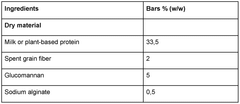
Figure IMGF000016_0001 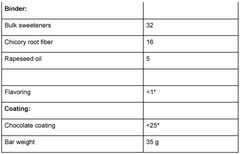
Figure IMGF000017_0001 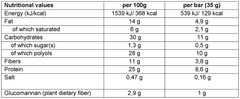
Figure IMGF000017_0002
Abstract
Description
[0001] A NUTRITIONAL FOOD AND DRINK PRODUCT, AND A METHOD FOR
[0002] MANUFACTURING SAID PRODUCT
[0003] FIELD OF THE INVENTION
[0004] The present disclosure relates to a nutritional food and drink product. The disclosure also relates to a method for manufacturing a nutritional food and drink product.
[0005] According to an embodiment, the present disclosure relates to a food product having high protein and dietary fiber, and to reduced carbohydrates functional food products / snacks and their use to suppress appetite and promote weight loss.
[0006] BACKGROUND OF THE INVENTION
[0007] The sedentary lifestyle of modern society has increased the rates of overweight and obesity with the latter to be a major risk factor for multiple diseases such as type 2 diabetes mellitus and cardiovascular disease. Thus, there is an extensive need for people to manage their weight.
[0008] Carbohydrates are classified into two categories, digestible and non digestible. Digestible carbohydrates are mainly starch and sugars and their digestion starts in the mouth and ends in the intestinal, whereas starch is divided into three types, namely resistant starch (RS), slowly digestible starch (SDS) and rapidly digestible starch (RDS).
[0009] Starch is classified into the following three categories based on their structural properties and digestion rates:
[0010] 1. Resistant starch (RS) refers to starch that resists digestion in the small intestine and is fermented by colonic bacteria in the large intestine. Resistant starch can be found in foods such as unripe bananas, potatoes, and legumes. RS is considered a type of dietary fiber and has been linked to a range of health benefits, including improved glycemic control, increased satiety, and improved bowel function.
[0011] 2. Slowly digestible starch (SDS) is starch that is digested more slowly in the small intestine than RDS. SDS can be found in foods such as whole grains, legumes, and some fruits and vegetables. SDS has been shown to have a lower glycemic response compared to RDS, which means that it can help regulate blood sugar levels.
[0012] 3. Rapidly digestible starch (RDS) is starch that is digested quickly in the small intestine and rapidly raises blood sugar levels. RDS can be found in foods such as white bread, white rice, and processed cereals. High intake of RDS has been linked to an increased risk of chronic diseases such as type 2 diabetes and cardiovascular disease.
[0013] Non digestible (resistant) carbohydrates resist digestion in the small intestine or are poorly absorbed. Those could be the resistant starch, dietary fibers and prebiotic. Dietary fibers are mostly derived from plant sources and can be further classified into soluble and insoluble types of fibre. Prebiotics are non digestible food ingredients that selectively stimulate the growth and activity of intestinal bacteria. It has been shown in studies that a diet which is rich in these types of non digestible and slowly absorbed carbohydrates is beneficial for various health reasons.
[0014] With regard to a desire to improve weight management, it is consequently previously known that the consumption of food with high amounts of fast digestible carbohydrates is known to lead to excessive food intake and obesity. Therefore, it is preferable that any ingredient used in weight management to be low in fast digestible carbohydrates and high in non digestible carbohydrates.
[0015] An important factor with regard to the object of suppressing appetite and promoting weight loss is the state of satiety, i.e. a state of fullness and consequently the opposite to hunger. In this regard, there is sufficient evidence that increasing the consumption of high fiber foods promotes satiety as the more viscous fibers could decrease hunger by delaying gastric emptying which provides a feeling of fullness. Thus, an increased amount of dietary fibers can have a positive effect on people’s health, and their weight management. On the other hand, inadequate intake can have a negative effect on general health and immune system and can increase the risk of obesity and other diseases.
[0016] Fiber can help maintain digestive health as it helps to promote regular bowel movements, prevents constipation and supports the growth of beneficial bacteria in the gut. Inadequate intake of fiber can lead to digestive problems and an increased risk of gastrointestinal diseases. The gut microbiota plays a critical role in regulating the immune system, and dietary fiber is a key nutrient that supports the growth and diversity of beneficial gut bacteria. Inadequate fiber intake can lead to imbalances in gut bacteria, which can weaken the immune system and increase the risk of infections and chronic diseases. Fiber helps to slow the absorption of sugar in the bloodstream (improve blood sugar control), which can help to regulate blood sugar levels and prevent insulin resistance. High-fiber foods are typically low in calories and high in volume, which can help to promote feelings of fullness and reduce overall calorie intake. This can help to prevent weight gain and type 2 diabetes.
[0017] Protein is the uppermost nutrient, compared to carbohydrates and fat, to promote satiety and, by extension, weight loss through their contribution to a reduction in energy consumption and an increased thermogenesis. That means proteins take a longer time to break down in the body, providing a longer-lasting energy source. On the other hand, thermogenesis is a metabolic process that the body goes through in order to produce heat which helps to burn more calories and lose weight faster.
[0018] Protein is often considered the most satiating macronutrient because it takes longer to digest than carbohydrates or fat, and also triggers the release of certain hormones which signal to the brain that you are full. Additionally, protein has a high thermic effect, meaning that the body burns more calories digesting and processing protein than it does for carbohydrates or fat.
[0019] Fat can also help promote feelings of satiety because it is high in calories (fat has twice as many calories per gram than protein) and takes longer to digest than carbohydrates. However, unlike protein, fat does not have as much of an effect on the hormones that control appetite and satiety.
[0020] Both protein and fat can contribute to satiety, but a diet high in protein may be more effective for promoting feelings of fullness and reducing overall calorie intake.
[0021] Based on the above, there is consequently a need for improved food and drink products which are generally aimed at replacing fast digestible carbohydrates such as various sugar-based products with more healthy food products, which may improve the situation as regards weight loss and the risk for various diseases such as for example diabetes. In this regard, the replacement of fast digestible carbohydrates with dietary fibers and proteins has been shown generally to promote satiety and improve glucose and insulin profiles. For example, research has shown that food products with a high protein and high fiber content will reduce food intake and improve short term glucose and insulin profiles, as compared with high snack bars which are high on fat and sugar.
[0022] According to known technology, different types of food products such as so-called nutrition bars have been developed and marketed. This is a type of food product which is marketed as a convenient and nutritious snack, often as a form of sports nutrition or as a quick replacement for a regular meal. A nutrition bar typically contains a combination of ingredients such as protein, carbohydrates, fats, vitamins, and minerals. The nutritional content of such nutrition bars can vary to a high extent. In fact, some may contain high amounts of sugar and saturated fat.
[0023] The patent document EP 1641358 teaches a nutrition bar which is based on certain ingredients such as soy or rice protein, a transition metal or a transition metal compound, and also a humectant selected from a group consisting of polyols.
[0024] Even though the product according to EP 1641358 constitutes a useful food product which in particular comprises elevated levels of protein, there is a need for further improved food products by means of which the problems related to a high sugar content, a low nutrient quality and excessive levels of calories can be overcome.
[0025] It should be mentioned that certain other available food products may constitute improvements over certain types of nutrition bars, such as fresh fruits, nuts, vegetables and also so-called low sugar bars. There is also the option of making homemade bars, in which the ingredients can be controlled in a manner so that more healthy options are chosen.
[0026] Although there exist certain food products having certain health benefits, there is still a desire to improve the technology related to food products such as for example nutrition bars, in order to provide more healthy alternatives. SUMMARY OF THE INVENTION
[0027] In accordance with the disclosure, there is provided a nutritional food or drink product and a method for manufacturing such a product, by means of which one or more of the drawbacks of known products within this field can be overcome.
[0028] For this reason, there is provided a nutritional food or drink product, being provided as portions, each portion having a predetermined total weight and comprising 0,4 - 6 grams of konjac mannan and 0 - 10 grams of sodium alginate.
[0029] Certain advantages are achieved by means of the product according to the disclosure, i.e. including the above-mentioned amounts of konjac mannan and sodium alginate, respectively. In particular, the above-mentioned product fulfills a need for functional snack products with high levels of dietary fiber and proteins that assist in weight management by promoting satiety.
[0030] Through the use of konjac mannan and sodium alginate, in the above-mentioned specific amounts, certain synergistic effects can also be achieved. In particular, regarding protein and fiber, it should be noted that combining protein sources, such as nuts, seeds, or protein powders, with fiber sources, such as chia seeds, can help to increase satiety and regulate hunger.
[0031] The are certain synergistic effects associated with the use of the specific combination of konjac mannan and of sodium alginate according to the disclosure. In fact, there is a study for vitamin C encapsulation in beads, where it is suggested that the ratio of glucomannan-alginate and the preparation method can affect the physicochemical properties of vitamin C encapsulation. As it is mentioned, preparation of 1 :1 (w / w) ratio of glucomannan - alginate shows the most soluble excipient in pH 6.8. The highest viscosity was observed at encapsulation of 3% vitamin C prepared using 3:1 (w / w) of glucomannan-alginate. Therefore, the choice of glucomannan-alginate ratio may depend on specific properties. If a high degree of solubility is desired the 1 :1 (w / w) ratio may be more appropriate. However, if a higher concentration of vitamin C is needed and a higher viscosity is acceptable, the 3:1 (w / w) ratio may be a better. The present disclosure relates to a high protein and dietary fiber, and reduced carbohydrates functional food products / snacks and their use to suppress appetite and promote weight loss.
[0032] According to an embodiment, the product comprises 0,6 - 4 grams of konjac mannan.
[0033] According to an embodiment, the product comprises 0,8 - 2 grams of konjac mannan.
[0034] According to an embodiment, the product comprises 0,05 - 7 grams of sodium alginate.
[0035] According to an embodiment, the product comprises 0,1 - 5 grams of sodium alginate.
[0036] According to a further aspect, and in accordance with the disclosure, there is provided a nutritional food or drink product comprising 0,1 % to 50% (w / w) of konjac mannan and 0% to 50% (w / w) of sodium alginate.
[0037] According to an embodiment, the food or drink product comprises 0,15% to 38% (w / w) of konjac mannan.
[0038] According to an embodiment, the food or drink product comprises 0,3% to 25% (w / w) of konjac mannan.
[0039] According to an embodiment, the food or drink product comprises 0,05% to 38% (w / w) of sodium alginate.
[0040] According to an embodiment, the food or drink product comprises 0,1 % to 25% (w / w) of sodium alginate.
[0041] According to an embodiment, the food or drink product comprises 1 % to 40% (w / w) of proteins. In general, a higher percentage of protein is often desirable in certain types of food products, such as supplements, meal replacements, and snacks marketed to healthconscious consumers. Proteins have been shown to promote satiety, which is the feeling of fullness and satisfaction after eating. They are slow to digest and can help regulate appetite by signaling to the brain that the body has had enough to eat. This is why high- protein diets are often recommended for weight loss and weight management. The optimal percentage of protein depends on factors such as the nutritional goals of the product and the desired sensory characteristics.
[0042] According to an embodiment, the food or drink product comprises 2% to 37% (w / w) of proteins, preferably 3%-35% (w / w) of proteins.
[0043] According to an embodiment, the proteins are constituted by at least one of the following categories: milk protein, for example whey protein, or alternatively soy protein or pea protein.
[0044] According to an embodiment, the food or drink product further comprises 0% to 25% (w / w) of fat. The preferred percentage of fat in a food product can also vary depending on different factors. In general, a lower percentage of fat is often desirable in certain types of food products, particularly those marketed to health-conscious consumers. Similarly, the optimal percentage of fat will depend on factors such as the nutritional goals of the product and the desired sensory characteristics. Fat can promote satiety to some extent, but its effects on appetite regulation are not as strong as those of proteins and fibers. Fat is digested more slowly than fast digestible carbohydrates, so it can help delay the onset of hunger and provide a feeling of fullness and satisfaction after a meal. It is important to note that not all types of fat are equal, some types of fat, such as saturated and trans-fat, are less healthy than others, such as unsaturated fat. Overall, while fat can play a role in promoting satiety, it is important to consume it in moderation and as part of a balanced diet that includes adequate amounts of protein, fiber, and other essential nutrients.
[0045] According to an embodiment, the food or drink product comprises 0% to 18% (w / w) of fat, preferably 0%-12% (w / w) of fat.
[0046] According to an embodiment, the food or drink product further comprises 0% to 40% of a bulking agent.
[0047] According to an embodiment, the bulking agent comprises sugar alcohols.
[0048] According to an embodiment, at least one further ingredient comprising dietary fibers and being of the type chicory root fiber (inulin and oligofructose) is present within the range of from 0% to 25% (w / w). The amount of dietary fiber added to a product can vary depending on the desired nutritional and functional properties. Dietary fibers are a type of carbohydrate that are not digested by the body, so they pass through the digestive system relatively intact. This can help slow down digestion and delay the onset of hunger, leading to a feeling of fullness and satisfaction after a meal. In addition to promoting satiety, dietary fibers have many other health benefits. They can help regulate blood sugar levels, lower cholesterol levels, and support healthy digestion. They can also help prevent constipation and promote regular bowel movements. Dietary fibers can also provide functional benefits to food products. For example, they can help improve the texture, consistency, and shelf life of foods. They can also act as a bulking agent, which can help reduce the calorie density of foods without compromising their volume or taste.
[0049] According to an embodiment, the food or drink product further comprises 0%-20% (w / w) of dietary fibers, preferably 0%-16% (w / w) of dietary fibers.
[0050] According to an embodiment, at least one further ingredient comprises dietary fibers and is of the type spent grain, sugar beet and / or potato fiber and is present within the range of from 0% to 12% (w / w).
[0051] In accordance with the disclosure, there is also provided a method for manufacturing a nutritional food and drink product, wherein the method comprises the following steps: preparing a mixture of ingredients including 0,4 to 6 grams of konjac mannan and 0 to 10 grams of sodium alginate; shaping said mixture to form the actual food product having a predetermined size and shape; and cooling the product and wrapping it in a suitable individual labelled packaging.
[0052] According to an aspect, there is also provided a method comprising the following steps: preparing a mixture of ingredients including 0,1% to 50% (w / w) of konjac mannan and 0% to 50% (w / w) of sodium alginate; shaping said mixture to form the actual food product having a predetermined size and shape; and cooling the product and wrapping it in a suitable packaging.
[0053] Certain terms and definitions are used below. The term “dietary fiber” includes non- digestible carbohydrates and lignin that are intact and intrinsic in plants. The term “functional fiber” refers to isolated or synthetic fibers that are added to food to provide specific health benefits. These fibers may occur naturally in whole foods but they are still considered to have physiological effect in the body as they are known to promote satiety, reduce cholesterol levels or improve bowel regularity.
[0054] Some functional fibers may also be considered dietary fibers but not all dietary fibers are necessarily functional fibers. In the context of the present disclosure, glucomannan, sodium alginate, inulin, oligofructose, spent grain, are all both dietary and functional fibers.
[0055] Further advantages and advantageous features of the embodiments contemplated herein are disclosed in the following description and in the dependent claims.
[0056] DETAILED DESCRIPTION OF PARTICULAR EMBODIMENTS
[0057] Different aspects of the present disclosure will be described more fully hereinafter. The disclosure can be realized in many different forms and should not be construed as being limited to the embodiments below.
[0058] According to a first aspect of this disclosure, there is provided a food product in the form of a so-called nutrition bar, which can be used as a snack bar or possibly as a light replacement of a more substantial meal. Nutrition bars are conventionally marketed as a healthy meal which offer various nutrients, for example fibers and protein, and often also ingredients such as nuts or chocolate.
[0059] The production of nutrition bars is generally known, and comprises a number of manufacturing steps, such as the following: a) preparation and mixing of the ingredients in question at a suitable temperature; b) compression and shaping of the mixture in a mold to form the actual nutrition bars with a required size and shape; c) cooling the bars and wrapping them in suitable individual labelled packaging, after which the final products are finally packed, stored and subsequently shipped to distributors and various points of sale. Nutrition bars - which are sometimes referred to as “energy bars” or “nuggets” - can be manufactured in various sizes and shapes, for example with a circular, rectangular or square cross-sectional shape. The actual contents of the food product according to this disclosure will be discussed in greater detail below.
[0060] As mentioned initially, carbohydrates are classified into two categories, digestible and non digestible. The digestible carbohydrates are broken down by the digestive system. Examples of digestible carbohydrates are sugars and starches. On the other hand, non- digestible carbohydrates, also known as dietary fibers, are generally not digested or absorbed by the digestive system. They pass through the intestines generally unchanged and provide a number of health benefits, such as improved weight management and increased satiety. Examples of non-digestible carbohydrates are cellulose and certain types of fibers.
[0061] It is an essential principle of the present invention that the food product in question is based on a relatively high content of dietary fibers, which is an important component of the food product since it contributes to an improved health and since it can assist in regulating digestion and hunger.
[0062] According to an aspect, the invention provides a food product such as a nutrition bar or a similar product, generally based on non-digestible carbohydrates and in particular comprising dietary fibers compositions comprising glucomannan and sodium alginate. As used here, ‘glucomannan’ refers to a water soluble dietary fiber with B-(1 ,4)-linked-D- mannose and B-(1 ,4)-linked-D-glucose residues in approximately 3:1 ratio and various a- linked galactose end groups. It is most commonly isolated from konjac root (Amorphophallus konjac) but can also be isolated from other plant sources. Sodium alginate refers to a mixed polymer of a-d-mannuronic acid and p-l-guluronic acid. It is a naturally derived polysaccharide polymer obtained from marine brown algae.
[0063] It should be noted that in the present disclosure, the terms ’’glucomannan” and ’’konjac mannan” are to be regarded as synonyms. It is known that konjac mannan forms a viscous, gel-like mass in the stomach when hydrated which has a greater effect on delaying gastric emptying and inducing satiety (EFSA).
[0064] Dietary fibers
[0065] According to an embodiment, a mix of konjac mannan and sodium alginate is used in the present food product, as the two ingredients work synergistically to provide satiety and reduce the caloric intake. At the same time, a snack / meal with high viscosity properties has a greater effect on the sense of satiety.
[0066] The proportions of glucomannan and sodium alginate in the dietary fiber compositions is crucial in order to obtain the objectives relating to health benefits. According to an embodiment, the product according to this disclosure is suitable manufactured or provided as portions, each portion having a predetermined total weight and comprising 0,4 - 6 grams of konjac mannan and 0 - 10 grams of sodium alginate.
[0067] The term ’’portion” can be defined as a predetermined packaged amount of the food product which can be implemented, for example, as an effervescent tablet having a total weight of approximately 4 grams, or as a drink having a total weight of approximately 400 grams. A further example of a portion is an ordinary tablet, which has a weight of approximately 2 grams, or a relatively large drink weighing approximately 1000 grams.
[0068] Generally, the term ’’portion” is used to define a certain food or drink product which has a total weight which is in the interval of 2-1000 grams, preferably 3-600 grams, most preferably 4-400 grams.
[0069] According to different embodiments, the weight of the content of conjac mannan can be 0,4 - 6 grams, preferably 0,6 - 4 grams, most preferably 0,8 - 2 grams.
[0070] The weight of sodium alginate in a portion of the food product in question is according to different embodiments 0 -10 grams, preferably between 0,05 - 7 grams, and most preferably between 0,1 - 5 grams. The contents of konjac mannan and sodium alginate can also be determined in the form of percentages of the total weight of the food product in question. According to an embodiment, the food product according to this disclosure contains from about 0,1% to 50% (w / w) of konjac mannan and about 0% to 50% (w / w) of sodium alginate.
[0071] According to a further embodiment, the food product contains from about 0,15% to 38% (w / w) of konjac mannan.
[0072] According to a further, more preferred, embodiment, the food product contains from about 0,3% to 25% of konjac mannan.
[0073] According to a further embodiment, the food product contains from about 0,05% to 38% (w / w) of sodium alginate.
[0074] According to a further, more preferred, embodiment, the food product contains from about 0,1% to 25% of sodium alginate.
[0075] In addition to glucomannan and sodium alginate, other dietary fibers may also be included in the functional food products / snacks. The addition of extra dietary fibers in food could lead to a positive impact reducing the caloric contribution and the carbohydrate content. At the same time, some dietary fibers are excellent ingredients for sugar replacement in food applications as they have low caloric value compared to sugar and have a limited effect on blood sugar level, while their technological properties (bulking agent, improving mouthfeel, decrease water activity) are comparable to sugar.
[0076] Preferred sources for other dietary fibers which may be used in the present food product include chicory root fibers (inulin and oligofructose), spent grain flour, sugar beet fibers etc. The amount of the other dietary fibers, when present, are preferably within the range of from 0% to 16% (w / w) (as regards chicory root fibers (inulin and oligofructose)) and 0% - 12% (w / w) (as regards spent grain flour, sugar beet fibers etc).
[0077] Proteins
[0078] It is known that proteins have an important role in weight management, in particular as regards factors such as satiety, metabolism, muscle building and regulation of appetite. The functional food products / snacks according to an embodiment of the invention comprise 3% to 35% (w / w) of proteins such as for example pea protein, whey protein etc.
[0079] The pea protein may be present in any suitable form including as isolated pea protein, as pea protein concentrate or as pea protein hydrolysates.
[0080] The whey protein may be present in any suitable form including as isolated whey protein, as whey protein concentrate or as whey protein hydrolysates.
[0081] In addition to the pea and whey protein, other types of protein may also be included in the functional food products / snacks. Preferred sources for the other protein which may be used in the present invention include dairy protein sources such as whole milk, skim milk, milk solids non-fat, etc., and include soy protein such as soy protein isolate and soy protein concentrate or isolates; sources of casein protein; and sources of gelatin protein. The amounts of the other proteins, when present, are preferably within the range of from 3% to 35% (w / w).
[0082] Fat
[0083] The source for any fat used in the food product is preferably vegetable fat, such as for example, cocoa butter, shea, palm, palm kernel, coconut, rapeseed, canola, corn and sunflower oils, or mixtures thereof. However, animal fats such as butter fat may also be used if consistent with the desired nutritional profile of the product. Preferably the amount of fat is preferably within the range of from 0% - 12% (w / w).
[0084] Optional ingredients
[0085] If it is desired to include a bulking agent in the food product, a preferred bulking agent is sugar alcohols. Other conventional bulking agents which may be used alone or in combination therewith include resistant maltodextrin and resistant starch. Total bulking agent levels in the functional food of the invention, will preferably be from about 0% to 40% (w / w). Flavorings are preferably added to the functional food in amounts that will impart a mild, pleasant flavor. The flavoring may be present in any functional food product / snack, provided that processing is not adversely affected. The flavoring may be any of the commercial flavors typically employed in the functional food products / snacks, such as varying types of cocoa, pure vanilla or artificial flavor, such as vanillin, ethyl vanillin, chocolate, mint, extracts, spices, such as cinnamon, nutmeg and ginger, mixtures thereof, and the like. It will be appreciated that many flavor variations may be obtained by combinations of the basic flavors. The functional food is flavored to taste and suitable amounts of each flavoring agent desired will therefore be included. Suitable flavorings may also include seasoning, such as salt, and imitation fruit or chocolate flavors either singly or in any suitable combination. Flavorings which mask off-tastes from various ingredients are preferably included in the products of the invention.
[0086] The food product may include colorants, if desired, such as caramel colorant or vegetable or fruit colourings.
[0087] If desired, the food product may include processing aids such as calcium chloride, potassium sorbate etc.
[0088] The food product may optionally comprise, in suitable amounts, one or more agents which may beneficially influence (postprandial) energy metabolism and substrate utilization, for example caffeine, flavonoids (including tea catechins, capsaicinoids and carnitine).
[0089] The food product may also include emulsifiers. Typical emulsifying agents may be phospholipids and proteins or esters of long chain fatty acids and a polyhydric alcohol. Lecithin is an example. Fatty acid esters of glycerol, polyglycerol esters of fatty acids, sorbitan esters of fatty acids and polyoxyethylene and polyoxypropylene esters of fatty acids may be used but organoleptic properties, of course, must be considered. If present in the food products / snacks, emulsifiers may be used in amounts of about 0.03% to 1%, preferably 0.05% to 0.7%. Emulsifiers may be used in combination, as appropriate.
[0090] If it is desired, the food product, i.e. the functional food products / snacks of the disclosure, will be sweetened with sugar alcohols, dietary fibers and / or artificial sweeteners. Any of the sugar alcohols well known in the art may be used, such as mannitol, sorbitol, isomalt, maltitol, xylitol, glycerol, erythritol. The sweeteners are used in varying amounts of about 0% to 40% (w / w), depending on the sweetener. For example, maltitol may be used preferably at a level of 3% to 27% (w / w).
[0091] Any of the artificial sweeteners well known in the art may be used, such as aspartame, saccharine, acesulfame K, cyclamates, neotame, sucralose, mixtures thereof and the like. The sweeteners are used in varying amounts of about 0.002% to 1% (w / w) depending on the sweetener. For example, sucralose may be used preferably at a level of 0.002% to 0.005% (w / w).
[0092] The food product preferably has a calorie content in the range of from 40 kilocalories (kcals) to 250 kcals per portion.
[0093] A single serving size of the functional food p rod ucts / sn acks is typically in the range of from 15 g to 350 g.
[0094] The functional food products / snacks are preferably intended to be used as part of a restricted diet proposed to be consumed 3 times a day before meals along with adequate water. The food products / snacks are of a controlled carbohydrate content and are generally eaten as a single product / snack. Examples of products / snacks include; bars, cookies, crackers, cereals, non-alcoholic drinks, soups and desserts such as puddings etc.
[0095] The invention will be further illustrated by reference to certain examples.
[0096] Example 1.
[0097] Above, information is provided regarding suitable nutritional values of the bar, such as the bar is high in proteins and fibers and low in fast digestible carbs (starch and sugars) meaning that it can contribute to satiety and promote better weight management by reducing the daily food intake. Also, according to EFSA, at least 1g of glucomannan is the recommended dose to create satiety. Also, there is some scientific research that sodium alginate alone can contribute to satiety. Referring to example 1 above, a method for preparation is implemented in the following way: the bulk sweeteners, chicory root fiber, rapeseed oil and flavoring were mixed at room temperature. The dry materials were mixed separately and added to the mixture above with mixing until a uniform mixture was formed. The uniform dough is rested for approx. 24 hours. The bar was extruded with a cold process and cut in rectangular sizes. The bar is coated with chocolate coating with sweeteners which is allowed to set. Example 2:
[0098] Example 2 as described above relates to a food product in the form of a nut bar. According to a further example (Example 3), the food product comprises the following: a) 0,4% to 8% (w / w) of konjac mannan and 0,15% to 3% (w / w) of sodium alginate. b) 3% to 35% (w / w) of proteins such as pea protein isolate, whey protein concentrate, whey protein isolate etc. c) 1% to 17% (w / w) chicory root fiber (inulin & oligofructose), and d) 0,5% - 12% (w / w) other functional fibers (spent grain flour, sugar beet fiber etc).
[0099] It should be noted that the food product according to this disclosure can also be in the form of a drink. In such case, one or more of a number of liquid ingredients can be suitable to add. An example of such a food product is described below. Example 4:
[0100] In the event that the food product is in the form of a drink, the following ingredients are suitable: water, oligofructose, stevia, cocoa powder, whey protein isolates, milk powder, glucomannan, sodium alginate and flavours. So, it is basically the two ingredients glucomannan and sodium alginate, and also proteins, fibers and sweeteners.
[0101] Generally, the food product according to the disclosure may optionally include fibers such as those originating from potato fibers, sugar beet fibers and spent grain.
[0102] Regarding the dietary fiber, the main ingredient is preferably spent grain flour, secondary is the sugar beet fiber and last the potato fibers.
[0103] According to an exemplary embodiment, in which the food product is in the form of a bar or a similar product, a certain amount of spent grain can optionally be used. In such case, the amount of spent grain is up to 12%. According to a further embodiment, in which the food product is in the form of a drink, no spent grain is however used. However, the disclosure is not limited to such an embodiment only. In fact, spent grain can in principle also be used in such a drink, at a suitable amount, if needed.
[0104] The contents of the ingredients in the food or drink product according to this disclosure could be defined both in the form of an amount, i.e. expressed as a percentage, and in the form of a weight, i.e. expressed in grams.
[0105] In the case where each ingredient is defined in the form of a corresponding weight, it should borne in mind that such weights are chosen generally independently of the total weight of a portion of said product. Generally, the portion weight depends on the applications, whether it is a coffee sweetener tablet approximately 5 g, a protein bar 35 g, a protein drink or smoothie 500 g / 500 ml etc. According to further alternatives, there is provided some hybrids, e.g. a package of 9 cookies, where 3 cookies is a portion, and each cookie weighs 10 grams, or a bread of 1 - 2000 grams that will consist of about 24 slices and 3 slices is a “portion”. Consequently, the total weight of a portion can vary depending on the type of product.
[0106] According to EFSA regulations, each portion should have a content of 1 g konjac mannan.
[0107] Furthermore, the amount of konjac mannan and sodium alginate should suitably be different. According to EFSA, the European Food Safety Authority, one dose is 1 g of glucomannan to promote satiety. This means that in the drink, for example, there should be at least 1 g of it. For example, if a 250 ml drink is one portion / dose then the amount of konjac flour should be 1 g, and then the amount of alginate is adjusted. Consequently, in a drink of 250 ml, there is at least 1 g of konjac mannan. Also, the concentration of konjac mannan in that drink is 0,4%.
[0108] The final product should have the same total amount of glucomannan and sodium alginate, but the percentage of each may vary depending on the recipe / product. In other words, the ratio of glucomannan to sodium alginate may change, but the total amount of both ingredients will remain constant per portion.
[0109] In summary, the present disclosure relates to a nutritional food or drink product, being provided as portions. Each portion has a predetermined total weight and comprises 0,4 - 6 grams of konjac mannan; and 0 - 10 grams of sodium alginate.
[0110] According to a further definition based on amounts of ingredients expressed as percentages, the present disclosure relates to a nutritional food or drink product generally comprising 0,1% to 50% (w / w) of konjac mannan; and 0% to 50% (w / w) of sodium alginate. Such a product leads to advantages in the form of improved weight management and a reduced risk for diseases such a diabetes.
[0111] According to various aspects of the disclosure, the food or drink product may comprise 1% to 40% (w / w) of proteins, preferably 2% to 37% (w / w) of proteins, more preferably 3%- 35% (w / w) of proteins.
[0112] According to further aspects, the food or drink product may comprise 0% to 25% (w / w) of fat, preferably 0% to 18% (w / w) of fat, more preferably 0%-12% (w / w) of fat.
[0113] According to further aspects, the food or drink product may comprise 0% to 25% (w / w) of dietary fibers being of the type chicory root fiber (inulin and oligofructose), preferably 0%- 20% (w / w) of such dietary fibers, more preferably 0%-16% (w / w) of such dietary fibers.
[0114] According to further aspects, the food or drink product may comprise 0% to 12% (w / w) of dietary fibers being of the type spent grain, sugar beet and / or potato fiber. A corresponding method is also provided for manufacturing a nutritional food product, which comprises the following steps:
[0115] 1) preparing a mixture of ingredients including 0,4 - 6 grams of konjac mannan and 0 - 10 grams of sodium alginate;
[0116] 2) shaping said mixture to form the actual food product having a predetermined size and shape; and
[0117] 3) cooling the product and wrapping it in a suitable individual labelled packaging.
[0118] According to a further aspect, there is also provided a method which comprises the following steps:
[0119] 1) preparing a mixture of ingredients including 0,1% to 50% (w / w) of konjac mannan and 0% to 50% (w / w) of sodium alginate;
[0120] 2) shaping said mixture to form the actual food product having a predetermined size and shape; and
[0121] 3) cooling the product and wrapping it in a suitable individual labelled packaging.
[0122] The invention is not limited to the embodiments described above but can be varied within the scope of the appended claims.
Claims
CLAIMS1. A nutritional food or drink product, being provided as portions, each portion having a predetermined total weight and comprising:- 0,4 - 6 grams of konjac mannan; and- 0 - 10 grams of sodium alginate.
2. A food or drink product according to claim 1, further comprising 0,6 - 4 grams of konjac mannan.
3. A food or drink product according to claim 2, further comprising 0,8 - 2 grams of konjac mannan.
4. A food or drink product according to any one of claims 1-3, further comprising 0,05 - 7 grams of sodium alginate.
5. A food or drink product according to claim 4, further comprising 0,1 - 5 grams of sodium alginate.
6. A nutritional food or drink product comprising:- 0,1% to 50% (w / w) of konjac mannan; and- 0% to 50% (w / w) of sodium alginate.
7. A food or drink product according to claim 6, further comprising 0,15% to 38% (w / w) of konjac mannan.
8. A food or drink product according to claim 6 or 7, further comprising 0,3% to 25% (w / w) of konjac mannan.
9. A food or drink product according to any one of the preceding claims, further comprising 0,05% to 38% (w / w) of sodium alginate.
10. A food or drink product according to any one of the preceding claims, further comprising 0,1% to 25% (w / w) of sodium alginate.
11. A food or drink product according to any one of the preceding claims, further comprising 1% to 40% (w / w) of proteins.
12. A food or drink product according to claim 11 , further comprising 2% to 37% (w / w) of proteins, preferably 3%-35% (w / w) of proteins.
13. A food or drink product according to claim 11 or 12, wherein said proteins are constituted by at least one of the following categories: milk protein, for example whey protein, or alternatively soy protein or pea protein.
14. A food or drink product according to any one of the preceding claims, further comprising 0% to 25% (w / w) of fat.
15. A food or drink product according to claim 14, further comprising 0% to 18% (w / w) of fat, preferably 0%-12% (w / w) of fat.
16. A food or drink product according to any one of the preceding claims, further comprising 0% to 40% of a bulking agent.
17. A food or drink product according to any one of the preceding claims, wherein said bulking agent comprises sugar alcohols.
18. A food or drink product according to any one of the preceding claims, wherein at least one further ingredient comprising dietary fibers and being of the type chicory root fiber (inulin and oligofructose) is present within the range of from 0% to 25% (w / w).
19. A food or drink product according to claim 18, further comprising 0%-20% (w / w) of dietary fibers, preferably 0%-16% (w / w) of dietary fibers.
20. A food or drink product according to any one of the preceding claims, wherein at least one further ingredient comprising dietary fibers and being of the type spent grain, sugar beet and / or potato fiber is present within the range of from 0% to 12% (w / w).
21. Method for manufacturing a nutritional food product, said method comprising the following steps:preparing a mixture of ingredients including 0,4 - 6 grams of konjac mannan and 0 - 10 grams of sodium alginate; shaping said mixture to form the actual food product having a predetermined size and shape; and cooling the product and wrapping it in a suitable packaging.
22. Method for manufacturing a nutritional food product, said method comprising the following steps: preparing a mixture of ingredients including 0,1 % to 50% (w / w) of konjac mannan and 0% to 50% (w / w) of sodium alginate; shaping said mixture to form the actual food product having a predetermined size and shape; and cooling the product and wrapping it in a suitable packaging.
23. A method according to claim 21 or 22, further comprising the following step: providing further ingredients in the mixture such as proteins, fat and dietary fibers.
Citation Information
Patent Citations
Nutrition bar
EP1641358A1
Food compositions comprising flour, glucomannan and a mixture of soluble prebiotic fibres and process for the preparation thereof
WO2010140182A1
AU2014262248B2
Cited By
Effervescent fibre tablet
WO2026215511A1