
Polypropylene composite, and preparation method therefor and use thereof
By combining vinyl and propylene-based elastomers into the alloy resin in the polypropylene-based kettle, polypropylene composite materials are prepared, which solves the problem that the mechanical properties of polypropylene insulating materials are difficult to take into account in high and low temperature environments, and the high reliability and stability of the material in extreme environments are achieved.
Patent Information
- Application Number
- PCT/CN2024/093959
- Authority / Receiving Office
- WO · WO
- Patent Type
- Applications
- Current Assignee / Owner
- Priority Date
- 2023-11-30
- Filing Date
- 2024-05-17
- Publication Date
- 2025-06-05
AI Technical Summary
The mechanical properties of polypropylene insulating materials are difficult to take into account in both high and low temperature environments, resulting in insufficient reliability of cables in extreme environments.
The polypropylene-based alloy resin is used as the matrix, and the vinyl elastomer and acrylic elastomer are combined to prepare polypropylene composite materials through a melt blending process. Combining the performance advantages of vinyl elastomer and acrylic elastomer, the mechanical toughness and electrical properties of the polypropylene composite materials are balanced.
The prepared polypropylene composite material has excellent high and low temperature resistance, electrical and mechanical properties, which enhances the adaptability of the cable insulation layer under harsh conditions and ensures the stability of the polypropylene insulation structure.
Smart Images
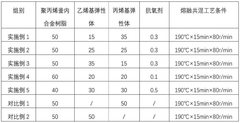
Figure PCTCN2024093959-FTAPPB-I100001 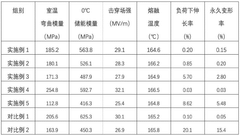
Figure PCTCN2024093959-FTAPPB-I100002
Abstract
Description
Polypropylene composite material and its preparation method and application Technical Field
[0001] The present invention relates to the technical field of polymer functional materials, in particular to a polypropylene composite material and a preparation method and application thereof. Background Art
[0002] High-voltage cables, the "arteries" and "nerves" of power transmission and distribution systems, play a vital role in the current and future global energy interconnection. During operation, high-voltage cables generate high temperatures in their cores. Furthermore, some regions are located in the frigid zone, with winter temperatures often dropping below -50°C. Therefore, improving the reliability of high-voltage cables in these extreme temperatures has become a critical technical challenge that needs to be addressed.
[0003] Polypropylene-based thermoplastic-insulated high-voltage cables offer low production energy consumption and are recyclable, making them more adaptable to future grid development requirements. Replacing traditional cross-linked polyethylene-insulated thermoplastic-insulated high-voltage cables with these cables represents the future direction of the cable industry. Therefore, to improve the performance deficiencies experienced by cables operating in extreme environments, it is necessary to improve the mechanical and electrical stability of polypropylene-based composite materials in high and low temperature environments to meet the needs of grid development.
[0004] Summary of the Invention
[0005] Based on this, it is necessary to provide a polypropylene composite material with excellent high and low temperature stability, electrical property stability and mechanical property stability, as well as a preparation method and application thereof.
[0006] In a first aspect of the present invention, a polypropylene composite material is provided, wherein the raw materials thereof comprise the following components in parts by weight:
[0007] 40 to 60 parts of polypropylene-based alloy resin in the kettle;
[0008] 15 to 35 parts of vinyl elastomer;
[0009] 15 to 35 parts of propylene-based elastomer.
[0010] In one embodiment, the vinyl elastomer comprises at least one of the following features:
[0011] (1) Density is 0.88g / cm 3 ~0.92g / cm 3 ;
[0012] (2) The melt index at 230°C and 2.16 kg is 2.2 g / 10 min to 2.8 g / 10 min.
[0013] In one embodiment, the propylene-based elastomer includes at least one of the following features:
[0014] (1) Crystallinity is 10% to 15%;
[0015] (2) Propylene content greater than 80 wt%;
[0016] (3) It has isotactic properties.
[0017] In one embodiment, the raw materials for preparing the polypropylene-based in-kettle alloy resin include a polypropylene matrix and an elastomer;
[0018] Optionally, the polypropylene matrix comprises a homopolymer polypropylene matrix;
[0019] Optionally, the elastomer includes one or more of a random copolymer of ethylene-propylene and a random copolymer of ethylene-propylene-butene.
[0020] In one embodiment, the content of the elastomer in the polypropylene-based in-kettle alloy resin is 20 wt% to 25 wt%.
[0021] In one embodiment, the raw materials of the polypropylene composite material further include 0.1 to 1.0 parts of an antioxidant by weight;
[0022] Optionally, the antioxidant includes antioxidant 1010 .
[0023] A second aspect of the present invention provides a method for preparing the polypropylene composite material as described above, comprising the following steps:
[0024] The raw materials are added and melt-blended to prepare a polypropylene-based composite material.
[0025] In one embodiment, the melt blending process satisfies at least one of the following conditions:
[0026] (1) The mixing temperature is 180℃~200℃;
[0027] (2) The mixing time is 10 to 15 minutes;
[0028] (3) The mixing speed is 60r / min~80r / min.
[0029] (4) The mixing method is internal mixing or extrusion.
[0030] In a third aspect, the present invention provides an insulating material comprising the polypropylene composite material as described above.
[0031] A fourth aspect of the present invention provides a high-voltage cable comprising the polypropylene composite material or the insulating material as described above.
[0032] The present invention has the following beneficial effects:
[0033] The present invention uses polypropylene-based kettle alloy resin as a matrix, and compound uses vinyl elastomer and propylene-based elastomer. The components are matched with each other according to specific weight parts to prepare a polypropylene-based composite material with excellent high and low temperature resistance, electrical properties and mechanical properties.
[0034] The modified polypropylene-based composite material combines the performance advantages of vinyl elastomer and propylene elastomer, while taking into account the mechanical toughness, electrical properties and heat resistance of the polypropylene matrix: the vinyl elastomer has high toughness and low modulus in low-temperature environments, and can provide an octene flexible segment, thereby improving the mechanical toughness of the polypropylene matrix while ensuring that the mechanical toughness is maintained in low-temperature environments; the propylene elastomer has isotactic characteristics, contains 10-15% crystallinity, has good interfacial compatibility with the polypropylene matrix, can effectively balance the mechanical toughness and electrical properties of polypropylene insulation, and the high-temperature resistant crystal structure can maintain the high-temperature resistance of the polypropylene composite material to a certain extent.
[0035] In summary, the present invention utilizes a multi-component elastomer having excellent compatibility with the polypropylene matrix as a modified raw material to balance the mechanical toughness and electrical properties of the polypropylene composite material. As a result, the prepared polypropylene composite material has good high and low temperature resistance while also having excellent mechanical and electrical properties. This enhances the adaptability of the cable insulation layer under harsh conditions, ensures the stability of the polypropylene insulation structure, and has good application prospects in the preparation of high-voltage cables. DETAILED DESCRIPTION
[0036] The polypropylene composite material of the present invention, its preparation method, and its application are further described in detail below with reference to specific examples. The present invention can be implemented in many different forms and is not limited to the embodiments described herein. Rather, the purpose of providing these embodiments is to provide a more thorough and comprehensive understanding of the present disclosure.
[0037] Unless otherwise defined, all technical and scientific terms used herein have the same meaning as those commonly understood by those skilled in the art of the present invention. The terms used in this specification of the present invention are only for the purpose of describing specific embodiments and are not intended to limit the present invention.
[0038] Unless otherwise specified or incompatible herewith, the terms and phrases used herein shall have the following meanings:
[0039] As used herein, "one or more" refers to any one, any two, or any two or more of the listed items.
[0040] Herein, the optional scope of "and / or", "or / and", and "and / or" includes any one of two or more relevant listed items, and also includes any and all combinations of the relevant listed items, and the said any and all combinations include any two relevant listed items, any more relevant listed items, or a combination of all relevant listed items.
[0041] Herein, “further”, “further”, “particularly”, etc. are used for descriptive purposes to indicate differences in content, but should not be understood as limiting the scope of protection of the present invention.
[0042] Herein, “first aspect”, “second aspect”, “third aspect”, etc. are used for descriptive purposes only and cannot be understood as indicating or implying relative importance or quantity, nor can they be understood as implicitly indicating the importance or quantity of the indicated technical features. In addition, “first”, “second”, “third”, etc. only serve the purpose of non-exhaustive enumeration and description, and should be understood as not constituting a closed limitation on quantity. Thus, the features defined as “first” or “second” may explicitly or implicitly include at least one of such features. In the description of the invention, the meaning of “multiple” is at least two, such as two, three, etc., unless otherwise clearly and specifically defined. In the description of the present invention, the meaning of “several” is at least one, such as one, two, etc., unless otherwise clearly and specifically defined.
[0043] In the present invention, when referring to numerical ranges, unless otherwise specified, the numerical ranges are considered continuous and include the minimum and maximum values of the range, as well as every value between such minimum and maximum values. Furthermore, when a range refers to an integer, every integer between the minimum and maximum values of the range is included. In addition, when multiple ranges are provided to describe a feature or characteristic, the ranges can be combined. In other words, unless otherwise specified, all ranges disclosed herein should be understood to include any and all subranges subsumed therein.
[0044] Unless otherwise specified, the percentage contents mentioned in the present invention refer to mass percentage for solid-liquid mixture and solid-solid mixture, and refer to volume percentage for liquid-liquid mixture.
[0045] The percentage concentrations mentioned in the present invention, unless otherwise specified, refer to the final concentration, which refers to the percentage of the added component in the system after the addition of the component.
[0046] The temperature parameters in the present invention, unless otherwise specified, allow both constant temperature treatment and treatment within a certain temperature range. The constant temperature treatment allows the temperature to fluctuate within the accuracy range of instrument control. Fluctuations within the ranges of ±5°C, ±2°C, ±1°C, ±0.5°C, ±0.4°C, ±0.3°C, ±0.2°C, and ±0.1°C are permitted. Normal temperature in the present invention refers to no temperature control operation, generally 4°C to 35°C, preferably 20±5°C.
[0047] In the present invention, the technical features described in an open manner include closed technical solutions composed of the listed features, and also include open technical solutions containing the listed features.
[0048] Currently, the development of polypropylene cables is still in its infancy. The performance of polypropylene insulation is being improved and enhanced primarily through methods such as blending, copolymerization, grafting, nano-modification, and crystal form manipulation. Blending, a physical method for uniformly mixing several materials to improve material performance, can enhance the physical and mechanical properties and processing characteristics of polymer materials, reduce costs, and expand their application. Blending is a key approach to polymer modification and the production of high-performance new materials.
[0049] Melt blending, also known as melt mixing, involves mixing the desired polymer components above their flow temperatures in a mixing mill to create a uniform polymer melt, followed by cooling and pelletizing. Melt blending offers the advantage of not requiring the same stringent particle size and uniformity as dry powder blending, simplifying raw material preparation. In the molten state, the interdiffusion reinforcement between dissimilar polymer chains, combined with the strong shear and stretching effects of the mixing mill, results in significantly better mixing than dry powder blending.
[0050] Polypropylene in-line alloy resin is produced directly through a multi-stage reaction in a reactor to form a polypropylene heterogeneous blend. Propylene is first polymerized in the first-stage reactor to produce homopolypropylene. The homopolypropylene is then transferred to the next-stage reactor, where ethylene and propylene monomers are introduced simultaneously for copolymerization, producing an ethylene-propylene random copolymer within the homopolypropylene. Because the copolymer has a low glass transition temperature, it acts as a rubber phase dispersed within the polypropylene matrix, imparting excellent low-temperature properties. Polyolefin elastomers, on the other hand, lack unsaturated double bonds in their molecular structure, exhibit a narrow molecular weight distribution, and possess uniformly distributed short chain branches. Consequently, they possess excellent physical and mechanical properties, including high elasticity, strength, and elongation, as well as exceptional low-temperature resistance.
[0051] During the experiment, the technical personnel of the present application unexpectedly discovered that by coupling the performance advantages of polyolefin elastomers with different chemical structures, that is, utilizing the high toughness and low modulus of vinyl elastomers in low-temperature environments and melt-blending them with propylene-based elastomers that are resistant to high-temperature deformation, a modified polypropylene-based composite material can be prepared. This can solve the problem of the difficulty in balancing the mechanical properties of polypropylene insulation materials in high and low-temperature environments, thereby preparing a polypropylene-based composite material with excellent electrical and mechanical properties.
[0052] In a first aspect of the present invention, a polypropylene composite material is provided, wherein the raw materials thereof comprise the following components in parts by weight:
[0053] 40 to 60 parts of polypropylene-based alloy resin in the kettle;
[0054] 15 to 35 parts of vinyl elastomer;
[0055] 15 to 35 parts of propylene-based elastomer.
[0056] It is understood that the amount of the polypropylene-based alloy resin in the kettle includes, but is not limited to, 40 parts, 41 parts, 42 parts, 43 parts, 44 parts, 45 parts, 46 parts, 47 parts, 48 parts, 49 parts, 50 parts, 51 parts, 52 parts, 53 parts, 53 parts, 55 parts, 56 parts, 57 parts, 58 parts, 59 parts, and 60 parts. The amount of the vinyl elastomer includes, but is not limited to, 15 parts, 16 parts, 17 parts, 18 parts, 19 parts, 20 parts, 21 parts, 22 parts, 23 parts, 24 parts, 25 parts, 26 parts, 27 parts, 28 parts, 29 parts, 30 parts, 31 parts, 32 parts, 33 parts, 34 parts, and 35 parts. The number of parts of the propylene-based elastomer includes but is not limited to: 15 parts, 16 parts, 17 parts, 18 parts, 19 parts, 20 parts, 21 parts, 22 parts, 23 parts, 24 parts, 25 parts, 26 parts, 27 parts, 28 parts, 29 parts, 30 parts, 31 parts, 32 parts, 33 parts, 34 parts and 35 parts.
[0057] This application uses the alloy resin in the polypropylene autoclave as the matrix, and compound uses vinyl elastomer and propylene-based elastomer to fully combine the performance advantages of the two. Among them, the vinyl elastomer provides octene flexible segments, which improves the mechanical toughness of the polypropylene matrix while ensuring that the mechanical toughness is maintained in a low-temperature environment. The propylene-based elastomer has isotactic characteristics, contains 10-15% crystallinity, has good interfacial compatibility with the polypropylene matrix, and can effectively balance the mechanical toughness and electrical properties of polypropylene insulation. The high-temperature resistant crystal structure can maintain the high-temperature resistance of polypropylene insulation to a certain extent. The present invention uses a multi-component elastomer as a modified raw material, has excellent compatibility with the polypropylene chain segment, balances the mechanical toughness and electrical properties of polypropylene insulation, has good resistance to high and low temperatures, enhances the adaptability of the cable insulation layer under harsh conditions, and ensures the stability of the polypropylene insulation structure.
[0058] In one specific example, the density of the vinyl elastomer is 0.88 g / cm 3 ~0.92g / cm 3 It is understood that the density of the vinyl elastomer includes but is not limited to: 0.88 g / cm 3 , 0.89g / cm 3 , 0.90g / cm 3 , 0.91g / cm 3 , 0.92g / cm 3 .
[0059] In one specific example, the melt index of the vinyl elastomer at 230° C. and 2.16 kg is 2.2 g / 10 min to 2.8 g / 10 min. It is understood that the melt index of the vinyl elastomer at 230° C. and 2.16 kg includes, but is not limited to, 2.2 g / 10 min, 2.3 g / 10 min, 2.4 g / 10 min, 2.5 g / 10 min, 2.6 g / 10 min, 2.7 g / 10 min, and 2.8 g / 10 min.
[0060] It can be understood that the vinyl elastomer is a thermoplastic elastomer produced by copolymerization of ethylene and octene catalyzed by metallocene.
[0061] In one specific example, the crystallinity of the propylene-based elastomer is 10% to 15%. In one specific example, the crystallinity of the propylene-based elastomer includes but is not limited to: 10%, 11%, 12%, 13%, 14%, and 15%.
[0062] In one specific example, the propylene content of the propylene-based elastomer is greater than 80 wt %.
[0063] In one specific example, the propylene-based elastomer has isotactic properties.
[0064] Propylene-based elastomers, produced using a combination of metallocene catalysis and solution polymerization, are unique propylene-ethylene semi-crystalline copolymers with exceptionally high elasticity, flexibility, and low-temperature impact resistance. This application utilizes a unique propylene-ethylene elastomer that retains some of the crystalline properties of polypropylene despite a high ethylene content.
[0065] In one specific example, the raw materials for preparing the polypropylene-based in-kettle alloy resin include a polypropylene matrix and an elastomer.
[0066] In one specific example, the polypropylene matrix includes a homopolymer polypropylene matrix.
[0067] In one specific example, the elastomer includes one or more of a random copolymer of ethylene-propylene and a random copolymer of ethylene-propylene-butene.
[0068] In one specific example, the content of the elastomer in the polypropylene-based in-kettle alloy resin is 20 wt% to 25 wt%.
[0069] In one specific example, the raw materials for preparing the polypropylene-based in-kettle alloy resin include a homopolymer polypropylene matrix and an ethylene-propylene random copolymer.
[0070] In one specific example, the content of the ethylene-propylene random copolymer in the polypropylene-based in-kettle alloy resin is 20 wt % to 25 wt %.
[0071] In one specific example, the raw materials of the polypropylene composite material further include 0.1 to 1.0 parts of an antioxidant by weight.
[0072] In one specific example, the antioxidant includes antioxidant 1010 .
[0073] A second aspect of the present invention provides a method for preparing the polypropylene composite material as described above, comprising the following steps:
[0074] The raw materials are added and melt-blended to prepare a polypropylene-based composite material.
[0075] In one specific example, in the melt blending process, the mixing temperature is 180° C. to 200° C. It is understood that the mixing temperature includes but is not limited to: 180° C., 181° C., 182° C., 183° C., 184° C., 185° C., 186° C., 187° C., 188° C., 189° C., 190° C., 191° C., 192° C., 193° C., 194° C., 195° C., 196° C., 197° C., 198° C., 199° C. and 200° C.
[0076] In one specific example, in the melt blending process, the mixing time is 10 min to 15 min. It is understandable that the mixing time includes but is not limited to: 10 min, 11 min, 12 min, 13 min, 14 min, and 15 min.
[0077] In one specific example, in the melt blending process, the mixing speed is 60 r / min to 80 r / min. It can be understood that the mixing speed includes but is not limited to: 60 r / min, 61 r / min, 62 r / min, 63 r / min, 64 r / min, 65 r / min, 66 r / min, 67 r / min, 68 r / min, 69 r / min, 70 r / min, 71 r / min, 72 r / min, 73 r / min, 74 r / min, 75 r / min, 76 r / min, 77 r / min, 78 r / min, 79 r / min, and 80 r / min.
[0078] In one specific example, in the melt blending process, the mixing method is internal mixing or extrusion.
[0079] In a third aspect, the present invention provides an insulating material comprising the polypropylene composite material as described above.
[0080] A fourth aspect of the present invention provides a high-voltage cable comprising the polypropylene composite material or the insulating material as described above.
[0081] The present invention couples in-reactor alloy modification and physical blending modification technologies, adopts olefin elastomer as the modification material, and introduces different components of ethylene-based and propylene-based elastomers to solve the problem of polypropylene insulation materials having difficulty in achieving both high and low temperature mechanical properties. The prepared modified polypropylene-based composite material has excellent high and low temperature stability, electrical properties, and mechanical properties, while ensuring the stability of the insulation structure. The material is suitable for use in high-voltage cables for preparing cable composite materials and other related products.
[0082] The present invention will be further described in detail below with reference to specific examples. For experimental parameters not specified in the following specific examples, reference should be made to the guidance provided in this application document. Reference may also be made to experimental manuals in the art or other experimental methods known in the art, or to manufacturer-recommended experimental conditions. It will be appreciated that the instruments and raw materials used in the following examples are relatively specific and are not limited thereto in other specific examples.
[0083] The alloy resin in the polypropylene kettle used in Examples 1 to 5 and Comparative Examples 1 to 2 is an elastomer introduced in situ into the homopolypropylene matrix in the polymerization reactor, wherein the elastomer is a random copolymer of ethylene and propylene with a content of 25wt%; the antioxidant used is antioxidant 100.
[0084] Example 1
[0085] Weigh 50 parts of polypropylene alloy resin in the kettle, 15 parts of vinyl elastomer (density 0.90 g / cm 3 , melt index 2.5 g / 10 min), 35 parts of a propylene-based elastomer (having isotactic properties, a propylene content of 89 wt%, and a crystallinity of 12%), and 0.3 parts of an antioxidant were melt-blended in an internal mixer to obtain a polypropylene-based composite material. The melt-blending process was: a temperature of 190°C, a time of 15 minutes, and a rotation speed of 80 r / min.
[0086] Example 2
[0087] Weigh 50 parts of polypropylene alloy resin in the kettle, 25 parts of vinyl elastomer (density 0.90 g / cm 3 , melt index 2.5 g / 10 min), 25 parts of a propylene-based elastomer (having isotactic properties, a propylene content of 89 wt%, and a crystallinity of 12%), and 0.3 parts of an antioxidant were melt-blended in an internal mixer to obtain a polypropylene-based composite material. The melt-blending process was: a temperature of 190°C, a time of 15 minutes, and a rotation speed of 80 r / min.
[0088] Example 3
[0089] Weigh 50 parts of polypropylene alloy resin in the kettle, 35 parts of vinyl elastomer (density 0.90 g / cm 3 , melt index 2.5 g / 10 min), 15 parts of a propylene-based elastomer (having isotactic properties, a propylene content of 89 wt%, and a crystallinity of 12%), and 0.3 parts of an antioxidant were melt-blended in an internal mixer to obtain a polypropylene-based composite material. The melt-blending process was: a temperature of 190°C, a time of 15 minutes, and a rotation speed of 80 r / min.
[0090] Example 4
[0091] Weigh 60 parts of polypropylene alloy resin in the kettle, 20 parts of vinyl elastomer (density 0.88g / cm 3 , melt index 2.2 g / 10 min), 20 parts of a propylene-based elastomer (having isotactic properties, a propylene content of 89 wt%, and a crystallinity of 12%), and 0.1 parts of an antioxidant were melt-blended in an internal mixer to obtain a polypropylene-based composite material. The melt-blending process was: a temperature of 190°C, a time of 15 minutes, and a rotation speed of 80 r / min.
[0092] Example 5
[0093] Weigh 40 parts of polypropylene alloy resin in the kettle, 30 parts of vinyl elastomer (density 0.92g / cm 3 , melt index 2.8 g / 10 min), 30 parts of a propylene-based elastomer (having isotactic properties, a propylene content of 89 wt%, and a crystallinity of 12%), and 0.5 parts of an antioxidant were melt-blended in an internal mixer to obtain a polypropylene-based composite material. The melt-blending process was: a temperature of 190°C, a time of 15 minutes, and a rotation speed of 80 r / min.
[0094] Comparative Example 1
[0095] 50 parts of polypropylene alloy resin in a polypropylene autoclave, 50 parts of a propylene-based elastomer (having isotactic properties, a propylene content of 89 wt%, and a crystallinity of 12%), and 0.5 parts of an antioxidant were weighed as raw materials and melt-blended in an internal mixer to obtain a polypropylene-based composite material. The melt-blending process was as follows: a temperature of 190°C, a time of 15 minutes, and a rotation speed of 80 rpm.
[0096] Comparative Example 2
[0097] Weigh 50 parts of polypropylene alloy resin in the kettle, 50 parts of vinyl elastomer (density 0.90g / cm 3 The raw materials were melt blended in an internal mixer at 230°C, 2.16 kg, with a melt index of 2.5 g / 10 min, and 0.5 parts of an antioxidant to obtain a polypropylene-based composite material. The melt blending process was as follows: a temperature of 190°C, a time of 15 minutes, and a rotation speed of 80 rpm.
[0098] The raw materials (in parts by weight) and melt blending process parameters in the preparation methods of Examples 1 to 5 and Comparative Examples 1 to 2 are listed in Table 1 below:
[0099] Table 1
[0100] The polypropylene composite materials prepared in Examples 1 to 5 and Comparative Examples 1 to 2 were characterized and tested for room temperature flexural modulus, electrical properties, crystal structure, heat resistance, and temperature dependence of storage modulus. The test results are shown in Table 2 below.
[0101] The test method or standard is:
[0102] (1) Flexural modulus: tested based on GB / T9341-2008;
[0103] (2) Electrical performance: The breakdown field strength is tested based on GB / T 1408.1-2016;
[0104] (3) Crystal structure: Using a differential scanning calorimeter (TA Q250), approximately 5 mg of sample was placed in a sealed crucible and heated from room temperature to 200 °C at a heating rate of 10 °C / min under a nitrogen atmosphere. The change in heat flow signal with temperature was recorded.
[0105] (4) Heat resistance test: To evaluate whether the insulating material can maintain the necessary mechanical strength under the expected overload temperature, prepare the specimen according to the tensile performance test method. Use the standard test method of the thermal extension test. Hang one end of the specimen in an oven set to 150°C. Place a weight on the other end that applies a tensile force of 0.2 MPa to the specimen cross section. After a set time of 15 minutes, measure the elongation of the specimen, which is defined as the elongation under load. The elongation after cooling is defined as the permanent set rate.
[0106] (5) Dependence of storage modulus on temperature: To evaluate the low-temperature resistance of the polypropylene composite materials, the storage modulus of the polypropylene composite samples of Examples 1-5 and Comparative Examples 1-2 at 0°C was characterized using a dynamic mechanical analyzer (TQ850) in tensile mode. The oscillation mode was used: a frequency of 1 Hz and an amplitude of 15 μm.
[0107] Table 2
[0108] As can be seen from Table 2 above, the polypropylene composite material prepared in Comparative Example 1 exhibits a low room temperature storage modulus, good heat resistance, and suitable breakdown field strength. However, the storage modulus at low temperature is as high as 625.3 MPa, which poses certain risks when used in cold areas. The polypropylene composite material prepared in Comparative Example 2 exhibits relatively excellent mechanical toughness. Even under low temperature conditions, the storage modulus is still low. However, the deformation of the composite material under load is large, the heat resistance is poor, and it is difficult to meet the requirements of use.
[0109] This application uses an alloy resin in a polypropylene kettle to couple the performance advantages of vinyl and propylene-based elastomers, taking into account the mechanical toughness, electrical properties, and heat resistance of polypropylene insulation. The polypropylene composite materials obtained in Examples 1 to 5 have a high melting temperature and a relatively stable polypropylene crystal skeleton, ensuring that the material has good dimensional stability at high temperatures and exhibits good heat resistance. The propylene-based elastomer has good interfacial compatibility with the polypropylene matrix, which improves toughness while ensuring that the material has a high breakdown field strength and electrical stability. In addition, the polypropylene insulation contains multiple elastomers, taking into account their advantages, exhibiting a suitable room temperature flexural modulus and a good low-temperature storage modulus, ensuring that the insulation material has a wider operating temperature range and good environmental adaptability.
[0110] In summary, the present invention utilizes a multi-component elastomer having excellent compatibility with the polypropylene chain segment as a modified raw material to balance the mechanical toughness and electrical properties of the polypropylene composite material. As a result, the prepared polypropylene composite material has good high and low temperature resistance while also having excellent mechanical and electrical properties. This enhances the adaptability of the cable insulation layer under harsh conditions and ensures the stability of the polypropylene insulation structure. This further demonstrates that the polypropylene composite material provided by the present invention has good application prospects in the preparation of high-voltage cable-related products.
[0111] The technical features of the above-mentioned embodiments can be combined arbitrarily. To make the description concise, not all possible combinations of the technical features in the above-mentioned embodiments are described. However, as long as there is no contradiction in the combination of these technical features, they should be considered to be within the scope of this specification.
[0112] The above-described embodiments merely illustrate several implementations of the present invention, and while their descriptions are relatively specific and detailed, they should not be construed as limiting the scope of the patent. It should be noted that a person skilled in the art would be able to make numerous variations and improvements without departing from the spirit of the present invention, all of which fall within the scope of protection of the present invention. Therefore, the scope of protection of the patent for this invention shall be determined by the appended claims.
Claims
1. A polypropylene composite material, characterized in that: The raw materials include the following components by weight: 40 to 60 parts of polypropylene-based alloy resin in the kettle; 15 to 35 parts of vinyl elastomer; 15 to 35 parts of propylene-based elastomer.
2. The polypropylene composite material according to claim 1, characterized in that: The vinyl elastomer includes at least one of the following features: (1) Density: 0.88 g / cm 3 ~0.92g / cm 3 ; (2) The melt index at 230°C and 2.16 kg is 2.2 g / 10 min to 2.8 g / 10 min.
3. The polypropylene composite material according to claim 1, characterized in that: The propylene-based elastomer includes at least one of the following features: (1) Crystallinity is 10% to 15%; (2) Propylene content greater than 80 wt%; (3) It has isotactic properties.
4. The polypropylene composite material according to claim 1, characterized in that: The raw materials for preparing the polypropylene-based in-kettle alloy resin include a polypropylene matrix and an elastomer; Optionally, the polypropylene matrix comprises a homopolymer polypropylene matrix; Optionally, the elastomer includes one or more of a random copolymer of ethylene-propylene and a random copolymer of ethylene-propylene-butene.
5. The polypropylene composite material according to claim 4, characterized in that: In the polypropylene-based in-kettle alloy resin, the content of the elastomer is 20wt% to 25wt%.
6. The polypropylene composite material according to any one of claims 1 to 5, characterized in that: The raw materials also include 0.1 to 1.0 parts of antioxidants by weight; Optionally, the antioxidant includes antioxidant 1010 .
7. A method for preparing a polypropylene composite material according to any one of claims 1 to 5, characterized in that: The steps include: The raw materials are added and melt-blended to prepare a polypropylene-based composite material.
8. The method for preparing the polypropylene composite material according to claim 7, characterized in that: The melt blending process satisfies at least one of the following conditions: (1) The mixing temperature is 180°C to 200°C; (2) The mixing time is 10 to 15 minutes; (3) The mixing speed is 60 r / min to 80 r / min; (4) The mixing method is internal mixing or extrusion.
9. An insulating material, characterized in that: The polypropylene composite material comprises the polypropylene composite material according to any one of claims 1 to 6.
10. A high voltage cable, characterized in that: The invention comprises the polypropylene composite material according to any one of claims 1 to 6 or the insulating material according to claim 9.
Citation Information
Patent Citations
Anti-scratch and low-temperature-resistant LSOH (low smoke zero halogen) flame-retardant cable material and preparation method thereof
CN103467806A
Polymer blend comprising propylene-based elastomer and random copolymer polypropylene
CN104583303A
Flame-retardant antistatic polypropylene composition, flame-retardant antistatic polypropylene material and preparation method thereof
CN106995576A
Adhesive compositions, articles including the adhesive compositions, and methods thereof
CN109563321A
Polyolefin resin composition for electric wire insulation
CN111630105A
Cited By
Polypropylene composition as well as preparation method and application thereof
CN120463866A