
Method of treatment ammonia contaminated solid sorbent
The method of treating ammonia-contaminated solid amine-functionalized sorbents by washing and drying significantly reduces ammonia levels, enhancing CO2 capture efficiency and compliance with certification standards while minimizing environmental and health risks.
Patent Information
- Application Number
- PCT/NL2024/050666
- Authority / Receiving Office
- WO · WO
- Patent Type
- Applications
- Current Assignee / Owner
- Priority Date
- 2023-12-22
- Filing Date
- 2024-12-12
- Publication Date
- 2025-06-26
AI Technical Summary
Amine-functionalized solid sorbents used in carbon dioxide direct air capture (DAC) often contain residual ammonia, which interferes with CO2 capture efficiency, generates unwanted ammonia emissions during desorption, and poses health and environmental risks.
A method involving contacting the ammonia-contaminated solid amine-functionalized sorbent with an aqueous medium while stirring, followed by drying, to reduce ammonia concentrations to less than 5 ppm, thereby enhancing CO2 adsorption capacity and minimizing ammonia emissions.
The method effectively reduces ammonia contamination in the sorbent, improving its CO2 capture capacity and ensuring compliance with stringent CO2 certification standards, while also minimizing environmental and health risks associated with ammonia emissions.
Smart Images
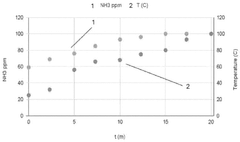
Figure 00000035_0000 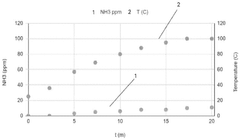
Figure 00000036_0000 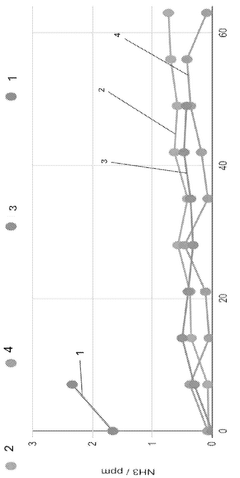
Figure 00000037_0000
Abstract
Description
METHOD OF TREATMENT AMMONIA CONTAMINATED SOLID SORBENT[1] The present invention relates to a method of treatment of an ammonia-contaminated solid amine-functionalized sorbent used in carbon dioxide direct air capture (DAC). This method significantly enhances the sorbent's capacity for CO2adsorption, not only improving its efficiency in capturing carbon dioxide but also effectively mitigating the release of ammonia during the CO2desorption phase.BACKGROUND[2] Direct Air Capture (DAC) technology captures CO2directly from the atmosphere by using a sorbent and is a cost-effective technology for capturing CO2at any location, unlike traditional carbon dioxide capture technologies that target emission sources like power plants or industrial facilities. DAC systems can vary in their design and operation, but generally, they use chemical processes to adsorb and then release CO2. Sorbents typically capture CO2at ambient temperatures and are regenerated by releasing the captured CO2at elevated temperatures or under reduced pressure.[3] Direct Air Capture (DAC) systems typically employ sorbents in either liquid or solid form to capture CO2from the atmosphere. Solid sorbent-based technology offers a versatile solution for carbon dioxide direct air capture.[4] Solid sorbents utilized in carbon dioxide capture encompass a diverse array of porous, solid-phase materials such as mesoporous silicas, zeolites, and metal-organic frameworks.[5] Porous sorbents are characterized by large surface areas, but only weak adsorption sites, thereby lacking sufficient capacity for CO2under ultra-low CO2concentrations. To enhance the sorption potential for low-pressure CO2, amine functional groups have been incorporated into highly porous sorbent materials. Sorbents featuring primary amino groups are particularly potent for efficient CO2capture.[6] In particular, amine functionalized solid sorbents are used for CO2direct air capture, due to their affinity to CO2, fast kinetics, high selectivity and long-term stability under ultra-low CO2concentration and humid conditions.[7] Amine-functionalized solid sorbents for CO2capture may be based on a support, often having a large surface area to which functional groups are attached by techniques such as amine based functionalization or amination. The most important property of a sorbent is its CO2adsorption capacity. The quantity of amine groups affects the capacity and reusability of the solid sorbent. Having a sufficient number of amine groups ensures that the sorbent maintains its functionality during repeated adsorption-desorption cycles, enabling successful regeneration and reusability. Higher quantities of amine groups on the solid sorbent surface provide more active sites available for interactions with the CO2molecules. As a result, the CO2sorbent's adsorption capacity increases.[8] The amine-functionalized sorbents for CO2capture often exhibit high capture capacity, yet they may also have shortcomings that pose challenges, such as lack of stability due to leaching of amines over adsorption / desorption cycles and limited transport of CO2to active support sites due to diffusion hindrance pose challenges.[9] The amine-functionalized sorbents encompass a diverse range of primary, secondary, and tertiary amines that can be affixed to various support materials. Among these, primary and secondary amines are the most commonly employed. When subjected to carbon dioxide (CO2), primary and secondary amines undergo a reaction, resulting in the formation of compounds known as carbamates and / or carbonates.
[0010] Solid amine-based sorbent materials for capturing carbon dioxide (CO2) are usually ordered from commercial suppliers. At times, the amine -based sorbent materials provided by the suppliers can comprise elevated levels of ammonia upon delivery, with ammonia concentrations exceeding 10 ppm, or exceeding 50 ppm, or even exceeding 100 ppm (>100 ppm), sometimes reaching 150 ppm, or 200 ppm or more (as determined by the ASTM D1293).
[0011] Ammonia can be a byproduct or impurity in the manufacturing or storage of amine-based materials. If ammonium-based compounds are part of the formulation, traces of ammonia may persist due to incomplete reactions.
[0012] The presence of residual ammonia in these sorbents can pose challenges duringtheir further use. For example, residual ammonia in sorbents can interfere with the efficiency of the CO2capture process. Additionally, during CO2desorption, the sorbent is typically heated to elevated temperatures. This elevated temperature facilitates the release of the captured CO2molecules from the amine groups on the sorbent surface. In addition, along with release of CO2gas, this process often leads to the generation of ammonia as an off gas. This introduces an unwanted byproduct or contaminant, which may render the captured CO2unsuitable for various applications.For example, it might not meet food-grade quality standards (Food Grade CO2certification) or the beverage grade CO2standards or possess the required level of purity for other intended uses.
[0013] Even at low concentrations, gases like ammonia can present environmental and industrial challenges. In higher concentrations, ammonia is considered toxic, acting as a respiratory irritant and causing discomfort to the eyes, nose, throat, and lungs. Prolonged or high-level exposure to ammonia can lead to more severe health effects, including respiratory distress, coughing, chest pain, and, in extreme cases, damage to the respiratory system.
[0014] This can lead to air pollution and may pose health risks to workers or individuals in the vicinity. Further, the presence of residual ammonia could pose health and safety risks to individuals handling orworkingwith the sorbent.
[0015] Furthermore, there are also regulatory limits on the allowable levels of ammonia emissions, such as odour emissions.
[0016] Therefore, given the potential toxicity of ammonia, it is crucial to ensure that any residual ammonia in the final product is kept at safe and acceptable levels.
[0017] Amine functionalized sorbents from the supplier may have elevated levels of ammonia due to the phthalimide synthesis process. This occurs because trace amounts of ammonia can remain bound to the sorbent material even after the amine functionalization process.
[0018] For example, document US 2006 / 0173083, refers to a process for producing monodisperse, macroporous ion exchangers having weakly basic primary amine groups by what is termed the phthalimide process, comprising: a) Initiating a reaction between monomer droplets containing at least one monovinylaromatic compound, at least one polyvinylaromatic compound, along with a porogen and an initiator (or combination of initiators). This leads to the formation of a monodisperse crosslinked bead polymer, b) Amidomethylating the resulting monodisperse crosslinked bead polymer with phthalimide derivatives, c) Subsequently, subjecting the amidomethylated bead polymer to a reaction that results in the formation of a basic ion exchange resin, characterized by aminomethyl groups in the form of primary amine groups.
[0019] Another example is document US2002193454, herein incorporated by reference, describes a process for preparing weak-base anion exchangers containing the primary amino groups from the crosslinked vinylaromatic polymers, such as styrene, vinyltoluene, ethylstyrene, [alpha]- methylstyrene, chlorostyrene, o-chloromethyl-styrene, m-chloromethylstyrene, p- chloromethylstyrene, vinylpyridine, and vinyinaphthalene. In this process, the crosslinkedvinylaromatic polymers undergo a reaction with reactive phthalimide derivatives, such as N- chloromethylphthalimide. Subsequently, the resulting phthalimido compounds are hydrolyzed to yield the corresponding primary amines. In this process it is possible for ammonia to form as a byproduct. This can occur during, for example the aminomethylation reaction, where the reactive phthalimide derivatives, such as N-chloromethylphthalimide, interact with the crosslinked vinylaromatic polymers. The resulting phthalimido compounds may undergo hydrolysis, which could release ammonia along with the formation of the corresponding primary amines.
[0020] This aspect of the process has direct implications for Direct Air Capture (DAC) systems. While the resulting weak-base anion exchange resin sorbents are efficient in capturing CO2, the potential generation of residual ammonia poses a challenge.
[0021] The state-of-the-art approach of addressing the challenge posed by residual ammonia in amine-functionalized sorbents is to incorporate additional filters, ammonia traps, or specialized sorbents to mitigate ammonia emissions. However, this introduces complexity, as using filters to capture ammonia can lead to higher pressure drops. Consequently, more powerful fans would be necessary, resulting in increased overall costs for the DAC system.
[0022] Another state-of -the art method involves passing steam through the sorbent, which can selectively remove ammonia due to its higher volatility compared to CO2. The desorbed ammonia can then be separated from the steam. In this case, the condensation and collection of stripped ammonia would need to be managed, which would require more complex equipment.
[0023] Thus, there is a need to find a way to prevent and mitigate the formation of ammonia byproducts and emissions during the CO2desorption phase in the direct air capture process that is simple and cost-effective method to address this challenge.BRIEF SUMMARY
[0024] The aim of the present invention is to provide a method of treatment, more specifically method for purification, of amine-functionalized solid sorbents for CO2capture that may be contaminated with ammonia (NH3) upon delivery from the supplier, potentially due to residual byproducts from production, exposure during handling, or adsorption during storage. The method for purification of the present invention aims to reduce the concentration of ammonia contaminants in the sorbent, thereby preventing ammonia emissions during the desorption of CO2at elevated temperatures and increasing the sorbent's capacity for CO2capture, in order to preventammonia emissions during the desorption of CO2from the sorbent at elevated temperature and also to increase the capacity of the sorbent.
[0025] According to an aspect of the present invention for which protection is sought, there is provided a method for purification of an ammonia-contaminated solid amine-functionalized sorbent for capturing carbon dioxide through direct air capture, wherein the ammonia- contaminated solid amine-functionalized sorbent comprises an ammonia contaminant at a concentration equal to or exceeding 10 ppm, the method comprising: at least one step of contacting an ammonia-contaminated solid amine-functionalized sorbent with an aqueous medium while stirring to obtain a washed solid amine-functionalized sorbent,
[0026] subjecting the washed solid amine-functionalized sorbent to drying and obtaining an essentially ammonia-free solid amine-functionalized sorbent with an ammonia concentration of less than 5 ppm, more preferably less than 2.5 ppm. The concentration of the ammonia contaminant is measured by an electrochemical method, such pH measurement as described below. Further, in an embodiment, the solid ammonia-contaminated amine-functionalized sorbent can be obtained by phthalimide synthesis.
[0027] Further, the stirring while contactingthe ammonia-contaminated solid amine- functionalized sorbent with the aqueous medium can be a continuously stirring at low revolutions per minute (RPM) ranging of from 5 RPM to 200 RPM, preferably from 20 to 150 RPM, more preferably form 20 RPM to 100 RPM, even more preferably, 40 RPM to 60 RPM.
[0028] Herein, "ammonia contaminant" refers to ammonia (NH3) molecules or compounds that release NH3, which are present within amine-based sorbents. These include, for example, ammonia-derived residues located within the sorbent's structure or on its surface, resulting from various production, handling, or storage processes.
[0029] In an embodiment, the ammonia-contaminated solid amine-functionalized sorbent for capturing carbon dioxide used in the method described above comprises an ammonia contaminant at a concentration equal to or exceeding 25 ppm, preferably equal to or exceeding 50 ppm, more preferably equal to or exceeding 80 ppm, even more preferably equal to or exceeding 100 ppm.
[0030] In another embodiment, the ammonia-contaminated solid amine-functionalized sorbent for capturing carbon dioxide used in the method of the present invention comprises an ammonia contaminant at a concentration equal to or exceeding 20ppm, preferably equal to or exceeding 60ppm, more preferably equal to or exceeding 70 ppm, even more preferably equal to or exceeding 90 ppm.
[0031] In an embodiment, the solid ammonia-contaminated amine-functionalized sorbent used in the method for purification described herein is obtained by phthalimide synthesis,
[0032] Accordingto a further aspect of the invention forwhich protection is sought, there is provided a method of treatment (purification) of an ammonia-contaminated solid amine- functionalized sorbent for capturing carbon dioxide through direct air capture, comprising: at least one step of contacting an ammonia-contaminated solid amine-functionalized sorbent with an aqueous medium while stirring to obtain a washed solid amine-functionalized sorbent, wherein the solid ammonia-contaminated amine-functionalized sorbent is obtained by phthalimide synthesis, subjecting the washed solid amine-functionalized sorbent to drying, and obtaining an essentially ammonia-free solid amine-functionalized sorbent with an ammonia concentration of less than 5 ppm, more preferably less than 2.5 ppm at room temperature, as determined by an electrochemical method using pH measurement. Further, the ammonia-contaminated solid amine-functionalized sorbent may comprise an ammonia contaminant at a concentration equalto or exceeding 10 ppm, (measured in the solid amine-functionalized sorbent’s headspace with electrochemical gas analyser PDM+)For example, the ammonia-contaminated solid amine- functionalized sorbent may comprise an ammonia contaminant at a concentration equalto or exceeding 20 ppm, or exceeding 30 ppm, or exceeding 40 ppm, or exceeding 50 ppm, or exceeding 60 ppm, or exceeding 70 ppm, or exceeding 80 ppm, or exceeding 90 ppm, or exceeding 100 ppm, as measured in the solid amine-functionalized sorbent’s headspace with electrochemical gas analyser PDM+.
[0033] The present invention introduces at least one step, preferably two-step washing protocol as a treatment process for a sorbent prior to its use in CO2direct air capture.
[0034] In an embodiment, the method for purification described herein includes a step of contacting the ammonia-contaminated solid amine-functionalized sorbent with an aqueous medium, which comprises performing at least two successive washing steps. Further, at least two successive washing steps are designated as the first washing step and a second washing step, both using water as the aqueous medium.
[0035] In the method for purification described in the present invention, the aqueous medium may have a temperature below 25 °C, preferably a temperature between 5°C and 25°C.
[0036] In an embodiment, the aqueous medium has a temperature below 25 °C in both first and second washing steps, preferably a temperature between 5°C and 25°C.
[0037] In an embodiment, the first washing step is shorter than the second washing step and the ratio of the volume of water used in the first washing step to that in the second washing step is 1 :50 to 1 :1 , preferably 1 :30 to 1 :2.
[0038] In an embodiment, the first washing step is shorter than the second washing step and the ratio of the volume of water used in the first washing step to that in the second washing step ranges from 0.1 to 0.5, preferably from 0.25 to 0.33.
[0039] In an embodiment, the first washing step has a duration rangingfrom 15 min to 120 min, preferably between 15 min and 60 min, more preferably between 20 and 40 min.
[0040] In a further embodiment, the second washing step has a duration ranging from 1 hour to 48 hours, preferably from 1 hour to 24 hours.
[0041] In a further embodiment, the method for purification described herein includes a step of the drying conducted after the first, and / or second washing step. This drying can be carried out with a stream of fluid, preferably gas, having a temperature below 70 °C, preferably in the range between 20°C and 70°C, more preferably in the range between 40°C and 70°C, even more preferably in the range between 50°C and 65°C. The drying step may be carried out to minimise the formation of carbonic acid, as well as to reduce the generation of additional ammonia.
[0042] The method according to any one of the preceding claims, comprising a further step of contacting the essentially ammonia-free solid amine-functionalized sorbent with an ammonia concentration of less than 5 ppm, more preferably less than 2.5 ppm with the carbon dioxide comprising gas stream and absorbing at least a portion of said carbon dioxide from the carbon dioxide containing gas stream, desorbing the CO2from the solid amine-functionalized sorbent by heating, resulting in the release of a gas mixture, where the gas mixture comprises both CO2and trace amounts of ammonia gas below 2.5 ppm, preferably below 1 ppm, even more preferably below 0.5 ppm at a temperature of about 100°C, as determined by Ion Mobility Spectrometry.
[0043] In an embodiment, the carbon dioxide comprising gas stream is air.
[0044] The method for purification of the present invention may comprise a further step of contacting the substantially ammonia-free solid amine-functionalized sorbent, with an ammonia concentration of less than 5 ppm, more preferably less than 2.5 ppm, with the carbon dioxide comprising gas stream and adsorbing at least a portion of said carbon dioxide from the carbondioxide containing gas stream, desorbing the CO2from the solid amine-functionalized sorbent by heating, resulting in the release of a gas mixture, where the gas mixture comprises both CO2and trace amounts of ammonia gas, where the concentration of the ammonia gas in the gas mixture is below 2.5 ppm, preferably below 1 ppm, even more preferably below 0.5 ppm at a temperature of about 100°C, as determined , at a temperature of about 100°C, as determined by Ion Mobility Spectrometry, Infra-Red Spectroscopy, or colorimetric detector tubes.
[0045] According to a further aspect of the invention for which protection is sought, there is provided an essentially ammonia-free solid amine-functionalized sorbent material for CO2capture obtained by the method for purification of an ammonia-contaminated solid amine-functionalized sorbent for capturing carbon dioxide through direct air capture according to the present invention, the method comprising: providing an ammonia-contaminated phthalimide synthesis based solid amine-functionalized sorbent comprising an ammonia contaminant at a concentration equal to or exceeding 10 ppm, contactingthe ammonia-contaminated phthalimide synthesis based solid amine-functionalized sorbent with an aqueous medium, carrying out at least one washing step, preferably carrying out successively a first and second washing steps while stirring, where the duration of the second washing step is longer than the first step, drying the phthalimide based solid amine-functionalized sorbent with a stream of fluid, preferably gas, having a temperature below 70 °C to obtain an ammonia-free phthalimide based solid amine functionalized sorbent, wherein the essentially ammonia-free phthalimide synthesis based solid amine functionalized sorbent comprises less than 2.5 ppm ammonia ( as determined by electrochemical ammonia detection).
[0046] According to another aspect, the present invention relates to use of ammonia-free solid amine functionalized sorbent obtained by the method above, for adsorption and desorption of carbon dioxide from a gas stream rich in carbon dioxide through direct air capture, comprising: contacting the ammonia-free solid amine-functionalized sorbent with the carbon dioxide comprising a gas stream and adsorbing at least a portion of said carbon dioxide from the carbon dioxide containing gas stream, desorbing the CO2from the solid amine-functionalized sorbent by heating, and releasing a gas mixture, where the concentration of the ammonia gas in the gas mixture is below 2.5 ppm, as determined by Ion Mobility Spectrometry , Infra-Red Spectroscopy, colorimetric detector tubes.
[0047] In an embodiment, the carbon dioxide comprising gas stream is air.
[0048] Definitions and Terms
[0049] As used herein, the term “carbon dioxide removed directly or indirectly from the atmosphere,” and similar terms, includes carbon dioxide that is directly removed from the current atmosphere, e.g., by direct air capture (DAC).
[0050] The term “Direct Air capture” or “DAC” used herein refers to technologies that extract CO2 directly from the atmosphere. The sorbent of the present invention is adapted to capture CO2 from the air.
[0051] As used herein, the term “solid sorbent for capturing CO2”, also known as a “CO2adsorbent” or “CO2capture material", refers to a material capable of selectively capturing and retaining carbon dioxide (CO2) molecules from a gas stream. These sorbents are typically porous materials with a large surface area, which provide a high number of active sites for CO2adsorption. They can be categorized into various types, including amine-based sorbents, metal-organic frameworks (MOFs), zeolites, activated carbon, and other tailored materials. Further, solid sorbents are typically solid materials, such as powders, pellets, beads, or structured forms, as opposed to being in a liquid or gaseous state.
[0052] As used herein, the term "sorbent " refers to a material that can adhere gas molecules, ions, or other species within its structure (e.g., removal of CO2from air). The term “sorbent” is being interchangeably used with the term “sorbent material” or “adsorbent”.
[0053] The term “adsorption” used herein refers to the process by which molecules or particles from a fluid (gas or liquid) adhere or accumulate onto the surface of a solid, liquid, or even a gas. In adsorption, the adsorbate (the substance being adsorbed) adheres to the adsorbent (the material onto which adsorption occurs) due to attractive forces between them.
[0054] The terms “amine-based sorbent material “, “amine-functionalized sorbent material”, “amine-based sorbent” or “amine-functionalized sorbent” are used herein interchangeably.
[0055] In the claims, as well as in the specification above, all transitional phrases such as “comprising,” “including,” “carrying,” “having,” “containing,” “involving,” “holding,” and the like are to be understood to be open-ended, i.e., to mean including but not limited to. Only the transitional phrases “consisting of” and “consisting essentially of” shall be closed or semi-closed transitional phrases, respectively.
[0056] Thermal desorption is a process of release or removal of carbon dioxide from a solid material or sorbent that has previously adsorbed or captured CO2by heating the sorbent.
[0057] The term “reversible adsorption” refers to a process of capturing a gas or liquid onto a solid surface, and then releasing it again when desired.
[0058] A sorbent bed refers to a physical arrangement or layer of sorbent material within a system designed for adsorption processes.
[0059] The term "ammonia-contaminated" herein indicates that ammonia (NH3) is present on or within the sorbent material.
[0060] The term “washed solid amine-functionalized sorbent” refers to the ammonia- contaminated solid amine-functionalized sorbent after being subjected to a at least one washing step.
[0061] The term "washing" herein refers to the process of cleaning or purifying a substance (sorbent) by removing unwanted impurities, contaminants, or residues, achieved by treating the substance with a liquid, such as water.
[0062] As used herein, the term "phthalimide synthesis-based," implies that the amine- functionalized solid sorbent material is synthesized using a process that involves phthalimide route.
[0063] The term "room temperature" refers to a temperature of 22°C to 25°C.
[0064] Further, amine-based sorbent materials for CO2capture are a class of solid materials that contain amines as the active component for selectively capturing and removing carbon dioxide (CO2) from gas streams. These materials are designed to have a high affinity for CO2, allowing them to effectively capture and separate it from other gases, such as flue gases from power plants or ambient air in direct air capture (DAC) systems.
[0065] The term “ASTM” stands for American Society for Testing and Materials.BRIEF DESCRIPTION OF THE SEVERALVIEWS OFTHE DRAWINGS
[0066] To easily identify the discussion of any particular element or act, the most significant digit or digits in a reference number refer to the figure number in which that element is first introduced.
[0067] FIG. 1 demonstrates a correlation between temperature and the amount of released ammonia during the desorption step of CO2, particularly after the ammonia-contaminated sorbent has undergone a thorough treatment involving a single washing step with an aqueous medium.
[0068] FIG. 2 illustrates an aspect of the subject matter in accordance with one embodiment. FIG. 2 illustrates the relationship between temperature and the quantity of ammonia released during processes like the desorption of CO2, particularly after the ammonia-contaminated sorbent has undergone a thorough treatment (purification) involving two washing steps with an aqueous medium.
[0069] FIG. 3 illustrates an aspect of the subject matter in accordance with one embodiment. FIG. 3. illustrates ammonia concentration as a function of single washing, double washing with an aqueous medium, stirring and drying.DETAILED DESCRIPTIONThe present invention relates to a process for efficiently and reversibly adsorbing carbon dioxide from a CO2-rich gas stream via Direct Air Capture (DAC) and addressing the issue of ammonia emissions during desorption of the captured CO2by implementing a purification step for the ammonia-contaminated amine-functionalized solid sorbent in accordance with the method of Claim 1 , that is method for purification of an ammonia-contaminated solid amine-functionalized sorbent for capturing carbon dioxide through direct air capture, wherein the ammonia- contaminated solid amine-functionalized sorbent comprises an ammonia contaminant at a concentration equal to or exceeding 10 ppm, the method comprising: at least one step of contacting an ammonia-contaminated solid amine-functionalized sorbent with an aqueous medium while stirring to obtain a washed solid amine-functionalized sorbent, subjecting the washed solid amine-functionalized sorbent to drying, and obtaining an essentially ammonia-free solid amine-functionalized sorbent with an ammonia concentration of less than 5 ppm, more preferably less than 2.5 ppm.This method for purification of the present invention enhances the CO2 adsorption due to the improved capacity of the solid amine-functionalized sorbent and reduces the release of NH3during the CO2desorption phase, thereby improving the overall efficiency and environmental sustainability of the direct air capture process. Further, the removal of ammonia through the method for purification of the present invention prior to use in CO2 capture and release through direct air capture is essential for meeting stringent CO2certification standards, such as the <2.5 ppm threshold required for Food Grade CO2.
[0070] In an embodiment, there is provided a method of treatment (purification) of an ammonia- contaminated solid amine-functionalized sorbent for capturing carbon dioxide through direct aircapture comprising: at last one step of contacting an ammonia-contaminated solid amine- functionalized sorbent with an aqueous medium while stirringto obtain a washed solid amine- functionalized sorbent, wherein the solid ammonia-contaminated amine-functionalized sorbent is obtained by phthalimide synthesis, subjecting the washed solid amine-functionalized sorbent to drying, and obtaining an essentially ammonia-free solid amine-functionalized sorbent with an ammonia concentration of less than 5 ppm, more preferably less than 2.5 ppm, at room temperature, as determined by an electrochemical method using a pH meter (ASTM D1293). In this embodiment, the ammonia-contaminated solid amine-functionalized sorbent may comprise an ammonia contaminant at a concentration equal to or exceeding 10 ppm, equal to or exceeding 20 ppm, equal to or exceeding 25 ppm or exceeding 30 ppm, or exceeding 40 ppm, or exceeding 50 ppm, or exceeding 60 ppm, or exceeding 70 ppm, or exceeding 80 ppm, or exceeding 90 ppm, or exceeding 100 ppm, as measured in the solid amine-functionalized sorbent’s headspace with electrochemical gas analyser PDM+.
[0071] Further, in an embodiment the ammonia-contaminated solid amine-functionalized sorbent comprises an ammonia contaminant at a concentration equalto or exceeding 100 ppm, the method.
[0072] Further, the essentially ammonia-free solid amine-functionalized sorbent obtained by the method for purification described above can have ammonia concentration of less than 5 ppm, preferably less than 2.5 ppm, more preferably less than 1 ppm, and even more preferably less than 0.5 ppm.
[0073] The ammonia concentration in the ammonia-contaminated solid amine-functionalized sorbent is measured at room temperature (typically from 20°C to 25°C) and determined in accordance with ASTM D1293, and further presented in parts per million (ppm) throughout this description. In a preferred embodiment, the at least one step of contacting the ammonia- contaminated solid amine-functionalized sorbent with an aqueous medium comprises two successive washing steps, a first and a second washing steps, both using water as the aqueous medium.
[0074] In a preferred embodiment, the method of treatment of an ammonia-contaminated solid amine-functionalized sorbent for capturing carbon dioxide may involve continuously stirring at low revolutions per minute (RPM) ranging from 5 RPM to 200 RPM of the solid amine-functionalized sorbent and water mixture during both the first and second washing steps.
[0075] Thus, the present invention aims to address the challenge of minimizing the release of ammonia emissions during the CO2desorption process, while simultaneously enhancing the CO2capture capacity of the sorbent.
[0076] The method of the present invention may advantageously be employed in projects aiming to meet emissions reduction targets. Further, the CO2direct air capture of the present invention can be used for enhancing plant growth in e.g. greenhouses for food or energy plants, or decorative purposes such as flowers; for biofuel or nutraceuticals production through microalgae, and for other applications such as in the beverage industry, for storage under carbon dioxide, for medical applications and so on.
[0077] Advantageously, the treatment of ammonia-contaminated solid amine functionalized sorbent in order to minimise the amount of residual ammonia in the sorbent and to increase its capacity is an extremely easy and cost-effective method.
[0078] There is broadly contemplated, in accordance with at least one embodiment of the present invention, a process for removing carbon dioxide from a gas stream rich in carbon dioxide, specifically through direct air capture, that may comprise: a treatment step of amine functionalized ion exchange resin sorbent for CO2capture that is contaminated with residual ammonia, more preferably a primary amine-functionalized solid sorbent where the amine- functionalized sorbent is obtained by phthalimide synthesis. The treatment step typically involves a process of double washing followed by thorough drying of the amine functionalized ion exchange resin sorbent.
[0079] The concentration of this residual ammonia or ammonia contaminant in the ammonia- contaminated solid sorbent of the present invention can exceed (greater than) 10 ppm, as measured in accordance with ASTM D1293. For example, the concentration of this residual ammonia or ammonia contaminant in the ammonia-contaminated solid sorbent can be: equalto or exceeding (greater than) 20 ppm, equal to or exceeding (greater than) 25 ppm, or equal to or exceeding 30 ppm, or equal to or exceeding 40 ppm, or equal to or exceeding 50 ppm, or equalto or exceeding 60 ppm, or equalto or exceeding 70 ppm, or equal to or exceeding 80 ppm, or equalto or exceeding 90 ppm, or equalto or exceeding 100 ppm, or equalto or exceeding 110 ppm, or equal to or exceeding120 ppm, reaching 150 ppm to 200 ppm or more, as determined by an electrochemical method described below (ASTM D1293).
[0080] In an embodiment, the concentration of this residual ammonia or ammonia contaminant in the ammonia-contaminated solid sorbent of the present invention can be equal to or exceeding 10 ppm, or be equal to or exceeding 20 ppm, or be equal to or exceeding 25 ppm, or equal to or exceeding 50 ppm, or equal to or exceeding 60 ppm, or equal to or exceeding 70 ppm, or equalto or exceeding 80 ppm, or equal to or exceeding 90 ppm, as determined accordance with ASTM D1293 and the electrochemical method described below. .
[0081] In a further embodiment, the concentration of this residual ammonia or ammonia contaminant in the ammonia-contaminated solid sorbent of the present invention can be equalto or exceeding 100 ppm, as determined by an electrochemical method described below (ASTM D1293).
[0082] Although the present method for purification is exemplified with higher initial concentrations of ammonia contaminants in the sorbents, such as those above 10 ppm, or above 25 ppm , or above 50 ppm, or above 100 ppm, the method is not limited to these examples and can also effectively purify ammonia contaminants starting with lower initial concentrations.
[0083] Through the method for purification of the present invention, the concentration of the ammonia contaminant can be reduced for example from 1000 ppm to below 5 ppm or even below 2.5 ppm, or even below 1 ppm; or from 200 ppm to below 5 ppm or even below 2.5 ppm, or even below 1 ppm; or from 150 ppm to below 5 ppm or even below 2.5 ppm, or even below 1 ppm; or from more than 100 ppm to below 5 ppm, or even below 2.5 ppm, or even below 1 ppm; or from 100 ppm to below 5 ppm, or even below 2.5 ppm, or even below 1 ppm or from 90 ppm to below 5 ppm, or even below 2.5 ppm, or even below 1 ppm; or form 80 ppm to below 5 ppm, or even below 2.5 ppm, or even below 1 ppm; or from 70 ppm to below 5 ppm, or even below 2.5 ppm, or even below1 ppm; or from 60 ppm to below 5 ppm, or even below 2.5 ppm, or even below 1 ppm; or from 50 ppm to below 5 ppm, or even below 2.5 ppm, or even below 1 ppm; or form 40 ppm to below 5 ppm, or below 2.5 ppm, or even below 1 ppm; or from 30 ppm to below 5 ppm, or even below 2.5 ppm, or even below 1 ppm; or form 20 ppm to below 5 ppm, or even below 2.5 ppm, or even below 1 ppm ; or from 10 ppm to below 5 ppm, or even below 2.5 ppm, or even below 1 ppm. The concentration of the ammonia contaminant is determined in accordance with ASTM D1293, using pH meter (described below).
[0084] The technique used in measuring ammonia concentration in ppm after purifying the ammonia contaminated solid amine-functionalized sorbent may include pH analysis with a pHmeter (as described below to determine the pH of the wash water, which reflects the amount of ammonia removed from the ammonia-contaminated solid amine-functionalized sorbent. Additionally, a colorimeter (e.g., Hanna Ammonia Low-Range Checker HI700) can be used to measure the ammonia nitrogen concentration in the wash water.
[0085] The technique used in measuring ammonia concentration in ppm before purifying the ammonia contaminated solid amine-functionalized sorbent may include an electrochemical single gas detector (model: Watchgas PDM+) to measure ammonia concentration in the headspace air of the sorbent).
[0086] In an embodiment, there is provided a method for purification of an ammonia- contaminated solid amine-functionalized sorbent for capturing carbon dioxide through direct air capture, wherein the ammonia-contaminated solid amine-functionalized sorbent comprises an ammonia contaminant at a concentration equal to or greater than 10 ppm, preferably equal to or greater than 25 ppm, more preferably equal to or greater than 50 ppm, even more preferably equal to or greater than 100 ppm (parts per million), the method comprising: at last one step of contacting an ammonia-contaminated solid amine-functionalized sorbent with an aqueous medium while stirringto obtain a washed solid amine-functionalized sorbent, wherein the solid ammonia-contaminated amine-functionalized sorbent is obtained by phthalimide synthesis, subjecting the washed solid amine-functionalized sorbent to drying, and obtaining an essentially ammonia-free solid amine-functionalized sorbent with an ammonia concentration of less than 5 ppm, more preferably less than 2.5 ppm at room temperature, as determined by an electrochemical method using a pH meter (ASTM D1293).
[0087] In an embodiment, there is provided a method for purification of an ammonia- contaminated solid amine-functionalized sorbent for capturing carbon dioxide through direct air capture, wherein the ammonia-contaminated solid amine-functionalized sorbent comprises an ammonia contaminant at a concentration equal to or greater than 110 ppm, or equal to or greater than 120 ppm, or equal to or greaterthan 130 ppm, or equalto or greater than 140 ppm, or equal to or greaterthan 150 ppm (as measured by an electrochemical single-gas detector).
[0088] Preferably, the amine-contaminated solid amine-functionalized sorbent may be a primary amine-functionalized ion exchange resin.
[0089] Preferably, the primary amine-functionalized ion exchange resin sorbent, such as a weak basic anion exchange resin obtained by this phthalimide process, is subjected to a two-phasewashing step in an aqueous medium with continuous agitation, each washing step followed by removal of any residual liquid by allowing it to drain away in order to lower the concentration of the ammonia contaminant.
[0090] Preferably, in subsequent step, the amine-functionalized ion exchange resin sorbent undergoes desiccation using a warm air convection method, with temperatures maintained below 70 degrees Celsius to obtain an ammonia-free amine functionalized ion exchange resin sorbent having ammonia concentration below 5 ppm, preferably below 2.5 ppm. Subsequently the ammonia-free amine functionalized ion exchange resin sorbent may be contacted with carbon dioxide containing gas stream and adsorbing at least a portion of said carbon dioxide from the carbon dioxide containing gas stream. The amines of the sorbent material might react with the CO2to form a carbamate moiety. After the adsorption, a desorption step can be carried out for example by increasing the temperature of the sorbent bed from 60°C to circa 100 °C, or even 150°C by heating, such as electrical heating or by contacting the sorbent with warm fluid, e.g. gas or water. Preferably, desorption of CO2is conducted at lower temperature ranges, such as 60°C to 120°C, 60°C to 100°C, or 60°C to 80°C, to avoid exceeding 150°C, which may lead to retro-polymerization of the polymer and compromise the sorbent's structural integrity and functionality. In most cases, temperatures above 60°C are required to achieve efficient CO2desorption while maintaining a balance between energy consumption and sorbent performance.
[0091] In an embodiment, electrical heating is employed for CO2desorption from the saturated amine -functionalized adsorbent.
[0092] Different sorbents may be employed according to the required circumstances, the sorbent may be any suitable sorbent that allows for regenerative adsorption and desorption under the mild conditions as employed. Typical sorbents are solids, and typically with an amine functionality, such as inorganic or organic polymeric components with sufficiently high surface areas per volume, e.g. zeolites, alumina, silica, silica alumina, and organic polymers, such as light and porous beads or membranes.
[0093] The sorbent material may be based on a polystyrene material, preferably cross-linked polystyrene material and most preferably poly(styrene-co-divinylbenzene), which is at least partially functionalized to or contains alkylbenzylamine moieties, preferably a-methylbenzylamine moieties, preferably throughout the material or at least or only on its the surface, wherein preferably the material or the functionalization is obtained by a phthalimide or a Blanc-Queletreaction pathway or a sequence of reactions that includes at least an acylation, preferably a Friedel-Crafts acylation and a functional group interconversion involving nucleophilic, nitrogenbased reagents including an azidation, amination, imination, or amidation step or a combination thereof. These reactions may be carried out on either the monomer or, preferably, the polystyrene material.
[0094] In a preferred embodiment, the amine-functionalized sorbent material used for direct CO2capture can be an amine functionalized ion exchange resin that is synthesized through a phthalimide process. More preferably, the amine functionalized solid sorbent can be a weak basic anion exchange resin obtained by phthalimide synthesis.
[0095] In another embodiment, said ion exchange resin can be a macroporous, a polystyrene polymer based resin, which is crosslinked via the use of divinylbenze, and is functionalized with primary amine groups including benzylamine and wherein the ion exchange resin is produced by a phthalimide process and is in spherical bead form.
[0096] The present method preferably makes use of a particular adsorbent having primary amino functionality, e.g. benzyl amine, as this was found to be most effective, and highly stable. Such materials have widespread use as ion-exchange resins in bead form. The resins can be produced in the form of beads or membranes, the latter include beads with a particular particle size distribution, depending on the manufacturing process. The polymeric beads can be functionalized to act as ion exchangers or absorbers / adsorbers for certain molecules.
[0097] The sorbent can have a primary amino functionality at a total capacity of at least 2.0 eq. / I, a surface area (BET) in the range of from 15 to 100 m 2 / g, and an average pore diameter of 1 to 200 nm.
[0098] Although the present invention utilizes an amine-functionalized sorbent, it is not limited to this specific type; the method described herein can be effectively adapted for use with other types of ammonia contaminated sorbents.
[0099] When the phthalimide process is used, the phthalimide molecule undergoes a reaction with a primary amine (an amine with only one alkyl or aryl group attached to the nitrogen atom). This reaction results in the formation of an imide-derived amine compound. This compound contains an amine functional group. The imide-derived amine compound is then subjected to hydrolysis, where water is used to break chemical bonds. This process transforms the compound into an active amine functional group, ready to capture CO2. During the desorption phase, the soobtained sorbent is heated to release the captured CO2. The heat can also induce further reactions within the sorbent material. In some cases, this may lead to the decomposition of certain chemical groups within the material, potentially including the amine functional groups. This decomposition can release ammonia (NH3) as a byproduct. The ammonia byproduct may actually be residual ammonia within the sorbent intended for use in direct air capture (DAC), formingthis way an ammonia-contaminated amine-functionalized sorbent.
[0100] Method of treatment of ammonia-contaminated sorbent
[0101] The ammonia contaminated amine functionalizes solid sorbent is brought in contact with an aqueous medium and soaked in it for a period of time while stirring. The aqueous medium has preferably a temperature below 25 °C. For example, the temperature of the aqueous medium used in the washing step can be between 5°C and 25°C, 10 °C and 25 °C, or 15 °C and 25°C, or 20°C and 25°C. Using aqueous medium (water) at a temperature below 25°C helps effectively removing ammonia, as it optimizes the solubility and diffusion of ammonia in the aqueous medium.In an embodiment, the aqueous medium (e.g water) used in both the first and second washing steps preferably has a temperature that can range from 5°C to 25°C, 10°C to 25°C, 15°C to 25°C, or 20°C to 25°C.
[0102] After the washing step, the aqueous medium is drained from the sorbent. In the case of a single washing step, a drying step is performed using a fluid, such as a gas, at a temperature below 70°C. The gas for drying the sorbent can be an inert gas, such as N2 or Ar. Alternatively, a second washing step can be performed following the first washing step. In this case, after draining the water from the first washing step, the sorbent is contacted with fresh water for a period of up to 48 hours, preferably up to 24 hours. Following this second washing step, the water is drained, and the sorbent is dried again using a fluid, such as a gas (for example inert gas, such as N2 or Ar), at a temperature below 70°C.
[0103] In a preferred embodiment, prior to the adsorption of the CO2bythe amine-functionalized sorbent comprising a residual ammonia, an ammonia contamination removal step is carried out. The step comprises contactingthe contaminated with ammonia solid amine functionalized ion exchange resin sorbent with an aqueous medium while continuously stirring the solid amine functionalized ion exchange resin sorbent and leaving the soaked sorbent- water mixture to stand for a specified duration. It is known that the ammonia is a weak base and has a very high solubility in water: 32 g NH3 in 100 ml at 25°C. The solubility of ammonia increases with decreasing watertemperature. Therefore, contacting the ammonia -contaminated amine functionalized ion exchange resin sorbent with aqueous medium (water) having a temperature of below 25 °C reduces the levels of the ammonia contaminant. For example, the temperature of the water used for washing can be between 5°C and 25°C, 10 °C and 25 °C, or 15 °C and 25°C, or 20°C and 25°C.
[0104] Washing the ammonia-contaminated solid sorbent with cool water serves to remove the excess of residual ammonia within the sorbent matrix by dissolving ammonia.
[0105] In an embodiment, the washing comprises a single washing step carried out while stirring at low RPM (revolutions per minute), ranging from 5 RPM to 200 RPM both the solid sorbent and the aqueous medium (water), followed by optionally draining of the water and drying at a temperature below 70 °C, wherein the aqueous medium has a temperature of below 25°C. The stirring can be also in the range between 20 and 100 RPM, even more preferably, 40 RPM and 60 RPM,
[0106] In an embodiment, after the single washing step while stirring and subsequent optionally draining and drying of the an ammonia-contaminated solid amine-functionalized sorbent, the concentration of the ammonia contaminant can be reduced from for example 1000 ppm to below 5 ppm or even below 2.5 ppm, or even below 1 ppm; or from 200 ppm to below 5 ppm or even below 2.5 ppm, or even below 1 ppm; or from 150 ppm to below 5 ppm or even below 2.5 ppm, or even below 1 ppm; or from more than 100 ppm to below 5 ppm, or even below 2.5 ppm, or even below 1 ppm; or from 100 ppm to below 5 ppm, or even below 2.5 ppm, or even below 1 ppm or from 90 ppm to below 5 ppm, or even below 2.5 ppm, or even below 1 ppm; or form 80 ppm to below 5 ppm, or even below 2.5 ppm, or even below 1 ppm; or from 70 ppm to below 5 ppm, or even below 2.5 ppm, or even below 1 ppm; or from 60 ppm to below 5 ppm, or even below 2.5 ppm, or even below1 ppm; or from 50 ppm to below 5 ppm, or even below 2.5 ppm, or even below 1 ppm; or form 40 ppm to below 5 ppm, or below 2.5 ppm, or even below 1 ppm; or from 30 ppm to below 5 ppm, or even below 2.5 ppm, or even below 1 ppm; or form 20 ppm to below 5 ppm, or even below 2.5 ppm, or even below 1 ppm ; or from 10 ppm to below 5 ppm, or even below 2.5 ppm, or even below 1 ppm. The concentration of the ammonia contaminant is determined in accordance with ASTM D1293, and using a pH meter (described below),
[0107] In an embodiment, after carrying out two subsequent washing steps in accordance with the method for purification of the present invention, while stirring and subsequent optionally draining and drying of the an ammonia-contaminated solid amine-functionalized sorbent, the concentration of the ammonia contaminant can be reduced for example from 1000 ppm to below 5ppm or even below 2.5 ppm, or even below 1 ppm, or even below 0,5 ppm; or from 200 ppm to below 5 ppm or even below 2.5 ppm, or even below 1 ppm, or even below 0,5 ppm; or from 150 ppm to below 5 ppm or even below 2.5 ppm, or even below 1 ppm, or even below 0,5 ppm; or from more than 100 ppm to below 5 ppm, or even below 2.5 ppm, or even below 1 ppm, or even below 0,5 ppm; or from 100 ppm to below 5 ppm, or even below 2.5 ppm, or even below 1 ppm, or even below 0,5 ppm; or from 90 ppm to below 5 ppm, or even below 2.5 ppm, or even below 1 ppm or even below 0,5 ppm; or form 80 ppm to below 5 ppm, or even below 2.5 ppm, or even below 1 ppm, or even below 0,5 ppm; or from 70 ppm to below 5 ppm, or even below 2.5 ppm, or even below 1 ppm, or even below 0,5 ppm; or from 60 ppm to below 5 ppm, or even below 2.5 ppm, or even below 1 ppm, or even below 0,5 ppm; or from 50 ppm to below 5 ppm, or even below 2.5 ppm, or even below 1 ppm, or even below 0,5 ppm; or form 40 ppm to below 5 ppm, or below 2.5 ppm, or even below 1 ppm, or even below 0,5 ppm; or from 30 ppm to below 5 ppm, or even below 2.5 ppm, or even below 1 ppm; or from 25 ppm to below 5 ppm, or even below 2.5 ppm, or even below 1 ppm; or from 20 ppm to below 5 ppm, or from 10 ppm to below 5 ppm, or even below 2.5 ppm, or even below 1 ppm, or even below 0,5 ppm ; or from 10 ppm to below 5 ppm, or even below 2.5 ppm, or even below 1 ppm, or even below 0,5 ppm. The concentration of the ammonia contaminant is determined in accordance with ASTM D1293, using a pH meter (described below).
[0108] Preferably, the washing process involves two washing steps with varying durations and liquid volumes while stirring (agitating) at low RPM (revolutions per minute), ranging from 5 to 200 RPM, more preferably 20 to 100 RPM, even more preferably, 40 RPM to 60 RPM. Stirring helps to disperse the dissolved ammonia, preventing local saturation and can lead to shorter wash times. A low RPM allows for more controlled dissolution rates.
[0109] Inventors have surprisingly found that using stirring during the washing steps enhances the purification of the primary amine-functionalized ion exchange resin sorbent contaminated with amine, as shown in FIG. 3, data point 4. When the sorbent material comes into contact with water, the water will enter the pores of the material. As the water fills these pores, they expand, allowing deeper penetration of water into the material. Expanded pores allow for the water to penetrate deeper into the material and come into contact with the source of ammonia in the core of the material. The ammonia in the core of the material will dissolve in the water. This dissolved ammonia can slowly diffuse out of the material through the pores as long as there is aconcentration gradient between the inside and the outside of the material (less ammonia on the outside will drive the ammonia to leave the material). By adding stirring in the washing step, a consistent concentration gradient between the inside and the outside of the material will be maintained. This consistent concentration gradient will ensure faster diffusion of ammonia from the core of the sorbent material to the outside of the sorbent material and thus removal of the ammonia.
[0110] After the second washing step, the sorbent is drained and then dried using a stream of warm air to remove any remaining moisture, which can hinder the adsorption of CO2.
[0111] Preferably, the aqueous medium may have a temperature below 25 °C in both first and second washing steps, more preferably a temperature between 5°C and 25°C. The aqueous medium is preferably water.
[0112] The total amount of aqueous medium or water used in the washing process of the present method can be between 6 to 12 times the volume of the amine functionalizes solid sorbent, preferably 8 to 10 times the volume of the amine functionalizes solid sorbent.
[0113] Preferably, the first washing step may be shorter than the second washing step and the ratio of the volume of water used in the first washing step to that in the second washing step may range from 0.1 to 0.5, preferably from 0.25 to 0.33.The first washing step may have a duration in the range from 15 min to 120 min, or from 20 min to 60 min, or from 20 min to 40 min.
[0114] If the method includes a second washing step, the duration of this step may range from 1 hours to 48 hours. For example, the duration of the second washing step may be in the range between 1 and 36 hours, or between 4 hours and 24 hours, 6 hours and 24 hours, 8 hours and 24 hours, or between 10 hours to 24hours, or 10 to 24 hours, or 11 hours to 24 hours.
[0115] In an embodiment, the first washing step has a duration of from 20 min to 40 min, preferably 30 min, followed by the second washing step with duration between 1 and 48 hours, preferably a duration between 1 hours and 24 hours, or between 2 hours and 24 hours.
[0116] In an embodiment, the second washing step has a duration between 6 hours and 14 hours.
[0117] In an embodiment, the second washing step has a duration between 12 hours and 24 hours.
[0118] The water having a temperature of below 25 °C, distinguished by its high dielectric constant and polar characteristics, serves as a potent solvent. Water molecules establish interactions with ammonia moieties, engendering their dissolution and subsequent removalfrom1 the sorbent matrix. This phenomenon is underpinned by intermolecular forces, particularly hydrogen bonding, which facilitate the formation of ammonia-water complexes.
[0119] In a preferred embodiment, after washing, the method comprises drying the amine- functionalized sorbent with temperatures maintained below 70 degrees Celsius. For example, the drying step is carried out at temperature in the range between 20°C and 70°C, or between 30°C and 70 °C, or between 40°C and 70°C, or between 50°C and 70°C, or between 60°C and 70°C. If the temperature is higher than 70°C the amine functionalized sorbents may deactivate which can affect their performance. For example, a sorbent that deactivates too much may lose its ability to capture CO2gases.
[0120] In an embodiment, the ratio of aqueous medium (water) used in the first step to that used in the washing step is approximately 1 :50 to 1 :1, preferably within the range of 1 :30 to 1 :2, more preferably between 1 :20 to 1 :2, and most preferably within 1 :10 to 1 :2.
[0121] In an embodiment, the drying step after the first and / or the second washing step is carried out at temperature in the range or between 50°C and 70°C, preferably 60°C and 70°C.
[0122] Preferably, the drying can be carried out with a stream of warm gas, having a temperature below 70 °C to minimise the formation of carbonic acid and to prevent formation of more ammonia.
[0123] As can be seen in FIG. 3, the drying step further lowers the concentration of ammonia, thus improving the shelf-life and storage of the amine -functionalized sorbent.
[0124] It has been surprisingly found that dryingthe sorbents after the two-phase washing minimises the formation of carbonic acid.
[0125] The primary amine functional groups on the ion exchange sorbent can react with CO2to form carbamates.
[0126] RNH2 + CO2-> RNHCOO-, where R is an organic group.
[0127] When the sorbent is wet, the carbamates can react with water to form carbonates, for example in the form of carbonic acid.
[0128] RNHCOO- + H2O ^ RNH2+ H2CO3
[0129] Also, carbonic acid (H2CO3) for example can form when carbon dioxide (CO2) dissolves in water: H2O + CO2H2C O3.
[0130] The formation of carbonic acid can have a number of negative impacts on the direct air capture process. The carbonic acid is a weak acid and can compete with CO2molecules forbinding with the amine groups in a sorbent material, which could reduce the overall efficiency of the CO2capture process. Also, the carbonic acid can react with some of the primary amine functional groups on the sorbent to form irreversible salts. This reduces the number of available amine groups for CO2capture.
[0131] Thoroughly drying the sorbent after washing removes moisture, minimizes the potential for carbonic acid formation and prevents further formation of more ammonia. For example, the moisture content of the dry amine-functionalized solid sorbent obtained through drying step of the present method can range between 5 wt % and 30 wt %, preferably between 5 wt% and 20 wt %, more preferably between 10 wt% and 15wt %.
[0132] Inventors have surprisingly discovered that by purifyingthe primary amine-functionalized ion exchange resin sorbent, which is contaminated with ammonia, usingthe method outlined in the present invention, the sorbent's capacity is increased by 20% (measured by thermo-gravimetric analysis (TGA)). The capacity of an amine-functionalized sorbent for direct air capture (DAC) of CO2is defined as the maximum amount of CO2that the sorbent can adsorb from the atmosphere under specific conditions. The improvement in sorbent capacity not only means more CO2can be captured per unit of material but also potentially reduces the material and energy costs associated with CO2capture and sequestration. The sorbent's capacity can be measured by thermo- gravimetric analysis (TGA), also Differential Thermal Analysis (DTA), Temperature Programmed Desorption (TPD), volumetric measurements, such as Low and High-Pressure Volumetric Techniques.
[0133] The reason for enhancing the sorbent's capacity is that both ammonia (NH3) and primary amines (RNH2) share a similar reactivity toward CO2. This means that if there is residual ammonia on the sorbent, it may compete with the primary amine for CO2binding sites. This can lead to reduced capacity for CO2adsorption, meaning that the sorbent may not capture as much CO2as expected.
[0134] Also, if an amine-functionalized sorbent contains residual ammonia, it is possible for urea to form as a by-product. This can occur through a reaction between the residual ammonia and carbon dioxide (CO2), which results in the formation of urea, which can have implications for the effectiveness of the sorbent.
[0135] 2 NH3+ CO2NH2CONH2(urea)
[0136] Thus, following the steps outlined above, a substantially ammonia-free amine functionalised sorbent is obtained with concentrations of less than 5 ppm, preferably less than 4 ppm, more preferably less than 3 ppm, even more preferably less than 2.5 ppm at room temperature, even more preferably less than 1 ppm, or even less than 0.5 ppm as measured by one or more of the methods outlined in the Examples.
[0137] In a preferred embodiment, there is provided a method for purifying ammonia- contaminated, solid amine-functionalized sorbents used in CO2direct air capture, wherein the ammonia-contaminated solid amine-functionalized sorbent comprises an ammonia contaminant at a concentration equal to or exceeding 10 ppm, and also to prevent ammonia off-gassing during desorption of CO2from the amine-functionalized sorbent, the method comprising the following steps: contacting an ammonia-contaminated solid amine-functionalized sorbent with an aqueous medium to obtain an essentially ammonia-free solid amine functionalized sorbent, where the solid ammonia-contaminated amine-functionalized sorbent is obtained by phthalimide synthesis, wherein the step of contacting the solid amine-functionalized sorbent with an aqueous medium comprises two successive washing steps, during which the sorbent is continuously stirred, namely a first and a second washing steps, both using water as the aqueous medium, wherein the first washing step is shorter than the second washing step and the ratio of the volume of water used in the first washing step to that in the second washing step ranges from 0.25 to 0.33, thus the first washing step employs a smaller volume of water compared to the second washing step, further subjecting the soaked and washed solid amine-functionalized sorbent to draining and drying after the second washing step, and obtaining an essentially ammonia-free solid amine-functionalized sorbent with an ammonia concentration of less than 5 ppm, more preferably <2.5 ppm, even more preferably less than 1 ppm at room temperature.
[0138] Preferably, the total amount of water that may be used during the two washing steps may range from 8 to 15 times, preferably 8 to 10 times the volume of the sorbent bed. The ratio of the volume of water used in the first washing step to that in the second washing step ranges from approximately from 0.1 to 0.5, preferably from 0.25 (1 :4) to 0.33 (1 :3). In the first washing step, a smaller volume of water might be used to rapidly reduce the high concentration of ammonia. This creates a steep concentration gradient, enhancing the driving force for ammonia removal. However, as the concentration decreases, the removal rate may slow down, and achieving ultra-low levels (below 2.5 ppm) becomes more challenging, thus necessitating more water during the second washing step to effectively remove the remaining ammonia.
[0139] Adsorption and desorption of CO2
[0140] In a preferred embodiment, the (pre)treatment step of the ammonia-contaminated phthalimide synthesized amine-functionalized sorbent effectively ensures it is virtually ammonia- free, and this is followed by a step of reversible adsorption of carbon dioxide from a gas mixture by contacting the ammonia free-solid amine functionalized sorbent with the CO2comprising gas stream at elevated temperature, such as at a temperature in the range of from 15° C to 45° C, or from 15 ° C to 30°C.
[0141] Afterthe adsorption step, desorption can be carried out in the process of removing captured carbon dioxide (CO2) from the sorbent. The CO2saturated sorbent was heated up to 120 °C, or for example in the range between 60°C, and 120°C, or between 60°C and 100°C, or between 60°C and 80°C. This step involves releasing the adsorbed CO2molecules from the surface of the sorbent, making it available for further processing or storage. Further, it has been observed that operating at relatively low regeneration temperatures (<100°C) helps minimize ammonia release during the CO2desorption process.
[0142] During the desorption step the concentration of the released ammonia gas was measured in the gas mixture and determined to be less than 2.5 ppm, more preferably less than 1 ppm, even more preferably less than 0.5 ppm at a temperature of about 100°C, as determined by Ion Mobility Spectrometry, and confirmed by Infra-Red Spectroscopy.
[0143] Thus, desorbing the CO2from the solid amine-functionalized sorbent by heating resulted in the release of a gas mixture, where the gas mixture comprised both CO2and trace amounts of ammonia gas below 2.5 ppm, preferably below 1 ppm, even more preferably below 0.5 ppm, at a temperature of about 100°C, as determined by Ion Mobility Spectrometry.
[0144] EXAMPLE 1
[0145] The following describes an illustrative and non-limiting example of a method for pretreatment of a solid amine-functionalized ion exchange resin sorbent containing residual ammonia prior to CO2capturing and CO2release from the CO2saturated sorbent.
[0146] Process of obtaining essentially an ammonia -free sorbent
[0147] In the present example the ion exchange resin sorbent utilized is a crosslinked, weakly basic, monodisperse, macroporous, spherical, anion exchange polystyrene based resin being functionalized with primary amine groups produced by the phthalimide addition process.
[0148] More specifically, the sorbent was a dinvinyl benzene based polymeric particular sorbent having a primary amino functionality at a total capacity of at least 2.0 eq. / I, a surface area (BET) in the range of from 15 to 100 m2 / g, and an average pore diameter 1 nm to 150 nm.
[0149] Testing was performed to evaluate water wash performance in the treatment step. Before conducting the washing treatment step, the prior to purification, an electrochemical ammonia detector (single gas detector WatchGas PDM+ ) was employed to assess the ammonia levels in the headspace of ion exchange resin sorbent sample mentioned earlier. Headspace refers to the region where ammonia gas accumulates after being released (off gassed) from the sorbent material. The readings indicated ammonia levels exceeding 100 ppm, also determined by PDM+ single sustainable gas detector. Since the reading exceeds 100 ppm, it may reach up to 150 ppm, or even 200 ppm.
[0150] Then, the primary amine-functionalized ion exchange resin sorbent was placed in a receptacle and submerged in water with temperature below 25°C (<25°C). Deionized water was used as wash water, comprising a basic (pH>7) water solution. It was soaked for approximately 30- 40 minutes with gentle stirring at low RPM, such as 40 RPM to 60 RPM, constituting the first washing step, and where the quantity of water used was equivalent to twice the volume of the sorbent bed (2 sorbent bed volumes). Following this, the waterwas drained.
[0151] After the first washing step, the ammonia concentration was measured again using an electrochemical ammonia detector (PDM+ electrochemical detector). The process effectively reduced the ammonia levels from over 100 ppm to 60 ppm without stirring, and with stirring even below 10 ppm, or even below 5 ppm, as measured in the headspace of the sorbent using an electrochemical single-gas detector (WatchGas PDM+) or by pH meter.
[0152] The sorbent was soaked again in fresh water with temperature below 25°C for an additional 10 to 12 hours, preferably for up to 24 hours with continuous stirring at low RPM, i.e. 40 RPM to 60 RPM, constituting the second washing step. The next step involved draining the water from the sorbent material.
[0153] After the second washing step, the washed amine-functionalized sorbent was then dried using a stream of warm gas (below 70°C), such as air, synthetic air, or inert gases (such as N2, Ar),until the moisture content reached 10-15% by weight. Notably, the volume of water used in the second wash was greater (6-8 sorbent bed volumes) compared to the first wash (2 sorbent bed volumes). The drying step prevents the formation of more ammonia.
[0154] It has been determined that subjecting the sorbent to a double washing (first and second washing steps), stirring (also during the first and second steps) and drying yields ammonia concentrations of less than 5 ppm, preferably less than 2.5 ppm as measured by the methods disclosed in the Examples.
[0155] Also, it has been determined that after the purification the sorbent's capacity is increased by 20%, as measured by thermo-gravimetric analysis (TGA).
[0156] While several embodiments of the present invention have been described and illustrated herein, those of ordinary skill in the art will readily envision a variety of other means and / or structures for performing the functions and / or obtaining the results and / or one or more of the advantages described herein, and each of such variations and / or modifications is deemed to be within the scope of the present invention.
[0157] EXAMPLE 2
[0158] Methods for determiningthe concentration of ammonia (NH3)
[0159] The ammonia (NH3) concentration in the present invention has been determined using three different measurement techniques, which are:
[0160] 1. PDM+ single sustainable gas detector (WatchGAs detection).
[0161] PDM+ single sustainable gas detector (NH3)
[0162] Name: PDM+ single sustainable gas detector (NH3).
[0163] Producer: WatchGas. Model:
[0164] SP-SGTP-NH3.
[0165] Sensor technology: electrochemical cell.
[0166] Measurements: diffusion type.
[0167] The PDM+ is a gas detector engineered to monitor ambient air for toxic gases. It is specifically calibrated for detecting ammonia (NH3) and is capable of identifying concentrations ranging from 0 to 100 ppm with a precise resolution of 1 ppm. In the event that NH3levels surpass predetermined alarm thresholds, the PDM+ promptly alerts users through a combination of LED indicators, vibration, and audible alarms, ensuring immediate awareness of potentially hazardous exposure.
[0168] 2. pH meter- determined in accordance with ASTM D1293
[0169] Name: Testo 206
[0170] Producer: Testo, Model: Testo 206 with pH1 immersion probe.
[0171] Sensor technology: pH electrode / NTC
[0172] The (Testo 206) pH meter, equipped with the pH1 immersion probe, is an instrument designed for on-the-spot measurements of both pH value and temperature. The (Testo 206)-pH1 pH meter uses an electrochemical method for pH measurement. This method involves a pH electrode or probe, which functions based on electrochemical principles. The probe in the Testo 206-pH1 is a gel electrolyte. The meter can measure temperatures from 0 to 60 °C (short-term up to +80 °C for 5 min) and has a pH measuring range of O to 14, with an accuracy of ±0.02 pH.
[0173] In order to detect NH3 concentration,! g of sorbent is placed inside a 20 ml vial. 15 ml of demi water is added to the vial. Exploiting the high solubility of NH3in water, the sorbent is filtered away and the pH of the solution is tested. pH measurements exploit NH3alkalinity and it is assumed that NH3is the only compound responsible for the alkaline solution. pH is measured and recorded. Based on pH value, it is possible to obtain the NH3concentration according to the following reaction:
[0174] NH3+ H20 NH4++ OH-1'175] Assuming that NH3is the only specie to dissociate in water, it is possible to back calculate NH3concentration following these calculations:
[0176] Kw = H+[ ] OH- [ ] H+[ ] = 10-pH OH- [ ] = Kw / H+[ ]
[0177] Kb = NH4+[ ] OH- [ ] / [NH3]
[0178] [NH3] = NH4+ [ ] 0H- [ ] / Kb
[0179] A7? = 1. 8 * 10 at 25°C
[0180] 3. Checker HC handheld colorimeter (HANNA instruments)
[0181] Name: Checker HC handheld colorimeter (ammonia low range).
[0182] Producer: HANNA instruments; Model: HI700; Accessories: reagents for ammonia low range tests (HI700A-0 and HI700B-0); sample cuvette; Sensor technology: photo-detection (silicon photocell; Adaptation of the ASTM Manual of Water and Environmental Technology D1426-92, Nessler Method. The reaction between ammonia and reagents causes a yellow tint in the sample.
[0183] The Ammonia Low-Range Checker is a sophisticated device that utilizes a fixed wavelength LED and a silicon photodetector to accurately determine NH3-N (ammonia-nitrogen) concentrations. This checker is specifically designed to measure NH3-N levels within a range of 0.00 to 3.00 ppm, offering a high-resolution output of 0.01 ppm. The precision of this device is enhanced by its light source, a light-emitting diode (LED) operating at 470 nm, and its detection is carried out by a sensitive silicon photocell.
[0184] In order to quantify NH3concentration, 1 g of sorbent is placed inside a 20 ml vial. 15 ml of demi water is added to the vial. Exploiting the high solubility of NH3in water, the sorbent is filtered away and 10 ml of the remaining aqueous solution are transferred to the sample cuvette. The ‘unreacted sample’ is tested as a reference in the checker. As soon as the test is over, the reagent HI700A-0 is added (four drops) and then the reagent HI700B-0 (four drops) is added as well. The cuvette is tested again. The instrument displays the ammonia nitrogen (NH3-N) concentration in ppm (mg / L). To convert the reading to ppm of NH3, multiply the result by 1 .214.
[0185] FIG. 1 illustrates that during the CO2desorption process in direct air capture (DAC), increasing the temperature to release CO2from the saturated solid sorbent also results in the release of ammonia. This ammonia release occurs due to contamination present in the amine- functionalized sorbent prior to its use. With reference to Fig.1 , an ammonia contaminated amine- functionalized solid sorbent was treated by carrying a single incomplete washing step, where the ammonia concentration was reduced. Then, the partially purified amine-functionalized solid sorbent was then heated to simulate the CO2desorption step, demonstrating a clear correlation between the temperature increase during desorption and the release of ammonia.
[0186] Fig. 1 shows a graph where the dots marked with number 1 show the concentration of the ammonia (ppm) and those marked with number 2 correspond to temperature values. A sorbent batch was tested where a single (incomplete,) washing step was performed, and the concentration of ammonia was reduced from over 100 ppm to 60 ppm. Linder incomplete washing step, it is meant that the washing was performed in a manner that did not fully remove all ammonia prior to heating, due to for example, skipping stirring or reducing the duration of the washing step, resulting in partial purification of the sorbent. This batch was subsequently heated up to see an accelerated release of ammonia. The Figure illustrates a clear correlation: as the temperature rises, there's a notable increase in the release of ammonia. For instance, at 20 °C the ammonia concentration stands at 60 ppm, but increases to approximately 79 ppm at 59 °C. Notably, at 92°C, the ammoniaconcentration reaches 100 ppm. These observations align with the temperatures typically observed during the CO2desorption process.
[0187] FIG. 2 illustrates a graph where the dots marked with number 1 show the concentration of the ammonia (ppm) and those marked with number 2 correspond to temperature values. An amine-functionalized solid sorbent batch was tested where a double incomplete washing treatment (two incomplete washing steps, meaning again that the ammonia was not fully removed prior to heating of the sorbent) using an aqueous medium and conducted without stirring was performed, effectively reducing the ammonia concentration to below 1 ppm at 22 °C. Upon increasing the temperature to 100°C, which aligns with the CO2desorption temperature, the ammonia concentration was observed to be around 10 ppm. Fig. 2 shows that by removing ammonia from the ammonia contaminated amine-functionalized solid sorbent material prior to its use in the CO2capture and release through direct air capture, effectively prevents the production of large quantities of ammonia during the CO2desorption step. FIG. 3. illustrates ammonia concentration as function of drying, washing and stirring. Data point 1 on the graph illustrates ammonia concentration after a single wash and subsequent drying; Data point 2 on the graph represents the concentration of ammonia following a double wash and subsequent drying process; Data point 3 on the graph shows the concentration of ammonia following a double wash, with the second wash lasting 12 hours. Data point 4 depicts the ammonia concentration after a process combining double washing, stirring, and drying according to the method of the present invention. Data point 4 indicates that the ammonia concentration remains consistently low, well below 2.5 ppm, even after a storage period of more than 60 days.
[0188] Within the scope of this application, it is expressly intended that the various aspects, embodiments, examples and alternatives set out in the preceding paragraphs, in the claims and / or in the following description and drawings, and in particular the individual features thereof, may be taken independently or in any combination. That is, all embodiments and / or features of any embodiment can be combined in any way and / or combination, unless such features are incompatible. The applicant reserves the right to change any originally filed claim or file any new claim, accordingly, including the right to amend any originally filed claim to depend on and / or incorporate any feature of any other claim although not originally claimed in that manner.
Claims
Claims1 . A method for purification of an ammonia-contaminated solid amine-functionalized sorbent for capturing carbon dioxide through direct air capture, wherein the ammonia-contaminated solid amine-functionalized sorbent comprises an ammonia contaminant at a concentration equalto or exceeding 10 ppm, the method comprising: at least one step of contacting an ammonia-contaminated solid amine-functionalized sorbent with an aqueous medium while stirring to obtain a washed solid amine-functionalized sorbent, subjecting the washed solid amine-functionalized sorbent to drying, and obtaining an essentially ammonia-free solid amine-functionalized sorbent with an ammonia concentration of less than 5 ppm, more preferably less than 2.5 ppm.
2. The method for purification according to claim 1 , wherein the ammonia-contaminated solid amine-functionalized sorbent for capturing carbon dioxide comprises an ammonia contaminant at a concentration equalto or exceeding 25 ppm, preferably equalto or exceeding 50 ppm, more preferably equal to or exceeding 80 ppm, even more preferably equalto or exceeding 100 ppm.
3. The method according to any one of claims 1 or 2, wherein the stirring is continuously stirring at low revolutions per minute (RPM) ranging of from 5 RPM to 200 RPM, preferably from 20 to 150 RPM, more preferably form 20 RPM to 100 RPM, even more preferably, 40 RPM to 60 RPM.
4. The method according to any one of the preceding claims, wherein the at least one step of contacting the ammonia-contaminated solid amine-functionalized sorbent with an aqueous medium comprises at least two successive washing steps.
5. The method according to any one of the preceding claims, wherein the at least two successive washing steps are designated as a first washing step and a second washing step, both using water as the aqueous medium.
6. The method according to any one of the preceding claims, wherein the first washing step is shorter than the second washing step and the ratio of the volume of water used in the first washing step to that in the second washing step is 1 :50 to 1 :1 , preferably 1 :30 to 1 :2.
7. The method according to any one of the preceding claims, comprising continuously stirring at low revolutions per minute (RPM) ranging of from 5 RPM to 200 RPM of the solid amine- functionalized sorbent and water mixture during both the first and second washing steps.
8. The method according to any one of the preceding claims, where the aqueous medium has a temperature below 25 °C, preferably a temperature between 5°C and 25°C9. The method accordingto any one of the preceding claims, wherein the drying is carried out with a stream of fluid, preferably gas, having a temperature below 70 °C, preferably in the range between 20°C and 70°C.
10. The method according to any one of the preceding claims, wherein the first washing step has a duration ranging from 15 min to 120 min, preferably between 15 min and 60 min.11 . The method according to any one of the preceding claims, wherein by the second washing step has a duration ranging from 1 hour to 48 hours, preferably from 1 hour to 24 hours.
12. The method accordingto any one of the preceding claims, wherein the amine-contaminated solid amine-functionalized sorbent is a primary amine-functionalized ion exchange resin.
13. The method for purification accordingto any one of the preceding claims, wherein the solid ammonia-contaminated amine-functionalized sorbent is obtained by phthalimide synthesis.
14. The method according to any one of the preceding claims, comprising a further step of contactingthe essentially ammonia-free solid amine-functionalized sorbent with an ammonia concentration of less than 5 ppm, more preferably less than 2.5 ppm with the carbon dioxidecomprising gas stream and adsorbing at least a portion of said carbon dioxide from the carbon dioxide containing gas stream, desorbing the CO2from the solid amine-functionalized sorbent by heating, resulting in the release of a gas mixture, where the gas mixture comprises both CO2and trace amounts of ammonia gas below 2.5 ppm, preferably below 1 ppm, even more preferably below 0.5 ppm.
15. An essentially ammonia-free solid amine-functionalized sorbent material for CO2capture obtained by a method for purification of an ammonia-contaminated solid amine-functionalized sorbent for capturing carbon dioxide through direct air capture according to any one of claims 1 to 14, the method comprising: providing an ammonia-contaminated phthalimide synthesis based solid amine- functionalized sorbent comprising an ammonia contaminant at a concentration equalto or exceeding 10 ppm, contactingthe ammonia-contaminated phthalimide synthesis based solid amine- functionalized sorbent with an aqueous medium, carrying out at least one washing step, preferably carrying out successively a first and second washing steps while stirring, where the duration of the second washing step is longer than the first step, drying the phthalimide based solid amine-functionalized sorbent with a stream of fluid, preferably gas, gas having a temperature below 70 °C to obtain an ammonia-free phthalimide based solid amine functionalized sorbent, wherein the essentially ammonia-free phthalimide synthesis based solid amine functionalized sorbent comprises less than 2.5 ppm ammonia.
16. Use of essentially ammonia-free solid amine functionalized sorbent according to any one of the preceding claims, for adsorption and desorption of carbon dioxide from a gas stream rich in carbon dioxide through direct air capture, comprising: contactingthe essentially ammonia-free solid amine-functionalized sorbent with the carbon dioxide comprising a gas stream and adsorbing at least a portion of said carbon dioxide from the carbon dioxide containing gas stream, desorbing the CO2from the solid amine-functionalized sorbent by heating, and releasing a gas mixture, where the concentration of the ammonia gas in the gas mixture is below 2.5 ppm.
17. Use of ammonia-free solid amine functionalized sorbent according to claim 16, wherein the concentration of the essentially ammonia-free solid amine functionalized sorbent is below 5 ppm.
Citation Information
Patent Citations
Process for preparing selective ion exchangers
US20020193454A1
Arsenic-adsorbing ion exchanger
US20060173083A1
Process for gas adsorption using aminomethylated bead polymers
US20010043881A1
Process for preparing aminomethylated bead polymers
US20160108199A1