

Adaptive CDI Performance in Unpredictable Water Sources
APR 21, 20269 MIN READ
Generate Your Research Report Instantly with AI Agent
PatSnap Eureka helps you evaluate technical feasibility & market potential.
Adaptive CDI Technology Background and Performance Goals
Capacitive Deionization (CDI) technology has emerged as a promising electrochemical water treatment method since its initial development in the 1960s. The technology operates on the principle of electrosorption, where ions are removed from water through electrostatic attraction to charged electrode surfaces. Early CDI systems demonstrated the fundamental capability to desalinate water without phase changes or chemical additives, positioning it as an energy-efficient alternative to conventional desalination methods.
The evolution of CDI technology has been marked by significant material science breakthroughs, particularly in electrode development. Traditional activated carbon electrodes have progressively been enhanced with advanced materials including carbon nanotubes, graphene, and metal-organic frameworks. These innovations have substantially improved ion adsorption capacity and selectivity, enabling CDI systems to handle increasingly complex water compositions with varying ionic strengths and contaminant profiles.
Contemporary CDI research has shifted focus toward adaptive performance capabilities, recognizing that real-world water sources exhibit unpredictable variations in salinity, pH, temperature, and contaminant composition. This variability poses significant challenges for conventional CDI systems, which typically operate under fixed parameters optimized for specific water conditions. The need for adaptive systems has become particularly acute in applications involving brackish groundwater, industrial wastewater, and agricultural runoff, where water quality can fluctuate dramatically over time.
The primary technical objectives for adaptive CDI systems center on developing intelligent control mechanisms that can dynamically adjust operational parameters in response to changing water conditions. Key performance goals include maintaining consistent desalination efficiency across varying salinity ranges, optimizing energy consumption through real-time parameter adjustment, and extending electrode lifespan through adaptive cycling protocols. Additionally, advanced CDI systems aim to achieve selective ion removal capabilities, enabling targeted extraction of specific contaminants while preserving beneficial minerals.
Current research trajectories focus on integrating machine learning algorithms with sensor networks to create predictive control systems. These systems aim to anticipate water quality changes and preemptively adjust voltage profiles, flow rates, and cycling frequencies to maintain optimal performance. The ultimate goal is developing autonomous CDI platforms capable of delivering consistent water quality output regardless of source water variability, thereby expanding the technology's applicability across diverse water treatment scenarios and geographical regions.
The evolution of CDI technology has been marked by significant material science breakthroughs, particularly in electrode development. Traditional activated carbon electrodes have progressively been enhanced with advanced materials including carbon nanotubes, graphene, and metal-organic frameworks. These innovations have substantially improved ion adsorption capacity and selectivity, enabling CDI systems to handle increasingly complex water compositions with varying ionic strengths and contaminant profiles.
Contemporary CDI research has shifted focus toward adaptive performance capabilities, recognizing that real-world water sources exhibit unpredictable variations in salinity, pH, temperature, and contaminant composition. This variability poses significant challenges for conventional CDI systems, which typically operate under fixed parameters optimized for specific water conditions. The need for adaptive systems has become particularly acute in applications involving brackish groundwater, industrial wastewater, and agricultural runoff, where water quality can fluctuate dramatically over time.
The primary technical objectives for adaptive CDI systems center on developing intelligent control mechanisms that can dynamically adjust operational parameters in response to changing water conditions. Key performance goals include maintaining consistent desalination efficiency across varying salinity ranges, optimizing energy consumption through real-time parameter adjustment, and extending electrode lifespan through adaptive cycling protocols. Additionally, advanced CDI systems aim to achieve selective ion removal capabilities, enabling targeted extraction of specific contaminants while preserving beneficial minerals.
Current research trajectories focus on integrating machine learning algorithms with sensor networks to create predictive control systems. These systems aim to anticipate water quality changes and preemptively adjust voltage profiles, flow rates, and cycling frequencies to maintain optimal performance. The ultimate goal is developing autonomous CDI platforms capable of delivering consistent water quality output regardless of source water variability, thereby expanding the technology's applicability across diverse water treatment scenarios and geographical regions.
Market Demand for Flexible Water Treatment Solutions
The global water treatment market is experiencing unprecedented demand for flexible and adaptive solutions, driven by increasing water scarcity, stringent environmental regulations, and the growing complexity of water contamination sources. Traditional water treatment technologies often struggle to maintain consistent performance when faced with variable water quality parameters, creating a significant market gap for adaptive systems that can respond dynamically to changing conditions.
Industrial sectors represent the largest demand segment for flexible water treatment solutions, particularly in manufacturing, oil and gas, mining, and chemical processing industries. These sectors frequently encounter unpredictable water sources with varying salinity levels, organic contaminants, and suspended solids. The inability of conventional treatment systems to adapt to these fluctuations results in operational inefficiencies, increased maintenance costs, and potential regulatory compliance issues.
Municipal water treatment facilities are increasingly seeking adaptive technologies to address seasonal variations in source water quality and emerging contaminants. Climate change has intensified the unpredictability of water sources, with extreme weather events causing sudden changes in turbidity, dissolved solids, and contamination levels. This variability demands treatment systems capable of real-time performance optimization without extensive manual intervention.
The desalination market presents substantial opportunities for adaptive CDI technologies, particularly in regions with limited freshwater resources. Coastal areas and island nations are investing heavily in flexible desalination solutions that can efficiently process varying seawater compositions while minimizing energy consumption. The ability to maintain consistent performance across different salinity ranges and water temperatures is becoming a critical selection criterion.
Remote and off-grid applications constitute an emerging high-growth segment, including military installations, disaster relief operations, and remote industrial sites. These applications require robust, self-adjusting water treatment systems that can operate effectively with minimal technical oversight while handling diverse and unpredictable water sources.
The market demand is further amplified by increasing awareness of operational cost optimization and sustainability requirements. Organizations are prioritizing technologies that can reduce energy consumption, minimize waste generation, and extend equipment lifespan through intelligent adaptation to varying operating conditions, making adaptive CDI solutions increasingly attractive for long-term water treatment strategies.
Industrial sectors represent the largest demand segment for flexible water treatment solutions, particularly in manufacturing, oil and gas, mining, and chemical processing industries. These sectors frequently encounter unpredictable water sources with varying salinity levels, organic contaminants, and suspended solids. The inability of conventional treatment systems to adapt to these fluctuations results in operational inefficiencies, increased maintenance costs, and potential regulatory compliance issues.
Municipal water treatment facilities are increasingly seeking adaptive technologies to address seasonal variations in source water quality and emerging contaminants. Climate change has intensified the unpredictability of water sources, with extreme weather events causing sudden changes in turbidity, dissolved solids, and contamination levels. This variability demands treatment systems capable of real-time performance optimization without extensive manual intervention.
The desalination market presents substantial opportunities for adaptive CDI technologies, particularly in regions with limited freshwater resources. Coastal areas and island nations are investing heavily in flexible desalination solutions that can efficiently process varying seawater compositions while minimizing energy consumption. The ability to maintain consistent performance across different salinity ranges and water temperatures is becoming a critical selection criterion.
Remote and off-grid applications constitute an emerging high-growth segment, including military installations, disaster relief operations, and remote industrial sites. These applications require robust, self-adjusting water treatment systems that can operate effectively with minimal technical oversight while handling diverse and unpredictable water sources.
The market demand is further amplified by increasing awareness of operational cost optimization and sustainability requirements. Organizations are prioritizing technologies that can reduce energy consumption, minimize waste generation, and extend equipment lifespan through intelligent adaptation to varying operating conditions, making adaptive CDI solutions increasingly attractive for long-term water treatment strategies.
Current CDI Limitations in Variable Water Conditions
Capacitive Deionization technology faces significant operational challenges when deployed in environments with unpredictable water sources. Traditional CDI systems are typically designed and optimized for specific water compositions, making them vulnerable to performance degradation when encountering variable feed water conditions. The primary limitation stems from the technology's sensitivity to changes in ionic strength, pH levels, and the presence of competing ions that can dramatically alter the electrosorption efficiency.
One of the most critical constraints is the system's inability to maintain consistent desalination performance across varying total dissolved solids concentrations. When feed water TDS levels fluctuate beyond the designed operational range, CDI electrodes experience reduced ion removal capacity and shortened operational cycles. This variability forces frequent system recalibration and can lead to premature electrode degradation, significantly impacting the economic viability of CDI installations in real-world applications.
The presence of multivalent ions in unpredictable water sources presents another substantial challenge. Calcium, magnesium, and other divalent cations can cause irreversible fouling of electrode surfaces, leading to capacity fade and reduced system lifetime. Current CDI configurations lack adaptive mechanisms to adjust electrode polarization strategies based on real-time water chemistry analysis, resulting in suboptimal performance when encountering diverse ionic compositions.
pH variations in variable water sources create additional operational difficulties for CDI systems. Extreme pH conditions can accelerate electrode corrosion, alter the surface chemistry of carbon electrodes, and affect the stability of the electrical double layer formation. Most existing CDI systems operate within narrow pH ranges and lack robust pH buffering or adaptive control mechanisms to handle significant variations in feed water acidity or alkalinity.
Temperature fluctuations in unpredictable water sources further compound CDI performance limitations. Thermal variations affect ionic mobility, electrode conductivity, and the thermodynamics of the electrosorption process. Current CDI designs typically lack temperature compensation algorithms, leading to inconsistent ion removal rates and energy efficiency degradation under varying thermal conditions.
The absence of real-time adaptive control systems represents a fundamental limitation in current CDI technology. Most systems operate with fixed voltage profiles and regeneration cycles, regardless of changing feed water characteristics. This static operational approach prevents optimization of energy consumption and ion removal efficiency when water quality parameters deviate from design specifications, highlighting the urgent need for intelligent, adaptive CDI systems capable of responding to unpredictable water source variations.
One of the most critical constraints is the system's inability to maintain consistent desalination performance across varying total dissolved solids concentrations. When feed water TDS levels fluctuate beyond the designed operational range, CDI electrodes experience reduced ion removal capacity and shortened operational cycles. This variability forces frequent system recalibration and can lead to premature electrode degradation, significantly impacting the economic viability of CDI installations in real-world applications.
The presence of multivalent ions in unpredictable water sources presents another substantial challenge. Calcium, magnesium, and other divalent cations can cause irreversible fouling of electrode surfaces, leading to capacity fade and reduced system lifetime. Current CDI configurations lack adaptive mechanisms to adjust electrode polarization strategies based on real-time water chemistry analysis, resulting in suboptimal performance when encountering diverse ionic compositions.
pH variations in variable water sources create additional operational difficulties for CDI systems. Extreme pH conditions can accelerate electrode corrosion, alter the surface chemistry of carbon electrodes, and affect the stability of the electrical double layer formation. Most existing CDI systems operate within narrow pH ranges and lack robust pH buffering or adaptive control mechanisms to handle significant variations in feed water acidity or alkalinity.
Temperature fluctuations in unpredictable water sources further compound CDI performance limitations. Thermal variations affect ionic mobility, electrode conductivity, and the thermodynamics of the electrosorption process. Current CDI designs typically lack temperature compensation algorithms, leading to inconsistent ion removal rates and energy efficiency degradation under varying thermal conditions.
The absence of real-time adaptive control systems represents a fundamental limitation in current CDI technology. Most systems operate with fixed voltage profiles and regeneration cycles, regardless of changing feed water characteristics. This static operational approach prevents optimization of energy consumption and ion removal efficiency when water quality parameters deviate from design specifications, highlighting the urgent need for intelligent, adaptive CDI systems capable of responding to unpredictable water source variations.
Existing Adaptive CDI Solutions and Approaches
01 Electrode material composition and structure for enhanced CDI performance
The performance of capacitive deionization systems can be significantly improved through the development of advanced electrode materials with optimized composition and structure. This includes the use of carbon-based materials with high surface area, controlled porosity, and enhanced electrical conductivity. The electrode structure can be engineered to maximize ion adsorption capacity and improve charge efficiency. Material modifications such as doping, surface functionalization, and composite formation can further enhance the electrochemical properties and salt removal capacity of CDI electrodes.- Electrode material composition and structure for enhanced CDI performance: The performance of capacitive deionization systems can be significantly improved through the development of advanced electrode materials with optimized composition and structure. This includes the use of carbon-based materials with high surface area, controlled porosity, and enhanced electrical conductivity. The electrode structure can be engineered to maximize ion adsorption capacity and improve charge efficiency. Material modifications such as doping, surface functionalization, and composite formation can further enhance the electrochemical properties and salt removal capacity of CDI electrodes.
- CDI system configuration and flow design optimization: The overall performance of capacitive deionization can be enhanced through optimized system configuration and flow design. This includes the arrangement of electrode pairs, flow channel geometry, and spacer design to improve ion transport and minimize resistance. System configurations may incorporate flow-through or flow-by designs, with considerations for pressure drop, residence time, and current distribution. Advanced designs may include multi-stage arrangements or hybrid configurations to achieve higher desalination efficiency and throughput.
- Operating parameters and voltage control strategies: CDI performance can be optimized through careful control of operating parameters including applied voltage, charging and discharging cycles, and flow rates. Voltage control strategies such as constant voltage, constant current, or variable voltage modes can be employed to maximize ion removal efficiency while minimizing energy consumption. The optimization of charging and regeneration cycles, including timing and voltage profiles, can improve salt adsorption capacity and extend electrode lifespan. Advanced control algorithms may incorporate real-time monitoring and adaptive adjustment of operating conditions.
- Membrane and separator integration for improved ion selectivity: The integration of membranes and separators in CDI systems can enhance performance by improving ion selectivity and preventing co-ion expulsion. Ion-exchange membranes can be incorporated to create membrane capacitive deionization systems that achieve higher charge efficiency and salt removal rates. The selection of appropriate membrane materials with specific ion permeability and chemical stability can optimize the separation process. Separator designs that minimize electrical resistance while maintaining effective ion transport can further improve overall system efficiency.
- Energy recovery and regeneration methods: CDI performance and energy efficiency can be enhanced through the implementation of energy recovery systems and optimized regeneration methods. Energy recovery techniques can capture and reuse the energy released during the desorption phase, reducing overall energy consumption. Regeneration strategies including reverse voltage application, short-circuit discharge, or zero-voltage discharge can be optimized to maximize electrode recovery and minimize cycle time. Advanced systems may incorporate capacitive energy storage or coupling with renewable energy sources to improve sustainability and reduce operating costs.
02 CDI system configuration and flow design optimization
The overall performance of capacitive deionization can be enhanced through optimized system configuration and flow design. This includes the arrangement of electrode pairs, spacer design, flow channel geometry, and flow distribution patterns. Proper system configuration ensures uniform current distribution, minimizes pressure drop, and maximizes contact between the feed water and electrode surfaces. Advanced flow designs can improve mass transfer efficiency, reduce concentration polarization, and enhance the overall desalination rate and energy efficiency of the CDI process.Expand Specific Solutions03 Operating parameters and control strategies for CDI performance
The performance of capacitive deionization systems is highly dependent on operating parameters such as applied voltage, flow rate, cycle time, and regeneration conditions. Optimization of these parameters can significantly improve salt removal efficiency, energy consumption, and water recovery rate. Advanced control strategies including voltage modulation, flow rate adjustment, and intelligent switching between charging and discharging cycles can enhance the overall system performance. Real-time monitoring and adaptive control algorithms can be implemented to maintain optimal operating conditions under varying feed water conditions.Expand Specific Solutions04 Membrane and separator materials for improved CDI efficiency
The integration of ion-exchange membranes and advanced separator materials can significantly enhance CDI performance by improving ion selectivity and preventing co-ion expulsion. Membrane-based CDI systems can achieve higher charge efficiency and salt removal capacity compared to conventional CDI. The selection of appropriate membrane materials with suitable ion selectivity, conductivity, and mechanical stability is crucial for optimizing system performance. Advanced separator designs can also reduce internal resistance and improve current distribution within the CDI cell.Expand Specific Solutions05 Hybrid CDI systems and integration with other technologies
The performance of capacitive deionization can be enhanced through hybrid system designs that combine CDI with other water treatment technologies. This includes integration with pre-treatment processes, coupling with energy recovery systems, and combination with other desalination methods. Hybrid approaches can address the limitations of standalone CDI systems and expand their application range. Multi-stage configurations and process intensification strategies can improve overall water quality, increase recovery rates, and reduce specific energy consumption for desalination applications.Expand Specific Solutions
Key Players in CDI and Water Treatment Industry
The adaptive CDI (Capacitive Deionization) performance in unpredictable water sources represents an emerging technology sector in the early development stage, with significant growth potential driven by increasing water scarcity and quality concerns. The market is experiencing moderate expansion as industries seek efficient desalination alternatives. Technology maturity varies considerably across players, with established research institutions like China Institute of Water Resources & Hydropower Research, Hohai University, and Wuhan University leading fundamental research, while companies such as COWAY Co., Ltd. and Hong Kong Applied Science & Technology Research Institute are advancing commercial applications. Chinese Research Academy of Environmental Sciences and Beijing Normal University contribute to environmental integration aspects. The competitive landscape shows a mix of academic institutions driving innovation and industrial players like China Yangtze Power Co., Ltd. working toward practical implementation, indicating the technology is transitioning from laboratory research to pilot-scale deployment.
China Institute of Water Resources & Hydropower Research
Technical Solution: Develops adaptive CDI systems with real-time water quality monitoring and dynamic electrode configuration adjustment. Their technology incorporates multi-parameter sensors for continuous assessment of water conductivity, pH, and ionic composition, enabling automatic optimization of applied voltage and flow rates. The system features machine learning algorithms that predict optimal operating conditions based on historical performance data and current water characteristics. Advanced membrane materials and electrode designs allow for efficient desalination across varying salinity levels from 500-10,000 ppm TDS. Integration with IoT platforms enables remote monitoring and predictive maintenance capabilities for enhanced system reliability in unpredictable water source environments.
Strengths: Comprehensive research infrastructure and extensive field testing experience in diverse water conditions. Weaknesses: Limited commercial scalability and higher initial investment costs compared to conventional treatment methods.
Hong Kong Applied Science & Technology Research Institute
Technical Solution: Develops next-generation adaptive CDI systems with advanced sensor integration and machine learning-based control algorithms for optimal performance in unpredictable water sources. Their technology features innovative electrode architectures with tunable surface properties and real-time electrochemical impedance monitoring for dynamic parameter optimization. The system incorporates multi-modal sensing capabilities including optical, electrochemical, and spectroscopic methods for comprehensive water quality assessment and predictive performance modeling. Research focuses on developing robust control strategies that maintain desalination efficiency while minimizing energy consumption across varying salinity levels and water compositions. Advanced materials research includes development of nanostructured electrodes with enhanced ion selectivity and reduced fouling susceptibility for long-term operation in challenging water environments.
Strengths: Cutting-edge research capabilities with strong focus on innovative materials and advanced sensing technologies. Weaknesses: Early-stage technology development with limited field validation and higher complexity potentially affecting commercial viability.
Core Innovations in Real-time CDI Optimization
Capacitive deionization system for water treatment
PatentInactiveTW200942495A
Innovation
- The use of bipolar electrodes with embedded sealing members and supercapacitors for rapid electrode regeneration, combined with a staggered electrode arrangement and optimized electrical connections, ensures even voltage distribution and minimizes cross-contamination, enhancing ion adsorption capacity and reducing energy consumption.
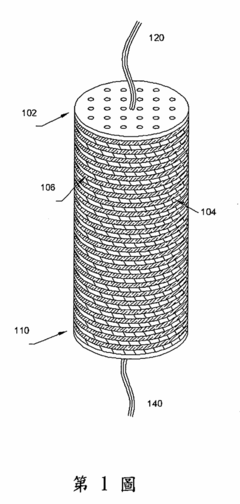
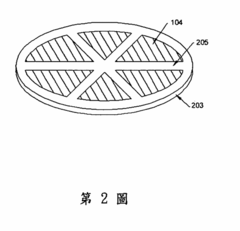
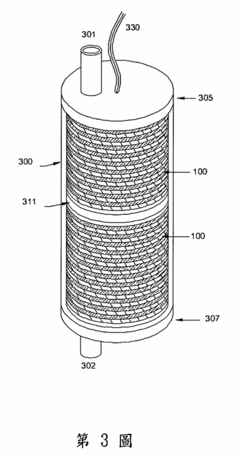
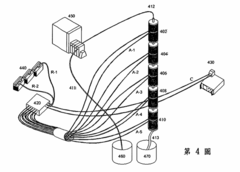
Apparatus and method for enhanced capacitive deionization of contaminated water
PatentInactiveUS20220017388A1
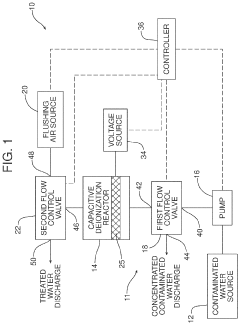
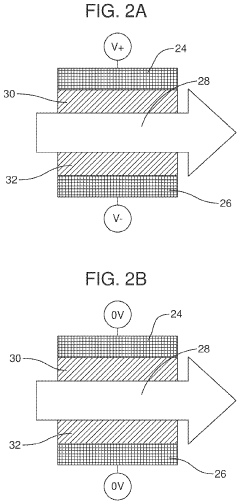
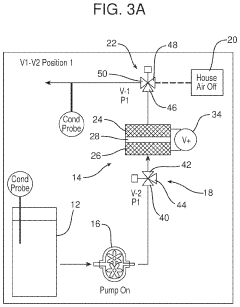
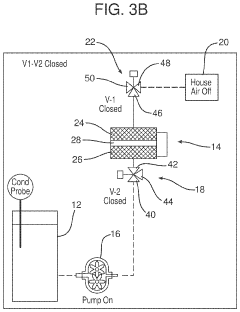
Innovation
- The introduction of a flushing fluid, such as inert gas or air, is used to isolate and flush out concentrated contaminants from the CDI reactor, separating the cleaning process from the main water treatment process, thereby conserving contaminated water and enhancing the efficiency of capacitive deionization by maximizing water recovery.
Environmental Impact Assessment of CDI Technologies
Capacitive Deionization (CDI) technologies present a complex environmental profile that requires comprehensive assessment across multiple impact categories. The environmental implications of CDI systems extend beyond their operational phase to encompass manufacturing, deployment, and end-of-life considerations, particularly when applied to adaptive performance scenarios in unpredictable water sources.
The carbon footprint of CDI technologies demonstrates significant variability depending on the energy source utilized for operation. While CDI systems typically consume 0.5-2.0 kWh per cubic meter of treated water, their environmental advantage becomes pronounced when powered by renewable energy sources. The manufacturing phase contributes approximately 15-25% of the total lifecycle carbon emissions, primarily attributed to electrode material production and system assembly processes.
Water resource impact assessment reveals that CDI technologies exhibit favorable characteristics compared to conventional desalination methods. The absence of chemical additives and minimal brine production reduces secondary pollution risks. However, adaptive CDI systems operating in unpredictable water sources may require periodic electrode regeneration, potentially increasing water consumption by 5-10% during maintenance cycles.
Material sustainability considerations highlight both opportunities and challenges within CDI implementation. The reliance on carbon-based electrode materials presents recyclability advantages, with activated carbon electrodes demonstrating 80-90% material recovery potential. Conversely, advanced electrode materials incorporating nanomaterials or specialized coatings may pose disposal challenges and require specialized handling protocols.
Ecosystem impact evaluation indicates minimal direct environmental disruption during CDI operation. The low-pressure, ambient temperature operation eliminates thermal pollution concerns associated with thermal desalination processes. However, concentrated brine discharge, though reduced compared to reverse osmosis systems, still requires careful management to prevent localized salinity impacts in receiving water bodies.
Lifecycle assessment studies demonstrate that CDI technologies achieve environmental break-even points within 2-4 years of operation when replacing conventional treatment methods. The adaptive nature of modern CDI systems, while improving treatment efficiency, may introduce additional environmental considerations through increased system complexity and potential maintenance requirements in challenging water source conditions.
The carbon footprint of CDI technologies demonstrates significant variability depending on the energy source utilized for operation. While CDI systems typically consume 0.5-2.0 kWh per cubic meter of treated water, their environmental advantage becomes pronounced when powered by renewable energy sources. The manufacturing phase contributes approximately 15-25% of the total lifecycle carbon emissions, primarily attributed to electrode material production and system assembly processes.
Water resource impact assessment reveals that CDI technologies exhibit favorable characteristics compared to conventional desalination methods. The absence of chemical additives and minimal brine production reduces secondary pollution risks. However, adaptive CDI systems operating in unpredictable water sources may require periodic electrode regeneration, potentially increasing water consumption by 5-10% during maintenance cycles.
Material sustainability considerations highlight both opportunities and challenges within CDI implementation. The reliance on carbon-based electrode materials presents recyclability advantages, with activated carbon electrodes demonstrating 80-90% material recovery potential. Conversely, advanced electrode materials incorporating nanomaterials or specialized coatings may pose disposal challenges and require specialized handling protocols.
Ecosystem impact evaluation indicates minimal direct environmental disruption during CDI operation. The low-pressure, ambient temperature operation eliminates thermal pollution concerns associated with thermal desalination processes. However, concentrated brine discharge, though reduced compared to reverse osmosis systems, still requires careful management to prevent localized salinity impacts in receiving water bodies.
Lifecycle assessment studies demonstrate that CDI technologies achieve environmental break-even points within 2-4 years of operation when replacing conventional treatment methods. The adaptive nature of modern CDI systems, while improving treatment efficiency, may introduce additional environmental considerations through increased system complexity and potential maintenance requirements in challenging water source conditions.
Energy Efficiency Optimization in Adaptive CDI Systems
Energy efficiency optimization represents a critical performance parameter for adaptive CDI systems operating in unpredictable water sources, where variable feed water characteristics directly impact power consumption patterns. The dynamic nature of source water composition, including fluctuating salinity levels, temperature variations, and changing ionic species concentrations, necessitates sophisticated energy management strategies to maintain optimal desalination performance while minimizing operational costs.
Traditional CDI systems operate under fixed voltage and current parameters, resulting in suboptimal energy utilization when confronted with varying water quality conditions. Adaptive systems address this limitation through real-time monitoring and adjustment of electrical parameters, enabling dynamic optimization of energy consumption based on instantaneous feed water characteristics. This approach typically achieves 15-25% energy savings compared to conventional fixed-parameter operations.
The implementation of variable voltage control algorithms forms the cornerstone of energy efficiency optimization in adaptive CDI systems. These algorithms continuously monitor conductivity, pH, and temperature parameters to determine optimal charging voltages for electrode pairs. Lower salinity conditions require reduced voltages to prevent energy waste, while higher conductivity scenarios benefit from increased voltage applications to maintain adequate ion removal rates.
Advanced energy recovery mechanisms further enhance system efficiency through capacitive energy harvesting during discharge cycles. Modern adaptive systems incorporate supercapacitor banks and DC-DC converter networks to capture and redistribute electrical energy that would otherwise be dissipated as heat. This recovered energy can contribute 8-12% of total system power requirements under optimal operating conditions.
Intelligent scheduling algorithms optimize charging and discharging cycles based on predictive models that analyze historical water quality data and real-time sensor inputs. These systems can anticipate periods of high or low salinity and adjust operational parameters proactively, reducing energy consumption during favorable conditions while maintaining consistent output water quality standards.
Machine learning integration enables continuous improvement of energy optimization strategies through pattern recognition and adaptive parameter tuning. Neural network models analyze correlations between water quality parameters and optimal energy consumption profiles, automatically refining operational algorithms to achieve maximum efficiency across diverse source water conditions.
Traditional CDI systems operate under fixed voltage and current parameters, resulting in suboptimal energy utilization when confronted with varying water quality conditions. Adaptive systems address this limitation through real-time monitoring and adjustment of electrical parameters, enabling dynamic optimization of energy consumption based on instantaneous feed water characteristics. This approach typically achieves 15-25% energy savings compared to conventional fixed-parameter operations.
The implementation of variable voltage control algorithms forms the cornerstone of energy efficiency optimization in adaptive CDI systems. These algorithms continuously monitor conductivity, pH, and temperature parameters to determine optimal charging voltages for electrode pairs. Lower salinity conditions require reduced voltages to prevent energy waste, while higher conductivity scenarios benefit from increased voltage applications to maintain adequate ion removal rates.
Advanced energy recovery mechanisms further enhance system efficiency through capacitive energy harvesting during discharge cycles. Modern adaptive systems incorporate supercapacitor banks and DC-DC converter networks to capture and redistribute electrical energy that would otherwise be dissipated as heat. This recovered energy can contribute 8-12% of total system power requirements under optimal operating conditions.
Intelligent scheduling algorithms optimize charging and discharging cycles based on predictive models that analyze historical water quality data and real-time sensor inputs. These systems can anticipate periods of high or low salinity and adjust operational parameters proactively, reducing energy consumption during favorable conditions while maintaining consistent output water quality standards.
Machine learning integration enables continuous improvement of energy optimization strategies through pattern recognition and adaptive parameter tuning. Neural network models analyze correlations between water quality parameters and optimal energy consumption profiles, automatically refining operational algorithms to achieve maximum efficiency across diverse source water conditions.
Unlock deeper insights with PatSnap Eureka Quick Research — get a full tech report to explore trends and direct your research. Try now!
Generate Your Research Report Instantly with AI Agent
Supercharge your innovation with PatSnap Eureka AI Agent Platform!