

Optimizing CDI Elements for Sustainable Water Practices
APR 21, 20269 MIN READ
Generate Your Research Report Instantly with AI Agent
PatSnap Eureka helps you evaluate technical feasibility & market potential.
CDI Technology Background and Sustainability Goals
Capacitive Deionization (CDI) technology emerged in the 1960s as a promising electrochemical water treatment method, initially developed for space applications where energy efficiency and minimal waste generation were critical. The technology operates on the principle of electrosorption, where ions are removed from water by applying an electric field across porous carbon electrodes. Unlike conventional desalination methods such as reverse osmosis or thermal distillation, CDI offers unique advantages including lower energy consumption for brackish water treatment, no chemical additives requirement, and the ability to operate at ambient temperature and pressure.
The fundamental mechanism involves charging carbon electrodes to create an electric double layer that attracts and stores ions from the feed water. When the electrodes reach saturation, the polarity is reversed or the voltage is removed, allowing the concentrated brine to be discharged while the electrodes regenerate for the next cycle. This reversible process enables continuous operation with relatively simple system architecture, making CDI particularly attractive for decentralized water treatment applications.
Recent technological evolution has focused on enhancing electrode materials, system design, and operational efficiency. Advanced carbon materials including activated carbon, carbon nanotubes, and graphene-based composites have significantly improved ion adsorption capacity and selectivity. Hybrid CDI systems incorporating ion-exchange membranes have addressed co-ion repulsion issues, while flow-electrode CDI configurations have enabled continuous operation for larger-scale applications.
The sustainability goals driving CDI optimization center on addressing global water scarcity challenges while minimizing environmental impact. Primary objectives include achieving energy consumption below 1 kWh per cubic meter for brackish water desalination, extending electrode lifespan beyond 10,000 cycles, and developing cost-effective materials using abundant resources. Environmental sustainability targets encompass zero liquid discharge systems, integration with renewable energy sources, and elimination of chemical pretreatment requirements.
Economic sustainability goals focus on reducing capital and operational costs to compete with established desalination technologies. This includes developing scalable manufacturing processes for electrode materials, optimizing system design for different water qualities, and creating modular systems suitable for distributed deployment in water-stressed regions.
The fundamental mechanism involves charging carbon electrodes to create an electric double layer that attracts and stores ions from the feed water. When the electrodes reach saturation, the polarity is reversed or the voltage is removed, allowing the concentrated brine to be discharged while the electrodes regenerate for the next cycle. This reversible process enables continuous operation with relatively simple system architecture, making CDI particularly attractive for decentralized water treatment applications.
Recent technological evolution has focused on enhancing electrode materials, system design, and operational efficiency. Advanced carbon materials including activated carbon, carbon nanotubes, and graphene-based composites have significantly improved ion adsorption capacity and selectivity. Hybrid CDI systems incorporating ion-exchange membranes have addressed co-ion repulsion issues, while flow-electrode CDI configurations have enabled continuous operation for larger-scale applications.
The sustainability goals driving CDI optimization center on addressing global water scarcity challenges while minimizing environmental impact. Primary objectives include achieving energy consumption below 1 kWh per cubic meter for brackish water desalination, extending electrode lifespan beyond 10,000 cycles, and developing cost-effective materials using abundant resources. Environmental sustainability targets encompass zero liquid discharge systems, integration with renewable energy sources, and elimination of chemical pretreatment requirements.
Economic sustainability goals focus on reducing capital and operational costs to compete with established desalination technologies. This includes developing scalable manufacturing processes for electrode materials, optimizing system design for different water qualities, and creating modular systems suitable for distributed deployment in water-stressed regions.
Market Demand for Sustainable Water Treatment Solutions
The global water treatment market is experiencing unprecedented growth driven by escalating water scarcity, stringent environmental regulations, and increasing awareness of sustainable practices. Traditional water treatment technologies face mounting pressure to reduce energy consumption and environmental impact, creating substantial demand for innovative solutions like Capacitive Deionization (CDI) technology.
Industrial sectors represent the largest demand segment for sustainable water treatment solutions. Manufacturing facilities, particularly in semiconductor, pharmaceutical, and food processing industries, require high-purity water while facing increasing pressure to minimize their environmental footprint. These industries are actively seeking energy-efficient alternatives to conventional reverse osmosis and ion exchange systems, positioning CDI as an attractive solution due to its lower energy requirements and reduced chemical usage.
Municipal water treatment authorities constitute another significant market segment driving demand for sustainable technologies. Growing urban populations and aging infrastructure necessitate advanced treatment solutions that can handle varying water quality conditions while maintaining operational efficiency. CDI technology's ability to operate without chemical regeneration and its modular scalability make it particularly appealing for municipal applications seeking to reduce operational costs and environmental impact.
The agricultural sector presents emerging opportunities for CDI applications, particularly in regions facing water stress. Precision agriculture and greenhouse operations require reliable water treatment solutions that can remove salts and contaminants from brackish water sources. The technology's capability to treat moderately saline water makes it suitable for agricultural water recycling and reuse applications.
Regulatory frameworks worldwide are increasingly favoring technologies that demonstrate clear environmental benefits. Carbon footprint reduction mandates and circular economy initiatives are pushing organizations toward treatment solutions that minimize waste generation and energy consumption. CDI technology aligns with these regulatory trends by offering chemical-free operation and the potential for energy recovery during the desorption process.
Market demand is also influenced by the growing emphasis on decentralized water treatment systems. Remote communities, industrial facilities in water-scarce regions, and emergency response applications require compact, reliable treatment solutions that can operate with minimal maintenance. The modular nature of CDI systems and their ability to function effectively at smaller scales address these specific market needs.
Economic factors further drive market demand as organizations seek to reduce long-term operational costs associated with water treatment. Rising energy prices and chemical costs make energy-efficient, chemical-free technologies increasingly attractive from a total cost of ownership perspective.
Industrial sectors represent the largest demand segment for sustainable water treatment solutions. Manufacturing facilities, particularly in semiconductor, pharmaceutical, and food processing industries, require high-purity water while facing increasing pressure to minimize their environmental footprint. These industries are actively seeking energy-efficient alternatives to conventional reverse osmosis and ion exchange systems, positioning CDI as an attractive solution due to its lower energy requirements and reduced chemical usage.
Municipal water treatment authorities constitute another significant market segment driving demand for sustainable technologies. Growing urban populations and aging infrastructure necessitate advanced treatment solutions that can handle varying water quality conditions while maintaining operational efficiency. CDI technology's ability to operate without chemical regeneration and its modular scalability make it particularly appealing for municipal applications seeking to reduce operational costs and environmental impact.
The agricultural sector presents emerging opportunities for CDI applications, particularly in regions facing water stress. Precision agriculture and greenhouse operations require reliable water treatment solutions that can remove salts and contaminants from brackish water sources. The technology's capability to treat moderately saline water makes it suitable for agricultural water recycling and reuse applications.
Regulatory frameworks worldwide are increasingly favoring technologies that demonstrate clear environmental benefits. Carbon footprint reduction mandates and circular economy initiatives are pushing organizations toward treatment solutions that minimize waste generation and energy consumption. CDI technology aligns with these regulatory trends by offering chemical-free operation and the potential for energy recovery during the desorption process.
Market demand is also influenced by the growing emphasis on decentralized water treatment systems. Remote communities, industrial facilities in water-scarce regions, and emergency response applications require compact, reliable treatment solutions that can operate with minimal maintenance. The modular nature of CDI systems and their ability to function effectively at smaller scales address these specific market needs.
Economic factors further drive market demand as organizations seek to reduce long-term operational costs associated with water treatment. Rising energy prices and chemical costs make energy-efficient, chemical-free technologies increasingly attractive from a total cost of ownership perspective.
Current CDI Element Performance and Optimization Challenges
Capacitive deionization technology faces significant performance limitations that constrain its widespread adoption in sustainable water treatment applications. Current CDI systems typically achieve salt removal efficiencies ranging from 70-90%, which falls short of the performance levels required for many industrial and municipal water treatment scenarios. The energy consumption per unit of salt removed remains elevated, with most commercial systems requiring 1.5-3.0 kWh per kilogram of salt removed, limiting their economic viability compared to established desalination technologies.
Electrode material degradation represents a critical challenge affecting long-term system reliability. Carbon-based electrodes, while cost-effective, suffer from oxidation and structural deterioration during repeated charge-discharge cycles. This degradation manifests as reduced electrosorption capacity, typically declining by 15-25% after 1000 cycles under standard operating conditions. The formation of irreversible surface functional groups and micropore blockage further compromises electrode performance over time.
Membrane fouling and scaling issues significantly impact system efficiency and operational costs. Organic fouling from natural organic matter and biological growth reduces ion transport rates and increases system resistance. Inorganic scaling, particularly calcium carbonate and silica precipitation, creates additional barriers to effective ion removal. These fouling mechanisms necessitate frequent cleaning cycles and membrane replacement, increasing operational complexity and costs.
Current CDI systems exhibit limited selectivity for target ions, resulting in co-removal of beneficial minerals alongside contaminants. This non-selective removal characteristic poses challenges for applications requiring selective ion extraction or mineral recovery. The simultaneous removal of calcium and magnesium ions, essential for human health, limits CDI applicability in drinking water treatment without post-treatment mineralization steps.
Energy recovery and system integration challenges further constrain CDI optimization. Most existing systems lack effective energy recovery mechanisms during the desorption phase, resulting in energy waste. The intermittent nature of CDI operation creates difficulties in integrating with continuous water treatment processes, requiring complex buffer systems and flow management strategies.
Temperature sensitivity and pH dependency of CDI performance create operational constraints that limit system flexibility. Performance degradation at elevated temperatures and pH variations necessitates additional process control systems, increasing capital and operational expenditures while reducing system robustness in diverse water treatment applications.
Electrode material degradation represents a critical challenge affecting long-term system reliability. Carbon-based electrodes, while cost-effective, suffer from oxidation and structural deterioration during repeated charge-discharge cycles. This degradation manifests as reduced electrosorption capacity, typically declining by 15-25% after 1000 cycles under standard operating conditions. The formation of irreversible surface functional groups and micropore blockage further compromises electrode performance over time.
Membrane fouling and scaling issues significantly impact system efficiency and operational costs. Organic fouling from natural organic matter and biological growth reduces ion transport rates and increases system resistance. Inorganic scaling, particularly calcium carbonate and silica precipitation, creates additional barriers to effective ion removal. These fouling mechanisms necessitate frequent cleaning cycles and membrane replacement, increasing operational complexity and costs.
Current CDI systems exhibit limited selectivity for target ions, resulting in co-removal of beneficial minerals alongside contaminants. This non-selective removal characteristic poses challenges for applications requiring selective ion extraction or mineral recovery. The simultaneous removal of calcium and magnesium ions, essential for human health, limits CDI applicability in drinking water treatment without post-treatment mineralization steps.
Energy recovery and system integration challenges further constrain CDI optimization. Most existing systems lack effective energy recovery mechanisms during the desorption phase, resulting in energy waste. The intermittent nature of CDI operation creates difficulties in integrating with continuous water treatment processes, requiring complex buffer systems and flow management strategies.
Temperature sensitivity and pH dependency of CDI performance create operational constraints that limit system flexibility. Performance degradation at elevated temperatures and pH variations necessitates additional process control systems, increasing capital and operational expenditures while reducing system robustness in diverse water treatment applications.
Existing CDI Element Optimization Approaches
01 CDI elements in automotive safety systems
CDI (Capacitor Discharge Ignition) elements are utilized in automotive safety systems to enhance vehicle performance and safety features. These elements provide reliable ignition timing and energy discharge control, which are critical for proper engine operation and integration with safety mechanisms. The technology ensures consistent spark generation and improved combustion efficiency in various operating conditions.- CDI elements in combustion engine systems: CDI (Capacitor Discharge Ignition) elements are utilized in combustion engine systems to improve ignition performance and efficiency. These elements store electrical energy in capacitors and discharge it rapidly to create a high-voltage spark for ignition. The technology enhances engine starting, fuel combustion efficiency, and overall engine performance across various applications including automotive and industrial engines.
- CDI circuit design and control mechanisms: Advanced circuit designs for CDI systems incorporate control mechanisms to optimize ignition timing and energy discharge. These designs include microprocessor-based controls, timing adjustment circuits, and voltage regulation components that ensure precise spark generation under varying engine conditions. The control systems can adapt to different operating parameters to maximize combustion efficiency and reduce emissions.
- CDI components and structural configurations: The structural design of CDI elements includes various components such as charging circuits, trigger circuits, capacitor assemblies, and discharge transformers. These components are configured to work together in compact arrangements suitable for different engine types. The structural innovations focus on improving durability, heat dissipation, and electromagnetic compatibility while maintaining efficient energy conversion.
- CDI applications in multi-cylinder engines: CDI technology is adapted for multi-cylinder engine applications where synchronized ignition across multiple cylinders is required. The systems incorporate distribution mechanisms and multiple discharge circuits to ensure proper firing sequence and timing coordination. These applications address the complexity of managing ignition events in engines with multiple combustion chambers while maintaining consistent performance.
- CDI integration with engine management systems: Modern CDI elements are integrated with comprehensive engine management systems that monitor and control various engine parameters. This integration allows for real-time adjustments based on sensor inputs including engine speed, load, temperature, and throttle position. The coordinated control enhances overall engine performance, fuel efficiency, and emission control while providing diagnostic capabilities.
02 CDI circuit design and configuration
The design and configuration of CDI circuits involve specific arrangements of capacitors, transformers, and switching elements to optimize ignition performance. These configurations focus on achieving proper energy storage and discharge characteristics, timing control, and voltage transformation. The circuit designs incorporate various electronic components to ensure reliable operation across different temperature ranges and electrical conditions.Expand Specific Solutions03 CDI control systems and timing mechanisms
Control systems for CDI elements incorporate advanced timing mechanisms and electronic control units to regulate ignition timing based on engine parameters. These systems utilize sensors and microprocessors to adjust discharge timing dynamically, optimizing engine performance and fuel efficiency. The control mechanisms ensure precise synchronization between ignition events and engine cycles.Expand Specific Solutions04 CDI component integration and assembly
Integration and assembly techniques for CDI components focus on compact packaging and efficient thermal management. These approaches involve specific mounting arrangements, electrical connections, and housing designs that protect sensitive electronic components while maintaining optimal performance. The assembly methods ensure durability and reliability in harsh operating environments.Expand Specific Solutions05 CDI testing and quality control methods
Testing and quality control methods for CDI elements encompass various procedures to verify performance characteristics, reliability, and compliance with specifications. These methods include electrical parameter testing, endurance testing under different conditions, and validation of timing accuracy. Quality control processes ensure consistent manufacturing standards and product reliability throughout the production lifecycle.Expand Specific Solutions
Key Players in CDI and Water Treatment Industry
The CDI (Capacitive Deionization) technology for sustainable water practices is currently in a growth phase, transitioning from early commercialization to broader market adoption. The global water treatment market, valued at approximately $300 billion, presents significant opportunities for CDI applications in desalination and water purification. Technology maturity varies considerably across market players, with established companies like Samsung Electronics, LG Electronics, and Mitsubishi Electric leveraging their advanced manufacturing capabilities and R&D infrastructure to develop sophisticated CDI systems. Specialized water technology firms such as Voltea BV, Stockholm Water Technology AB, and Current Water Technologies represent mature CDI implementations with proven commercial deployments. Research institutions including Technion Research & Development Foundation, University of Kentucky Research Foundation, and various IITs are advancing fundamental CDI science and next-generation materials. The competitive landscape shows a clear division between technology giants with substantial resources, specialized water treatment companies with focused expertise, and academic institutions driving innovation, indicating a maturing but still evolving market with significant growth potential.
COWAY Co., Ltd.
Technical Solution: COWAY has integrated CDI technology into their comprehensive water purification systems, developing hybrid filtration solutions that combine capacitive deionization with traditional filtration methods. Their approach focuses on residential and commercial water treatment applications, emphasizing user-friendly operation and maintenance. The company's CDI systems are designed for point-of-use applications, providing efficient removal of dissolved minerals and contaminants while maintaining essential minerals in drinking water through selective ion removal capabilities.
Strengths: Strong consumer market presence, integrated filtration solutions, focus on user experience. Weaknesses: Limited to smaller scale applications, less suitable for industrial water treatment requirements.
Voltea BV
Technical Solution: Voltea specializes in capacitive deionization (CDI) technology for water treatment, developing modular CapDI systems that use electrically charged carbon electrodes to remove dissolved salts from water. Their technology operates at low voltage (1.2V) and enables energy recovery during the desorption cycle, making it highly energy-efficient for brackish water desalination. The company's systems are designed for decentralized water treatment applications, offering sustainable solutions for industrial process water, irrigation, and municipal water supplies with significantly lower energy consumption compared to reverse osmosis systems.
Strengths: Low energy consumption, modular design, energy recovery capability. Weaknesses: Limited to brackish water applications, lower salt removal capacity compared to RO systems.
Core Innovations in Advanced CDI Element Design
Method of manufacturing capacitive deionization (CDI) device, CDI device and apparatus for treating water, electrode for capacitive deionization and method of forming same
PatentInactiveSG11201903410XA
Innovation
- A method of manufacturing a CDI device involving the formation of electrosorptive electrodes, a spacer compartment, and surface plates, with the use of MXene material having hydrophobic functional group terminations, carbon black, and a binder to enhance electrode performance, and a modular design for scalability and replaceability.


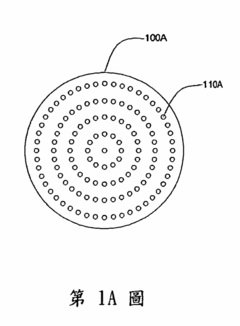
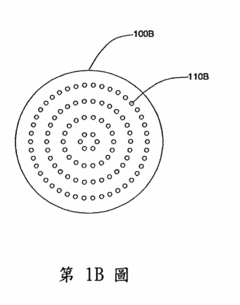
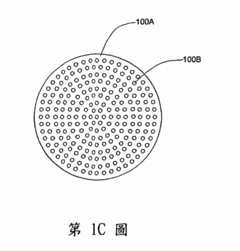
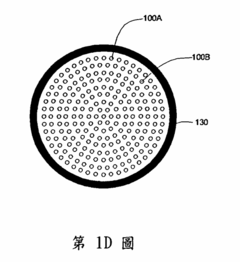
Capacitive deionization using hybrid polar electrodes
PatentInactiveTW200942494A
Innovation
- A hybrid flow-through capacitor module incorporating both unipolar and bipolar electrodes, optimized fluid dynamics through perforated electrode plates, and supercapacitors for energy recovery, enabling balanced operating voltage and current while reducing energy costs and cycle times.
Environmental Impact Assessment of CDI Systems
Capacitive Deionization (CDI) systems present a compelling environmental profile when evaluated against conventional desalination technologies. Life cycle assessments demonstrate that CDI operations typically generate 40-60% lower carbon emissions compared to reverse osmosis systems of equivalent capacity. This reduction stems primarily from CDI's lower energy requirements, operating at 1.5-3 kWh per cubic meter of treated water versus 3-6 kWh for traditional membrane-based processes.
The environmental footprint of CDI systems extends beyond energy consumption to encompass material sustainability considerations. Carbon electrode materials, predominantly activated carbon and carbon aerogels, exhibit favorable end-of-life characteristics with potential for regeneration and recycling. However, emerging electrode materials such as carbon nanotubes and graphene derivatives raise concerns regarding manufacturing energy intensity and potential ecological risks during production phases.
Water resource impact assessments reveal CDI's advantage in recovery rates, typically achieving 85-95% water recovery compared to 75-85% for conventional systems. This enhanced efficiency translates to reduced brine discharge volumes, minimizing environmental stress on receiving water bodies. The concentrated brine streams from CDI operations contain fewer chemical additives, as the process eliminates the need for anti-scalants and biocides commonly required in pressure-driven membrane systems.
Ecosystem impact studies indicate minimal thermal pollution from CDI operations due to ambient temperature processing requirements. Unlike thermal desalination methods, CDI systems do not contribute to thermal discharge issues in marine environments. Additionally, the absence of high-pressure pumping systems reduces noise pollution and mechanical environmental disturbances.
Chemical footprint analysis demonstrates CDI's advantage in eliminating secondary pollution sources. The electrochemical process operates without chemical regenerants, reducing the risk of chemical spills and associated soil or groundwater contamination. However, electrode degradation products require monitoring, particularly for systems utilizing novel nanomaterials where long-term environmental fate remains under investigation.
Regional environmental assessments show varying impacts based on electricity grid composition. CDI systems deployed in regions with renewable energy sources demonstrate significantly lower environmental impacts, while those operating on fossil fuel-dependent grids show diminished environmental advantages. This grid dependency factor becomes crucial for comprehensive environmental impact evaluations and sustainable deployment strategies.
The environmental footprint of CDI systems extends beyond energy consumption to encompass material sustainability considerations. Carbon electrode materials, predominantly activated carbon and carbon aerogels, exhibit favorable end-of-life characteristics with potential for regeneration and recycling. However, emerging electrode materials such as carbon nanotubes and graphene derivatives raise concerns regarding manufacturing energy intensity and potential ecological risks during production phases.
Water resource impact assessments reveal CDI's advantage in recovery rates, typically achieving 85-95% water recovery compared to 75-85% for conventional systems. This enhanced efficiency translates to reduced brine discharge volumes, minimizing environmental stress on receiving water bodies. The concentrated brine streams from CDI operations contain fewer chemical additives, as the process eliminates the need for anti-scalants and biocides commonly required in pressure-driven membrane systems.
Ecosystem impact studies indicate minimal thermal pollution from CDI operations due to ambient temperature processing requirements. Unlike thermal desalination methods, CDI systems do not contribute to thermal discharge issues in marine environments. Additionally, the absence of high-pressure pumping systems reduces noise pollution and mechanical environmental disturbances.
Chemical footprint analysis demonstrates CDI's advantage in eliminating secondary pollution sources. The electrochemical process operates without chemical regenerants, reducing the risk of chemical spills and associated soil or groundwater contamination. However, electrode degradation products require monitoring, particularly for systems utilizing novel nanomaterials where long-term environmental fate remains under investigation.
Regional environmental assessments show varying impacts based on electricity grid composition. CDI systems deployed in regions with renewable energy sources demonstrate significantly lower environmental impacts, while those operating on fossil fuel-dependent grids show diminished environmental advantages. This grid dependency factor becomes crucial for comprehensive environmental impact evaluations and sustainable deployment strategies.
Economic Viability of Optimized CDI Solutions
The economic viability of optimized Capacitive Deionization (CDI) solutions represents a critical factor determining their widespread adoption in sustainable water treatment applications. Current market analysis indicates that optimized CDI systems demonstrate competitive operational costs compared to traditional desalination technologies, particularly in brackish water treatment scenarios where energy consumption can be reduced by 30-50% through advanced electrode materials and system configurations.
Capital expenditure considerations reveal that while initial investment costs for optimized CDI systems may exceed conventional reverse osmosis installations by 15-25%, the total cost of ownership over a 10-year operational period shows favorable economics. This advantage stems from reduced energy requirements, minimal chemical usage, and lower maintenance demands associated with optimized electrode designs and improved system architectures.
Revenue generation potential for optimized CDI solutions extends beyond direct water treatment services. The technology enables value recovery through selective ion extraction, creating additional income streams from valuable mineral recovery processes. Industrial applications demonstrate particularly strong economic returns, with payback periods ranging from 3-5 years in high-salinity industrial wastewater treatment scenarios.
Operational cost structures for optimized CDI systems show significant improvements over first-generation technologies. Energy costs, typically representing 40-60% of operational expenses in conventional desalination, are substantially reduced through enhanced electrode efficiency and regeneration processes. Maintenance costs remain minimal due to the absence of high-pressure components and reduced fouling tendencies in optimized electrode configurations.
Market scalability analysis indicates that economies of scale become particularly pronounced in medium to large-scale installations, where optimized CDI systems can achieve cost parity with established technologies while delivering superior environmental performance. The modular nature of CDI technology facilitates incremental capacity expansion, reducing financial risks associated with large initial investments and enabling flexible deployment strategies that align with evolving water demand patterns.
Capital expenditure considerations reveal that while initial investment costs for optimized CDI systems may exceed conventional reverse osmosis installations by 15-25%, the total cost of ownership over a 10-year operational period shows favorable economics. This advantage stems from reduced energy requirements, minimal chemical usage, and lower maintenance demands associated with optimized electrode designs and improved system architectures.
Revenue generation potential for optimized CDI solutions extends beyond direct water treatment services. The technology enables value recovery through selective ion extraction, creating additional income streams from valuable mineral recovery processes. Industrial applications demonstrate particularly strong economic returns, with payback periods ranging from 3-5 years in high-salinity industrial wastewater treatment scenarios.
Operational cost structures for optimized CDI systems show significant improvements over first-generation technologies. Energy costs, typically representing 40-60% of operational expenses in conventional desalination, are substantially reduced through enhanced electrode efficiency and regeneration processes. Maintenance costs remain minimal due to the absence of high-pressure components and reduced fouling tendencies in optimized electrode configurations.
Market scalability analysis indicates that economies of scale become particularly pronounced in medium to large-scale installations, where optimized CDI systems can achieve cost parity with established technologies while delivering superior environmental performance. The modular nature of CDI technology facilitates incremental capacity expansion, reducing financial risks associated with large initial investments and enabling flexible deployment strategies that align with evolving water demand patterns.
Unlock deeper insights with PatSnap Eureka Quick Research — get a full tech report to explore trends and direct your research. Try now!
Generate Your Research Report Instantly with AI Agent
Supercharge your innovation with PatSnap Eureka AI Agent Platform!