

CDI vs Microfiltration: Effectiveness and Scalability
APR 21, 20269 MIN READ
Generate Your Research Report Instantly with AI Agent
PatSnap Eureka helps you evaluate technical feasibility & market potential.
CDI and Microfiltration Technology Background and Objectives
Capacitive Deionization (CDI) represents an emerging electrochemical water treatment technology that removes ionic contaminants through electrostatic attraction. The technology operates by applying a low voltage across porous carbon electrodes, causing ions to migrate and adhere to oppositely charged electrode surfaces. CDI has evolved significantly since its initial development in the 1960s, with recent advances in electrode materials, system design, and energy recovery mechanisms positioning it as a promising alternative for brackish water desalination and water purification applications.
Microfiltration, conversely, constitutes a well-established physical separation process utilizing membrane technology with pore sizes ranging from 0.1 to 10 micrometers. This pressure-driven process effectively removes suspended particles, bacteria, and larger contaminants while allowing dissolved salts and smaller molecules to pass through. Microfiltration has demonstrated consistent performance across diverse industrial applications since its commercial introduction in the 1970s, establishing itself as a reliable pretreatment technology in multi-stage water treatment systems.
The fundamental operational principles of these technologies differ substantially. CDI operates through reversible ion adsorption, enabling regeneration of electrode materials and potential energy recovery during the desorption phase. This electrochemical approach allows selective removal of specific ionic species while maintaining relatively low energy consumption for brackish water applications. The technology demonstrates particular effectiveness in treating water with total dissolved solids concentrations between 500-5000 mg/L.
Microfiltration functions through size exclusion mechanisms, providing consistent and predictable separation performance regardless of water chemistry variations. The technology excels in removing particulate matter, microorganisms, and turbidity while requiring minimal chemical additives. However, microfiltration cannot address dissolved ionic contaminants, necessitating integration with other treatment technologies for comprehensive water purification.
Current technological objectives focus on enhancing the effectiveness and scalability of both approaches. For CDI, primary goals include improving electrode materials to increase ion adsorption capacity, developing more efficient system architectures, and optimizing energy consumption patterns. Research efforts concentrate on advanced carbon materials, hybrid electrode designs, and intelligent control systems to maximize treatment efficiency while minimizing operational costs.
Microfiltration advancement targets membrane durability, fouling resistance, and flux optimization. Key objectives encompass developing novel membrane materials with enhanced selectivity, implementing advanced cleaning protocols, and designing modular systems capable of handling varying feed water qualities. Integration capabilities with complementary technologies remain a critical focus area for expanding application scope.
Microfiltration, conversely, constitutes a well-established physical separation process utilizing membrane technology with pore sizes ranging from 0.1 to 10 micrometers. This pressure-driven process effectively removes suspended particles, bacteria, and larger contaminants while allowing dissolved salts and smaller molecules to pass through. Microfiltration has demonstrated consistent performance across diverse industrial applications since its commercial introduction in the 1970s, establishing itself as a reliable pretreatment technology in multi-stage water treatment systems.
The fundamental operational principles of these technologies differ substantially. CDI operates through reversible ion adsorption, enabling regeneration of electrode materials and potential energy recovery during the desorption phase. This electrochemical approach allows selective removal of specific ionic species while maintaining relatively low energy consumption for brackish water applications. The technology demonstrates particular effectiveness in treating water with total dissolved solids concentrations between 500-5000 mg/L.
Microfiltration functions through size exclusion mechanisms, providing consistent and predictable separation performance regardless of water chemistry variations. The technology excels in removing particulate matter, microorganisms, and turbidity while requiring minimal chemical additives. However, microfiltration cannot address dissolved ionic contaminants, necessitating integration with other treatment technologies for comprehensive water purification.
Current technological objectives focus on enhancing the effectiveness and scalability of both approaches. For CDI, primary goals include improving electrode materials to increase ion adsorption capacity, developing more efficient system architectures, and optimizing energy consumption patterns. Research efforts concentrate on advanced carbon materials, hybrid electrode designs, and intelligent control systems to maximize treatment efficiency while minimizing operational costs.
Microfiltration advancement targets membrane durability, fouling resistance, and flux optimization. Key objectives encompass developing novel membrane materials with enhanced selectivity, implementing advanced cleaning protocols, and designing modular systems capable of handling varying feed water qualities. Integration capabilities with complementary technologies remain a critical focus area for expanding application scope.
Market Demand Analysis for Advanced Water Treatment Solutions
The global water treatment market is experiencing unprecedented growth driven by escalating water scarcity, stringent environmental regulations, and increasing industrial demand for high-quality water. Traditional treatment methods are increasingly inadequate for addressing emerging contaminants and meeting evolving water quality standards, creating substantial market opportunities for advanced technologies like Capacitive Deionization and microfiltration systems.
Municipal water treatment represents the largest market segment, where aging infrastructure and growing populations demand more efficient and cost-effective solutions. CDI technology shows particular promise in desalination applications for brackish water treatment, addressing the needs of water-stressed regions globally. The technology's energy efficiency advantages over reverse osmosis make it attractive for municipalities seeking to reduce operational costs while maintaining treatment effectiveness.
Industrial applications constitute another significant demand driver, particularly in sectors requiring ultrapure water such as pharmaceuticals, electronics manufacturing, and power generation. Microfiltration has established strong market presence in these applications due to its proven reliability and scalability. However, CDI's selective ion removal capabilities are generating interest for specialized industrial processes where precise water chemistry control is essential.
The agricultural sector presents emerging opportunities as water reuse and recycling become critical for sustainable farming practices. Both technologies offer distinct advantages: microfiltration excels in removing suspended solids and pathogens from irrigation water, while CDI provides effective salinity management for crop-sensitive applications.
Market demand is increasingly influenced by sustainability considerations and circular economy principles. End users are prioritizing technologies that minimize chemical usage, reduce waste generation, and enable resource recovery. CDI's chemical-free operation and potential for selective ion recovery align well with these sustainability requirements, while microfiltration's established track record provides confidence for large-scale implementations.
Regional demand patterns vary significantly, with water-scarce regions showing stronger interest in desalination-focused solutions, while developed markets emphasize treatment efficiency and regulatory compliance. The competitive landscape is driving continuous innovation in both technologies, with market demand increasingly favoring solutions that can demonstrate superior performance metrics, lower lifecycle costs, and enhanced operational flexibility.
Municipal water treatment represents the largest market segment, where aging infrastructure and growing populations demand more efficient and cost-effective solutions. CDI technology shows particular promise in desalination applications for brackish water treatment, addressing the needs of water-stressed regions globally. The technology's energy efficiency advantages over reverse osmosis make it attractive for municipalities seeking to reduce operational costs while maintaining treatment effectiveness.
Industrial applications constitute another significant demand driver, particularly in sectors requiring ultrapure water such as pharmaceuticals, electronics manufacturing, and power generation. Microfiltration has established strong market presence in these applications due to its proven reliability and scalability. However, CDI's selective ion removal capabilities are generating interest for specialized industrial processes where precise water chemistry control is essential.
The agricultural sector presents emerging opportunities as water reuse and recycling become critical for sustainable farming practices. Both technologies offer distinct advantages: microfiltration excels in removing suspended solids and pathogens from irrigation water, while CDI provides effective salinity management for crop-sensitive applications.
Market demand is increasingly influenced by sustainability considerations and circular economy principles. End users are prioritizing technologies that minimize chemical usage, reduce waste generation, and enable resource recovery. CDI's chemical-free operation and potential for selective ion recovery align well with these sustainability requirements, while microfiltration's established track record provides confidence for large-scale implementations.
Regional demand patterns vary significantly, with water-scarce regions showing stronger interest in desalination-focused solutions, while developed markets emphasize treatment efficiency and regulatory compliance. The competitive landscape is driving continuous innovation in both technologies, with market demand increasingly favoring solutions that can demonstrate superior performance metrics, lower lifecycle costs, and enhanced operational flexibility.
Current Status and Challenges in CDI vs Microfiltration
Capacitive deionization (CDI) technology has emerged as a promising alternative to conventional water treatment methods, yet its current development stage presents both opportunities and limitations when compared to established microfiltration systems. CDI operates through electrosorption principles, utilizing porous carbon electrodes to remove ionic contaminants from water, while microfiltration relies on physical separation through membrane pores typically ranging from 0.1 to 10 micrometers.
The current state of CDI technology demonstrates significant potential in desalination applications, particularly for brackish water treatment with total dissolved solids concentrations between 500-5000 mg/L. However, CDI systems face substantial challenges in energy efficiency optimization, with current energy consumption rates varying significantly based on feed water salinity and system design. The technology struggles with consistent performance when treating high-salinity waters, where energy requirements increase exponentially compared to microfiltration systems.
Microfiltration technology, having reached commercial maturity decades ago, maintains established market dominance in water treatment applications. Current microfiltration systems achieve reliable particle removal efficiency exceeding 99% for contaminants larger than membrane pore sizes, with well-documented operational parameters and maintenance protocols. Nevertheless, microfiltration faces inherent limitations in removing dissolved ionic species, requiring additional treatment stages for comprehensive water purification.
Scalability represents a critical challenge differentiating these technologies. CDI systems encounter electrode degradation issues during long-term operation, with carbon electrode capacity declining over repeated charge-discharge cycles. Manufacturing consistency for large-scale CDI installations remains problematic, as electrode performance variations significantly impact overall system efficiency. Current CDI pilot projects typically operate at capacities below 1000 cubic meters per day, highlighting scalability constraints.
Conversely, microfiltration systems demonstrate proven scalability across industrial applications, with established manufacturing processes supporting installations ranging from residential units to municipal treatment facilities processing millions of gallons daily. However, membrane fouling and replacement costs present ongoing operational challenges, particularly in applications involving high particulate loads or biological contamination.
The integration of hybrid systems combining CDI and microfiltration technologies represents an emerging approach addressing individual technology limitations. Current research focuses on optimizing sequential treatment configurations, where microfiltration serves as pretreatment for CDI systems, potentially extending electrode lifespan while achieving comprehensive contaminant removal across both particulate and ionic species.
The current state of CDI technology demonstrates significant potential in desalination applications, particularly for brackish water treatment with total dissolved solids concentrations between 500-5000 mg/L. However, CDI systems face substantial challenges in energy efficiency optimization, with current energy consumption rates varying significantly based on feed water salinity and system design. The technology struggles with consistent performance when treating high-salinity waters, where energy requirements increase exponentially compared to microfiltration systems.
Microfiltration technology, having reached commercial maturity decades ago, maintains established market dominance in water treatment applications. Current microfiltration systems achieve reliable particle removal efficiency exceeding 99% for contaminants larger than membrane pore sizes, with well-documented operational parameters and maintenance protocols. Nevertheless, microfiltration faces inherent limitations in removing dissolved ionic species, requiring additional treatment stages for comprehensive water purification.
Scalability represents a critical challenge differentiating these technologies. CDI systems encounter electrode degradation issues during long-term operation, with carbon electrode capacity declining over repeated charge-discharge cycles. Manufacturing consistency for large-scale CDI installations remains problematic, as electrode performance variations significantly impact overall system efficiency. Current CDI pilot projects typically operate at capacities below 1000 cubic meters per day, highlighting scalability constraints.
Conversely, microfiltration systems demonstrate proven scalability across industrial applications, with established manufacturing processes supporting installations ranging from residential units to municipal treatment facilities processing millions of gallons daily. However, membrane fouling and replacement costs present ongoing operational challenges, particularly in applications involving high particulate loads or biological contamination.
The integration of hybrid systems combining CDI and microfiltration technologies represents an emerging approach addressing individual technology limitations. Current research focuses on optimizing sequential treatment configurations, where microfiltration serves as pretreatment for CDI systems, potentially extending electrode lifespan while achieving comprehensive contaminant removal across both particulate and ionic species.
Current Technical Solutions for CDI and Microfiltration
01 Capacitive deionization (CDI) system design and electrode configuration
CDI systems utilize capacitive electrodes to remove ions from water through electrosorption. The effectiveness of CDI can be enhanced through optimized electrode configurations, including flow-through designs, membrane integration, and specialized carbon electrode materials. System architecture improvements focus on maximizing ion removal capacity while maintaining energy efficiency and scalability for various water treatment applications.- Capacitive Deionization (CDI) System Design and Configuration: CDI systems utilize electrodes to remove ions from water through electrosorption. The effectiveness of CDI can be enhanced through optimized electrode configurations, cell stack designs, and flow channel arrangements. Key design parameters include electrode spacing, flow distribution, and cell architecture to maximize ion removal efficiency while maintaining scalability for industrial applications.
- Hybrid CDI-Microfiltration Integration Systems: Combining CDI with microfiltration creates synergistic water treatment systems that address both ionic contaminants and particulate matter. The integration allows for pre-treatment or post-treatment configurations where microfiltration removes suspended solids while CDI handles dissolved ions. This hybrid approach improves overall water quality and system efficiency while enabling modular scalability for various application sizes.
- Membrane and Electrode Material Optimization: The effectiveness of both CDI and microfiltration depends heavily on material selection. Advanced electrode materials with high surface area and conductivity enhance CDI performance, while optimized membrane pore sizes and materials improve microfiltration efficiency. Material innovations focus on durability, fouling resistance, and regeneration capabilities to ensure long-term operational effectiveness and economic scalability.
- Scaling and Fouling Prevention Mechanisms: Both CDI and microfiltration systems face challenges from scaling and fouling that impact effectiveness and scalability. Solutions include periodic electrode regeneration, backwashing protocols, chemical cleaning procedures, and operational parameter optimization. Advanced monitoring and control systems enable predictive maintenance and automated cleaning cycles to maintain consistent performance in large-scale deployments.
- Modular System Architecture for Industrial Scalability: Scalable CDI and microfiltration systems employ modular designs that allow capacity expansion through parallel or series configurations. Standardized modules facilitate installation, maintenance, and system upgrades. Design considerations include flow distribution uniformity, pressure management, and energy efficiency optimization across multiple units to ensure consistent performance from pilot to industrial scale applications.
02 Microfiltration membrane materials and pore structure optimization
Microfiltration effectiveness depends on membrane material selection and pore size distribution. Advanced membrane designs incorporate polymeric or ceramic materials with controlled porosity to achieve optimal filtration performance. The scalability of microfiltration systems is enhanced through modular membrane configurations that allow for capacity expansion while maintaining consistent filtration quality and flux rates.Expand Specific Solutions03 Hybrid CDI-microfiltration integrated systems
Integration of CDI with microfiltration creates synergistic water treatment systems that combine ion removal with particle filtration. These hybrid approaches improve overall treatment effectiveness by addressing both dissolved and suspended contaminants. Scalability is achieved through parallel processing units and optimized flow distribution, enabling treatment of varying water volumes while maintaining performance standards.Expand Specific Solutions04 Fouling prevention and cleaning strategies for scalable operation
Long-term effectiveness and scalability require robust fouling mitigation strategies for both CDI and microfiltration systems. Approaches include surface modification techniques, periodic regeneration protocols, and automated cleaning cycles. These methods ensure sustained performance in large-scale installations by minimizing downtime and extending operational lifespan of treatment components.Expand Specific Solutions05 Energy efficiency and process optimization for large-scale deployment
Scalability of CDI and microfiltration systems requires optimization of energy consumption and operational parameters. Advanced control systems monitor performance metrics and adjust operating conditions to maintain efficiency at various scales. Process intensification techniques and energy recovery mechanisms enable cost-effective deployment in industrial and municipal water treatment facilities.Expand Specific Solutions
Major Players in CDI and Microfiltration Industry
The CDI versus microfiltration competitive landscape reflects a water treatment industry in transition, with the market experiencing steady growth driven by increasing water scarcity and quality concerns. The industry is currently in a mature development stage for microfiltration technologies, while CDI represents an emerging alternative gaining traction. Market size continues expanding globally, particularly in industrial and municipal applications. Technology maturity varies significantly between the two approaches: established players like Honeywell International, Koninklijke Philips, and COWAY demonstrate advanced microfiltration capabilities with proven commercial deployment, while CDI technology shows promising development through research institutions including MIT, University of California, and Tsinghua University. Companies such as KX Technologies and specialized filtration manufacturers are bridging traditional and innovative approaches, indicating a competitive environment where both technologies coexist, with scalability and cost-effectiveness determining long-term market positioning.
COWAY Co., Ltd.
Technical Solution: COWAY has developed advanced water purification systems that integrate both CDI and microfiltration technologies for residential and commercial applications. Their hybrid approach combines capacitive deionization for selective ion removal with multi-stage microfiltration systems featuring 0.1-0.01 micron pore sizes. The company's CDI modules utilize activated carbon electrodes with surface areas exceeding 1000 m²/g, achieving desalination capacities of 10-15 mg/g for brackish water treatment. Their microfiltration systems employ hollow fiber membranes with flux rates of 50-100 L/m²/h, effectively removing particles, bacteria, and suspended solids while maintaining low energy consumption of 0.5-1.0 kWh/m³.
Strengths: Strong market presence in water purification, proven commercial scalability, integrated technology approach. Weaknesses: Limited to lower salinity applications, higher membrane replacement costs.
The Regents of the University of California
Technical Solution: UC researchers have developed next-generation CDI systems using novel electrode materials including graphene-based aerogels and carbon nanotube composites, achieving salt adsorption capacities of 20-30 mg/g. Their comparative studies demonstrate CDI effectiveness for brackish water (500-5000 ppm TDS) with energy consumption of 0.3-0.8 kWh/m³, while their advanced microfiltration research focuses on biomimetic membranes with enhanced fouling resistance. The university's pilot-scale CDI systems show 85-95% salt removal efficiency with regeneration cycles lasting 100-500 cycles. Their microfiltration innovations include surface-modified membranes achieving 99.9% particle removal with extended operational lifespans of 2-3 years.
Strengths: Cutting-edge research capabilities, innovative materials development, comprehensive comparative analysis. Weaknesses: Early-stage technologies, limited commercial deployment, scalability challenges.
Key Technology Analysis in Ion Removal and Particle Filtration
Method of manufacturing capacitive deionization (CDI) device, CDI device and apparatus for treating water, electrode for capacitive deionization and method of forming same
PatentInactiveSG11201903410XA
Innovation
- A method of manufacturing a CDI device involving the formation of electrosorptive electrodes, a spacer compartment, and surface plates, with the use of MXene material having hydrophobic functional group terminations, carbon black, and a binder to enhance electrode performance, and a modular design for scalability and replaceability.


Capacitive deionization using hybrid polar electrodes
PatentInactiveTW200942494A
Innovation
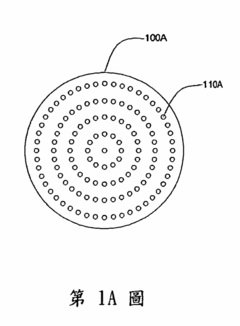
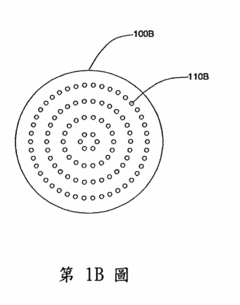
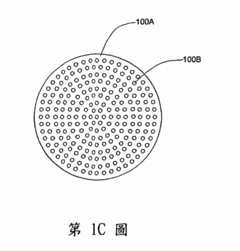
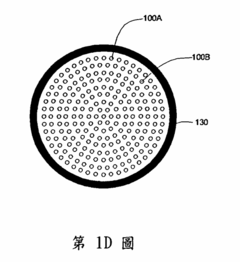
- A hybrid flow-through capacitor module incorporating both unipolar and bipolar electrodes, optimized fluid dynamics through perforated electrode plates, and supercapacitors for energy recovery, enabling balanced operating voltage and current while reducing energy costs and cycle times.
Environmental Impact Assessment of Water Treatment Technologies
The environmental implications of water treatment technologies have become increasingly critical as global water scarcity intensifies and regulatory frameworks tighten. Both Capacitive Deionization (CDI) and microfiltration represent distinct approaches to water purification, each carrying unique environmental footprints that must be carefully evaluated across their operational lifecycles.
CDI technology demonstrates superior environmental performance in several key areas. The process operates at low voltages without requiring chemical additives, eliminating the generation of hazardous waste streams commonly associated with conventional treatment methods. Energy consumption remains relatively modest, typically ranging from 0.5 to 2.0 kWh per cubic meter of treated water, depending on feed water salinity and system configuration. The absence of membrane replacement requirements significantly reduces solid waste generation, while the regenerative nature of carbon electrodes extends operational lifespan considerably.
Microfiltration systems present a more complex environmental profile. While the technology effectively removes particulates and pathogens without chemical addition, membrane fouling necessitates regular cleaning cycles using chemical agents such as sodium hypochlorite or citric acid. These cleaning procedures generate contaminated wastewater requiring proper disposal or secondary treatment. Membrane replacement cycles, typically occurring every 2-5 years depending on feed water quality, contribute to plastic waste streams that pose long-term disposal challenges.
Carbon footprint analysis reveals notable differences between the technologies. CDI systems exhibit lower operational carbon emissions due to reduced energy requirements and minimal chemical consumption. However, the manufacturing of specialized carbon electrodes involves energy-intensive processes that contribute to initial embodied carbon. Microfiltration demonstrates higher operational emissions primarily attributed to chemical cleaning agents and membrane manufacturing, though recent advances in membrane materials have begun addressing these concerns.
Water recovery rates significantly influence environmental impact assessments. CDI typically achieves 85-95% water recovery rates, minimizing concentrate disposal volumes. Microfiltration systems generally operate at higher recovery rates exceeding 95%, though backwashing requirements can reduce net water production efficiency. The concentrate management strategies for both technologies require careful consideration of local environmental regulations and disposal infrastructure capabilities.
Lifecycle assessments indicate that CDI technology offers superior environmental sustainability for brackish water treatment applications, particularly in scenarios requiring minimal chemical intervention. Microfiltration remains environmentally competitive for applications demanding high particulate removal efficiency, though the environmental burden of membrane disposal and chemical cleaning cannot be overlooked in comprehensive sustainability evaluations.
CDI technology demonstrates superior environmental performance in several key areas. The process operates at low voltages without requiring chemical additives, eliminating the generation of hazardous waste streams commonly associated with conventional treatment methods. Energy consumption remains relatively modest, typically ranging from 0.5 to 2.0 kWh per cubic meter of treated water, depending on feed water salinity and system configuration. The absence of membrane replacement requirements significantly reduces solid waste generation, while the regenerative nature of carbon electrodes extends operational lifespan considerably.
Microfiltration systems present a more complex environmental profile. While the technology effectively removes particulates and pathogens without chemical addition, membrane fouling necessitates regular cleaning cycles using chemical agents such as sodium hypochlorite or citric acid. These cleaning procedures generate contaminated wastewater requiring proper disposal or secondary treatment. Membrane replacement cycles, typically occurring every 2-5 years depending on feed water quality, contribute to plastic waste streams that pose long-term disposal challenges.
Carbon footprint analysis reveals notable differences between the technologies. CDI systems exhibit lower operational carbon emissions due to reduced energy requirements and minimal chemical consumption. However, the manufacturing of specialized carbon electrodes involves energy-intensive processes that contribute to initial embodied carbon. Microfiltration demonstrates higher operational emissions primarily attributed to chemical cleaning agents and membrane manufacturing, though recent advances in membrane materials have begun addressing these concerns.
Water recovery rates significantly influence environmental impact assessments. CDI typically achieves 85-95% water recovery rates, minimizing concentrate disposal volumes. Microfiltration systems generally operate at higher recovery rates exceeding 95%, though backwashing requirements can reduce net water production efficiency. The concentrate management strategies for both technologies require careful consideration of local environmental regulations and disposal infrastructure capabilities.
Lifecycle assessments indicate that CDI technology offers superior environmental sustainability for brackish water treatment applications, particularly in scenarios requiring minimal chemical intervention. Microfiltration remains environmentally competitive for applications demanding high particulate removal efficiency, though the environmental burden of membrane disposal and chemical cleaning cannot be overlooked in comprehensive sustainability evaluations.
Economic Feasibility and Scalability Comparison Framework
The economic feasibility comparison between Capacitive Deionization (CDI) and microfiltration technologies requires a comprehensive framework that evaluates both capital expenditure (CAPEX) and operational expenditure (OPEX) across different deployment scales. Initial capital costs for CDI systems typically range from $800-1,200 per cubic meter of daily capacity, while microfiltration systems generally require $600-900 per cubic meter, making microfiltration initially more cost-effective for smaller installations.
However, the economic landscape shifts significantly when examining operational costs over extended periods. CDI systems demonstrate superior energy efficiency, consuming approximately 0.5-1.5 kWh per cubic meter of treated water compared to microfiltration's 1.5-3.0 kWh per cubic meter. This energy advantage becomes increasingly pronounced in large-scale deployments where operational costs dominate total cost of ownership calculations.
Scalability economics reveal distinct patterns for each technology. CDI systems exhibit favorable economies of scale, with per-unit costs decreasing substantially as capacity increases beyond 1,000 cubic meters per day. The modular nature of CDI allows for incremental capacity expansion with minimal infrastructure modifications, reducing scaling risks and enabling phased investment approaches.
Microfiltration systems face scalability challenges related to membrane replacement costs and fouling management complexity. While initial scaling appears linear, operational complexity increases exponentially with system size, particularly in challenging water quality conditions. Membrane replacement cycles typically range from 2-5 years, creating significant recurring capital requirements that impact long-term economic viability.
The framework must also incorporate water quality-dependent performance factors. CDI systems demonstrate consistent economic performance across varying feed water conditions, while microfiltration costs fluctuate significantly based on suspended solids concentration and fouling potential. This variability creates economic uncertainty that must be factored into feasibility assessments.
Maintenance cost structures differ substantially between technologies. CDI systems require periodic electrode regeneration and replacement every 3-7 years, while microfiltration demands continuous membrane monitoring, chemical cleaning, and more frequent component replacement. These operational differences significantly impact total cost projections and resource allocation requirements for large-scale implementations.
However, the economic landscape shifts significantly when examining operational costs over extended periods. CDI systems demonstrate superior energy efficiency, consuming approximately 0.5-1.5 kWh per cubic meter of treated water compared to microfiltration's 1.5-3.0 kWh per cubic meter. This energy advantage becomes increasingly pronounced in large-scale deployments where operational costs dominate total cost of ownership calculations.
Scalability economics reveal distinct patterns for each technology. CDI systems exhibit favorable economies of scale, with per-unit costs decreasing substantially as capacity increases beyond 1,000 cubic meters per day. The modular nature of CDI allows for incremental capacity expansion with minimal infrastructure modifications, reducing scaling risks and enabling phased investment approaches.
Microfiltration systems face scalability challenges related to membrane replacement costs and fouling management complexity. While initial scaling appears linear, operational complexity increases exponentially with system size, particularly in challenging water quality conditions. Membrane replacement cycles typically range from 2-5 years, creating significant recurring capital requirements that impact long-term economic viability.
The framework must also incorporate water quality-dependent performance factors. CDI systems demonstrate consistent economic performance across varying feed water conditions, while microfiltration costs fluctuate significantly based on suspended solids concentration and fouling potential. This variability creates economic uncertainty that must be factored into feasibility assessments.
Maintenance cost structures differ substantially between technologies. CDI systems require periodic electrode regeneration and replacement every 3-7 years, while microfiltration demands continuous membrane monitoring, chemical cleaning, and more frequent component replacement. These operational differences significantly impact total cost projections and resource allocation requirements for large-scale implementations.
Unlock deeper insights with PatSnap Eureka Quick Research — get a full tech report to explore trends and direct your research. Try now!
Generate Your Research Report Instantly with AI Agent
Supercharge your innovation with PatSnap Eureka AI Agent Platform!