

CDI Electrochemical Performance: Comparative Review
APR 21, 20269 MIN READ
Generate Your Research Report Instantly with AI Agent
PatSnap Eureka helps you evaluate technical feasibility & market potential.
CDI Technology Background and Performance Goals
Capacitive Deionization (CDI) technology emerged in the 1960s as an innovative electrochemical water treatment method, initially developed for space applications where energy efficiency and minimal chemical usage were paramount. The fundamental principle relies on the electrosorption of ions onto charged electrode surfaces, creating an electric double layer that enables selective ion removal from aqueous solutions. This technology has evolved significantly from its early carbon-based electrode systems to sophisticated architectures incorporating advanced nanomaterials and hybrid configurations.
The evolution of CDI technology has been driven by the increasing global demand for sustainable water treatment solutions. Traditional desalination methods such as reverse osmosis and thermal distillation, while effective, consume substantial energy and require extensive infrastructure. CDI presents a compelling alternative for brackish water treatment, offering lower energy consumption for moderate salinity levels and the ability to operate without high-pressure systems or thermal input.
Contemporary CDI systems have expanded beyond simple capacitive mechanisms to include membrane CDI (MCDI), flow-through electrode CDI, and hybrid CDI configurations. These advancements address fundamental limitations of early systems, including co-ion expulsion, electrode degradation, and limited salt removal capacity. The integration of ion-exchange membranes and flow-through architectures has significantly enhanced charge efficiency and operational stability.
Current performance objectives for CDI technology focus on achieving salt removal capacities exceeding 30 mg/g, energy consumption below 1.5 kWh/m³ for brackish water treatment, and operational lifespans surpassing 10,000 cycles. These targets aim to establish CDI as a commercially viable alternative to conventional desalination technologies for specific salinity ranges, particularly in decentralized applications and industrial water recycling.
The technology roadmap emphasizes developing electrode materials with enhanced conductivity, stability, and ion selectivity. Research priorities include optimizing pore structure distribution, surface functionalization strategies, and electrode architecture design to maximize electrosorption capacity while minimizing parasitic reactions. Additionally, system-level improvements focus on energy recovery mechanisms, automated operation protocols, and integration with renewable energy sources to achieve sustainable water treatment solutions.
The evolution of CDI technology has been driven by the increasing global demand for sustainable water treatment solutions. Traditional desalination methods such as reverse osmosis and thermal distillation, while effective, consume substantial energy and require extensive infrastructure. CDI presents a compelling alternative for brackish water treatment, offering lower energy consumption for moderate salinity levels and the ability to operate without high-pressure systems or thermal input.
Contemporary CDI systems have expanded beyond simple capacitive mechanisms to include membrane CDI (MCDI), flow-through electrode CDI, and hybrid CDI configurations. These advancements address fundamental limitations of early systems, including co-ion expulsion, electrode degradation, and limited salt removal capacity. The integration of ion-exchange membranes and flow-through architectures has significantly enhanced charge efficiency and operational stability.
Current performance objectives for CDI technology focus on achieving salt removal capacities exceeding 30 mg/g, energy consumption below 1.5 kWh/m³ for brackish water treatment, and operational lifespans surpassing 10,000 cycles. These targets aim to establish CDI as a commercially viable alternative to conventional desalination technologies for specific salinity ranges, particularly in decentralized applications and industrial water recycling.
The technology roadmap emphasizes developing electrode materials with enhanced conductivity, stability, and ion selectivity. Research priorities include optimizing pore structure distribution, surface functionalization strategies, and electrode architecture design to maximize electrosorption capacity while minimizing parasitic reactions. Additionally, system-level improvements focus on energy recovery mechanisms, automated operation protocols, and integration with renewable energy sources to achieve sustainable water treatment solutions.
Market Demand for CDI Desalination Solutions
The global water scarcity crisis has intensified demand for energy-efficient desalination technologies, positioning Capacitive Deionization as a promising alternative to conventional reverse osmosis systems. CDI technology addresses the growing need for decentralized water treatment solutions, particularly in regions with limited infrastructure or energy resources. The technology's ability to operate at low voltages and ambient temperatures makes it attractive for remote communities and industrial applications where energy costs are critical considerations.
Municipal water treatment facilities represent a significant market segment for CDI solutions, especially for brackish water desalination and water recycling applications. The technology's modular design allows for scalable implementation, from small residential units to large-scale municipal installations. Growing regulatory pressure on water quality standards and increasing awareness of environmental sustainability drive adoption in this sector.
Industrial applications constitute another major demand driver, particularly in sectors requiring high-purity water such as electronics manufacturing, pharmaceutical production, and food processing. CDI's ability to selectively remove specific ions makes it valuable for specialized industrial water treatment processes. The technology's lower energy consumption compared to traditional methods aligns with corporate sustainability goals and operational cost reduction initiatives.
The agricultural sector presents emerging opportunities for CDI technology, especially in arid regions where brackish groundwater represents the primary water source. Farmers increasingly seek cost-effective desalination solutions for irrigation, driving demand for robust, low-maintenance CDI systems. The technology's potential for integration with renewable energy sources further enhances its appeal in agricultural applications.
Market growth is also fueled by increasing investment in distributed water treatment infrastructure and the shift toward circular economy principles in water management. Government initiatives promoting water security and technological innovation create favorable conditions for CDI market expansion. The technology's environmental benefits, including reduced chemical usage and lower carbon footprint, align with global sustainability trends and regulatory frameworks promoting clean water technologies.
Municipal water treatment facilities represent a significant market segment for CDI solutions, especially for brackish water desalination and water recycling applications. The technology's modular design allows for scalable implementation, from small residential units to large-scale municipal installations. Growing regulatory pressure on water quality standards and increasing awareness of environmental sustainability drive adoption in this sector.
Industrial applications constitute another major demand driver, particularly in sectors requiring high-purity water such as electronics manufacturing, pharmaceutical production, and food processing. CDI's ability to selectively remove specific ions makes it valuable for specialized industrial water treatment processes. The technology's lower energy consumption compared to traditional methods aligns with corporate sustainability goals and operational cost reduction initiatives.
The agricultural sector presents emerging opportunities for CDI technology, especially in arid regions where brackish groundwater represents the primary water source. Farmers increasingly seek cost-effective desalination solutions for irrigation, driving demand for robust, low-maintenance CDI systems. The technology's potential for integration with renewable energy sources further enhances its appeal in agricultural applications.
Market growth is also fueled by increasing investment in distributed water treatment infrastructure and the shift toward circular economy principles in water management. Government initiatives promoting water security and technological innovation create favorable conditions for CDI market expansion. The technology's environmental benefits, including reduced chemical usage and lower carbon footprint, align with global sustainability trends and regulatory frameworks promoting clean water technologies.
Current CDI Performance Status and Technical Challenges
Capacitive deionization technology has demonstrated significant progress in electrochemical performance over the past decade, with current commercial systems achieving salt removal capacities ranging from 10-30 mg/g and energy consumption levels of 0.5-2.0 kWh/m³. Leading CDI systems now operate at cell voltages between 1.0-1.4V, delivering water recovery rates of 75-85% while maintaining stable performance over 1000+ charge-discharge cycles. These performance metrics position CDI as a competitive technology for brackish water desalination applications with feed water salinity levels up to 5,000 ppm.
The electrode materials landscape has evolved substantially, with activated carbon remaining the dominant choice due to its high specific surface area (1000-2500 m²/g) and established manufacturing processes. However, performance limitations persist, including relatively low salt adsorption capacity and susceptibility to co-ion expulsion effects that reduce overall efficiency. Advanced carbon materials such as carbon nanotubes, graphene-based composites, and hierarchical porous carbons have shown promising laboratory results with enhanced capacitance values exceeding 200 F/g.
Membrane-based CDI configurations have emerged as a critical advancement, addressing charge efficiency issues through selective ion transport. Current membrane CDI systems achieve charge efficiencies of 80-95%, significantly higher than conventional CDI's 60-75% range. However, membrane integration introduces additional complexity and cost considerations, with ion-exchange membranes contributing 20-30% to overall system costs while requiring periodic replacement due to fouling and degradation.
Energy efficiency remains a primary technical challenge, with current systems struggling to compete with reverse osmosis for higher salinity applications. The theoretical minimum energy requirement for CDI is approximately 0.1 kWh/m³, yet practical systems consume 5-20 times this amount due to internal resistance, parasitic losses, and incomplete charge utilization. Voltage losses across electrodes, separators, and current collectors contribute significantly to this efficiency gap.
Scaling and fouling present ongoing operational challenges that limit long-term performance stability. Calcium and magnesium precipitation on electrode surfaces reduces active surface area and increases system resistance over time. Current pretreatment approaches add complexity and operational costs, while in-situ cleaning protocols often require system downtime and chemical consumption.
The technology faces geographical concentration in research and development, with major advances primarily emerging from institutions in the United States, Europe, and East Asia. This distribution reflects varying regional water scarcity pressures and research funding priorities, potentially limiting technology transfer and adaptation to diverse operating conditions globally.
The electrode materials landscape has evolved substantially, with activated carbon remaining the dominant choice due to its high specific surface area (1000-2500 m²/g) and established manufacturing processes. However, performance limitations persist, including relatively low salt adsorption capacity and susceptibility to co-ion expulsion effects that reduce overall efficiency. Advanced carbon materials such as carbon nanotubes, graphene-based composites, and hierarchical porous carbons have shown promising laboratory results with enhanced capacitance values exceeding 200 F/g.
Membrane-based CDI configurations have emerged as a critical advancement, addressing charge efficiency issues through selective ion transport. Current membrane CDI systems achieve charge efficiencies of 80-95%, significantly higher than conventional CDI's 60-75% range. However, membrane integration introduces additional complexity and cost considerations, with ion-exchange membranes contributing 20-30% to overall system costs while requiring periodic replacement due to fouling and degradation.
Energy efficiency remains a primary technical challenge, with current systems struggling to compete with reverse osmosis for higher salinity applications. The theoretical minimum energy requirement for CDI is approximately 0.1 kWh/m³, yet practical systems consume 5-20 times this amount due to internal resistance, parasitic losses, and incomplete charge utilization. Voltage losses across electrodes, separators, and current collectors contribute significantly to this efficiency gap.
Scaling and fouling present ongoing operational challenges that limit long-term performance stability. Calcium and magnesium precipitation on electrode surfaces reduces active surface area and increases system resistance over time. Current pretreatment approaches add complexity and operational costs, while in-situ cleaning protocols often require system downtime and chemical consumption.
The technology faces geographical concentration in research and development, with major advances primarily emerging from institutions in the United States, Europe, and East Asia. This distribution reflects varying regional water scarcity pressures and research funding priorities, potentially limiting technology transfer and adaptation to diverse operating conditions globally.
Existing CDI Performance Enhancement Solutions
01 Electrode material composition and structure for enhanced CDI performance
The electrochemical performance of capacitive deionization systems can be significantly improved through the development of advanced electrode materials with optimized composition and structure. This includes the use of carbon-based materials with high surface area, porous structures, and enhanced electrical conductivity. The electrode architecture, including hierarchical pore structures and surface modifications, plays a crucial role in improving ion adsorption capacity and charge efficiency. Material selection and structural design directly impact the salt removal capacity and energy efficiency of the CDI system.- Electrode material composition and structure for enhanced CDI performance: The electrochemical performance of capacitive deionization systems can be significantly improved through the development of advanced electrode materials with optimized composition and structure. This includes the use of carbon-based materials with high surface area, porous structures, and controlled pore size distribution to enhance ion adsorption capacity. The incorporation of nanomaterials, composite structures, and surface modifications can further improve the electrical conductivity, capacitance, and ion accessibility of the electrodes, leading to higher desalination efficiency and capacity.
- Flow-through cell design and configuration optimization: The design and configuration of the CDI cell structure plays a crucial role in determining the overall electrochemical performance. Flow-through designs with optimized electrode spacing, flow channel geometry, and current distribution can enhance mass transfer, reduce resistance, and improve ion removal efficiency. Various cell architectures including flow-between electrodes, flow-by configurations, and multi-stage arrangements have been developed to maximize the contact between the electrolyte and electrode surfaces while minimizing pressure drop and energy consumption.
- Membrane integration and hybrid CDI systems: The integration of ion-exchange membranes into CDI systems creates membrane capacitive deionization configurations that prevent co-ion expulsion and improve charge efficiency. These hybrid systems combine the advantages of capacitive electrodes with selective ion transport through membranes, resulting in enhanced desalination performance, reduced energy consumption, and improved stability during charge-discharge cycles. The membrane properties, including selectivity, conductivity, and chemical stability, are critical factors affecting the overall system performance.
- Operating parameters and voltage control strategies: The electrochemical performance of CDI systems is highly dependent on operating parameters such as applied voltage, current density, flow rate, and cycle time. Optimized voltage control strategies, including constant voltage, constant current, and variable voltage modes, can significantly affect the ion removal rate, energy efficiency, and electrode stability. Advanced control algorithms and real-time monitoring systems enable adaptive operation based on feed water characteristics and desired product water quality, maximizing performance while minimizing energy consumption and electrode degradation.
- Regeneration methods and long-term stability enhancement: Effective regeneration of CDI electrodes is essential for maintaining long-term electrochemical performance and preventing capacity fade. Various regeneration strategies including voltage reversal, short-circuit discharge, and chemical cleaning methods have been developed to restore electrode capacity and remove accumulated ions. The optimization of regeneration protocols, including discharge voltage, duration, and frequency, can significantly impact the cycle life, energy recovery, and overall system efficiency. Advanced electrode materials with improved chemical and mechanical stability contribute to enhanced durability and consistent performance over extended operation periods.
02 Flow cell design and configuration optimization
The design and configuration of the flow cell structure is critical for optimizing CDI electrochemical performance. This includes the arrangement of electrodes, spacer materials, and flow channel geometry to ensure uniform current distribution and efficient ion transport. Innovations in cell architecture, such as flow-through versus flow-by configurations, affect the contact between electrolyte and electrode surfaces. Proper cell design minimizes pressure drop while maximizing desalination efficiency and throughput.Expand Specific Solutions03 Operating parameters and voltage control strategies
The electrochemical performance of CDI systems is highly dependent on operating parameters such as applied voltage, current density, and cycle timing. Optimization of charging and discharging protocols, including constant voltage versus constant current modes, affects ion removal efficiency and energy consumption. Advanced control strategies, including voltage ramping and pulse techniques, can enhance desalination capacity while reducing electrode degradation. Proper parameter selection balances performance with system longevity and operational costs.Expand Specific Solutions04 Surface modification and functionalization techniques
Surface modification and functionalization of electrode materials represent key approaches to enhancing CDI electrochemical performance. Chemical treatments, coating applications, and the introduction of functional groups can improve wettability, ion selectivity, and charge storage capacity. These modifications can reduce co-ion repulsion and enhance counter-ion attraction, leading to improved salt adsorption capacity. Surface engineering also helps prevent fouling and extends the operational lifetime of electrodes.Expand Specific Solutions05 Hybrid and composite electrode systems
The development of hybrid and composite electrode systems combines multiple materials to leverage synergistic effects for improved CDI performance. This includes the integration of carbon materials with metal oxides, conductive polymers, or other functional additives to enhance both capacitive and faradaic charge storage mechanisms. Composite electrodes can achieve higher desalination capacity and better cycling stability compared to single-component systems. The combination of materials with complementary properties enables optimization of both ion adsorption kinetics and overall electrochemical efficiency.Expand Specific Solutions
Key Players in CDI and Electrochemical Industry
The CDI (Capacitive Deionization) electrochemical performance field represents an emerging water treatment technology currently in the early commercialization stage. The market demonstrates significant growth potential driven by increasing water scarcity concerns and demand for energy-efficient desalination solutions. Technology maturity varies considerably across players, with established companies like Samsung Electronics and LG Electronics leveraging their advanced materials expertise, while specialized firms such as Voltea BV focus exclusively on CDI commercialization. Research institutions including Rice University, Karlsruhe Institute of Technology, and University of Kentucky Research Foundation contribute fundamental electrode material innovations. Industrial giants like Johnson Matthey and Taiwan Semiconductor Manufacturing bring sophisticated manufacturing capabilities, while companies such as Envision Power Technology integrate CDI with energy storage systems. The competitive landscape shows a mix of academic research, specialized startups, and diversified technology corporations, indicating the technology's transition from laboratory development toward market-ready solutions with varying levels of commercial maturity.
Voltea BV
Technical Solution: Voltea specializes in capacitive deionization (CDI) technology with their CapDI systems that utilize porous carbon electrodes for water desalination and purification. Their technology focuses on optimizing electrode materials with high surface area activated carbon and advanced membrane separators to enhance ion removal efficiency. The company has developed modular CDI systems that operate at low voltages (typically 1.2-1.6V) with energy recovery capabilities, achieving salt removal efficiencies of up to 95% for brackish water treatment. Their electrochemical performance is enhanced through proprietary electrode coatings and optimized flow-through cell designs that minimize energy consumption while maximizing throughput.
Strengths: Commercial-scale CDI systems with proven performance, energy-efficient operation with recovery capabilities. Weaknesses: Limited to brackish water applications, higher capital costs compared to conventional methods.
Samsung Electronics Co., Ltd.
Technical Solution: Samsung has developed advanced CDI electrode materials using graphene-based composites and carbon nanotube architectures for enhanced electrochemical performance. Their research focuses on hybrid CDI systems that combine faradaic and non-faradaic processes, utilizing pseudocapacitive materials like MXenes and conducting polymers to improve salt adsorption capacity. Samsung's CDI technology incorporates novel electrode fabrication techniques including 3D printing and laser processing to create hierarchical porous structures that optimize ion transport pathways. Their systems demonstrate improved cycling stability and faster regeneration times through advanced surface functionalization and electrolyte optimization strategies.
Strengths: Advanced materials research capabilities, innovative manufacturing processes for electrode production. Weaknesses: Technology still in development phase, limited commercial deployment in water treatment sector.
Core Innovations in CDI Electrode Materials
Electrochemical cell for capacitive deionization containing carbon electrode having patterned channel and method for preparing the same
PatentInactiveKR1020130134187A
Innovation
- The electrochemical cell for capacitive deionization features patterned channels on activated carbon electrodes to enhance electrolyte flow, reduce internal pressure, and increase ion adsorption efficiency by maintaining a consistent electrode structure.


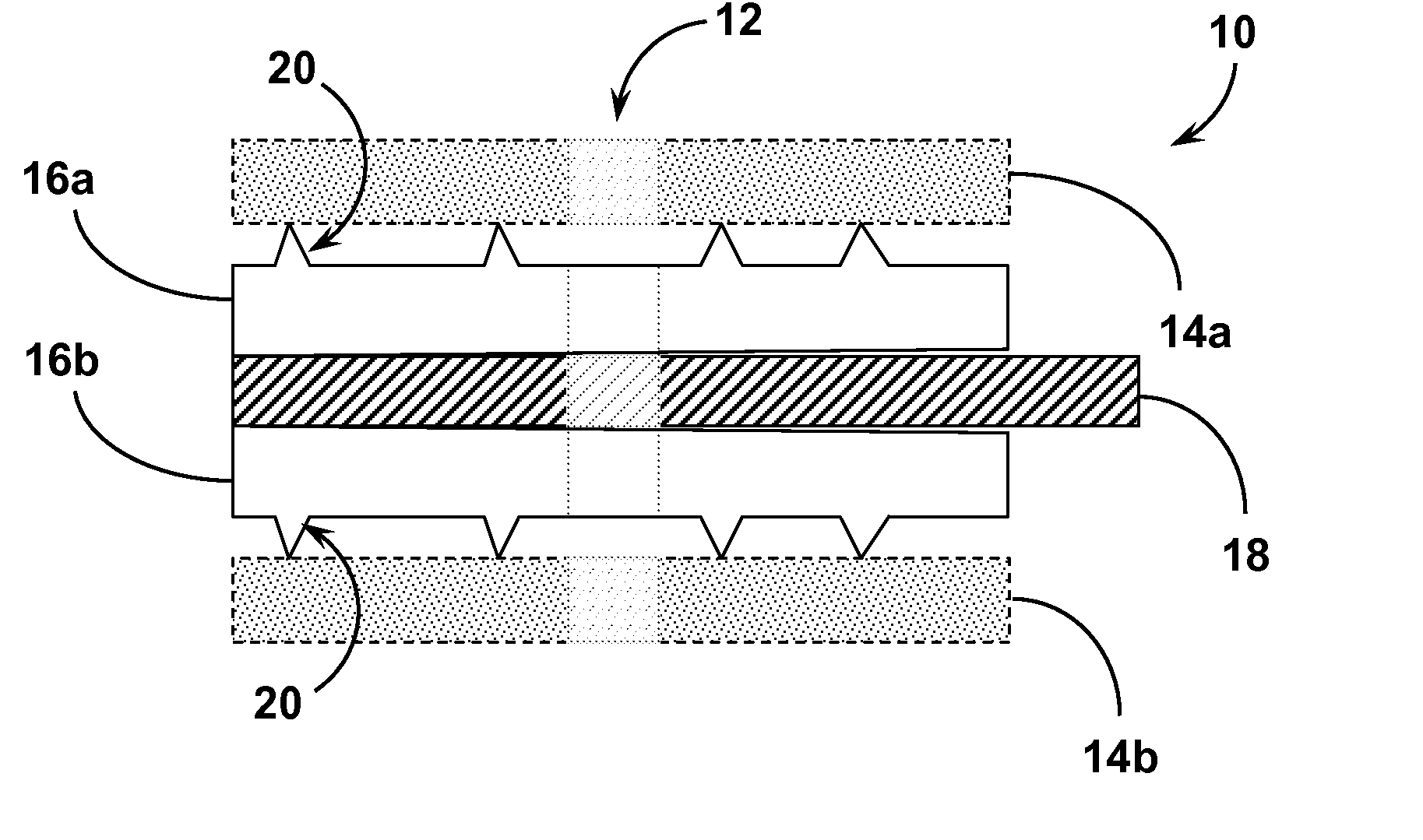
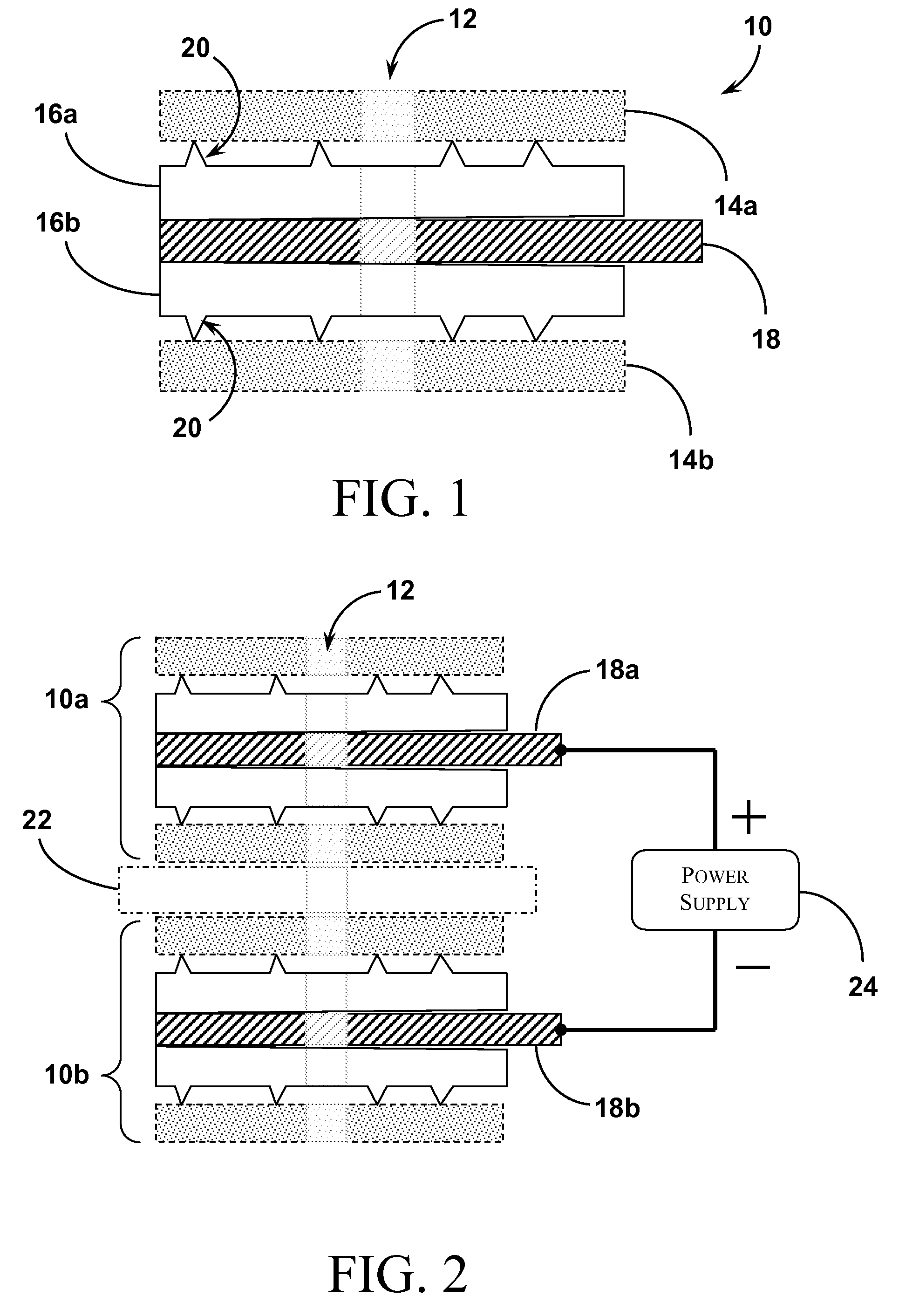
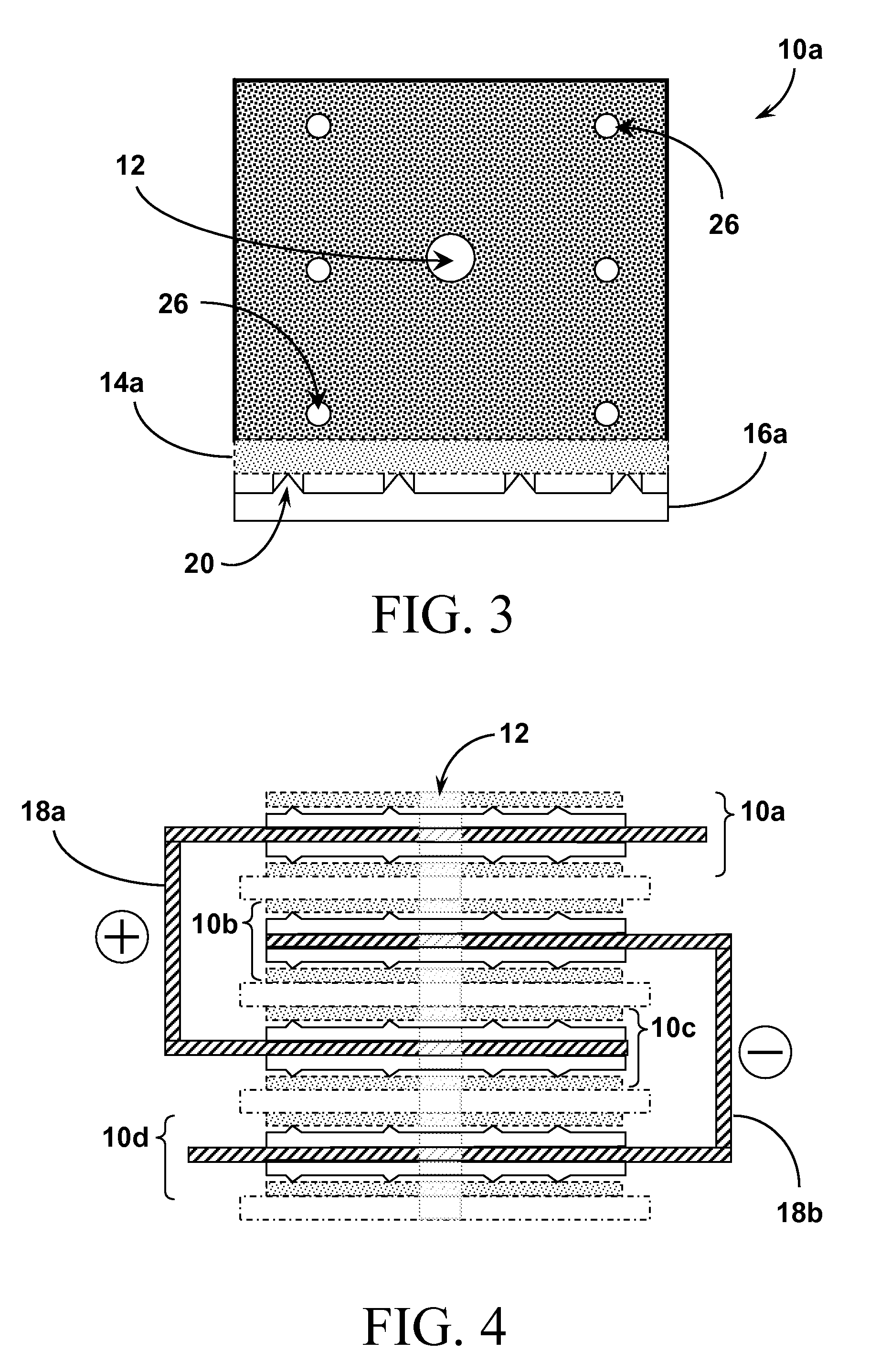
Hybrid Capacitive Deionization and Electro-Deionization (CDI-EDI) Electrochemical Cell for Fluid Purification
PatentInactiveUS20080078672A1
Innovation
- A hybrid capacitive deionization/electro-deionization system is developed, featuring a perforated coating with pin holes and spacers to separate the coating from electrodes, optimizing ion expulsion and energy efficiency, using thin, low-resistance membranes with improved surface area and conductance, and efficient power source circuitry.

Environmental Impact Assessment of CDI Systems
Capacitive deionization (CDI) systems present significant environmental advantages compared to conventional desalination technologies, particularly in terms of energy consumption and carbon footprint. The technology operates at relatively low voltages (typically 1.2-1.6V), resulting in substantially lower energy requirements than reverse osmosis or thermal desalination processes. This reduced energy demand translates to decreased greenhouse gas emissions, especially when powered by renewable energy sources.
The material composition of CDI electrodes raises important environmental considerations throughout the system lifecycle. Activated carbon electrodes, while derived from renewable biomass sources, require energy-intensive activation processes that contribute to their overall environmental impact. Advanced electrode materials such as carbon nanotubes and graphene, despite superior electrochemical performance, involve more complex synthesis procedures with potentially higher environmental costs during manufacturing phases.
Water recovery rates in CDI systems typically range from 50-80%, generating concentrated brine streams that require appropriate disposal or treatment strategies. Unlike high-pressure membrane processes, CDI brine contains no chemical additives, simplifying downstream processing and reducing secondary pollution risks. The absence of chemical pretreatment requirements further minimizes the environmental burden associated with chemical consumption and waste generation.
End-of-life considerations for CDI systems demonstrate favorable environmental profiles compared to membrane-based technologies. Carbon-based electrodes can potentially be regenerated or repurposed, while the absence of polymer membranes reduces long-term waste accumulation. The modular design of CDI systems facilitates component replacement and system upgrades, extending operational lifespans and reducing material consumption over time.
Life cycle assessments indicate that CDI systems achieve environmental break-even points within 2-3 years of operation, primarily due to their lower operational energy requirements. The technology's compatibility with intermittent renewable energy sources enhances its environmental sustainability profile, particularly in off-grid applications where solar or wind power integration is feasible.
Regional environmental impacts vary significantly based on local energy grid compositions and water scarcity conditions. In areas with high renewable energy penetration, CDI systems demonstrate exceptional environmental performance metrics, while regions dependent on fossil fuel-based electricity generation show more modest environmental benefits compared to alternative desalination technologies.
The material composition of CDI electrodes raises important environmental considerations throughout the system lifecycle. Activated carbon electrodes, while derived from renewable biomass sources, require energy-intensive activation processes that contribute to their overall environmental impact. Advanced electrode materials such as carbon nanotubes and graphene, despite superior electrochemical performance, involve more complex synthesis procedures with potentially higher environmental costs during manufacturing phases.
Water recovery rates in CDI systems typically range from 50-80%, generating concentrated brine streams that require appropriate disposal or treatment strategies. Unlike high-pressure membrane processes, CDI brine contains no chemical additives, simplifying downstream processing and reducing secondary pollution risks. The absence of chemical pretreatment requirements further minimizes the environmental burden associated with chemical consumption and waste generation.
End-of-life considerations for CDI systems demonstrate favorable environmental profiles compared to membrane-based technologies. Carbon-based electrodes can potentially be regenerated or repurposed, while the absence of polymer membranes reduces long-term waste accumulation. The modular design of CDI systems facilitates component replacement and system upgrades, extending operational lifespans and reducing material consumption over time.
Life cycle assessments indicate that CDI systems achieve environmental break-even points within 2-3 years of operation, primarily due to their lower operational energy requirements. The technology's compatibility with intermittent renewable energy sources enhances its environmental sustainability profile, particularly in off-grid applications where solar or wind power integration is feasible.
Regional environmental impacts vary significantly based on local energy grid compositions and water scarcity conditions. In areas with high renewable energy penetration, CDI systems demonstrate exceptional environmental performance metrics, while regions dependent on fossil fuel-based electricity generation show more modest environmental benefits compared to alternative desalination technologies.
Energy Efficiency Standards for CDI Applications
Energy efficiency standards for Capacitive Deionization (CDI) applications have emerged as critical benchmarks for evaluating system performance and guiding technological advancement in water treatment processes. These standards encompass multiple performance metrics that collectively determine the viability and sustainability of CDI systems in various operational contexts.
The primary energy efficiency metric for CDI systems is the energy consumption per unit volume of water treated, typically expressed in kWh/m³. Current industry benchmarks suggest that efficient CDI systems should achieve energy consumption levels below 1.5 kWh/m³ for brackish water desalination applications, with advanced systems targeting sub-1.0 kWh/m³ performance. These thresholds are established based on comparative analysis with alternative desalination technologies and economic feasibility assessments.
Charge efficiency represents another fundamental standard, measuring the ratio of ions removed to the total charge applied during the electrosorption process. High-performance CDI systems should demonstrate charge efficiencies exceeding 80%, with state-of-the-art configurations achieving values above 90%. This metric directly correlates with energy utilization effectiveness and operational cost optimization.
Salt removal efficiency standards define the minimum acceptable performance for CDI applications across different water quality scenarios. For municipal water treatment, systems must achieve at least 85% salt removal efficiency, while industrial applications may require higher thresholds depending on specific water quality requirements. These standards ensure consistent treatment outcomes while maintaining energy-efficient operation.
Recovery rate standards establish minimum water recovery percentages that CDI systems must achieve to be considered energy-efficient. Typical benchmarks require recovery rates above 75% for brackish water applications, ensuring that energy investment translates into meaningful water production volumes. Advanced systems are expected to achieve recovery rates exceeding 85%.
Cycle stability standards mandate that CDI systems maintain their energy efficiency performance over extended operational periods. Systems must demonstrate less than 10% degradation in energy efficiency over 1000 charge-discharge cycles to meet industrial reliability requirements. This ensures long-term operational sustainability and cost-effectiveness.
Temperature-dependent efficiency standards account for varying operational conditions, establishing performance baselines across temperature ranges from 15°C to 45°C. These standards ensure consistent energy efficiency regardless of seasonal variations or geographic deployment locations, maintaining reliable performance metrics across diverse operational environments.
The primary energy efficiency metric for CDI systems is the energy consumption per unit volume of water treated, typically expressed in kWh/m³. Current industry benchmarks suggest that efficient CDI systems should achieve energy consumption levels below 1.5 kWh/m³ for brackish water desalination applications, with advanced systems targeting sub-1.0 kWh/m³ performance. These thresholds are established based on comparative analysis with alternative desalination technologies and economic feasibility assessments.
Charge efficiency represents another fundamental standard, measuring the ratio of ions removed to the total charge applied during the electrosorption process. High-performance CDI systems should demonstrate charge efficiencies exceeding 80%, with state-of-the-art configurations achieving values above 90%. This metric directly correlates with energy utilization effectiveness and operational cost optimization.
Salt removal efficiency standards define the minimum acceptable performance for CDI applications across different water quality scenarios. For municipal water treatment, systems must achieve at least 85% salt removal efficiency, while industrial applications may require higher thresholds depending on specific water quality requirements. These standards ensure consistent treatment outcomes while maintaining energy-efficient operation.
Recovery rate standards establish minimum water recovery percentages that CDI systems must achieve to be considered energy-efficient. Typical benchmarks require recovery rates above 75% for brackish water applications, ensuring that energy investment translates into meaningful water production volumes. Advanced systems are expected to achieve recovery rates exceeding 85%.
Cycle stability standards mandate that CDI systems maintain their energy efficiency performance over extended operational periods. Systems must demonstrate less than 10% degradation in energy efficiency over 1000 charge-discharge cycles to meet industrial reliability requirements. This ensures long-term operational sustainability and cost-effectiveness.
Temperature-dependent efficiency standards account for varying operational conditions, establishing performance baselines across temperature ranges from 15°C to 45°C. These standards ensure consistent energy efficiency regardless of seasonal variations or geographic deployment locations, maintaining reliable performance metrics across diverse operational environments.
Unlock deeper insights with PatSnap Eureka Quick Research — get a full tech report to explore trends and direct your research. Try now!
Generate Your Research Report Instantly with AI Agent
Supercharge your innovation with PatSnap Eureka AI Agent Platform!