

Developing CDI Systems for Resilient Water Purification Solutions
APR 21, 20269 MIN READ
Generate Your Research Report Instantly with AI Agent
PatSnap Eureka helps you evaluate technical feasibility & market potential.
CDI Water Purification Technology Background and Objectives
Capacitive Deionization (CDI) technology represents a revolutionary approach to water purification that has gained significant momentum over the past two decades. This electrochemical desalination method operates by applying a low voltage across porous carbon electrodes, causing ions to be electrostatically attracted and stored within the electrode pores. Unlike traditional desalination methods such as reverse osmosis or thermal distillation, CDI offers energy-efficient operation, minimal chemical usage, and reduced environmental impact.
The historical development of CDI can be traced back to the 1960s when the fundamental principles were first explored. However, substantial technological advancement occurred in the 1990s with the introduction of carbon aerogel electrodes, which dramatically improved ion removal capacity. The technology has since evolved through multiple generations, incorporating advanced materials such as activated carbon cloth, carbon nanotubes, and more recently, graphene-based electrodes that enhance both capacity and selectivity.
Current market drivers for CDI technology stem from increasing global water scarcity, stricter environmental regulations, and growing demand for sustainable desalination solutions. The technology addresses critical challenges in brackish water treatment, industrial wastewater processing, and distributed water purification systems where traditional methods prove economically or technically unfeasible.
The primary objective of developing resilient CDI systems focuses on creating robust, scalable solutions capable of operating under diverse environmental conditions while maintaining consistent performance. This includes enhancing electrode durability, improving energy efficiency, and developing intelligent control systems that can adapt to varying water quality parameters. Key technical targets include achieving higher salt removal rates, extending operational lifespan, and reducing overall system complexity.
Strategic goals encompass advancing electrode materials science to improve ion selectivity and capacity, developing modular system architectures for flexible deployment, and integrating renewable energy sources for off-grid applications. The ultimate vision involves creating self-sustaining water purification systems that can operate reliably in remote locations, disaster relief scenarios, and resource-constrained environments while delivering consistent water quality standards.
The historical development of CDI can be traced back to the 1960s when the fundamental principles were first explored. However, substantial technological advancement occurred in the 1990s with the introduction of carbon aerogel electrodes, which dramatically improved ion removal capacity. The technology has since evolved through multiple generations, incorporating advanced materials such as activated carbon cloth, carbon nanotubes, and more recently, graphene-based electrodes that enhance both capacity and selectivity.
Current market drivers for CDI technology stem from increasing global water scarcity, stricter environmental regulations, and growing demand for sustainable desalination solutions. The technology addresses critical challenges in brackish water treatment, industrial wastewater processing, and distributed water purification systems where traditional methods prove economically or technically unfeasible.
The primary objective of developing resilient CDI systems focuses on creating robust, scalable solutions capable of operating under diverse environmental conditions while maintaining consistent performance. This includes enhancing electrode durability, improving energy efficiency, and developing intelligent control systems that can adapt to varying water quality parameters. Key technical targets include achieving higher salt removal rates, extending operational lifespan, and reducing overall system complexity.
Strategic goals encompass advancing electrode materials science to improve ion selectivity and capacity, developing modular system architectures for flexible deployment, and integrating renewable energy sources for off-grid applications. The ultimate vision involves creating self-sustaining water purification systems that can operate reliably in remote locations, disaster relief scenarios, and resource-constrained environments while delivering consistent water quality standards.
Market Demand for Resilient Water Treatment Solutions
The global water treatment market is experiencing unprecedented growth driven by escalating water scarcity, deteriorating water quality, and increasing regulatory pressures across multiple sectors. Traditional water treatment infrastructure faces mounting challenges from aging systems, energy inefficiency, and limited adaptability to varying water quality conditions. This creates substantial market opportunities for innovative technologies like Capacitive Deionization systems that offer energy-efficient, modular, and resilient water purification solutions.
Industrial sectors represent the largest demand segment for resilient water treatment solutions, particularly in manufacturing, pharmaceuticals, electronics, and food processing industries. These sectors require consistent water quality standards while facing increasing pressure to reduce operational costs and environmental impact. CDI systems address these needs through lower energy consumption compared to reverse osmosis and reduced chemical usage, making them attractive for continuous industrial operations.
Municipal water treatment authorities are increasingly seeking decentralized and adaptive treatment solutions to address infrastructure limitations and population growth. Remote communities, disaster-prone regions, and developing areas present significant market potential for resilient CDI systems due to their ability to operate with intermittent power sources and minimal maintenance requirements. The technology's scalability allows deployment from small community systems to large municipal installations.
The desalination market segment shows strong growth potential, particularly for brackish water treatment applications. CDI technology offers advantages in treating low to moderate salinity water sources, positioning it as a cost-effective alternative to traditional desalination methods. This market segment benefits from CDI's ability to achieve selective ion removal and operate efficiently at varying salinity levels.
Emergency response and military applications constitute an emerging high-value market segment. These applications demand portable, robust, and rapidly deployable water treatment solutions capable of handling diverse water sources. CDI systems' compact design, quick startup capabilities, and resilience to water quality fluctuations align well with these critical operational requirements.
Agricultural irrigation markets increasingly demand water treatment solutions that can handle variable water quality while maintaining cost-effectiveness. CDI systems offer potential for treating agricultural runoff and brackish groundwater sources, supporting sustainable farming practices and water resource management in water-stressed regions.
Industrial sectors represent the largest demand segment for resilient water treatment solutions, particularly in manufacturing, pharmaceuticals, electronics, and food processing industries. These sectors require consistent water quality standards while facing increasing pressure to reduce operational costs and environmental impact. CDI systems address these needs through lower energy consumption compared to reverse osmosis and reduced chemical usage, making them attractive for continuous industrial operations.
Municipal water treatment authorities are increasingly seeking decentralized and adaptive treatment solutions to address infrastructure limitations and population growth. Remote communities, disaster-prone regions, and developing areas present significant market potential for resilient CDI systems due to their ability to operate with intermittent power sources and minimal maintenance requirements. The technology's scalability allows deployment from small community systems to large municipal installations.
The desalination market segment shows strong growth potential, particularly for brackish water treatment applications. CDI technology offers advantages in treating low to moderate salinity water sources, positioning it as a cost-effective alternative to traditional desalination methods. This market segment benefits from CDI's ability to achieve selective ion removal and operate efficiently at varying salinity levels.
Emergency response and military applications constitute an emerging high-value market segment. These applications demand portable, robust, and rapidly deployable water treatment solutions capable of handling diverse water sources. CDI systems' compact design, quick startup capabilities, and resilience to water quality fluctuations align well with these critical operational requirements.
Agricultural irrigation markets increasingly demand water treatment solutions that can handle variable water quality while maintaining cost-effectiveness. CDI systems offer potential for treating agricultural runoff and brackish groundwater sources, supporting sustainable farming practices and water resource management in water-stressed regions.
Current CDI Technology Status and Technical Challenges
Capacitive Deionization technology has evolved significantly since its initial development in the 1960s, establishing itself as a promising electrochemical water treatment method. Current CDI systems utilize porous carbon electrodes to remove ionic contaminants through electrosorption, achieving typical energy consumption rates of 0.5-1.5 kWh per cubic meter of treated water. Modern implementations demonstrate salt removal efficiencies ranging from 80-95% for brackish water applications, with operational voltages typically maintained between 1.0-1.4V to prevent water electrolysis.
Contemporary CDI configurations encompass several architectural variants, including flow-through CDI, flow-by CDI, and membrane CDI systems. Flow-through designs direct water through porous electrodes, maximizing contact area but potentially causing pressure drops. Flow-by configurations channel water between electrodes, reducing hydraulic resistance while maintaining reasonable removal rates. Membrane CDI incorporates ion-exchange membranes to enhance selectivity and prevent co-ion expulsion, achieving superior desalination performance.
Despite technological advances, CDI systems face substantial technical limitations that constrain widespread adoption. Electrode fouling represents a critical challenge, as organic matter, suspended solids, and scaling compounds accumulate on carbon surfaces, progressively degrading performance. This fouling phenomenon reduces electrosorption capacity by 20-40% over extended operation periods, necessitating frequent maintenance cycles that increase operational costs.
Energy efficiency optimization remains problematic, particularly during regeneration phases where stored ions must be released. Current systems typically recover only 30-50% of input energy during electrode regeneration, resulting in overall energy penalties. Additionally, parasitic reactions including water splitting and carbon oxidation occur at higher voltages, limiting operational windows and electrode longevity.
Scaling limitations significantly impact CDI applicability for high-salinity feedwater. Most commercial systems demonstrate optimal performance with total dissolved solids concentrations below 2,000 mg/L, restricting applications to brackish water treatment. Higher salinity levels cause rapid electrode saturation and reduced removal efficiency, making CDI less competitive compared to reverse osmosis for seawater desalination.
Electrode material degradation poses long-term sustainability concerns, as activated carbon electrodes experience structural changes under repeated charge-discharge cycles. Micropore collapse, surface oxidation, and reduced electrical conductivity contribute to performance decline, typically requiring electrode replacement every 2-3 years depending on operating conditions and water quality parameters.
Contemporary CDI configurations encompass several architectural variants, including flow-through CDI, flow-by CDI, and membrane CDI systems. Flow-through designs direct water through porous electrodes, maximizing contact area but potentially causing pressure drops. Flow-by configurations channel water between electrodes, reducing hydraulic resistance while maintaining reasonable removal rates. Membrane CDI incorporates ion-exchange membranes to enhance selectivity and prevent co-ion expulsion, achieving superior desalination performance.
Despite technological advances, CDI systems face substantial technical limitations that constrain widespread adoption. Electrode fouling represents a critical challenge, as organic matter, suspended solids, and scaling compounds accumulate on carbon surfaces, progressively degrading performance. This fouling phenomenon reduces electrosorption capacity by 20-40% over extended operation periods, necessitating frequent maintenance cycles that increase operational costs.
Energy efficiency optimization remains problematic, particularly during regeneration phases where stored ions must be released. Current systems typically recover only 30-50% of input energy during electrode regeneration, resulting in overall energy penalties. Additionally, parasitic reactions including water splitting and carbon oxidation occur at higher voltages, limiting operational windows and electrode longevity.
Scaling limitations significantly impact CDI applicability for high-salinity feedwater. Most commercial systems demonstrate optimal performance with total dissolved solids concentrations below 2,000 mg/L, restricting applications to brackish water treatment. Higher salinity levels cause rapid electrode saturation and reduced removal efficiency, making CDI less competitive compared to reverse osmosis for seawater desalination.
Electrode material degradation poses long-term sustainability concerns, as activated carbon electrodes experience structural changes under repeated charge-discharge cycles. Micropore collapse, surface oxidation, and reduced electrical conductivity contribute to performance decline, typically requiring electrode replacement every 2-3 years depending on operating conditions and water quality parameters.
Existing CDI System Designs and Configurations
01 Redundancy and failover mechanisms in CDI systems
Implementation of redundant components and automatic failover capabilities to ensure continuous operation of CDI systems during component failures. This includes backup modules, duplicate data paths, and seamless switching mechanisms that maintain system functionality when primary components fail. The approach enhances system availability and prevents single points of failure in critical CDI infrastructure.- Redundancy and failover mechanisms in CDI systems: Implementation of redundant components and automatic failover capabilities to ensure continuous operation of CDI systems during component failures. This includes backup modules, duplicate data paths, and automatic switching mechanisms that activate when primary systems fail, thereby maintaining system availability and preventing service interruptions.
- Fault detection and diagnostic systems for CDI: Advanced monitoring and diagnostic capabilities that continuously assess CDI system health and detect anomalies or potential failures. These systems employ sensors, data analysis algorithms, and predictive maintenance techniques to identify issues before they cause system failures, enabling proactive maintenance and improved reliability.
- Data integrity and recovery mechanisms: Methods for ensuring data consistency and implementing recovery procedures in CDI systems. This includes error correction codes, data validation techniques, backup storage solutions, and recovery protocols that protect against data corruption and enable restoration of system state after failures or disruptions.
- Network resilience and communication protocols: Enhanced communication architectures and protocols designed to maintain connectivity and data transmission in CDI systems under adverse conditions. This encompasses alternative routing mechanisms, error-tolerant communication protocols, and network topology designs that ensure reliable information exchange even when portions of the network are compromised.
- System hardening and environmental protection: Physical and logical protection measures to shield CDI systems from environmental stresses and external threats. This includes protective enclosures, electromagnetic shielding, temperature management systems, and security features that prevent unauthorized access or tampering, ensuring system operation under harsh conditions and maintaining operational integrity.
02 Fault detection and diagnostic systems for CDI
Advanced monitoring and diagnostic capabilities that continuously assess CDI system health and detect anomalies or potential failures. These systems employ sensors, data analytics, and predictive algorithms to identify issues before they cause system disruptions. Real-time monitoring enables proactive maintenance and rapid response to emerging problems, improving overall system resilience.Expand Specific Solutions03 Data integrity and recovery mechanisms
Techniques for ensuring data consistency and enabling rapid recovery in CDI systems following disruptions. This includes error correction codes, data validation protocols, and backup strategies that protect against data corruption or loss. Recovery mechanisms allow systems to restore normal operation quickly after failures while maintaining data accuracy and completeness.Expand Specific Solutions04 Adaptive control strategies for system stability
Dynamic control algorithms that adjust CDI system parameters in response to changing conditions or disturbances. These adaptive approaches optimize system performance under varying loads and environmental conditions while maintaining stability. The control strategies incorporate feedback mechanisms and learning capabilities to improve resilience against unexpected events.Expand Specific Solutions05 Communication network resilience for CDI systems
Robust communication architectures that ensure reliable data transmission between CDI system components even under adverse conditions. This includes redundant communication channels, error-tolerant protocols, and network reconfiguration capabilities. The designs maintain connectivity and data flow during network disruptions or interference, supporting overall system resilience.Expand Specific Solutions
Major Players in CDI and Water Treatment Industry
The CDI systems market for water purification is experiencing rapid growth driven by increasing global water scarcity and stringent environmental regulations. The industry is in an expansion phase, transitioning from niche applications to mainstream adoption across residential, commercial, and industrial sectors. Market size is projected to reach significant scale as demand for energy-efficient, chemical-free water treatment solutions intensifies. Technology maturity varies considerably among market players. Established electronics giants like Samsung Electronics, LG Electronics, and Mitsubishi Electric leverage their advanced manufacturing capabilities and R&D infrastructure to develop sophisticated CDI systems. Specialized water technology companies such as Voltea BV, Stockholm Water Technology, and Current Water Technologies demonstrate high technical expertise with proprietary innovations. Academic institutions including Singapore University of Technology & Design, Indian Institute of Technology Madras, and University of Kentucky Research Foundation contribute fundamental research breakthroughs. The competitive landscape shows a convergence of traditional electronics manufacturers, dedicated water treatment specialists, and research institutions, indicating strong technological momentum and diverse innovation pathways in CDI development.
Samsung Electronics Co., Ltd.
Technical Solution: Samsung has developed CDI systems leveraging their semiconductor and materials expertise to create advanced electrode materials and control systems. Their approach utilizes nanostructured carbon materials with enhanced electrochemical properties for improved ion adsorption capacity. The company's CDI technology incorporates IoT connectivity and AI-driven optimization algorithms for predictive maintenance and performance monitoring. Samsung's systems feature modular architecture with standardized components for easy scaling and maintenance. Their research focuses on hybrid CDI systems that combine capacitive deionization with other treatment technologies for comprehensive water purification. The technology includes advanced power management systems that optimize energy consumption during operation and regeneration cycles, making it suitable for both grid-connected and off-grid applications in remote areas.
Strengths: Advanced materials technology, IoT integration capabilities, and strong R&D resources for continuous innovation. Weaknesses: Limited commercial deployment in water treatment sector and higher initial investment costs.
COWAY Co., Ltd.
Technical Solution: COWAY has developed advanced water purification systems incorporating CDI technology for residential and commercial applications. Their approach combines CDI with multi-stage filtration systems, including pre-filtration, activated carbon, and post-treatment processes. The company's CDI modules utilize specially designed carbon electrodes with enhanced surface area and conductivity for improved ion removal efficiency. Their systems feature smart monitoring capabilities with real-time water quality assessment and automatic system optimization. COWAY's CDI technology is integrated into compact units suitable for point-of-use applications, achieving consistent water quality with minimal maintenance requirements. The systems are designed for long-term operation with electrode regeneration cycles that extend component lifespan while maintaining performance standards.
Strengths: Strong consumer market presence, integrated smart monitoring systems, and compact design for residential use. Weaknesses: Primarily focused on lower-capacity applications and limited industrial-scale deployment experience.
Core Innovations in Electrode Materials and Cell Design
Power system for water treatment capacitve desalination ionization module
PatentActiveKR1020230077299A
Innovation
- A power system for a CDI module with a power supply unit, DC/DC converter, bidirectional bipolar converter, and control unit that alternates between water purification and regeneration modes, recovering power to an output capacitor and using it for subsequent driving, with a DB resistance unit to prevent capacitor damage.


Hybrid Capacitive Deionization and Electro-Deionization (CDI-EDI) Electrochemical Cell for Fluid Purification
PatentInactiveUS20080078672A1
Innovation
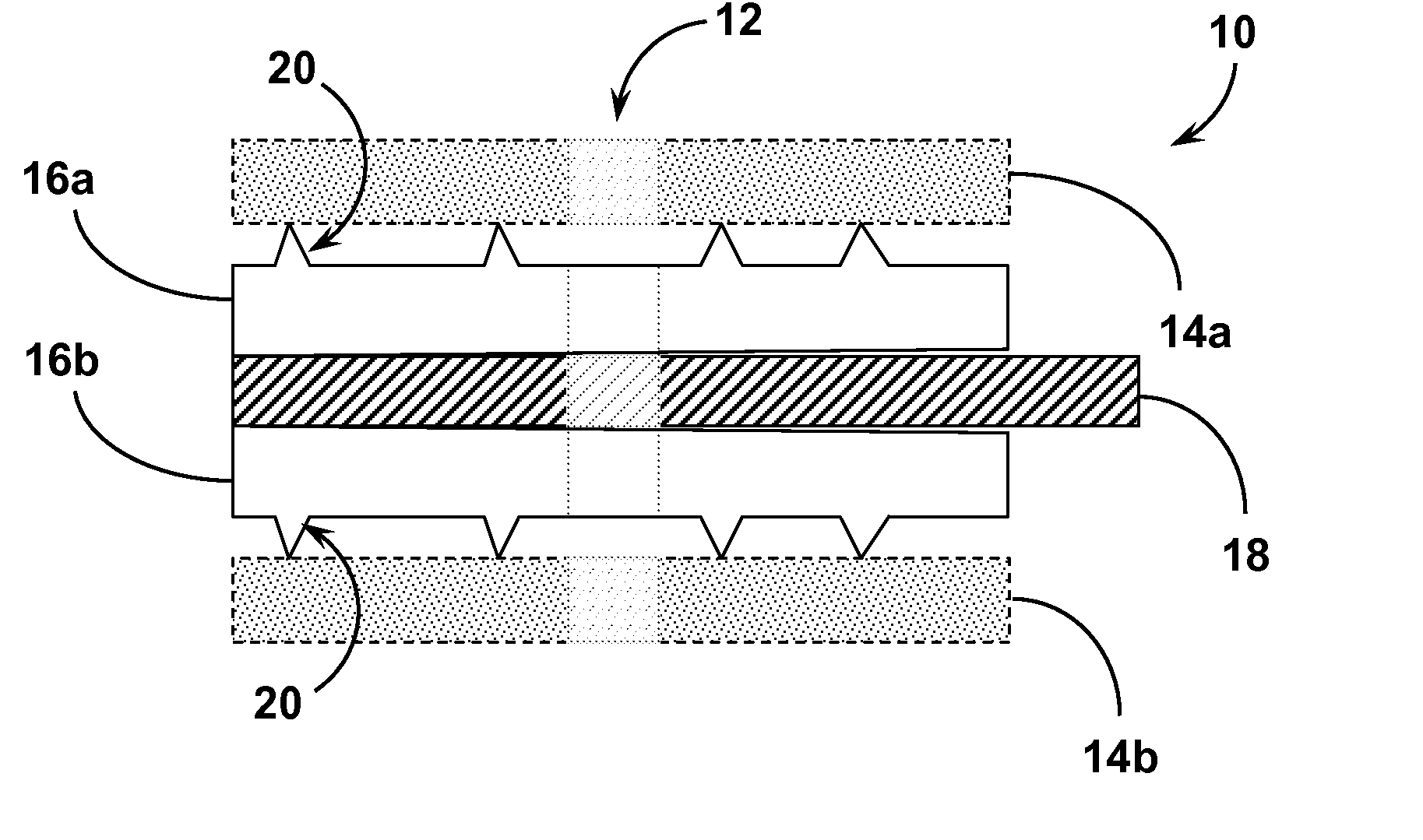
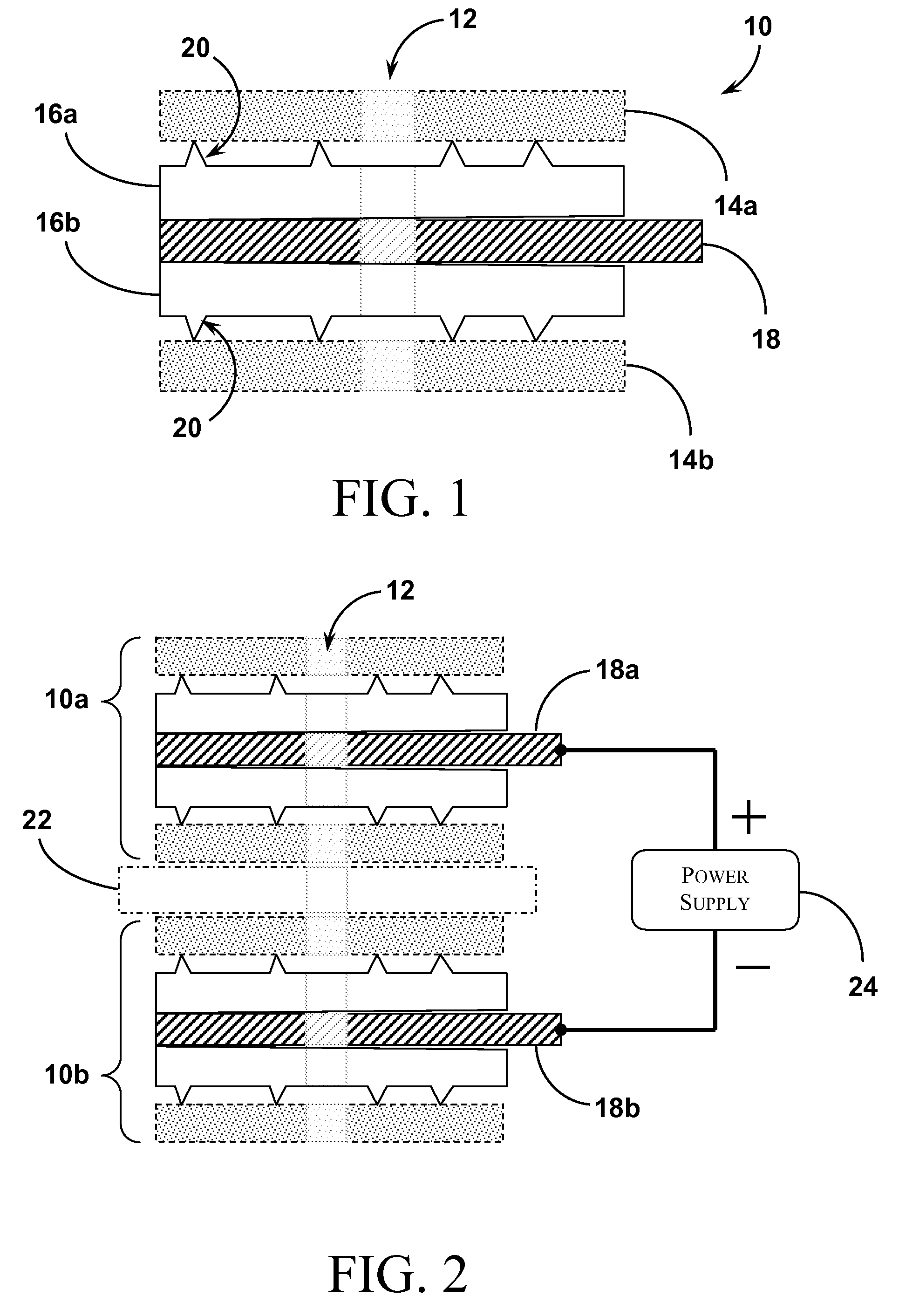
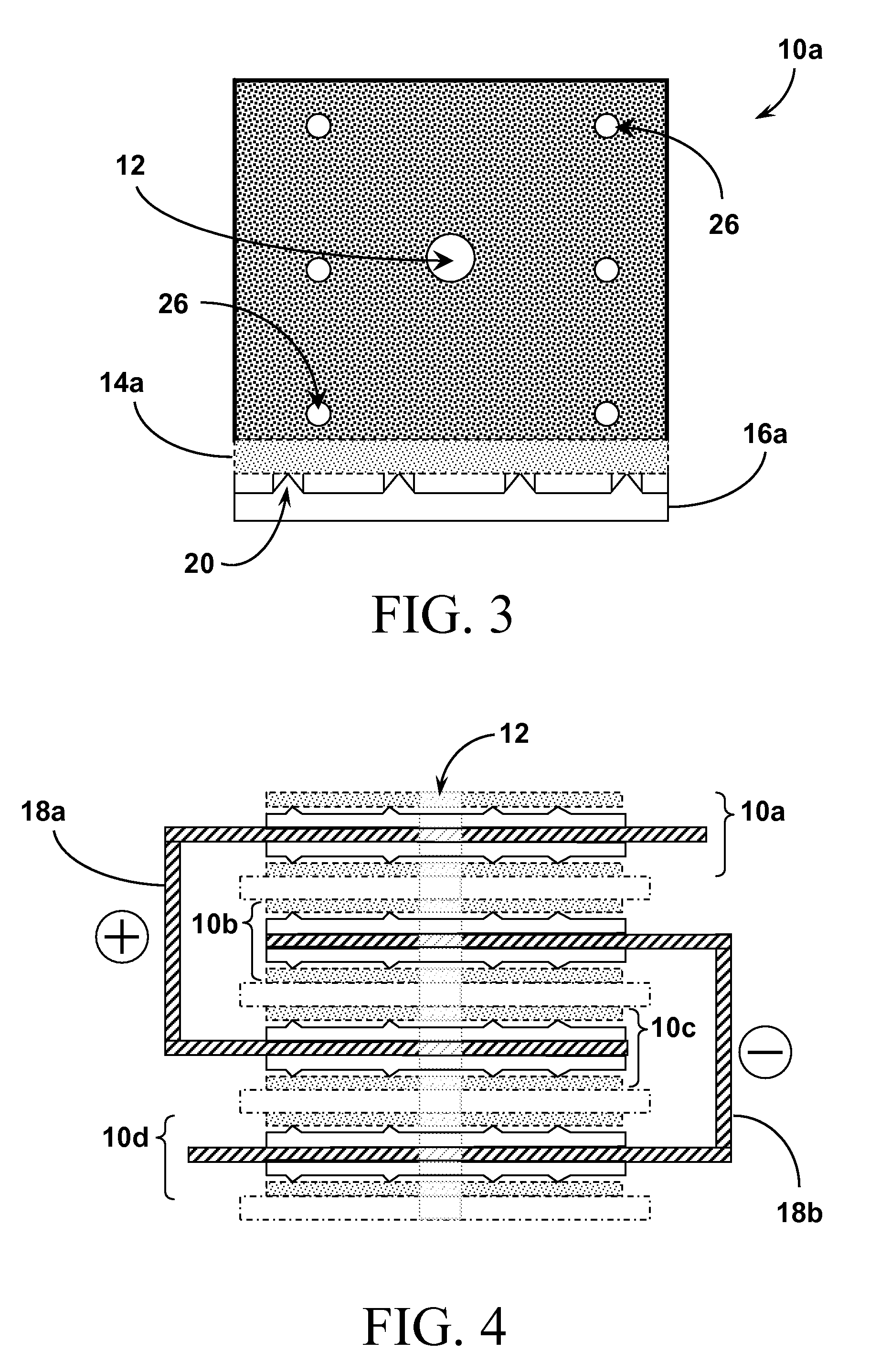
- A hybrid capacitive deionization/electro-deionization system is developed, featuring a perforated coating with pin holes and spacers to separate the coating from electrodes, optimizing ion expulsion and energy efficiency, using thin, low-resistance membranes with improved surface area and conductance, and efficient power source circuitry.

Environmental Regulations for Water Treatment Systems
The regulatory landscape for water treatment systems, particularly Capacitive Deionization (CDI) technologies, is governed by a complex framework of international, national, and regional environmental standards. These regulations establish stringent requirements for water quality parameters, discharge limits, and operational safety protocols that directly influence CDI system design and implementation strategies.
Primary regulatory frameworks include the Safe Drinking Water Act in the United States, which sets maximum contaminant levels for various pollutants, and the European Union's Drinking Water Directive, which mandates specific quality standards for treated water. These regulations require CDI systems to demonstrate consistent removal efficiency for targeted contaminants while maintaining compliance with residual chemical limits and microbiological safety standards.
Emerging regulations increasingly focus on energy efficiency and carbon footprint reduction in water treatment processes. The EU's Energy Efficiency Directive and similar policies worldwide are driving demand for low-energy purification technologies like CDI, which consume significantly less power compared to traditional reverse osmosis systems. These regulatory trends create favorable conditions for CDI adoption while imposing strict performance benchmarks.
Discharge regulations present critical compliance challenges for CDI systems. Concentrated brine streams generated during the desorption process must meet specific conductivity and chemical composition limits before disposal. Regional water authorities increasingly restrict high-salinity discharge into municipal systems, requiring advanced brine management strategies and potential integration with zero liquid discharge technologies.
Environmental impact assessments are becoming mandatory for large-scale CDI installations. Regulations require comprehensive evaluation of electrode materials, particularly regarding heavy metal leaching and long-term environmental fate. Recent regulatory updates emphasize lifecycle assessment requirements, pushing manufacturers toward sustainable electrode materials and recyclable system components.
Certification processes for CDI systems involve rigorous testing protocols established by organizations such as NSF International and the Water Quality Association. These standards evaluate long-term performance stability, material safety, and contaminant removal effectiveness under various operating conditions. Compliance with these certification requirements is essential for market acceptance and regulatory approval in most jurisdictions.
Primary regulatory frameworks include the Safe Drinking Water Act in the United States, which sets maximum contaminant levels for various pollutants, and the European Union's Drinking Water Directive, which mandates specific quality standards for treated water. These regulations require CDI systems to demonstrate consistent removal efficiency for targeted contaminants while maintaining compliance with residual chemical limits and microbiological safety standards.
Emerging regulations increasingly focus on energy efficiency and carbon footprint reduction in water treatment processes. The EU's Energy Efficiency Directive and similar policies worldwide are driving demand for low-energy purification technologies like CDI, which consume significantly less power compared to traditional reverse osmosis systems. These regulatory trends create favorable conditions for CDI adoption while imposing strict performance benchmarks.
Discharge regulations present critical compliance challenges for CDI systems. Concentrated brine streams generated during the desorption process must meet specific conductivity and chemical composition limits before disposal. Regional water authorities increasingly restrict high-salinity discharge into municipal systems, requiring advanced brine management strategies and potential integration with zero liquid discharge technologies.
Environmental impact assessments are becoming mandatory for large-scale CDI installations. Regulations require comprehensive evaluation of electrode materials, particularly regarding heavy metal leaching and long-term environmental fate. Recent regulatory updates emphasize lifecycle assessment requirements, pushing manufacturers toward sustainable electrode materials and recyclable system components.
Certification processes for CDI systems involve rigorous testing protocols established by organizations such as NSF International and the Water Quality Association. These standards evaluate long-term performance stability, material safety, and contaminant removal effectiveness under various operating conditions. Compliance with these certification requirements is essential for market acceptance and regulatory approval in most jurisdictions.
Energy Efficiency and Sustainability in CDI Systems
Energy efficiency represents a critical design parameter in CDI systems, directly impacting operational costs and environmental sustainability. Modern CDI technologies achieve energy consumption rates ranging from 0.5 to 2.0 kWh per cubic meter of treated water, significantly lower than conventional reverse osmosis systems. The energy efficiency primarily depends on electrode materials, system configuration, and operational parameters such as applied voltage and flow rates.
Advanced electrode materials play a pivotal role in enhancing energy performance. Carbon aerogels and activated carbon electrodes demonstrate superior capacitive properties, enabling higher salt removal capacity per unit energy consumed. Recent developments in hybrid capacitive deionization systems incorporate battery materials like sodium manganese oxide, achieving energy recovery during the desorption phase and reducing overall energy consumption by up to 30%.
System design optimization contributes substantially to energy efficiency improvements. Flow-by configurations typically consume less energy than flow-through designs due to reduced pressure drops and optimized residence times. Variable voltage control strategies, including constant current and pulsed voltage operations, have shown potential for minimizing energy waste while maintaining desalination performance.
Sustainability considerations extend beyond energy consumption to encompass material lifecycle, water recovery rates, and environmental impact. CDI systems demonstrate excellent sustainability credentials through their chemical-free operation, eliminating the need for membrane replacement and reducing waste generation. The technology achieves water recovery rates exceeding 85%, substantially higher than traditional desalination methods.
Renewable energy integration presents significant opportunities for sustainable CDI deployment. Solar-powered CDI systems have demonstrated successful operation in remote locations, with energy storage capabilities enabling continuous operation during low-irradiance periods. The modular nature of CDI technology facilitates scalable implementations that can adapt to varying renewable energy availability.
Economic sustainability analysis reveals favorable long-term operational costs despite higher initial capital investments. The absence of chemical additives, minimal maintenance requirements, and extended electrode lifespan contribute to reduced operational expenses. Life cycle assessments indicate that CDI systems achieve carbon neutrality within 2-3 years of operation when powered by renewable energy sources.
Advanced electrode materials play a pivotal role in enhancing energy performance. Carbon aerogels and activated carbon electrodes demonstrate superior capacitive properties, enabling higher salt removal capacity per unit energy consumed. Recent developments in hybrid capacitive deionization systems incorporate battery materials like sodium manganese oxide, achieving energy recovery during the desorption phase and reducing overall energy consumption by up to 30%.
System design optimization contributes substantially to energy efficiency improvements. Flow-by configurations typically consume less energy than flow-through designs due to reduced pressure drops and optimized residence times. Variable voltage control strategies, including constant current and pulsed voltage operations, have shown potential for minimizing energy waste while maintaining desalination performance.
Sustainability considerations extend beyond energy consumption to encompass material lifecycle, water recovery rates, and environmental impact. CDI systems demonstrate excellent sustainability credentials through their chemical-free operation, eliminating the need for membrane replacement and reducing waste generation. The technology achieves water recovery rates exceeding 85%, substantially higher than traditional desalination methods.
Renewable energy integration presents significant opportunities for sustainable CDI deployment. Solar-powered CDI systems have demonstrated successful operation in remote locations, with energy storage capabilities enabling continuous operation during low-irradiance periods. The modular nature of CDI technology facilitates scalable implementations that can adapt to varying renewable energy availability.
Economic sustainability analysis reveals favorable long-term operational costs despite higher initial capital investments. The absence of chemical additives, minimal maintenance requirements, and extended electrode lifespan contribute to reduced operational expenses. Life cycle assessments indicate that CDI systems achieve carbon neutrality within 2-3 years of operation when powered by renewable energy sources.
Unlock deeper insights with PatSnap Eureka Quick Research — get a full tech report to explore trends and direct your research. Try now!
Generate Your Research Report Instantly with AI Agent
Supercharge your innovation with PatSnap Eureka AI Agent Platform!