

Optimizing CDI Systems for Flexible Water Quality Demands
APR 21, 20269 MIN READ
Generate Your Research Report Instantly with AI Agent
PatSnap Eureka helps you evaluate technical feasibility & market potential.
CDI Technology Background and Water Treatment Goals
Capacitive Deionization (CDI) technology emerged in the 1960s as an innovative electrochemical water treatment method, initially developed for space applications where energy efficiency and minimal chemical usage were paramount. The technology operates on the principle of electrical double-layer formation at the electrode-electrolyte interface, where ions are electrostatically attracted and stored in the porous structure of carbon-based electrodes when voltage is applied.
The fundamental mechanism involves applying a low voltage (typically 1-2V) across two porous carbon electrodes, creating an electric field that drives cations toward the cathode and anions toward the anode. During the charging phase, salt ions are removed from the feed water and stored in the electrical double layer of the electrode materials. The deionization process is reversed during discharge, releasing the captured ions into a concentrated brine stream, thereby regenerating the electrodes for subsequent cycles.
CDI technology has evolved significantly from its early applications, transitioning from simple carbon cloth electrodes to advanced materials including activated carbon, carbon nanotubes, graphene, and various composite materials. Modern CDI systems incorporate membrane technologies, creating Membrane CDI (MCDI) variants that enhance ion selectivity and prevent co-ion expulsion, thereby improving desalination efficiency and reducing energy consumption.
The primary water treatment goals of CDI systems encompass brackish water desalination, particularly for applications requiring moderate salt removal from water sources containing 500-10,000 mg/L total dissolved solids. Unlike reverse osmosis or thermal desalination processes, CDI excels in scenarios demanding flexible operation, where water quality requirements vary dynamically based on end-use applications or seasonal variations in source water composition.
Contemporary CDI development focuses on achieving selective ion removal capabilities, enabling targeted extraction of specific contaminants such as heavy metals, nitrates, or fluorides while preserving beneficial minerals. This selective approach addresses growing demands for customized water treatment solutions in industrial processes, agricultural applications, and potable water production where maintaining optimal mineral balance is crucial.
Energy recovery and sustainability represent core objectives in modern CDI system optimization. The technology's inherent advantage lies in its ability to recover a significant portion of charging energy during the discharge phase, making it particularly attractive for renewable energy integration and off-grid applications where energy efficiency directly impacts operational viability and environmental footprint.
The fundamental mechanism involves applying a low voltage (typically 1-2V) across two porous carbon electrodes, creating an electric field that drives cations toward the cathode and anions toward the anode. During the charging phase, salt ions are removed from the feed water and stored in the electrical double layer of the electrode materials. The deionization process is reversed during discharge, releasing the captured ions into a concentrated brine stream, thereby regenerating the electrodes for subsequent cycles.
CDI technology has evolved significantly from its early applications, transitioning from simple carbon cloth electrodes to advanced materials including activated carbon, carbon nanotubes, graphene, and various composite materials. Modern CDI systems incorporate membrane technologies, creating Membrane CDI (MCDI) variants that enhance ion selectivity and prevent co-ion expulsion, thereby improving desalination efficiency and reducing energy consumption.
The primary water treatment goals of CDI systems encompass brackish water desalination, particularly for applications requiring moderate salt removal from water sources containing 500-10,000 mg/L total dissolved solids. Unlike reverse osmosis or thermal desalination processes, CDI excels in scenarios demanding flexible operation, where water quality requirements vary dynamically based on end-use applications or seasonal variations in source water composition.
Contemporary CDI development focuses on achieving selective ion removal capabilities, enabling targeted extraction of specific contaminants such as heavy metals, nitrates, or fluorides while preserving beneficial minerals. This selective approach addresses growing demands for customized water treatment solutions in industrial processes, agricultural applications, and potable water production where maintaining optimal mineral balance is crucial.
Energy recovery and sustainability represent core objectives in modern CDI system optimization. The technology's inherent advantage lies in its ability to recover a significant portion of charging energy during the discharge phase, making it particularly attractive for renewable energy integration and off-grid applications where energy efficiency directly impacts operational viability and environmental footprint.
Market Demand for Flexible Water Desalination Solutions
The global water desalination market is experiencing unprecedented growth driven by escalating water scarcity challenges and increasing population demands. Traditional desalination technologies, while effective, often lack the flexibility required to address varying water quality specifications across different applications. This gap has created substantial market opportunities for adaptive desalination solutions that can dynamically adjust their output characteristics based on specific end-use requirements.
Municipal water treatment facilities represent a significant demand segment, particularly in arid regions where conventional freshwater sources are insufficient. These facilities require desalination systems capable of producing water that meets diverse municipal standards while maintaining operational efficiency across varying feed water conditions. The ability to adjust treatment intensity based on seasonal variations in source water quality has become increasingly valuable for municipal operators seeking to optimize both performance and operational costs.
Industrial applications constitute another major market driver, with sectors such as pharmaceuticals, electronics manufacturing, and food processing requiring highly specific water quality parameters. These industries demand desalination solutions that can produce ultrapure water for critical processes while also providing lower-grade water for general industrial use from the same system. The flexibility to switch between different output specifications without system reconfiguration represents a significant competitive advantage.
Agricultural irrigation markets are increasingly recognizing the value of flexible desalination systems that can adjust salinity levels based on crop requirements and growth stages. Different agricultural applications require varying degrees of desalination, from partial desalination for salt-tolerant crops to complete desalination for sensitive vegetation. This variability creates demand for systems capable of producing multiple water quality grades simultaneously.
The residential and commercial sectors are driving demand for compact, flexible desalination solutions that can adapt to changing household or building requirements. Point-of-use applications particularly benefit from systems that can provide both drinking water quality output and less treated water for non-potable uses, maximizing resource efficiency while minimizing waste.
Emerging markets in developing regions present substantial growth opportunities, where flexible desalination systems can serve multiple community needs with single installations. The ability to adjust output quality based on intended use helps optimize system utilization while reducing infrastructure investment requirements for resource-constrained communities.
Municipal water treatment facilities represent a significant demand segment, particularly in arid regions where conventional freshwater sources are insufficient. These facilities require desalination systems capable of producing water that meets diverse municipal standards while maintaining operational efficiency across varying feed water conditions. The ability to adjust treatment intensity based on seasonal variations in source water quality has become increasingly valuable for municipal operators seeking to optimize both performance and operational costs.
Industrial applications constitute another major market driver, with sectors such as pharmaceuticals, electronics manufacturing, and food processing requiring highly specific water quality parameters. These industries demand desalination solutions that can produce ultrapure water for critical processes while also providing lower-grade water for general industrial use from the same system. The flexibility to switch between different output specifications without system reconfiguration represents a significant competitive advantage.
Agricultural irrigation markets are increasingly recognizing the value of flexible desalination systems that can adjust salinity levels based on crop requirements and growth stages. Different agricultural applications require varying degrees of desalination, from partial desalination for salt-tolerant crops to complete desalination for sensitive vegetation. This variability creates demand for systems capable of producing multiple water quality grades simultaneously.
The residential and commercial sectors are driving demand for compact, flexible desalination solutions that can adapt to changing household or building requirements. Point-of-use applications particularly benefit from systems that can provide both drinking water quality output and less treated water for non-potable uses, maximizing resource efficiency while minimizing waste.
Emerging markets in developing regions present substantial growth opportunities, where flexible desalination systems can serve multiple community needs with single installations. The ability to adjust output quality based on intended use helps optimize system utilization while reducing infrastructure investment requirements for resource-constrained communities.
Current CDI System Limitations and Technical Challenges
Current CDI systems face significant operational constraints that limit their effectiveness in addressing diverse water quality requirements. The most prominent limitation lies in their narrow operational voltage window, typically ranging from 1.0 to 1.4 volts. Operating beyond this range leads to water electrolysis, electrode degradation, and reduced system efficiency. This voltage constraint directly impacts the achievable salt removal capacity and processing speed, making it challenging to adapt to varying feed water salinity levels.
Electrode material degradation represents another critical challenge affecting system longevity and performance consistency. Carbon-based electrodes, while cost-effective, suffer from oxidation and structural deterioration during extended operation cycles. This degradation manifests as reduced electrosorption capacity, increased electrical resistance, and eventual electrode failure. The problem becomes more severe when treating high-salinity water or operating under aggressive cycling conditions.
Energy efficiency remains a persistent technical hurdle, particularly during the desorption phase where energy recovery is minimal. Current systems typically achieve energy consumption rates of 1.5-3.0 kWh per cubic meter of treated water, which is significantly higher than reverse osmosis for high-salinity applications. The lack of effective energy recovery mechanisms during electrode regeneration contributes to overall system inefficiency and limits commercial viability.
Scaling and fouling issues pose substantial operational challenges, especially when treating real-world water sources containing organic matter, suspended solids, and multivalent ions. Calcium and magnesium precipitation on electrode surfaces reduces active surface area and increases system resistance. Organic fouling creates additional complications by forming biofilms that impede ion transport and require frequent cleaning cycles.
System scalability presents both technical and economic barriers to widespread adoption. Current CDI configurations struggle to maintain uniform flow distribution and electrical field consistency across large electrode arrays. This limitation restricts system capacity and complicates the design of industrial-scale installations capable of meeting high-volume water treatment demands.
The selectivity limitations of conventional CDI systems create additional operational constraints. Most systems exhibit poor selectivity between different ionic species, making it difficult to achieve targeted removal of specific contaminants while preserving beneficial minerals. This lack of selectivity becomes particularly problematic when treating complex water matrices requiring precise ionic composition control.
Electrode material degradation represents another critical challenge affecting system longevity and performance consistency. Carbon-based electrodes, while cost-effective, suffer from oxidation and structural deterioration during extended operation cycles. This degradation manifests as reduced electrosorption capacity, increased electrical resistance, and eventual electrode failure. The problem becomes more severe when treating high-salinity water or operating under aggressive cycling conditions.
Energy efficiency remains a persistent technical hurdle, particularly during the desorption phase where energy recovery is minimal. Current systems typically achieve energy consumption rates of 1.5-3.0 kWh per cubic meter of treated water, which is significantly higher than reverse osmosis for high-salinity applications. The lack of effective energy recovery mechanisms during electrode regeneration contributes to overall system inefficiency and limits commercial viability.
Scaling and fouling issues pose substantial operational challenges, especially when treating real-world water sources containing organic matter, suspended solids, and multivalent ions. Calcium and magnesium precipitation on electrode surfaces reduces active surface area and increases system resistance. Organic fouling creates additional complications by forming biofilms that impede ion transport and require frequent cleaning cycles.
System scalability presents both technical and economic barriers to widespread adoption. Current CDI configurations struggle to maintain uniform flow distribution and electrical field consistency across large electrode arrays. This limitation restricts system capacity and complicates the design of industrial-scale installations capable of meeting high-volume water treatment demands.
The selectivity limitations of conventional CDI systems create additional operational constraints. Most systems exhibit poor selectivity between different ionic species, making it difficult to achieve targeted removal of specific contaminants while preserving beneficial minerals. This lack of selectivity becomes particularly problematic when treating complex water matrices requiring precise ionic composition control.
Existing CDI Optimization Solutions and Approaches
01 Capacitive Deionization (CDI) electrode materials and configurations
Advanced electrode materials and configurations are utilized in CDI systems to enhance water deionization efficiency. These include carbon-based electrodes with high surface area, modified electrode structures, and composite materials that improve ion adsorption capacity. The electrode design focuses on maximizing the electrosorption of dissolved ions from water, thereby improving overall water quality through effective desalination.- Capacitive Deionization (CDI) System Design and Configuration: CDI systems utilize capacitive deionization technology for water treatment, featuring specific electrode configurations and cell designs to remove ions from water. The systems incorporate capacitive elements arranged to create electric fields that attract and capture dissolved ions, enabling efficient desalination and water purification. Various structural configurations optimize the ion removal process and system performance.
- Water Quality Monitoring and Control Systems: Advanced monitoring systems are integrated into water treatment processes to continuously assess water quality parameters. These systems employ sensors and analytical devices to measure various water quality indicators, enabling real-time monitoring and automated control of treatment processes. The monitoring capabilities ensure consistent output water quality and allow for dynamic adjustment of treatment parameters based on detected water conditions.
- Ion Removal and Desalination Methods: Specialized methods for removing specific ions and contaminants from water streams are employed to improve water quality. These techniques focus on selective ion extraction, desalination processes, and the reduction of total dissolved solids. The methods utilize electrochemical principles and membrane technologies to achieve targeted purification objectives and meet specific water quality standards.
- Electrode Materials and Surface Treatment: The development of specialized electrode materials with enhanced ion adsorption properties is crucial for effective water treatment. Surface modifications and material compositions are optimized to increase ion capture efficiency and system longevity. Various coating techniques and material selections improve the electrochemical performance and durability of electrodes used in water purification systems.
- System Integration and Process Optimization: Comprehensive water treatment systems integrate multiple components including pre-treatment units, main treatment modules, and post-treatment processes. Process optimization strategies focus on energy efficiency, water recovery rates, and operational cost reduction. The integrated approach ensures consistent water quality output while minimizing resource consumption and maximizing system reliability through coordinated operation of various treatment stages.
02 CDI system monitoring and control technologies
Real-time monitoring and control systems are integrated into CDI water treatment processes to optimize performance and ensure consistent water quality. These technologies include sensors for measuring conductivity, flow rates, and ion concentrations, along with automated control systems that adjust operational parameters. The monitoring systems enable continuous assessment of water quality parameters and system efficiency.Expand Specific Solutions03 Flow-through CDI cell design and architecture
Innovative flow-through cell designs improve the efficiency of CDI systems by optimizing water flow patterns and contact time with electrodes. These designs include spacer configurations, flow channel geometries, and multi-stage arrangements that enhance ion removal rates. The architecture focuses on minimizing pressure drop while maximizing deionization effectiveness and water recovery rates.Expand Specific Solutions04 Regeneration and energy recovery in CDI systems
Energy-efficient regeneration methods are employed to restore electrode capacity and recover energy during the desorption phase of CDI operation. These methods include voltage reversal techniques, short-circuit regeneration, and energy recovery circuits that capture and reuse electrical energy. The regeneration processes are designed to minimize energy consumption while maintaining high water quality output.Expand Specific Solutions05 Hybrid CDI systems for enhanced water purification
Hybrid systems combine CDI technology with other water treatment methods to achieve superior water quality and address multiple contaminants simultaneously. These integrated approaches may include combinations with membrane filtration, chemical treatment, or other electrochemical processes. The hybrid configurations are designed to handle complex water quality challenges and improve overall treatment efficiency.Expand Specific Solutions
Key Players in CDI and Water Treatment Industry
The CDI (Capacitive Deionization) systems market for flexible water quality demands is in a growth phase, driven by increasing water scarcity and stringent quality requirements across industries. The market shows significant expansion potential, particularly in industrial and municipal applications where adaptable water treatment solutions are essential. Technology maturity varies considerably among key players: established electronics giants like Samsung Electronics, LG Electronics, and Siemens AG leverage their advanced manufacturing capabilities and R&D infrastructure to develop sophisticated CDI systems, while specialized water technology companies such as Stockholm Water Technology and Current Water Technologies focus on innovative electrochemical approaches. Research institutions including MIT, Indian Institute of Technology Madras, and Xi'an University of Technology contribute fundamental breakthroughs in electrode materials and system optimization. The competitive landscape features both mature industrial corporations with extensive resources and emerging clean-tech startups like JSP Enviro, creating a dynamic environment where technological advancement accelerates through diverse innovation approaches and cross-sector collaboration.
COWAY Co., Ltd.
Technical Solution: COWAY has developed consumer and commercial CDI systems with smart sensing technology and flexible operational modes to accommodate varying water quality conditions. Their technology integrates multi-parameter water quality sensors with automated control systems that adjust CDI operational parameters including electrode voltage, treatment cycles, and flow management based on real-time water analysis. The system features modular electrode assemblies that can be configured for different capacity requirements and contaminant removal targets. Their CDI platform includes user-friendly interfaces for manual override and custom programming, along with energy-efficient operation modes that optimize power consumption while maintaining consistent water quality output across different source water conditions and usage demands.
Strengths: Strong consumer market presence with user-friendly design and proven reliability in residential and small commercial applications. Weaknesses: Limited capability for large-scale industrial applications and less advanced process control compared to specialized industrial CDI providers.
Stockholm Water Technology AB
Technical Solution: Stockholm Water Technology has developed advanced CDI systems with modular electrode configurations that can be dynamically adjusted based on real-time water quality monitoring. Their technology incorporates smart control algorithms that automatically optimize voltage profiles and flow rates to match varying salinity levels and contaminant concentrations. The system features adaptive desalination capacity ranging from 50-500 ppm salt removal efficiency, with energy consumption optimization that reduces power usage by up to 40% during low-demand periods. Their flexible CDI platform includes interchangeable electrode modules and programmable operation cycles that can handle fluctuating feed water conditions while maintaining consistent output quality standards.
Strengths: Highly adaptive system design with real-time optimization capabilities and proven energy efficiency improvements. Weaknesses: Higher initial capital costs due to complex control systems and potential maintenance complexity from multiple modular components.
Core Innovations in Adaptive CDI System Design
Capacitive deionization system for water treatment
PatentInactiveTW200942495A
Innovation
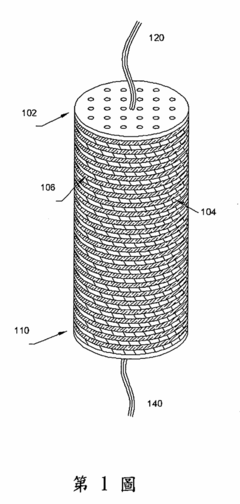
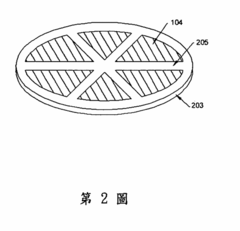
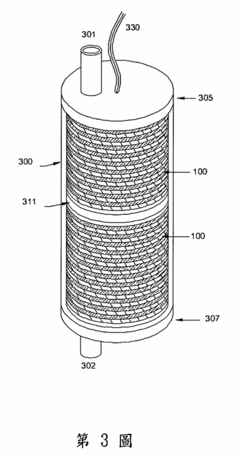
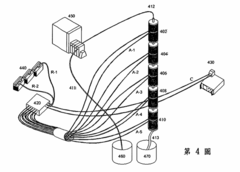
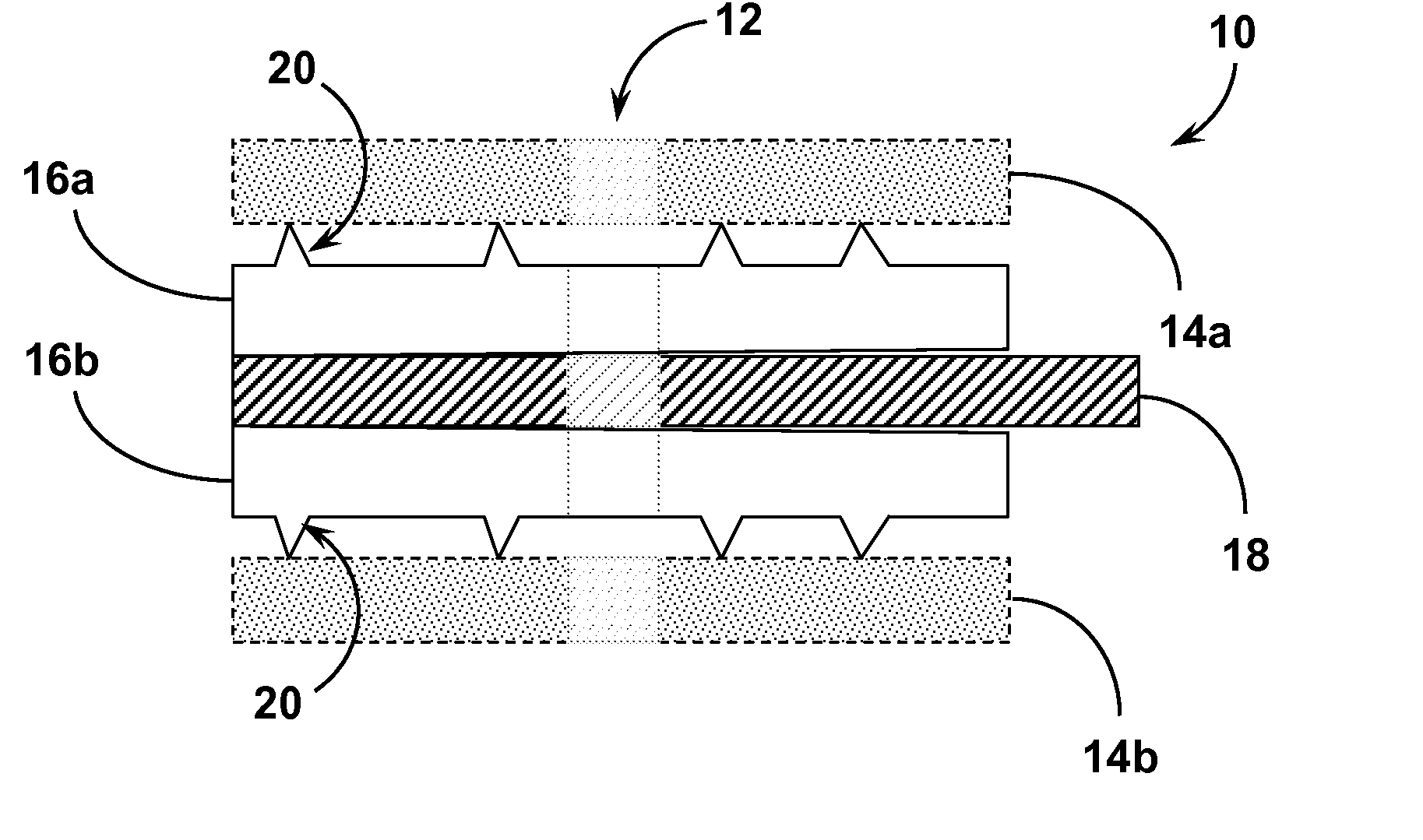
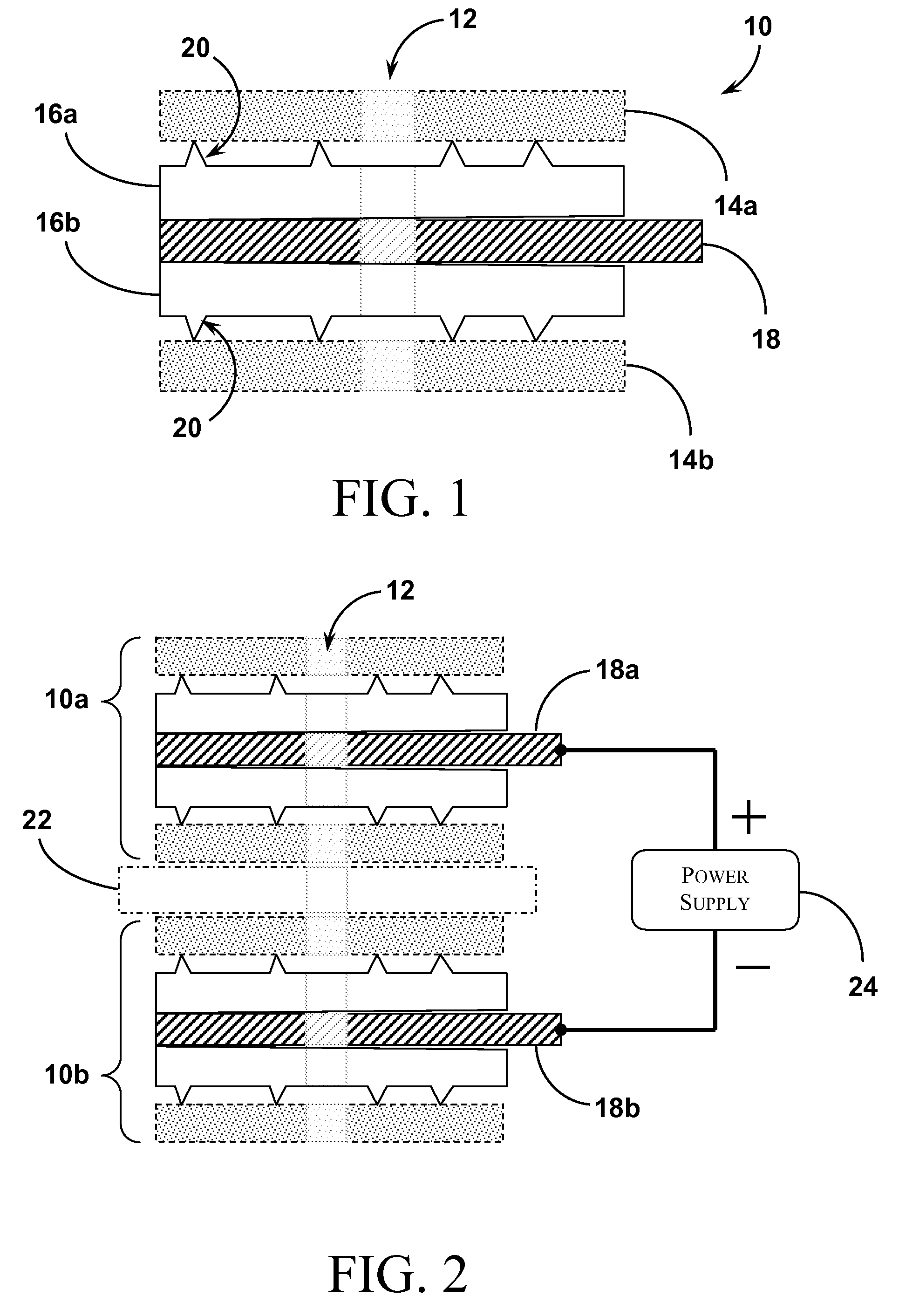
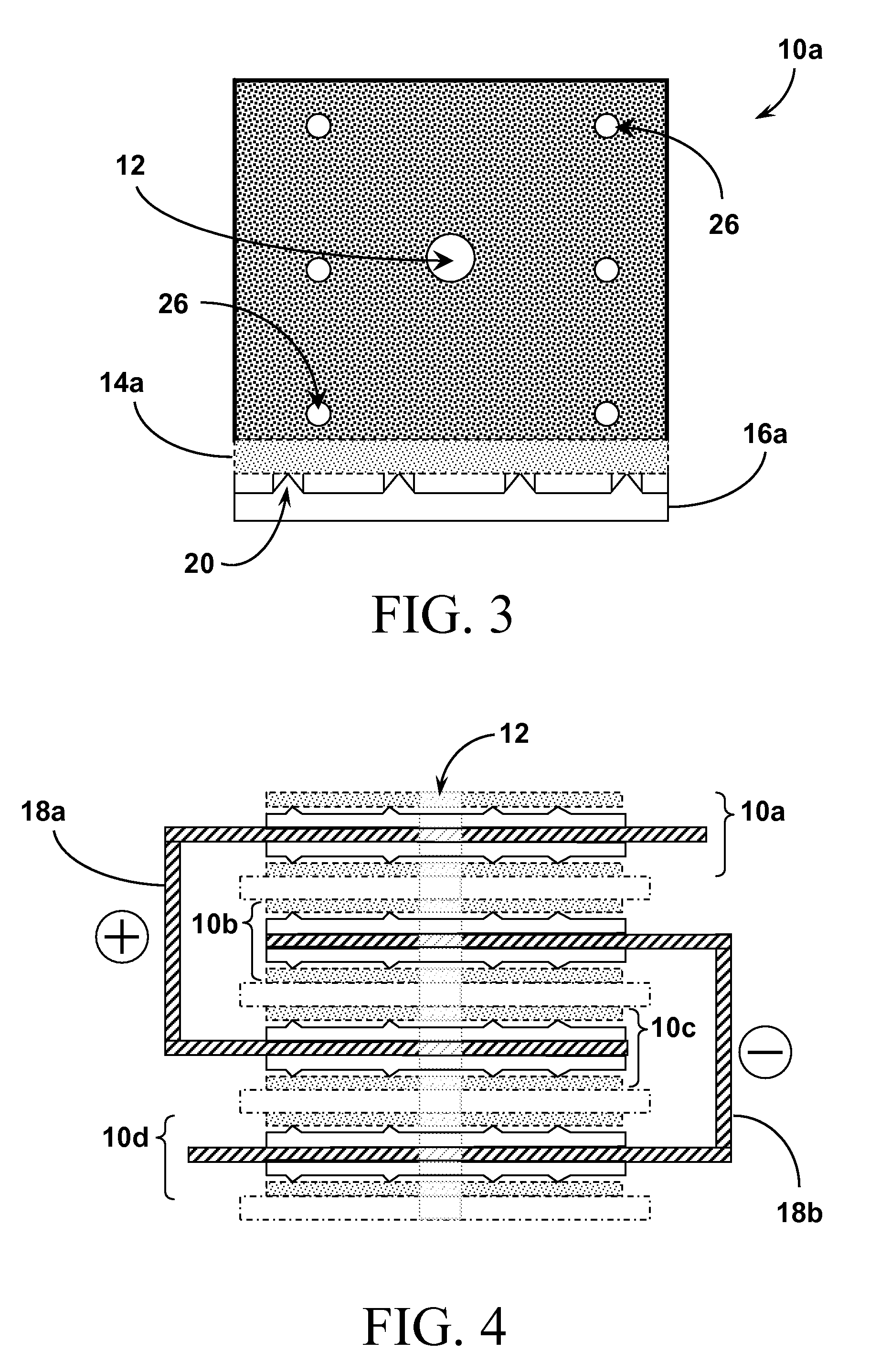
- The use of bipolar electrodes with embedded sealing members and supercapacitors for rapid electrode regeneration, combined with a staggered electrode arrangement and optimized electrical connections, ensures even voltage distribution and minimizes cross-contamination, enhancing ion adsorption capacity and reducing energy consumption.
Hybrid Capacitive Deionization and Electro-Deionization (CDI-EDI) Electrochemical Cell for Fluid Purification
PatentInactiveUS20080078672A1
Innovation
- A hybrid capacitive deionization/electro-deionization system is developed, featuring a perforated coating with pin holes and spacers to separate the coating from electrodes, optimizing ion expulsion and energy efficiency, using thin, low-resistance membranes with improved surface area and conductance, and efficient power source circuitry.

Environmental Regulations for Water Treatment Systems
Environmental regulations governing water treatment systems have become increasingly stringent worldwide, directly impacting the development and deployment of Capacitive Deionization (CDI) technologies. The regulatory landscape encompasses multiple jurisdictions with varying standards for water quality, discharge limits, and treatment efficiency requirements that CDI systems must meet to achieve market acceptance.
The United States Environmental Protection Agency (EPA) establishes primary and secondary drinking water standards under the Safe Drinking Water Act, setting maximum contaminant levels for various ions and dissolved solids that CDI systems are designed to remove. Similarly, the European Union's Drinking Water Directive 2020/2184 mandates specific quality parameters for treated water, including total dissolved solids limits and individual ion concentrations that influence CDI system design specifications.
Discharge regulations present another critical compliance dimension for CDI operations. The Clean Water Act in the United States and corresponding legislation in other regions establish effluent limitations for industrial water treatment facilities. CDI systems must demonstrate compliance with these discharge standards, particularly regarding concentrate stream management and the handling of rejected salts and contaminants during the regeneration process.
Energy efficiency regulations are increasingly relevant to CDI system optimization, as governments implement carbon reduction mandates and energy consumption standards for industrial processes. The European Union's Energy Efficiency Directive and similar frameworks in other regions require water treatment facilities to meet specific energy performance benchmarks, driving demand for more efficient CDI configurations and operational strategies.
Emerging regulations addressing per- and polyfluoroalkyl substances (PFAS) and other contaminants of emerging concern are reshaping CDI system requirements. Recent regulatory developments in multiple jurisdictions mandate removal of these persistent compounds, necessitating advanced CDI electrode materials and hybrid treatment approaches to achieve compliance while maintaining operational flexibility.
Regional variations in regulatory frameworks create additional complexity for CDI system deployment across different markets. Countries like Singapore and Australia have implemented water recycling mandates that favor flexible treatment technologies, while water-scarce regions increasingly adopt regulations promoting advanced treatment and reuse applications where CDI systems can provide competitive advantages through their modular and adaptable design characteristics.
The United States Environmental Protection Agency (EPA) establishes primary and secondary drinking water standards under the Safe Drinking Water Act, setting maximum contaminant levels for various ions and dissolved solids that CDI systems are designed to remove. Similarly, the European Union's Drinking Water Directive 2020/2184 mandates specific quality parameters for treated water, including total dissolved solids limits and individual ion concentrations that influence CDI system design specifications.
Discharge regulations present another critical compliance dimension for CDI operations. The Clean Water Act in the United States and corresponding legislation in other regions establish effluent limitations for industrial water treatment facilities. CDI systems must demonstrate compliance with these discharge standards, particularly regarding concentrate stream management and the handling of rejected salts and contaminants during the regeneration process.
Energy efficiency regulations are increasingly relevant to CDI system optimization, as governments implement carbon reduction mandates and energy consumption standards for industrial processes. The European Union's Energy Efficiency Directive and similar frameworks in other regions require water treatment facilities to meet specific energy performance benchmarks, driving demand for more efficient CDI configurations and operational strategies.
Emerging regulations addressing per- and polyfluoroalkyl substances (PFAS) and other contaminants of emerging concern are reshaping CDI system requirements. Recent regulatory developments in multiple jurisdictions mandate removal of these persistent compounds, necessitating advanced CDI electrode materials and hybrid treatment approaches to achieve compliance while maintaining operational flexibility.
Regional variations in regulatory frameworks create additional complexity for CDI system deployment across different markets. Countries like Singapore and Australia have implemented water recycling mandates that favor flexible treatment technologies, while water-scarce regions increasingly adopt regulations promoting advanced treatment and reuse applications where CDI systems can provide competitive advantages through their modular and adaptable design characteristics.
Energy Efficiency Standards in CDI Applications
Energy efficiency standards in CDI applications have emerged as critical benchmarks for evaluating system performance and environmental sustainability. Current international standards primarily focus on specific energy consumption metrics, typically measured in kilowatt-hours per cubic meter of treated water (kWh/m³). The IEEE and IEC organizations have established preliminary guidelines that define acceptable energy consumption ranges for different water treatment capacities and salinity levels.
The most widely adopted standard is the Energy Recovery Ratio (ERR), which measures the percentage of energy recovered during the discharge cycle compared to the total energy input during charging. Leading CDI systems currently achieve ERR values between 60-80%, with premium systems reaching up to 85% efficiency. This metric has become fundamental for comparing different CDI technologies and manufacturers' performance claims.
Regional variations in energy efficiency requirements reflect local environmental policies and energy costs. European Union regulations mandate minimum energy efficiency thresholds of 3.5 kWh/m³ for municipal water treatment applications, while stricter standards of 2.8 kWh/m³ apply to industrial installations. The United States EPA has proposed similar guidelines through the Energy Star program, emphasizing lifecycle energy consumption assessments.
Emerging standards are incorporating dynamic efficiency measurements that account for variable water quality inputs and flexible operational modes. These advanced metrics evaluate energy performance across different salinity ranges, flow rates, and recovery ratios, providing more comprehensive efficiency assessments. The International Desalination Association has proposed adaptive efficiency standards that adjust benchmarks based on feed water characteristics and treatment objectives.
Certification processes for energy efficiency compliance typically involve third-party testing under standardized conditions, including specific temperature ranges, salinity levels, and operational cycles. These protocols ensure consistent performance evaluation across different manufacturers and system configurations, facilitating informed decision-making for end users and regulatory compliance verification.
The most widely adopted standard is the Energy Recovery Ratio (ERR), which measures the percentage of energy recovered during the discharge cycle compared to the total energy input during charging. Leading CDI systems currently achieve ERR values between 60-80%, with premium systems reaching up to 85% efficiency. This metric has become fundamental for comparing different CDI technologies and manufacturers' performance claims.
Regional variations in energy efficiency requirements reflect local environmental policies and energy costs. European Union regulations mandate minimum energy efficiency thresholds of 3.5 kWh/m³ for municipal water treatment applications, while stricter standards of 2.8 kWh/m³ apply to industrial installations. The United States EPA has proposed similar guidelines through the Energy Star program, emphasizing lifecycle energy consumption assessments.
Emerging standards are incorporating dynamic efficiency measurements that account for variable water quality inputs and flexible operational modes. These advanced metrics evaluate energy performance across different salinity ranges, flow rates, and recovery ratios, providing more comprehensive efficiency assessments. The International Desalination Association has proposed adaptive efficiency standards that adjust benchmarks based on feed water characteristics and treatment objectives.
Certification processes for energy efficiency compliance typically involve third-party testing under standardized conditions, including specific temperature ranges, salinity levels, and operational cycles. These protocols ensure consistent performance evaluation across different manufacturers and system configurations, facilitating informed decision-making for end users and regulatory compliance verification.
Unlock deeper insights with PatSnap Eureka Quick Research — get a full tech report to explore trends and direct your research. Try now!
Generate Your Research Report Instantly with AI Agent
Supercharge your innovation with PatSnap Eureka AI Agent Platform!