

Atomic Force Microscopy Vs Vibrational Sum-frequency Generation: Detail Comparison
SEP 19, 20259 MIN READ
Generate Your Research Report Instantly with AI Agent
PatSnap Eureka helps you evaluate technical feasibility & market potential.
AFM and VSFG Technology Background and Objectives
Surface characterization techniques have evolved significantly over the past few decades, with Atomic Force Microscopy (AFM) and Vibrational Sum-Frequency Generation (VSFG) emerging as powerful tools for investigating material surfaces at the nanoscale. These complementary techniques represent different approaches to surface analysis, each with unique historical development trajectories and technological foundations.
AFM, developed in the 1980s by Gerd Binnig, Calvin Quate, and Christoph Gerber, evolved from scanning tunneling microscopy (STM) to overcome the limitation of only imaging conductive surfaces. The technique revolutionized surface science by enabling three-dimensional topographical imaging with nanometer resolution across virtually any material type. Since its inception, AFM has undergone continuous refinement, with modern systems achieving atomic resolution and incorporating additional measurement capabilities beyond topography.
VSFG spectroscopy, meanwhile, emerged in the 1980s as a surface-specific vibrational spectroscopic technique. Based on nonlinear optical principles, VSFG combines visible and infrared light to generate a sum-frequency signal that is inherently sensitive to molecular structures at interfaces. The technique has experienced significant advancement in recent decades with improvements in laser technology, detection sensitivity, and data processing algorithms.
The technological evolution of both techniques has been driven by increasing demands for more detailed surface characterization across multiple scientific disciplines and industrial applications. AFM has expanded from basic topographical imaging to include mechanical, electrical, magnetic, and thermal property measurements, while VSFG has developed enhanced capabilities for real-time monitoring of surface chemical reactions and interfacial molecular orientations.
The primary objective of comparing these technologies is to establish a comprehensive understanding of their respective strengths, limitations, and complementary nature. AFM excels in providing high-resolution spatial information about surface topography and physical properties, while VSFG offers molecular-level chemical specificity at interfaces without requiring vacuum conditions.
Future technological trends point toward integration of these techniques, with hybrid systems that combine the spatial resolution of AFM with the chemical specificity of spectroscopic methods. Additionally, both technologies are evolving toward higher throughput capabilities, improved automation, and enhanced data analysis through machine learning algorithms to extract more meaningful information from increasingly complex datasets.
Understanding the fundamental differences and potential synergies between AFM and VSFG is crucial for researchers and industries seeking optimal surface characterization strategies for applications ranging from semiconductor manufacturing to biological research and materials science.
AFM, developed in the 1980s by Gerd Binnig, Calvin Quate, and Christoph Gerber, evolved from scanning tunneling microscopy (STM) to overcome the limitation of only imaging conductive surfaces. The technique revolutionized surface science by enabling three-dimensional topographical imaging with nanometer resolution across virtually any material type. Since its inception, AFM has undergone continuous refinement, with modern systems achieving atomic resolution and incorporating additional measurement capabilities beyond topography.
VSFG spectroscopy, meanwhile, emerged in the 1980s as a surface-specific vibrational spectroscopic technique. Based on nonlinear optical principles, VSFG combines visible and infrared light to generate a sum-frequency signal that is inherently sensitive to molecular structures at interfaces. The technique has experienced significant advancement in recent decades with improvements in laser technology, detection sensitivity, and data processing algorithms.
The technological evolution of both techniques has been driven by increasing demands for more detailed surface characterization across multiple scientific disciplines and industrial applications. AFM has expanded from basic topographical imaging to include mechanical, electrical, magnetic, and thermal property measurements, while VSFG has developed enhanced capabilities for real-time monitoring of surface chemical reactions and interfacial molecular orientations.
The primary objective of comparing these technologies is to establish a comprehensive understanding of their respective strengths, limitations, and complementary nature. AFM excels in providing high-resolution spatial information about surface topography and physical properties, while VSFG offers molecular-level chemical specificity at interfaces without requiring vacuum conditions.
Future technological trends point toward integration of these techniques, with hybrid systems that combine the spatial resolution of AFM with the chemical specificity of spectroscopic methods. Additionally, both technologies are evolving toward higher throughput capabilities, improved automation, and enhanced data analysis through machine learning algorithms to extract more meaningful information from increasingly complex datasets.
Understanding the fundamental differences and potential synergies between AFM and VSFG is crucial for researchers and industries seeking optimal surface characterization strategies for applications ranging from semiconductor manufacturing to biological research and materials science.
Market Applications and Research Demand Analysis
The market for advanced surface characterization technologies has witnessed significant growth in recent years, driven by increasing demands across various scientific and industrial sectors. Atomic Force Microscopy (AFM) and Vibrational Sum-frequency Generation (VSFG) represent two distinct approaches to surface analysis, each serving different market segments with unique value propositions.
AFM has established a robust commercial presence with an estimated global market value exceeding $500 million annually. The technology has found widespread adoption in semiconductor manufacturing, where nanoscale quality control is essential for maintaining production standards. Additionally, biomedical research institutions represent a major market segment, utilizing AFM for cellular and molecular imaging at unprecedented resolutions.
Material science research facilities constitute another significant market for AFM, particularly in the development of novel nanomaterials and thin films. The pharmaceutical industry has also embraced AFM technology for drug delivery system development and quality control processes, creating a steady demand for advanced AFM systems with specialized capabilities.
In contrast, VSFG occupies a more specialized market niche, primarily serving fundamental research applications in physical chemistry and surface science. Academic and government research laboratories form the core customer base for VSFG systems, with particular concentration in countries with strong scientific research infrastructure such as the United States, Germany, Japan, and China.
Market research indicates growing demand for VSFG in industrial R&D settings, particularly for interface characterization in catalysis development, polymer science, and electrochemical systems. This expansion beyond purely academic applications signals potential market growth for VSFG technology in coming years.
The complementary nature of these technologies has created a market segment for integrated analytical solutions. Research facilities increasingly seek comprehensive surface characterization capabilities, driving demand for systems that can provide both topographical data (via AFM) and molecular-specific chemical information (via VSFG) in coordinated analytical workflows.
Environmental monitoring represents an emerging application area for both technologies, with particular interest in water-air interface studies using VSFG and nanoscale pollutant characterization via AFM. This sector shows promising growth potential as environmental regulations become more stringent globally.
Market trends indicate increasing demand for user-friendly systems with automated data processing capabilities, as both technologies expand beyond specialist users to broader research and industrial applications. Manufacturers responding to this trend with simplified interfaces and turnkey solutions are gaining market share across both technology segments.
AFM has established a robust commercial presence with an estimated global market value exceeding $500 million annually. The technology has found widespread adoption in semiconductor manufacturing, where nanoscale quality control is essential for maintaining production standards. Additionally, biomedical research institutions represent a major market segment, utilizing AFM for cellular and molecular imaging at unprecedented resolutions.
Material science research facilities constitute another significant market for AFM, particularly in the development of novel nanomaterials and thin films. The pharmaceutical industry has also embraced AFM technology for drug delivery system development and quality control processes, creating a steady demand for advanced AFM systems with specialized capabilities.
In contrast, VSFG occupies a more specialized market niche, primarily serving fundamental research applications in physical chemistry and surface science. Academic and government research laboratories form the core customer base for VSFG systems, with particular concentration in countries with strong scientific research infrastructure such as the United States, Germany, Japan, and China.
Market research indicates growing demand for VSFG in industrial R&D settings, particularly for interface characterization in catalysis development, polymer science, and electrochemical systems. This expansion beyond purely academic applications signals potential market growth for VSFG technology in coming years.
The complementary nature of these technologies has created a market segment for integrated analytical solutions. Research facilities increasingly seek comprehensive surface characterization capabilities, driving demand for systems that can provide both topographical data (via AFM) and molecular-specific chemical information (via VSFG) in coordinated analytical workflows.
Environmental monitoring represents an emerging application area for both technologies, with particular interest in water-air interface studies using VSFG and nanoscale pollutant characterization via AFM. This sector shows promising growth potential as environmental regulations become more stringent globally.
Market trends indicate increasing demand for user-friendly systems with automated data processing capabilities, as both technologies expand beyond specialist users to broader research and industrial applications. Manufacturers responding to this trend with simplified interfaces and turnkey solutions are gaining market share across both technology segments.
Current Technical Capabilities and Limitations
Atomic Force Microscopy (AFM) currently offers unparalleled spatial resolution down to the atomic scale, enabling researchers to visualize and manipulate individual atoms and molecules on surfaces. The technique provides three-dimensional topographical imaging with vertical resolution reaching 0.1 nm and lateral resolution of 1-5 nm under optimal conditions. Modern AFM systems incorporate various operational modes including contact, non-contact, and tapping modes, each optimized for specific sample types and measurement requirements.
Despite these capabilities, AFM faces significant limitations in measurement speed, typically requiring minutes to hours for high-resolution imaging, which restricts its application in dynamic processes. The technique also struggles with imaging deeply recessed features due to tip geometry constraints and experiences challenges in liquid environments where cantilever dynamics become more complex.
Vibrational Sum-Frequency Generation (VSFG) spectroscopy, conversely, excels in molecular interface analysis with exceptional chemical specificity. The technique selectively probes molecular vibrations at interfaces without interference from bulk materials, making it uniquely suited for studying boundary layers, membranes, and surface chemistry. Modern VSFG systems achieve spectral resolution of 2-5 cm⁻¹ and can detect submonolayer molecular coverage.
VSFG offers superior temporal resolution compared to AFM, with ultrafast measurements possible in the picosecond to femtosecond range, enabling real-time monitoring of surface chemical reactions and conformational changes. The non-contact nature of VSFG allows for investigation of delicate or liquid interfaces without perturbation.
However, VSFG's spatial resolution remains limited to the diffraction limit (typically several hundred nanometers), significantly lower than AFM. The technique also requires relatively high laser intensities, which can potentially damage sensitive biological samples, and interpretation of VSFG spectra demands sophisticated theoretical modeling and reference databases.
Both techniques face common challenges in sample preparation, with AFM requiring flat, stable surfaces and VSFG needing optically accessible interfaces with sufficient molecular ordering. Environmental factors such as temperature fluctuations, vibrations, and atmospheric contaminants can compromise measurement quality in both methods.
Recent technological advances have begun addressing these limitations, with high-speed AFM now achieving frame rates of several frames per second for limited scan areas, and VSFG benefiting from improved laser sources and detection schemes that enhance sensitivity and reduce acquisition times. Hybrid approaches combining elements of both techniques are emerging as promising directions for comprehensive surface characterization.
Despite these capabilities, AFM faces significant limitations in measurement speed, typically requiring minutes to hours for high-resolution imaging, which restricts its application in dynamic processes. The technique also struggles with imaging deeply recessed features due to tip geometry constraints and experiences challenges in liquid environments where cantilever dynamics become more complex.
Vibrational Sum-Frequency Generation (VSFG) spectroscopy, conversely, excels in molecular interface analysis with exceptional chemical specificity. The technique selectively probes molecular vibrations at interfaces without interference from bulk materials, making it uniquely suited for studying boundary layers, membranes, and surface chemistry. Modern VSFG systems achieve spectral resolution of 2-5 cm⁻¹ and can detect submonolayer molecular coverage.
VSFG offers superior temporal resolution compared to AFM, with ultrafast measurements possible in the picosecond to femtosecond range, enabling real-time monitoring of surface chemical reactions and conformational changes. The non-contact nature of VSFG allows for investigation of delicate or liquid interfaces without perturbation.
However, VSFG's spatial resolution remains limited to the diffraction limit (typically several hundred nanometers), significantly lower than AFM. The technique also requires relatively high laser intensities, which can potentially damage sensitive biological samples, and interpretation of VSFG spectra demands sophisticated theoretical modeling and reference databases.
Both techniques face common challenges in sample preparation, with AFM requiring flat, stable surfaces and VSFG needing optically accessible interfaces with sufficient molecular ordering. Environmental factors such as temperature fluctuations, vibrations, and atmospheric contaminants can compromise measurement quality in both methods.
Recent technological advances have begun addressing these limitations, with high-speed AFM now achieving frame rates of several frames per second for limited scan areas, and VSFG benefiting from improved laser sources and detection schemes that enhance sensitivity and reduce acquisition times. Hybrid approaches combining elements of both techniques are emerging as promising directions for comprehensive surface characterization.
Comparative Analysis of AFM and VSFG Methodologies
01 AFM instrumentation and resolution enhancement
Atomic Force Microscopy (AFM) instrumentation has evolved to achieve higher resolution surface characterization. Advanced AFM systems incorporate specialized probes, feedback mechanisms, and vibration isolation to enhance sensitivity and resolution. These improvements allow for atomic-scale imaging of surface topography and properties. Modifications to cantilever design and detection systems have pushed resolution limits to the sub-nanometer range, enabling detailed characterization of surface features and molecular structures.- AFM instrumentation and resolution enhancement: Atomic Force Microscopy (AFM) instrumentation has been developed to achieve higher resolution and sensitivity for surface characterization. These developments include specialized cantilevers, probe tips, and feedback mechanisms that allow for atomic-level resolution. Advanced AFM systems can detect surface features at the nanometer scale and even achieve sub-nanometer resolution under optimal conditions, enabling detailed topographical mapping of various surfaces.
- VSFG spectroscopy for surface molecular analysis: Vibrational Sum-frequency Generation (VSFG) spectroscopy provides molecular-level information about surfaces and interfaces. This technique is particularly valuable for analyzing molecular orientation, conformation, and interactions at interfaces. VSFG is surface-specific due to its selection rules, making it highly sensitive to molecular structures at interfaces while eliminating bulk signals. The technique can detect monolayers and sub-monolayers of molecules on various substrates.
- Combined AFM-VSFG systems for comprehensive surface analysis: Integration of Atomic Force Microscopy with Vibrational Sum-frequency Generation creates powerful hybrid systems for comprehensive surface characterization. These combined systems allow simultaneous acquisition of topographical data and molecular spectroscopic information, providing correlative insights into surface properties. The integration enables researchers to connect physical surface features with chemical composition and molecular orientation at interfaces, offering more complete characterization than either technique alone.
- Environmental control and in-situ measurements: Advanced AFM and VSFG systems incorporate environmental control chambers and in-situ measurement capabilities to study surfaces under various conditions. These setups allow for real-time observation of surface changes in response to temperature, pressure, humidity, or chemical exposure. Such capabilities are crucial for understanding dynamic surface processes, including chemical reactions, phase transitions, and biological interactions at interfaces.
- Signal processing and sensitivity enhancement techniques: Various signal processing and enhancement techniques have been developed to improve the sensitivity and resolution of both AFM and VSFG measurements. These include noise reduction algorithms, lock-in amplification, heterodyne detection, and advanced data analysis methods. Such techniques enable detection of weak signals from small surface features or low-concentration molecular species, pushing the detection limits of both techniques and allowing characterization of increasingly subtle surface phenomena.
02 VSFG spectroscopy for surface molecular analysis
Vibrational Sum-frequency Generation (VSFG) spectroscopy provides molecular-level information about surface composition and orientation. This technique is particularly valuable for analyzing interfaces and thin films with high surface specificity. VSFG combines infrared and visible laser beams to generate signals that are sensitive to molecular vibrations specifically at interfaces. The technique offers exceptional sensitivity to molecular orientation and conformation at surfaces, providing information that complements topographical data from AFM.Expand Specific Solutions03 Combined AFM-VSFG systems for comprehensive surface characterization
Integrated systems combining AFM and VSFG technologies enable simultaneous measurement of both physical topography and chemical composition of surfaces. These hybrid approaches provide correlated structural and spectroscopic information at high spatial resolution. The combined techniques allow researchers to connect physical surface features with molecular composition and orientation, offering more comprehensive surface characterization than either technique alone. Such integrated systems have applications in materials science, semiconductor research, and biological sample analysis.Expand Specific Solutions04 Environmental control and sample preparation techniques
Advanced environmental control systems and sample preparation methods enhance the sensitivity and reliability of AFM and VSFG measurements. Controlled atmosphere chambers, temperature regulation, and vibration isolation platforms improve measurement stability. Specialized sample preparation techniques preserve surface integrity while enabling high-resolution imaging and spectroscopy. These environmental controls are crucial for analyzing sensitive samples and for maintaining consistent measurement conditions, particularly for biological specimens or reactive surfaces.Expand Specific Solutions05 Data processing and analysis methods for surface characterization
Advanced algorithms and computational methods have been developed to process and analyze data from AFM and VSFG measurements. These techniques include noise reduction, signal enhancement, and multivariate analysis to extract meaningful information from complex datasets. Machine learning approaches are increasingly applied to interpret surface characterization data, enabling automated feature recognition and classification. These computational methods improve the sensitivity of detection and enable quantitative analysis of surface properties at nanoscale resolution.Expand Specific Solutions
Leading Manufacturers and Research Institutions
Atomic Force Microscopy (AFM) and Vibrational Sum-frequency Generation (VSFG) technologies are currently in different stages of market maturity. The AFM market is well-established and mature, with key players like Shimadzu, JEOL, Hitachi, and Infinitesima driving innovation in high-resolution surface imaging applications. In contrast, VSFG represents an emerging specialized spectroscopic technique with growing applications in surface chemistry and materials science. The global microscopy market, encompassing these technologies, is projected to reach $12 billion by 2026, with AFM holding significant market share. Academic institutions (Beihang University, Yale, Northwestern) collaborate with research organizations (CSIC, CNRS) and industry leaders to advance both technologies, with recent developments focusing on combining AFM's nanoscale spatial resolution with VSFG's molecular-level chemical specificity for comprehensive surface analysis capabilities.
JEOL Ltd.
Technical Solution: JEOL has developed advanced Atomic Force Microscopy systems with their JSPM series that incorporates ultra-high vacuum (UHV) capabilities and temperature control from 20K to 800K. Their technology integrates scanning tunneling microscopy (STM) with AFM in a single platform, allowing researchers to switch between techniques without sample transfer. JEOL's AFM systems feature proprietary piezoelectric scanners with sub-angstrom resolution and minimal thermal drift. For comparative studies with vibrational spectroscopy, JEOL has engineered specialized sample holders that enable sequential AFM and spectroscopic measurements on identical sample regions. Their latest systems incorporate machine learning algorithms for automated tip conditioning and image optimization, significantly reducing operator dependency[1][3].
Strengths: JEOL's integrated AFM-STM systems provide exceptional versatility for surface analysis with atomic resolution capabilities. Their temperature-controlled environments enable studies across wide temperature ranges. Weaknesses: Their systems are generally more expensive than competitors and require specialized training. The comparative workflow between AFM and vibrational techniques still requires sample transfer between instruments, introducing potential alignment challenges.
Infinitesima Ltd.
Technical Solution: Infinitesima has developed the Rapid Probe Microscopy (RPM) technology that dramatically increases AFM scanning speeds while maintaining high resolution. Their VideoAFM system can acquire topographical images at video frame rates (15 fps), approximately 1000 times faster than conventional AFM systems. This breakthrough enables real-time observation of dynamic surface processes that would be impossible with traditional AFM. For comparative studies with vibrational techniques, Infinitesima has developed specialized sample mounting systems that maintain precise registration between different measurement platforms. Their high-speed scanning capability allows researchers to rapidly identify regions of interest for subsequent spectroscopic analysis, significantly improving workflow efficiency. Infinitesima's systems incorporate proprietary probe designs with optimized mechanical properties for high-speed scanning while maintaining tip sharpness and measurement accuracy. Their data acquisition systems feature advanced signal processing algorithms that reduce noise and enhance contrast in real-time[7][9].
Strengths: Infinitesima's revolutionary scanning speed enables applications impossible with conventional AFM, particularly for dynamic processes and large-area scanning. Their systems offer excellent throughput for industrial applications. Weaknesses: The high-speed scanning comes with some trade-offs in ultimate resolution compared to the highest-resolution AFM systems. Their technology is more specialized for AFM without direct integration with vibrational spectroscopy techniques.
Key Patents and Scientific Breakthroughs
Atomic force microscope and method of energy dissipation imaging using the same
PatentInactiveUS7387016B2
Innovation
- An atomic force microscope with a cantilever equipped with a probe for contact with a sample, featuring vibrating means controlled by amplitude feedback to maintain constant amplitude, allowing for precise energy dissipation imaging by creating an energy dissipation image based on the difference between detected and set amplitude values.


Atomic force microscope and interaction force measurement method using atomic force microscope
PatentInactiveUS20100071099A1
Innovation
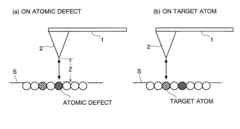
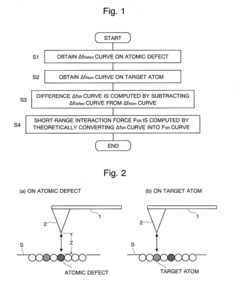
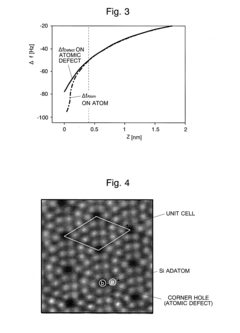
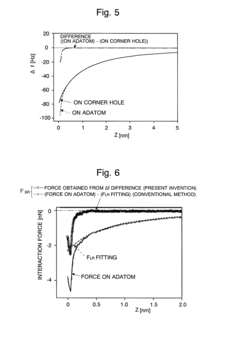
- A frequency modulation atomic force microscope method that computes the difference between Δf curves obtained on a target atom and an atomic defect to isolate the short-range interaction force, allowing for measurement within a shorter range scale (up to 1 nm) and reducing the need for bias voltage compensation, thereby minimizing electrostatic influence and accelerating computational processes.
Cost-Benefit Analysis and Implementation Considerations
When evaluating the implementation of Atomic Force Microscopy (AFM) versus Vibrational Sum-frequency Generation (VSFG) technologies, cost-benefit analysis reveals significant differences in initial investment, operational expenses, and research outcomes.
The initial capital expenditure for AFM systems typically ranges from $100,000 to $500,000, depending on capabilities and resolution requirements. In contrast, VSFG systems generally require investments of $300,000 to $800,000, primarily due to the sophisticated laser systems and optical components involved. This substantial difference in upfront costs must be carefully weighed against the specific research objectives and available funding.
Operational costs present another important consideration. AFM systems generally have lower maintenance requirements, with annual costs typically ranging from $5,000 to $20,000, primarily for probe replacement and calibration. VSFG systems demand more specialized maintenance, with annual costs potentially reaching $30,000 to $50,000 due to laser maintenance, optical alignment, and specialized technical support.
Training requirements differ significantly between these technologies. AFM operation can typically be mastered within 1-3 months, while VSFG requires 3-6 months of specialized training due to its complex optical setup and data interpretation challenges. This training differential translates to higher personnel costs and longer implementation timelines for VSFG.
Space and infrastructure requirements also impact implementation decisions. AFM systems require minimal laboratory space (approximately 2-4 m²) and standard vibration isolation. VSFG demands larger dedicated spaces (10-15 m²) with stringent environmental controls for temperature stability and optical path integrity.
Return on investment calculations must consider research output potential. AFM provides immediate, high-resolution topographical data with relatively straightforward interpretation. VSFG offers unique molecular-level surface chemistry insights but with more complex data analysis requirements and longer time-to-publication metrics.
Scalability considerations favor AFM for routine analysis and high-throughput applications, while VSFG excels in specialized research requiring molecular orientation and chemical bond information at interfaces. Multi-user facilities may find AFM more adaptable to diverse research needs, whereas VSFG typically serves more specialized research programs.
Ultimately, the optimal technology choice depends on aligning research objectives with available resources. Organizations with diverse surface characterization needs might consider a phased implementation approach, beginning with AFM capabilities and expanding to VSFG as expertise and funding permit.
The initial capital expenditure for AFM systems typically ranges from $100,000 to $500,000, depending on capabilities and resolution requirements. In contrast, VSFG systems generally require investments of $300,000 to $800,000, primarily due to the sophisticated laser systems and optical components involved. This substantial difference in upfront costs must be carefully weighed against the specific research objectives and available funding.
Operational costs present another important consideration. AFM systems generally have lower maintenance requirements, with annual costs typically ranging from $5,000 to $20,000, primarily for probe replacement and calibration. VSFG systems demand more specialized maintenance, with annual costs potentially reaching $30,000 to $50,000 due to laser maintenance, optical alignment, and specialized technical support.
Training requirements differ significantly between these technologies. AFM operation can typically be mastered within 1-3 months, while VSFG requires 3-6 months of specialized training due to its complex optical setup and data interpretation challenges. This training differential translates to higher personnel costs and longer implementation timelines for VSFG.
Space and infrastructure requirements also impact implementation decisions. AFM systems require minimal laboratory space (approximately 2-4 m²) and standard vibration isolation. VSFG demands larger dedicated spaces (10-15 m²) with stringent environmental controls for temperature stability and optical path integrity.
Return on investment calculations must consider research output potential. AFM provides immediate, high-resolution topographical data with relatively straightforward interpretation. VSFG offers unique molecular-level surface chemistry insights but with more complex data analysis requirements and longer time-to-publication metrics.
Scalability considerations favor AFM for routine analysis and high-throughput applications, while VSFG excels in specialized research requiring molecular orientation and chemical bond information at interfaces. Multi-user facilities may find AFM more adaptable to diverse research needs, whereas VSFG typically serves more specialized research programs.
Ultimately, the optimal technology choice depends on aligning research objectives with available resources. Organizations with diverse surface characterization needs might consider a phased implementation approach, beginning with AFM capabilities and expanding to VSFG as expertise and funding permit.
Sample Preparation Requirements and Environmental Factors
Sample preparation requirements and environmental factors significantly influence the effectiveness and accuracy of both Atomic Force Microscopy (AFM) and Vibrational Sum-frequency Generation (VSFG) techniques, albeit in distinctly different ways due to their fundamental operational principles.
AFM sample preparation typically requires minimal processing, making it relatively straightforward compared to many other microscopy techniques. Samples must be securely mounted on a flat substrate, commonly mica, silicon wafers, or glass slides. Surface cleanliness is paramount as even nanoscale contaminants can be detected and potentially misinterpreted as sample features. For biological samples, fixation may be necessary, though AFM excels in imaging unfixed specimens in near-native conditions.
Environmental factors critically impact AFM performance. Ambient vibrations can severely compromise resolution, necessitating vibration isolation systems. Temperature fluctuations cause thermal drift affecting both the cantilever and sample, while humidity variations can alter tip-sample interactions, particularly through capillary forces in ambient conditions. Many advanced AFM systems operate in controlled environments or vacuum chambers to mitigate these issues.
In contrast, VSFG imposes more stringent sample preparation requirements. The technique demands optically accessible interfaces with minimal background signals. Samples must be prepared on IR-transparent substrates like CaF₂ or specially treated gold surfaces. Molecular orientation at interfaces is crucial, often requiring careful deposition techniques such as Langmuir-Blodgett films or self-assembled monolayers to achieve analyzable signals.
VSFG's environmental sensitivity differs markedly from AFM. As an optical technique, it requires precise alignment of multiple laser beams at the sample interface. Atmospheric water vapor and CO₂ can absorb IR radiation, potentially interfering with measurements. Temperature control is essential not only for sample stability but also for maintaining optical alignment and preventing thermal lensing effects in the optical components.
Notably, while AFM can operate in various media including liquids, gases, and vacuum, VSFG is particularly powerful at liquid-solid or liquid-air interfaces but requires optical access to these interfaces. This creates unique experimental design challenges, often necessitating custom sample cells that maintain interface integrity while allowing optical access from multiple angles.
The temporal requirements also differ substantially: AFM imaging typically requires minutes to hours depending on resolution and scan area, while VSFG can capture data in seconds to minutes, making it potentially more suitable for dynamic interface studies when temporal resolution is prioritized over spatial mapping.
AFM sample preparation typically requires minimal processing, making it relatively straightforward compared to many other microscopy techniques. Samples must be securely mounted on a flat substrate, commonly mica, silicon wafers, or glass slides. Surface cleanliness is paramount as even nanoscale contaminants can be detected and potentially misinterpreted as sample features. For biological samples, fixation may be necessary, though AFM excels in imaging unfixed specimens in near-native conditions.
Environmental factors critically impact AFM performance. Ambient vibrations can severely compromise resolution, necessitating vibration isolation systems. Temperature fluctuations cause thermal drift affecting both the cantilever and sample, while humidity variations can alter tip-sample interactions, particularly through capillary forces in ambient conditions. Many advanced AFM systems operate in controlled environments or vacuum chambers to mitigate these issues.
In contrast, VSFG imposes more stringent sample preparation requirements. The technique demands optically accessible interfaces with minimal background signals. Samples must be prepared on IR-transparent substrates like CaF₂ or specially treated gold surfaces. Molecular orientation at interfaces is crucial, often requiring careful deposition techniques such as Langmuir-Blodgett films or self-assembled monolayers to achieve analyzable signals.
VSFG's environmental sensitivity differs markedly from AFM. As an optical technique, it requires precise alignment of multiple laser beams at the sample interface. Atmospheric water vapor and CO₂ can absorb IR radiation, potentially interfering with measurements. Temperature control is essential not only for sample stability but also for maintaining optical alignment and preventing thermal lensing effects in the optical components.
Notably, while AFM can operate in various media including liquids, gases, and vacuum, VSFG is particularly powerful at liquid-solid or liquid-air interfaces but requires optical access to these interfaces. This creates unique experimental design challenges, often necessitating custom sample cells that maintain interface integrity while allowing optical access from multiple angles.
The temporal requirements also differ substantially: AFM imaging typically requires minutes to hours depending on resolution and scan area, while VSFG can capture data in seconds to minutes, making it potentially more suitable for dynamic interface studies when temporal resolution is prioritized over spatial mapping.
Unlock deeper insights with PatSnap Eureka Quick Research — get a full tech report to explore trends and direct your research. Try now!
Generate Your Research Report Instantly with AI Agent
Supercharge your innovation with PatSnap Eureka AI Agent Platform!