

B58 Engine's Integration with Mild Hybrid Systems
AUG 12, 20259 MIN READ
Generate Your Research Report Instantly with AI Agent
Patsnap Eureka helps you evaluate technical feasibility & market potential.
B58 Engine Evolution
The B58 engine, developed by BMW, has undergone significant evolution since its introduction in 2015. This inline-six turbocharged engine was designed as a successor to the N55 engine, with a focus on improved performance, efficiency, and emissions compliance. The B58's evolution can be traced through several key stages, each marked by technological advancements and refinements.
Initially, the B58 was introduced with a 3.0-liter displacement, featuring a closed-deck design for increased strength and durability. The engine incorporated BMW's TwinPower Turbo technology, which combined a twin-scroll turbocharger with direct fuel injection and variable valve timing. This configuration allowed for improved throttle response and a broader power band compared to its predecessor.
As emissions regulations became more stringent, BMW implemented further enhancements to the B58. In 2018, the engine received updates to its cooling system and turbocharger, resulting in increased power output and improved thermal management. These changes were crucial in preparing the B58 for integration with mild hybrid systems, as they provided a more robust platform for electrification.
The next significant evolution came with the introduction of the B58TU1 (Technical Update 1) in 2019. This update brought several key improvements, including a new particulate filter to meet Euro 6d-TEMP emissions standards. The engine also received a revised fuel injection system with higher pressure capabilities, allowing for more precise fuel delivery and improved combustion efficiency.
In 2020, BMW unveiled the B58TU2, marking another milestone in the engine's evolution. This version featured a further increase in power output, achieved through optimizations in the turbocharger and engine management systems. More importantly, the B58TU2 was designed with mild hybrid integration in mind, incorporating a 48-volt electrical system and an integrated starter-generator.
The latest iteration of the B58 engine, introduced in 2022, represents the culmination of these evolutionary steps. This version is fully compatible with mild hybrid systems, featuring a more powerful integrated starter-generator and a sophisticated energy management system. The engine's ability to seamlessly integrate with electric components has significantly improved its efficiency and performance characteristics.
Throughout its evolution, the B58 engine has maintained its core strengths of smooth power delivery and impressive torque output. However, each iteration has brought incremental improvements in areas such as fuel efficiency, emissions reduction, and overall refinement. The engine's adaptability to changing regulatory requirements and technological advancements has ensured its continued relevance in BMW's powertrain lineup.
Initially, the B58 was introduced with a 3.0-liter displacement, featuring a closed-deck design for increased strength and durability. The engine incorporated BMW's TwinPower Turbo technology, which combined a twin-scroll turbocharger with direct fuel injection and variable valve timing. This configuration allowed for improved throttle response and a broader power band compared to its predecessor.
As emissions regulations became more stringent, BMW implemented further enhancements to the B58. In 2018, the engine received updates to its cooling system and turbocharger, resulting in increased power output and improved thermal management. These changes were crucial in preparing the B58 for integration with mild hybrid systems, as they provided a more robust platform for electrification.
The next significant evolution came with the introduction of the B58TU1 (Technical Update 1) in 2019. This update brought several key improvements, including a new particulate filter to meet Euro 6d-TEMP emissions standards. The engine also received a revised fuel injection system with higher pressure capabilities, allowing for more precise fuel delivery and improved combustion efficiency.
In 2020, BMW unveiled the B58TU2, marking another milestone in the engine's evolution. This version featured a further increase in power output, achieved through optimizations in the turbocharger and engine management systems. More importantly, the B58TU2 was designed with mild hybrid integration in mind, incorporating a 48-volt electrical system and an integrated starter-generator.
The latest iteration of the B58 engine, introduced in 2022, represents the culmination of these evolutionary steps. This version is fully compatible with mild hybrid systems, featuring a more powerful integrated starter-generator and a sophisticated energy management system. The engine's ability to seamlessly integrate with electric components has significantly improved its efficiency and performance characteristics.
Throughout its evolution, the B58 engine has maintained its core strengths of smooth power delivery and impressive torque output. However, each iteration has brought incremental improvements in areas such as fuel efficiency, emissions reduction, and overall refinement. The engine's adaptability to changing regulatory requirements and technological advancements has ensured its continued relevance in BMW's powertrain lineup.
Mild Hybrid Market
The mild hybrid market has experienced significant growth in recent years, driven by increasing environmental concerns and stringent emissions regulations worldwide. This market segment represents a crucial transition phase between conventional internal combustion engines and fully electric vehicles, offering improved fuel efficiency and reduced emissions without the range anxiety associated with pure electric vehicles.
In the context of B58 engine integration with mild hybrid systems, the market demand is particularly strong in the premium and luxury vehicle segments. These vehicles typically require high performance while facing pressure to meet increasingly strict emissions standards. The mild hybrid technology allows manufacturers to maintain the power and driving characteristics expected in premium vehicles while achieving better fuel economy and lower emissions.
The global mild hybrid market is projected to grow at a compound annual growth rate (CAGR) of over 10% from 2021 to 2026. This growth is fueled by several factors, including government regulations promoting cleaner vehicles, consumer demand for more fuel-efficient options, and automakers' strategies to meet fleet-wide emissions targets. Europe and Asia-Pacific regions are expected to lead this growth, with North America following closely behind.
In terms of vehicle segments, SUVs and premium sedans are showing the highest adoption rates for mild hybrid systems. This aligns well with the typical applications of the B58 engine, which is commonly found in high-performance BMW models. The integration of mild hybrid technology with the B58 engine could potentially expand its market reach to more environmentally conscious consumers who still desire performance-oriented vehicles.
The mild hybrid market is also seeing increased competition among automotive suppliers and OEMs. Major players are investing heavily in research and development to improve the efficiency and performance of their mild hybrid systems. This competition is driving innovation in areas such as battery technology, power electronics, and system integration, which could benefit the B58 engine's mild hybrid implementation.
Consumer acceptance of mild hybrid technology is growing, particularly as the cost premium over conventional vehicles decreases. The mild hybrid option is increasingly seen as a practical compromise between traditional engines and full hybrids or electric vehicles. This trend suggests a favorable market environment for B58 engines equipped with mild hybrid systems, especially in regions with strict emissions regulations or high fuel prices.
However, the market also faces challenges. The rapid advancement of full hybrid and electric vehicle technologies could potentially limit the long-term growth of the mild hybrid market. Additionally, the added complexity and cost of mild hybrid systems compared to conventional engines may impact profit margins for manufacturers. These factors will need to be carefully considered in the strategic planning for B58 engine's integration with mild hybrid systems.
In the context of B58 engine integration with mild hybrid systems, the market demand is particularly strong in the premium and luxury vehicle segments. These vehicles typically require high performance while facing pressure to meet increasingly strict emissions standards. The mild hybrid technology allows manufacturers to maintain the power and driving characteristics expected in premium vehicles while achieving better fuel economy and lower emissions.
The global mild hybrid market is projected to grow at a compound annual growth rate (CAGR) of over 10% from 2021 to 2026. This growth is fueled by several factors, including government regulations promoting cleaner vehicles, consumer demand for more fuel-efficient options, and automakers' strategies to meet fleet-wide emissions targets. Europe and Asia-Pacific regions are expected to lead this growth, with North America following closely behind.
In terms of vehicle segments, SUVs and premium sedans are showing the highest adoption rates for mild hybrid systems. This aligns well with the typical applications of the B58 engine, which is commonly found in high-performance BMW models. The integration of mild hybrid technology with the B58 engine could potentially expand its market reach to more environmentally conscious consumers who still desire performance-oriented vehicles.
The mild hybrid market is also seeing increased competition among automotive suppliers and OEMs. Major players are investing heavily in research and development to improve the efficiency and performance of their mild hybrid systems. This competition is driving innovation in areas such as battery technology, power electronics, and system integration, which could benefit the B58 engine's mild hybrid implementation.
Consumer acceptance of mild hybrid technology is growing, particularly as the cost premium over conventional vehicles decreases. The mild hybrid option is increasingly seen as a practical compromise between traditional engines and full hybrids or electric vehicles. This trend suggests a favorable market environment for B58 engines equipped with mild hybrid systems, especially in regions with strict emissions regulations or high fuel prices.
However, the market also faces challenges. The rapid advancement of full hybrid and electric vehicle technologies could potentially limit the long-term growth of the mild hybrid market. Additionally, the added complexity and cost of mild hybrid systems compared to conventional engines may impact profit margins for manufacturers. These factors will need to be carefully considered in the strategic planning for B58 engine's integration with mild hybrid systems.
B58 Hybrid Challenges
The integration of BMW's B58 engine with mild hybrid systems presents several significant challenges that require innovative solutions. One of the primary obstacles is the seamless integration of the electric motor with the existing internal combustion engine architecture. The B58, known for its robust performance and efficiency, must maintain its characteristic power delivery while accommodating the additional components of a mild hybrid system.
Space constraints within the engine bay pose a considerable challenge. The B58 engine, already compact and densely packaged, leaves little room for the integration of hybrid components such as the electric motor, power electronics, and battery pack. Engineers must find creative ways to incorporate these elements without compromising the engine's performance or the vehicle's weight distribution.
Thermal management becomes increasingly complex with the addition of hybrid components. The B58 engine's existing cooling system must be adapted to handle the additional heat generated by the electric motor and power electronics. This requires a redesign of the cooling circuits and potentially the introduction of new cooling technologies to maintain optimal operating temperatures for both the combustion engine and the hybrid system.
Another significant challenge lies in the calibration and control strategies for the hybrid powertrain. The B58 engine's management system must be extensively modified to seamlessly coordinate with the electric motor, ensuring smooth power delivery and efficient energy recuperation. This involves developing sophisticated algorithms for power blending, regenerative braking, and start-stop functionality.
The electrical architecture of the vehicle requires substantial upgrades to support the mild hybrid system. This includes implementing a higher-voltage electrical system, typically 48V, to power the electric motor and other high-draw components. The transition from a conventional 12V system to a dual-voltage architecture introduces complexity in terms of wiring, safety systems, and electromagnetic compatibility.
Weight management is a critical concern in the hybridization process. While the addition of electric components inevitably increases the overall weight of the powertrain, engineers must strive to minimize this impact through the use of lightweight materials and optimized component designs. The challenge lies in balancing the added weight against the performance and efficiency gains provided by the hybrid system.
Durability and reliability testing present unique challenges for the hybridized B58 engine. The integration of new components and the altered operating conditions require extensive validation to ensure the longevity and robustness of the hybrid powertrain. This involves developing new test procedures and extending the duration of endurance testing to account for the additional stress on components.
Space constraints within the engine bay pose a considerable challenge. The B58 engine, already compact and densely packaged, leaves little room for the integration of hybrid components such as the electric motor, power electronics, and battery pack. Engineers must find creative ways to incorporate these elements without compromising the engine's performance or the vehicle's weight distribution.
Thermal management becomes increasingly complex with the addition of hybrid components. The B58 engine's existing cooling system must be adapted to handle the additional heat generated by the electric motor and power electronics. This requires a redesign of the cooling circuits and potentially the introduction of new cooling technologies to maintain optimal operating temperatures for both the combustion engine and the hybrid system.
Another significant challenge lies in the calibration and control strategies for the hybrid powertrain. The B58 engine's management system must be extensively modified to seamlessly coordinate with the electric motor, ensuring smooth power delivery and efficient energy recuperation. This involves developing sophisticated algorithms for power blending, regenerative braking, and start-stop functionality.
The electrical architecture of the vehicle requires substantial upgrades to support the mild hybrid system. This includes implementing a higher-voltage electrical system, typically 48V, to power the electric motor and other high-draw components. The transition from a conventional 12V system to a dual-voltage architecture introduces complexity in terms of wiring, safety systems, and electromagnetic compatibility.
Weight management is a critical concern in the hybridization process. While the addition of electric components inevitably increases the overall weight of the powertrain, engineers must strive to minimize this impact through the use of lightweight materials and optimized component designs. The challenge lies in balancing the added weight against the performance and efficiency gains provided by the hybrid system.
Durability and reliability testing present unique challenges for the hybridized B58 engine. The integration of new components and the altered operating conditions require extensive validation to ensure the longevity and robustness of the hybrid powertrain. This involves developing new test procedures and extending the duration of endurance testing to account for the additional stress on components.
B58 Hybrid Solutions
01 Engine design and components
The B58 engine is a modern inline-six engine design with various components and features. It includes advancements in engine block design, cylinder head configuration, and internal components to improve performance and efficiency.- Engine design and components: The B58 engine is a modern inline-six engine design with various components and features. It includes advancements in engine block design, cylinder head configuration, and internal components to improve performance and efficiency.
- Fuel injection system: The B58 engine incorporates an advanced fuel injection system, which may include direct injection technology. This system is designed to optimize fuel delivery, improve combustion efficiency, and reduce emissions.
- Turbocharging technology: Turbocharging is a key feature of the B58 engine, enhancing its power output and efficiency. The turbocharger system may include advanced designs for improved boost pressure control and reduced turbo lag.
- Engine management and control systems: The B58 engine utilizes sophisticated engine management and control systems to optimize performance, fuel efficiency, and emissions. These systems may include advanced sensors, electronic control units, and software algorithms.
- Cooling and lubrication systems: The B58 engine features advanced cooling and lubrication systems to maintain optimal operating temperatures and reduce friction. These systems may include innovative designs for coolant flow, oil circulation, and heat management.
02 Fuel injection system
The B58 engine incorporates an advanced fuel injection system, likely direct injection, to optimize fuel delivery and combustion. This system contributes to improved power output, fuel efficiency, and reduced emissions.Expand Specific Solutions03 Turbocharging technology
Turbocharging is a key feature of the B58 engine, enhancing power output and efficiency. The turbocharger system may include advanced designs for improved boost pressure control and reduced turbo lag.Expand Specific Solutions04 Engine management and control systems
The B58 engine utilizes sophisticated engine management and control systems to optimize performance, fuel efficiency, and emissions. These systems may include advanced sensors, electronic control units, and software algorithms.Expand Specific Solutions05 Cooling and lubrication systems
Efficient cooling and lubrication systems are crucial for the B58 engine's performance and longevity. These systems may incorporate innovative designs for improved heat management and oil circulation throughout the engine.Expand Specific Solutions
Key Hybrid Players
The integration of B58 engines with mild hybrid systems represents a growing trend in the automotive industry, reflecting the sector's transition towards electrification. This technology is in its early to mid-stage development, with market size expanding as more manufacturers adopt hybrid solutions. Companies like BMW, Hyundai, and Schaeffler are at the forefront, demonstrating varying levels of technical maturity. While established automakers like BMW have implemented this technology in production vehicles, suppliers such as Schaeffler are continuously innovating to enhance system efficiency. The market is characterized by intense competition among traditional automotive players and emerging electric vehicle manufacturers, driving rapid advancements in mild hybrid technology.
ZF Friedrichshafen AG
Technical Solution: ZF's approach to integrating the B58 engine with mild hybrid systems centers on their modular mSTARS (modular Semi-Trailing Arm Rear Suspension) system. This system incorporates an electric axle drive unit that can be paired with conventional engines like the B58[8]. ZF's solution allows for various levels of hybridization, from mild to full hybrid, providing flexibility for manufacturers. The company's 48V electric motor can be integrated into the transmission, offering up to 25 kW of power and 650 Nm of torque[9]. ZF has also developed a hybrid-specific eight-speed automatic transmission that can be paired with the B58 engine, optimizing the interaction between electric and combustion power sources[10].
Strengths: Modular design allows for easy integration with existing platforms, scalable hybrid solutions. Weaknesses: May require significant modifications to existing vehicle architectures for full benefits.
Robert Bosch GmbH
Technical Solution: Bosch's contribution to integrating the B58 engine with mild hybrid systems focuses on their eClutch technology and 48V battery systems. The eClutch allows for seamless transitions between electric and combustion power, enabling coasting with the engine off and quick restarts[5]. Bosch's 48V battery system supports regenerative braking, storing energy that can be used for electric boost during acceleration[6]. Their system also includes advanced power electronics for efficient energy conversion and distribution. Bosch has developed a compact 48V DC/DC converter that enables integration of the 48V network with the existing 12V system, ensuring compatibility with traditional vehicle electrical systems[7].
Strengths: Extensive experience in automotive electronics, scalable solutions for various vehicle types. Weaknesses: Reliance on OEM partnerships for full system integration.
Core Hybrid Patents
Mild hybrid system
PatentWO2011152619A2
Innovation
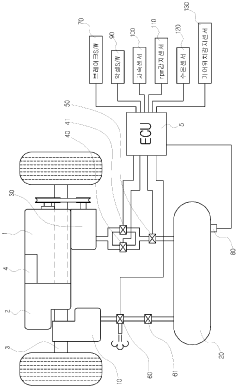
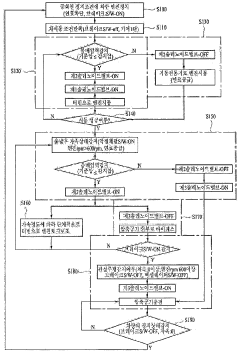
- A hybrid engine system utilizing a compressor, compressed air cylinder, turbine, and solenoid valves to control compressed air supply for smooth engine start and acceleration, reducing engine load and maintaining efficient operation without design changes to existing engines.
Multi-functional electromechanical device for a mild hybrid system including an internal combustion engine
PatentWO2017209790A1
Innovation
- A multi-functional electromechanical device that includes a motor/generator set and an energy distributor, allowing for the simultaneous and independent operation of multiple motor/generators to provide mechanical assistance, generate electricity, and manage power distribution between the internal combustion engine and transmission, using an Electronic Control Unit (ECU) to optimize energy use and efficiency.


Emissions Regulations
The integration of the B58 engine with mild hybrid systems is significantly influenced by emissions regulations worldwide. These regulations have become increasingly stringent, driving automotive manufacturers to adopt innovative technologies to reduce vehicle emissions and improve fuel efficiency.
In the European Union, the Euro 6d emissions standard, implemented in 2020, sets strict limits on nitrogen oxides (NOx) and particulate matter emissions. This regulation has pushed automakers to incorporate mild hybrid systems into their powertrains, including those featuring the B58 engine. The 48V mild hybrid technology, when integrated with the B58, helps reduce emissions during low-load conditions and improves overall fuel economy.
The United States Environmental Protection Agency (EPA) has also tightened its emissions standards, with the Corporate Average Fuel Economy (CAFE) regulations requiring manufacturers to achieve increasingly higher fleet-wide fuel efficiency. This has led to the adoption of mild hybrid systems in conjunction with the B58 engine in vehicles sold in the US market, as it provides a cost-effective solution to meet these stringent requirements.
China, the world's largest automotive market, has implemented the China 6 emissions standard, which is comparable to Euro 6 in terms of stringency. This regulation has accelerated the integration of mild hybrid systems with engines like the B58 in vehicles sold in the Chinese market, as manufacturers strive to comply with these strict emissions limits.
The integration of mild hybrid systems with the B58 engine also aligns with the global trend towards electrification. Many countries have announced plans to phase out internal combustion engines in favor of electric vehicles. Mild hybrid technology serves as a transitional solution, allowing manufacturers to extend the viability of engines like the B58 while gradually shifting towards full electrification.
Furthermore, emissions regulations have led to the development of more advanced engine management systems and exhaust after-treatment technologies. When combined with the B58 engine and mild hybrid system, these technologies work synergistically to minimize emissions across various driving conditions. This includes improved start-stop functionality, regenerative braking, and electric boost during acceleration, all of which contribute to reduced emissions and improved fuel efficiency.
In conclusion, emissions regulations have been a primary driver for the integration of mild hybrid systems with the B58 engine. As these regulations continue to evolve and become more stringent, we can expect further refinements and innovations in this integration to ensure compliance and maintain the competitiveness of vehicles equipped with this powertrain configuration.
In the European Union, the Euro 6d emissions standard, implemented in 2020, sets strict limits on nitrogen oxides (NOx) and particulate matter emissions. This regulation has pushed automakers to incorporate mild hybrid systems into their powertrains, including those featuring the B58 engine. The 48V mild hybrid technology, when integrated with the B58, helps reduce emissions during low-load conditions and improves overall fuel economy.
The United States Environmental Protection Agency (EPA) has also tightened its emissions standards, with the Corporate Average Fuel Economy (CAFE) regulations requiring manufacturers to achieve increasingly higher fleet-wide fuel efficiency. This has led to the adoption of mild hybrid systems in conjunction with the B58 engine in vehicles sold in the US market, as it provides a cost-effective solution to meet these stringent requirements.
China, the world's largest automotive market, has implemented the China 6 emissions standard, which is comparable to Euro 6 in terms of stringency. This regulation has accelerated the integration of mild hybrid systems with engines like the B58 in vehicles sold in the Chinese market, as manufacturers strive to comply with these strict emissions limits.
The integration of mild hybrid systems with the B58 engine also aligns with the global trend towards electrification. Many countries have announced plans to phase out internal combustion engines in favor of electric vehicles. Mild hybrid technology serves as a transitional solution, allowing manufacturers to extend the viability of engines like the B58 while gradually shifting towards full electrification.
Furthermore, emissions regulations have led to the development of more advanced engine management systems and exhaust after-treatment technologies. When combined with the B58 engine and mild hybrid system, these technologies work synergistically to minimize emissions across various driving conditions. This includes improved start-stop functionality, regenerative braking, and electric boost during acceleration, all of which contribute to reduced emissions and improved fuel efficiency.
In conclusion, emissions regulations have been a primary driver for the integration of mild hybrid systems with the B58 engine. As these regulations continue to evolve and become more stringent, we can expect further refinements and innovations in this integration to ensure compliance and maintain the competitiveness of vehicles equipped with this powertrain configuration.
Hybrid Cost Analysis
The integration of the B58 engine with mild hybrid systems presents a complex cost analysis scenario. Initial investment costs for adapting the B58 engine to incorporate mild hybrid technology are substantial, primarily due to the need for redesigning certain components and integrating new electrical systems. These upfront costs include research and development expenses, retooling of production lines, and potential licensing fees for hybrid-specific technologies.
However, the long-term cost benefits of this integration are significant. The mild hybrid system enhances fuel efficiency, potentially reducing fuel costs by 10-15% over the lifespan of the vehicle. This translates to considerable savings for consumers and improved environmental performance for manufacturers, potentially offsetting regulatory compliance costs related to emissions standards.
Maintenance costs present a mixed picture. While the addition of electrical components and battery systems may increase the complexity of maintenance procedures, the reduced strain on the internal combustion engine components due to hybrid assistance could lead to extended service intervals and reduced wear on traditional mechanical parts. This balance may result in a net neutral or slightly positive impact on long-term maintenance costs.
Production costs are expected to increase initially due to the additional components required for the mild hybrid system. However, as production scales up and technology matures, these costs are projected to decrease. Industry analysts estimate that the cost premium for mild hybrid technology could reduce by 30-40% within 5-7 years of widespread adoption.
From a consumer perspective, the higher initial purchase price of vehicles equipped with the B58 mild hybrid system may be offset by fuel savings and potential tax incentives for eco-friendly vehicles. The payback period for this cost differential is estimated to be 3-5 years, depending on driving patterns and local fuel prices.
For manufacturers, the cost-benefit analysis must also consider the strategic value of investing in hybrid technology. As global markets increasingly demand and regulate for lower-emission vehicles, the ability to offer mild hybrid options becomes a competitive necessity rather than just a financial decision. This strategic positioning may justify higher short-term costs for long-term market viability.
However, the long-term cost benefits of this integration are significant. The mild hybrid system enhances fuel efficiency, potentially reducing fuel costs by 10-15% over the lifespan of the vehicle. This translates to considerable savings for consumers and improved environmental performance for manufacturers, potentially offsetting regulatory compliance costs related to emissions standards.
Maintenance costs present a mixed picture. While the addition of electrical components and battery systems may increase the complexity of maintenance procedures, the reduced strain on the internal combustion engine components due to hybrid assistance could lead to extended service intervals and reduced wear on traditional mechanical parts. This balance may result in a net neutral or slightly positive impact on long-term maintenance costs.
Production costs are expected to increase initially due to the additional components required for the mild hybrid system. However, as production scales up and technology matures, these costs are projected to decrease. Industry analysts estimate that the cost premium for mild hybrid technology could reduce by 30-40% within 5-7 years of widespread adoption.
From a consumer perspective, the higher initial purchase price of vehicles equipped with the B58 mild hybrid system may be offset by fuel savings and potential tax incentives for eco-friendly vehicles. The payback period for this cost differential is estimated to be 3-5 years, depending on driving patterns and local fuel prices.
For manufacturers, the cost-benefit analysis must also consider the strategic value of investing in hybrid technology. As global markets increasingly demand and regulate for lower-emission vehicles, the ability to offer mild hybrid options becomes a competitive necessity rather than just a financial decision. This strategic positioning may justify higher short-term costs for long-term market viability.
Unlock deeper insights with Patsnap Eureka Quick Research — get a full tech report to explore trends and direct your research. Try now!
Generate Your Research Report Instantly with AI Agent
Supercharge your innovation with Patsnap Eureka AI Agent Platform!