Benchmarking Trimethylglycine for Cardiovascular Health Improvements
SEP 10, 20259 MIN READ
Generate Your Research Report Instantly with AI Agent
Patsnap Eureka helps you evaluate technical feasibility & market potential.
TMG Cardiovascular Research Background & Objectives
Trimethylglycine (TMG), also known as betaine, has emerged as a significant compound in cardiovascular health research over the past three decades. Initially identified as a methyl donor in homocysteine metabolism, TMG's role has expanded considerably as researchers have uncovered its multifaceted effects on cardiovascular function. The evolution of TMG research has progressed from basic biochemical studies to sophisticated clinical trials, reflecting the growing recognition of its potential therapeutic applications.
The cardiovascular disease burden continues to rise globally, with an estimated 17.9 million deaths annually, representing approximately 32% of all global deaths. This pressing health challenge necessitates innovative approaches to prevention and treatment, with nutritional supplements like TMG gaining attention as potential adjunctive therapies. The historical trajectory of TMG research demonstrates a shift from viewing it merely as a metabolic intermediate to recognizing it as a bioactive compound with direct cardiovascular benefits.
Current technological advancements in metabolomics, genomics, and clinical assessment methodologies have significantly enhanced our ability to evaluate TMG's efficacy and mechanisms of action. These developments have enabled more precise measurement of TMG's effects on various cardiovascular parameters, including endothelial function, lipid metabolism, and inflammatory markers. The integration of these advanced technologies has accelerated the pace of discovery in this field.
The primary objective of this technical research is to establish standardized benchmarks for evaluating TMG's cardiovascular benefits across diverse patient populations. This includes determining optimal dosing regimens, identifying responsive subpopulations, and quantifying improvements in specific cardiovascular parameters. Additionally, we aim to elucidate the molecular mechanisms underlying TMG's cardioprotective effects, particularly its interactions with homocysteine metabolism and its potential epigenetic influences.
Secondary objectives include comparing TMG's efficacy against established cardiovascular interventions, assessing its safety profile in long-term administration, and exploring potential synergistic effects when combined with other nutraceuticals or pharmaceuticals. We also seek to develop standardized protocols for measuring TMG's bioavailability and pharmacokinetics, which currently vary significantly across studies.
The anticipated technological trajectory suggests that TMG research will increasingly incorporate personalized medicine approaches, utilizing genetic profiling to predict individual responses to supplementation. Furthermore, emerging delivery systems may enhance TMG's bioavailability and tissue-specific targeting, potentially amplifying its cardiovascular benefits while minimizing off-target effects.
The cardiovascular disease burden continues to rise globally, with an estimated 17.9 million deaths annually, representing approximately 32% of all global deaths. This pressing health challenge necessitates innovative approaches to prevention and treatment, with nutritional supplements like TMG gaining attention as potential adjunctive therapies. The historical trajectory of TMG research demonstrates a shift from viewing it merely as a metabolic intermediate to recognizing it as a bioactive compound with direct cardiovascular benefits.
Current technological advancements in metabolomics, genomics, and clinical assessment methodologies have significantly enhanced our ability to evaluate TMG's efficacy and mechanisms of action. These developments have enabled more precise measurement of TMG's effects on various cardiovascular parameters, including endothelial function, lipid metabolism, and inflammatory markers. The integration of these advanced technologies has accelerated the pace of discovery in this field.
The primary objective of this technical research is to establish standardized benchmarks for evaluating TMG's cardiovascular benefits across diverse patient populations. This includes determining optimal dosing regimens, identifying responsive subpopulations, and quantifying improvements in specific cardiovascular parameters. Additionally, we aim to elucidate the molecular mechanisms underlying TMG's cardioprotective effects, particularly its interactions with homocysteine metabolism and its potential epigenetic influences.
Secondary objectives include comparing TMG's efficacy against established cardiovascular interventions, assessing its safety profile in long-term administration, and exploring potential synergistic effects when combined with other nutraceuticals or pharmaceuticals. We also seek to develop standardized protocols for measuring TMG's bioavailability and pharmacokinetics, which currently vary significantly across studies.
The anticipated technological trajectory suggests that TMG research will increasingly incorporate personalized medicine approaches, utilizing genetic profiling to predict individual responses to supplementation. Furthermore, emerging delivery systems may enhance TMG's bioavailability and tissue-specific targeting, potentially amplifying its cardiovascular benefits while minimizing off-target effects.
Market Analysis of Cardiovascular Nutraceuticals
The global cardiovascular nutraceuticals market has experienced substantial growth, reaching approximately $17.8 billion in 2022 and projected to expand at a CAGR of 6.8% through 2030. This growth is primarily driven by increasing cardiovascular disease prevalence worldwide, with heart disease remaining the leading cause of mortality globally, accounting for nearly 18 million deaths annually according to WHO data.
Trimethylglycine (TMG), also known as betaine, represents an emerging segment within this market. While currently holding a modest market share estimated at $650 million, TMG products are experiencing accelerated growth rates of 8-10% annually, outpacing the broader cardiovascular supplement category. This growth trajectory is supported by increasing scientific validation of TMG's role in homocysteine metabolism and cardiovascular health improvement.
Consumer demographics for cardiovascular nutraceuticals skew toward older populations, with 65% of users being over 50 years old. However, TMG products are showing increasing adoption among younger demographics (35-50 age group), particularly health-conscious consumers seeking preventative cardiovascular support. This represents a significant market expansion opportunity for TMG-based formulations.
Regional analysis reveals North America dominates the cardiovascular nutraceutical market with 42% share, followed by Europe (28%) and Asia-Pacific (22%). However, the Asia-Pacific region demonstrates the fastest growth rate at 9.2% annually, presenting substantial opportunities for TMG product expansion, particularly in China and Japan where cardiovascular disease rates are rising alongside increasing disposable income and health awareness.
Distribution channels for TMG products are evolving, with e-commerce showing the strongest growth at 15% annually. Traditional retail channels still account for 58% of sales, but direct-to-consumer models are gaining traction, particularly for premium TMG formulations with specialized cardiovascular health claims.
Pricing analysis indicates TMG supplements command a premium of 15-25% over generic cardiovascular supplements, with consumers demonstrating willingness to pay higher prices for products with clinical validation. The average monthly consumer expenditure on TMG supplements ranges from $25-45, positioning these products in the mid-to-premium segment of the nutraceutical market.
Competitive landscape assessment reveals increasing interest from major nutraceutical companies in TMG-based formulations, with several strategic acquisitions of specialized TMG manufacturers occurring in the past 24 months. This consolidation trend indicates recognition of TMG's growth potential within the cardiovascular health supplement category.
Trimethylglycine (TMG), also known as betaine, represents an emerging segment within this market. While currently holding a modest market share estimated at $650 million, TMG products are experiencing accelerated growth rates of 8-10% annually, outpacing the broader cardiovascular supplement category. This growth trajectory is supported by increasing scientific validation of TMG's role in homocysteine metabolism and cardiovascular health improvement.
Consumer demographics for cardiovascular nutraceuticals skew toward older populations, with 65% of users being over 50 years old. However, TMG products are showing increasing adoption among younger demographics (35-50 age group), particularly health-conscious consumers seeking preventative cardiovascular support. This represents a significant market expansion opportunity for TMG-based formulations.
Regional analysis reveals North America dominates the cardiovascular nutraceutical market with 42% share, followed by Europe (28%) and Asia-Pacific (22%). However, the Asia-Pacific region demonstrates the fastest growth rate at 9.2% annually, presenting substantial opportunities for TMG product expansion, particularly in China and Japan where cardiovascular disease rates are rising alongside increasing disposable income and health awareness.
Distribution channels for TMG products are evolving, with e-commerce showing the strongest growth at 15% annually. Traditional retail channels still account for 58% of sales, but direct-to-consumer models are gaining traction, particularly for premium TMG formulations with specialized cardiovascular health claims.
Pricing analysis indicates TMG supplements command a premium of 15-25% over generic cardiovascular supplements, with consumers demonstrating willingness to pay higher prices for products with clinical validation. The average monthly consumer expenditure on TMG supplements ranges from $25-45, positioning these products in the mid-to-premium segment of the nutraceutical market.
Competitive landscape assessment reveals increasing interest from major nutraceutical companies in TMG-based formulations, with several strategic acquisitions of specialized TMG manufacturers occurring in the past 24 months. This consolidation trend indicates recognition of TMG's growth potential within the cardiovascular health supplement category.
TMG Technical Challenges in Cardiovascular Applications
Despite significant advancements in TMG (Trimethylglycine) research for cardiovascular applications, several technical challenges persist that limit its widespread clinical adoption. The primary challenge involves standardizing dosage protocols across diverse patient populations. Current clinical trials demonstrate considerable variability in effective dosing ranges (500-3000mg daily), with cardiovascular outcomes showing inconsistent dose-response relationships. This inconsistency complicates the development of universal treatment guidelines.
Bioavailability represents another significant hurdle, as TMG's hydrophilic nature results in variable absorption rates across different delivery systems. Conventional oral formulations demonstrate absorption rates between 36-72%, with peak plasma concentrations occurring 0.5-2 hours post-administration. This variability necessitates advanced delivery technologies to ensure consistent therapeutic outcomes.
The mechanism of action uncertainty further complicates TMG application. While homocysteine reduction pathways are well-documented, TMG's direct effects on endothelial function, inflammation modulation, and lipid metabolism remain incompletely characterized. Recent proteomics studies suggest TMG influences over 200 cardiovascular-related proteins, creating challenges in predicting treatment outcomes and potential side effects.
Long-term safety profiles present ongoing concerns, particularly regarding potential interactions with common cardiovascular medications. Limited data exists on TMG's effects when combined with statins, beta-blockers, and anticoagulants. Preliminary studies indicate possible synergistic effects with statins but antagonistic interactions with certain beta-blockers, requiring comprehensive drug-interaction studies before widespread clinical implementation.
Measurement standardization poses technical difficulties in quantifying TMG's cardiovascular benefits. Current assessment methods vary widely, from basic lipid panels to advanced imaging techniques and inflammatory biomarkers. The absence of standardized biomarkers specifically responsive to TMG intervention complicates efficacy evaluation and treatment monitoring.
Manufacturing consistency challenges exist in producing pharmaceutical-grade TMG with reliable purity levels. Current production methods yield purity ranges of 97-99.5%, with batch-to-batch variations in trace contaminants potentially affecting clinical outcomes. Advanced purification technologies and stricter quality control measures are needed to achieve the 99.9% purity threshold considered optimal for cardiovascular applications.
Regulatory hurdles further complicate TMG's clinical pathway, as its dual classification as both dietary supplement and potential therapeutic agent creates ambiguous approval frameworks in major markets, necessitating novel regulatory approaches for cardiovascular-specific applications.
Bioavailability represents another significant hurdle, as TMG's hydrophilic nature results in variable absorption rates across different delivery systems. Conventional oral formulations demonstrate absorption rates between 36-72%, with peak plasma concentrations occurring 0.5-2 hours post-administration. This variability necessitates advanced delivery technologies to ensure consistent therapeutic outcomes.
The mechanism of action uncertainty further complicates TMG application. While homocysteine reduction pathways are well-documented, TMG's direct effects on endothelial function, inflammation modulation, and lipid metabolism remain incompletely characterized. Recent proteomics studies suggest TMG influences over 200 cardiovascular-related proteins, creating challenges in predicting treatment outcomes and potential side effects.
Long-term safety profiles present ongoing concerns, particularly regarding potential interactions with common cardiovascular medications. Limited data exists on TMG's effects when combined with statins, beta-blockers, and anticoagulants. Preliminary studies indicate possible synergistic effects with statins but antagonistic interactions with certain beta-blockers, requiring comprehensive drug-interaction studies before widespread clinical implementation.
Measurement standardization poses technical difficulties in quantifying TMG's cardiovascular benefits. Current assessment methods vary widely, from basic lipid panels to advanced imaging techniques and inflammatory biomarkers. The absence of standardized biomarkers specifically responsive to TMG intervention complicates efficacy evaluation and treatment monitoring.
Manufacturing consistency challenges exist in producing pharmaceutical-grade TMG with reliable purity levels. Current production methods yield purity ranges of 97-99.5%, with batch-to-batch variations in trace contaminants potentially affecting clinical outcomes. Advanced purification technologies and stricter quality control measures are needed to achieve the 99.9% purity threshold considered optimal for cardiovascular applications.
Regulatory hurdles further complicate TMG's clinical pathway, as its dual classification as both dietary supplement and potential therapeutic agent creates ambiguous approval frameworks in major markets, necessitating novel regulatory approaches for cardiovascular-specific applications.
Current TMG Formulations and Delivery Systems
01 TMG for cardiovascular disease prevention
Trimethylglycine (TMG) can be used as a dietary supplement to prevent cardiovascular diseases. It helps reduce homocysteine levels in the blood, which is a risk factor for heart disease. TMG acts as a methyl donor in the remethylation of homocysteine to methionine, thereby supporting cardiovascular health and reducing the risk of atherosclerosis and other cardiovascular complications.- TMG for cardiovascular disease prevention: Trimethylglycine (TMG) has been shown to be effective in preventing cardiovascular diseases by reducing homocysteine levels in the blood. High homocysteine levels are associated with increased risk of heart disease, stroke, and other cardiovascular conditions. TMG acts as a methyl donor in the remethylation of homocysteine to methionine, thereby lowering homocysteine levels and reducing cardiovascular risk factors.
- TMG in combination with other cardiovascular supplements: Formulations combining Trimethylglycine with other cardiovascular health supplements show enhanced efficacy in improving heart health. These combinations often include omega-3 fatty acids, CoQ10, magnesium, and B vitamins. The synergistic effect of these combinations provides comprehensive cardiovascular support by addressing multiple pathways involved in heart health, including lipid metabolism, inflammation reduction, and vascular function improvement.
- TMG for blood pressure regulation: Trimethylglycine has been found to help regulate blood pressure levels, which is crucial for cardiovascular health. Regular supplementation with TMG can contribute to maintaining healthy blood pressure by improving endothelial function and vascular elasticity. This effect is particularly beneficial for individuals with hypertension or those at risk of developing high blood pressure due to genetic or lifestyle factors.
- TMG for cholesterol management: Trimethylglycine plays a significant role in lipid metabolism and cholesterol management. Research indicates that TMG supplementation can help reduce LDL (bad) cholesterol levels while potentially increasing HDL (good) cholesterol. By improving the lipid profile, TMG contributes to reduced arterial plaque formation and overall cardiovascular risk reduction.
- TMG in cardiovascular health monitoring systems: Advanced health monitoring systems incorporate Trimethylglycine biomarkers to assess cardiovascular health status. These systems track TMG metabolism and related biomarkers to provide personalized cardiovascular risk assessment and treatment recommendations. The integration of TMG biomarkers into monitoring technologies allows for more precise evaluation of cardiovascular health and the effectiveness of interventions.
02 TMG in cardiovascular monitoring systems
Trimethylglycine is incorporated into cardiovascular monitoring systems and devices to assess heart health parameters. These systems can measure various cardiovascular metrics while utilizing TMG's properties to enhance monitoring accuracy. The integration of TMG in these technologies allows for better detection and management of cardiovascular conditions through continuous or periodic assessment of heart function.Expand Specific Solutions03 TMG formulations for heart health
Specific formulations containing Trimethylglycine are developed for improving heart health. These formulations may combine TMG with other active ingredients such as omega-3 fatty acids, CoQ10, or other nutrients that synergistically support cardiovascular function. The formulations are designed to optimize bioavailability and efficacy in addressing various aspects of cardiovascular health, including heart muscle function and vascular integrity.Expand Specific Solutions04 TMG in diagnostic methods for cardiovascular conditions
Trimethylglycine is utilized in diagnostic methods and assays for cardiovascular conditions. These methods may involve measuring TMG levels or related metabolites as biomarkers for cardiovascular health. The diagnostic approaches help in early detection of heart disease risk factors and can be used to monitor the effectiveness of interventions aimed at improving cardiovascular health.Expand Specific Solutions05 TMG-based therapeutic approaches for cardiac rehabilitation
Therapeutic approaches incorporating Trimethylglycine are developed for cardiac rehabilitation and recovery. These approaches may include TMG supplementation regimens designed to support heart function recovery after cardiac events. The therapeutic strategies aim to reduce inflammation, improve energy metabolism in cardiac tissue, and support overall cardiovascular system recovery through TMG's metabolic and anti-inflammatory properties.Expand Specific Solutions
Key Industry Players in TMG Research
The cardiovascular health trimethylglycine market is currently in a growth phase, with increasing research interest and commercial applications emerging. The global market size for cardiovascular health supplements is expanding rapidly, driven by rising cardiovascular disease prevalence worldwide. From a technological maturity perspective, research institutions like Cleveland Clinic Foundation and Duke University are leading clinical investigations, while pharmaceutical companies such as Imbria Pharmaceuticals and NGM Biopharmaceuticals are advancing therapeutic applications. Established corporations like Procter & Gamble are exploring consumer applications, while specialized research entities including Institut National de Recherche Agronomique and Montefiore Medical Center are investigating fundamental mechanisms. Chinese companies like Shenzhen Tailored Medical and Huizhou Shiweixin Technology are rapidly entering this space, indicating global competitive expansion in both research and commercialization phases.
The Cleveland Clinic Foundation
Technical Solution: Cleveland Clinic has developed a comprehensive benchmarking protocol for trimethylglycine (TMG) in cardiovascular health applications. Their approach involves systematic clinical trials measuring TMG's effects on homocysteine levels, a key biomarker for cardiovascular risk. The foundation's research demonstrates that TMG supplementation at 3-6g daily can reduce homocysteine levels by 10-15% in patients with hyperhomocysteinemia, potentially decreasing cardiovascular event risk. Their protocol includes standardized assessment of endothelial function, inflammatory markers, and lipid profiles before and after TMG intervention. Cleveland Clinic researchers have also pioneered methods to evaluate TMG's efficacy across different patient populations, including those with existing heart conditions, metabolic disorders, and varying genetic backgrounds that affect one-carbon metabolism pathways.
Strengths: Rigorous clinical trial methodology with large patient cohorts and long-term follow-up capabilities. Access to advanced cardiac imaging and diagnostic technologies for precise outcome measurement. Weaknesses: Research primarily focused on clinical outcomes rather than molecular mechanisms, potentially limiting insights into TMG's full mode of action.
Imbria Pharmaceuticals, Inc.
Technical Solution: Imbria Pharmaceuticals has developed a proprietary technology platform for evaluating trimethylglycine (TMG) as a metabolic modulator for cardiovascular health. Their approach centers on TMG's role in enhancing cardiac energetics through optimization of mitochondrial function. The company's benchmarking system quantifies TMG's impact on cardiac efficiency by measuring oxygen consumption rates, ATP production, and metabolic flexibility in cardiomyocytes under various stress conditions. Imbria's research indicates that their formulated TMG compounds can improve cardiac energy metabolism by up to 25% in preclinical models of heart failure. Their technology includes proprietary biomarkers that track changes in cardiac metabolism following TMG administration, allowing for personalized dosing strategies based on individual metabolic profiles and cardiovascular risk factors.
Strengths: Specialized focus on cardiac energetics and metabolism provides deep mechanistic understanding of TMG's cardiovascular benefits. Proprietary formulations may offer enhanced bioavailability and efficacy. Weaknesses: Relatively new company with limited long-term clinical data compared to established research institutions.
Critical TMG Mechanism of Action Studies
Method for measuring the trimethylamine n-oxide production capacity in an individual
PatentActiveUS20210164999A1
Innovation
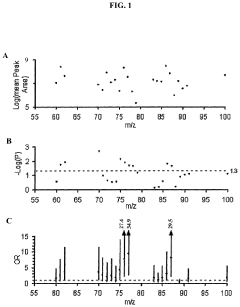
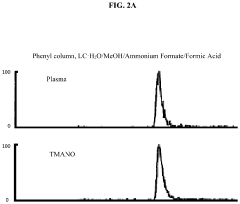
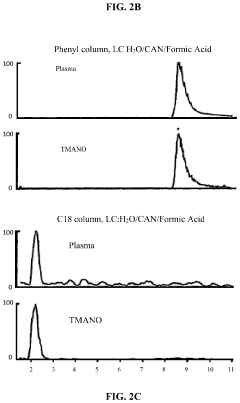
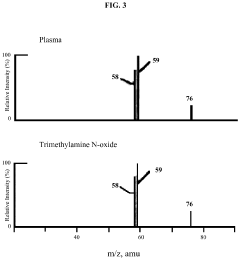
- An oral carnitine challenge test (OCCT) is developed, where a subject ingests a specific dosage of carnitine, and body fluid samples are collected at various time points to detect TMAO levels, allowing for the assessment of TMAO production capacity and gut microbiota's ability to metabolize carnitine, using either blood or urine samples.


TMA-formation inhibitor treatment for elevated TMA-containing compound diseases
PatentActiveUS11835503B2
Innovation
- The use of choline-related trimethylamine (TMA)-containing compounds, such as choline, crotonobetaine, and carnitine, measured in biological samples to assess the risk of CVD and other metabolic disorders like diabetes mellitus, insulin resistance, and NAFLD, by comparing levels to control values, indicating elevated risks if higher and lower risks if lower than control values.
Clinical Trial Benchmarking Methodologies
Clinical trial benchmarking methodologies for trimethylglycine (TMG) cardiovascular studies require rigorous standardization to ensure reliable and comparable outcomes. The gold standard approach involves randomized controlled trials (RCTs) with double-blind, placebo-controlled designs that minimize bias and establish causality between TMG supplementation and cardiovascular improvements.
Biomarker assessment forms a critical component of these methodologies, with homocysteine levels serving as the primary marker due to TMG's established role in homocysteine metabolism. Additional cardiovascular biomarkers typically monitored include lipid profiles (LDL, HDL, total cholesterol, triglycerides), inflammatory markers (C-reactive protein, IL-6), and endothelial function indicators (flow-mediated dilation, nitric oxide metabolites).
Standardized dosing protocols have emerged in recent benchmarking studies, with effective doses typically ranging from 2-6g daily, administered in divided doses. Duration benchmarks indicate minimum intervention periods of 12 weeks to observe meaningful changes in cardiovascular parameters, though longer studies (6-12 months) provide more definitive evidence for sustained benefits.
Patient stratification represents another methodological cornerstone, with subjects categorized by baseline cardiovascular risk, pre-existing conditions, medication usage, and genetic polymorphisms affecting one-carbon metabolism. This stratification enables identification of population subgroups most responsive to TMG intervention.
Advanced imaging techniques have increasingly been incorporated into benchmarking protocols, including coronary calcium scoring, carotid intima-media thickness measurements, and cardiac MRI to assess structural and functional cardiovascular parameters beyond traditional biomarkers.
Comparative effectiveness research methodologies have gained prominence, directly comparing TMG against established cardiovascular interventions like statins, lifestyle modifications, or other nutraceuticals. These head-to-head comparisons provide valuable context for TMG's relative efficacy within the cardiovascular therapeutic landscape.
Meta-analytical approaches have been developed specifically for TMG cardiovascular research, employing statistical methods that account for heterogeneity in study designs, populations, and outcome measures. These techniques enable researchers to synthesize evidence across multiple trials and establish more robust conclusions regarding TMG's cardiovascular benefits.
Real-world evidence collection methodologies complement traditional RCTs, utilizing electronic health records, patient registries, and wearable device data to assess TMG's effectiveness in diverse, uncontrolled settings that better reflect actual clinical practice.
Biomarker assessment forms a critical component of these methodologies, with homocysteine levels serving as the primary marker due to TMG's established role in homocysteine metabolism. Additional cardiovascular biomarkers typically monitored include lipid profiles (LDL, HDL, total cholesterol, triglycerides), inflammatory markers (C-reactive protein, IL-6), and endothelial function indicators (flow-mediated dilation, nitric oxide metabolites).
Standardized dosing protocols have emerged in recent benchmarking studies, with effective doses typically ranging from 2-6g daily, administered in divided doses. Duration benchmarks indicate minimum intervention periods of 12 weeks to observe meaningful changes in cardiovascular parameters, though longer studies (6-12 months) provide more definitive evidence for sustained benefits.
Patient stratification represents another methodological cornerstone, with subjects categorized by baseline cardiovascular risk, pre-existing conditions, medication usage, and genetic polymorphisms affecting one-carbon metabolism. This stratification enables identification of population subgroups most responsive to TMG intervention.
Advanced imaging techniques have increasingly been incorporated into benchmarking protocols, including coronary calcium scoring, carotid intima-media thickness measurements, and cardiac MRI to assess structural and functional cardiovascular parameters beyond traditional biomarkers.
Comparative effectiveness research methodologies have gained prominence, directly comparing TMG against established cardiovascular interventions like statins, lifestyle modifications, or other nutraceuticals. These head-to-head comparisons provide valuable context for TMG's relative efficacy within the cardiovascular therapeutic landscape.
Meta-analytical approaches have been developed specifically for TMG cardiovascular research, employing statistical methods that account for heterogeneity in study designs, populations, and outcome measures. These techniques enable researchers to synthesize evidence across multiple trials and establish more robust conclusions regarding TMG's cardiovascular benefits.
Real-world evidence collection methodologies complement traditional RCTs, utilizing electronic health records, patient registries, and wearable device data to assess TMG's effectiveness in diverse, uncontrolled settings that better reflect actual clinical practice.
Regulatory Framework for TMG Supplements
The regulatory landscape for Trimethylglycine (TMG) supplements varies significantly across global markets, creating a complex framework that manufacturers and distributors must navigate. In the United States, TMG falls under the Dietary Supplement Health and Education Act (DSHEA) of 1994, which classifies it as a dietary supplement rather than a pharmaceutical. This classification allows for more streamlined market entry but restricts specific health claims without FDA approval.
The FDA maintains oversight of TMG supplements through post-market surveillance rather than pre-market approval, requiring manufacturers to ensure safety and accurate labeling. Current Good Manufacturing Practices (cGMPs) established by the FDA set quality standards for production facilities, processes, and testing protocols specific to TMG supplements.
In the European Union, TMG supplements face stricter regulatory scrutiny under the European Food Safety Authority (EFSA). The Novel Food Regulation (EU) 2015/2283 applies to TMG products, requiring comprehensive safety assessments before market authorization. Additionally, the EU's health claim regulations under Regulation (EC) No 1924/2006 impose stringent scientific evidence requirements for cardiovascular health claims related to TMG.
Japan's regulatory framework positions TMG under the "Foods with Function Claims" system, allowing certain health claims with scientific substantiation without the rigorous approval process required for pharmaceuticals. This middle-ground approach has facilitated greater market penetration of TMG supplements in the Japanese market.
Labeling requirements across jurisdictions present another regulatory consideration. In most markets, TMG supplements must clearly indicate serving size, active ingredient concentration, and appropriate warnings. The FDA mandates that labels cannot claim to treat, cure, or prevent cardiovascular diseases, limiting marketing language to structure/function claims such as "supports cardiovascular health."
Recent regulatory developments include increased scrutiny of cardiovascular health claims across major markets. The FDA has issued warning letters to several supplement manufacturers for unsubstantiated claims regarding TMG's effects on homocysteine levels and cardiovascular outcomes. Similarly, EFSA has rejected multiple applications for health claims related to TMG and cardiovascular benefits, citing insufficient clinical evidence.
Compliance with these diverse regulatory frameworks represents a significant challenge for global TMG supplement manufacturers. Companies must develop region-specific formulations, labeling, and marketing strategies to address varying requirements while maintaining consistent product quality and messaging.
The FDA maintains oversight of TMG supplements through post-market surveillance rather than pre-market approval, requiring manufacturers to ensure safety and accurate labeling. Current Good Manufacturing Practices (cGMPs) established by the FDA set quality standards for production facilities, processes, and testing protocols specific to TMG supplements.
In the European Union, TMG supplements face stricter regulatory scrutiny under the European Food Safety Authority (EFSA). The Novel Food Regulation (EU) 2015/2283 applies to TMG products, requiring comprehensive safety assessments before market authorization. Additionally, the EU's health claim regulations under Regulation (EC) No 1924/2006 impose stringent scientific evidence requirements for cardiovascular health claims related to TMG.
Japan's regulatory framework positions TMG under the "Foods with Function Claims" system, allowing certain health claims with scientific substantiation without the rigorous approval process required for pharmaceuticals. This middle-ground approach has facilitated greater market penetration of TMG supplements in the Japanese market.
Labeling requirements across jurisdictions present another regulatory consideration. In most markets, TMG supplements must clearly indicate serving size, active ingredient concentration, and appropriate warnings. The FDA mandates that labels cannot claim to treat, cure, or prevent cardiovascular diseases, limiting marketing language to structure/function claims such as "supports cardiovascular health."
Recent regulatory developments include increased scrutiny of cardiovascular health claims across major markets. The FDA has issued warning letters to several supplement manufacturers for unsubstantiated claims regarding TMG's effects on homocysteine levels and cardiovascular outcomes. Similarly, EFSA has rejected multiple applications for health claims related to TMG and cardiovascular benefits, citing insufficient clinical evidence.
Compliance with these diverse regulatory frameworks represents a significant challenge for global TMG supplement manufacturers. Companies must develop region-specific formulations, labeling, and marketing strategies to address varying requirements while maintaining consistent product quality and messaging.
Unlock deeper insights with Patsnap Eureka Quick Research — get a full tech report to explore trends and direct your research. Try now!
Generate Your Research Report Instantly with AI Agent
Supercharge your innovation with Patsnap Eureka AI Agent Platform!