Carbon Utilization from Methane Pyrolysis Byproducts.
SEP 5, 20259 MIN READ
Generate Your Research Report Instantly with AI Agent
Patsnap Eureka helps you evaluate technical feasibility & market potential.
Methane Pyrolysis Carbon Utilization Background and Objectives
Methane pyrolysis represents a significant advancement in hydrogen production technology, offering a cleaner alternative to traditional steam methane reforming by producing solid carbon instead of CO2 as a byproduct. This process has evolved considerably since its conceptual development in the mid-20th century, with substantial technological breakthroughs occurring in the past two decades as global focus on decarbonization has intensified.
The evolution of methane pyrolysis technology has followed several distinct phases, beginning with laboratory-scale experiments, progressing through pilot demonstrations, and now approaching commercial viability. Early research primarily focused on catalytic methods, while recent innovations have expanded to include plasma, molten metal, and thermal decomposition approaches, each offering unique advantages and challenges in carbon handling.
Current technological trajectories suggest continued refinement in reactor design, catalyst development, and process efficiency improvements. The carbon byproduct, historically viewed as waste, is increasingly recognized as a valuable resource with diverse applications across multiple industries, representing a paradigm shift in how we conceptualize waste streams in hydrogen production.
The primary objective of carbon utilization from methane pyrolysis is to transform what was once considered a disposal challenge into a circular economy opportunity. This involves developing economically viable pathways to convert pyrolytic carbon into high-value products while maintaining the environmental benefits of the hydrogen production process.
Specific technical goals include characterizing and standardizing pyrolytic carbon properties to ensure consistent quality for downstream applications, developing scalable purification and processing methods, and identifying optimal utilization pathways based on carbon morphology and market demand. Additionally, there is a critical need to establish life cycle assessment frameworks that accurately quantify the environmental benefits of various carbon utilization strategies.
Market-oriented objectives focus on identifying and developing applications where pyrolytic carbon can command premium pricing, thereby improving the overall economics of methane pyrolysis hydrogen production. These applications span traditional carbon black markets, advanced materials development, agricultural uses, and construction materials.
Long-term strategic goals include establishing methane pyrolysis with carbon utilization as a cornerstone technology in the hydrogen economy, creating integrated value chains that maximize both hydrogen and carbon value, and developing regulatory frameworks that properly incentivize carbon utilization through appropriate carbon pricing mechanisms and product certification standards.
The evolution of methane pyrolysis technology has followed several distinct phases, beginning with laboratory-scale experiments, progressing through pilot demonstrations, and now approaching commercial viability. Early research primarily focused on catalytic methods, while recent innovations have expanded to include plasma, molten metal, and thermal decomposition approaches, each offering unique advantages and challenges in carbon handling.
Current technological trajectories suggest continued refinement in reactor design, catalyst development, and process efficiency improvements. The carbon byproduct, historically viewed as waste, is increasingly recognized as a valuable resource with diverse applications across multiple industries, representing a paradigm shift in how we conceptualize waste streams in hydrogen production.
The primary objective of carbon utilization from methane pyrolysis is to transform what was once considered a disposal challenge into a circular economy opportunity. This involves developing economically viable pathways to convert pyrolytic carbon into high-value products while maintaining the environmental benefits of the hydrogen production process.
Specific technical goals include characterizing and standardizing pyrolytic carbon properties to ensure consistent quality for downstream applications, developing scalable purification and processing methods, and identifying optimal utilization pathways based on carbon morphology and market demand. Additionally, there is a critical need to establish life cycle assessment frameworks that accurately quantify the environmental benefits of various carbon utilization strategies.
Market-oriented objectives focus on identifying and developing applications where pyrolytic carbon can command premium pricing, thereby improving the overall economics of methane pyrolysis hydrogen production. These applications span traditional carbon black markets, advanced materials development, agricultural uses, and construction materials.
Long-term strategic goals include establishing methane pyrolysis with carbon utilization as a cornerstone technology in the hydrogen economy, creating integrated value chains that maximize both hydrogen and carbon value, and developing regulatory frameworks that properly incentivize carbon utilization through appropriate carbon pricing mechanisms and product certification standards.
Market Analysis for Carbon Materials from Pyrolysis
The global carbon materials market derived from methane pyrolysis byproducts is experiencing significant growth, driven by increasing demand across multiple industries. Current market valuations indicate that carbon black alone represents a market worth over $18 billion globally, with an annual growth rate of approximately 6% through 2025. Carbon fiber markets are even more robust, valued at $7 billion with projected growth rates exceeding 10% annually as lightweight materials become critical in automotive and aerospace applications.
Methane pyrolysis-derived carbon materials offer unique market positioning due to their environmental credentials. Unlike traditional carbon black production methods that emit substantial CO2, pyrolysis-derived carbon can be marketed as carbon-negative or carbon-neutral, commanding premium pricing in environmentally conscious markets. This positioning is particularly valuable as regulatory frameworks increasingly penalize carbon-intensive production methods.
Market segmentation analysis reveals diverse application potential. The highest immediate value exists in specialty carbon black applications for rubber reinforcement, plastics, and coatings, where quality and performance specifications are stringent. The solid carbon byproduct from methane pyrolysis can potentially serve these markets after appropriate processing and refinement.
Emerging high-growth segments include battery materials, where carbon additives are essential components in lithium-ion battery anodes. With electric vehicle markets expanding at over 25% annually, this represents a particularly attractive opportunity. Additionally, construction materials incorporating carbon for strength enhancement represent a volume-driven market with substantial absorption capacity.
Regional market analysis indicates that Asia-Pacific currently dominates carbon materials consumption, accounting for approximately 45% of global demand, followed by North America and Europe. However, the highest growth rates for environmentally sustainable carbon materials are observed in European markets, where regulatory pressures and consumer preferences strongly favor green alternatives.
Pricing structures vary significantly based on carbon quality and specifications. While commodity carbon black trades at $800-1,200 per ton, specialty grades can command $3,000-5,000 per ton. Carbon materials meeting specific performance criteria for advanced applications like electronics or energy storage can achieve even higher price points, sometimes exceeding $10,000 per ton for the highest purity materials.
Customer adoption barriers primarily center on quality consistency and performance validation. Industrial buyers require extensive testing and certification before incorporating new carbon material sources, necessitating robust quality control systems and comprehensive technical documentation to support market entry and penetration strategies.
Methane pyrolysis-derived carbon materials offer unique market positioning due to their environmental credentials. Unlike traditional carbon black production methods that emit substantial CO2, pyrolysis-derived carbon can be marketed as carbon-negative or carbon-neutral, commanding premium pricing in environmentally conscious markets. This positioning is particularly valuable as regulatory frameworks increasingly penalize carbon-intensive production methods.
Market segmentation analysis reveals diverse application potential. The highest immediate value exists in specialty carbon black applications for rubber reinforcement, plastics, and coatings, where quality and performance specifications are stringent. The solid carbon byproduct from methane pyrolysis can potentially serve these markets after appropriate processing and refinement.
Emerging high-growth segments include battery materials, where carbon additives are essential components in lithium-ion battery anodes. With electric vehicle markets expanding at over 25% annually, this represents a particularly attractive opportunity. Additionally, construction materials incorporating carbon for strength enhancement represent a volume-driven market with substantial absorption capacity.
Regional market analysis indicates that Asia-Pacific currently dominates carbon materials consumption, accounting for approximately 45% of global demand, followed by North America and Europe. However, the highest growth rates for environmentally sustainable carbon materials are observed in European markets, where regulatory pressures and consumer preferences strongly favor green alternatives.
Pricing structures vary significantly based on carbon quality and specifications. While commodity carbon black trades at $800-1,200 per ton, specialty grades can command $3,000-5,000 per ton. Carbon materials meeting specific performance criteria for advanced applications like electronics or energy storage can achieve even higher price points, sometimes exceeding $10,000 per ton for the highest purity materials.
Customer adoption barriers primarily center on quality consistency and performance validation. Industrial buyers require extensive testing and certification before incorporating new carbon material sources, necessitating robust quality control systems and comprehensive technical documentation to support market entry and penetration strategies.
Technical Challenges in Carbon Recovery from Methane Pyrolysis
Methane pyrolysis offers a promising pathway for hydrogen production with solid carbon as a byproduct, presenting significant advantages over traditional steam methane reforming processes. However, the recovery and utilization of carbon from this process face substantial technical challenges that must be addressed to ensure economic viability and environmental sustainability.
The primary challenge lies in the heterogeneous nature of the carbon produced during pyrolysis. Depending on reaction conditions, the carbon can manifest in various allotropic forms including amorphous carbon, graphite, graphene, carbon nanotubes, and carbon black. Each form possesses distinct physical and chemical properties, complicating standardized recovery and processing methods. The variability in carbon structure directly impacts its market value and potential applications.
Catalyst contamination presents another significant hurdle. Most methane pyrolysis processes employ metal catalysts (nickel, iron, cobalt) to reduce activation energy and operating temperatures. These catalysts often become embedded within the carbon matrix, necessitating complex separation processes that can damage the carbon structure and reduce its quality. Current separation techniques frequently compromise the integrity of high-value carbon allotropes.
The scalability of carbon recovery systems remains problematic. Laboratory-scale carbon separation methods often fail to translate effectively to industrial scales due to increased complexity in flow dynamics, heat transfer, and mass transport phenomena. This scaling challenge is particularly evident in continuous flow reactors where carbon accumulation can lead to reactor clogging and pressure buildup, disrupting system stability.
Energy efficiency in carbon recovery represents a critical concern. High-temperature thermal treatments required for carbon purification and structural modification can significantly offset the environmental benefits gained from the hydrogen production process. The energy intensity of these treatments must be reduced to maintain the overall sustainability advantage of methane pyrolysis.
Surface functionalization of recovered carbon presents both a challenge and opportunity. The carbon surface chemistry must be precisely controlled to meet specifications for various applications, from polymer reinforcement to energy storage. Current functionalization techniques lack precision and reproducibility at scale, limiting high-value applications.
Additionally, the development of in-situ carbon recovery systems that can extract carbon without reactor shutdown remains an unsolved engineering problem. Continuous operation is essential for commercial viability, yet current systems typically require periodic interruptions for carbon removal, reducing overall process efficiency and increasing operational costs.
Addressing these technical challenges requires interdisciplinary approaches combining materials science, chemical engineering, and process design innovations to transform carbon byproducts into valuable resources rather than waste streams.
The primary challenge lies in the heterogeneous nature of the carbon produced during pyrolysis. Depending on reaction conditions, the carbon can manifest in various allotropic forms including amorphous carbon, graphite, graphene, carbon nanotubes, and carbon black. Each form possesses distinct physical and chemical properties, complicating standardized recovery and processing methods. The variability in carbon structure directly impacts its market value and potential applications.
Catalyst contamination presents another significant hurdle. Most methane pyrolysis processes employ metal catalysts (nickel, iron, cobalt) to reduce activation energy and operating temperatures. These catalysts often become embedded within the carbon matrix, necessitating complex separation processes that can damage the carbon structure and reduce its quality. Current separation techniques frequently compromise the integrity of high-value carbon allotropes.
The scalability of carbon recovery systems remains problematic. Laboratory-scale carbon separation methods often fail to translate effectively to industrial scales due to increased complexity in flow dynamics, heat transfer, and mass transport phenomena. This scaling challenge is particularly evident in continuous flow reactors where carbon accumulation can lead to reactor clogging and pressure buildup, disrupting system stability.
Energy efficiency in carbon recovery represents a critical concern. High-temperature thermal treatments required for carbon purification and structural modification can significantly offset the environmental benefits gained from the hydrogen production process. The energy intensity of these treatments must be reduced to maintain the overall sustainability advantage of methane pyrolysis.
Surface functionalization of recovered carbon presents both a challenge and opportunity. The carbon surface chemistry must be precisely controlled to meet specifications for various applications, from polymer reinforcement to energy storage. Current functionalization techniques lack precision and reproducibility at scale, limiting high-value applications.
Additionally, the development of in-situ carbon recovery systems that can extract carbon without reactor shutdown remains an unsolved engineering problem. Continuous operation is essential for commercial viability, yet current systems typically require periodic interruptions for carbon removal, reducing overall process efficiency and increasing operational costs.
Addressing these technical challenges requires interdisciplinary approaches combining materials science, chemical engineering, and process design innovations to transform carbon byproducts into valuable resources rather than waste streams.
Current Carbon Valorization Approaches and Methods
01 Carbon materials for energy storage applications
Carbon materials derived from methane pyrolysis can be utilized in energy storage applications such as batteries, supercapacitors, and hydrogen storage systems. The carbon produced has advantageous properties including high surface area, porosity, and electrical conductivity, making it suitable for electrode materials. These carbon materials can enhance energy density, cycling stability, and overall performance of energy storage devices.- Carbon materials for energy storage applications: Carbon derived from methane pyrolysis can be utilized in energy storage applications such as batteries and supercapacitors. The high surface area and unique structural properties of pyrolytic carbon make it suitable for electrode materials. These carbon materials can enhance energy density, cycling stability, and charge-discharge rates in various energy storage devices, offering improved performance compared to conventional carbon sources.
- Carbon as reinforcement in composite materials: Pyrolytic carbon from methane can be incorporated into composite materials to enhance mechanical properties. The carbon particles or fibers act as reinforcing agents in polymers, ceramics, and metal matrices, improving strength, stiffness, and durability. These carbon-reinforced composites find applications in automotive, aerospace, and construction industries where lightweight yet strong materials are required.
- Carbon for environmental remediation and filtration: Carbon produced from methane pyrolysis can be processed into activated carbon for environmental applications. These materials are effective in water purification, air filtration, and contaminant adsorption due to their high porosity and surface functionality. The carbon can be tailored to target specific pollutants by modifying surface chemistry, making it valuable for industrial wastewater treatment and emissions control.
- Carbon as catalyst or catalyst support: Pyrolytic carbon from methane can serve as a catalyst or catalyst support in various chemical processes. The carbon materials can be functionalized or doped with metals to enhance catalytic activity. These carbon-based catalysts demonstrate high performance in hydrogenation, oxidation, and electrochemical reactions, offering advantages such as high surface area, thermal stability, and recyclability compared to traditional catalysts.
- Carbon for advanced electronic and thermal applications: Carbon materials derived from methane pyrolysis can be utilized in advanced electronic and thermal management applications. These include conductive inks, thermal interface materials, electromagnetic shielding, and components for electronic devices. The electrical conductivity, thermal properties, and processability of pyrolytic carbon make it suitable for next-generation electronics, particularly in applications requiring high performance under extreme conditions.
02 Carbon as reinforcement in composite materials
Carbon obtained from methane pyrolysis can be incorporated into various composite materials to enhance their mechanical, thermal, and electrical properties. The carbon can be used as a reinforcement agent in polymers, ceramics, and metals, resulting in lightweight yet strong materials. These carbon-reinforced composites find applications in automotive, aerospace, construction, and consumer goods industries.Expand Specific Solutions03 Carbon for environmental remediation and filtration
Pyrolytic carbon from methane can be processed into adsorbent materials for environmental applications. The carbon can be activated or functionalized to create effective filtration media for water purification, air cleaning, and contaminant removal. These carbon-based materials can adsorb pollutants, heavy metals, organic compounds, and other harmful substances from various environments.Expand Specific Solutions04 Carbon as catalyst or catalyst support
Carbon materials derived from methane pyrolysis can serve as catalysts or catalyst supports in various chemical processes. The carbon can be functionalized or doped with metals to enhance catalytic activity. These carbon-based catalysts are valuable in industrial processes, fuel cells, and environmental applications due to their high surface area, thermal stability, and chemical resistance.Expand Specific Solutions05 Carbon for advanced materials and nanotechnology
Methane pyrolysis can produce various carbon nanostructures including nanotubes, graphene, fullerenes, and carbon fibers. These advanced carbon materials have unique properties that make them valuable in electronics, sensors, medical applications, and advanced manufacturing. The controlled pyrolysis conditions allow for tailoring the carbon structures to specific applications requiring precise electrical, thermal, or mechanical properties.Expand Specific Solutions
Key Industry Players in Methane Pyrolysis and Carbon Markets
The methane pyrolysis byproducts utilization market is in its early growth phase, characterized by increasing R&D investments and emerging commercial applications. The global carbon utilization market is projected to reach $70-100 billion by 2030, with methane pyrolysis byproducts representing a growing segment. Technologically, the field shows varying maturity levels across different players. Industry leaders like BASF, Air Liquide, and Shell demonstrate advanced capabilities in carbon conversion technologies, while specialized firms like Hazer Group and Molten Industries focus on innovative hydrogen-carbon co-production processes. Academic institutions (USC, Zhejiang University) and research organizations (TNO) are developing next-generation catalytic processes, while petrochemical giants (Sinopec, ExxonMobil) leverage their infrastructure to scale carbon utilization technologies from methane pyrolysis.
Hazer Group Ltd.
Technical Solution: Hazer Group has pioneered the Hazer Process, an innovative methane pyrolysis technology that utilizes iron ore catalysts to convert natural gas into hydrogen and high-quality graphitic carbon. Their approach operates at lower temperatures (750-900°C) than traditional pyrolysis methods by leveraging the catalytic properties of iron ore. The process produces structured graphitic carbon that can be tailored for specific applications through controlled reaction conditions. Hazer's carbon utilization strategy focuses on producing graphite suitable for battery anodes, construction materials, and advanced carbon composites. Their technology captures approximately 70-80% of the carbon content from methane as solid graphitic material[2][3]. The company has developed proprietary post-processing techniques to purify and functionalize the carbon byproducts, enhancing their value for energy storage applications. Hazer has successfully demonstrated their process at pilot scale and is advancing toward commercial implementation with strategic partnerships in the energy and materials sectors.
Strengths: Lower temperature operation reduces energy requirements; produces higher-value graphitic carbon suitable for battery applications; uses widely available iron ore catalysts. Weaknesses: Catalyst recovery and regeneration challenges; potential for catalyst contamination in carbon products; process optimization still needed for consistent carbon nanostructure control.
Synfuels International, Inc.
Technical Solution: Synfuels International has developed a proprietary methane pyrolysis technology called the Thermal Decomposition Process (TDP) that converts natural gas into hydrogen and solid carbon. Their approach uses a specialized reactor design that operates at temperatures between 1200-1500°C to crack methane molecules efficiently. The solid carbon byproduct is collected as carbon black with controlled morphology and properties suitable for various industrial applications. Synfuels' process integrates carbon utilization pathways by producing high-purity carbon black that can be used in rubber manufacturing, plastics, printing inks, and coatings. Their technology includes a post-processing system that treats the carbon to enhance its commercial value, focusing on particle size distribution and surface characteristics to meet industry specifications[1]. The company has demonstrated carbon yields exceeding 85% with minimal energy requirements compared to traditional carbon black manufacturing processes.
Strengths: Produces high-quality carbon black with controlled properties suitable for direct commercial applications; integrated system design minimizes energy consumption. Weaknesses: High temperature requirements increase operational costs; scaling challenges for large-volume production; carbon product quality may vary based on feedstock composition.
Critical Patents and Research in Pyrolytic Carbon Applications
Handling Carbon Nanoparticles Produced From Methane Pyrolysis
PatentPendingUS20250263300A1
Innovation
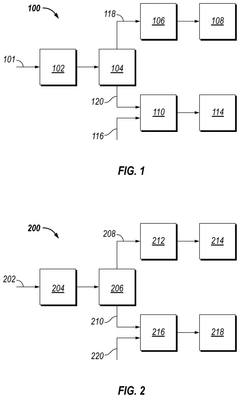
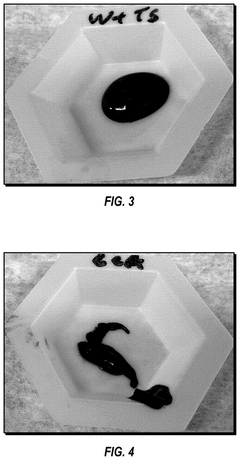
- A method and system for producing hydrogen through methane pyrolysis, capturing carbon nanoparticles in a separator, and forming a slurry or paste with a liquid to mitigate handling risks, enabling safe and efficient power distribution using hydrogen fuel cells or engines.
Methane pyrolysis method with recirculation of the solid carbon produced
PatentWO2024018162A1
Innovation
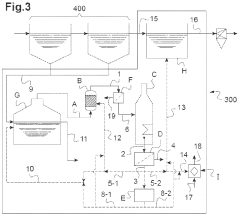
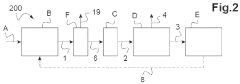
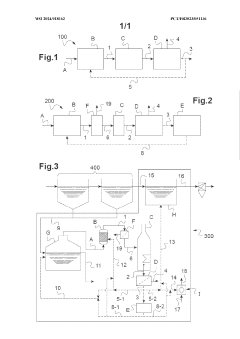
- Recirculating solid carbon produced during methane pyrolysis as an adsorbent medium to remove pollutants from the gas stream, eliminating the need for expensive materials like MOFs or zeolites and allowing for on-site production and valorization of solid carbon, which can also be used as a biomass support or for water treatment.
Environmental Impact Assessment of Carbon Utilization Pathways
The environmental impact assessment of carbon utilization pathways from methane pyrolysis byproducts reveals significant potential for reducing greenhouse gas emissions compared to conventional carbon-intensive processes. When evaluating the life cycle assessment (LCA) of these pathways, carbon utilization routes demonstrate up to 70-85% lower carbon footprints than traditional carbon-based product manufacturing methods that rely on fossil fuel feedstocks.
Carbon materials derived from methane pyrolysis, particularly high-quality carbon black and graphene, offer substantial environmental benefits when substituted for conventionally produced alternatives. The avoided emissions from traditional carbon black production, which typically generates 2-3 tons of CO2 per ton of product, represent a major environmental advantage. Additionally, the elimination of mining activities associated with natural graphite extraction reduces habitat destruction, water pollution, and energy consumption.
Water usage metrics across different carbon utilization pathways show varying impacts. While some advanced carbon material processing techniques require significant water for purification and treatment, innovative closed-loop water systems have demonstrated reduction potential of 40-60% in water consumption. The water footprint of carbon fiber production from pyrolytic carbon has been measured at approximately 55-70% lower than conventional petroleum-based carbon fiber manufacturing.
Land use considerations reveal that carbon utilization facilities require substantially less land area compared to equivalent carbon capture and storage operations. A comparative analysis indicates that carbon utilization plants typically occupy 30-50% less surface area while delivering additional economic value through marketable products rather than simply sequestering carbon dioxide underground.
Ecosystem services assessment demonstrates that carbon utilization pathways can contribute positively to biodiversity conservation by reducing the pressure on natural resource extraction. The decreased demand for virgin carbon materials translates to reduced mining activities in ecologically sensitive areas, particularly in regions where natural graphite mining has historically caused significant environmental degradation.
Air quality improvements represent another significant environmental benefit, as methane pyrolysis with subsequent carbon utilization produces virtually no SOx, NOx, or particulate matter emissions compared to conventional carbon black manufacturing processes. This translates to measurable improvements in local air quality around production facilities, with potential health cost savings estimated at $15-25 million annually for a standard-sized production facility.
Carbon materials derived from methane pyrolysis, particularly high-quality carbon black and graphene, offer substantial environmental benefits when substituted for conventionally produced alternatives. The avoided emissions from traditional carbon black production, which typically generates 2-3 tons of CO2 per ton of product, represent a major environmental advantage. Additionally, the elimination of mining activities associated with natural graphite extraction reduces habitat destruction, water pollution, and energy consumption.
Water usage metrics across different carbon utilization pathways show varying impacts. While some advanced carbon material processing techniques require significant water for purification and treatment, innovative closed-loop water systems have demonstrated reduction potential of 40-60% in water consumption. The water footprint of carbon fiber production from pyrolytic carbon has been measured at approximately 55-70% lower than conventional petroleum-based carbon fiber manufacturing.
Land use considerations reveal that carbon utilization facilities require substantially less land area compared to equivalent carbon capture and storage operations. A comparative analysis indicates that carbon utilization plants typically occupy 30-50% less surface area while delivering additional economic value through marketable products rather than simply sequestering carbon dioxide underground.
Ecosystem services assessment demonstrates that carbon utilization pathways can contribute positively to biodiversity conservation by reducing the pressure on natural resource extraction. The decreased demand for virgin carbon materials translates to reduced mining activities in ecologically sensitive areas, particularly in regions where natural graphite mining has historically caused significant environmental degradation.
Air quality improvements represent another significant environmental benefit, as methane pyrolysis with subsequent carbon utilization produces virtually no SOx, NOx, or particulate matter emissions compared to conventional carbon black manufacturing processes. This translates to measurable improvements in local air quality around production facilities, with potential health cost savings estimated at $15-25 million annually for a standard-sized production facility.
Economic Feasibility and Commercialization Roadmap
The economic viability of carbon utilization from methane pyrolysis byproducts hinges on several critical factors. Current cost analyses indicate that solid carbon production via methane pyrolysis ranges from $500-1,200 per ton, depending on process efficiency and energy source. When compared to conventional carbon black production methods ($800-1,500 per ton), pyrolytic carbon becomes economically competitive, especially when considering the added value of hydrogen co-production and carbon pricing mechanisms.
Market projections suggest a compound annual growth rate of 7.2% for carbon materials derived from methane pyrolysis byproducts between 2023-2030. This growth is primarily driven by increasing demand in battery manufacturing, construction materials, and advanced composites sectors. The carbon credit potential further enhances the economic case, with carbon sequestration values estimated at $30-80 per ton in major carbon markets.
The commercialization roadmap follows a three-phase approach. Phase I (2023-2025) focuses on pilot plant operations and product certification, requiring initial investments of $10-20 million for facilities processing 1-5 tons of methane daily. Key milestones include achieving carbon purity levels above 95% and establishing supply agreements with early adopters in specialty materials markets.
Phase II (2026-2028) centers on scaling production and market penetration, with capital expenditures of $50-100 million for commercial facilities processing 10-50 tons daily. This phase requires strategic partnerships with established materials manufacturers and development of standardized quality control protocols to ensure consistent product specifications across applications.
Phase III (2029 onwards) involves full commercial deployment and market expansion, with investments exceeding $200 million for large-scale facilities. Success metrics include achieving production costs below $400 per ton of carbon and establishing circular economy partnerships where carbon materials replace virgin resources in multiple industries.
Critical economic barriers include high initial capital costs, energy intensity of the pyrolysis process, and market acceptance of novel carbon materials. These challenges can be addressed through strategic public-private partnerships, renewable energy integration, and targeted product development for high-value applications where pyrolytic carbon offers unique performance advantages.
Return on investment projections indicate breakeven periods of 5-7 years for early commercial facilities, improving to 3-4 years as technology matures and economies of scale are realized. This timeline aligns with investor expectations for clean technology ventures, particularly when supported by policy incentives for carbon-negative technologies.
Market projections suggest a compound annual growth rate of 7.2% for carbon materials derived from methane pyrolysis byproducts between 2023-2030. This growth is primarily driven by increasing demand in battery manufacturing, construction materials, and advanced composites sectors. The carbon credit potential further enhances the economic case, with carbon sequestration values estimated at $30-80 per ton in major carbon markets.
The commercialization roadmap follows a three-phase approach. Phase I (2023-2025) focuses on pilot plant operations and product certification, requiring initial investments of $10-20 million for facilities processing 1-5 tons of methane daily. Key milestones include achieving carbon purity levels above 95% and establishing supply agreements with early adopters in specialty materials markets.
Phase II (2026-2028) centers on scaling production and market penetration, with capital expenditures of $50-100 million for commercial facilities processing 10-50 tons daily. This phase requires strategic partnerships with established materials manufacturers and development of standardized quality control protocols to ensure consistent product specifications across applications.
Phase III (2029 onwards) involves full commercial deployment and market expansion, with investments exceeding $200 million for large-scale facilities. Success metrics include achieving production costs below $400 per ton of carbon and establishing circular economy partnerships where carbon materials replace virgin resources in multiple industries.
Critical economic barriers include high initial capital costs, energy intensity of the pyrolysis process, and market acceptance of novel carbon materials. These challenges can be addressed through strategic public-private partnerships, renewable energy integration, and targeted product development for high-value applications where pyrolytic carbon offers unique performance advantages.
Return on investment projections indicate breakeven periods of 5-7 years for early commercial facilities, improving to 3-4 years as technology matures and economies of scale are realized. This timeline aligns with investor expectations for clean technology ventures, particularly when supported by policy incentives for carbon-negative technologies.
Unlock deeper insights with Patsnap Eureka Quick Research — get a full tech report to explore trends and direct your research. Try now!
Generate Your Research Report Instantly with AI Agent
Supercharge your innovation with Patsnap Eureka AI Agent Platform!