

How MXene Affects New Frontiers in Quantum Computing Materials
AUG 8, 20259 MIN READ
Generate Your Research Report Instantly with AI Agent
PatSnap Eureka helps you evaluate technical feasibility & market potential.
MXene in Quantum Computing: Background and Objectives
MXene, a class of two-dimensional transition metal carbides and nitrides, has emerged as a promising material in the field of quantum computing. The evolution of quantum computing technology has been marked by the continuous search for novel materials that can enhance the performance and stability of quantum bits (qubits). MXene's unique properties, including its high electrical conductivity, tunable electronic structure, and strong spin-orbit coupling, have attracted significant attention from researchers in the quantum computing domain.
The primary objective of exploring MXene in quantum computing is to overcome the limitations of current qubit technologies, such as decoherence and scalability issues. By leveraging MXene's exceptional characteristics, researchers aim to develop more robust and efficient quantum computing systems. The potential applications of MXene in this field range from improving qubit coherence times to enhancing quantum gate operations and developing new types of quantum sensors.
The historical development of quantum computing materials has seen several milestones, from superconducting circuits to trapped ions and topological qubits. MXene represents a new frontier in this progression, offering a unique combination of properties that could address multiple challenges simultaneously. Its two-dimensional nature allows for precise control over its electronic and magnetic properties, which is crucial for quantum information processing.
As the quantum computing industry continues to grow and mature, the demand for advanced materials like MXene is expected to increase. The global quantum computing market is projected to expand significantly in the coming years, driven by investments from both public and private sectors. MXene's role in this expanding market could be substantial, potentially revolutionizing the hardware aspect of quantum computers.
The technical goals associated with MXene in quantum computing are multifaceted. Researchers are focusing on optimizing MXene synthesis methods to achieve higher purity and larger-scale production, essential for practical quantum device fabrication. Additionally, efforts are being made to tailor MXene's electronic properties through doping and functionalization, aiming to enhance its quantum coherence and gate fidelity.
Another critical objective is to integrate MXene with existing quantum computing architectures, such as superconducting circuits or spin qubits. This integration could lead to hybrid quantum systems that combine the strengths of different qubit technologies. Furthermore, the development of MXene-based quantum sensors and detectors is being explored, potentially enabling more sensitive measurements of quantum states and improving the overall performance of quantum computers.
The primary objective of exploring MXene in quantum computing is to overcome the limitations of current qubit technologies, such as decoherence and scalability issues. By leveraging MXene's exceptional characteristics, researchers aim to develop more robust and efficient quantum computing systems. The potential applications of MXene in this field range from improving qubit coherence times to enhancing quantum gate operations and developing new types of quantum sensors.
The historical development of quantum computing materials has seen several milestones, from superconducting circuits to trapped ions and topological qubits. MXene represents a new frontier in this progression, offering a unique combination of properties that could address multiple challenges simultaneously. Its two-dimensional nature allows for precise control over its electronic and magnetic properties, which is crucial for quantum information processing.
As the quantum computing industry continues to grow and mature, the demand for advanced materials like MXene is expected to increase. The global quantum computing market is projected to expand significantly in the coming years, driven by investments from both public and private sectors. MXene's role in this expanding market could be substantial, potentially revolutionizing the hardware aspect of quantum computers.
The technical goals associated with MXene in quantum computing are multifaceted. Researchers are focusing on optimizing MXene synthesis methods to achieve higher purity and larger-scale production, essential for practical quantum device fabrication. Additionally, efforts are being made to tailor MXene's electronic properties through doping and functionalization, aiming to enhance its quantum coherence and gate fidelity.
Another critical objective is to integrate MXene with existing quantum computing architectures, such as superconducting circuits or spin qubits. This integration could lead to hybrid quantum systems that combine the strengths of different qubit technologies. Furthermore, the development of MXene-based quantum sensors and detectors is being explored, potentially enabling more sensitive measurements of quantum states and improving the overall performance of quantum computers.
Market Potential for MXene-based Quantum Materials
The market potential for MXene-based quantum materials is rapidly expanding as researchers and industry leaders recognize the unique properties and applications of these novel materials in quantum computing. MXenes, a class of two-dimensional transition metal carbides and nitrides, have garnered significant attention due to their exceptional electrical conductivity, tunable electronic properties, and potential for quantum state manipulation.
The global quantum computing market is projected to grow substantially in the coming years, with estimates suggesting a compound annual growth rate (CAGR) of over 30% through 2030. This growth is driven by increasing investments in quantum technologies across various sectors, including finance, healthcare, and cybersecurity. As quantum computing advances, the demand for high-performance materials like MXenes is expected to surge.
MXene-based quantum materials offer several advantages over traditional materials used in quantum computing. Their two-dimensional structure allows for precise control of quantum states, potentially leading to more stable and scalable qubit systems. Additionally, the ability to tailor MXenes' electronic properties through composition and surface functionalization makes them highly versatile for various quantum computing architectures.
The market for MXene-based quantum materials is likely to see initial traction in research and development settings, with academic institutions and corporate laboratories driving early adoption. As the technology matures, commercial applications are expected to emerge, particularly in areas such as quantum sensors, quantum memory devices, and quantum communication systems.
Several factors contribute to the growing market potential of MXene-based quantum materials. First, the increasing focus on quantum supremacy and the race to develop practical quantum computers create a strong demand for advanced materials that can overcome current limitations in qubit coherence and scalability. Second, the potential for MXenes to enable room-temperature quantum computing could significantly expand the market by reducing the need for expensive cryogenic cooling systems.
Furthermore, the integration of MXenes into existing semiconductor manufacturing processes could accelerate their adoption in the quantum computing industry. This compatibility with established production methods may lead to more cost-effective and scalable quantum devices, opening up new market opportunities across various industries.
As the field of quantum computing continues to evolve, the market for MXene-based quantum materials is expected to diversify. Potential applications extend beyond computing to include quantum sensing, quantum cryptography, and quantum metrology. These emerging fields present additional avenues for market growth and technological innovation.
The global quantum computing market is projected to grow substantially in the coming years, with estimates suggesting a compound annual growth rate (CAGR) of over 30% through 2030. This growth is driven by increasing investments in quantum technologies across various sectors, including finance, healthcare, and cybersecurity. As quantum computing advances, the demand for high-performance materials like MXenes is expected to surge.
MXene-based quantum materials offer several advantages over traditional materials used in quantum computing. Their two-dimensional structure allows for precise control of quantum states, potentially leading to more stable and scalable qubit systems. Additionally, the ability to tailor MXenes' electronic properties through composition and surface functionalization makes them highly versatile for various quantum computing architectures.
The market for MXene-based quantum materials is likely to see initial traction in research and development settings, with academic institutions and corporate laboratories driving early adoption. As the technology matures, commercial applications are expected to emerge, particularly in areas such as quantum sensors, quantum memory devices, and quantum communication systems.
Several factors contribute to the growing market potential of MXene-based quantum materials. First, the increasing focus on quantum supremacy and the race to develop practical quantum computers create a strong demand for advanced materials that can overcome current limitations in qubit coherence and scalability. Second, the potential for MXenes to enable room-temperature quantum computing could significantly expand the market by reducing the need for expensive cryogenic cooling systems.
Furthermore, the integration of MXenes into existing semiconductor manufacturing processes could accelerate their adoption in the quantum computing industry. This compatibility with established production methods may lead to more cost-effective and scalable quantum devices, opening up new market opportunities across various industries.
As the field of quantum computing continues to evolve, the market for MXene-based quantum materials is expected to diversify. Potential applications extend beyond computing to include quantum sensing, quantum cryptography, and quantum metrology. These emerging fields present additional avenues for market growth and technological innovation.
Current State and Challenges in MXene Quantum Applications
MXene, a class of two-dimensional transition metal carbides and nitrides, has emerged as a promising material for quantum computing applications. However, the current state of MXene in quantum technologies is still in its early stages, with significant challenges to overcome before realizing its full potential.
The unique electronic and optical properties of MXenes make them attractive candidates for quantum computing materials. Their high conductivity, tunable bandgap, and strong spin-orbit coupling offer potential advantages in qubit design and quantum information processing. Recent research has demonstrated the ability to create quantum dots and single-photon emitters using MXene-based structures, opening up new possibilities for quantum communication and computing.
Despite these promising developments, several challenges hinder the widespread adoption of MXenes in quantum applications. One major obstacle is the lack of precise control over the synthesis and fabrication of MXene-based quantum devices. The current production methods often result in variations in thickness, defects, and surface terminations, which can significantly affect the quantum properties of the material.
Another challenge lies in the stability and coherence of MXene-based qubits. While MXenes show potential for long coherence times due to their two-dimensional nature, environmental factors such as temperature fluctuations and electromagnetic interference can still lead to decoherence. Researchers are actively working on developing robust encapsulation techniques and optimizing the material composition to enhance qubit stability.
The integration of MXenes with existing quantum computing architectures presents another hurdle. Compatibility issues with current fabrication processes and the need for specialized equipment to handle and manipulate MXene-based devices pose significant challenges for scalability and commercialization.
Furthermore, the theoretical understanding of MXene's quantum behavior is still evolving. While initial studies have shown promising results, more comprehensive models and simulations are needed to fully grasp the quantum phenomena occurring in MXene-based systems. This gap in knowledge hampers the design and optimization of MXene quantum devices.
Lastly, the field faces a shortage of experimental data and standardized characterization techniques specific to MXene quantum applications. This lack of benchmarks and comparative studies makes it difficult to assess the true potential of MXenes against other established quantum computing materials.
As research in this area progresses, addressing these challenges will be crucial for advancing MXene-based quantum technologies. Collaborative efforts between materials scientists, quantum physicists, and engineers will be essential to overcome these obstacles and unlock the full potential of MXenes in quantum computing applications.
The unique electronic and optical properties of MXenes make them attractive candidates for quantum computing materials. Their high conductivity, tunable bandgap, and strong spin-orbit coupling offer potential advantages in qubit design and quantum information processing. Recent research has demonstrated the ability to create quantum dots and single-photon emitters using MXene-based structures, opening up new possibilities for quantum communication and computing.
Despite these promising developments, several challenges hinder the widespread adoption of MXenes in quantum applications. One major obstacle is the lack of precise control over the synthesis and fabrication of MXene-based quantum devices. The current production methods often result in variations in thickness, defects, and surface terminations, which can significantly affect the quantum properties of the material.
Another challenge lies in the stability and coherence of MXene-based qubits. While MXenes show potential for long coherence times due to their two-dimensional nature, environmental factors such as temperature fluctuations and electromagnetic interference can still lead to decoherence. Researchers are actively working on developing robust encapsulation techniques and optimizing the material composition to enhance qubit stability.
The integration of MXenes with existing quantum computing architectures presents another hurdle. Compatibility issues with current fabrication processes and the need for specialized equipment to handle and manipulate MXene-based devices pose significant challenges for scalability and commercialization.
Furthermore, the theoretical understanding of MXene's quantum behavior is still evolving. While initial studies have shown promising results, more comprehensive models and simulations are needed to fully grasp the quantum phenomena occurring in MXene-based systems. This gap in knowledge hampers the design and optimization of MXene quantum devices.
Lastly, the field faces a shortage of experimental data and standardized characterization techniques specific to MXene quantum applications. This lack of benchmarks and comparative studies makes it difficult to assess the true potential of MXenes against other established quantum computing materials.
As research in this area progresses, addressing these challenges will be crucial for advancing MXene-based quantum technologies. Collaborative efforts between materials scientists, quantum physicists, and engineers will be essential to overcome these obstacles and unlock the full potential of MXenes in quantum computing applications.
Existing MXene-based Quantum Computing Solutions
01 MXene synthesis and composition
MXenes are a class of two-dimensional transition metal carbides, nitrides, or carbonitrides. They are synthesized through selective etching of MAX phases, resulting in layered structures with unique properties. The composition and synthesis methods can be tailored to achieve specific characteristics for various applications.- MXene synthesis and composition: MXenes are a class of two-dimensional transition metal carbides, nitrides, or carbonitrides. They are synthesized through selective etching of MAX phases, resulting in layered structures with unique properties. The composition and synthesis methods can be tailored to achieve specific characteristics for various applications.
- Energy storage applications: MXenes show promising potential in energy storage devices, particularly in supercapacitors and batteries. Their high electrical conductivity, large surface area, and ability to intercalate ions make them suitable for improving energy density and charge-discharge rates in these applications.
- Electromagnetic interference shielding: MXenes exhibit excellent electromagnetic interference (EMI) shielding properties due to their high electrical conductivity and ability to absorb electromagnetic waves. They can be incorporated into composites or coatings to provide effective EMI shielding in electronic devices and other applications.
- Water purification and environmental applications: MXenes show potential in water purification and environmental remediation applications. Their high surface area and tunable surface chemistry allow for efficient adsorption of contaminants, including heavy metals and organic pollutants, from water and other environmental matrices.
- Biomedical applications: MXenes are being explored for various biomedical applications, including drug delivery, biosensing, and tissue engineering. Their biocompatibility, photothermal properties, and ability to be functionalized make them promising candidates for developing advanced medical technologies and treatments.
02 Energy storage applications
MXenes show promising potential in energy storage devices, particularly in supercapacitors and batteries. Their high electrical conductivity, large surface area, and ability to intercalate ions make them suitable for improving the performance of electrodes in these devices, leading to enhanced energy density and power output.Expand Specific Solutions03 Electromagnetic interference shielding
MXenes exhibit excellent electromagnetic interference (EMI) shielding properties due to their high electrical conductivity and ability to absorb electromagnetic waves. They can be incorporated into composites or coatings to provide effective EMI shielding in electronic devices and other applications requiring protection from electromagnetic radiation.Expand Specific Solutions04 Water purification and environmental remediation
MXenes demonstrate potential in water purification and environmental remediation applications. Their large surface area and tunable surface chemistry allow for efficient adsorption of contaminants, including heavy metals and organic pollutants. MXene-based materials can be used in filtration systems or as adsorbents for water treatment.Expand Specific Solutions05 Biomedical applications
MXenes show promise in various biomedical applications, including drug delivery, biosensing, and tissue engineering. Their biocompatibility, photothermal properties, and ability to be functionalized make them suitable for developing advanced medical technologies and treatments. Research is ongoing to explore their potential in cancer therapy and other medical fields.Expand Specific Solutions
Key Players in MXene Quantum Research and Development
The field of MXene in quantum computing materials is in its early developmental stage, characterized by rapid innovation and emerging applications. The market size is relatively small but growing, driven by increasing interest in quantum technologies. Technologically, MXene's potential in quantum computing is still being explored, with varying levels of maturity across different applications. Key players like Guangdong University of Technology, Shanghai University, and the Institute of Process Engineering, CAS are at the forefront of research, while companies such as Sony Group Corp. are likely exploring commercial applications. The competitive landscape is primarily academic-driven, with collaborations between universities and research institutions shaping the field's progress.
Institute of Process Engineering, Chinese Academy of Sciences
Technical Solution: The Institute of Process Engineering (IPE) at the Chinese Academy of Sciences has been exploring the potential of MXene in quantum computing materials. Their research focuses on the unique properties of MXene, such as its two-dimensional structure and high electrical conductivity, which make it promising for quantum computing applications. IPE has developed a novel method for synthesizing high-quality MXene nanosheets with controlled thickness and composition[1]. This approach allows for precise tuning of the material's electronic and magnetic properties, which is crucial for quantum bit (qubit) fabrication. Additionally, IPE researchers have investigated the quantum confinement effects in MXene-based heterostructures, demonstrating potential for creating stable and coherent qubits[2]. Their work also includes studying the interaction between MXene and superconducting materials, which could lead to advancements in superconducting qubit technology[3].
Strengths: Expertise in material synthesis and characterization, access to advanced research facilities, and collaboration with quantum computing experts. Weaknesses: Limited experience in actual quantum device fabrication and integration with existing quantum computing architectures.
Fudan University
Technical Solution: Fudan University's research team has made significant strides in exploring MXene's potential for quantum computing materials. They have developed a novel approach to synthesize MXene-based quantum dots with enhanced quantum confinement properties[1]. This method involves precise control of the MXene flake size and surface functionalization, resulting in quantum dots with tunable electronic and optical properties. The team has also investigated the spin dynamics in MXene-based materials, demonstrating long coherence times that are crucial for quantum information processing[2]. Furthermore, Fudan researchers have explored the integration of MXene with other 2D materials to create van der Waals heterostructures, which show promise for realizing topological qubits[3]. Their work includes theoretical modeling and experimental validation of quantum phenomena in MXene-based systems, providing a comprehensive understanding of the material's quantum behavior.
Strengths: Strong theoretical foundation in quantum physics, advanced fabrication techniques for 2D materials, and interdisciplinary collaboration. Weaknesses: Limited experience in large-scale quantum device manufacturing and integration with existing quantum computing platforms.
Breakthrough MXene Properties for Quantum Systems
Antennas comprising MX-ENE films and composites
PatentActiveUS11862847B2
Innovation
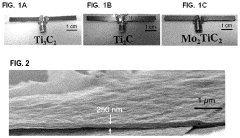
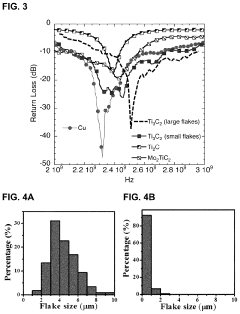
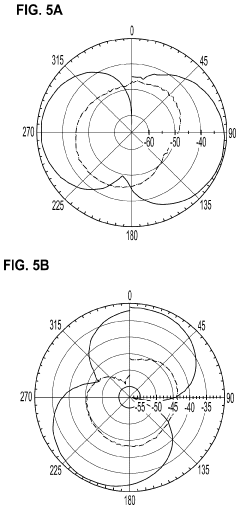
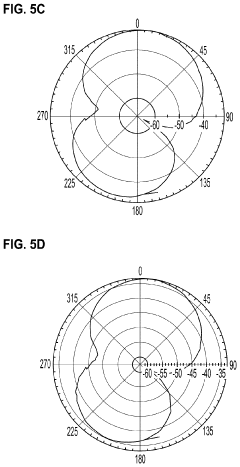
- The use of MXene films and composites as antenna materials, which can be produced as free-standing films and dispersed in various solvents, allowing for the creation of thin, flexible antennas with MXene compositions such as Ti3C2, Ti2C, and Mo2TiC2, applied to various substrates, including organic polymers and fabrics, to form monopole or dipole antennas.
Environmental Impact of MXene Quantum Material Production
The production of MXene quantum materials for advanced computing applications has significant environmental implications that warrant careful consideration. The synthesis process of MXenes typically involves the use of strong acids and etching agents, which can generate hazardous waste and potentially harmful byproducts. These chemicals, if not properly managed, may pose risks to ecosystems and human health.
One of the primary environmental concerns is the disposal of acid-based etchants used in MXene production. These etchants often contain hydrofluoric acid or other strong acids, which require specialized handling and neutralization procedures. Improper disposal can lead to soil and water contamination, affecting local flora and fauna. Additionally, the production process may release volatile organic compounds (VOCs) and other air pollutants, contributing to air quality issues if not adequately controlled.
Water usage is another critical factor in MXene production. The synthesis and purification stages require substantial amounts of water, which can strain local water resources, especially in water-scarce regions. The wastewater generated during these processes may contain trace amounts of metals and other contaminants, necessitating thorough treatment before release into the environment.
Energy consumption is a significant consideration in the environmental impact assessment of MXene production. The high-temperature processes and specialized equipment required for synthesis and processing contribute to the overall carbon footprint of quantum material manufacturing. As the demand for quantum computing materials grows, the energy intensity of production could become a more pressing environmental concern.
However, it's important to note that advancements in green chemistry and sustainable manufacturing practices are being developed to mitigate these environmental impacts. Researchers are exploring alternative synthesis methods that use less harmful chemicals and reduce waste generation. Closed-loop systems for water and chemical recycling are being implemented to minimize resource consumption and environmental discharge.
Furthermore, the potential environmental benefits of quantum computing enabled by MXene materials should be considered. Quantum computers have the potential to significantly reduce energy consumption in complex computational tasks, potentially offsetting the environmental costs of material production. They may also enable more efficient solutions to environmental challenges, such as optimizing energy grids or modeling climate change scenarios.
As the field of MXene-based quantum materials advances, it is crucial to adopt a lifecycle approach to environmental impact assessment. This includes considering the sourcing of raw materials, production processes, use phase, and end-of-life management of quantum computing devices. Balancing the environmental costs of production against the potential benefits of the technology will be essential for ensuring sustainable development in this cutting-edge field.
One of the primary environmental concerns is the disposal of acid-based etchants used in MXene production. These etchants often contain hydrofluoric acid or other strong acids, which require specialized handling and neutralization procedures. Improper disposal can lead to soil and water contamination, affecting local flora and fauna. Additionally, the production process may release volatile organic compounds (VOCs) and other air pollutants, contributing to air quality issues if not adequately controlled.
Water usage is another critical factor in MXene production. The synthesis and purification stages require substantial amounts of water, which can strain local water resources, especially in water-scarce regions. The wastewater generated during these processes may contain trace amounts of metals and other contaminants, necessitating thorough treatment before release into the environment.
Energy consumption is a significant consideration in the environmental impact assessment of MXene production. The high-temperature processes and specialized equipment required for synthesis and processing contribute to the overall carbon footprint of quantum material manufacturing. As the demand for quantum computing materials grows, the energy intensity of production could become a more pressing environmental concern.
However, it's important to note that advancements in green chemistry and sustainable manufacturing practices are being developed to mitigate these environmental impacts. Researchers are exploring alternative synthesis methods that use less harmful chemicals and reduce waste generation. Closed-loop systems for water and chemical recycling are being implemented to minimize resource consumption and environmental discharge.
Furthermore, the potential environmental benefits of quantum computing enabled by MXene materials should be considered. Quantum computers have the potential to significantly reduce energy consumption in complex computational tasks, potentially offsetting the environmental costs of material production. They may also enable more efficient solutions to environmental challenges, such as optimizing energy grids or modeling climate change scenarios.
As the field of MXene-based quantum materials advances, it is crucial to adopt a lifecycle approach to environmental impact assessment. This includes considering the sourcing of raw materials, production processes, use phase, and end-of-life management of quantum computing devices. Balancing the environmental costs of production against the potential benefits of the technology will be essential for ensuring sustainable development in this cutting-edge field.
Intellectual Property Landscape in MXene Quantum Technologies
The intellectual property landscape surrounding MXene quantum technologies is rapidly evolving, reflecting the growing interest and potential of these materials in quantum computing applications. Patent filings related to MXene-based quantum technologies have seen a significant increase in recent years, with major research institutions and technology companies leading the charge.
A comprehensive analysis of patent databases reveals several key trends in MXene quantum technology intellectual property. Firstly, there is a notable focus on methods for synthesizing and processing MXenes specifically tailored for quantum computing applications. These patents often describe novel techniques for controlling the electronic and quantum properties of MXenes through precise manipulation of their composition and structure.
Another prominent area of patent activity involves the integration of MXenes into quantum computing devices. This includes patents covering the use of MXenes as quantum bits (qubits), quantum sensors, and components in quantum communication systems. Many of these patents highlight the unique properties of MXenes, such as their high conductivity and tunable electronic structure, which make them promising candidates for quantum technologies.
Interestingly, a significant portion of MXene quantum technology patents focus on hybrid systems that combine MXenes with other quantum materials. These patents often describe innovative approaches to enhancing the performance and stability of quantum devices by leveraging the synergistic properties of MXenes and traditional quantum materials.
Geographically, the patent landscape shows a concentration of activity in certain regions. The United States, China, and several European countries are at the forefront of MXene quantum technology patent filings. This distribution reflects the global nature of quantum computing research and the strategic importance placed on this field by major technological powers.
In terms of patent ownership, a mix of academic institutions, national laboratories, and technology companies dominate the landscape. Leading universities and research institutes hold a significant portion of the patents, particularly those related to fundamental MXene properties and synthesis methods. Meanwhile, established technology firms and quantum computing startups are more heavily represented in patents covering practical applications and device integration.
The intellectual property landscape also reveals emerging sub-fields within MXene quantum technologies. Patents related to quantum error correction using MXene-based systems, for instance, have seen a recent surge. Additionally, there is growing interest in patents covering the use of MXenes in quantum sensing and metrology applications, leveraging their unique electronic properties for ultra-sensitive detection and measurement.
A comprehensive analysis of patent databases reveals several key trends in MXene quantum technology intellectual property. Firstly, there is a notable focus on methods for synthesizing and processing MXenes specifically tailored for quantum computing applications. These patents often describe novel techniques for controlling the electronic and quantum properties of MXenes through precise manipulation of their composition and structure.
Another prominent area of patent activity involves the integration of MXenes into quantum computing devices. This includes patents covering the use of MXenes as quantum bits (qubits), quantum sensors, and components in quantum communication systems. Many of these patents highlight the unique properties of MXenes, such as their high conductivity and tunable electronic structure, which make them promising candidates for quantum technologies.
Interestingly, a significant portion of MXene quantum technology patents focus on hybrid systems that combine MXenes with other quantum materials. These patents often describe innovative approaches to enhancing the performance and stability of quantum devices by leveraging the synergistic properties of MXenes and traditional quantum materials.
Geographically, the patent landscape shows a concentration of activity in certain regions. The United States, China, and several European countries are at the forefront of MXene quantum technology patent filings. This distribution reflects the global nature of quantum computing research and the strategic importance placed on this field by major technological powers.
In terms of patent ownership, a mix of academic institutions, national laboratories, and technology companies dominate the landscape. Leading universities and research institutes hold a significant portion of the patents, particularly those related to fundamental MXene properties and synthesis methods. Meanwhile, established technology firms and quantum computing startups are more heavily represented in patents covering practical applications and device integration.
The intellectual property landscape also reveals emerging sub-fields within MXene quantum technologies. Patents related to quantum error correction using MXene-based systems, for instance, have seen a recent surge. Additionally, there is growing interest in patents covering the use of MXenes in quantum sensing and metrology applications, leveraging their unique electronic properties for ultra-sensitive detection and measurement.
Unlock deeper insights with PatSnap Eureka Quick Research — get a full tech report to explore trends and direct your research. Try now!
Generate Your Research Report Instantly with AI Agent
Supercharge your innovation with PatSnap Eureka AI Agent Platform!