

How Stratified Charge Provides Efficiency in LS Engine Operation
AUG 12, 20259 MIN READ
Generate Your Research Report Instantly with AI Agent
PatSnap Eureka helps you evaluate technical feasibility & market potential.
LS Engine Evolution
The LS engine series, introduced by General Motors in 1997, marked a significant evolution in V8 engine design. This family of engines represented a departure from traditional small-block V8s, incorporating advanced technologies to improve performance, efficiency, and emissions. The LS engine's evolution can be traced through several key generations, each bringing notable improvements and innovations.
The first-generation LS1 engine debuted in the 1997 Chevrolet Corvette, featuring an all-aluminum design that significantly reduced weight compared to its predecessors. This initial offering set the stage for future developments, with its 5.7-liter displacement producing 345 horsepower. The engine's architecture included features such as a deep-skirt cylinder block, six-bolt main bearing caps, and a distributor-less ignition system, all contributing to improved durability and performance.
As the LS series progressed, subsequent generations introduced various enhancements. The LS2, introduced in 2005, increased displacement to 6.0 liters and incorporated revised cylinder heads for better airflow. This was followed by the LS3 in 2008, which further increased displacement to 6.2 liters and introduced a new, high-flow cylinder head design, resulting in power outputs exceeding 400 horsepower in stock form.
A significant milestone in the LS engine's evolution was the introduction of variable valve timing (VVT) technology. This feature, first implemented in the L99 variant of the LS3, allowed for improved engine efficiency across a broader range of operating conditions. VVT technology enabled the engine to optimize valve timing based on engine load and speed, contributing to both performance and fuel economy improvements.
The development of direct injection technology marked another crucial step in the LS engine's evolution. Introduced in the LT1 engine in 2014, direct injection allowed for more precise fuel delivery directly into the combustion chamber. This innovation not only improved fuel efficiency but also enabled higher compression ratios, leading to increased power output and reduced emissions.
Throughout its evolution, the LS engine series has consistently pushed the boundaries of V8 engine technology. Advancements in materials science, such as the use of lightweight alloys and composite materials, have allowed for further weight reduction and improved thermal management. Additionally, the integration of advanced engine management systems and electronic controls has enabled more sophisticated tuning capabilities, optimizing engine performance across a wide range of operating conditions.
The ongoing evolution of the LS engine series continues to focus on improving efficiency while maintaining the high-performance characteristics that have made these engines popular. Recent developments have explored the potential of technologies such as cylinder deactivation and advanced combustion strategies, including stratified charge operation, to further enhance fuel economy without sacrificing power output.
The first-generation LS1 engine debuted in the 1997 Chevrolet Corvette, featuring an all-aluminum design that significantly reduced weight compared to its predecessors. This initial offering set the stage for future developments, with its 5.7-liter displacement producing 345 horsepower. The engine's architecture included features such as a deep-skirt cylinder block, six-bolt main bearing caps, and a distributor-less ignition system, all contributing to improved durability and performance.
As the LS series progressed, subsequent generations introduced various enhancements. The LS2, introduced in 2005, increased displacement to 6.0 liters and incorporated revised cylinder heads for better airflow. This was followed by the LS3 in 2008, which further increased displacement to 6.2 liters and introduced a new, high-flow cylinder head design, resulting in power outputs exceeding 400 horsepower in stock form.
A significant milestone in the LS engine's evolution was the introduction of variable valve timing (VVT) technology. This feature, first implemented in the L99 variant of the LS3, allowed for improved engine efficiency across a broader range of operating conditions. VVT technology enabled the engine to optimize valve timing based on engine load and speed, contributing to both performance and fuel economy improvements.
The development of direct injection technology marked another crucial step in the LS engine's evolution. Introduced in the LT1 engine in 2014, direct injection allowed for more precise fuel delivery directly into the combustion chamber. This innovation not only improved fuel efficiency but also enabled higher compression ratios, leading to increased power output and reduced emissions.
Throughout its evolution, the LS engine series has consistently pushed the boundaries of V8 engine technology. Advancements in materials science, such as the use of lightweight alloys and composite materials, have allowed for further weight reduction and improved thermal management. Additionally, the integration of advanced engine management systems and electronic controls has enabled more sophisticated tuning capabilities, optimizing engine performance across a wide range of operating conditions.
The ongoing evolution of the LS engine series continues to focus on improving efficiency while maintaining the high-performance characteristics that have made these engines popular. Recent developments have explored the potential of technologies such as cylinder deactivation and advanced combustion strategies, including stratified charge operation, to further enhance fuel economy without sacrificing power output.
Market Demand Analysis
The market demand for stratified charge technology in LS engine operation has been steadily growing due to increasing pressure on automotive manufacturers to improve fuel efficiency and reduce emissions. This technology offers significant advantages in terms of engine performance and environmental impact, making it attractive to both consumers and regulators.
In recent years, there has been a notable shift in consumer preferences towards more fuel-efficient vehicles. This trend is driven by rising fuel costs and growing environmental consciousness among consumers. Stratified charge technology in LS engines addresses these concerns by offering improved fuel economy without sacrificing performance. As a result, vehicles equipped with this technology are becoming increasingly popular in the market.
The automotive industry is also facing stringent emissions regulations worldwide. Governments and regulatory bodies are implementing stricter standards to reduce greenhouse gas emissions and improve air quality. Stratified charge technology helps manufacturers meet these requirements by reducing fuel consumption and lowering emissions. This has created a strong market pull for engines incorporating this technology, particularly in regions with the most stringent environmental regulations.
From a market size perspective, the global market for stratified charge engines is expected to grow significantly in the coming years. This growth is driven by the increasing adoption of this technology in various vehicle segments, from compact cars to larger SUVs and trucks. The technology's versatility and adaptability to different engine sizes and configurations contribute to its expanding market potential.
The commercial vehicle sector also presents a substantial market opportunity for stratified charge technology. Fleet operators and logistics companies are increasingly seeking ways to reduce fuel costs and comply with emissions regulations. The efficiency gains offered by stratified charge in LS engines make it an attractive option for this segment, potentially leading to widespread adoption in commercial trucks and vans.
Furthermore, the aftermarket and retrofit sector show promise for stratified charge technology. As awareness of its benefits grows, there is potential for retrofitting existing LS engines with stratified charge systems, opening up a new market segment for automotive suppliers and service providers.
However, the market demand is not without challenges. The initial cost of implementing stratified charge technology can be higher compared to conventional engine designs. This cost factor may impact adoption rates, particularly in price-sensitive market segments. Additionally, the complexity of stratified charge systems requires specialized maintenance and repair skills, which could affect long-term ownership costs and consumer acceptance.
In recent years, there has been a notable shift in consumer preferences towards more fuel-efficient vehicles. This trend is driven by rising fuel costs and growing environmental consciousness among consumers. Stratified charge technology in LS engines addresses these concerns by offering improved fuel economy without sacrificing performance. As a result, vehicles equipped with this technology are becoming increasingly popular in the market.
The automotive industry is also facing stringent emissions regulations worldwide. Governments and regulatory bodies are implementing stricter standards to reduce greenhouse gas emissions and improve air quality. Stratified charge technology helps manufacturers meet these requirements by reducing fuel consumption and lowering emissions. This has created a strong market pull for engines incorporating this technology, particularly in regions with the most stringent environmental regulations.
From a market size perspective, the global market for stratified charge engines is expected to grow significantly in the coming years. This growth is driven by the increasing adoption of this technology in various vehicle segments, from compact cars to larger SUVs and trucks. The technology's versatility and adaptability to different engine sizes and configurations contribute to its expanding market potential.
The commercial vehicle sector also presents a substantial market opportunity for stratified charge technology. Fleet operators and logistics companies are increasingly seeking ways to reduce fuel costs and comply with emissions regulations. The efficiency gains offered by stratified charge in LS engines make it an attractive option for this segment, potentially leading to widespread adoption in commercial trucks and vans.
Furthermore, the aftermarket and retrofit sector show promise for stratified charge technology. As awareness of its benefits grows, there is potential for retrofitting existing LS engines with stratified charge systems, opening up a new market segment for automotive suppliers and service providers.
However, the market demand is not without challenges. The initial cost of implementing stratified charge technology can be higher compared to conventional engine designs. This cost factor may impact adoption rates, particularly in price-sensitive market segments. Additionally, the complexity of stratified charge systems requires specialized maintenance and repair skills, which could affect long-term ownership costs and consumer acceptance.
Stratified Charge Tech
Stratified charge technology represents a significant advancement in internal combustion engine design, particularly for LS (Luxury Sport) engines. This approach to fuel injection and combustion aims to improve engine efficiency and reduce emissions by creating a layered or stratified mixture of air and fuel in the combustion chamber.
In a stratified charge engine, the fuel is injected directly into the cylinder late in the compression stroke, creating a rich fuel-air mixture near the spark plug while maintaining a leaner mixture elsewhere in the cylinder. This stratification allows for overall leaner operation, which is particularly beneficial during part-load conditions typical in everyday driving.
The key to stratified charge operation lies in precise fuel injection timing and spray pattern control. Advanced fuel injectors, capable of multiple injections per cycle, are employed to achieve the desired fuel distribution. These injectors work in conjunction with specially designed piston crowns that help direct the fuel spray and maintain the stratified charge.
Combustion in a stratified charge engine occurs in stages. Initially, the rich mixture near the spark plug ignites easily, creating a stable flame kernel. This flame then propagates through the leaner regions of the cylinder, ensuring complete combustion of the fuel. This staged combustion process allows for more efficient fuel utilization and reduced pumping losses compared to traditional homogeneous charge engines.
The benefits of stratified charge technology in LS engine operation are multifaceted. Firstly, it enables the engine to operate with a higher compression ratio, which inherently improves thermal efficiency. Secondly, the ability to run leaner overall mixtures reduces fuel consumption, particularly during partial load conditions. Additionally, the reduced pumping losses contribute to improved efficiency across a wide range of operating conditions.
However, implementing stratified charge technology in LS engines presents several challenges. Precise control of the fuel injection process is critical and requires sophisticated engine management systems. The technology also demands high-quality fuel to prevent issues such as pre-ignition and knock, which can be more prevalent in stratified charge engines due to the higher compression ratios and localized rich mixtures.
Furthermore, while stratified charge operation excels in part-load conditions, it may not be optimal for all operating scenarios. As such, modern LS engines employing this technology often incorporate the ability to switch between stratified and homogeneous charge modes depending on the driving conditions and power demands.
In a stratified charge engine, the fuel is injected directly into the cylinder late in the compression stroke, creating a rich fuel-air mixture near the spark plug while maintaining a leaner mixture elsewhere in the cylinder. This stratification allows for overall leaner operation, which is particularly beneficial during part-load conditions typical in everyday driving.
The key to stratified charge operation lies in precise fuel injection timing and spray pattern control. Advanced fuel injectors, capable of multiple injections per cycle, are employed to achieve the desired fuel distribution. These injectors work in conjunction with specially designed piston crowns that help direct the fuel spray and maintain the stratified charge.
Combustion in a stratified charge engine occurs in stages. Initially, the rich mixture near the spark plug ignites easily, creating a stable flame kernel. This flame then propagates through the leaner regions of the cylinder, ensuring complete combustion of the fuel. This staged combustion process allows for more efficient fuel utilization and reduced pumping losses compared to traditional homogeneous charge engines.
The benefits of stratified charge technology in LS engine operation are multifaceted. Firstly, it enables the engine to operate with a higher compression ratio, which inherently improves thermal efficiency. Secondly, the ability to run leaner overall mixtures reduces fuel consumption, particularly during partial load conditions. Additionally, the reduced pumping losses contribute to improved efficiency across a wide range of operating conditions.
However, implementing stratified charge technology in LS engines presents several challenges. Precise control of the fuel injection process is critical and requires sophisticated engine management systems. The technology also demands high-quality fuel to prevent issues such as pre-ignition and knock, which can be more prevalent in stratified charge engines due to the higher compression ratios and localized rich mixtures.
Furthermore, while stratified charge operation excels in part-load conditions, it may not be optimal for all operating scenarios. As such, modern LS engines employing this technology often incorporate the ability to switch between stratified and homogeneous charge modes depending on the driving conditions and power demands.
Current SC Solutions
01 Improved combustion efficiency
LS engines can achieve higher efficiency through optimized combustion processes. This includes advanced fuel injection systems, improved air-fuel mixture control, and enhanced combustion chamber designs. These improvements lead to more complete fuel burning, reduced emissions, and increased power output.- Improved combustion efficiency: LS engines can achieve higher efficiency through optimized combustion processes. This includes advanced fuel injection systems, improved air-fuel mixture control, and enhanced combustion chamber designs. These improvements lead to more complete fuel burning, reduced emissions, and increased power output.
- Advanced thermal management: Efficient thermal management systems are crucial for LS engine performance. This involves innovative cooling techniques, heat dissipation methods, and temperature control mechanisms. By maintaining optimal operating temperatures, these systems contribute to improved fuel efficiency, reduced wear, and enhanced overall engine performance.
- Variable valve timing and lift: LS engines can incorporate variable valve timing and lift technologies to optimize performance across different operating conditions. These systems allow for dynamic adjustment of valve operation, improving fuel efficiency, power output, and emissions control at various engine speeds and loads.
- Friction reduction techniques: Minimizing internal friction is essential for improving LS engine efficiency. This can be achieved through advanced materials, surface treatments, and optimized component designs. Reduced friction leads to lower mechanical losses, improved fuel economy, and increased power output.
- Electronic engine management systems: Sophisticated electronic control units (ECUs) and sensors play a crucial role in optimizing LS engine performance. These systems continuously monitor and adjust various engine parameters in real-time, ensuring optimal efficiency under different operating conditions. Advanced algorithms and adaptive learning capabilities further enhance engine performance and fuel economy.
02 Advanced thermal management
Efficient thermal management systems in LS engines help maintain optimal operating temperatures, reducing energy loss and improving overall efficiency. This involves innovative cooling systems, heat recovery mechanisms, and thermal barrier coatings to minimize heat loss and maximize energy utilization.Expand Specific Solutions03 Variable valve timing and lift
LS engines often incorporate variable valve timing and lift technologies to optimize engine performance across different operating conditions. This allows for better control of air intake and exhaust, improving fuel efficiency, power output, and reducing emissions at various engine speeds and loads.Expand Specific Solutions04 Friction reduction techniques
Various friction reduction techniques are employed in LS engines to minimize energy losses. These may include advanced lubricants, low-friction coatings on engine components, and optimized piston and ring designs. Reducing friction helps improve overall engine efficiency and performance.Expand Specific Solutions05 Electronic engine management systems
Sophisticated electronic engine management systems are crucial for optimizing LS engine efficiency. These systems continuously monitor and adjust various engine parameters in real-time, such as fuel injection timing, ignition timing, and air-fuel ratios, to ensure optimal performance and efficiency under different operating conditions.Expand Specific Solutions
Key Industry Players
The stratified charge technology in LS engine operation is in a mature development stage, with significant market adoption and ongoing refinement. The competitive landscape is characterized by established automotive manufacturers and suppliers, including Toyota, GM, Ford, and Bosch, who have invested heavily in this efficiency-enhancing technology. The market size for stratified charge engines is substantial, driven by increasing demand for fuel-efficient vehicles and stricter emissions regulations. While the core technology is well-established, companies continue to innovate, focusing on optimizing combustion processes, improving fuel injection systems, and integrating advanced engine control strategies to further enhance efficiency and performance.
Toyota Motor Corp.
Technical Solution: Toyota has developed a D-4S (Direct injection 4-stroke gasoline engine Superior version) system that incorporates both port and direct fuel injection to achieve stratified charge operation in their LS-style engines. This dual injection system allows for precise control of the air-fuel mixture, creating a stratified charge when needed for efficiency and a homogeneous charge for high-power output. Toyota's approach includes a high-pressure direct injection system operating at up to 200 bar, coupled with swirl control valves in the intake ports to enhance air-fuel mixing [5]. The company has also implemented an advanced combustion chamber design with a shallow piston bowl that promotes fuel stratification while minimizing wall wetting [6].
Strengths: Flexibility to switch between stratified and homogeneous charge modes, potential for lower particulate emissions compared to pure direct injection systems. Weaknesses: Increased system complexity and cost due to dual injection system, potential for increased maintenance requirements.
Nissan Motor Co., Ltd.
Technical Solution: Nissan has developed a Variable Compression Turbo (VC-Turbo) engine that incorporates stratified charge technology for improved efficiency in their LS-style engines. The system uses direct fuel injection and a unique variable compression ratio mechanism that can adjust the piston's reach, altering the compression ratio from 8:1 to 14:1. This allows for stratified charge operation at low loads and homogeneous charge at high loads. Nissan's approach includes a multi-point injection strategy that creates a stratified charge by injecting fuel in multiple stages during the compression stroke [7]. The company has also implemented advanced piston and cylinder head designs that promote tumble flow for better air-fuel mixing and stratification [8].
Strengths: High adaptability to different driving conditions, excellent balance between power and efficiency. Weaknesses: Mechanical complexity of the variable compression system, potential reliability concerns due to the advanced mechanism.
Core SC Innovations
Control strategy for lean NOx trap regeneration
PatentInactiveUS20050222748A1
Innovation
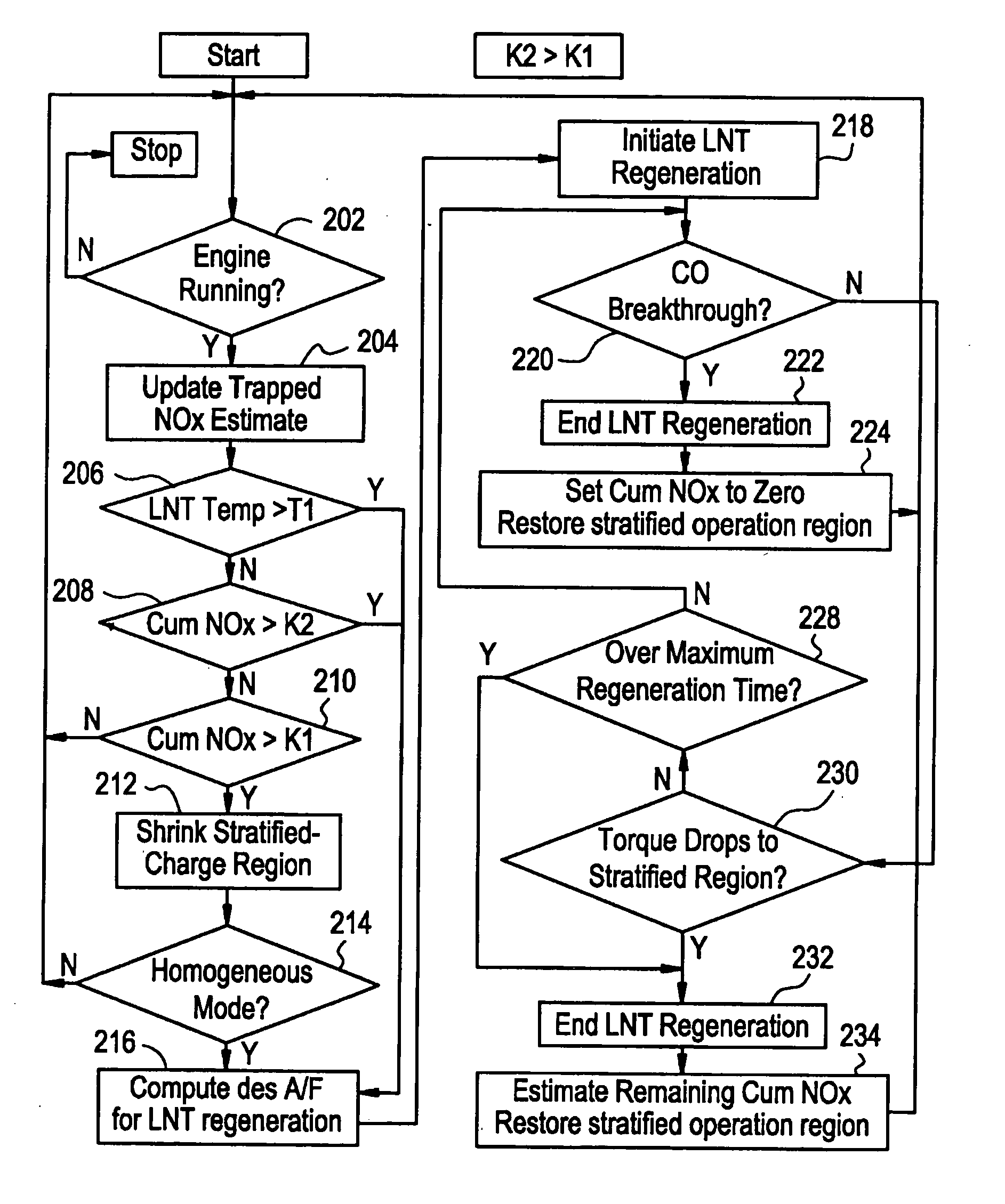
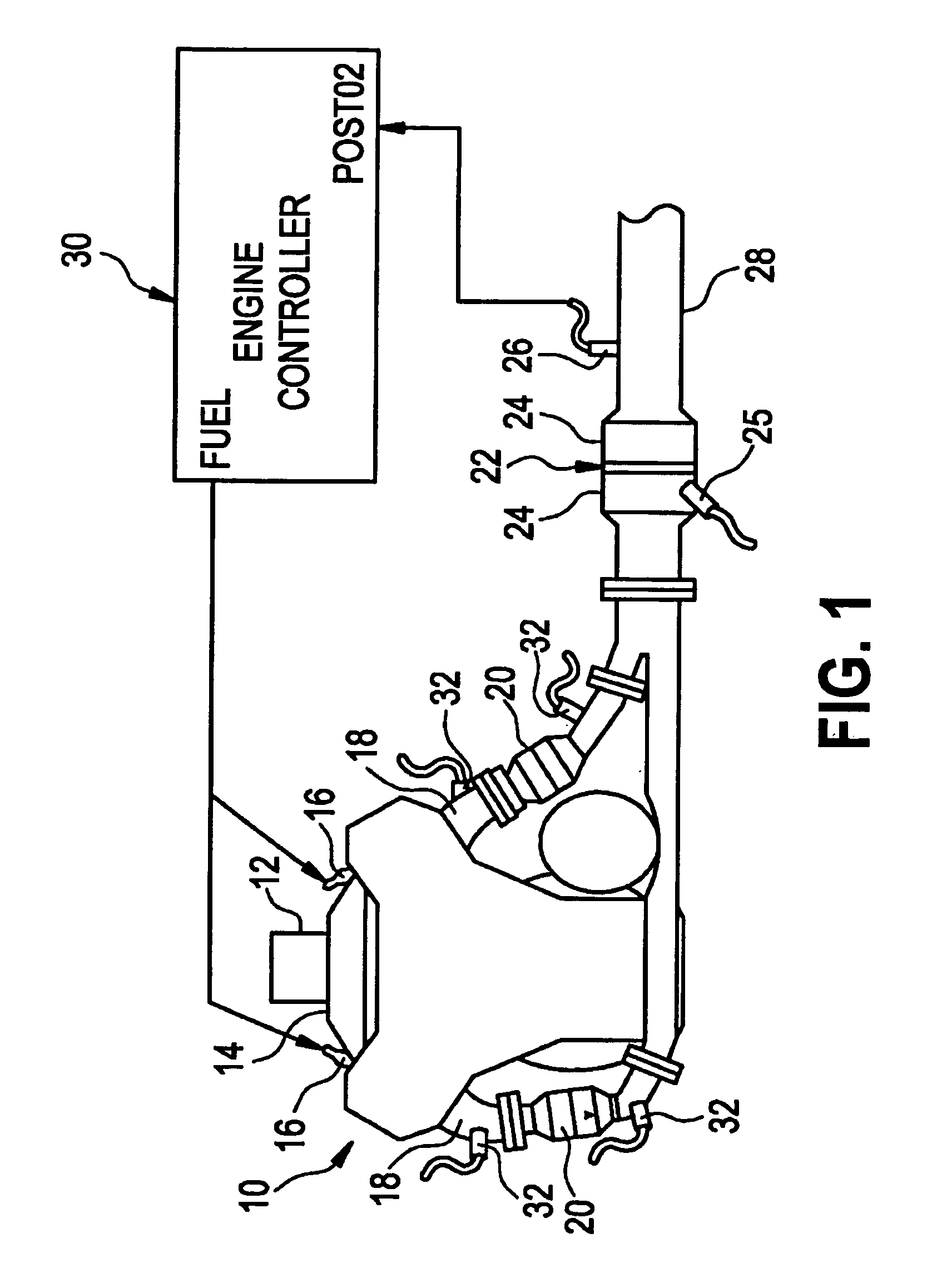
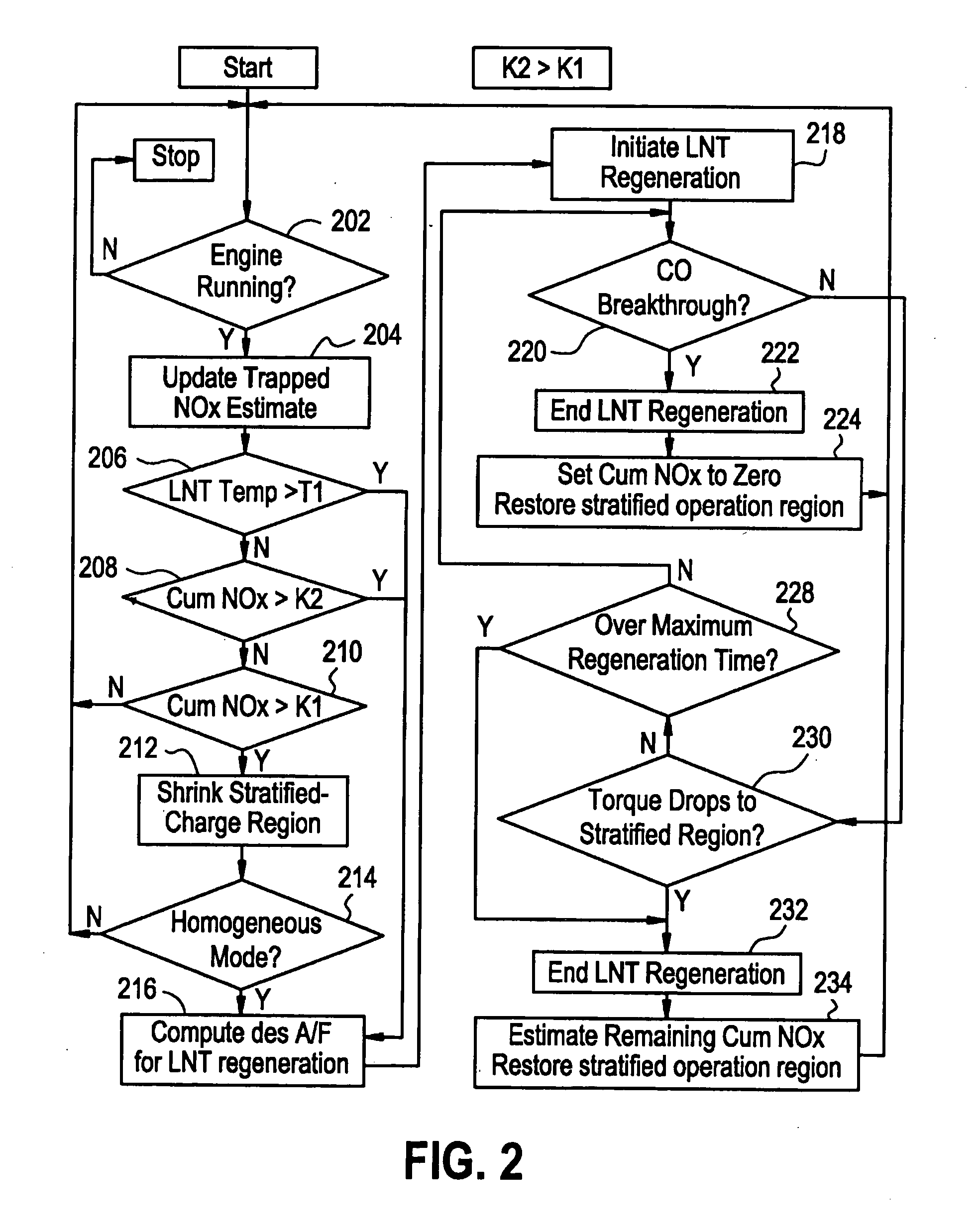
- The strategy coordinates lean NOx trap regeneration by monitoring its state and scheduling it during normal vehicle driving behavior, particularly by operating in a homogeneous region, adjusting the air-fuel ratio, and terminating regeneration based on exhaust gas composition and engine torque demand to maintain efficient emissions control and fuel economy.

Method of ignition and corresponding ignition unit
PatentInactiveUS6814047B2
Innovation
- The proposed ignition method employs control-pulse coding to adapt the ignition coil's energy delivery, using pulse-train ignition for stratified operations and single-pulse ignition for homogeneous operations, with adjustable primary current to optimize energy use and prevent spark-plug wear, allowing for efficient ignition across various engine modes.


Emissions Regulations
Emissions regulations have played a significant role in shaping the development of stratified charge technology in LS engine operation. As environmental concerns have grown, governments worldwide have implemented increasingly stringent emissions standards for vehicles. These regulations have driven automotive manufacturers to seek innovative solutions for improving engine efficiency and reducing harmful emissions.
The United States Environmental Protection Agency (EPA) and the California Air Resources Board (CARB) have been at the forefront of emissions regulations, setting progressively tighter standards for nitrogen oxides (NOx), carbon monoxide (CO), and particulate matter (PM) emissions. The European Union has also implemented similar regulations through its Euro emission standards. These regulatory frameworks have created a challenging environment for engine manufacturers, pushing them to explore advanced combustion strategies like stratified charge.
Stratified charge technology in LS engines has emerged as a promising solution to meet these stringent emissions requirements. By creating a fuel-rich zone near the spark plug and a leaner mixture elsewhere in the combustion chamber, stratified charge allows for more precise control of the combustion process. This approach enables engines to operate with overall leaner air-fuel ratios, resulting in improved fuel efficiency and reduced emissions, particularly NOx and CO.
However, the implementation of stratified charge technology has not been without challenges in the context of emissions regulations. While it effectively reduces certain pollutants, it can potentially increase others, such as particulate matter emissions. This has led to the development of complementary technologies, including advanced catalytic converters and particulate filters, to ensure compliance with comprehensive emissions standards.
The ongoing evolution of emissions regulations continues to drive innovation in stratified charge technology. Future standards are expected to focus on further reductions in greenhouse gas emissions, particularly CO2. This trend is likely to accelerate the adoption and refinement of stratified charge systems in LS engines, as manufacturers strive to meet both efficiency and emissions targets.
As regulations become more stringent, the integration of stratified charge technology with other advanced engine technologies, such as variable valve timing, direct injection, and turbocharging, is becoming increasingly important. These combined approaches offer the potential to achieve even greater emissions reductions while maintaining or improving engine performance and efficiency.
In conclusion, emissions regulations have been a key driver in the development and implementation of stratified charge technology in LS engines. As these regulations continue to evolve, they will undoubtedly shape the future direction of engine design and combustion strategies, with stratified charge remaining a crucial tool in meeting the dual challenges of efficiency and environmental compliance.
The United States Environmental Protection Agency (EPA) and the California Air Resources Board (CARB) have been at the forefront of emissions regulations, setting progressively tighter standards for nitrogen oxides (NOx), carbon monoxide (CO), and particulate matter (PM) emissions. The European Union has also implemented similar regulations through its Euro emission standards. These regulatory frameworks have created a challenging environment for engine manufacturers, pushing them to explore advanced combustion strategies like stratified charge.
Stratified charge technology in LS engines has emerged as a promising solution to meet these stringent emissions requirements. By creating a fuel-rich zone near the spark plug and a leaner mixture elsewhere in the combustion chamber, stratified charge allows for more precise control of the combustion process. This approach enables engines to operate with overall leaner air-fuel ratios, resulting in improved fuel efficiency and reduced emissions, particularly NOx and CO.
However, the implementation of stratified charge technology has not been without challenges in the context of emissions regulations. While it effectively reduces certain pollutants, it can potentially increase others, such as particulate matter emissions. This has led to the development of complementary technologies, including advanced catalytic converters and particulate filters, to ensure compliance with comprehensive emissions standards.
The ongoing evolution of emissions regulations continues to drive innovation in stratified charge technology. Future standards are expected to focus on further reductions in greenhouse gas emissions, particularly CO2. This trend is likely to accelerate the adoption and refinement of stratified charge systems in LS engines, as manufacturers strive to meet both efficiency and emissions targets.
As regulations become more stringent, the integration of stratified charge technology with other advanced engine technologies, such as variable valve timing, direct injection, and turbocharging, is becoming increasingly important. These combined approaches offer the potential to achieve even greater emissions reductions while maintaining or improving engine performance and efficiency.
In conclusion, emissions regulations have been a key driver in the development and implementation of stratified charge technology in LS engines. As these regulations continue to evolve, they will undoubtedly shape the future direction of engine design and combustion strategies, with stratified charge remaining a crucial tool in meeting the dual challenges of efficiency and environmental compliance.
Fuel Economy Standards
Fuel economy standards have become increasingly stringent in recent years, driving automotive manufacturers to explore innovative technologies for improving engine efficiency. The stratified charge concept in LS (Luxury Sport) engines represents a significant advancement in this pursuit. These standards typically set specific targets for fuel consumption and emissions reduction, which manufacturers must meet across their vehicle fleets.
The implementation of stratified charge in LS engines aligns closely with these regulatory requirements. By creating a layered fuel-air mixture in the combustion chamber, stratified charge allows for overall leaner operation while maintaining a rich mixture near the spark plug for reliable ignition. This approach enables engines to operate more efficiently under partial load conditions, which are common in real-world driving scenarios.
Stratified charge technology contributes to meeting fuel economy standards through several mechanisms. Firstly, it allows for a higher compression ratio without the risk of knock, improving thermal efficiency. Secondly, it reduces pumping losses by enabling unthrottled operation at low loads. Thirdly, the leaner overall mixture leads to lower heat losses to the cylinder walls, further enhancing efficiency.
The impact of stratified charge on LS engine fuel economy is substantial. Studies have shown improvements in fuel efficiency of up to 15% under certain operating conditions compared to conventional homogeneous charge engines. This translates to significant reductions in CO2 emissions, a key metric in many fuel economy standards.
However, the implementation of stratified charge technology is not without challenges. Meeting emissions standards, particularly for NOx, can be more difficult with stratified operation. Advanced aftertreatment systems and precise control strategies are necessary to ensure compliance with both fuel economy and emissions regulations.
As fuel economy standards continue to evolve, stratified charge technology in LS engines is likely to play an increasingly important role. Manufacturers are investing in further refinements to expand the operating range of stratified charge and to integrate it with other efficiency-enhancing technologies such as direct injection and variable valve timing. These developments promise to deliver even greater fuel economy benefits while meeting increasingly stringent regulatory requirements.
The implementation of stratified charge in LS engines aligns closely with these regulatory requirements. By creating a layered fuel-air mixture in the combustion chamber, stratified charge allows for overall leaner operation while maintaining a rich mixture near the spark plug for reliable ignition. This approach enables engines to operate more efficiently under partial load conditions, which are common in real-world driving scenarios.
Stratified charge technology contributes to meeting fuel economy standards through several mechanisms. Firstly, it allows for a higher compression ratio without the risk of knock, improving thermal efficiency. Secondly, it reduces pumping losses by enabling unthrottled operation at low loads. Thirdly, the leaner overall mixture leads to lower heat losses to the cylinder walls, further enhancing efficiency.
The impact of stratified charge on LS engine fuel economy is substantial. Studies have shown improvements in fuel efficiency of up to 15% under certain operating conditions compared to conventional homogeneous charge engines. This translates to significant reductions in CO2 emissions, a key metric in many fuel economy standards.
However, the implementation of stratified charge technology is not without challenges. Meeting emissions standards, particularly for NOx, can be more difficult with stratified operation. Advanced aftertreatment systems and precise control strategies are necessary to ensure compliance with both fuel economy and emissions regulations.
As fuel economy standards continue to evolve, stratified charge technology in LS engines is likely to play an increasingly important role. Manufacturers are investing in further refinements to expand the operating range of stratified charge and to integrate it with other efficiency-enhancing technologies such as direct injection and variable valve timing. These developments promise to deliver even greater fuel economy benefits while meeting increasingly stringent regulatory requirements.
Unlock deeper insights with PatSnap Eureka Quick Research — get a full tech report to explore trends and direct your research. Try now!
Generate Your Research Report Instantly with AI Agent
Supercharge your innovation with PatSnap Eureka AI Agent Platform!