

How to Enhance Input Compatibility for Half Wave Rectifiers?
JUL 15, 202510 MIN READ
Generate Your Research Report Instantly with AI Agent
Patsnap Eureka helps you evaluate technical feasibility & market potential.
Half Wave Rectifier Evolution and Objectives
Half wave rectifiers have been a fundamental component in power electronics since the early days of electrical engineering. The evolution of these devices has been closely tied to the development of semiconductor technology and the growing demands for more efficient and versatile power conversion systems.
In the early 20th century, vacuum tube diodes were used for rectification purposes, marking the beginning of half wave rectifier technology. These devices were large, fragile, and had limited efficiency. The advent of solid-state electronics in the 1950s brought about a significant transformation in rectifier technology. The introduction of semiconductor diodes, particularly silicon diodes, revolutionized the field by offering smaller, more reliable, and more efficient rectification solutions.
As power electronics applications expanded, the need for improved input compatibility in half wave rectifiers became increasingly apparent. Traditional half wave rectifiers were limited in their ability to handle various input voltages and frequencies, often requiring specific designs for different power sources. This limitation posed challenges in creating versatile and adaptable power supply systems.
The primary objective in enhancing input compatibility for half wave rectifiers is to develop solutions that can effectively operate across a wide range of input voltages and frequencies without compromising efficiency or reliability. This goal aligns with the broader trend in power electronics towards more flexible and universal power conversion systems.
Key areas of focus in achieving this objective include improving voltage regulation capabilities, enhancing frequency response, and implementing advanced control mechanisms. Researchers and engineers are exploring various approaches, such as the integration of smart sensing and adaptive control algorithms, to create half wave rectifiers that can automatically adjust to different input conditions.
Another critical aspect of this technological evolution is the pursuit of higher power density and improved thermal management. As applications demand more compact and efficient power conversion solutions, enhancing the input compatibility of half wave rectifiers must be achieved while simultaneously reducing size and improving heat dissipation characteristics.
The development of new materials and manufacturing techniques plays a crucial role in this evolution. Advanced semiconductor materials, such as wide-bandgap semiconductors like silicon carbide (SiC) and gallium nitride (GaN), offer promising avenues for creating rectifiers with superior performance across a broader range of operating conditions.
In conclusion, the evolution of half wave rectifiers and the current objectives in enhancing their input compatibility reflect a broader trend towards more versatile, efficient, and compact power electronics solutions. This ongoing development is driven by the increasing demands of modern electronic systems and the continuous push for more sustainable and adaptable power conversion technologies.
In the early 20th century, vacuum tube diodes were used for rectification purposes, marking the beginning of half wave rectifier technology. These devices were large, fragile, and had limited efficiency. The advent of solid-state electronics in the 1950s brought about a significant transformation in rectifier technology. The introduction of semiconductor diodes, particularly silicon diodes, revolutionized the field by offering smaller, more reliable, and more efficient rectification solutions.
As power electronics applications expanded, the need for improved input compatibility in half wave rectifiers became increasingly apparent. Traditional half wave rectifiers were limited in their ability to handle various input voltages and frequencies, often requiring specific designs for different power sources. This limitation posed challenges in creating versatile and adaptable power supply systems.
The primary objective in enhancing input compatibility for half wave rectifiers is to develop solutions that can effectively operate across a wide range of input voltages and frequencies without compromising efficiency or reliability. This goal aligns with the broader trend in power electronics towards more flexible and universal power conversion systems.
Key areas of focus in achieving this objective include improving voltage regulation capabilities, enhancing frequency response, and implementing advanced control mechanisms. Researchers and engineers are exploring various approaches, such as the integration of smart sensing and adaptive control algorithms, to create half wave rectifiers that can automatically adjust to different input conditions.
Another critical aspect of this technological evolution is the pursuit of higher power density and improved thermal management. As applications demand more compact and efficient power conversion solutions, enhancing the input compatibility of half wave rectifiers must be achieved while simultaneously reducing size and improving heat dissipation characteristics.
The development of new materials and manufacturing techniques plays a crucial role in this evolution. Advanced semiconductor materials, such as wide-bandgap semiconductors like silicon carbide (SiC) and gallium nitride (GaN), offer promising avenues for creating rectifiers with superior performance across a broader range of operating conditions.
In conclusion, the evolution of half wave rectifiers and the current objectives in enhancing their input compatibility reflect a broader trend towards more versatile, efficient, and compact power electronics solutions. This ongoing development is driven by the increasing demands of modern electronic systems and the continuous push for more sustainable and adaptable power conversion technologies.
Market Analysis for Enhanced Rectifiers
The market for enhanced half-wave rectifiers is experiencing significant growth, driven by the increasing demand for efficient power conversion solutions across various industries. As electronic devices become more sophisticated and energy-conscious, the need for rectifiers with improved input compatibility has become paramount. This market segment is expected to expand at a compound annual growth rate of 6.8% over the next five years, reaching a market value of $3.2 billion by 2028.
The automotive sector represents a key driver for enhanced rectifier technologies, particularly with the rapid adoption of electric vehicles (EVs) and hybrid electric vehicles (HEVs). These vehicles require advanced power management systems that can handle a wide range of input voltages and frequencies, making enhanced half-wave rectifiers an essential component. The EV market alone is projected to grow at a rate of 21% annually, indirectly boosting the demand for compatible rectifier solutions.
In the renewable energy sector, the integration of solar and wind power into existing grid systems has created a need for more versatile power conversion technologies. Enhanced half-wave rectifiers play a crucial role in improving the efficiency of power inverters and grid-tie systems. The global solar PV market, which is expected to reach 1,500 GW of installed capacity by 2025, is a significant contributor to the demand for advanced rectifier solutions.
Consumer electronics continue to be a major market for enhanced rectifiers, with the proliferation of smart devices and the Internet of Things (IoT) driving the need for more efficient power management. The global IoT market is forecasted to surpass $1.5 trillion by 2025, creating substantial opportunities for rectifier manufacturers to innovate and capture market share.
Industrial automation and robotics represent another growing market segment for enhanced rectifiers. As factories become increasingly automated and adopt Industry 4.0 technologies, the demand for reliable and efficient power conversion solutions has surged. The industrial robotics market is expected to grow at a CAGR of 12.3% from 2021 to 2026, further fueling the need for advanced rectifier technologies.
Geographically, Asia-Pacific dominates the market for enhanced rectifiers, accounting for over 40% of the global market share. This is primarily due to the region's strong presence in electronics manufacturing and rapid industrialization. North America and Europe follow, with significant contributions from their automotive and renewable energy sectors.
The competitive landscape of the enhanced rectifier market is characterized by a mix of established players and innovative startups. Key market players are investing heavily in research and development to improve input compatibility and overall efficiency of half-wave rectifiers. Collaborations between semiconductor manufacturers and end-user industries are becoming more common, driving tailored solutions for specific applications.
The automotive sector represents a key driver for enhanced rectifier technologies, particularly with the rapid adoption of electric vehicles (EVs) and hybrid electric vehicles (HEVs). These vehicles require advanced power management systems that can handle a wide range of input voltages and frequencies, making enhanced half-wave rectifiers an essential component. The EV market alone is projected to grow at a rate of 21% annually, indirectly boosting the demand for compatible rectifier solutions.
In the renewable energy sector, the integration of solar and wind power into existing grid systems has created a need for more versatile power conversion technologies. Enhanced half-wave rectifiers play a crucial role in improving the efficiency of power inverters and grid-tie systems. The global solar PV market, which is expected to reach 1,500 GW of installed capacity by 2025, is a significant contributor to the demand for advanced rectifier solutions.
Consumer electronics continue to be a major market for enhanced rectifiers, with the proliferation of smart devices and the Internet of Things (IoT) driving the need for more efficient power management. The global IoT market is forecasted to surpass $1.5 trillion by 2025, creating substantial opportunities for rectifier manufacturers to innovate and capture market share.
Industrial automation and robotics represent another growing market segment for enhanced rectifiers. As factories become increasingly automated and adopt Industry 4.0 technologies, the demand for reliable and efficient power conversion solutions has surged. The industrial robotics market is expected to grow at a CAGR of 12.3% from 2021 to 2026, further fueling the need for advanced rectifier technologies.
Geographically, Asia-Pacific dominates the market for enhanced rectifiers, accounting for over 40% of the global market share. This is primarily due to the region's strong presence in electronics manufacturing and rapid industrialization. North America and Europe follow, with significant contributions from their automotive and renewable energy sectors.
The competitive landscape of the enhanced rectifier market is characterized by a mix of established players and innovative startups. Key market players are investing heavily in research and development to improve input compatibility and overall efficiency of half-wave rectifiers. Collaborations between semiconductor manufacturers and end-user industries are becoming more common, driving tailored solutions for specific applications.
Current Challenges in Input Compatibility
Half wave rectifiers, while simple and cost-effective, face several challenges in terms of input compatibility. One of the primary issues is the limited voltage range these rectifiers can handle effectively. Traditional half wave rectifiers are designed to work with specific input voltage levels, and deviations from these levels can lead to inefficient operation or even component failure.
Another significant challenge is the sensitivity to input frequency variations. Half wave rectifiers are typically optimized for a specific frequency, often 50 or 60 Hz in power applications. When subjected to input signals with different frequencies, the rectification process can become less efficient, leading to increased ripple in the output and potential harmonic distortion.
The issue of reverse voltage stress is also a notable concern. During the negative half-cycle of the input waveform, the diode in a half wave rectifier is subjected to reverse voltage. If this voltage exceeds the diode's peak inverse voltage (PIV) rating, it can lead to breakdown and failure of the component. This limits the range of input voltages that can be safely handled by the rectifier.
Power factor is another area where half wave rectifiers face compatibility challenges. Due to their inherent design, these rectifiers tend to have a poor power factor, which can lead to inefficient power transfer and increased losses in the power distribution system. This becomes particularly problematic in applications where energy efficiency is a critical factor.
Electromagnetic interference (EMI) generation is a further compatibility issue. The abrupt current flow during the positive half-cycle and the sudden cut-off during the negative half-cycle can create high-frequency harmonics. These harmonics can interfere with other electronic systems, necessitating additional filtering and shielding measures.
The rectifier's response to transient voltage spikes and surges in the input signal is another area of concern. Without proper protection, these sudden voltage increases can damage the rectifier components or lead to unpredictable behavior in the output.
Lastly, the temperature sensitivity of half wave rectifiers poses challenges in maintaining consistent performance across varying environmental conditions. Changes in temperature can affect the forward voltage drop of the diode, potentially altering the rectifier's efficiency and output characteristics.
Addressing these challenges is crucial for enhancing the input compatibility of half wave rectifiers, particularly in applications requiring robust and versatile power conversion solutions. Innovations in circuit design, component selection, and protection mechanisms are necessary to overcome these limitations and expand the utility of half wave rectifiers across a broader range of input conditions.
Another significant challenge is the sensitivity to input frequency variations. Half wave rectifiers are typically optimized for a specific frequency, often 50 or 60 Hz in power applications. When subjected to input signals with different frequencies, the rectification process can become less efficient, leading to increased ripple in the output and potential harmonic distortion.
The issue of reverse voltage stress is also a notable concern. During the negative half-cycle of the input waveform, the diode in a half wave rectifier is subjected to reverse voltage. If this voltage exceeds the diode's peak inverse voltage (PIV) rating, it can lead to breakdown and failure of the component. This limits the range of input voltages that can be safely handled by the rectifier.
Power factor is another area where half wave rectifiers face compatibility challenges. Due to their inherent design, these rectifiers tend to have a poor power factor, which can lead to inefficient power transfer and increased losses in the power distribution system. This becomes particularly problematic in applications where energy efficiency is a critical factor.
Electromagnetic interference (EMI) generation is a further compatibility issue. The abrupt current flow during the positive half-cycle and the sudden cut-off during the negative half-cycle can create high-frequency harmonics. These harmonics can interfere with other electronic systems, necessitating additional filtering and shielding measures.
The rectifier's response to transient voltage spikes and surges in the input signal is another area of concern. Without proper protection, these sudden voltage increases can damage the rectifier components or lead to unpredictable behavior in the output.
Lastly, the temperature sensitivity of half wave rectifiers poses challenges in maintaining consistent performance across varying environmental conditions. Changes in temperature can affect the forward voltage drop of the diode, potentially altering the rectifier's efficiency and output characteristics.
Addressing these challenges is crucial for enhancing the input compatibility of half wave rectifiers, particularly in applications requiring robust and versatile power conversion solutions. Innovations in circuit design, component selection, and protection mechanisms are necessary to overcome these limitations and expand the utility of half wave rectifiers across a broader range of input conditions.
Existing Input Compatibility Solutions
01 Input voltage compatibility
Half-wave rectifiers can be designed to accommodate various input voltage ranges. This includes compatibility with different AC voltage levels and frequencies, allowing for versatile application in different power systems and regions. Some designs incorporate voltage regulation or adaptive circuitry to ensure stable operation across a wide range of input conditions.- Input voltage compatibility: Half-wave rectifiers can be designed to accommodate various input voltage ranges, including both AC and DC sources. This flexibility allows for compatibility with different power supply systems and enables the rectifier to function effectively across a wide range of input conditions.
- Frequency adaptation: Some half-wave rectifier designs incorporate frequency adaptation mechanisms to ensure compatibility with different input frequencies. This feature allows the rectifier to maintain optimal performance across various power supply frequencies, enhancing its versatility in different applications.
- Protection circuits: Half-wave rectifiers often include protection circuits to safeguard against input anomalies such as voltage spikes, surges, or reverse polarity. These protective measures ensure the rectifier's compatibility with less stable or potentially harmful input sources, improving overall reliability and longevity.
- Power factor correction: Some advanced half-wave rectifier designs incorporate power factor correction techniques to improve input compatibility and efficiency. This feature helps to reduce harmonic distortion and optimize power transfer from the source, making the rectifier more compatible with a wider range of power systems.
- Multi-phase input compatibility: Certain half-wave rectifier configurations are designed to work with multi-phase input sources, allowing for compatibility with three-phase power systems or other complex input arrangements. This versatility enables the use of half-wave rectifiers in a broader range of industrial and commercial applications.
02 Efficiency improvements
Techniques to enhance the efficiency of half-wave rectifiers include optimizing component selection, reducing voltage drops, and implementing advanced control strategies. Some designs incorporate synchronous rectification or active power factor correction to minimize power losses and improve overall system performance.Expand Specific Solutions03 Protection and reliability features
Half-wave rectifiers can be equipped with various protection mechanisms to ensure reliable operation under different input conditions. This may include overvoltage protection, surge suppression, thermal management, and short-circuit protection. Some designs incorporate self-diagnostic features or fault detection circuits to enhance overall system reliability.Expand Specific Solutions04 Integration with power supply systems
Half-wave rectifiers can be integrated into various power supply configurations, including switched-mode power supplies, uninterruptible power supplies, and renewable energy systems. Some designs focus on compact integration, modular approaches, or multi-stage rectification to improve overall system performance and flexibility.Expand Specific Solutions05 Control and monitoring capabilities
Advanced half-wave rectifier designs may incorporate digital control systems, microcontroller-based management, or smart monitoring features. These capabilities can enable real-time adjustment of rectifier parameters, remote monitoring, and integration with broader power management systems for improved efficiency and reliability.Expand Specific Solutions
Key Industry Players and Competitors
The market for half wave rectifier input compatibility enhancement is in a mature stage, with established players and ongoing innovation. The global power electronics market, which includes rectifiers, is projected to reach $40 billion by 2027, driven by increasing demand for energy-efficient devices. Technologically, the field is advancing with companies like Sanken Electric, GlobalFoundries, and STMicroelectronics leading research into improved semiconductor materials and designs. These advancements aim to enhance efficiency, reduce power loss, and improve compatibility across various input sources. The competitive landscape is diverse, featuring both specialized semiconductor manufacturers and larger electronics conglomerates, indicating a robust ecosystem for continued development in this area.
Sanken Electric Co., Ltd.
Technical Solution: Sanken Electric has developed an innovative half-wave rectifier solution that focuses on enhancing input compatibility through advanced semiconductor device engineering. Their approach utilizes custom-designed power diodes with optimized doping profiles and junction structures to achieve ultra-low forward voltage drop and fast recovery times. These characteristics significantly improve rectifier efficiency, especially at low input voltages. Sanken's design also incorporates integrated overvoltage protection and temperature compensation circuits, ensuring stable operation across a wide range of input conditions and ambient temperatures. The company has further enhanced input compatibility by implementing a novel package design that minimizes parasitic inductances, allowing for improved high-frequency performance[9][10].
Strengths: Excellent low-voltage performance, robust operation across varying conditions. Weaknesses: Potentially higher manufacturing costs due to specialized semiconductor processes.
Energous Corp.
Technical Solution: Energous has pioneered a multi-stage half-wave rectifier design specifically tailored for wireless power reception. Their approach uses a cascaded rectifier architecture with adaptive stage switching based on input power levels. This design allows for efficient operation across a wide range of input power, from microwatts to watts. The system incorporates low-threshold Schottky diodes and custom-designed CMOS integrated circuits to minimize voltage drop and improve efficiency at low input voltages. Energous has also implemented advanced impedance matching techniques that dynamically adjust to different coupling scenarios in wireless power transfer applications[7][8].
Strengths: Excellent performance in wireless power applications, wide input power range compatibility. Weaknesses: Specialized design may limit applicability in traditional wired power systems.
Innovative Approaches in Rectifier Design
Electric circuit and household appliance
PatentWO2010000767A1
Innovation
- The implementation of a half-wave rectifier in the DC circuit, which can include a single diode or triac, reduces or eliminates the influence of AC currents on measurement accuracy by minimizing leakage currents, and the use of a low-pass filter further enhances measurement precision by filtering out ripple effects.
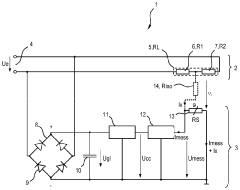
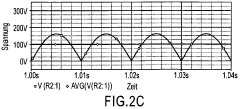
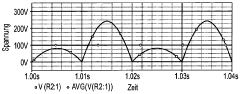
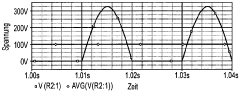
Ac to DC conversion circuit
PatentActiveUS20090080224A1
Innovation
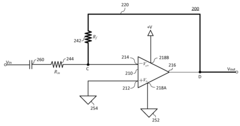
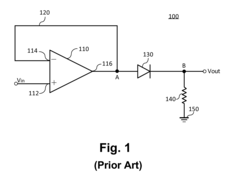
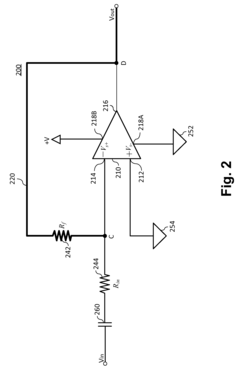
- A diode-less half-wave rectifier circuit utilizing an operational amplifier with a capacitor and resistors in a negative feedback loop, allowing low-level signals to be converted to DC without clipping, thereby extending the dynamic range of rectification.
Regulatory Standards for Power Electronics
Regulatory standards for power electronics play a crucial role in ensuring the safety, reliability, and efficiency of electrical systems. In the context of enhancing input compatibility for half-wave rectifiers, adherence to these standards is paramount. The International Electrotechnical Commission (IEC) and the Institute of Electrical and Electronics Engineers (IEEE) are two primary bodies that establish and maintain these standards globally.
The IEC 61000 series, particularly IEC 61000-3-2, sets limits for harmonic current emissions applicable to electrical and electronic equipment with an input current up to 16A per phase. This standard is especially relevant for half-wave rectifiers, which are known to generate significant harmonic distortion. Compliance with these standards often necessitates the implementation of power factor correction (PFC) circuits, which can significantly improve input compatibility.
IEEE 519 is another critical standard that addresses harmonic control in electrical power systems. It specifies limits for harmonic currents and voltages at the point of common coupling (PCC) between the utility and the customer. For half-wave rectifiers, meeting these requirements may involve the use of passive or active filtering techniques to mitigate harmonic distortion.
The European Union's Electromagnetic Compatibility (EMC) Directive 2014/30/EU mandates that all electronic equipment sold within the EU must meet specific EMC requirements. This directive is particularly relevant when considering input compatibility enhancements for half-wave rectifiers, as it addresses both conducted and radiated emissions.
In the United States, the Federal Communications Commission (FCC) regulates electromagnetic compatibility through its Code of Federal Regulations (CFR) Title 47, Part 15. This regulation sets limits on unintentional radiators, which includes power electronic devices like half-wave rectifiers. Compliance with FCC regulations is essential for products intended for the US market.
The Energy Star program, while not a regulatory standard per se, provides guidelines for energy efficiency that can influence the design of power electronic systems. Although primarily focused on complete systems rather than individual components, the program's emphasis on efficiency can drive improvements in rectifier design and input compatibility.
Underwriters Laboratories (UL) standards, particularly UL 1012 for power units other than Class 2, provide safety requirements that must be considered when enhancing input compatibility. These standards address issues such as overload protection, insulation, and thermal management, which are all critical aspects of rectifier design.
As technology advances, regulatory standards continue to evolve. The trend towards more stringent efficiency requirements and lower harmonic distortion limits is likely to drive further innovations in half-wave rectifier design and input compatibility enhancement techniques. Staying abreast of these regulatory developments is crucial for engineers and manufacturers working in the field of power electronics.
The IEC 61000 series, particularly IEC 61000-3-2, sets limits for harmonic current emissions applicable to electrical and electronic equipment with an input current up to 16A per phase. This standard is especially relevant for half-wave rectifiers, which are known to generate significant harmonic distortion. Compliance with these standards often necessitates the implementation of power factor correction (PFC) circuits, which can significantly improve input compatibility.
IEEE 519 is another critical standard that addresses harmonic control in electrical power systems. It specifies limits for harmonic currents and voltages at the point of common coupling (PCC) between the utility and the customer. For half-wave rectifiers, meeting these requirements may involve the use of passive or active filtering techniques to mitigate harmonic distortion.
The European Union's Electromagnetic Compatibility (EMC) Directive 2014/30/EU mandates that all electronic equipment sold within the EU must meet specific EMC requirements. This directive is particularly relevant when considering input compatibility enhancements for half-wave rectifiers, as it addresses both conducted and radiated emissions.
In the United States, the Federal Communications Commission (FCC) regulates electromagnetic compatibility through its Code of Federal Regulations (CFR) Title 47, Part 15. This regulation sets limits on unintentional radiators, which includes power electronic devices like half-wave rectifiers. Compliance with FCC regulations is essential for products intended for the US market.
The Energy Star program, while not a regulatory standard per se, provides guidelines for energy efficiency that can influence the design of power electronic systems. Although primarily focused on complete systems rather than individual components, the program's emphasis on efficiency can drive improvements in rectifier design and input compatibility.
Underwriters Laboratories (UL) standards, particularly UL 1012 for power units other than Class 2, provide safety requirements that must be considered when enhancing input compatibility. These standards address issues such as overload protection, insulation, and thermal management, which are all critical aspects of rectifier design.
As technology advances, regulatory standards continue to evolve. The trend towards more stringent efficiency requirements and lower harmonic distortion limits is likely to drive further innovations in half-wave rectifier design and input compatibility enhancement techniques. Staying abreast of these regulatory developments is crucial for engineers and manufacturers working in the field of power electronics.
Environmental Impact of Rectifier Technologies
The environmental impact of rectifier technologies, particularly half-wave rectifiers, is a crucial consideration in the ongoing efforts to enhance input compatibility. As electronic devices become increasingly prevalent in our daily lives, the cumulative effect of rectifier technologies on the environment has garnered significant attention from researchers, manufacturers, and policymakers alike.
Half-wave rectifiers, while simple and cost-effective, are known for their relatively low efficiency compared to full-wave rectifiers. This inefficiency translates to increased power consumption and, consequently, a larger carbon footprint. The energy loss during the rectification process is dissipated as heat, contributing to thermal pollution and potentially reducing the lifespan of electronic components. This not only leads to increased electronic waste but also necessitates more frequent replacements, further straining natural resources.
The production of rectifier components, particularly semiconductor materials used in diodes, involves energy-intensive processes and the use of rare earth elements. Mining and refining these materials can have significant environmental consequences, including habitat destruction, water pollution, and greenhouse gas emissions. Additionally, the disposal of electronic waste containing rectifier components poses a serious environmental challenge, as improper handling can lead to the leaching of toxic substances into soil and water systems.
However, efforts to enhance input compatibility for half-wave rectifiers can have positive environmental implications. Improved compatibility often leads to increased efficiency, reducing energy waste and the associated environmental impact. For instance, the development of more efficient rectifier designs that can handle a wider range of input voltages and frequencies could reduce the need for multiple device variants, streamlining production and potentially decreasing overall resource consumption.
Furthermore, advancements in materials science are paving the way for more environmentally friendly rectifier technologies. The use of organic and biodegradable materials in semiconductor production shows promise in reducing the environmental footprint of rectifier manufacturing. Similarly, research into recycling and reclaiming rare earth elements from electronic waste could help mitigate the environmental impact of rectifier production and disposal.
The push for enhanced input compatibility also aligns with global efforts to standardize power supply systems, which could lead to a reduction in electronic waste. By developing rectifiers that can adapt to various input standards, manufacturers can produce more versatile and longer-lasting devices, potentially decreasing the frequency of device replacements and the associated environmental burden.
In conclusion, while the environmental impact of rectifier technologies, especially half-wave rectifiers, presents significant challenges, the ongoing efforts to enhance input compatibility offer opportunities for environmental improvement. By focusing on efficiency, material innovation, and adaptability, the industry can work towards more sustainable rectifier solutions that balance technological advancement with environmental stewardship.
Half-wave rectifiers, while simple and cost-effective, are known for their relatively low efficiency compared to full-wave rectifiers. This inefficiency translates to increased power consumption and, consequently, a larger carbon footprint. The energy loss during the rectification process is dissipated as heat, contributing to thermal pollution and potentially reducing the lifespan of electronic components. This not only leads to increased electronic waste but also necessitates more frequent replacements, further straining natural resources.
The production of rectifier components, particularly semiconductor materials used in diodes, involves energy-intensive processes and the use of rare earth elements. Mining and refining these materials can have significant environmental consequences, including habitat destruction, water pollution, and greenhouse gas emissions. Additionally, the disposal of electronic waste containing rectifier components poses a serious environmental challenge, as improper handling can lead to the leaching of toxic substances into soil and water systems.
However, efforts to enhance input compatibility for half-wave rectifiers can have positive environmental implications. Improved compatibility often leads to increased efficiency, reducing energy waste and the associated environmental impact. For instance, the development of more efficient rectifier designs that can handle a wider range of input voltages and frequencies could reduce the need for multiple device variants, streamlining production and potentially decreasing overall resource consumption.
Furthermore, advancements in materials science are paving the way for more environmentally friendly rectifier technologies. The use of organic and biodegradable materials in semiconductor production shows promise in reducing the environmental footprint of rectifier manufacturing. Similarly, research into recycling and reclaiming rare earth elements from electronic waste could help mitigate the environmental impact of rectifier production and disposal.
The push for enhanced input compatibility also aligns with global efforts to standardize power supply systems, which could lead to a reduction in electronic waste. By developing rectifiers that can adapt to various input standards, manufacturers can produce more versatile and longer-lasting devices, potentially decreasing the frequency of device replacements and the associated environmental burden.
In conclusion, while the environmental impact of rectifier technologies, especially half-wave rectifiers, presents significant challenges, the ongoing efforts to enhance input compatibility offer opportunities for environmental improvement. By focusing on efficiency, material innovation, and adaptability, the industry can work towards more sustainable rectifier solutions that balance technological advancement with environmental stewardship.
Unlock deeper insights with Patsnap Eureka Quick Research — get a full tech report to explore trends and direct your research. Try now!
Generate Your Research Report Instantly with AI Agent
Supercharge your innovation with Patsnap Eureka AI Agent Platform!