Map Optimization Methods for LS Engine ECU Performance
AUG 12, 20259 MIN READ
Generate Your Research Report Instantly with AI Agent
PatSnap Eureka helps you evaluate technical feasibility & market potential.
LS Engine ECU Background
The LS (Luxury Sport) engine series, developed by General Motors, has become a cornerstone in modern automotive engineering since its introduction in 1997. These engines, known for their compact design and high performance, have been widely adopted across various GM vehicle lines, from sports cars to trucks. The Electronic Control Unit (ECU) plays a crucial role in managing the LS engine's performance, efficiency, and emissions.
The ECU, often referred to as the "brain" of the engine, is responsible for controlling various aspects of engine operation, including fuel injection, ignition timing, and valve timing in some applications. For LS engines, the ECU has evolved significantly over the years, incorporating more advanced features and capabilities to meet increasingly stringent performance and emissions standards.
Early LS engine ECUs were relatively simple, focusing primarily on basic engine management functions. However, as technology progressed, ECUs became more sophisticated, incorporating adaptive learning algorithms, real-time sensor data processing, and the ability to fine-tune engine parameters on the fly. This evolution has led to significant improvements in engine performance, fuel efficiency, and emissions control.
One of the key features of modern LS engine ECUs is their ability to utilize complex mapping strategies. These maps are multi-dimensional lookup tables that define how various engine parameters should be adjusted based on different operating conditions. Common maps include fuel injection timing, ignition timing, and air-fuel ratio targets. The optimization of these maps is critical for achieving optimal engine performance across a wide range of operating conditions.
The challenge in ECU map optimization lies in balancing multiple, often competing, objectives. Engineers must consider factors such as power output, fuel efficiency, emissions compliance, and engine longevity. This complexity has led to the development of advanced optimization techniques, including model-based calibration and machine learning algorithms.
As emissions regulations have become more stringent, LS engine ECUs have also incorporated more advanced emissions control strategies. These include closed-loop fuel control, exhaust gas recirculation (EGR) management, and catalyst efficiency monitoring. The ECU must constantly adjust engine parameters to ensure compliance with emissions standards while maintaining performance and drivability.
The advent of drive-by-wire technology has further expanded the capabilities of LS engine ECUs. By eliminating the mechanical linkage between the accelerator pedal and the throttle body, ECUs can now implement more sophisticated throttle control strategies, enhancing both performance and fuel efficiency.
In recent years, the focus on connectivity and over-the-air updates has begun to influence ECU design for LS engines. Modern ECUs are increasingly capable of receiving software updates remotely, allowing for continuous improvement of engine performance and the addition of new features without requiring physical intervention.
The ECU, often referred to as the "brain" of the engine, is responsible for controlling various aspects of engine operation, including fuel injection, ignition timing, and valve timing in some applications. For LS engines, the ECU has evolved significantly over the years, incorporating more advanced features and capabilities to meet increasingly stringent performance and emissions standards.
Early LS engine ECUs were relatively simple, focusing primarily on basic engine management functions. However, as technology progressed, ECUs became more sophisticated, incorporating adaptive learning algorithms, real-time sensor data processing, and the ability to fine-tune engine parameters on the fly. This evolution has led to significant improvements in engine performance, fuel efficiency, and emissions control.
One of the key features of modern LS engine ECUs is their ability to utilize complex mapping strategies. These maps are multi-dimensional lookup tables that define how various engine parameters should be adjusted based on different operating conditions. Common maps include fuel injection timing, ignition timing, and air-fuel ratio targets. The optimization of these maps is critical for achieving optimal engine performance across a wide range of operating conditions.
The challenge in ECU map optimization lies in balancing multiple, often competing, objectives. Engineers must consider factors such as power output, fuel efficiency, emissions compliance, and engine longevity. This complexity has led to the development of advanced optimization techniques, including model-based calibration and machine learning algorithms.
As emissions regulations have become more stringent, LS engine ECUs have also incorporated more advanced emissions control strategies. These include closed-loop fuel control, exhaust gas recirculation (EGR) management, and catalyst efficiency monitoring. The ECU must constantly adjust engine parameters to ensure compliance with emissions standards while maintaining performance and drivability.
The advent of drive-by-wire technology has further expanded the capabilities of LS engine ECUs. By eliminating the mechanical linkage between the accelerator pedal and the throttle body, ECUs can now implement more sophisticated throttle control strategies, enhancing both performance and fuel efficiency.
In recent years, the focus on connectivity and over-the-air updates has begun to influence ECU design for LS engines. Modern ECUs are increasingly capable of receiving software updates remotely, allowing for continuous improvement of engine performance and the addition of new features without requiring physical intervention.
Market Demand Analysis
The market demand for Map Optimization Methods in LS Engine ECU Performance has been steadily increasing in recent years, driven by the automotive industry's push for improved fuel efficiency, reduced emissions, and enhanced engine performance. As environmental regulations become more stringent worldwide, automakers are increasingly focusing on optimizing engine control units (ECUs) to meet these standards while maintaining or improving vehicle performance.
The global automotive ECU market is expected to grow significantly in the coming years, with a particular emphasis on engine management systems. This growth is fueled by the rising adoption of electric and hybrid vehicles, as well as the increasing complexity of internal combustion engines. Map optimization methods play a crucial role in this market, as they allow for fine-tuning of engine parameters to achieve optimal performance under various operating conditions.
One of the key drivers for map optimization in LS Engine ECUs is the demand for improved fuel economy. Consumers and regulators alike are pushing for vehicles that consume less fuel, and map optimization techniques can help achieve this goal by precisely controlling fuel injection, ignition timing, and other engine parameters. This optimization can lead to substantial improvements in fuel efficiency without sacrificing performance, making it an attractive solution for automakers.
Another significant factor driving market demand is the need for reduced emissions. As governments worldwide implement stricter emission standards, such as Euro 6 in Europe and Tier 3 in the United States, automakers are turning to advanced ECU optimization techniques to ensure compliance. Map optimization methods allow for precise control of engine operations, helping to minimize harmful emissions while maintaining optimal performance.
The performance enthusiast market also contributes to the demand for map optimization methods. Aftermarket tuning companies and performance-oriented consumers seek ways to extract maximum power and torque from LS engines. Advanced map optimization techniques enable these users to customize engine performance characteristics to suit their specific needs, whether for racing, towing, or everyday driving.
Furthermore, the integration of artificial intelligence and machine learning in ECU optimization is opening up new opportunities in the market. These technologies enable more sophisticated and adaptive optimization strategies, potentially leading to even greater improvements in engine performance and efficiency. As a result, there is growing interest from both OEMs and aftermarket suppliers in developing and implementing AI-driven map optimization solutions.
The market for map optimization methods is also benefiting from the trend towards connected and autonomous vehicles. As vehicles become more interconnected and data-driven, there is an increasing need for ECUs that can adapt to real-time conditions and driver preferences. Map optimization techniques that can dynamically adjust engine parameters based on various inputs are becoming more valuable in this context.
The global automotive ECU market is expected to grow significantly in the coming years, with a particular emphasis on engine management systems. This growth is fueled by the rising adoption of electric and hybrid vehicles, as well as the increasing complexity of internal combustion engines. Map optimization methods play a crucial role in this market, as they allow for fine-tuning of engine parameters to achieve optimal performance under various operating conditions.
One of the key drivers for map optimization in LS Engine ECUs is the demand for improved fuel economy. Consumers and regulators alike are pushing for vehicles that consume less fuel, and map optimization techniques can help achieve this goal by precisely controlling fuel injection, ignition timing, and other engine parameters. This optimization can lead to substantial improvements in fuel efficiency without sacrificing performance, making it an attractive solution for automakers.
Another significant factor driving market demand is the need for reduced emissions. As governments worldwide implement stricter emission standards, such as Euro 6 in Europe and Tier 3 in the United States, automakers are turning to advanced ECU optimization techniques to ensure compliance. Map optimization methods allow for precise control of engine operations, helping to minimize harmful emissions while maintaining optimal performance.
The performance enthusiast market also contributes to the demand for map optimization methods. Aftermarket tuning companies and performance-oriented consumers seek ways to extract maximum power and torque from LS engines. Advanced map optimization techniques enable these users to customize engine performance characteristics to suit their specific needs, whether for racing, towing, or everyday driving.
Furthermore, the integration of artificial intelligence and machine learning in ECU optimization is opening up new opportunities in the market. These technologies enable more sophisticated and adaptive optimization strategies, potentially leading to even greater improvements in engine performance and efficiency. As a result, there is growing interest from both OEMs and aftermarket suppliers in developing and implementing AI-driven map optimization solutions.
The market for map optimization methods is also benefiting from the trend towards connected and autonomous vehicles. As vehicles become more interconnected and data-driven, there is an increasing need for ECUs that can adapt to real-time conditions and driver preferences. Map optimization techniques that can dynamically adjust engine parameters based on various inputs are becoming more valuable in this context.
Current Challenges
The optimization of engine control unit (ECU) maps for LS engines faces several significant challenges in the current technological landscape. These challenges stem from the complex interplay between various engine parameters and the need for precise control to meet stringent performance, efficiency, and emissions requirements.
One of the primary challenges is the high-dimensional nature of ECU maps. Modern LS engines utilize multiple maps to control various aspects of engine operation, including fuel injection, ignition timing, and valve timing. Each of these maps can have numerous input variables, creating a vast parameter space that is difficult to optimize comprehensively. This complexity makes it challenging to find the optimal settings for all operating conditions simultaneously.
Another significant hurdle is the non-linear relationships between input parameters and engine performance metrics. Small changes in one parameter can have disproportionate effects on multiple output variables, making it difficult to predict the overall impact of map adjustments. This non-linearity also complicates the use of traditional optimization algorithms, which often assume linear or well-behaved relationships.
The dynamic nature of engine operation poses an additional challenge. Engine performance characteristics can vary significantly based on factors such as temperature, altitude, and fuel quality. Developing maps that perform optimally across a wide range of operating conditions requires sophisticated modeling and extensive testing, which can be time-consuming and costly.
Furthermore, the interdependence of various engine subsystems adds another layer of complexity to map optimization. Changes in one map can affect the optimal settings for others, necessitating a holistic approach to optimization that considers the entire engine system rather than individual components in isolation.
The need for real-time adaptability is also a pressing challenge. As engines age and components wear, their performance characteristics change. Developing map optimization methods that can adapt to these changes over time while maintaining optimal performance is a significant technical hurdle.
Emissions regulations present another critical challenge. Optimizing for performance and efficiency must be balanced with meeting increasingly stringent emissions standards. This often requires trade-offs that can limit the potential for performance gains, making it difficult to satisfy all requirements simultaneously.
Lastly, the computational resources required for advanced map optimization techniques can be substantial. Implementing complex optimization algorithms in real-time on ECU hardware with limited processing power and memory is a significant technical challenge, particularly for high-performance applications that demand rapid response times.
One of the primary challenges is the high-dimensional nature of ECU maps. Modern LS engines utilize multiple maps to control various aspects of engine operation, including fuel injection, ignition timing, and valve timing. Each of these maps can have numerous input variables, creating a vast parameter space that is difficult to optimize comprehensively. This complexity makes it challenging to find the optimal settings for all operating conditions simultaneously.
Another significant hurdle is the non-linear relationships between input parameters and engine performance metrics. Small changes in one parameter can have disproportionate effects on multiple output variables, making it difficult to predict the overall impact of map adjustments. This non-linearity also complicates the use of traditional optimization algorithms, which often assume linear or well-behaved relationships.
The dynamic nature of engine operation poses an additional challenge. Engine performance characteristics can vary significantly based on factors such as temperature, altitude, and fuel quality. Developing maps that perform optimally across a wide range of operating conditions requires sophisticated modeling and extensive testing, which can be time-consuming and costly.
Furthermore, the interdependence of various engine subsystems adds another layer of complexity to map optimization. Changes in one map can affect the optimal settings for others, necessitating a holistic approach to optimization that considers the entire engine system rather than individual components in isolation.
The need for real-time adaptability is also a pressing challenge. As engines age and components wear, their performance characteristics change. Developing map optimization methods that can adapt to these changes over time while maintaining optimal performance is a significant technical hurdle.
Emissions regulations present another critical challenge. Optimizing for performance and efficiency must be balanced with meeting increasingly stringent emissions standards. This often requires trade-offs that can limit the potential for performance gains, making it difficult to satisfy all requirements simultaneously.
Lastly, the computational resources required for advanced map optimization techniques can be substantial. Implementing complex optimization algorithms in real-time on ECU hardware with limited processing power and memory is a significant technical challenge, particularly for high-performance applications that demand rapid response times.
Existing Optimization
01 ECU calibration and tuning for LS engines
Optimizing the Engine Control Unit (ECU) calibration and tuning for LS engines to enhance performance. This involves adjusting parameters such as fuel injection timing, ignition timing, and air-fuel ratios to maximize power output, improve throttle response, and increase overall engine efficiency.- ECU optimization for LS engine performance: Optimizing the Engine Control Unit (ECU) for LS engines can significantly improve performance. This involves fine-tuning parameters such as fuel injection timing, ignition timing, and air-fuel ratios to maximize power output and efficiency. Advanced ECU programming techniques can unlock the full potential of LS engines, allowing for better throttle response, increased horsepower, and improved fuel economy.
- Integration of sensors for real-time engine monitoring: Incorporating advanced sensors into the LS engine ECU system enables real-time monitoring of various engine parameters. These sensors can measure factors such as air intake, exhaust gas composition, and engine temperature. By continuously analyzing this data, the ECU can make instant adjustments to optimize engine performance and efficiency under different operating conditions.
- Adaptive learning algorithms for ECU performance: Implementing adaptive learning algorithms in LS engine ECUs allows the system to continuously improve its performance over time. These algorithms can analyze driving patterns, environmental conditions, and engine wear to make intelligent adjustments to engine parameters. This results in optimized performance tailored to the specific vehicle and driver, enhancing both power output and fuel efficiency.
- Custom ECU mapping for LS engine modifications: Developing custom ECU maps for modified LS engines is crucial for maximizing performance gains. This involves creating specialized fuel and ignition maps that account for aftermarket components such as high-flow intake systems, performance camshafts, or forced induction setups. Custom ECU mapping ensures that the engine management system is optimized for the specific modifications, resulting in improved power output and drivability.
- Integration of advanced communication protocols: Incorporating advanced communication protocols into LS engine ECUs enhances their ability to interact with other vehicle systems. This integration allows for improved data exchange between the ECU and components such as transmission controllers, traction control systems, and onboard diagnostics. The result is a more cohesive and efficient powertrain management system, leading to better overall vehicle performance and drivability.
02 Advanced sensor integration for improved engine management
Incorporating advanced sensors and integrating their data into the ECU for more precise engine management. This includes utilizing sensors for parameters such as air mass flow, exhaust gas temperature, and knock detection to enable real-time adjustments and optimize performance across various operating conditions.Expand Specific Solutions03 Adaptive learning algorithms for ECU performance
Implementing adaptive learning algorithms in the ECU to continuously optimize engine performance. These algorithms analyze driving patterns, environmental conditions, and engine wear to make dynamic adjustments to engine parameters, ensuring optimal performance and efficiency over time.Expand Specific Solutions04 Performance-oriented ECU mapping techniques
Developing and applying performance-oriented ECU mapping techniques specifically for LS engines. This involves creating custom fuel and ignition maps that are tailored to the unique characteristics of LS engines, taking into account factors such as displacement, compression ratio, and aftermarket modifications.Expand Specific Solutions05 Integration of aftermarket performance modules
Designing ECU systems that can seamlessly integrate with aftermarket performance modules. This allows for easy installation of plug-and-play performance upgrades that can enhance the ECU's capabilities, providing additional tuning options and performance gains without compromising reliability or emissions compliance.Expand Specific Solutions
Key Industry Players
The map optimization methods for LS Engine ECU performance represent a mature technology in the automotive industry, with the market in a consolidation phase. Major players like GM Global Technology Operations, Hyundai Motor, and Toyota Motor Corp. have established strong positions, leveraging their extensive R&D capabilities. The market size is substantial, driven by the ongoing demand for improved engine efficiency and performance. Technological advancements focus on refining existing methods rather than revolutionary breakthroughs. Companies like Bosch and Hitachi Astemo are also significant contributors, bringing expertise in automotive electronics and control systems to further enhance ECU optimization techniques.
GM Global Technology Operations LLC
Technical Solution: GM has developed advanced map optimization methods for LS Engine ECU performance, focusing on real-time adaptive control strategies. Their approach utilizes machine learning algorithms to continuously optimize engine maps based on driving conditions and environmental factors. The system employs a neural network that processes sensor data to predict optimal fuel injection and ignition timing parameters[1]. This adaptive mapping technique allows for dynamic adjustments to engine performance, resulting in improved fuel efficiency and reduced emissions. GM's method also incorporates a multi-dimensional lookup table that can be rapidly accessed and updated in real-time, ensuring quick response to changing driving scenarios[3].
Strengths: Adaptive real-time optimization, improved fuel efficiency, and reduced emissions. Weaknesses: Complexity of implementation and potential increased computational requirements for ECU.
Toyota Motor Corp.
Technical Solution: Toyota has developed a unique map optimization method for LS Engine ECU performance, focusing on their hybrid powertrain systems. Their approach integrates engine and electric motor control maps to maximize overall powertrain efficiency. Toyota's system employs a predictive energy management strategy that optimizes the power split between the engine and electric motor based on anticipated driving conditions[5]. The map optimization process utilizes a combination of rule-based logic and dynamic programming to determine the most efficient operating points for the engine. Toyota's method also incorporates a self-learning algorithm that adapts to individual driving patterns over time, further refining the engine maps for personalized performance[6]. This adaptive approach ensures that the engine operates at its optimal efficiency point under various driving scenarios, contributing to improved fuel economy and reduced emissions.
Strengths: Integrated optimization of hybrid powertrains, personalized adaptation to driving patterns, and improved overall efficiency. Weaknesses: Complexity in coordinating multiple power sources and potential over-reliance on predicted driving conditions.
Core Innovations
Method for optimising an engine control map of a vehicle
PatentWO2014102270A1
Innovation
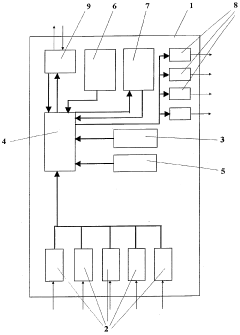
- A method to optimize the control map of an internal combustion engine by characterizing the vehicle and driver profiles using a neural network, determining an optimal control map that minimizes fuel consumption, and implementing it in the electronic vehicle injection control unit, which considers real-world usage and engine performance, allowing for personalized adaptation.


Method for achieving optimized control of internal combustion engines
PatentWO1999002833A1
Innovation
- The method involves calculating and updating engine control measures based on real-time comparisons of current operating status and environmental conditions, using reprogrammable memory components to adapt engine maps, allowing the control unit to derive optimized control variables for metered quantity, admission pressure, fuel temperature, and ignition point.
Emissions Regulations
Emissions regulations play a crucial role in shaping the development and optimization of engine control units (ECUs) for LS engines. These regulations, which are becoming increasingly stringent worldwide, have a significant impact on the performance and efficiency of modern engines.
In the United States, the Environmental Protection Agency (EPA) and the California Air Resources Board (CARB) set the standards for vehicle emissions. These regulations cover a wide range of pollutants, including carbon monoxide (CO), nitrogen oxides (NOx), hydrocarbons (HC), and particulate matter (PM). The EPA's Tier 3 standards, implemented in 2017, require substantial reductions in emissions compared to previous regulations.
European emissions standards, known as Euro standards, are equally influential in the global automotive industry. The current Euro 6 standard, introduced in 2014, has been progressively tightened with subsequent updates. These standards have led to the widespread adoption of advanced emission control technologies, such as selective catalytic reduction (SCR) and gasoline particulate filters (GPF).
The impact of these regulations on LS engine ECU performance is profound. Map optimization methods must now balance the conflicting demands of performance, fuel efficiency, and emissions compliance. This has led to the development of more sophisticated control algorithms and sensor technologies to monitor and adjust engine parameters in real-time.
One key area of focus is the optimization of air-fuel ratios across different operating conditions. ECU maps must be carefully calibrated to ensure optimal combustion efficiency while minimizing emissions. This often involves the use of advanced closed-loop control systems that can make rapid adjustments based on feedback from oxygen sensors and other emissions monitoring devices.
Another critical aspect is the management of exhaust gas recirculation (EGR) systems. EGR is a key technology for reducing NOx emissions, but it can also impact engine performance and efficiency. ECU maps must be optimized to control EGR rates precisely, balancing emissions reduction with power output and fuel economy.
The challenge of meeting emissions regulations while maintaining performance has driven innovation in ECU hardware and software. Multi-core processors and increased memory capacity allow for more complex control algorithms and real-time optimization strategies. Additionally, over-the-air update capabilities are becoming increasingly common, allowing manufacturers to refine ECU calibrations in response to changing regulations or to address emerging issues.
As emissions regulations continue to evolve, the importance of advanced map optimization methods for LS engine ECUs will only increase. Future developments are likely to focus on predictive control strategies, machine learning algorithms, and integration with hybrid powertrains to further improve emissions performance without compromising the driving experience.
In the United States, the Environmental Protection Agency (EPA) and the California Air Resources Board (CARB) set the standards for vehicle emissions. These regulations cover a wide range of pollutants, including carbon monoxide (CO), nitrogen oxides (NOx), hydrocarbons (HC), and particulate matter (PM). The EPA's Tier 3 standards, implemented in 2017, require substantial reductions in emissions compared to previous regulations.
European emissions standards, known as Euro standards, are equally influential in the global automotive industry. The current Euro 6 standard, introduced in 2014, has been progressively tightened with subsequent updates. These standards have led to the widespread adoption of advanced emission control technologies, such as selective catalytic reduction (SCR) and gasoline particulate filters (GPF).
The impact of these regulations on LS engine ECU performance is profound. Map optimization methods must now balance the conflicting demands of performance, fuel efficiency, and emissions compliance. This has led to the development of more sophisticated control algorithms and sensor technologies to monitor and adjust engine parameters in real-time.
One key area of focus is the optimization of air-fuel ratios across different operating conditions. ECU maps must be carefully calibrated to ensure optimal combustion efficiency while minimizing emissions. This often involves the use of advanced closed-loop control systems that can make rapid adjustments based on feedback from oxygen sensors and other emissions monitoring devices.
Another critical aspect is the management of exhaust gas recirculation (EGR) systems. EGR is a key technology for reducing NOx emissions, but it can also impact engine performance and efficiency. ECU maps must be optimized to control EGR rates precisely, balancing emissions reduction with power output and fuel economy.
The challenge of meeting emissions regulations while maintaining performance has driven innovation in ECU hardware and software. Multi-core processors and increased memory capacity allow for more complex control algorithms and real-time optimization strategies. Additionally, over-the-air update capabilities are becoming increasingly common, allowing manufacturers to refine ECU calibrations in response to changing regulations or to address emerging issues.
As emissions regulations continue to evolve, the importance of advanced map optimization methods for LS engine ECUs will only increase. Future developments are likely to focus on predictive control strategies, machine learning algorithms, and integration with hybrid powertrains to further improve emissions performance without compromising the driving experience.
Fuel Efficiency Impact
The impact of map optimization methods for LS Engine ECU performance on fuel efficiency is significant and multifaceted. These optimization techniques primarily focus on refining the engine control unit's (ECU) fuel and ignition maps to achieve optimal combustion efficiency across various operating conditions.
One of the key areas where map optimization yields substantial fuel efficiency improvements is in part-load conditions. By fine-tuning the fuel injection timing and quantity, as well as adjusting the ignition timing, the engine can operate more efficiently during everyday driving scenarios. This results in reduced fuel consumption without compromising drivability or performance.
Another crucial aspect of map optimization is its ability to enhance fuel efficiency during transient operations. By implementing advanced algorithms that predict and adapt to rapid changes in engine load and speed, the ECU can maintain optimal air-fuel ratios and ignition timing. This leads to improved fuel economy during acceleration, deceleration, and gear changes.
The integration of closed-loop feedback systems in map optimization further contributes to fuel efficiency gains. These systems continuously monitor exhaust gas composition and adjust fuel delivery in real-time, ensuring that the engine operates at the stoichiometric air-fuel ratio whenever possible. This not only improves fuel economy but also reduces emissions.
Map optimization techniques also address the challenge of cylinder-to-cylinder variations in LS engines. By implementing individual cylinder fuel trim adjustments, the ECU can compensate for differences in airflow and combustion characteristics between cylinders. This results in more uniform combustion across all cylinders, leading to improved overall engine efficiency and reduced fuel consumption.
Furthermore, advanced map optimization methods incorporate adaptive learning algorithms that continuously refine the fuel and ignition maps based on real-world driving data. This allows the ECU to optimize its performance over time, accounting for factors such as engine wear, fuel quality variations, and environmental conditions. The result is sustained fuel efficiency improvements throughout the vehicle's lifecycle.
In conclusion, map optimization methods for LS Engine ECU performance have a profound impact on fuel efficiency. By leveraging sophisticated algorithms, real-time adaptations, and continuous learning capabilities, these techniques enable significant reductions in fuel consumption across various driving conditions. As automotive manufacturers continue to face stringent fuel economy regulations, the importance of advanced map optimization strategies in achieving these targets cannot be overstated.
One of the key areas where map optimization yields substantial fuel efficiency improvements is in part-load conditions. By fine-tuning the fuel injection timing and quantity, as well as adjusting the ignition timing, the engine can operate more efficiently during everyday driving scenarios. This results in reduced fuel consumption without compromising drivability or performance.
Another crucial aspect of map optimization is its ability to enhance fuel efficiency during transient operations. By implementing advanced algorithms that predict and adapt to rapid changes in engine load and speed, the ECU can maintain optimal air-fuel ratios and ignition timing. This leads to improved fuel economy during acceleration, deceleration, and gear changes.
The integration of closed-loop feedback systems in map optimization further contributes to fuel efficiency gains. These systems continuously monitor exhaust gas composition and adjust fuel delivery in real-time, ensuring that the engine operates at the stoichiometric air-fuel ratio whenever possible. This not only improves fuel economy but also reduces emissions.
Map optimization techniques also address the challenge of cylinder-to-cylinder variations in LS engines. By implementing individual cylinder fuel trim adjustments, the ECU can compensate for differences in airflow and combustion characteristics between cylinders. This results in more uniform combustion across all cylinders, leading to improved overall engine efficiency and reduced fuel consumption.
Furthermore, advanced map optimization methods incorporate adaptive learning algorithms that continuously refine the fuel and ignition maps based on real-world driving data. This allows the ECU to optimize its performance over time, accounting for factors such as engine wear, fuel quality variations, and environmental conditions. The result is sustained fuel efficiency improvements throughout the vehicle's lifecycle.
In conclusion, map optimization methods for LS Engine ECU performance have a profound impact on fuel efficiency. By leveraging sophisticated algorithms, real-time adaptations, and continuous learning capabilities, these techniques enable significant reductions in fuel consumption across various driving conditions. As automotive manufacturers continue to face stringent fuel economy regulations, the importance of advanced map optimization strategies in achieving these targets cannot be overstated.
Unlock deeper insights with PatSnap Eureka Quick Research — get a full tech report to explore trends and direct your research. Try now!
Generate Your Research Report Instantly with AI Agent
Supercharge your innovation with PatSnap Eureka AI Agent Platform!