

Methane Pyrolysis: Environmental Regulations Overview.
SEP 12, 20259 MIN READ
Generate Your Research Report Instantly with AI Agent
PatSnap Eureka helps you evaluate technical feasibility & market potential.
Methane Pyrolysis Background and Objectives
Methane pyrolysis represents a significant advancement in hydrogen production technology, offering a cleaner alternative to traditional steam methane reforming (SMR) processes. The technique involves the thermal decomposition of methane (CH₄) into hydrogen (H₂) and solid carbon in the absence of oxygen, without generating carbon dioxide emissions. This process has evolved considerably since its conceptual development in the mid-20th century, with substantial technological refinements occurring over the past two decades.
The historical trajectory of methane pyrolysis technology shows a clear progression from laboratory-scale experiments to pilot demonstrations, with recent years witnessing accelerated development due to increasing environmental concerns and the growing hydrogen economy. Early research focused primarily on catalytic approaches, while more recent innovations have explored molten metal reactors, plasma-assisted decomposition, and microwave-induced pyrolysis.
Current global environmental regulations are increasingly stringent regarding carbon emissions, creating a favorable landscape for methane pyrolysis adoption. The Paris Agreement and subsequent national commitments to carbon neutrality have positioned low-carbon hydrogen production methods as critical components of future energy systems. Methane pyrolysis aligns with these regulatory frameworks by offering a pathway to produce hydrogen with significantly reduced carbon footprint compared to conventional methods.
The primary technical objective of methane pyrolysis development is to achieve economic viability at commercial scale while maintaining environmental benefits. This includes optimizing reactor designs to enhance conversion efficiency, developing effective carbon handling and valorization strategies, and reducing energy requirements through improved heat management systems. Secondary objectives include process integration with renewable energy sources to further reduce the carbon intensity of the overall system.
From a regulatory perspective, the technology aims to provide a compliant pathway for hydrogen production that meets increasingly stringent emissions standards across different jurisdictions. This includes addressing potential regulatory challenges related to carbon byproduct classification, transportation, and utilization or sequestration.
The environmental objectives of methane pyrolysis are multifaceted, focusing on minimizing greenhouse gas emissions throughout the value chain, reducing water consumption compared to electrolysis, and creating opportunities for carbon utilization in various industries. The solid carbon byproduct presents unique opportunities for circular economy applications, potentially offsetting emissions from other sectors.
As hydrogen demand continues to grow across industrial, transportation, and energy storage applications, methane pyrolysis stands at a critical juncture where technological maturity, regulatory support, and market readiness converge to determine its role in the future energy landscape.
The historical trajectory of methane pyrolysis technology shows a clear progression from laboratory-scale experiments to pilot demonstrations, with recent years witnessing accelerated development due to increasing environmental concerns and the growing hydrogen economy. Early research focused primarily on catalytic approaches, while more recent innovations have explored molten metal reactors, plasma-assisted decomposition, and microwave-induced pyrolysis.
Current global environmental regulations are increasingly stringent regarding carbon emissions, creating a favorable landscape for methane pyrolysis adoption. The Paris Agreement and subsequent national commitments to carbon neutrality have positioned low-carbon hydrogen production methods as critical components of future energy systems. Methane pyrolysis aligns with these regulatory frameworks by offering a pathway to produce hydrogen with significantly reduced carbon footprint compared to conventional methods.
The primary technical objective of methane pyrolysis development is to achieve economic viability at commercial scale while maintaining environmental benefits. This includes optimizing reactor designs to enhance conversion efficiency, developing effective carbon handling and valorization strategies, and reducing energy requirements through improved heat management systems. Secondary objectives include process integration with renewable energy sources to further reduce the carbon intensity of the overall system.
From a regulatory perspective, the technology aims to provide a compliant pathway for hydrogen production that meets increasingly stringent emissions standards across different jurisdictions. This includes addressing potential regulatory challenges related to carbon byproduct classification, transportation, and utilization or sequestration.
The environmental objectives of methane pyrolysis are multifaceted, focusing on minimizing greenhouse gas emissions throughout the value chain, reducing water consumption compared to electrolysis, and creating opportunities for carbon utilization in various industries. The solid carbon byproduct presents unique opportunities for circular economy applications, potentially offsetting emissions from other sectors.
As hydrogen demand continues to grow across industrial, transportation, and energy storage applications, methane pyrolysis stands at a critical juncture where technological maturity, regulatory support, and market readiness converge to determine its role in the future energy landscape.
Market Demand Analysis for Clean Hydrogen Production
The global hydrogen market is experiencing a significant shift towards clean production methods, with methane pyrolysis emerging as a promising technology. Current market analysis indicates that hydrogen demand is projected to grow substantially, from approximately 70 million tonnes in 2020 to potentially 500-680 million tonnes by 2050, driven primarily by decarbonization efforts across multiple industries. Clean hydrogen, particularly from methane pyrolysis which produces solid carbon instead of CO2 emissions, is positioned to capture a substantial portion of this expanding market.
Industrial sectors represent the primary demand drivers for clean hydrogen production. Traditional heavy industries such as steel manufacturing, chemical processing, and ammonia production are actively seeking low-carbon alternatives to meet increasingly stringent emissions targets. The steel industry alone could potentially consume 12-20 million tonnes of hydrogen annually by 2030 as manufacturers transition from coal-dependent blast furnaces to hydrogen-based direct reduction processes.
Transportation represents another significant growth sector for hydrogen demand. Fuel cell electric vehicles (FCEVs), particularly in heavy-duty transport, shipping, and aviation, are gaining traction as viable decarbonization pathways. Market forecasts suggest that hydrogen could power up to 400 million passenger vehicles, 15-20 million trucks, and 5 million buses globally by 2050, creating substantial demand for clean hydrogen production technologies.
Energy storage applications present an emerging market opportunity for clean hydrogen. As renewable energy penetration increases, the need for long-duration storage solutions becomes critical. Hydrogen produced through methane pyrolysis during periods of excess renewable generation can be stored and later used for power generation or industrial processes, addressing intermittency challenges while maintaining low emissions profiles.
Regional market analysis reveals varying adoption patterns for clean hydrogen technologies. Europe leads policy support through initiatives like the European Clean Hydrogen Alliance and dedicated funding mechanisms. Asia-Pacific markets, particularly Japan, South Korea, and increasingly China, demonstrate strong commercial interest in hydrogen infrastructure development. North America shows growing investment in hydrogen hubs centered around existing natural gas infrastructure, creating ideal conditions for methane pyrolysis deployment.
Economic factors increasingly favor clean hydrogen production methods. While conventional hydrogen production costs range from $1-2/kg, methane pyrolysis can potentially achieve $1.5-2.5/kg production costs with the added benefit of valuable carbon byproducts and significantly lower environmental impact. Market projections indicate that with scaled production and technological improvements, methane pyrolysis could achieve cost parity with conventional methods by 2030, while offering superior environmental performance.
Industrial sectors represent the primary demand drivers for clean hydrogen production. Traditional heavy industries such as steel manufacturing, chemical processing, and ammonia production are actively seeking low-carbon alternatives to meet increasingly stringent emissions targets. The steel industry alone could potentially consume 12-20 million tonnes of hydrogen annually by 2030 as manufacturers transition from coal-dependent blast furnaces to hydrogen-based direct reduction processes.
Transportation represents another significant growth sector for hydrogen demand. Fuel cell electric vehicles (FCEVs), particularly in heavy-duty transport, shipping, and aviation, are gaining traction as viable decarbonization pathways. Market forecasts suggest that hydrogen could power up to 400 million passenger vehicles, 15-20 million trucks, and 5 million buses globally by 2050, creating substantial demand for clean hydrogen production technologies.
Energy storage applications present an emerging market opportunity for clean hydrogen. As renewable energy penetration increases, the need for long-duration storage solutions becomes critical. Hydrogen produced through methane pyrolysis during periods of excess renewable generation can be stored and later used for power generation or industrial processes, addressing intermittency challenges while maintaining low emissions profiles.
Regional market analysis reveals varying adoption patterns for clean hydrogen technologies. Europe leads policy support through initiatives like the European Clean Hydrogen Alliance and dedicated funding mechanisms. Asia-Pacific markets, particularly Japan, South Korea, and increasingly China, demonstrate strong commercial interest in hydrogen infrastructure development. North America shows growing investment in hydrogen hubs centered around existing natural gas infrastructure, creating ideal conditions for methane pyrolysis deployment.
Economic factors increasingly favor clean hydrogen production methods. While conventional hydrogen production costs range from $1-2/kg, methane pyrolysis can potentially achieve $1.5-2.5/kg production costs with the added benefit of valuable carbon byproducts and significantly lower environmental impact. Market projections indicate that with scaled production and technological improvements, methane pyrolysis could achieve cost parity with conventional methods by 2030, while offering superior environmental performance.
Technical Challenges and Global Development Status
Methane pyrolysis faces significant technical challenges despite its promising potential for clean hydrogen production. The primary obstacle remains the high energy requirement, with temperatures exceeding 700°C needed to break methane's strong carbon-hydrogen bonds. This energy intensity creates efficiency concerns and potential carbon footprints unless renewable energy sources are employed. Current industrial implementations struggle with scaling while maintaining economic viability, particularly in reactor design optimization.
Carbon management presents another substantial challenge, as the solid carbon byproduct requires effective handling, storage, and potential commercialization strategies. The quality and form of this carbon varies significantly depending on process conditions, affecting its market value and applications. Catalyst development remains critical, with researchers seeking materials that can lower activation energy requirements while maintaining stability under harsh reaction conditions.
Globally, methane pyrolysis development shows distinct regional patterns. Europe leads in research and pilot projects, particularly in Germany where the BASF-Linde collaboration has demonstrated significant progress with their furnace-based technology. North America has increased investment in this sector, with the U.S. Department of Energy allocating substantial funding for pyrolysis research through hydrogen production initiatives.
Japan and South Korea are advancing catalytic approaches, focusing on novel materials and reactor designs. Meanwhile, Australia has positioned itself strategically by exploring methane pyrolysis as part of its national hydrogen strategy, leveraging its natural gas resources. China has recently accelerated research efforts, particularly in molten metal reactor technologies.
The technology readiness level (TRL) varies significantly across different pyrolysis approaches. Thermal methods without catalysts have reached TRL 6-7 with several demonstration plants operating, while catalytic and plasma-based methods remain at TRL 3-5, still requiring significant development before commercial deployment.
Regulatory frameworks governing methane pyrolysis differ substantially worldwide, creating an uneven development landscape. The European Union's hydrogen strategy explicitly recognizes pyrolysis as a low-carbon hydrogen production method, providing regulatory clarity. In contrast, many regions lack specific regulations for this emerging technology, creating uncertainty for potential investors and developers.
Infrastructure limitations further constrain global development, as methane pyrolysis requires integration with existing natural gas networks and development of hydrogen distribution systems. Countries with well-developed natural gas infrastructure hold advantages in near-term implementation potential.
Carbon management presents another substantial challenge, as the solid carbon byproduct requires effective handling, storage, and potential commercialization strategies. The quality and form of this carbon varies significantly depending on process conditions, affecting its market value and applications. Catalyst development remains critical, with researchers seeking materials that can lower activation energy requirements while maintaining stability under harsh reaction conditions.
Globally, methane pyrolysis development shows distinct regional patterns. Europe leads in research and pilot projects, particularly in Germany where the BASF-Linde collaboration has demonstrated significant progress with their furnace-based technology. North America has increased investment in this sector, with the U.S. Department of Energy allocating substantial funding for pyrolysis research through hydrogen production initiatives.
Japan and South Korea are advancing catalytic approaches, focusing on novel materials and reactor designs. Meanwhile, Australia has positioned itself strategically by exploring methane pyrolysis as part of its national hydrogen strategy, leveraging its natural gas resources. China has recently accelerated research efforts, particularly in molten metal reactor technologies.
The technology readiness level (TRL) varies significantly across different pyrolysis approaches. Thermal methods without catalysts have reached TRL 6-7 with several demonstration plants operating, while catalytic and plasma-based methods remain at TRL 3-5, still requiring significant development before commercial deployment.
Regulatory frameworks governing methane pyrolysis differ substantially worldwide, creating an uneven development landscape. The European Union's hydrogen strategy explicitly recognizes pyrolysis as a low-carbon hydrogen production method, providing regulatory clarity. In contrast, many regions lack specific regulations for this emerging technology, creating uncertainty for potential investors and developers.
Infrastructure limitations further constrain global development, as methane pyrolysis requires integration with existing natural gas networks and development of hydrogen distribution systems. Countries with well-developed natural gas infrastructure hold advantages in near-term implementation potential.
Current Methane Pyrolysis Technical Solutions
01 Catalytic methane pyrolysis processes
Catalytic processes for methane pyrolysis involve the use of specific catalysts to enhance the decomposition of methane into hydrogen and solid carbon. These catalysts typically include transition metals, metal oxides, or supported metal systems that lower the activation energy required for breaking the C-H bonds in methane. The catalytic approach allows for operation at lower temperatures compared to thermal pyrolysis, improving energy efficiency and reducing operational costs. The process can be conducted in various reactor configurations optimized for catalyst performance and carbon separation.- Catalytic methane pyrolysis processes: Catalytic processes for methane pyrolysis involve the use of specific catalysts to enhance the decomposition of methane into hydrogen and solid carbon. These catalysts typically include transition metals, metal oxides, or supported metal systems that lower the activation energy required for breaking the C-H bonds in methane. The catalytic approach allows for operation at lower temperatures compared to thermal pyrolysis, improving energy efficiency and reducing operational costs. The process design often includes specialized reactors that optimize catalyst contact time and manage carbon deposition to prevent catalyst deactivation.
- Thermal methane pyrolysis technologies: Thermal methane pyrolysis involves the direct decomposition of methane into hydrogen and carbon using high temperatures, typically above 1000°C, without catalysts. These processes utilize various reactor designs such as plasma reactors, molten metal reactors, or thermal cracking systems to achieve the necessary reaction conditions. The high temperature requirement presents challenges in terms of energy consumption and material selection for reactor construction, but offers advantages in terms of process simplicity and avoiding catalyst-related issues. Innovations in this area focus on improving energy efficiency and managing the produced carbon effectively.
- Carbon management and utilization in methane pyrolysis: Managing and utilizing the solid carbon produced during methane pyrolysis is a critical aspect of process development. Technologies focus on controlled carbon formation, collection methods, and subsequent applications of the carbon product. The carbon can be produced in various forms including carbon black, graphite, carbon nanotubes, or amorphous carbon depending on process conditions. Innovations in this area include continuous carbon removal systems, carbon quality control mechanisms, and integration with downstream processes that utilize carbon as a valuable product rather than a waste material. This approach enhances the economic viability of methane pyrolysis while providing environmental benefits.
- Reactor designs for methane pyrolysis: Specialized reactor designs for methane pyrolysis address challenges related to heat transfer, carbon management, and process efficiency. These include fluidized bed reactors, molten metal reactors, plasma reactors, and moving bed systems. Each design offers specific advantages in terms of reaction kinetics, carbon handling, and scalability. Key innovations focus on continuous operation capabilities, preventing carbon deposition on reactor walls, efficient heat management, and integration with hydrogen purification systems. Advanced reactor designs also incorporate features for improved process control, safety measures, and reduced energy consumption.
- Hydrogen purification and system integration: Technologies for hydrogen purification and overall system integration are essential components of methane pyrolysis processes. These include membrane separation, pressure swing adsorption, cryogenic separation, and other methods to achieve high-purity hydrogen suitable for various applications. System integration aspects focus on heat recovery, process optimization, and coupling with renewable energy sources to improve overall efficiency. Innovations in this area also address the integration of methane pyrolysis with existing industrial infrastructure, hydrogen storage solutions, and distribution networks to facilitate the transition to hydrogen-based energy systems.
02 Thermal methane pyrolysis technologies
Thermal methane pyrolysis involves the direct decomposition of methane into hydrogen and carbon at high temperatures (typically 700-1200°C) without catalysts. This approach relies on thermal energy to break the strong C-H bonds in methane molecules. Various reactor designs have been developed to optimize heat transfer and residence time, including plasma reactors, molten metal reactors, and fluidized bed systems. The process produces hydrogen without CO2 emissions, making it an environmentally friendly alternative to steam methane reforming for hydrogen production.Expand Specific Solutions03 Carbon material recovery and utilization
Methods for recovering and utilizing the solid carbon byproduct from methane pyrolysis are essential for process economics and environmental sustainability. The carbon produced can be in various forms including carbon black, graphite, carbon nanotubes, or amorphous carbon depending on process conditions. Technologies have been developed for efficient separation of carbon from reactor systems, purification, and processing into valuable products. Applications for the recovered carbon include reinforcement in rubber products, electrode materials, soil amendments, and advanced materials for electronics and construction.Expand Specific Solutions04 Reactor design and optimization
Specialized reactor designs for methane pyrolysis focus on maximizing hydrogen yield while facilitating continuous carbon removal. Innovations include molten metal reactors where carbon floats to the surface for easy removal, fluidized bed reactors that maintain catalyst activity, and moving bed systems that allow for continuous operation. Reactor materials must withstand high temperatures and resist carbon deposition. Heat management systems are critical for energy efficiency, often incorporating heat recovery mechanisms to utilize the high process temperatures. Reactor geometries are optimized to enhance gas-solid contact and residence time distribution.Expand Specific Solutions05 Integration with hydrogen production systems
Methane pyrolysis can be integrated into broader hydrogen production and utilization systems. This includes purification of the hydrogen product, compression and storage solutions, and direct coupling with hydrogen applications such as fuel cells or chemical synthesis. Some systems combine methane pyrolysis with other hydrogen production methods in hybrid approaches to optimize efficiency and output. Integration considerations also include heat management across the system, feedstock preparation, and product handling. Advanced control systems monitor and optimize the integrated process parameters for consistent hydrogen quality and production rates.Expand Specific Solutions
Key Industry Players and Competitive Landscape
Methane pyrolysis technology is currently in the early commercialization phase, with a growing market driven by increasing environmental regulations on carbon emissions. The global market is expanding rapidly, estimated to reach several billion dollars by 2030 as industries seek cleaner hydrogen production methods. Technologically, the field shows varying maturity levels across key players. ExxonMobil, BASF, and Shell demonstrate advanced capabilities with established pilot projects, while specialized innovators like Hazer Group and Molten Industries are developing novel catalytic approaches. Academic-industrial partnerships involving Dalian Institute of Chemical Physics and Zhejiang University are accelerating technological breakthroughs. SABIC and Lummus Technology are leveraging their petrochemical expertise to scale up processes, while research institutions like CNRS are focusing on fundamental improvements in catalyst efficiency and reactor design for broader commercial adoption.
ExxonMobil Technology & Engineering Co.
Technical Solution: ExxonMobil has developed a proprietary methane pyrolysis technology that utilizes a novel plasma-assisted catalytic system to decompose methane into hydrogen and solid carbon. Their approach is specifically engineered to address stringent environmental regulations, particularly those targeting greenhouse gas emissions reduction. The technology operates using a continuous flow reactor design that maintains plasma conditions at relatively lower temperatures (700-900°C) than conventional thermal pyrolysis, reducing overall energy requirements. ExxonMobil's system incorporates advanced emissions monitoring and control technologies that enable real-time adjustments to maintain compliance with regulations such as the US EPA's New Source Performance Standards and international carbon pricing mechanisms. The company has also developed comprehensive regulatory documentation frameworks that address permitting requirements across multiple jurisdictions, including detailed environmental impact assessments and life cycle analyses that demonstrate significant carbon intensity reductions compared to conventional hydrogen production methods[4][7].
Strengths: ExxonMobil's plasma-assisted approach reduces energy requirements by approximately 25% compared to conventional pyrolysis methods, providing both environmental and economic advantages under carbon pricing regulations. Their technology produces high-purity hydrogen suitable for fuel cell applications. Weaknesses: The plasma technology involves complex electrical systems that require specialized safety protocols and may face additional regulatory scrutiny in certain jurisdictions.
BASF Corp.
Technical Solution: BASF has pioneered a methane pyrolysis technology called "Hydrogen Production by Methane Pyrolysis" that utilizes a fluidized bed reactor system with specialized carbon-based catalysts. Their approach is specifically designed to meet evolving environmental regulations across global markets by producing hydrogen with minimal CO2 emissions. The process operates at temperatures between 800-1000°C and employs proprietary heat management systems to optimize energy efficiency. BASF's technology generates solid carbon as a byproduct, which is captured and processed in compliance with waste management regulations. The company has implemented comprehensive emissions control systems that monitor and minimize potential fugitive methane emissions, addressing concerns under the EPA's Methane Emissions Reduction Action Plan and similar international frameworks. BASF has also developed regulatory compliance documentation packages that facilitate permitting processes across different jurisdictions[2][5].
Strengths: BASF's fluidized bed technology offers excellent scalability and integration potential with existing industrial infrastructure, making regulatory compliance more straightforward. Their carbon capture approach produces high-quality carbon black with commercial applications. Weaknesses: The process still requires significant thermal energy input, and catalyst deactivation issues may impact long-term operational stability under continuous compliance regimes.
Core Patents and Technical Literature Analysis
Inductively heated methane pyrolysis reactor for advanced oxygen recovery in environmental control and life support systems
PatentActiveUS10486967B2
Innovation
- Integration of a pyrolysis reactor with a Sabatier reactor and Oxygen Generating Assembly (OGA) to recover hydrogen from methane, using pre-forms with high surface areas for carbon deposition, and induction heating to enhance hydrogen yield and reduce hazardous byproducts, achieving a balanced stoichiometry for 100% oxygen recovery.


Methane conversion to higher hydrocarbons
PatentActiveUS20070191664A1
Innovation
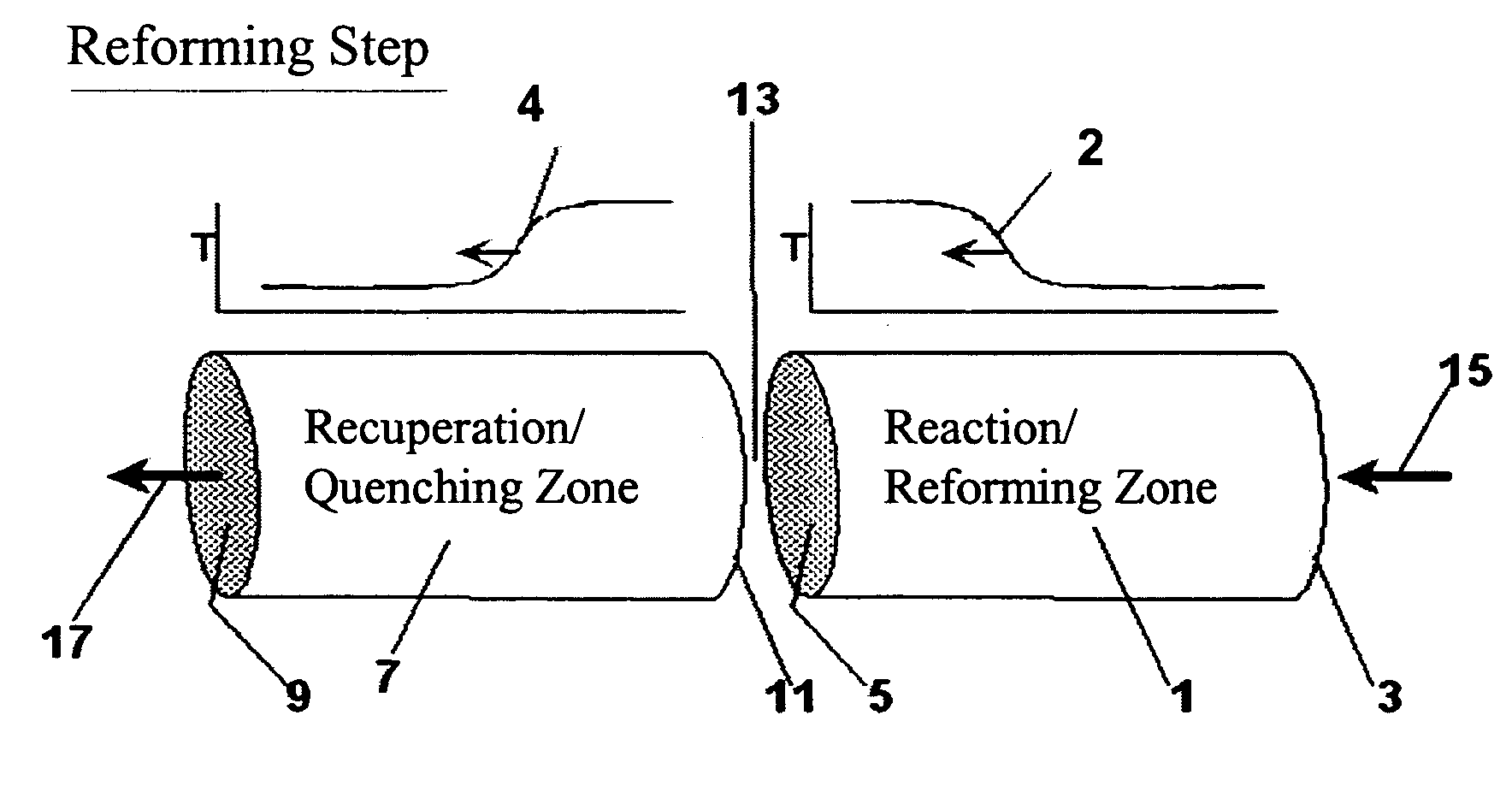
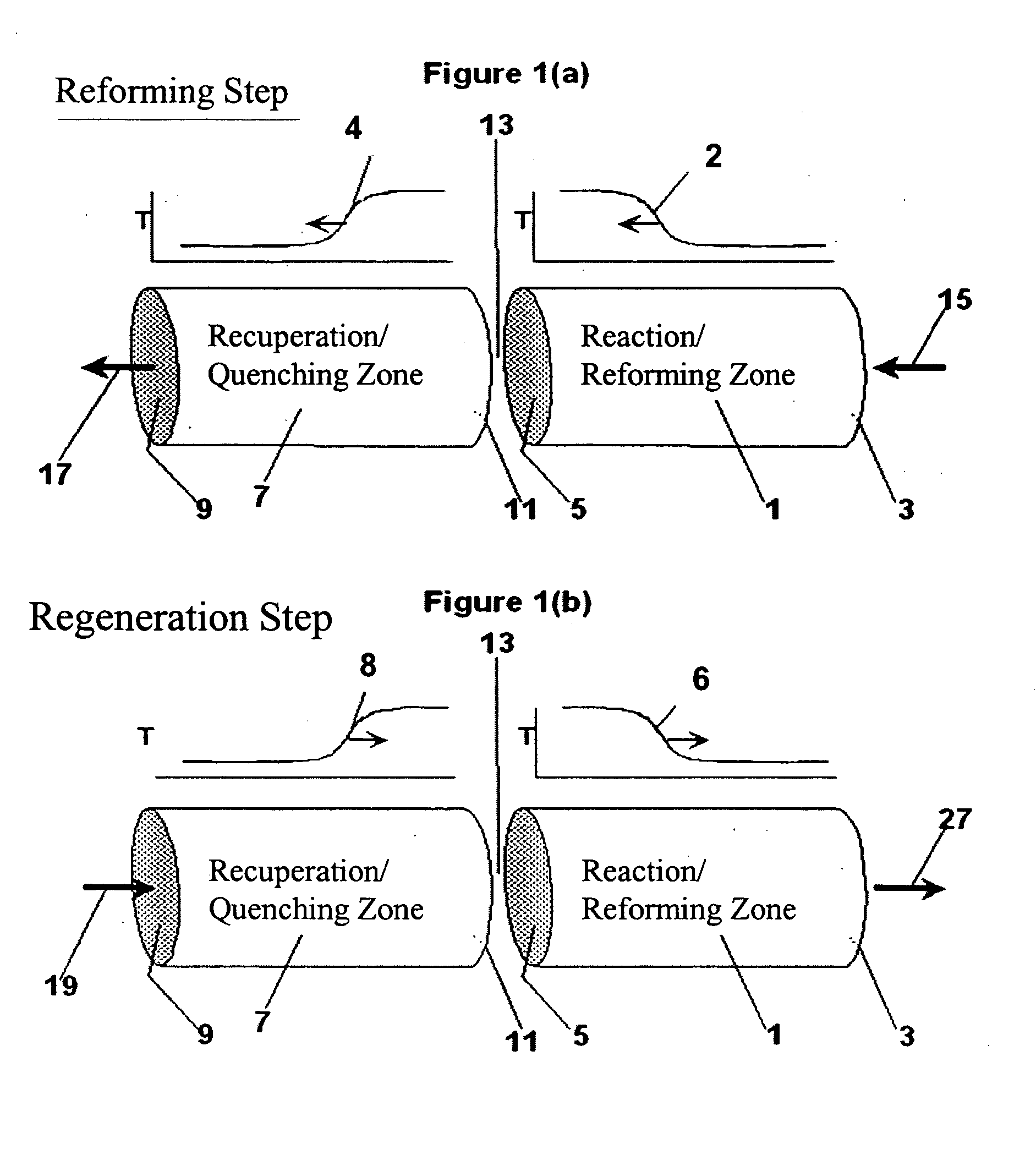
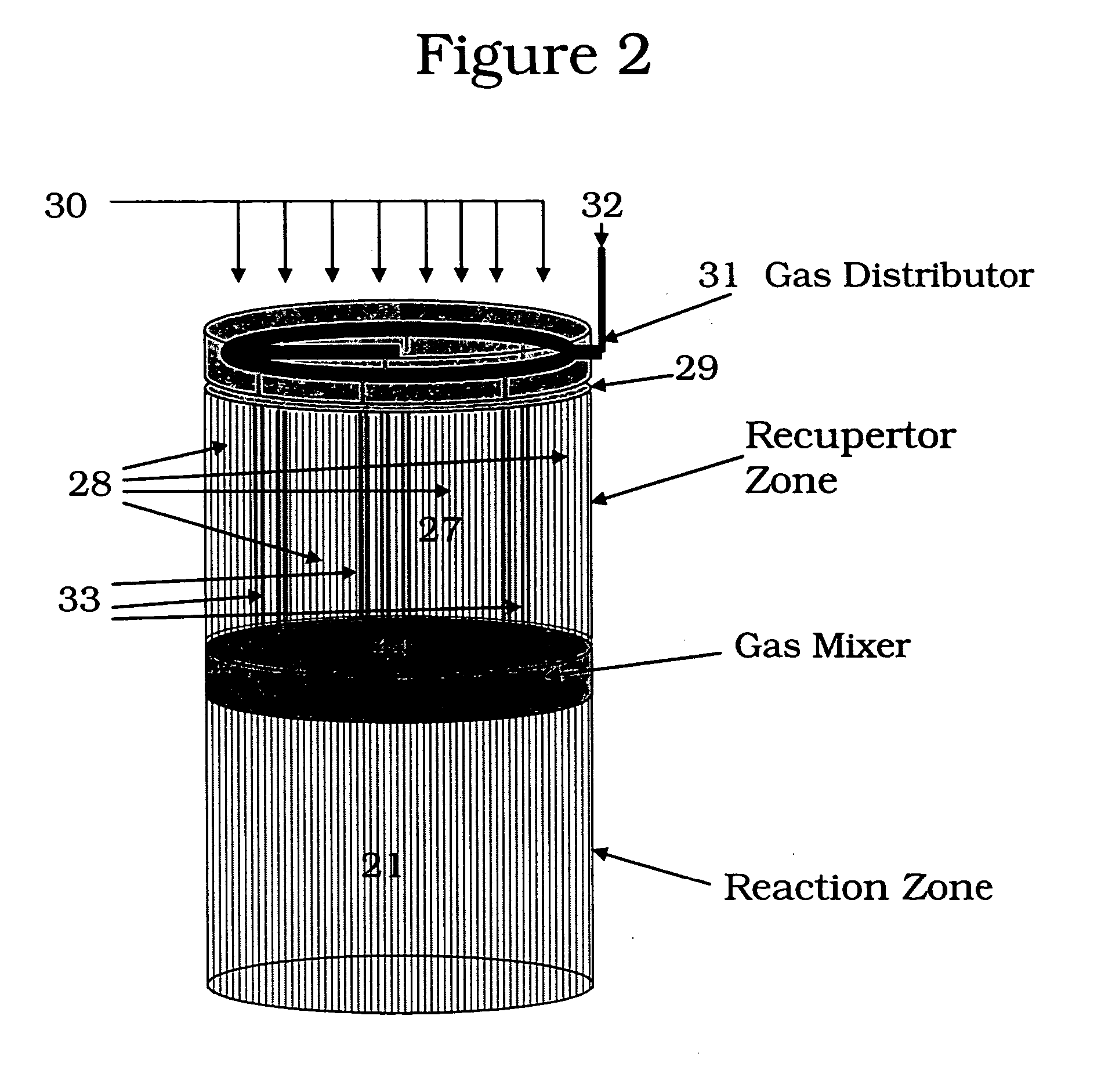
- A reverse-flow regenerative reactor system that controls the location and movement of reaction heat, using hydrogen as a diluent and creating a 'heat bubble' within the reactor to maintain high temperatures without degrading components, allowing for efficient and continuous production of acetylene from methane.

Environmental Regulatory Framework for Methane Pyrolysis
The regulatory landscape governing methane pyrolysis is complex and evolving, reflecting growing global concern about greenhouse gas emissions and climate change. At the international level, the Paris Agreement serves as the cornerstone framework, with its commitment to limit global warming to well below 2°C above pre-industrial levels. While methane pyrolysis is not explicitly mentioned, its potential to produce hydrogen with significantly reduced carbon emissions positions it favorably within this framework.
In the United States, the Environmental Protection Agency (EPA) regulates methane emissions under the Clean Air Act, with specific provisions targeting the oil and gas sector. Recent regulatory updates have strengthened methane emission reduction requirements, indirectly creating incentives for cleaner technologies like methane pyrolysis. Additionally, the Department of Energy's Hydrogen Program provides guidelines and funding opportunities for hydrogen production technologies, including emerging methods like pyrolysis.
The European Union has established the most comprehensive regulatory framework for hydrogen production through its Hydrogen Strategy and European Green Deal. The EU Taxonomy for Sustainable Activities specifically recognizes hydrogen production with carbon capture or electrolysis as environmentally sustainable economic activities. While methane pyrolysis is not yet explicitly included, ongoing revisions are considering its inclusion based on lifecycle carbon intensity metrics.
In Asia, regulatory approaches vary significantly. Japan's Strategic Roadmap for Hydrogen and Fuel Cells includes provisions for various hydrogen production pathways, while China's policies focus primarily on electrolysis but are increasingly recognizing alternative production methods. Both countries have established carbon intensity thresholds that methane pyrolysis may need to meet for regulatory approval and incentive eligibility.
Permitting requirements for methane pyrolysis facilities typically include environmental impact assessments, air quality permits, and safety certifications. The solid carbon byproduct of methane pyrolysis presents unique regulatory challenges, as its classification varies between jurisdictions—sometimes considered a valuable product and other times a waste material requiring management.
Emerging regulatory trends indicate a shift toward technology-neutral, outcome-based frameworks that focus on lifecycle emissions rather than prescribing specific technologies. This approach potentially benefits methane pyrolysis as it can demonstrate favorable carbon intensity metrics compared to conventional hydrogen production methods. Carbon pricing mechanisms, increasingly adopted globally, further enhance the economic case for methane pyrolysis by penalizing carbon-intensive production methods.
In the United States, the Environmental Protection Agency (EPA) regulates methane emissions under the Clean Air Act, with specific provisions targeting the oil and gas sector. Recent regulatory updates have strengthened methane emission reduction requirements, indirectly creating incentives for cleaner technologies like methane pyrolysis. Additionally, the Department of Energy's Hydrogen Program provides guidelines and funding opportunities for hydrogen production technologies, including emerging methods like pyrolysis.
The European Union has established the most comprehensive regulatory framework for hydrogen production through its Hydrogen Strategy and European Green Deal. The EU Taxonomy for Sustainable Activities specifically recognizes hydrogen production with carbon capture or electrolysis as environmentally sustainable economic activities. While methane pyrolysis is not yet explicitly included, ongoing revisions are considering its inclusion based on lifecycle carbon intensity metrics.
In Asia, regulatory approaches vary significantly. Japan's Strategic Roadmap for Hydrogen and Fuel Cells includes provisions for various hydrogen production pathways, while China's policies focus primarily on electrolysis but are increasingly recognizing alternative production methods. Both countries have established carbon intensity thresholds that methane pyrolysis may need to meet for regulatory approval and incentive eligibility.
Permitting requirements for methane pyrolysis facilities typically include environmental impact assessments, air quality permits, and safety certifications. The solid carbon byproduct of methane pyrolysis presents unique regulatory challenges, as its classification varies between jurisdictions—sometimes considered a valuable product and other times a waste material requiring management.
Emerging regulatory trends indicate a shift toward technology-neutral, outcome-based frameworks that focus on lifecycle emissions rather than prescribing specific technologies. This approach potentially benefits methane pyrolysis as it can demonstrate favorable carbon intensity metrics compared to conventional hydrogen production methods. Carbon pricing mechanisms, increasingly adopted globally, further enhance the economic case for methane pyrolysis by penalizing carbon-intensive production methods.
Carbon Credit Opportunities and Economic Viability
Methane pyrolysis presents significant carbon credit opportunities due to its potential for producing hydrogen with minimal CO2 emissions. The process generates solid carbon instead of CO2, creating a pathway for organizations to earn carbon credits through verified emission reductions. Current carbon markets value these credits between $5-50 per ton of CO2 equivalent avoided, with premium credits from innovative technologies like methane pyrolysis potentially commanding higher prices in voluntary markets.
The economic viability of methane pyrolysis depends on several interconnected factors. Capital expenditure requirements range from $800-1,500 per kW of hydrogen production capacity, with operational costs primarily driven by natural gas prices, electricity costs, and maintenance expenses. Sensitivity analysis indicates that a 10% reduction in natural gas prices can improve project IRR by approximately 2-3 percentage points, highlighting the importance of feedstock costs.
Revenue streams for methane pyrolysis projects are diversifying beyond hydrogen sales. The solid carbon byproduct, depending on quality and form, can be marketed as carbon black ($500-1,500/ton), activated carbon ($1,000-2,500/ton), or carbon nanotubes (significantly higher value). These secondary revenue streams can contribute 15-30% of total project economics, enhancing overall viability.
Government incentives substantially impact economic feasibility. Production tax credits in regions like the United States (up to $3/kg for clean hydrogen under the Inflation Reduction Act) and the European Union's hydrogen strategy subsidies can reduce payback periods from 8-10 years to 4-6 years. Carbon pricing mechanisms further enhance project economics, with each $10/ton CO2 price improving IRR by approximately 1-1.5 percentage points.
Break-even analysis suggests that methane pyrolysis becomes competitive with steam methane reforming when carbon prices exceed $30-40/ton CO2 or when natural gas prices remain below $3-4/MMBtu. The levelized cost of hydrogen production currently ranges from $1.5-3.0/kg, approaching cost parity with conventional methods in favorable regulatory environments.
Long-term economic projections indicate improving viability as technology matures and economies of scale are realized. Cost reduction curves suggest a 30-40% decrease in capital costs over the next decade, while increasing carbon prices and stricter emissions regulations will further enhance the comparative advantage of methane pyrolysis over conventional hydrogen production methods.
The economic viability of methane pyrolysis depends on several interconnected factors. Capital expenditure requirements range from $800-1,500 per kW of hydrogen production capacity, with operational costs primarily driven by natural gas prices, electricity costs, and maintenance expenses. Sensitivity analysis indicates that a 10% reduction in natural gas prices can improve project IRR by approximately 2-3 percentage points, highlighting the importance of feedstock costs.
Revenue streams for methane pyrolysis projects are diversifying beyond hydrogen sales. The solid carbon byproduct, depending on quality and form, can be marketed as carbon black ($500-1,500/ton), activated carbon ($1,000-2,500/ton), or carbon nanotubes (significantly higher value). These secondary revenue streams can contribute 15-30% of total project economics, enhancing overall viability.
Government incentives substantially impact economic feasibility. Production tax credits in regions like the United States (up to $3/kg for clean hydrogen under the Inflation Reduction Act) and the European Union's hydrogen strategy subsidies can reduce payback periods from 8-10 years to 4-6 years. Carbon pricing mechanisms further enhance project economics, with each $10/ton CO2 price improving IRR by approximately 1-1.5 percentage points.
Break-even analysis suggests that methane pyrolysis becomes competitive with steam methane reforming when carbon prices exceed $30-40/ton CO2 or when natural gas prices remain below $3-4/MMBtu. The levelized cost of hydrogen production currently ranges from $1.5-3.0/kg, approaching cost parity with conventional methods in favorable regulatory environments.
Long-term economic projections indicate improving viability as technology matures and economies of scale are realized. Cost reduction curves suggest a 30-40% decrease in capital costs over the next decade, while increasing carbon prices and stricter emissions regulations will further enhance the comparative advantage of methane pyrolysis over conventional hydrogen production methods.
Unlock deeper insights with PatSnap Eureka Quick Research — get a full tech report to explore trends and direct your research. Try now!
Generate Your Research Report Instantly with AI Agent
Supercharge your innovation with PatSnap Eureka AI Agent Platform!