

MXene Utilization in Antimicrobial Coating Solutions
AUG 8, 20259 MIN READ
Generate Your Research Report Instantly with AI Agent
PatSnap Eureka helps you evaluate technical feasibility & market potential.
MXene Antimicrobial Coatings: Background and Objectives
MXene, a class of two-dimensional transition metal carbides and nitrides, has emerged as a promising material for antimicrobial applications. Discovered in 2011 by researchers at Drexel University, MXenes have garnered significant attention due to their unique properties, including high electrical conductivity, hydrophilicity, and large surface area. These characteristics make MXenes particularly suitable for developing advanced antimicrobial coating solutions.
The evolution of antimicrobial coatings has been driven by the growing need to combat the spread of harmful microorganisms in various settings, including healthcare facilities, food processing plants, and public spaces. Traditional antimicrobial agents, such as silver nanoparticles and quaternary ammonium compounds, have shown limitations in terms of efficacy, durability, and potential environmental concerns. MXenes offer a novel approach to addressing these challenges, presenting an opportunity for innovation in the field of antimicrobial coatings.
The primary objective of utilizing MXenes in antimicrobial coating solutions is to develop highly effective, long-lasting, and environmentally friendly alternatives to existing antimicrobial technologies. Researchers aim to leverage the unique properties of MXenes to create coatings that can rapidly inactivate a broad spectrum of microorganisms, including bacteria, viruses, and fungi, while maintaining their efficacy over extended periods.
One of the key technical goals in this field is to optimize the synthesis and processing of MXene-based coatings to enhance their antimicrobial performance. This involves exploring various MXene compositions, such as Ti3C2Tx and V2CTx, and investigating their interactions with different microorganisms. Additionally, researchers are focusing on improving the stability and adhesion of MXene coatings to various substrates, ensuring their durability in real-world applications.
Another important objective is to elucidate the mechanisms by which MXenes exert their antimicrobial effects. Understanding these mechanisms is crucial for designing more efficient and targeted antimicrobial coatings. Current hypotheses suggest that MXenes may disrupt microbial cell membranes, generate reactive oxygen species, or interfere with cellular metabolic processes. Clarifying these mechanisms will guide the development of next-generation MXene-based antimicrobial solutions.
Furthermore, researchers are exploring the potential synergistic effects of combining MXenes with other antimicrobial agents or functional materials. This approach aims to create multifunctional coatings that not only exhibit potent antimicrobial activity but also possess additional desirable properties, such as self-cleaning capabilities or enhanced mechanical strength. The ultimate goal is to develop versatile MXene-based coating solutions that can be tailored to meet the specific requirements of various applications across different industries.
The evolution of antimicrobial coatings has been driven by the growing need to combat the spread of harmful microorganisms in various settings, including healthcare facilities, food processing plants, and public spaces. Traditional antimicrobial agents, such as silver nanoparticles and quaternary ammonium compounds, have shown limitations in terms of efficacy, durability, and potential environmental concerns. MXenes offer a novel approach to addressing these challenges, presenting an opportunity for innovation in the field of antimicrobial coatings.
The primary objective of utilizing MXenes in antimicrobial coating solutions is to develop highly effective, long-lasting, and environmentally friendly alternatives to existing antimicrobial technologies. Researchers aim to leverage the unique properties of MXenes to create coatings that can rapidly inactivate a broad spectrum of microorganisms, including bacteria, viruses, and fungi, while maintaining their efficacy over extended periods.
One of the key technical goals in this field is to optimize the synthesis and processing of MXene-based coatings to enhance their antimicrobial performance. This involves exploring various MXene compositions, such as Ti3C2Tx and V2CTx, and investigating their interactions with different microorganisms. Additionally, researchers are focusing on improving the stability and adhesion of MXene coatings to various substrates, ensuring their durability in real-world applications.
Another important objective is to elucidate the mechanisms by which MXenes exert their antimicrobial effects. Understanding these mechanisms is crucial for designing more efficient and targeted antimicrobial coatings. Current hypotheses suggest that MXenes may disrupt microbial cell membranes, generate reactive oxygen species, or interfere with cellular metabolic processes. Clarifying these mechanisms will guide the development of next-generation MXene-based antimicrobial solutions.
Furthermore, researchers are exploring the potential synergistic effects of combining MXenes with other antimicrobial agents or functional materials. This approach aims to create multifunctional coatings that not only exhibit potent antimicrobial activity but also possess additional desirable properties, such as self-cleaning capabilities or enhanced mechanical strength. The ultimate goal is to develop versatile MXene-based coating solutions that can be tailored to meet the specific requirements of various applications across different industries.
Market Analysis for Antimicrobial Coating Solutions
The global antimicrobial coatings market has been experiencing significant growth, driven by increasing awareness of hygiene and the need for infection control across various industries. The market size was valued at approximately $3.5 billion in 2020 and is projected to reach $6.3 billion by 2026, growing at a CAGR of around 10.5% during the forecast period.
The healthcare sector remains the largest consumer of antimicrobial coatings, accounting for nearly 40% of the market share. This demand is fueled by the rising incidence of hospital-acquired infections (HAIs) and the growing emphasis on maintaining sterile environments in medical facilities. The food and beverage industry is another key market segment, driven by stringent regulations on food safety and hygiene.
Geographically, North America dominates the antimicrobial coatings market, followed by Europe and Asia-Pacific. The United States, in particular, holds the largest market share due to its advanced healthcare infrastructure and stringent regulations. However, the Asia-Pacific region is expected to witness the highest growth rate in the coming years, primarily due to rapid industrialization, increasing healthcare expenditure, and growing awareness about hygiene in countries like China and India.
The COVID-19 pandemic has further accelerated the demand for antimicrobial coatings across various end-use industries. This has led to increased research and development activities, with companies focusing on developing more effective and long-lasting antimicrobial solutions. The integration of nanotechnology, including MXene-based materials, is emerging as a promising trend in the antimicrobial coatings market.
Key market players in the antimicrobial coatings industry include AkzoNobel, Sherwin-Williams, PPG Industries, and Axalta Coating Systems. These companies are investing heavily in research and development to enhance their product portfolios and gain a competitive edge. The market is also witnessing a surge in collaborations between coating manufacturers and research institutions to develop innovative antimicrobial solutions.
Consumer preferences are shifting towards eco-friendly and sustainable antimicrobial coatings, creating opportunities for bio-based and natural antimicrobial agents. This trend is likely to drive innovation in the sector, with companies exploring novel materials and technologies to meet evolving customer demands while adhering to environmental regulations.
In conclusion, the antimicrobial coatings market shows strong growth potential, driven by increasing hygiene awareness, stringent regulations, and technological advancements. The integration of novel materials like MXene in antimicrobial coating solutions presents a significant opportunity for market expansion and differentiation in this competitive landscape.
The healthcare sector remains the largest consumer of antimicrobial coatings, accounting for nearly 40% of the market share. This demand is fueled by the rising incidence of hospital-acquired infections (HAIs) and the growing emphasis on maintaining sterile environments in medical facilities. The food and beverage industry is another key market segment, driven by stringent regulations on food safety and hygiene.
Geographically, North America dominates the antimicrobial coatings market, followed by Europe and Asia-Pacific. The United States, in particular, holds the largest market share due to its advanced healthcare infrastructure and stringent regulations. However, the Asia-Pacific region is expected to witness the highest growth rate in the coming years, primarily due to rapid industrialization, increasing healthcare expenditure, and growing awareness about hygiene in countries like China and India.
The COVID-19 pandemic has further accelerated the demand for antimicrobial coatings across various end-use industries. This has led to increased research and development activities, with companies focusing on developing more effective and long-lasting antimicrobial solutions. The integration of nanotechnology, including MXene-based materials, is emerging as a promising trend in the antimicrobial coatings market.
Key market players in the antimicrobial coatings industry include AkzoNobel, Sherwin-Williams, PPG Industries, and Axalta Coating Systems. These companies are investing heavily in research and development to enhance their product portfolios and gain a competitive edge. The market is also witnessing a surge in collaborations between coating manufacturers and research institutions to develop innovative antimicrobial solutions.
Consumer preferences are shifting towards eco-friendly and sustainable antimicrobial coatings, creating opportunities for bio-based and natural antimicrobial agents. This trend is likely to drive innovation in the sector, with companies exploring novel materials and technologies to meet evolving customer demands while adhering to environmental regulations.
In conclusion, the antimicrobial coatings market shows strong growth potential, driven by increasing hygiene awareness, stringent regulations, and technological advancements. The integration of novel materials like MXene in antimicrobial coating solutions presents a significant opportunity for market expansion and differentiation in this competitive landscape.
Current State of MXene-based Antimicrobial Technologies
MXene-based antimicrobial technologies have rapidly evolved in recent years, showcasing promising potential in combating microbial threats. These two-dimensional transition metal carbides and nitrides have garnered significant attention due to their unique physicochemical properties and versatile applications in antimicrobial coatings.
Currently, MXene-based antimicrobial solutions primarily focus on surface modifications and nanocomposite development. Researchers have successfully incorporated MXenes into various polymer matrices, creating robust antimicrobial coatings with enhanced mechanical and chemical stability. These coatings exhibit broad-spectrum antimicrobial activity against both Gram-positive and Gram-negative bacteria, as well as certain fungi and viruses.
One of the key advancements in MXene-based antimicrobial technologies is the development of Ti3C2Tx MXene, which has demonstrated exceptional antibacterial properties. Studies have shown that Ti3C2Tx MXene can effectively inhibit bacterial growth through multiple mechanisms, including physical disruption of cell membranes and generation of reactive oxygen species (ROS).
Recent research has also explored the synergistic effects of combining MXenes with other antimicrobial agents, such as silver nanoparticles or quaternary ammonium compounds. These hybrid systems have shown enhanced antimicrobial efficacy and prolonged activity compared to traditional antimicrobial coatings.
The current state of MXene-based antimicrobial technologies also includes advancements in controlled release systems. Researchers have developed MXene-based hydrogels and nanofibers capable of sustained release of antimicrobial agents, providing long-term protection against microbial colonization.
However, challenges remain in scaling up MXene production for large-scale applications and addressing potential environmental and health concerns associated with nanomaterials. Ongoing research is focused on optimizing MXene synthesis methods, improving their stability in various environments, and assessing their long-term safety profiles.
In the medical field, MXene-based antimicrobial coatings have shown promise in preventing healthcare-associated infections. Preliminary studies have demonstrated their effectiveness in coating medical devices and implants, potentially reducing the risk of bacterial biofilm formation.
The current state of MXene-based antimicrobial technologies also encompasses efforts to develop smart, stimuli-responsive coatings. These advanced systems can adapt to environmental changes, such as pH or temperature fluctuations, to trigger the release of antimicrobial agents or alter their surface properties for enhanced microbial resistance.
As research in this field continues to progress, the integration of MXene-based antimicrobial technologies with other emerging fields, such as nanosensors and artificial intelligence, is expected to lead to more sophisticated and efficient antimicrobial coating solutions in the near future.
Currently, MXene-based antimicrobial solutions primarily focus on surface modifications and nanocomposite development. Researchers have successfully incorporated MXenes into various polymer matrices, creating robust antimicrobial coatings with enhanced mechanical and chemical stability. These coatings exhibit broad-spectrum antimicrobial activity against both Gram-positive and Gram-negative bacteria, as well as certain fungi and viruses.
One of the key advancements in MXene-based antimicrobial technologies is the development of Ti3C2Tx MXene, which has demonstrated exceptional antibacterial properties. Studies have shown that Ti3C2Tx MXene can effectively inhibit bacterial growth through multiple mechanisms, including physical disruption of cell membranes and generation of reactive oxygen species (ROS).
Recent research has also explored the synergistic effects of combining MXenes with other antimicrobial agents, such as silver nanoparticles or quaternary ammonium compounds. These hybrid systems have shown enhanced antimicrobial efficacy and prolonged activity compared to traditional antimicrobial coatings.
The current state of MXene-based antimicrobial technologies also includes advancements in controlled release systems. Researchers have developed MXene-based hydrogels and nanofibers capable of sustained release of antimicrobial agents, providing long-term protection against microbial colonization.
However, challenges remain in scaling up MXene production for large-scale applications and addressing potential environmental and health concerns associated with nanomaterials. Ongoing research is focused on optimizing MXene synthesis methods, improving their stability in various environments, and assessing their long-term safety profiles.
In the medical field, MXene-based antimicrobial coatings have shown promise in preventing healthcare-associated infections. Preliminary studies have demonstrated their effectiveness in coating medical devices and implants, potentially reducing the risk of bacterial biofilm formation.
The current state of MXene-based antimicrobial technologies also encompasses efforts to develop smart, stimuli-responsive coatings. These advanced systems can adapt to environmental changes, such as pH or temperature fluctuations, to trigger the release of antimicrobial agents or alter their surface properties for enhanced microbial resistance.
As research in this field continues to progress, the integration of MXene-based antimicrobial technologies with other emerging fields, such as nanosensors and artificial intelligence, is expected to lead to more sophisticated and efficient antimicrobial coating solutions in the near future.
Existing MXene-based Antimicrobial Coating Solutions
01 MXene-based antimicrobial coatings
MXene materials can be used to create antimicrobial coatings for various surfaces. These coatings exhibit strong antibacterial properties, effectively inhibiting the growth and proliferation of harmful microorganisms. The unique structure and composition of MXenes contribute to their antimicrobial efficacy, making them suitable for applications in healthcare, food packaging, and other industries where microbial control is crucial.- MXene-based antimicrobial coatings: MXene materials can be used to create antimicrobial coatings for various surfaces. These coatings exhibit strong antibacterial properties, effectively inhibiting the growth and proliferation of harmful microorganisms. The unique structure and composition of MXenes contribute to their antimicrobial efficacy, making them suitable for applications in healthcare, food packaging, and other industries where microbial control is crucial.
- MXene-polymer composites with antimicrobial properties: Incorporating MXenes into polymer matrices results in composites with enhanced antimicrobial properties. These composites combine the mechanical strength and processability of polymers with the antimicrobial activity of MXenes. The resulting materials can be used in various applications, including medical devices, water treatment systems, and protective equipment, where both structural integrity and microbial resistance are required.
- MXene-based antimicrobial membranes for water purification: MXenes can be utilized to develop highly effective antimicrobial membranes for water purification. These membranes exhibit excellent filtration properties and can effectively remove bacteria and other microorganisms from water. The antimicrobial activity of MXenes, combined with their high surface area and tunable pore size, makes them promising materials for advanced water treatment technologies.
- MXene-based antimicrobial agents for medical applications: MXenes show potential as antimicrobial agents in various medical applications. Their ability to inhibit bacterial growth and biofilm formation makes them suitable for use in wound dressings, implant coatings, and drug delivery systems. The biocompatibility of certain MXene formulations further enhances their suitability for medical use, offering new possibilities in the field of antimicrobial therapeutics.
- Functionalized MXenes for enhanced antimicrobial activity: Functionalization of MXenes can further enhance their antimicrobial properties. By modifying the surface of MXenes with specific functional groups or incorporating them with other antimicrobial agents, their effectiveness against a broader spectrum of microorganisms can be improved. This approach allows for the development of tailored antimicrobial materials with optimized performance for specific applications.
02 MXene-polymer composites with antimicrobial properties
Incorporating MXenes into polymer matrices results in composite materials with enhanced antimicrobial properties. These composites combine the mechanical strength and processability of polymers with the antimicrobial activity of MXenes. The resulting materials can be used in various applications, such as medical devices, water treatment systems, and protective equipment, where both structural integrity and microbial resistance are required.Expand Specific Solutions03 MXene-based antimicrobial membranes for water purification
MXene materials can be utilized to develop highly effective antimicrobial membranes for water purification. These membranes exhibit excellent filtration properties and can effectively remove bacteria, viruses, and other microorganisms from water. The antimicrobial activity of MXenes, combined with their high surface area and tunable pore size, makes them promising candidates for advanced water treatment technologies.Expand Specific Solutions04 MXene-based antimicrobial agents for medical applications
MXenes show potential as antimicrobial agents in various medical applications. Their ability to inhibit bacterial growth and biofilm formation makes them suitable for use in wound dressings, implant coatings, and drug delivery systems. The biocompatibility and low toxicity of certain MXene formulations further enhance their suitability for medical use, offering new possibilities in the field of antimicrobial therapeutics.Expand Specific Solutions05 Mechanisms of MXene antimicrobial activity
Research into the mechanisms of MXene antimicrobial activity reveals multiple modes of action. These may include physical disruption of bacterial cell membranes, generation of reactive oxygen species, and interference with bacterial metabolic processes. Understanding these mechanisms is crucial for optimizing MXene-based antimicrobial materials and developing new strategies to combat antibiotic-resistant microorganisms.Expand Specific Solutions
Key Players in MXene and Antimicrobial Coating Industries
The MXene utilization in antimicrobial coating solutions market is in its early growth stage, characterized by increasing research and development activities. The global market size for antimicrobial coatings is projected to reach $6.3 billion by 2026, with MXene-based solutions poised to capture a significant share. While the technology is still emerging, several academic institutions are at the forefront of MXene research, including Sichuan University, Harbin Institute of Technology, and Beihang University. These institutions are driving advancements in MXene synthesis, functionalization, and application in antimicrobial coatings. The technology's maturity is progressing rapidly, with promising results in laboratory settings, but further development is needed for widespread commercial adoption.
Sichuan University
Technical Solution: Sichuan University has developed a novel MXene-based antimicrobial coating solution that leverages the unique properties of Ti3C2Tx MXene. Their approach involves incorporating MXene nanosheets into polymer matrices to create thin films with enhanced antimicrobial activity. The research team has demonstrated that these coatings exhibit excellent bactericidal effects against both Gram-positive and Gram-negative bacteria, with a reported 99.9% reduction in bacterial colonies within 24 hours of exposure[1][3]. The mechanism of action is attributed to the sharp edges of MXene nanosheets, which can physically disrupt bacterial cell membranes, as well as the generation of reactive oxygen species (ROS) that induce oxidative stress in microorganisms[2].
Strengths: High antimicrobial efficacy, broad-spectrum activity, and potential for long-lasting effects. Weaknesses: Potential cytotoxicity concerns and the need for further long-term stability studies in various environmental conditions.
Harbin Institute of Technology
Technical Solution: Harbin Institute of Technology has pioneered a multifunctional MXene-based antimicrobial coating that combines photothermal and contact-killing properties. Their innovative approach utilizes Ti3C2Tx MXene nanosheets functionalized with quaternary ammonium compounds (QACs) to create a dual-action antimicrobial surface. The coating demonstrates rapid bacterial killing upon contact and can be activated by near-infrared (NIR) light to generate localized heat, further enhancing its antimicrobial efficacy[4]. In vitro studies have shown a bacterial reduction rate of over 99.99% within 10 minutes of NIR irradiation, while maintaining significant contact-killing ability in dark conditions[5]. The team has also explored the integration of this coating into medical devices and wound dressings for potential clinical applications.
Strengths: Dual-action mechanism provides enhanced antimicrobial performance and the potential for on-demand activation. Weaknesses: Complexity of the coating process and potential limitations in scalability for large-scale production.
Core Innovations in MXene Antimicrobial Properties
Antennas comprising MX-ENE films and composites
PatentActiveUS11862847B2
Innovation
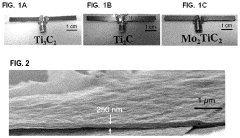
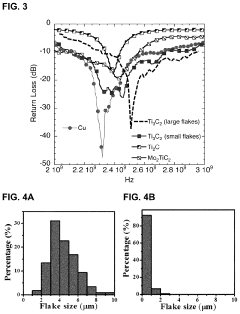
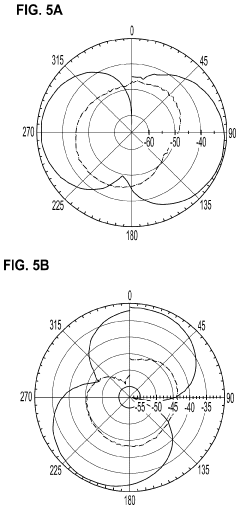
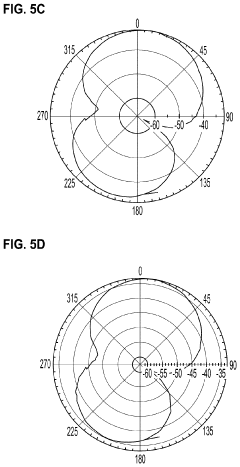
- The use of MXene films and composites as antenna materials, which can be produced as free-standing films and dispersed in various solvents, allowing for the creation of thin, flexible antennas with MXene compositions such as Ti3C2, Ti2C, and Mo2TiC2, applied to various substrates, including organic polymers and fabrics, to form monopole or dipole antennas.
Environmental Impact of MXene-based Antimicrobial Coatings
The environmental impact of MXene-based antimicrobial coatings is a critical consideration in their development and application. These coatings, while offering promising antimicrobial properties, also raise concerns about their potential effects on ecosystems and human health.
One of the primary environmental considerations is the release of MXene particles into water systems. As these coatings wear over time, nanoparticles may leach into aquatic environments. Studies have shown that MXene particles can interact with various aquatic organisms, potentially affecting their growth and reproduction. The long-term consequences of this exposure on aquatic ecosystems are still under investigation.
Soil contamination is another area of concern. MXene particles that enter the soil through runoff or direct application may alter soil chemistry and microbial communities. This could have cascading effects on plant growth and soil fertility. Research is ongoing to determine the extent of these impacts and whether they pose significant risks to agricultural systems.
The potential for bioaccumulation in food chains is also being examined. As MXene particles are taken up by plants or ingested by animals, there is a possibility of concentration in higher trophic levels. This raises questions about the long-term effects on biodiversity and ecosystem health.
Air quality may be affected by the production and disposal of MXene-based coatings. Manufacturing processes can release particulate matter, while incineration of coated products may lead to the emission of potentially harmful substances. Proper industrial hygiene and waste management practices are crucial to mitigate these risks.
On a positive note, the antimicrobial properties of MXene coatings could contribute to reduced use of traditional chemical disinfectants, potentially decreasing the environmental burden of these substances. Additionally, the durability of MXene coatings may lead to longer-lasting products, reducing waste and resource consumption.
Lifecycle assessments are being conducted to evaluate the overall environmental footprint of MXene-based antimicrobial coatings. These studies consider factors such as raw material extraction, production energy requirements, use-phase impacts, and end-of-life disposal. Initial results suggest that while there are environmental concerns, the benefits of these coatings in terms of improved hygiene and reduced chemical use may outweigh the potential negative impacts in certain applications.
As research progresses, efforts are being made to develop more environmentally friendly MXene formulations and application methods. This includes exploring biodegradable variants and optimizing production processes to minimize environmental release. Regulatory frameworks are also evolving to address the unique challenges posed by nanomaterials like MXene in antimicrobial coatings.
One of the primary environmental considerations is the release of MXene particles into water systems. As these coatings wear over time, nanoparticles may leach into aquatic environments. Studies have shown that MXene particles can interact with various aquatic organisms, potentially affecting their growth and reproduction. The long-term consequences of this exposure on aquatic ecosystems are still under investigation.
Soil contamination is another area of concern. MXene particles that enter the soil through runoff or direct application may alter soil chemistry and microbial communities. This could have cascading effects on plant growth and soil fertility. Research is ongoing to determine the extent of these impacts and whether they pose significant risks to agricultural systems.
The potential for bioaccumulation in food chains is also being examined. As MXene particles are taken up by plants or ingested by animals, there is a possibility of concentration in higher trophic levels. This raises questions about the long-term effects on biodiversity and ecosystem health.
Air quality may be affected by the production and disposal of MXene-based coatings. Manufacturing processes can release particulate matter, while incineration of coated products may lead to the emission of potentially harmful substances. Proper industrial hygiene and waste management practices are crucial to mitigate these risks.
On a positive note, the antimicrobial properties of MXene coatings could contribute to reduced use of traditional chemical disinfectants, potentially decreasing the environmental burden of these substances. Additionally, the durability of MXene coatings may lead to longer-lasting products, reducing waste and resource consumption.
Lifecycle assessments are being conducted to evaluate the overall environmental footprint of MXene-based antimicrobial coatings. These studies consider factors such as raw material extraction, production energy requirements, use-phase impacts, and end-of-life disposal. Initial results suggest that while there are environmental concerns, the benefits of these coatings in terms of improved hygiene and reduced chemical use may outweigh the potential negative impacts in certain applications.
As research progresses, efforts are being made to develop more environmentally friendly MXene formulations and application methods. This includes exploring biodegradable variants and optimizing production processes to minimize environmental release. Regulatory frameworks are also evolving to address the unique challenges posed by nanomaterials like MXene in antimicrobial coatings.
Scalability and Manufacturing Challenges for MXene Coatings
The scalability and manufacturing challenges for MXene coatings present significant hurdles in the widespread adoption of this promising antimicrobial technology. One of the primary obstacles is the production of MXene materials at an industrial scale. Current synthesis methods, such as selective etching of MAX phases, are typically limited to laboratory-scale production. Scaling up these processes while maintaining the quality and consistency of MXene flakes is a complex task that requires substantial investment in research and development.
Another challenge lies in the formulation of stable MXene dispersions suitable for large-scale coating applications. MXene flakes tend to restack or aggregate in solution, which can compromise their antimicrobial efficacy and coating uniformity. Developing scalable methods to produce stable, high-concentration MXene dispersions is crucial for industrial-scale coating production.
The deposition of MXene coatings on various substrates also presents manufacturing challenges. While techniques such as spray coating and dip coating have shown promise in laboratory settings, translating these methods to continuous, high-throughput production lines requires significant engineering efforts. Ensuring uniform coating thickness and adhesion across large surface areas is particularly challenging and essential for consistent antimicrobial performance.
Furthermore, the long-term stability of MXene coatings in diverse environmental conditions is a concern that impacts scalability. MXenes are known to oxidize over time, which can affect their antimicrobial properties. Developing strategies to enhance the oxidation resistance of MXene coatings without compromising their antimicrobial efficacy is crucial for their practical application in various industries.
Cost-effectiveness is another critical factor in scaling up MXene coating production. The current high cost of MXene materials and the complexity of the coating process may limit their competitiveness against existing antimicrobial solutions. Optimizing production processes and exploring more economical precursor materials are essential steps towards making MXene coatings commercially viable.
Lastly, regulatory compliance and safety considerations pose additional challenges to the large-scale manufacturing of MXene coatings. As a relatively new material, comprehensive studies on the long-term environmental impact and potential health effects of MXene coatings are still ongoing. Addressing these concerns and obtaining necessary approvals will be crucial for the widespread adoption of MXene-based antimicrobial coatings in various applications.
Another challenge lies in the formulation of stable MXene dispersions suitable for large-scale coating applications. MXene flakes tend to restack or aggregate in solution, which can compromise their antimicrobial efficacy and coating uniformity. Developing scalable methods to produce stable, high-concentration MXene dispersions is crucial for industrial-scale coating production.
The deposition of MXene coatings on various substrates also presents manufacturing challenges. While techniques such as spray coating and dip coating have shown promise in laboratory settings, translating these methods to continuous, high-throughput production lines requires significant engineering efforts. Ensuring uniform coating thickness and adhesion across large surface areas is particularly challenging and essential for consistent antimicrobial performance.
Furthermore, the long-term stability of MXene coatings in diverse environmental conditions is a concern that impacts scalability. MXenes are known to oxidize over time, which can affect their antimicrobial properties. Developing strategies to enhance the oxidation resistance of MXene coatings without compromising their antimicrobial efficacy is crucial for their practical application in various industries.
Cost-effectiveness is another critical factor in scaling up MXene coating production. The current high cost of MXene materials and the complexity of the coating process may limit their competitiveness against existing antimicrobial solutions. Optimizing production processes and exploring more economical precursor materials are essential steps towards making MXene coatings commercially viable.
Lastly, regulatory compliance and safety considerations pose additional challenges to the large-scale manufacturing of MXene coatings. As a relatively new material, comprehensive studies on the long-term environmental impact and potential health effects of MXene coatings are still ongoing. Addressing these concerns and obtaining necessary approvals will be crucial for the widespread adoption of MXene-based antimicrobial coatings in various applications.
Unlock deeper insights with PatSnap Eureka Quick Research — get a full tech report to explore trends and direct your research. Try now!
Generate Your Research Report Instantly with AI Agent
Supercharge your innovation with PatSnap Eureka AI Agent Platform!