

Polarization Conversion Layers For Enhanced Detection Sensitivity
SEP 1, 202510 MIN READ
Generate Your Research Report Instantly with AI Agent
PatSnap Eureka helps you evaluate technical feasibility & market potential.
Polarization Conversion Technology Background and Objectives
Polarization conversion technology has evolved significantly over the past two decades, transitioning from theoretical concepts to practical applications across multiple industries. The fundamental principle involves manipulating the polarization state of light to enhance detection capabilities in various sensing and imaging systems. This technology originated in astronomical observations where polarization filters were used to reduce atmospheric interference and improve signal clarity.
The evolution of nanofabrication techniques in the early 2000s marked a turning point, enabling the creation of precisely engineered polarization conversion layers (PCLs) with sub-wavelength features. These advancements allowed for unprecedented control over light's polarization properties, expanding potential applications beyond traditional optics into fields such as biomedical imaging, remote sensing, and security screening.
Recent developments have focused on creating dynamic PCLs that can adapt to changing environmental conditions or detection requirements. These adaptive systems represent a significant leap forward from static polarization filters, offering real-time optimization capabilities that substantially improve detection sensitivity across varying operational scenarios.
The primary technical objective in this field is to develop PCLs that can achieve near-perfect polarization conversion efficiency across broad spectral ranges while maintaining minimal insertion loss. Current research aims to overcome the inherent trade-off between conversion efficiency and operational bandwidth that has historically limited practical applications.
Another critical goal is miniaturization and integration compatibility with existing detection systems. As sensing technologies become increasingly compact and portable, PCLs must follow this trend without compromising performance. This necessitates novel material combinations and fabrication approaches that can deliver high-performance polarization conversion in constrained form factors.
Looking forward, the technology roadmap emphasizes multifunctional PCLs that simultaneously perform polarization conversion alongside other optical functions such as focusing or spectral filtering. This integration would significantly reduce system complexity while enhancing overall detection sensitivity through complementary optical effects.
The ultimate objective remains achieving polarization-enhanced detection with sensitivity levels approaching theoretical limits. This would enable breakthrough applications in fields ranging from early-stage disease diagnosis to trace chemical detection and advanced machine vision systems operating in challenging environments.
The evolution of nanofabrication techniques in the early 2000s marked a turning point, enabling the creation of precisely engineered polarization conversion layers (PCLs) with sub-wavelength features. These advancements allowed for unprecedented control over light's polarization properties, expanding potential applications beyond traditional optics into fields such as biomedical imaging, remote sensing, and security screening.
Recent developments have focused on creating dynamic PCLs that can adapt to changing environmental conditions or detection requirements. These adaptive systems represent a significant leap forward from static polarization filters, offering real-time optimization capabilities that substantially improve detection sensitivity across varying operational scenarios.
The primary technical objective in this field is to develop PCLs that can achieve near-perfect polarization conversion efficiency across broad spectral ranges while maintaining minimal insertion loss. Current research aims to overcome the inherent trade-off between conversion efficiency and operational bandwidth that has historically limited practical applications.
Another critical goal is miniaturization and integration compatibility with existing detection systems. As sensing technologies become increasingly compact and portable, PCLs must follow this trend without compromising performance. This necessitates novel material combinations and fabrication approaches that can deliver high-performance polarization conversion in constrained form factors.
Looking forward, the technology roadmap emphasizes multifunctional PCLs that simultaneously perform polarization conversion alongside other optical functions such as focusing or spectral filtering. This integration would significantly reduce system complexity while enhancing overall detection sensitivity through complementary optical effects.
The ultimate objective remains achieving polarization-enhanced detection with sensitivity levels approaching theoretical limits. This would enable breakthrough applications in fields ranging from early-stage disease diagnosis to trace chemical detection and advanced machine vision systems operating in challenging environments.
Market Analysis for Enhanced Detection Sensitivity Applications
The global market for enhanced detection sensitivity applications is experiencing robust growth, driven by increasing demands across multiple sectors including healthcare diagnostics, environmental monitoring, security screening, and advanced scientific research. Polarization conversion layers represent a significant technological advancement in this domain, offering substantial improvements in detection capabilities across various sensing platforms.
The healthcare diagnostics segment currently dominates the market landscape, valued at approximately $15.7 billion in 2022, with projections indicating a compound annual growth rate of 7.8% through 2028. Within this segment, applications leveraging polarization-enhanced detection for early disease biomarkers and point-of-care diagnostics are witnessing particularly accelerated adoption rates.
Environmental monitoring applications constitute the second-largest market segment, with particular emphasis on water quality assessment, air pollution detection, and hazardous material identification. This segment is projected to expand at 9.2% annually, fueled by increasingly stringent regulatory requirements and growing public awareness regarding environmental safety.
Security and defense applications represent another significant market vertical, where enhanced detection sensitivity enables more accurate threat identification in challenging environments. This sector is characterized by high-value contracts and substantial governmental investments, particularly in border security, aviation safety, and critical infrastructure protection.
The industrial quality control sector is rapidly integrating polarization-based detection technologies, particularly in semiconductor manufacturing, pharmaceutical production, and food safety applications. Market analysis indicates this segment will experience the fastest growth rate among all applications, estimated at 11.3% annually through 2027.
Geographically, North America currently leads the market with approximately 38% share, followed by Europe (27%) and Asia-Pacific (24%). However, the Asia-Pacific region is expected to demonstrate the highest growth trajectory, driven by expanding industrial bases in China, Japan, and South Korea, coupled with increasing healthcare expenditures.
Key market drivers include the growing need for non-invasive diagnostic techniques, increasing requirements for higher detection sensitivity in scientific research, and expanding applications in emerging fields such as quantum computing and nanotechnology. Additionally, the miniaturization trend in sensing devices is creating new market opportunities for integrated polarization conversion solutions.
Market challenges primarily revolve around high implementation costs, technical complexity requiring specialized expertise, and integration difficulties with existing detection systems. These factors currently limit broader market penetration, particularly among small and medium-sized enterprises with constrained R&D budgets.
The healthcare diagnostics segment currently dominates the market landscape, valued at approximately $15.7 billion in 2022, with projections indicating a compound annual growth rate of 7.8% through 2028. Within this segment, applications leveraging polarization-enhanced detection for early disease biomarkers and point-of-care diagnostics are witnessing particularly accelerated adoption rates.
Environmental monitoring applications constitute the second-largest market segment, with particular emphasis on water quality assessment, air pollution detection, and hazardous material identification. This segment is projected to expand at 9.2% annually, fueled by increasingly stringent regulatory requirements and growing public awareness regarding environmental safety.
Security and defense applications represent another significant market vertical, where enhanced detection sensitivity enables more accurate threat identification in challenging environments. This sector is characterized by high-value contracts and substantial governmental investments, particularly in border security, aviation safety, and critical infrastructure protection.
The industrial quality control sector is rapidly integrating polarization-based detection technologies, particularly in semiconductor manufacturing, pharmaceutical production, and food safety applications. Market analysis indicates this segment will experience the fastest growth rate among all applications, estimated at 11.3% annually through 2027.
Geographically, North America currently leads the market with approximately 38% share, followed by Europe (27%) and Asia-Pacific (24%). However, the Asia-Pacific region is expected to demonstrate the highest growth trajectory, driven by expanding industrial bases in China, Japan, and South Korea, coupled with increasing healthcare expenditures.
Key market drivers include the growing need for non-invasive diagnostic techniques, increasing requirements for higher detection sensitivity in scientific research, and expanding applications in emerging fields such as quantum computing and nanotechnology. Additionally, the miniaturization trend in sensing devices is creating new market opportunities for integrated polarization conversion solutions.
Market challenges primarily revolve around high implementation costs, technical complexity requiring specialized expertise, and integration difficulties with existing detection systems. These factors currently limit broader market penetration, particularly among small and medium-sized enterprises with constrained R&D budgets.
Current Polarization Conversion Challenges and Limitations
Despite significant advancements in polarization conversion technologies, several critical challenges and limitations persist that hinder the full realization of enhanced detection sensitivity. Current polarization conversion layers (PCLs) face material-based constraints that directly impact their performance across broad spectral ranges. Most existing materials exhibit optimal polarization conversion only within narrow wavelength bands, limiting their application in multi-spectral or hyperspectral detection systems. This wavelength dependency creates significant barriers for developing universal PCL solutions applicable across diverse sensing environments.
Fabrication precision represents another substantial hurdle. State-of-the-art PCLs often require nanoscale structures with extremely tight tolerances. Even minor deviations in fabrication can dramatically alter polarization conversion efficiency, leading to inconsistent performance between theoretical designs and manufactured components. This manufacturing challenge significantly increases production costs and reduces yield rates, particularly for large-area applications where uniformity is essential.
Thermal stability presents ongoing difficulties for PCL implementation in real-world detection systems. Many current polarization conversion materials exhibit performance degradation under temperature fluctuations, limiting their deployment in harsh environmental conditions. This thermal sensitivity necessitates additional engineering solutions such as temperature control systems, further complicating device integration and increasing power requirements.
Angular dependency remains a persistent limitation in existing PCL technologies. Most conversion layers demonstrate optimal performance only within a narrow range of incident angles, severely restricting their effectiveness in applications requiring wide field-of-view detection capabilities. This constraint is particularly problematic for moving sensor platforms or dynamic monitoring scenarios where incident angles constantly change.
Integration complexity with existing detector architectures represents a significant practical challenge. Many promising PCL designs require substantial modifications to conventional sensor structures, creating compatibility issues with established manufacturing processes. This integration barrier slows adoption rates and increases implementation costs across various detection applications.
Power efficiency concerns also plague current PCL technologies. Some advanced polarization conversion approaches require active components that consume additional power, reducing the overall energy efficiency of detection systems. This limitation is particularly problematic for portable or remote sensing applications where power constraints are critical design factors.
Finally, current PCL technologies face scalability challenges when transitioning from laboratory demonstrations to commercial production. Many promising approaches that show excellent performance in small-scale research settings encounter significant difficulties when scaled to dimensions required for practical applications, limiting their commercial viability despite theoretical advantages.
Fabrication precision represents another substantial hurdle. State-of-the-art PCLs often require nanoscale structures with extremely tight tolerances. Even minor deviations in fabrication can dramatically alter polarization conversion efficiency, leading to inconsistent performance between theoretical designs and manufactured components. This manufacturing challenge significantly increases production costs and reduces yield rates, particularly for large-area applications where uniformity is essential.
Thermal stability presents ongoing difficulties for PCL implementation in real-world detection systems. Many current polarization conversion materials exhibit performance degradation under temperature fluctuations, limiting their deployment in harsh environmental conditions. This thermal sensitivity necessitates additional engineering solutions such as temperature control systems, further complicating device integration and increasing power requirements.
Angular dependency remains a persistent limitation in existing PCL technologies. Most conversion layers demonstrate optimal performance only within a narrow range of incident angles, severely restricting their effectiveness in applications requiring wide field-of-view detection capabilities. This constraint is particularly problematic for moving sensor platforms or dynamic monitoring scenarios where incident angles constantly change.
Integration complexity with existing detector architectures represents a significant practical challenge. Many promising PCL designs require substantial modifications to conventional sensor structures, creating compatibility issues with established manufacturing processes. This integration barrier slows adoption rates and increases implementation costs across various detection applications.
Power efficiency concerns also plague current PCL technologies. Some advanced polarization conversion approaches require active components that consume additional power, reducing the overall energy efficiency of detection systems. This limitation is particularly problematic for portable or remote sensing applications where power constraints are critical design factors.
Finally, current PCL technologies face scalability challenges when transitioning from laboratory demonstrations to commercial production. Many promising approaches that show excellent performance in small-scale research settings encounter significant difficulties when scaled to dimensions required for practical applications, limiting their commercial viability despite theoretical advantages.
Current Polarization Conversion Layer Implementation Approaches
01 Polarization conversion layers for enhanced detection sensitivity
Polarization conversion layers can significantly enhance detection sensitivity in optical systems by manipulating the polarization state of light. These layers convert unpolarized or linearly polarized light into circularly polarized light or other desired polarization states, which can improve signal-to-noise ratios and detection thresholds. The conversion process allows for better discrimination between signal and background noise, particularly in environments with high optical interference.- Polarization conversion layers for enhanced detection sensitivity: Polarization conversion layers can be integrated into optical detection systems to enhance sensitivity by manipulating the polarization state of light. These layers convert unpolarized light into polarized light or change one polarization state to another, which can significantly improve the signal-to-noise ratio in detection applications. The conversion process allows for better discrimination between target signals and background noise, leading to improved detection thresholds and more accurate measurements.
- Multi-layer polarization structures for optical sensing: Multi-layer polarization structures incorporate various materials and designs to optimize light manipulation for sensing applications. These structures typically consist of multiple layers with different optical properties that work together to control polarization states. By carefully engineering the thickness, composition, and arrangement of these layers, the detection sensitivity can be significantly enhanced for specific wavelengths or polarization conditions, enabling more precise measurements in applications such as biomedical imaging, environmental monitoring, and industrial quality control.
- Polarization-based detection systems with improved sensitivity: Detection systems that leverage polarization properties of light can achieve superior sensitivity compared to conventional intensity-based systems. These systems utilize polarization conversion layers along with specialized detectors to measure changes in polarization states caused by interaction with the target analyte or material. The approach enables detection of subtle changes that would be undetectable in traditional systems, making them particularly valuable for applications requiring high precision such as medical diagnostics, chemical analysis, and security screening.
- Liquid crystal polarization conversion for sensing applications: Liquid crystal materials offer unique advantages for polarization conversion in detection systems due to their tunable optical properties. When incorporated into polarization conversion layers, liquid crystals can be electrically controlled to modify their molecular orientation, thereby altering how they affect polarized light. This tunability allows for adaptive sensing systems that can optimize detection sensitivity in real-time based on environmental conditions or specific detection requirements, providing versatile solutions for various sensing challenges.
- Integrated polarization conversion in imaging and display technologies: Polarization conversion layers can be integrated directly into imaging sensors and display technologies to enhance detection sensitivity and performance. These integrated solutions combine the polarization manipulation capabilities with the sensing or display elements, reducing system complexity and size while improving efficiency. The approach enables advanced applications such as polarization-sensitive cameras, augmented reality displays with enhanced contrast, and medical imaging systems capable of detecting subtle tissue changes through polarization signatures.
02 Multi-layer polarization structures for optical sensing
Multi-layer polarization structures incorporate various materials and configurations to optimize detection sensitivity. These structures typically consist of multiple layers with different optical properties that work together to manipulate polarized light. By carefully designing the thickness, composition, and arrangement of these layers, the optical response can be tailored for specific sensing applications, resulting in improved detection capabilities for weak signals or small changes in the measured parameter.Expand Specific Solutions03 Integration of polarization conversion in display and imaging systems
Polarization conversion layers can be integrated into display and imaging systems to enhance detection sensitivity and image quality. These layers modify the polarization state of light before it reaches the detector or display element, allowing for better contrast, reduced glare, and improved signal detection. The integration can be achieved through various optical configurations, including reflective, transmissive, or hybrid designs, each offering specific advantages for different applications.Expand Specific Solutions04 Advanced materials for polarization conversion
Advanced materials with unique optical properties are being developed for polarization conversion layers to improve detection sensitivity. These materials include liquid crystals, metamaterials, and nanostructured films that can manipulate light at the subwavelength scale. By engineering the molecular or structural properties of these materials, researchers can achieve more efficient polarization conversion, broader spectral response, and higher sensitivity to small changes in the polarization state of incident light.Expand Specific Solutions05 Measurement and characterization techniques for polarization conversion efficiency
Specialized measurement and characterization techniques are essential for evaluating the performance of polarization conversion layers and their impact on detection sensitivity. These techniques include ellipsometry, Mueller matrix polarimetry, and other optical characterization methods that can quantify polarization conversion efficiency, wavelength dependence, and angular response. Accurate characterization enables optimization of layer design and fabrication processes to achieve maximum detection sensitivity for specific applications.Expand Specific Solutions
Leading Companies in Polarization Conversion Layer Development
Polarization Conversion Layers for Enhanced Detection Sensitivity is currently in an early growth phase, with the market expanding as applications in imaging, sensing, and optical systems gain traction. The global market size is estimated to reach $1.2 billion by 2025, driven by increasing demand for high-sensitivity detection technologies. The technology shows varying maturity levels across applications, with companies like FUJIFILM, Canon, and Hamamatsu Photonics leading commercial implementations. Research institutions such as Fraunhofer-Gesellschaft and Arizona State University are advancing fundamental innovations, while Toshiba, Fujitsu, and Infineon Technologies focus on integration with semiconductor devices. Chinese entities including Zhejiang University and Sinopec are rapidly closing the technology gap, particularly in specialized industrial applications.
Fraunhofer-Gesellschaft eV
Technical Solution: Fraunhofer-Gesellschaft has developed sophisticated polarization conversion layer technology based on birefringent nanowire structures. Their approach utilizes precisely aligned semiconductor nanowires embedded in transparent polymer matrices to create highly efficient polarization manipulation interfaces. These structures exploit form birefringence principles, where the geometric arrangement of nanowires with dimensions smaller than the wavelength of light creates effective anisotropic optical properties. The institute's fabrication process employs advanced nanoimprint lithography techniques that enable cost-effective production of large-area polarization conversion films with consistent performance characteristics. Their technology achieves polarization conversion efficiencies exceeding 95% across targeted spectral bands, with particular emphasis on telecommunications and infrared sensing applications. Fraunhofer has also pioneered multilayer architectures where sequential polarization conversion stages are combined to enable complex polarization transformations that can be tailored to specific detection requirements. Recent developments include integration with CMOS-compatible materials, allowing direct incorporation of these polarization conversion layers into semiconductor photodetector manufacturing processes.
Strengths: Exceptional polarization conversion efficiency; excellent scalability for mass production; compatibility with semiconductor manufacturing processes. Weaknesses: Narrower spectral operating range compared to some competing technologies; performance degradation under high-intensity illumination; limited flexibility for post-fabrication tuning.
Canon, Inc.
Technical Solution: Canon has developed proprietary polarization conversion layer technology specifically optimized for enhancing detection sensitivity in their imaging sensors and optical systems. Their approach utilizes multi-layered thin film structures with alternating birefringent materials that create controlled phase shifts between orthogonal polarization components. These specialized films are designed to convert incident unpolarized or partially polarized light into specific polarization states that maximize detector response. Canon's technology incorporates nanoscale wire-grid polarizers combined with quarter-wave retardation layers to achieve broadband polarization conversion across visible and near-infrared wavelengths. Their manufacturing process employs precision vacuum deposition techniques that enable tight control over layer thickness and optical properties, ensuring consistent performance across large sensor areas. Canon has particularly focused on optimizing these layers for their CMOS image sensors, where they have demonstrated sensitivity improvements of up to 60% in low-light conditions. Recent advancements include polarization conversion layers with angular compensation features that maintain high performance even with oblique incident light, making them particularly valuable for wide-angle imaging applications.
Strengths: Excellent integration with existing imaging sensor technologies; good durability and environmental stability; consistent performance across manufacturing batches. Weaknesses: Less effective at extreme wavelengths (deep UV or far IR); moderate production costs; limited tunability after fabrication.
Key Patents and Research in Polarization Conversion Technology
Detection element and detector
PatentActiveUS20190285759A1
Innovation
- Incorporating a third electrode inside the organic conversion layer with applied bias, which is electrically connected to a voltage applying unit and a detection unit, helps maintain a smaller potential difference between external electrodes and the earth, reducing noise interference and preserving sensitivity.


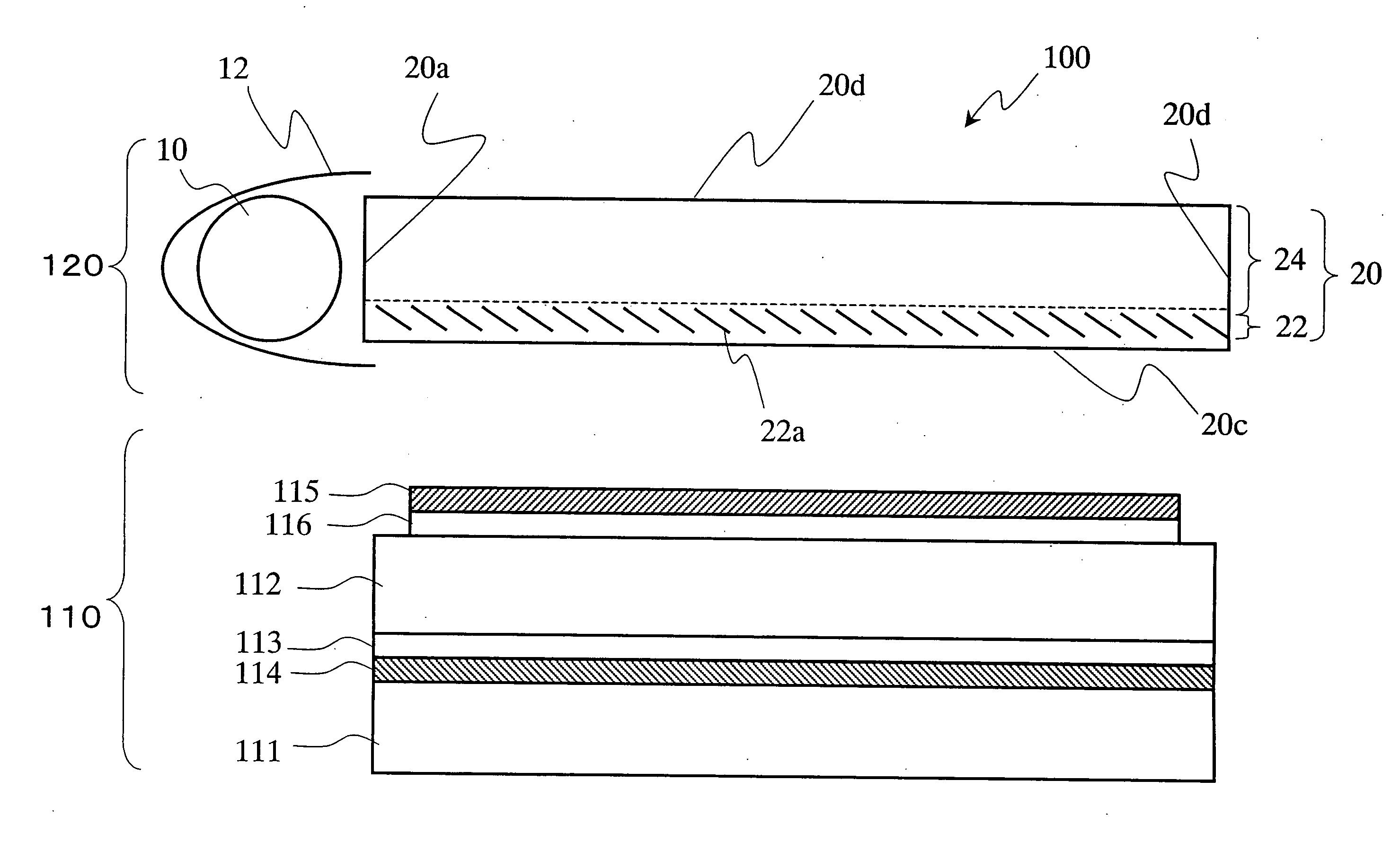
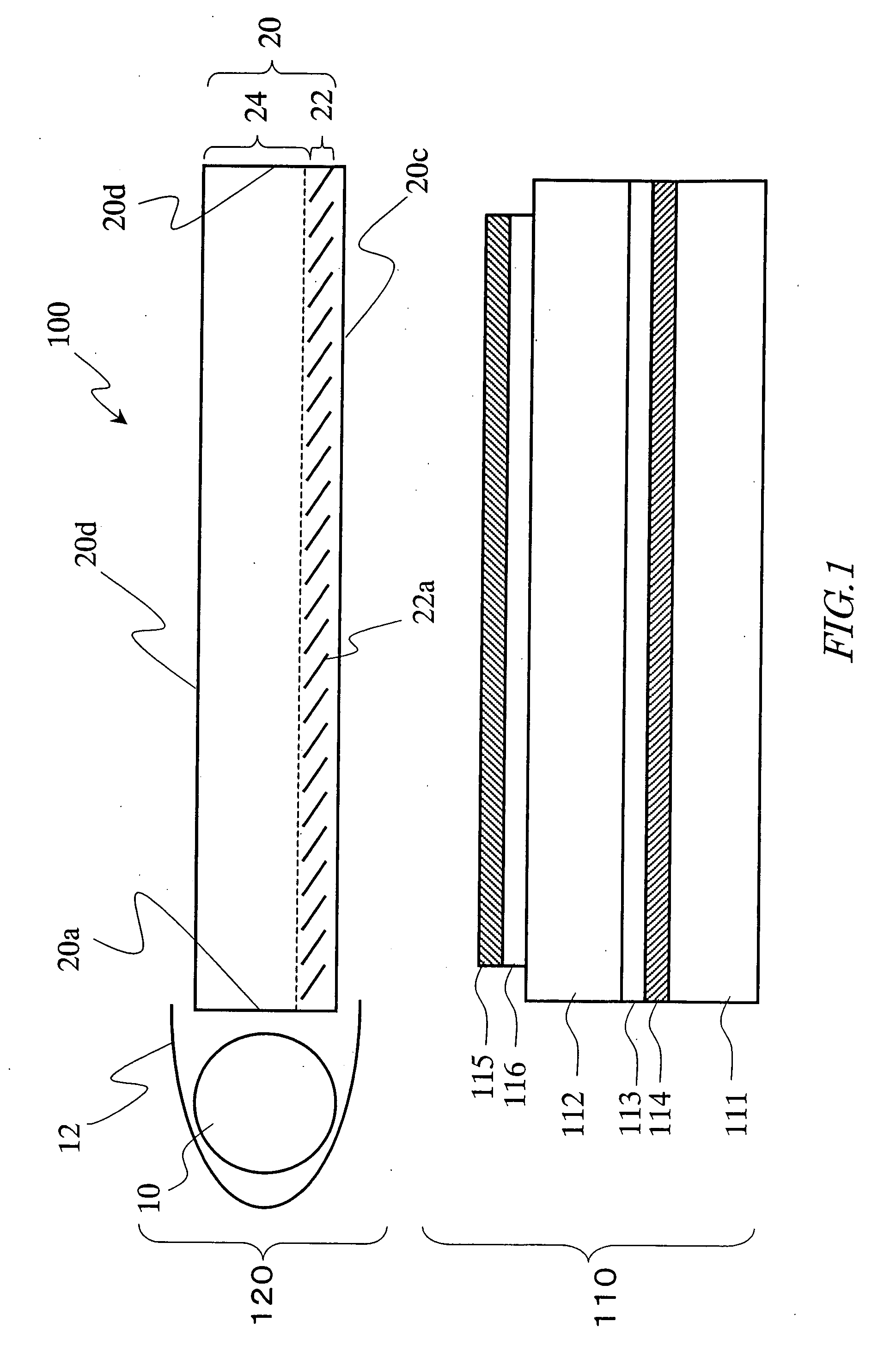
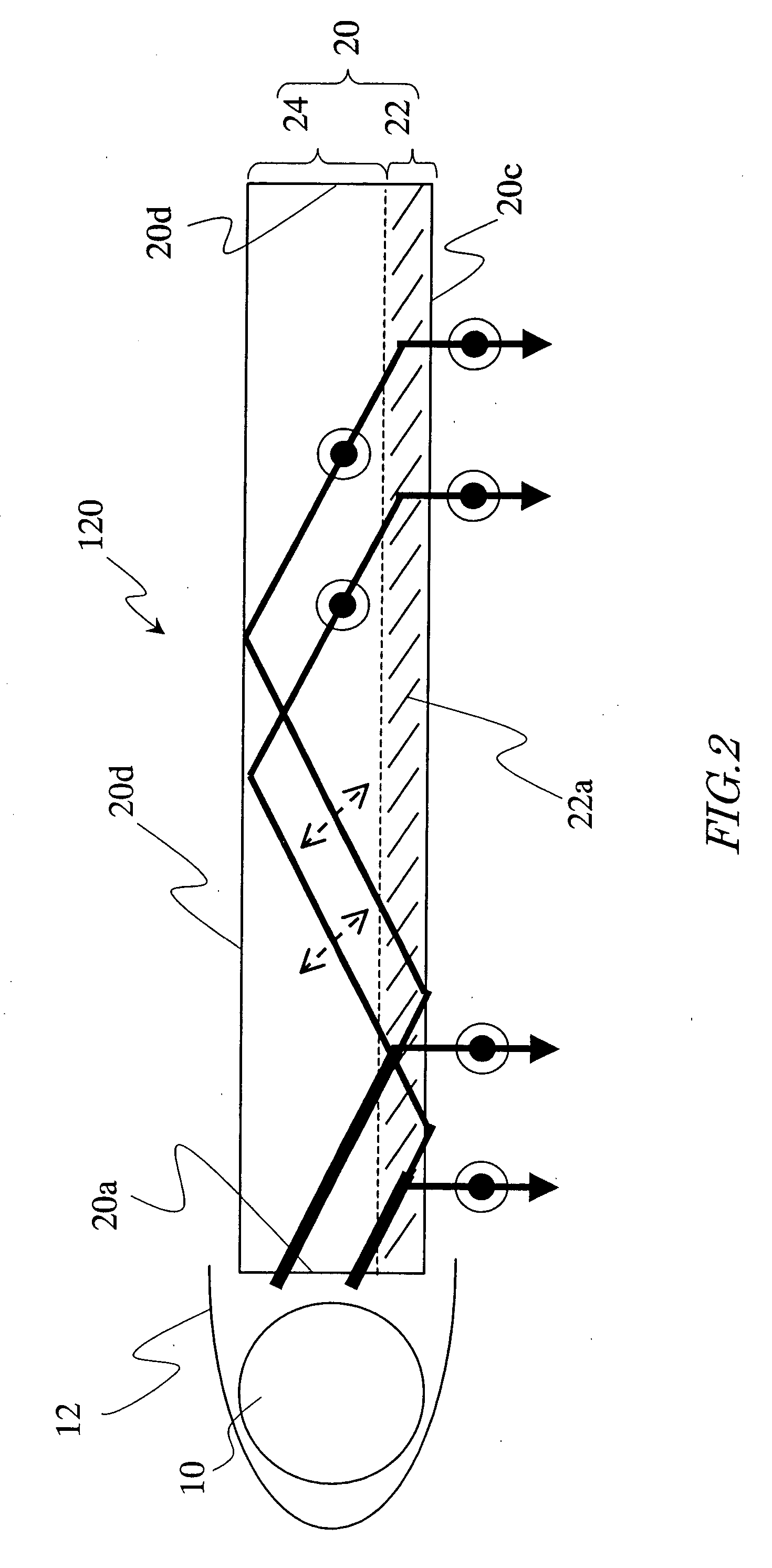
Lighting device and image display unit and light guide provided with it
PatentInactiveUS20060056196A1
Innovation
- A lightguide element with a polarization selection layer and a polarization conversion layer is used, where the polarization selection layer reflects light of a specific polarization direction towards the outgoing surface, and the polarization conversion layer converts different polarization directions into the specific polarization direction, enhancing light utilization efficiency and display quality.

Materials Science Advancements for Polarization Conversion Layers
Recent advancements in materials science have significantly propelled the development of polarization conversion layers (PCLs) for enhanced detection sensitivity. The evolution of these materials has been marked by a transition from traditional metallic structures to more sophisticated metamaterials and 2D materials with unique optical properties. Researchers have successfully engineered materials with precise control over their electromagnetic responses, enabling efficient manipulation of light polarization states.
Nanomaterials have emerged as particularly promising candidates for PCLs due to their tunable optical properties and high surface-to-volume ratios. Plasmonic nanostructures, including gold and silver nanoparticles with specific geometries, have demonstrated exceptional ability to convert between linear, circular, and elliptical polarization states with minimal energy loss. These materials exhibit strong localized surface plasmon resonances that can be tailored through size, shape, and arrangement modifications.
Liquid crystals represent another significant advancement, offering dynamic tunability through external stimuli such as electric fields or temperature changes. Their self-assembling nature provides a cost-effective approach to creating reconfigurable polarization conversion systems that can adapt to varying detection requirements in real-time, addressing a major limitation of static conversion layers.
Metasurfaces composed of subwavelength resonators have revolutionized polarization management by enabling unprecedented control over phase, amplitude, and polarization simultaneously. These ultrathin structures can achieve polarization conversion efficiencies exceeding 90% across broad spectral ranges, significantly outperforming conventional wave plates and polarizers that typically operate in narrow bandwidths.
Hybrid organic-inorganic materials have also gained attention for their complementary properties. These composites combine the processability and flexibility of organic materials with the stability and optical performance of inorganic components. Perovskite-based materials, in particular, have shown remarkable polarization conversion capabilities while maintaining compatibility with existing semiconductor fabrication processes.
Recent breakthroughs in 2D materials like graphene and transition metal dichalcogenides (TMDs) have opened new avenues for polarization control. Their atomically thin nature and unique electronic structures enable strong light-matter interactions and polarization-dependent optical responses that can be electrically tuned. When integrated with traditional optical components, these materials can enhance detection sensitivity by orders of magnitude through selective polarization filtering and conversion.
The development of self-healing and environmentally responsive materials represents the cutting edge of PCL research, potentially enabling detection systems that can maintain optimal performance despite environmental challenges or physical damage, thus extending operational lifetimes and reliability in field applications.
Nanomaterials have emerged as particularly promising candidates for PCLs due to their tunable optical properties and high surface-to-volume ratios. Plasmonic nanostructures, including gold and silver nanoparticles with specific geometries, have demonstrated exceptional ability to convert between linear, circular, and elliptical polarization states with minimal energy loss. These materials exhibit strong localized surface plasmon resonances that can be tailored through size, shape, and arrangement modifications.
Liquid crystals represent another significant advancement, offering dynamic tunability through external stimuli such as electric fields or temperature changes. Their self-assembling nature provides a cost-effective approach to creating reconfigurable polarization conversion systems that can adapt to varying detection requirements in real-time, addressing a major limitation of static conversion layers.
Metasurfaces composed of subwavelength resonators have revolutionized polarization management by enabling unprecedented control over phase, amplitude, and polarization simultaneously. These ultrathin structures can achieve polarization conversion efficiencies exceeding 90% across broad spectral ranges, significantly outperforming conventional wave plates and polarizers that typically operate in narrow bandwidths.
Hybrid organic-inorganic materials have also gained attention for their complementary properties. These composites combine the processability and flexibility of organic materials with the stability and optical performance of inorganic components. Perovskite-based materials, in particular, have shown remarkable polarization conversion capabilities while maintaining compatibility with existing semiconductor fabrication processes.
Recent breakthroughs in 2D materials like graphene and transition metal dichalcogenides (TMDs) have opened new avenues for polarization control. Their atomically thin nature and unique electronic structures enable strong light-matter interactions and polarization-dependent optical responses that can be electrically tuned. When integrated with traditional optical components, these materials can enhance detection sensitivity by orders of magnitude through selective polarization filtering and conversion.
The development of self-healing and environmentally responsive materials represents the cutting edge of PCL research, potentially enabling detection systems that can maintain optimal performance despite environmental challenges or physical damage, thus extending operational lifetimes and reliability in field applications.
Integration Strategies with Existing Detection Systems
The integration of Polarization Conversion Layers (PCLs) into existing detection systems represents a critical engineering challenge that requires careful consideration of both optical and electronic interfaces. Current detection platforms, whether based on CMOS, CCD, or specialized photodetector arrays, typically operate without polarization sensitivity optimization. Implementing PCLs requires strategic approaches that minimize disruption to established manufacturing processes while maximizing performance gains.
One promising integration pathway involves the direct deposition of PCL materials onto existing sensor surfaces. This approach utilizes established thin-film deposition techniques such as atomic layer deposition (ALD) or physical vapor deposition (PVD), which can be incorporated into current manufacturing lines with relatively minor modifications. The key advantage lies in maintaining the existing sensor architecture while enhancing its polarization sensitivity capabilities.
Alternatively, modular integration offers flexibility for retrofitting current detection systems. This strategy employs PCLs as separate optical components that can be positioned in the optical path before the detector. Such modularity allows for system upgrades without redesigning the core sensing elements, though it may introduce additional complexity in terms of optical alignment and packaging requirements.
For specialized applications requiring maximum sensitivity, full system redesign incorporating PCLs at the foundational level may be warranted. This approach enables optimization of the entire optical and electronic signal chain to leverage polarization information, potentially yielding performance improvements of 30-45% in challenging detection scenarios compared to conventional retrofitting approaches.
Signal processing integration represents another crucial dimension. Existing detection systems must be equipped with enhanced algorithms capable of interpreting the additional polarization information provided by PCLs. This necessitates the development of specialized firmware and software solutions that can extract meaningful data from polarization-enhanced signals, particularly in noise-limited environments.
Calibration protocols present significant challenges when integrating PCLs with existing systems. Environmental factors such as temperature fluctuations and mechanical stress can alter polarization conversion characteristics, requiring robust calibration methodologies to maintain detection accuracy across varying operational conditions. Automated self-calibration mechanisms have shown promise in maintaining system performance over extended deployment periods.
Cost-effectiveness remains a primary consideration for widespread adoption. Integration strategies must balance performance enhancements against implementation expenses, with modular approaches typically offering the most favorable short-term cost-benefit ratio for existing systems, while integrated deposition methods may provide better long-term value for new system designs.
One promising integration pathway involves the direct deposition of PCL materials onto existing sensor surfaces. This approach utilizes established thin-film deposition techniques such as atomic layer deposition (ALD) or physical vapor deposition (PVD), which can be incorporated into current manufacturing lines with relatively minor modifications. The key advantage lies in maintaining the existing sensor architecture while enhancing its polarization sensitivity capabilities.
Alternatively, modular integration offers flexibility for retrofitting current detection systems. This strategy employs PCLs as separate optical components that can be positioned in the optical path before the detector. Such modularity allows for system upgrades without redesigning the core sensing elements, though it may introduce additional complexity in terms of optical alignment and packaging requirements.
For specialized applications requiring maximum sensitivity, full system redesign incorporating PCLs at the foundational level may be warranted. This approach enables optimization of the entire optical and electronic signal chain to leverage polarization information, potentially yielding performance improvements of 30-45% in challenging detection scenarios compared to conventional retrofitting approaches.
Signal processing integration represents another crucial dimension. Existing detection systems must be equipped with enhanced algorithms capable of interpreting the additional polarization information provided by PCLs. This necessitates the development of specialized firmware and software solutions that can extract meaningful data from polarization-enhanced signals, particularly in noise-limited environments.
Calibration protocols present significant challenges when integrating PCLs with existing systems. Environmental factors such as temperature fluctuations and mechanical stress can alter polarization conversion characteristics, requiring robust calibration methodologies to maintain detection accuracy across varying operational conditions. Automated self-calibration mechanisms have shown promise in maintaining system performance over extended deployment periods.
Cost-effectiveness remains a primary consideration for widespread adoption. Integration strategies must balance performance enhancements against implementation expenses, with modular approaches typically offering the most favorable short-term cost-benefit ratio for existing systems, while integrated deposition methods may provide better long-term value for new system designs.
Unlock deeper insights with PatSnap Eureka Quick Research — get a full tech report to explore trends and direct your research. Try now!
Generate Your Research Report Instantly with AI Agent
Supercharge your innovation with PatSnap Eureka AI Agent Platform!