Redefining Material Possibilities with Cellulose Acetate
Cellulose Acetate Evolution
Cellulose acetate has undergone a remarkable evolution since its inception in the late 19th century. Initially developed as a photographic film base, this versatile material has continuously expanded its applications across various industries. The journey of cellulose acetate began with its synthesis by Paul Schützenberger in 1865, but it wasn't until the early 1900s that it gained commercial significance.
The evolution of cellulose acetate can be traced through several key milestones. In the 1920s, it emerged as a revolutionary material for textile fibers, offering a more affordable and versatile alternative to silk. This breakthrough led to the widespread adoption of cellulose acetate in the fashion industry, particularly for lingerie and other garments requiring a silky texture.
The 1930s and 1940s saw cellulose acetate's expansion into the plastics industry. Its moldability and optical clarity made it an ideal material for eyeglass frames, toys, and various consumer goods. During this period, significant advancements were made in the production processes, improving the material's quality and consistency.
In the following decades, cellulose acetate continued to evolve, with researchers and manufacturers focusing on enhancing its properties. The 1960s and 1970s witnessed improvements in its durability and heat resistance, broadening its applications in automotive and industrial sectors. Concurrently, environmental concerns began to shape the material's development, leading to more sustainable production methods.
The late 20th and early 21st centuries marked a new era in cellulose acetate's evolution. With growing awareness of environmental issues, there has been a renewed interest in this bio-based material. Recent advancements have focused on improving its biodegradability and developing more eco-friendly production processes. This shift has positioned cellulose acetate as a potential solution to plastic pollution, particularly in single-use applications.
Today, cellulose acetate continues to evolve, with ongoing research exploring novel applications and enhanced properties. From advanced filtration membranes to innovative packaging solutions, the material is finding new roles in addressing contemporary challenges. The evolution of cellulose acetate exemplifies how a material can adapt and transform over time, continually redefining its possibilities and relevance in an ever-changing technological landscape.
Market Demand Analysis
The market demand for cellulose acetate has been steadily growing, driven by its versatile applications across various industries. This biodegradable and renewable material has gained significant traction in recent years due to increasing environmental concerns and the push for sustainable alternatives to traditional plastics.
In the packaging industry, cellulose acetate films are experiencing a surge in demand. As consumers become more environmentally conscious, there is a growing preference for eco-friendly packaging solutions. Cellulose acetate's biodegradability and compostability make it an attractive option for food packaging, disposable cutlery, and other single-use items. The food and beverage sector, in particular, has shown a strong interest in adopting cellulose acetate-based packaging to reduce their environmental footprint.
The textile industry has also embraced cellulose acetate, particularly in the production of high-quality fabrics and fibers. Its ability to mimic the properties of silk while offering better durability and lower cost has made it popular in fashion and apparel manufacturing. The demand for cellulose acetate fibers is expected to grow as more brands commit to sustainable and eco-friendly materials in their product lines.
In the personal care and cosmetics sector, cellulose acetate is gaining ground as a replacement for microbeads and other plastic-based ingredients. Its biodegradability and skin-friendly properties make it an ideal choice for exfoliants, cosmetic applicators, and packaging materials. The increasing consumer preference for natural and sustainable beauty products is driving the adoption of cellulose acetate in this industry.
The automotive industry is exploring cellulose acetate as a potential material for interior components and lightweight structural elements. Its high strength-to-weight ratio and moldability make it suitable for various automotive applications, potentially reducing vehicle weight and improving fuel efficiency.
The electronics industry is also showing interest in cellulose acetate for its potential in flexible electronics and biodegradable electronic components. As the demand for sustainable electronics grows, cellulose acetate could play a crucial role in developing eco-friendly devices and packaging solutions.
The global market for cellulose acetate is projected to expand significantly in the coming years, with Asia-Pacific region expected to be the fastest-growing market. This growth is attributed to the rapid industrialization, increasing population, and rising environmental awareness in countries like China and India. North America and Europe are also expected to maintain strong demand, driven by stringent environmental regulations and consumer preferences for sustainable products.
Technical Challenges
Cellulose acetate, despite its long history and widespread use, faces several technical challenges that hinder its full potential in redefining material possibilities. One of the primary obstacles is its limited thermal stability. When exposed to high temperatures, cellulose acetate tends to degrade, which restricts its applications in environments requiring heat resistance. This thermal sensitivity also complicates processing techniques, as manufacturers must carefully control temperature during production to avoid material degradation.
Another significant challenge lies in the moisture sensitivity of cellulose acetate. The material's tendency to absorb water from the environment can lead to dimensional instability and changes in mechanical properties. This hygroscopic nature limits its use in applications where consistent performance under varying humidity conditions is crucial. Researchers and engineers are actively seeking ways to improve the material's moisture resistance without compromising its other desirable properties.
The biodegradability of cellulose acetate, while often considered an advantage from an environmental perspective, presents challenges in certain applications requiring long-term durability. Balancing the material's biodegradable nature with the need for product longevity remains a complex issue. Additionally, the rate and extent of biodegradation can vary significantly depending on environmental conditions, making it difficult to predict and control the material's lifecycle in different settings.
Mechanical properties of cellulose acetate, particularly its brittleness and low impact resistance, pose limitations in high-stress applications. Improving the material's toughness and flexibility without sacrificing its other beneficial characteristics is an ongoing area of research. Scientists are exploring various additives and processing techniques to enhance these mechanical properties, but finding the right balance remains challenging.
The production process of cellulose acetate also presents technical hurdles. The use of acetic anhydride and other chemicals in the acetylation process raises environmental and safety concerns. Developing greener, more sustainable production methods that maintain or improve the material's quality is a key focus for researchers and manufacturers alike. Additionally, optimizing the degree of substitution during acetylation to achieve desired properties consistently across batches is a complex task that requires precise control and advanced processing techniques.
Lastly, the recyclability of cellulose acetate products poses a significant challenge. While the material is theoretically recyclable, the practical implementation of recycling processes on a large scale is complicated by contamination issues and the need for specialized recycling facilities. Improving the ease of recycling and developing more efficient recycling technologies are crucial steps in enhancing the material's sustainability profile and circular economy potential.
Current Applications
01 Cellulose acetate fibers and textiles
Cellulose acetate can be used to produce fibers and textiles with various properties. These materials can be modified to enhance characteristics such as strength, durability, and moisture absorption. Applications include clothing, upholstery, and industrial textiles.- Cellulose acetate fibers and films: Cellulose acetate can be processed into fibers and films for various applications. These materials offer unique properties such as biodegradability, transparency, and moldability. They are used in textiles, packaging, and optical films, providing environmentally friendly alternatives to synthetic polymers.
- Cellulose acetate composites and blends: Cellulose acetate can be combined with other materials to create composites and blends with enhanced properties. These combinations can improve strength, flexibility, or specific functionalities. Applications include reinforced plastics, biocomposites, and specialty materials for various industries.
- Cellulose acetate in membrane technology: Cellulose acetate is widely used in membrane technology for filtration and separation processes. These membranes can be tailored for specific applications such as water purification, gas separation, and medical dialysis. The material's properties allow for efficient and selective filtration.
- Cellulose acetate in pharmaceutical and medical applications: Cellulose acetate has various applications in the pharmaceutical and medical fields. It can be used for controlled drug release systems, as a coating material for tablets, and in the production of medical devices. Its biocompatibility and versatility make it suitable for these sensitive applications.
- Cellulose acetate in sustainable packaging: Cellulose acetate is being explored as a sustainable alternative for packaging materials. Its biodegradability and renewable source make it attractive for eco-friendly packaging solutions. Research focuses on improving barrier properties and processability for food packaging and other consumer goods applications.
02 Cellulose acetate films and membranes
Cellulose acetate is utilized in the production of films and membranes for various applications. These materials can be engineered for specific properties such as permeability, selectivity, and mechanical strength. Uses include packaging, separation processes, and medical applications.Expand Specific Solutions03 Cellulose acetate in pharmaceutical and medical applications
Cellulose acetate finds use in pharmaceutical and medical fields. It can be employed in drug delivery systems, controlled release formulations, and as a material for medical devices. The biocompatibility and versatility of cellulose acetate make it suitable for various healthcare applications.Expand Specific Solutions04 Cellulose acetate in filtration and separation technologies
Cellulose acetate is widely used in filtration and separation technologies. It can be processed into membranes with specific pore sizes and structures, making it suitable for applications such as water purification, gas separation, and industrial filtration processes.Expand Specific Solutions05 Cellulose acetate in composite materials
Cellulose acetate can be incorporated into composite materials to enhance their properties. These composites may exhibit improved mechanical strength, thermal stability, or biodegradability. Applications include automotive parts, construction materials, and consumer goods.Expand Specific Solutions
Industry Leaders
The market for cellulose acetate is in a mature stage, with established players like Daicel Corp., Eastman Chemical Co., and BASF Corp. dominating the landscape. The global market size is substantial, driven by diverse applications in textiles, packaging, and consumer goods. Technologically, cellulose acetate is well-developed, but innovation continues, particularly in sustainability and performance enhancement. Companies like Cerdia International GmbH and Asahi Kasei Corp. are at the forefront of research, exploring new applications and eco-friendly production methods. Academic institutions such as Cornell University and Hokkaido University contribute to advancing the technology, while collaborations between industry and academia, like those involving the Centre National de la Recherche Scientifique, are pushing the boundaries of cellulose acetate's potential.
Daicel Corp.
Eastman Chemical Co.
Key Patents and Research
- A composite material using cellulose acetate as a binder with a degree of substitution between 1.2 and 2.7, combined with natural cellulose fibers, processed without external plasticizers, achieving a Vicat temperature of at least 160°C and improved mechanical properties.
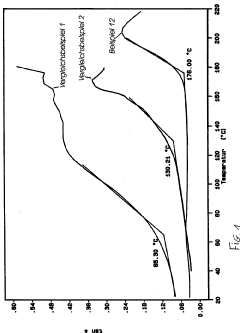
- A melt-processable cellulose acetate composition comprising cellulose acetate, fatty acid, and an optional processing aid, which allows for the production of biodegradable and compostable articles with improved processability and performance, utilizing a composition that includes cellulose acetate in a range of 50-97% by weight, fatty acid up to 5% by weight, and a processing aid, enabling the formation of melt-formed articles through conventional melt processing techniques.


Environmental Impact
Cellulose acetate, a versatile bioplastic derived from natural cellulose, has garnered significant attention due to its potential to redefine material possibilities while offering environmental benefits. As industries seek sustainable alternatives to conventional plastics, the environmental impact of cellulose acetate becomes a crucial consideration in its adoption and development.
One of the primary environmental advantages of cellulose acetate lies in its biodegradability. Unlike traditional petroleum-based plastics that persist in the environment for centuries, cellulose acetate can decompose within months to years under proper conditions. This characteristic significantly reduces the long-term environmental burden associated with plastic waste accumulation in landfills and ecosystems.
The production of cellulose acetate also presents a more environmentally friendly profile compared to many synthetic polymers. The raw material, cellulose, is abundant and renewable, typically sourced from sustainably managed forests or agricultural byproducts. This reduces dependence on finite fossil fuel resources and minimizes the carbon footprint associated with material extraction.
However, the environmental impact of cellulose acetate is not without complexities. The acetylation process, which converts cellulose into cellulose acetate, involves the use of acetic anhydride and other chemicals. While modern production methods have improved efficiency and reduced chemical usage, there is still room for optimization to further minimize environmental impacts during manufacturing.
Water consumption and wastewater management in cellulose acetate production also warrant attention. The process requires significant amounts of water, and the resulting effluents may contain residual chemicals. Implementing advanced water treatment and recycling systems is essential to mitigate these environmental concerns and ensure responsible resource management.
End-of-life considerations for cellulose acetate products present both opportunities and challenges. While biodegradable, the material's decomposition rate can vary depending on environmental conditions. Proper disposal and composting infrastructure are necessary to fully realize the biodegradability benefits. Additionally, the potential for recycling cellulose acetate offers a pathway to circular economy practices, further reducing its environmental footprint.
As the adoption of cellulose acetate expands across industries, lifecycle assessments become crucial in comprehensively evaluating its environmental impact. These assessments consider factors such as raw material sourcing, production processes, use phase, and end-of-life scenarios to provide a holistic view of the material's environmental performance compared to alternatives.
Regulatory Framework
The regulatory framework surrounding cellulose acetate plays a crucial role in shaping its development, production, and application across various industries. As this versatile material continues to redefine possibilities, it is subject to a complex web of regulations that ensure safety, environmental sustainability, and quality standards.
In the United States, the Food and Drug Administration (FDA) oversees the use of cellulose acetate in food contact materials and medical devices. The FDA has established specific guidelines for the composition and manufacturing processes of cellulose acetate products intended for these applications. Manufacturers must comply with Good Manufacturing Practices (GMP) and provide evidence of safety and efficacy through rigorous testing protocols.
The European Union has implemented the Registration, Evaluation, Authorization, and Restriction of Chemicals (REACH) regulation, which impacts the production and use of cellulose acetate. Under REACH, manufacturers and importers are required to register substances, assess their potential risks, and implement appropriate risk management measures. This regulatory framework aims to protect human health and the environment while promoting innovation in the chemical industry.
Environmental regulations also significantly influence the cellulose acetate industry. Many countries have implemented strict guidelines for waste management and emissions control in the production process. For instance, the Clean Air Act in the United States sets limits on air pollutants emitted during manufacturing, while the European Union's Industrial Emissions Directive establishes best available techniques for pollution prevention and control.
As sustainability becomes increasingly important, regulations promoting the circular economy are emerging. These regulations encourage the development of biodegradable and recyclable cellulose acetate products. For example, the EU's Single-Use Plastics Directive aims to reduce the environmental impact of certain plastic products, including those made from cellulose acetate, by promoting sustainable alternatives and improving waste management practices.
International standards organizations, such as the International Organization for Standardization (ISO), have developed specific standards for cellulose acetate materials. These standards define quality requirements, testing methods, and specifications for various applications, ensuring consistency and reliability across the global market.
As the potential of cellulose acetate continues to expand, regulatory bodies are adapting to keep pace with technological advancements. This dynamic regulatory landscape presents both challenges and opportunities for innovation in the field, driving the development of safer, more sustainable, and higher-performing cellulose acetate materials.