Role of Glycerol in Bio-Based Adhesive Formulations
JUL 23, 20259 MIN READ
Generate Your Research Report Instantly with AI Agent
Patsnap Eureka helps you evaluate technical feasibility & market potential.
Glycerol in Adhesives: Background and Objectives
Glycerol, a byproduct of biodiesel production, has emerged as a promising component in bio-based adhesive formulations. The increasing focus on sustainable and environmentally friendly materials has driven research into alternative adhesive solutions that can replace petroleum-based products. Glycerol's unique properties, including its hygroscopic nature, low toxicity, and biodegradability, make it an attractive candidate for incorporation into adhesive formulations.
The development of glycerol-based adhesives aligns with the global push towards a circular economy and the reduction of carbon footprints across industries. As the biodiesel industry continues to grow, the availability of glycerol as a raw material has increased significantly, creating opportunities for value-added applications. This abundance has sparked interest in exploring glycerol's potential in various sectors, with adhesives being a particularly promising area.
Historically, adhesives have been predominantly derived from fossil fuels, raising concerns about their environmental impact and long-term sustainability. The shift towards bio-based alternatives represents a paradigm change in the adhesives industry, driven by both regulatory pressures and consumer demand for greener products. Glycerol's role in this transition is multifaceted, serving not only as a renewable raw material but also as a potential enhancer of adhesive properties.
The primary objective of incorporating glycerol into adhesive formulations is to develop high-performance, eco-friendly bonding agents that can compete with or surpass traditional petroleum-based adhesives in terms of strength, durability, and versatility. Researchers aim to leverage glycerol's unique chemical structure and reactivity to create adhesives suitable for a wide range of applications, from packaging and construction to automotive and aerospace industries.
Another key goal is to optimize the utilization of glycerol in adhesive formulations to improve overall sustainability metrics. This includes developing processes that minimize waste, reduce energy consumption, and lower the carbon footprint of adhesive production. Additionally, there is a focus on enhancing the biodegradability and recyclability of glycerol-based adhesives, addressing end-of-life considerations that are becoming increasingly important in product design and material selection.
The technical evolution of glycerol in adhesives is expected to follow a trajectory of continuous improvement, with efforts directed towards overcoming challenges such as moisture sensitivity and long-term stability. As research progresses, the aim is to fine-tune formulations to meet specific performance requirements across diverse environmental conditions and substrates, ultimately expanding the market potential for bio-based adhesives.
The development of glycerol-based adhesives aligns with the global push towards a circular economy and the reduction of carbon footprints across industries. As the biodiesel industry continues to grow, the availability of glycerol as a raw material has increased significantly, creating opportunities for value-added applications. This abundance has sparked interest in exploring glycerol's potential in various sectors, with adhesives being a particularly promising area.
Historically, adhesives have been predominantly derived from fossil fuels, raising concerns about their environmental impact and long-term sustainability. The shift towards bio-based alternatives represents a paradigm change in the adhesives industry, driven by both regulatory pressures and consumer demand for greener products. Glycerol's role in this transition is multifaceted, serving not only as a renewable raw material but also as a potential enhancer of adhesive properties.
The primary objective of incorporating glycerol into adhesive formulations is to develop high-performance, eco-friendly bonding agents that can compete with or surpass traditional petroleum-based adhesives in terms of strength, durability, and versatility. Researchers aim to leverage glycerol's unique chemical structure and reactivity to create adhesives suitable for a wide range of applications, from packaging and construction to automotive and aerospace industries.
Another key goal is to optimize the utilization of glycerol in adhesive formulations to improve overall sustainability metrics. This includes developing processes that minimize waste, reduce energy consumption, and lower the carbon footprint of adhesive production. Additionally, there is a focus on enhancing the biodegradability and recyclability of glycerol-based adhesives, addressing end-of-life considerations that are becoming increasingly important in product design and material selection.
The technical evolution of glycerol in adhesives is expected to follow a trajectory of continuous improvement, with efforts directed towards overcoming challenges such as moisture sensitivity and long-term stability. As research progresses, the aim is to fine-tune formulations to meet specific performance requirements across diverse environmental conditions and substrates, ultimately expanding the market potential for bio-based adhesives.
Market Analysis for Bio-Based Adhesives
The bio-based adhesives market has been experiencing significant growth in recent years, driven by increasing environmental concerns and stringent regulations on volatile organic compound (VOC) emissions. This market segment is expected to continue its upward trajectory, with a compound annual growth rate (CAGR) projected to exceed 5% over the next five years. The global bio-based adhesives market size was valued at over $3 billion in 2020 and is anticipated to reach $5 billion by 2026.
The demand for bio-based adhesives is primarily fueled by the construction, packaging, and automotive industries. In the construction sector, there is a growing preference for eco-friendly building materials, including adhesives, to meet green building standards. The packaging industry is witnessing a shift towards sustainable packaging solutions, driving the adoption of bio-based adhesives. Similarly, the automotive sector is increasingly incorporating bio-based materials to reduce the carbon footprint of vehicles.
Geographically, North America and Europe are the leading markets for bio-based adhesives, owing to stringent environmental regulations and high consumer awareness. However, the Asia-Pacific region is expected to emerge as the fastest-growing market due to rapid industrialization, urbanization, and increasing environmental consciousness in countries like China and India.
The role of glycerol in bio-based adhesive formulations is gaining significant attention in this evolving market. Glycerol, a byproduct of biodiesel production, offers several advantages as a key component in bio-based adhesives. It acts as a plasticizer, improving the flexibility and durability of adhesives. Additionally, glycerol enhances the moisture resistance of bio-based adhesives, addressing one of the major challenges in their widespread adoption.
Market trends indicate a growing interest in developing high-performance bio-based adhesives that can compete with traditional petroleum-based products in terms of strength, durability, and versatility. Glycerol-based formulations are at the forefront of this innovation, as they offer improved adhesion properties and environmental benefits. The increasing availability of glycerol as a renewable resource further supports its integration into bio-based adhesive formulations.
Key market players are investing heavily in research and development to optimize glycerol-based adhesive formulations. These efforts are focused on enhancing bond strength, reducing curing time, and improving resistance to temperature and humidity fluctuations. As a result, the market is witnessing the introduction of novel glycerol-based adhesive products tailored for specific applications across various industries.
The demand for bio-based adhesives is primarily fueled by the construction, packaging, and automotive industries. In the construction sector, there is a growing preference for eco-friendly building materials, including adhesives, to meet green building standards. The packaging industry is witnessing a shift towards sustainable packaging solutions, driving the adoption of bio-based adhesives. Similarly, the automotive sector is increasingly incorporating bio-based materials to reduce the carbon footprint of vehicles.
Geographically, North America and Europe are the leading markets for bio-based adhesives, owing to stringent environmental regulations and high consumer awareness. However, the Asia-Pacific region is expected to emerge as the fastest-growing market due to rapid industrialization, urbanization, and increasing environmental consciousness in countries like China and India.
The role of glycerol in bio-based adhesive formulations is gaining significant attention in this evolving market. Glycerol, a byproduct of biodiesel production, offers several advantages as a key component in bio-based adhesives. It acts as a plasticizer, improving the flexibility and durability of adhesives. Additionally, glycerol enhances the moisture resistance of bio-based adhesives, addressing one of the major challenges in their widespread adoption.
Market trends indicate a growing interest in developing high-performance bio-based adhesives that can compete with traditional petroleum-based products in terms of strength, durability, and versatility. Glycerol-based formulations are at the forefront of this innovation, as they offer improved adhesion properties and environmental benefits. The increasing availability of glycerol as a renewable resource further supports its integration into bio-based adhesive formulations.
Key market players are investing heavily in research and development to optimize glycerol-based adhesive formulations. These efforts are focused on enhancing bond strength, reducing curing time, and improving resistance to temperature and humidity fluctuations. As a result, the market is witnessing the introduction of novel glycerol-based adhesive products tailored for specific applications across various industries.
Current Challenges in Glycerol-Based Adhesive Technology
Despite the promising potential of glycerol in bio-based adhesive formulations, several significant challenges hinder its widespread adoption and optimal performance. One of the primary obstacles is the inherent hygroscopic nature of glycerol, which can lead to moisture absorption in the adhesive matrix. This property often results in reduced bond strength and durability, particularly in high-humidity environments or applications exposed to water.
Another critical challenge lies in achieving the right balance between glycerol content and adhesive performance. While glycerol can enhance flexibility and reduce brittleness, excessive amounts may compromise the overall mechanical strength of the adhesive. This delicate equilibrium necessitates precise formulation control, which can be difficult to maintain consistently in large-scale production settings.
The compatibility of glycerol with other components in bio-based adhesive formulations presents another hurdle. Glycerol's polar nature may lead to phase separation or incompatibility with certain non-polar components, potentially causing instability in the adhesive system over time. This issue is particularly pronounced when attempting to incorporate glycerol into formulations designed for hydrophobic substrates.
Furthermore, the plasticizing effect of glycerol, while beneficial in some applications, can be detrimental in others. Excessive plasticization may result in reduced glass transition temperature and decreased cohesive strength, limiting the adhesive's applicability in high-temperature or high-stress environments.
The chemical stability of glycerol-based adhesives is another area of concern. Glycerol's hydroxyl groups are susceptible to oxidation and other chemical reactions, potentially leading to changes in adhesive properties over time. This instability can affect the long-term performance and shelf life of the adhesive products.
From a processing standpoint, the high viscosity of glycerol can pose challenges in mixing and application. Achieving uniform dispersion of glycerol throughout the adhesive matrix and maintaining consistent rheological properties during application can be technically demanding.
Lastly, while glycerol is a byproduct of biodiesel production, ensuring a stable and cost-effective supply chain for high-purity glycerol suitable for adhesive applications remains a challenge. Fluctuations in glycerol availability and quality can impact the consistency and scalability of glycerol-based adhesive production.
Addressing these challenges requires a multifaceted approach, combining advanced formulation strategies, innovative processing techniques, and a deeper understanding of glycerol's behavior in complex adhesive systems. Overcoming these hurdles is crucial for realizing the full potential of glycerol in next-generation bio-based adhesive technologies.
Another critical challenge lies in achieving the right balance between glycerol content and adhesive performance. While glycerol can enhance flexibility and reduce brittleness, excessive amounts may compromise the overall mechanical strength of the adhesive. This delicate equilibrium necessitates precise formulation control, which can be difficult to maintain consistently in large-scale production settings.
The compatibility of glycerol with other components in bio-based adhesive formulations presents another hurdle. Glycerol's polar nature may lead to phase separation or incompatibility with certain non-polar components, potentially causing instability in the adhesive system over time. This issue is particularly pronounced when attempting to incorporate glycerol into formulations designed for hydrophobic substrates.
Furthermore, the plasticizing effect of glycerol, while beneficial in some applications, can be detrimental in others. Excessive plasticization may result in reduced glass transition temperature and decreased cohesive strength, limiting the adhesive's applicability in high-temperature or high-stress environments.
The chemical stability of glycerol-based adhesives is another area of concern. Glycerol's hydroxyl groups are susceptible to oxidation and other chemical reactions, potentially leading to changes in adhesive properties over time. This instability can affect the long-term performance and shelf life of the adhesive products.
From a processing standpoint, the high viscosity of glycerol can pose challenges in mixing and application. Achieving uniform dispersion of glycerol throughout the adhesive matrix and maintaining consistent rheological properties during application can be technically demanding.
Lastly, while glycerol is a byproduct of biodiesel production, ensuring a stable and cost-effective supply chain for high-purity glycerol suitable for adhesive applications remains a challenge. Fluctuations in glycerol availability and quality can impact the consistency and scalability of glycerol-based adhesive production.
Addressing these challenges requires a multifaceted approach, combining advanced formulation strategies, innovative processing techniques, and a deeper understanding of glycerol's behavior in complex adhesive systems. Overcoming these hurdles is crucial for realizing the full potential of glycerol in next-generation bio-based adhesive technologies.
Existing Glycerol-Based Adhesive Solutions
01 Production of glycerol from renewable resources
Methods for producing glycerol from renewable resources, such as biomass or plant-based materials, have been developed. These processes often involve fermentation or chemical conversion of organic compounds to yield glycerol as a valuable product or byproduct.- Production of glycerol from renewable resources: Methods for producing glycerol from renewable resources, such as biomass or plant-based materials, have been developed. These processes often involve fermentation or chemical conversion of organic compounds to yield glycerol as a valuable product or byproduct.
- Purification and refining of glycerol: Various techniques have been invented for purifying and refining crude glycerol to obtain high-quality glycerol suitable for industrial applications. These methods may include distillation, ion exchange, membrane filtration, or other separation processes to remove impurities and achieve desired purity levels.
- Use of glycerol in biodiesel production: Glycerol is a significant byproduct of biodiesel production. Innovations have been made to utilize this glycerol effectively, either by converting it into value-added products or incorporating it back into the biodiesel production process to improve efficiency and reduce waste.
- Glycerol as a platform chemical: Research has focused on using glycerol as a platform chemical for the synthesis of various valuable compounds. This includes the development of catalytic processes to convert glycerol into industrially important chemicals such as propylene glycol, acrolein, or other specialty chemicals.
- Applications of glycerol in pharmaceuticals and personal care: Glycerol finds extensive use in pharmaceutical and personal care products due to its moisturizing and stabilizing properties. Innovations in this area include formulations for improved drug delivery, skincare products, and oral care applications that leverage the unique properties of glycerol.
02 Purification and refining of glycerol
Various techniques have been invented for purifying and refining crude glycerol obtained from industrial processes. These methods aim to remove impurities and increase the purity of glycerol for use in different applications, including pharmaceuticals, cosmetics, and food industries.Expand Specific Solutions03 Use of glycerol in biodiesel production
Glycerol is a byproduct of biodiesel production, and research has focused on developing methods to utilize this glycerol efficiently. Some inventions involve converting glycerol into value-added products or using it as a feedstock for other chemical processes.Expand Specific Solutions04 Glycerol as a platform chemical
Innovations have been made in using glycerol as a platform chemical for the synthesis of various valuable compounds. These processes often involve catalytic conversions or biotransformations to produce chemicals with applications in multiple industries.Expand Specific Solutions05 Glycerol in pharmaceutical and cosmetic formulations
Glycerol has been incorporated into various pharmaceutical and cosmetic formulations due to its moisturizing and stabilizing properties. Inventions in this area focus on novel formulations and delivery systems that utilize glycerol to enhance product efficacy and stability.Expand Specific Solutions
Key Players in Bio-Based Adhesive Industry
The glycerol-based bio-adhesive market is in a growth phase, driven by increasing demand for sustainable and eco-friendly adhesive solutions. The market size is expanding, with projections indicating significant growth potential in various industries. Technologically, the field is advancing rapidly, with companies like Arkema France SA, DuPont de Nemours, Inc., and BASF Corp. leading research and development efforts. These industry giants are investing in innovative formulations to enhance the performance and versatility of glycerol-based adhesives. Academic institutions such as North Carolina State University and Zhejiang University are also contributing to technological advancements through collaborative research projects. The involvement of both established chemical companies and research institutions suggests a maturing technology landscape with ongoing opportunities for innovation and market expansion.
Arkema France SA
Technical Solution: Arkema has developed a bio-based adhesive formulation incorporating glycerol as a key component. Their approach utilizes glycerol as a renewable plasticizer and crosslinking agent in epoxy-based adhesives. The company has successfully created a formulation that combines glycerol with epoxidized vegetable oils and bio-based hardeners, resulting in a high-performance, environmentally friendly adhesive[1][3]. This formulation demonstrates improved flexibility and impact resistance compared to traditional petroleum-based adhesives, while maintaining strong bonding properties[5].
Strengths: Utilizes renewable resources, reduces environmental impact, improves adhesive flexibility. Weaknesses: May have higher production costs, potential limitations in extreme temperature applications.
DuPont de Nemours, Inc.
Technical Solution: DuPont has developed a bio-based adhesive formulation that utilizes glycerol as a key component in their water-based adhesive systems. Their approach involves the modification of glycerol through esterification or etherification processes to create bio-based polymers suitable for adhesive applications. DuPont's research has demonstrated that these glycerol-derived polymers can be effectively used as binders in water-based adhesives, offering improved sustainability and comparable performance to traditional synthetic binders[10][11]. The company has successfully applied this technology in packaging and construction adhesives, showing good adhesion properties and moisture resistance[12].
Strengths: Utilizes renewable resources, good performance in water-based systems, applicable in multiple industries. Weaknesses: May have limitations in solvent-based applications, potential for higher raw material costs.
Innovations in Glycerol Utilization for Adhesives
Method for producing amino acids using glycerol
PatentWO2008002053A1
Innovation
- Amino acid-producing microorganisms with inactivated galR and/or glpR genes are cultured in media containing glycerol, allowing simultaneous utilization of glycerol and other carbon sources, thereby increasing fermentation efficiency and amino acid production.
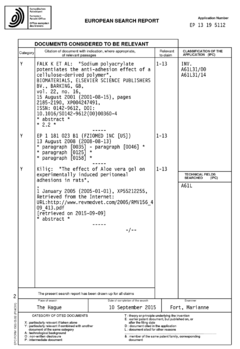
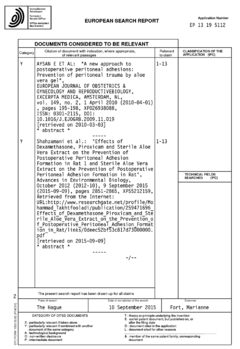
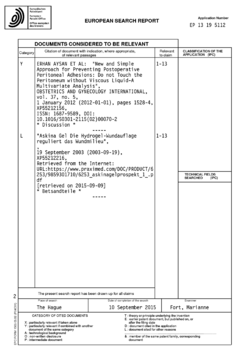
Composition for use in the prophylaxis of post-surgical adhesions
PatentInactiveEP2740500A3
Innovation
- A composition comprising a moisturizing component like glycerol, a mucoadhesive component like polyacrylic acid, and Aloe vera, combined with water, forms a hydrogel that effectively prevents post-surgical tissue adhesions by maintaining stability and immobility at the operation site, ensuring prolonged adhesion prevention and biocompatibility.
Environmental Impact of Glycerol-Based Adhesives
The environmental impact of glycerol-based adhesives is a crucial consideration in the development and application of bio-based adhesive formulations. Glycerol, a byproduct of biodiesel production, offers a sustainable alternative to petroleum-based adhesives, contributing to reduced carbon footprint and improved eco-friendliness in various industries.
One of the primary environmental benefits of glycerol-based adhesives is their biodegradability. Unlike traditional synthetic adhesives, which can persist in the environment for extended periods, glycerol-based adhesives break down more readily, reducing long-term ecological impact. This characteristic is particularly valuable in applications where adhesive residues may come into contact with soil or water systems.
The production of glycerol-based adhesives also presents a lower environmental burden compared to conventional adhesives. The use of glycerol, a renewable resource, reduces reliance on fossil fuels and minimizes the emission of greenhouse gases associated with petroleum-based adhesive production. Additionally, the utilization of glycerol as a raw material helps address the challenge of glycerol oversupply in the biodiesel industry, promoting a circular economy approach.
Water-based glycerol adhesives offer further environmental advantages by eliminating the need for volatile organic compounds (VOCs) commonly found in solvent-based adhesives. This reduction in VOC emissions contributes to improved air quality and reduced health risks for both workers and end-users. The low toxicity of glycerol-based adhesives also minimizes potential harm to aquatic ecosystems in case of accidental release.
In terms of energy consumption, the production of glycerol-based adhesives generally requires less energy compared to traditional synthetic adhesives. This lower energy demand translates to reduced carbon emissions throughout the manufacturing process. Furthermore, the potential for local sourcing of glycerol can decrease transportation-related emissions in the adhesive supply chain.
The end-of-life considerations for products using glycerol-based adhesives are also more favorable from an environmental perspective. The improved biodegradability of these adhesives facilitates easier recycling and disposal processes, reducing the overall waste footprint of adhesive-bonded products. This aspect is particularly relevant in industries such as packaging and construction, where large volumes of adhesives are used.
However, it is important to note that the environmental impact of glycerol-based adhesives can vary depending on the specific formulation and production methods. Factors such as the source of glycerol, additional components in the adhesive formulation, and the efficiency of the manufacturing process all play roles in determining the overall environmental profile. Ongoing research and development efforts are focused on optimizing these factors to further enhance the environmental benefits of glycerol-based adhesives.
One of the primary environmental benefits of glycerol-based adhesives is their biodegradability. Unlike traditional synthetic adhesives, which can persist in the environment for extended periods, glycerol-based adhesives break down more readily, reducing long-term ecological impact. This characteristic is particularly valuable in applications where adhesive residues may come into contact with soil or water systems.
The production of glycerol-based adhesives also presents a lower environmental burden compared to conventional adhesives. The use of glycerol, a renewable resource, reduces reliance on fossil fuels and minimizes the emission of greenhouse gases associated with petroleum-based adhesive production. Additionally, the utilization of glycerol as a raw material helps address the challenge of glycerol oversupply in the biodiesel industry, promoting a circular economy approach.
Water-based glycerol adhesives offer further environmental advantages by eliminating the need for volatile organic compounds (VOCs) commonly found in solvent-based adhesives. This reduction in VOC emissions contributes to improved air quality and reduced health risks for both workers and end-users. The low toxicity of glycerol-based adhesives also minimizes potential harm to aquatic ecosystems in case of accidental release.
In terms of energy consumption, the production of glycerol-based adhesives generally requires less energy compared to traditional synthetic adhesives. This lower energy demand translates to reduced carbon emissions throughout the manufacturing process. Furthermore, the potential for local sourcing of glycerol can decrease transportation-related emissions in the adhesive supply chain.
The end-of-life considerations for products using glycerol-based adhesives are also more favorable from an environmental perspective. The improved biodegradability of these adhesives facilitates easier recycling and disposal processes, reducing the overall waste footprint of adhesive-bonded products. This aspect is particularly relevant in industries such as packaging and construction, where large volumes of adhesives are used.
However, it is important to note that the environmental impact of glycerol-based adhesives can vary depending on the specific formulation and production methods. Factors such as the source of glycerol, additional components in the adhesive formulation, and the efficiency of the manufacturing process all play roles in determining the overall environmental profile. Ongoing research and development efforts are focused on optimizing these factors to further enhance the environmental benefits of glycerol-based adhesives.
Regulatory Framework for Bio-Based Adhesives
The regulatory framework for bio-based adhesives is evolving rapidly as governments and industries worldwide recognize the importance of sustainable and environmentally friendly products. In the context of glycerol's role in bio-based adhesive formulations, regulatory bodies are increasingly focusing on safety, environmental impact, and performance standards.
At the international level, organizations such as the International Organization for Standardization (ISO) have developed standards for bio-based products, including adhesives. ISO 16620 series provides guidelines for determining and communicating the bio-based content of products, which is crucial for adhesives containing glycerol derived from renewable sources.
In the European Union, the Registration, Evaluation, Authorization, and Restriction of Chemicals (REACH) regulation plays a significant role in governing the use of chemicals, including those in adhesive formulations. Glycerol, when used in bio-based adhesives, must comply with REACH requirements, ensuring its safe use and environmental compatibility.
The United States Environmental Protection Agency (EPA) has established the Safer Choice program, which includes criteria for adhesives and sealants. This voluntary program encourages the use of safer chemical ingredients, potentially favoring bio-based adhesives that incorporate glycerol as a renewable component.
Many countries have implemented eco-labeling schemes that can apply to bio-based adhesives. For instance, the EU Ecolabel and the Nordic Swan Ecolabel have specific criteria for adhesives, which may include considerations for the use of bio-based ingredients like glycerol.
In terms of performance standards, organizations such as ASTM International and the European Committee for Standardization (CEN) have developed test methods and specifications for adhesives. These standards are being adapted to address the unique properties of bio-based adhesives, including those formulated with glycerol.
The food packaging industry has particularly stringent regulations. The U.S. Food and Drug Administration (FDA) and the European Food Safety Authority (EFSA) have established guidelines for food contact materials, which apply to adhesives used in food packaging. Bio-based adhesives containing glycerol must meet these safety requirements to be used in food-related applications.
As the bio-based adhesive market grows, regulatory frameworks are likely to become more comprehensive and specific. Future regulations may focus on lifecycle assessments, carbon footprint reduction, and end-of-life considerations for adhesives. This evolving landscape will continue to shape the development and application of glycerol-based adhesive formulations, driving innovation towards more sustainable and regulatory-compliant products.
At the international level, organizations such as the International Organization for Standardization (ISO) have developed standards for bio-based products, including adhesives. ISO 16620 series provides guidelines for determining and communicating the bio-based content of products, which is crucial for adhesives containing glycerol derived from renewable sources.
In the European Union, the Registration, Evaluation, Authorization, and Restriction of Chemicals (REACH) regulation plays a significant role in governing the use of chemicals, including those in adhesive formulations. Glycerol, when used in bio-based adhesives, must comply with REACH requirements, ensuring its safe use and environmental compatibility.
The United States Environmental Protection Agency (EPA) has established the Safer Choice program, which includes criteria for adhesives and sealants. This voluntary program encourages the use of safer chemical ingredients, potentially favoring bio-based adhesives that incorporate glycerol as a renewable component.
Many countries have implemented eco-labeling schemes that can apply to bio-based adhesives. For instance, the EU Ecolabel and the Nordic Swan Ecolabel have specific criteria for adhesives, which may include considerations for the use of bio-based ingredients like glycerol.
In terms of performance standards, organizations such as ASTM International and the European Committee for Standardization (CEN) have developed test methods and specifications for adhesives. These standards are being adapted to address the unique properties of bio-based adhesives, including those formulated with glycerol.
The food packaging industry has particularly stringent regulations. The U.S. Food and Drug Administration (FDA) and the European Food Safety Authority (EFSA) have established guidelines for food contact materials, which apply to adhesives used in food packaging. Bio-based adhesives containing glycerol must meet these safety requirements to be used in food-related applications.
As the bio-based adhesive market grows, regulatory frameworks are likely to become more comprehensive and specific. Future regulations may focus on lifecycle assessments, carbon footprint reduction, and end-of-life considerations for adhesives. This evolving landscape will continue to shape the development and application of glycerol-based adhesive formulations, driving innovation towards more sustainable and regulatory-compliant products.
Unlock deeper insights with Patsnap Eureka Quick Research — get a full tech report to explore trends and direct your research. Try now!
Generate Your Research Report Instantly with AI Agent
Supercharge your innovation with Patsnap Eureka AI Agent Platform!