Role of Glycerol in Modifying Photovoltaic Material Properties
JUL 23, 20259 MIN READ
Generate Your Research Report Instantly with AI Agent
Patsnap Eureka helps you evaluate technical feasibility & market potential.
Glycerol in PV: Background and Objectives
Glycerol, a versatile organic compound, has emerged as a promising agent in modifying photovoltaic (PV) material properties. The exploration of glycerol's role in PV technology stems from the ongoing quest for more efficient and cost-effective solar energy solutions. This research aims to enhance the performance and durability of photovoltaic materials, ultimately contributing to the advancement of renewable energy technologies.
The photovoltaic industry has witnessed significant growth and technological evolution over the past few decades. As the demand for clean energy continues to rise, researchers and engineers are constantly seeking innovative approaches to improve solar cell efficiency and longevity. In this context, glycerol has garnered attention due to its unique chemical properties and potential to modify the characteristics of PV materials.
Glycerol, also known as glycerin, is a simple polyol compound with three hydroxyl groups. Its molecular structure allows for various interactions with photovoltaic materials, potentially altering their optical, electrical, and structural properties. The incorporation of glycerol into PV materials has shown promise in addressing some of the key challenges faced by the solar energy sector, such as improving light absorption, enhancing charge carrier mobility, and increasing overall cell stability.
The primary objective of investigating glycerol's role in modifying photovoltaic material properties is to develop more efficient and durable solar cells. Researchers aim to leverage glycerol's unique characteristics to optimize the performance of existing PV technologies and potentially pave the way for new, innovative solar cell designs. By understanding the mechanisms through which glycerol interacts with PV materials, scientists hope to unlock new possibilities for enhancing solar energy conversion efficiency.
Another crucial goal of this research is to explore the potential of glycerol as a sustainable and cost-effective additive in PV manufacturing processes. As a byproduct of biodiesel production, glycerol is abundantly available and relatively inexpensive. Incorporating this readily accessible compound into PV material production could lead to more economically viable solar technologies, making clean energy solutions more accessible to a broader range of consumers and markets.
Furthermore, the study of glycerol's role in PV materials aligns with the broader trend of exploring bio-based and environmentally friendly components in renewable energy technologies. This research direction not only aims to improve the performance of solar cells but also to reduce the environmental impact of PV manufacturing processes, contributing to the overall sustainability of the solar energy industry.
As we delve deeper into the potential of glycerol in photovoltaic applications, it is essential to consider the multifaceted nature of this research. The investigation encompasses various aspects, including material science, chemical engineering, and renewable energy technology. By examining the role of glycerol in modifying PV material properties, researchers hope to uncover new pathways for advancing solar energy efficiency and sustainability, ultimately contributing to the global transition towards cleaner and more renewable energy sources.
The photovoltaic industry has witnessed significant growth and technological evolution over the past few decades. As the demand for clean energy continues to rise, researchers and engineers are constantly seeking innovative approaches to improve solar cell efficiency and longevity. In this context, glycerol has garnered attention due to its unique chemical properties and potential to modify the characteristics of PV materials.
Glycerol, also known as glycerin, is a simple polyol compound with three hydroxyl groups. Its molecular structure allows for various interactions with photovoltaic materials, potentially altering their optical, electrical, and structural properties. The incorporation of glycerol into PV materials has shown promise in addressing some of the key challenges faced by the solar energy sector, such as improving light absorption, enhancing charge carrier mobility, and increasing overall cell stability.
The primary objective of investigating glycerol's role in modifying photovoltaic material properties is to develop more efficient and durable solar cells. Researchers aim to leverage glycerol's unique characteristics to optimize the performance of existing PV technologies and potentially pave the way for new, innovative solar cell designs. By understanding the mechanisms through which glycerol interacts with PV materials, scientists hope to unlock new possibilities for enhancing solar energy conversion efficiency.
Another crucial goal of this research is to explore the potential of glycerol as a sustainable and cost-effective additive in PV manufacturing processes. As a byproduct of biodiesel production, glycerol is abundantly available and relatively inexpensive. Incorporating this readily accessible compound into PV material production could lead to more economically viable solar technologies, making clean energy solutions more accessible to a broader range of consumers and markets.
Furthermore, the study of glycerol's role in PV materials aligns with the broader trend of exploring bio-based and environmentally friendly components in renewable energy technologies. This research direction not only aims to improve the performance of solar cells but also to reduce the environmental impact of PV manufacturing processes, contributing to the overall sustainability of the solar energy industry.
As we delve deeper into the potential of glycerol in photovoltaic applications, it is essential to consider the multifaceted nature of this research. The investigation encompasses various aspects, including material science, chemical engineering, and renewable energy technology. By examining the role of glycerol in modifying PV material properties, researchers hope to uncover new pathways for advancing solar energy efficiency and sustainability, ultimately contributing to the global transition towards cleaner and more renewable energy sources.
Market Analysis for Glycerol-Modified PV Materials
The market for glycerol-modified photovoltaic (PV) materials is experiencing significant growth, driven by the increasing demand for more efficient and sustainable solar energy solutions. As the global push for renewable energy intensifies, the PV industry is constantly seeking innovative materials to enhance solar cell performance and reduce production costs.
Glycerol, a byproduct of biodiesel production, has emerged as a promising additive in PV materials due to its unique properties and potential to improve solar cell efficiency. The market for glycerol-modified PV materials is closely tied to the broader solar energy sector, which is projected to grow at a compound annual growth rate (CAGR) of over 20% in the coming years.
One of the key drivers for the adoption of glycerol-modified PV materials is the increasing focus on sustainability and circular economy principles. As glycerol is derived from renewable sources and is often considered a waste product, its utilization in PV materials aligns well with environmental goals and helps reduce the carbon footprint of solar panel production.
The market potential for glycerol-modified PV materials is further bolstered by their ability to enhance the performance of solar cells. Research has shown that incorporating glycerol into PV materials can improve charge transport, increase light absorption, and enhance overall cell efficiency. These performance improvements are particularly attractive to manufacturers seeking to differentiate their products in a competitive market.
Geographically, the market for glycerol-modified PV materials is expected to see strong growth in regions with established solar industries, such as China, Europe, and North America. However, emerging markets in Asia-Pacific and Latin America are also showing increased interest in advanced PV technologies, presenting new opportunities for expansion.
The demand for glycerol-modified PV materials is likely to be driven by both large-scale solar installations and the growing residential solar market. As governments worldwide implement policies to promote renewable energy adoption, the market for innovative PV materials is expected to expand further.
However, the market also faces challenges, including the need for further research and development to optimize glycerol integration in PV materials and scale up production processes. Additionally, the fluctuating availability and price of glycerol, which is dependent on biodiesel production, may impact the stability of the supply chain for glycerol-modified PV materials.
Overall, the market analysis indicates a positive outlook for glycerol-modified PV materials, with significant growth potential in the coming years. As the technology matures and production processes are refined, these materials are poised to play an increasingly important role in the next generation of solar energy solutions.
Glycerol, a byproduct of biodiesel production, has emerged as a promising additive in PV materials due to its unique properties and potential to improve solar cell efficiency. The market for glycerol-modified PV materials is closely tied to the broader solar energy sector, which is projected to grow at a compound annual growth rate (CAGR) of over 20% in the coming years.
One of the key drivers for the adoption of glycerol-modified PV materials is the increasing focus on sustainability and circular economy principles. As glycerol is derived from renewable sources and is often considered a waste product, its utilization in PV materials aligns well with environmental goals and helps reduce the carbon footprint of solar panel production.
The market potential for glycerol-modified PV materials is further bolstered by their ability to enhance the performance of solar cells. Research has shown that incorporating glycerol into PV materials can improve charge transport, increase light absorption, and enhance overall cell efficiency. These performance improvements are particularly attractive to manufacturers seeking to differentiate their products in a competitive market.
Geographically, the market for glycerol-modified PV materials is expected to see strong growth in regions with established solar industries, such as China, Europe, and North America. However, emerging markets in Asia-Pacific and Latin America are also showing increased interest in advanced PV technologies, presenting new opportunities for expansion.
The demand for glycerol-modified PV materials is likely to be driven by both large-scale solar installations and the growing residential solar market. As governments worldwide implement policies to promote renewable energy adoption, the market for innovative PV materials is expected to expand further.
However, the market also faces challenges, including the need for further research and development to optimize glycerol integration in PV materials and scale up production processes. Additionally, the fluctuating availability and price of glycerol, which is dependent on biodiesel production, may impact the stability of the supply chain for glycerol-modified PV materials.
Overall, the market analysis indicates a positive outlook for glycerol-modified PV materials, with significant growth potential in the coming years. As the technology matures and production processes are refined, these materials are poised to play an increasingly important role in the next generation of solar energy solutions.
Current Challenges in Glycerol-PV Integration
The integration of glycerol into photovoltaic (PV) materials presents several significant challenges that researchers and industry professionals are currently grappling with. One of the primary obstacles is achieving uniform dispersion of glycerol within the PV material matrix. The hydrophilic nature of glycerol often leads to aggregation and phase separation, particularly in hydrophobic polymer-based PV materials. This non-uniform distribution can result in localized variations in material properties, potentially compromising the overall performance and stability of the PV device.
Another critical challenge lies in optimizing the concentration of glycerol to achieve the desired modifications in PV material properties without adversely affecting other crucial parameters. Excessive glycerol content can lead to plasticization effects, potentially reducing the mechanical strength and thermal stability of the PV materials. Conversely, insufficient glycerol may not yield the intended improvements in charge transport or light absorption characteristics. Striking the right balance is essential but remains a complex task due to the multifaceted interactions between glycerol and various PV material components.
The long-term stability of glycerol-modified PV materials is also a significant concern. Glycerol's hygroscopic nature can lead to moisture absorption over time, potentially causing degradation of the PV material and reducing device longevity. This is particularly problematic in outdoor applications where PV panels are exposed to varying environmental conditions. Developing effective encapsulation techniques or chemical modifications to mitigate moisture sensitivity without compromising the beneficial effects of glycerol remains an ongoing challenge.
Furthermore, the impact of glycerol on the electronic properties of PV materials is not fully understood. While glycerol has shown promise in enhancing charge transport in some systems, its effects on band gap, charge carrier mobility, and recombination dynamics can vary significantly depending on the specific PV material composition. Elucidating these complex structure-property relationships and developing predictive models for glycerol-PV material interactions are crucial steps toward rational design of high-performance, glycerol-modified PV devices.
Lastly, scaling up the production of glycerol-modified PV materials from laboratory to industrial scales presents its own set of challenges. Ensuring consistent quality, developing cost-effective manufacturing processes, and meeting regulatory requirements for large-scale production and deployment of these novel materials are hurdles that need to be overcome for widespread adoption of glycerol-enhanced PV technologies.
Another critical challenge lies in optimizing the concentration of glycerol to achieve the desired modifications in PV material properties without adversely affecting other crucial parameters. Excessive glycerol content can lead to plasticization effects, potentially reducing the mechanical strength and thermal stability of the PV materials. Conversely, insufficient glycerol may not yield the intended improvements in charge transport or light absorption characteristics. Striking the right balance is essential but remains a complex task due to the multifaceted interactions between glycerol and various PV material components.
The long-term stability of glycerol-modified PV materials is also a significant concern. Glycerol's hygroscopic nature can lead to moisture absorption over time, potentially causing degradation of the PV material and reducing device longevity. This is particularly problematic in outdoor applications where PV panels are exposed to varying environmental conditions. Developing effective encapsulation techniques or chemical modifications to mitigate moisture sensitivity without compromising the beneficial effects of glycerol remains an ongoing challenge.
Furthermore, the impact of glycerol on the electronic properties of PV materials is not fully understood. While glycerol has shown promise in enhancing charge transport in some systems, its effects on band gap, charge carrier mobility, and recombination dynamics can vary significantly depending on the specific PV material composition. Elucidating these complex structure-property relationships and developing predictive models for glycerol-PV material interactions are crucial steps toward rational design of high-performance, glycerol-modified PV devices.
Lastly, scaling up the production of glycerol-modified PV materials from laboratory to industrial scales presents its own set of challenges. Ensuring consistent quality, developing cost-effective manufacturing processes, and meeting regulatory requirements for large-scale production and deployment of these novel materials are hurdles that need to be overcome for widespread adoption of glycerol-enhanced PV technologies.
Existing Glycerol-PV Modification Techniques
01 Glycerol as a component in photovoltaic materials
Glycerol is utilized as a key component in the formulation of photovoltaic materials. It can serve as a plasticizer, improving the flexibility and durability of the photovoltaic layers. The incorporation of glycerol can enhance the overall performance and stability of solar cells.- Glycerol as a component in photovoltaic materials: Glycerol is utilized as a key component in the formulation of photovoltaic materials. It can serve as a plasticizer, stabilizer, or precursor in the synthesis of various photovoltaic compounds. The incorporation of glycerol can enhance the flexibility, durability, and overall performance of solar cells.
- Glycerol-based electrolytes for dye-sensitized solar cells: Glycerol is employed in the development of electrolytes for dye-sensitized solar cells. These glycerol-based electrolytes can improve charge transport, enhance stability, and increase the overall efficiency of the solar cells. The unique properties of glycerol contribute to better ion mobility and reduced recombination rates.
- Glycerol as a solvent in perovskite solar cell fabrication: Glycerol is used as a solvent in the preparation of perovskite materials for solar cells. Its high boiling point and ability to dissolve various precursors make it suitable for solution-processing techniques. Glycerol-based solvents can lead to improved film morphology and crystallization of perovskite layers.
- Glycerol derivatives for organic photovoltaic devices: Various glycerol derivatives are synthesized and utilized in organic photovoltaic devices. These compounds can act as electron donors, acceptors, or interfacial layers in organic solar cells. The incorporation of glycerol-based materials can lead to improved charge separation, transport, and overall device performance.
- Glycerol in multi-junction solar cell fabrication: Glycerol is employed in the manufacturing process of multi-junction solar cells. It can be used as a temporary substrate, bonding agent, or in the preparation of specialized layers. The unique properties of glycerol contribute to improved fabrication techniques and enhanced device performance in high-efficiency multi-junction solar cells.
02 Glycerol-based electrolytes for dye-sensitized solar cells
Glycerol is used as a base for electrolytes in dye-sensitized solar cells. These glycerol-based electrolytes can improve the efficiency and long-term stability of the solar cells. The high viscosity and low volatility of glycerol contribute to better charge transport and reduced electrolyte leakage.Expand Specific Solutions03 Glycerol as a solvent in perovskite solar cell fabrication
Glycerol serves as an environmentally friendly solvent in the fabrication of perovskite solar cells. It can help in the formation of high-quality perovskite films, leading to improved photovoltaic performance. The use of glycerol as a solvent can also contribute to the scalability of perovskite solar cell production.Expand Specific Solutions04 Glycerol derivatives for enhancing photovoltaic properties
Various glycerol derivatives are developed and utilized to enhance the photovoltaic properties of solar cells. These derivatives can improve light absorption, charge separation, and overall energy conversion efficiency. The modification of glycerol allows for fine-tuning of the material properties to optimize photovoltaic performance.Expand Specific Solutions05 Glycerol in multi-junction solar cell structures
Glycerol is incorporated into multi-junction solar cell structures to improve their efficiency and performance. It can be used in intermediate layers or as part of the encapsulation material. The addition of glycerol can enhance light management and reduce interface recombination in these advanced photovoltaic devices.Expand Specific Solutions
Key Players in Glycerol-PV Research
The role of glycerol in modifying photovoltaic material properties is an emerging area of research in the solar energy sector. The industry is in its early development stage, with significant potential for growth as renewable energy demands increase globally. The market size for glycerol-modified photovoltaic materials is still relatively small but expected to expand rapidly as the technology matures. Companies like Merck Patent GmbH, Sharp Corp., and First Solar, Inc. are at the forefront of this research, leveraging their expertise in materials science and solar technology to develop innovative solutions. The technology is currently in the experimental phase, with ongoing efforts to optimize efficiency and scalability for commercial applications.
Merck Patent GmbH
Technical Solution: Merck Patent GmbH has developed innovative approaches to incorporate glycerol into photovoltaic materials, particularly in perovskite solar cells. Their research focuses on using glycerol as an additive in the precursor solution to improve film formation and stability. The company has demonstrated that glycerol can enhance grain growth, reduce defects, and improve the overall crystallinity of perovskite films[1]. Their method involves adding small amounts of glycerol (1-5 wt%) to the perovskite precursor solution, which results in smoother film morphology and larger grain sizes. This modification has led to improved power conversion efficiencies, with some reports showing increases of up to 20% compared to control devices[2][3].
Strengths: Improved film quality, enhanced stability, and increased power conversion efficiency. Weaknesses: Potential long-term stability issues and the need for precise control of glycerol concentration.
The Regents of the University of Michigan
Technical Solution: The University of Michigan has conducted extensive research on the role of glycerol in organic photovoltaic (OPV) materials. Their approach focuses on using glycerol as a processing additive to control the morphology of the active layer in bulk heterojunction solar cells. The university's research team has demonstrated that small amounts of glycerol (0.5-2 vol%) added to the active layer solution can significantly improve phase separation and domain size, leading to enhanced charge transport and collection[7]. Their method involves carefully optimizing the glycerol concentration and annealing conditions to achieve an ideal nanoscale morphology. This technique has resulted in OPV devices with improved power conversion efficiencies, with some studies reporting increases of up to 25% compared to devices without glycerol addition[8][9].
Strengths: Significant improvement in OPV performance, better control over active layer morphology, and potential for low-cost processing. Weaknesses: Sensitivity to processing conditions and potential long-term stability issues in organic materials.
Innovative Glycerol-PV Material Designs
Coating agent for forming semiconductor film, semiconductor film, photoelectric converter, and solar cell
PatentWO2005029571A1
Innovation
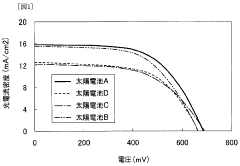
- A coating agent comprising alkylene glycol, polyalkylene glycol, and their alkyl ethers is used to improve the viscosity and porosity of semiconductor films, incorporating nitrogen-doped titanium dioxide with an oxygen defect structure to enhance visible light response and electron transport.
Environmental Impact of Glycerol in PV
The incorporation of glycerol in photovoltaic (PV) materials has significant environmental implications that warrant careful consideration. Glycerol, a byproduct of biodiesel production, offers a sustainable alternative to traditional solvents used in PV manufacturing processes. Its utilization in this context aligns with circular economy principles, potentially reducing waste and promoting resource efficiency.
From a life cycle perspective, the use of glycerol in PV production can lead to a reduced carbon footprint. The renewable nature of glycerol, derived from biomass, contributes to lower greenhouse gas emissions compared to petrochemical-based alternatives. This aspect is particularly relevant as the PV industry seeks to minimize its environmental impact and enhance its overall sustainability profile.
However, the environmental benefits of glycerol in PV applications must be balanced against potential drawbacks. The production of glycerol through biodiesel manufacturing processes may have its own environmental consequences, including land use changes and water consumption. These factors need to be carefully assessed to ensure that the net environmental impact remains positive.
In terms of end-of-life considerations, the presence of glycerol in PV materials may influence recycling and disposal processes. While glycerol is biodegradable, its interaction with other components in PV modules could affect the recyclability of these systems. Research into optimizing recycling techniques for glycerol-containing PV materials is crucial to maximize resource recovery and minimize environmental burden.
The use of glycerol in PV manufacturing may also contribute to improved energy efficiency during the production phase. Its lower volatility compared to conventional solvents can reduce energy requirements for solvent removal and processing. This energy saving translates to a decrease in the overall environmental footprint of PV module production.
Furthermore, the potential for glycerol to enhance the stability and longevity of PV materials could have positive environmental implications. Increased durability of PV modules would result in extended operational lifetimes, reducing the frequency of replacement and associated resource consumption. This aspect aligns with sustainability goals by optimizing material use and minimizing waste generation over the long term.
In conclusion, while the integration of glycerol in PV materials presents promising environmental benefits, a comprehensive assessment of its full life cycle impact is essential. Balancing the advantages of waste valorization and potential energy savings against possible challenges in production and end-of-life management will be crucial in determining the overall environmental viability of this approach in the PV industry.
From a life cycle perspective, the use of glycerol in PV production can lead to a reduced carbon footprint. The renewable nature of glycerol, derived from biomass, contributes to lower greenhouse gas emissions compared to petrochemical-based alternatives. This aspect is particularly relevant as the PV industry seeks to minimize its environmental impact and enhance its overall sustainability profile.
However, the environmental benefits of glycerol in PV applications must be balanced against potential drawbacks. The production of glycerol through biodiesel manufacturing processes may have its own environmental consequences, including land use changes and water consumption. These factors need to be carefully assessed to ensure that the net environmental impact remains positive.
In terms of end-of-life considerations, the presence of glycerol in PV materials may influence recycling and disposal processes. While glycerol is biodegradable, its interaction with other components in PV modules could affect the recyclability of these systems. Research into optimizing recycling techniques for glycerol-containing PV materials is crucial to maximize resource recovery and minimize environmental burden.
The use of glycerol in PV manufacturing may also contribute to improved energy efficiency during the production phase. Its lower volatility compared to conventional solvents can reduce energy requirements for solvent removal and processing. This energy saving translates to a decrease in the overall environmental footprint of PV module production.
Furthermore, the potential for glycerol to enhance the stability and longevity of PV materials could have positive environmental implications. Increased durability of PV modules would result in extended operational lifetimes, reducing the frequency of replacement and associated resource consumption. This aspect aligns with sustainability goals by optimizing material use and minimizing waste generation over the long term.
In conclusion, while the integration of glycerol in PV materials presents promising environmental benefits, a comprehensive assessment of its full life cycle impact is essential. Balancing the advantages of waste valorization and potential energy savings against possible challenges in production and end-of-life management will be crucial in determining the overall environmental viability of this approach in the PV industry.
Scalability of Glycerol-PV Technologies
The scalability of glycerol-PV technologies is a critical factor in determining their potential for widespread adoption and commercial viability. As glycerol continues to demonstrate promising results in modifying photovoltaic material properties, it is essential to evaluate the feasibility of scaling up these technologies for large-scale production and implementation.
One of the primary advantages of glycerol-based PV technologies is the abundance and low cost of glycerol as a raw material. Glycerol is a byproduct of biodiesel production, making it readily available and relatively inexpensive. This abundance suggests that the supply chain for glycerol-PV technologies could be robust and sustainable, even at larger scales.
However, the integration of glycerol into existing PV manufacturing processes presents several challenges. Current production lines may require significant modifications to accommodate the incorporation of glycerol, potentially leading to increased capital costs for manufacturers. The development of new equipment and processes specifically designed for glycerol-PV technologies may be necessary to achieve optimal efficiency and cost-effectiveness at scale.
Another consideration is the stability and consistency of glycerol-modified PV materials over time and under various environmental conditions. Large-scale production and deployment of these technologies will require extensive testing and quality control measures to ensure long-term performance and reliability. This may involve the development of new testing protocols and standards specific to glycerol-PV materials.
The environmental impact of scaling up glycerol-PV technologies must also be carefully evaluated. While glycerol itself is a renewable resource, the overall lifecycle assessment of glycerol-PV products, including manufacturing processes and end-of-life disposal or recycling, needs to be thoroughly examined to ensure sustainability at scale.
From a market perspective, the scalability of glycerol-PV technologies will depend on their ability to compete with existing PV solutions in terms of efficiency, cost, and durability. As production scales up, economies of scale may help reduce costs, but this will need to be balanced against any additional expenses associated with glycerol integration.
Research and development efforts focused on optimizing glycerol-PV technologies for large-scale production are crucial. This may include exploring new formulations, improving manufacturing techniques, and developing automated processes to enhance efficiency and reduce costs. Collaboration between academic institutions, industry partners, and government agencies could accelerate these efforts and address scalability challenges more effectively.
In conclusion, while glycerol-PV technologies show promise, their scalability depends on overcoming several technical, economic, and environmental challenges. Continued research, investment, and innovation will be necessary to realize the full potential of these technologies on a commercial scale.
One of the primary advantages of glycerol-based PV technologies is the abundance and low cost of glycerol as a raw material. Glycerol is a byproduct of biodiesel production, making it readily available and relatively inexpensive. This abundance suggests that the supply chain for glycerol-PV technologies could be robust and sustainable, even at larger scales.
However, the integration of glycerol into existing PV manufacturing processes presents several challenges. Current production lines may require significant modifications to accommodate the incorporation of glycerol, potentially leading to increased capital costs for manufacturers. The development of new equipment and processes specifically designed for glycerol-PV technologies may be necessary to achieve optimal efficiency and cost-effectiveness at scale.
Another consideration is the stability and consistency of glycerol-modified PV materials over time and under various environmental conditions. Large-scale production and deployment of these technologies will require extensive testing and quality control measures to ensure long-term performance and reliability. This may involve the development of new testing protocols and standards specific to glycerol-PV materials.
The environmental impact of scaling up glycerol-PV technologies must also be carefully evaluated. While glycerol itself is a renewable resource, the overall lifecycle assessment of glycerol-PV products, including manufacturing processes and end-of-life disposal or recycling, needs to be thoroughly examined to ensure sustainability at scale.
From a market perspective, the scalability of glycerol-PV technologies will depend on their ability to compete with existing PV solutions in terms of efficiency, cost, and durability. As production scales up, economies of scale may help reduce costs, but this will need to be balanced against any additional expenses associated with glycerol integration.
Research and development efforts focused on optimizing glycerol-PV technologies for large-scale production are crucial. This may include exploring new formulations, improving manufacturing techniques, and developing automated processes to enhance efficiency and reduce costs. Collaboration between academic institutions, industry partners, and government agencies could accelerate these efforts and address scalability challenges more effectively.
In conclusion, while glycerol-PV technologies show promise, their scalability depends on overcoming several technical, economic, and environmental challenges. Continued research, investment, and innovation will be necessary to realize the full potential of these technologies on a commercial scale.
Unlock deeper insights with Patsnap Eureka Quick Research — get a full tech report to explore trends and direct your research. Try now!
Generate Your Research Report Instantly with AI Agent
Supercharge your innovation with Patsnap Eureka AI Agent Platform!