

Surface Modification Techniques To Reduce Biofilm Formation
SEP 1, 20259 MIN READ
Generate Your Research Report Instantly with AI Agent
PatSnap Eureka helps you evaluate technical feasibility & market potential.
Biofilm Formation Challenges and Surface Modification Goals
Biofilm formation represents one of the most significant challenges in various industries including healthcare, food processing, water treatment, and marine engineering. These complex microbial communities develop when microorganisms adhere to surfaces and secrete extracellular polymeric substances (EPS), creating a protective matrix that shields them from external stressors. The resulting biofilms demonstrate up to 1,000 times greater resistance to antimicrobial agents compared to their planktonic counterparts, making them exceptionally difficult to eradicate once established.
In healthcare settings, biofilm-associated infections account for approximately 65-80% of all microbial infections, with particular prevalence on implanted medical devices and chronic wounds. These infections frequently demonstrate recalcitrance to conventional antibiotic treatments, leading to prolonged hospitalization, increased healthcare costs, and elevated patient mortality rates. The economic burden of biofilm-related infections exceeds $94 billion annually in the United States alone.
Industrial sectors face equally challenging biofilm-related issues. In water distribution systems, biofilms contribute to biofouling, corrosion, and potential contamination with pathogenic microorganisms. The food industry contends with biofilm formation on processing equipment, which can lead to product spoilage and foodborne illness outbreaks. Marine industries battle biofouling on ship hulls and underwater structures, resulting in increased fuel consumption and maintenance costs estimated at $15 billion annually worldwide.
The primary goal of surface modification techniques is to create surfaces that inherently resist initial bacterial attachment, thereby preventing the cascade of events leading to mature biofilm formation. This approach represents a paradigm shift from traditional reactive strategies that attempt to eliminate established biofilms toward proactive prevention. Ideal surface modifications should demonstrate broad-spectrum activity against diverse microbial species while maintaining biocompatibility with host tissues in medical applications.
Surface modification goals can be categorized into three primary approaches: physical modifications that alter surface topography to discourage bacterial adhesion; chemical modifications that create surfaces inherently hostile to microbial attachment; and active release systems that continuously dispense antimicrobial compounds to prevent colonization. The ultimate objective is to develop surfaces that maintain long-term efficacy without promoting antimicrobial resistance, are environmentally sustainable, and can be cost-effectively implemented across various industries.
Recent technological advances have expanded the toolkit for surface modification, incorporating nanotechnology, biomimetic approaches inspired by naturally anti-fouling surfaces, and smart materials that respond dynamically to environmental cues. The integration of these technologies promises more effective and sustainable solutions to the persistent challenge of biofilm formation.
In healthcare settings, biofilm-associated infections account for approximately 65-80% of all microbial infections, with particular prevalence on implanted medical devices and chronic wounds. These infections frequently demonstrate recalcitrance to conventional antibiotic treatments, leading to prolonged hospitalization, increased healthcare costs, and elevated patient mortality rates. The economic burden of biofilm-related infections exceeds $94 billion annually in the United States alone.
Industrial sectors face equally challenging biofilm-related issues. In water distribution systems, biofilms contribute to biofouling, corrosion, and potential contamination with pathogenic microorganisms. The food industry contends with biofilm formation on processing equipment, which can lead to product spoilage and foodborne illness outbreaks. Marine industries battle biofouling on ship hulls and underwater structures, resulting in increased fuel consumption and maintenance costs estimated at $15 billion annually worldwide.
The primary goal of surface modification techniques is to create surfaces that inherently resist initial bacterial attachment, thereby preventing the cascade of events leading to mature biofilm formation. This approach represents a paradigm shift from traditional reactive strategies that attempt to eliminate established biofilms toward proactive prevention. Ideal surface modifications should demonstrate broad-spectrum activity against diverse microbial species while maintaining biocompatibility with host tissues in medical applications.
Surface modification goals can be categorized into three primary approaches: physical modifications that alter surface topography to discourage bacterial adhesion; chemical modifications that create surfaces inherently hostile to microbial attachment; and active release systems that continuously dispense antimicrobial compounds to prevent colonization. The ultimate objective is to develop surfaces that maintain long-term efficacy without promoting antimicrobial resistance, are environmentally sustainable, and can be cost-effectively implemented across various industries.
Recent technological advances have expanded the toolkit for surface modification, incorporating nanotechnology, biomimetic approaches inspired by naturally anti-fouling surfaces, and smart materials that respond dynamically to environmental cues. The integration of these technologies promises more effective and sustainable solutions to the persistent challenge of biofilm formation.
Market Analysis of Anti-Biofilm Technologies
The global anti-biofilm technologies market is experiencing robust growth, driven by increasing awareness of biofilm-related infections and their impact across multiple sectors. Currently valued at approximately 9.8 billion USD in 2023, the market is projected to reach 15.6 billion USD by 2028, representing a compound annual growth rate (CAGR) of 9.7%. This growth trajectory is supported by escalating healthcare costs associated with biofilm-related infections, which account for over 80% of microbial infections in humans according to the National Institutes of Health.
Healthcare dominates the anti-biofilm market, constituting roughly 45% of the total market share. Within this sector, implantable medical devices represent a particularly high-value segment due to the critical nature of preventing biofilm formation on prosthetics, catheters, and other implants. The industrial sector follows at approximately 30% market share, with water treatment systems, food processing equipment, and industrial pipelines being key application areas where biofilm prevention is essential for operational efficiency and regulatory compliance.
Regional analysis reveals North America as the leading market with 38% share, followed by Europe (29%) and Asia-Pacific (22%). The Asia-Pacific region is demonstrating the fastest growth rate at 11.3% annually, driven by rapid healthcare infrastructure development and increasing industrial applications in countries like China, India, and Japan.
Surface modification technologies specifically represent approximately 35% of the total anti-biofilm market. This segment is further divided into physical modifications (12%), chemical treatments (14%), and biological approaches (9%). Antimicrobial coatings dominate the surface modification segment, with silver-based technologies holding the largest market share at 28% of coating solutions.
Key market drivers include stringent regulatory requirements for infection control, increasing prevalence of chronic wounds and implant-associated infections, and growing awareness of biofilm-related contamination in industrial settings. The healthcare cost burden associated with biofilm infections—estimated at 94 billion USD annually in the US alone—provides strong economic incentives for adoption of preventive technologies.
Market restraints include high development and implementation costs, technical challenges in creating durable anti-biofilm surfaces, and regulatory hurdles for novel materials. Additionally, concerns regarding potential environmental impacts of antimicrobial agents and the development of microbial resistance present challenges to market expansion.
Healthcare dominates the anti-biofilm market, constituting roughly 45% of the total market share. Within this sector, implantable medical devices represent a particularly high-value segment due to the critical nature of preventing biofilm formation on prosthetics, catheters, and other implants. The industrial sector follows at approximately 30% market share, with water treatment systems, food processing equipment, and industrial pipelines being key application areas where biofilm prevention is essential for operational efficiency and regulatory compliance.
Regional analysis reveals North America as the leading market with 38% share, followed by Europe (29%) and Asia-Pacific (22%). The Asia-Pacific region is demonstrating the fastest growth rate at 11.3% annually, driven by rapid healthcare infrastructure development and increasing industrial applications in countries like China, India, and Japan.
Surface modification technologies specifically represent approximately 35% of the total anti-biofilm market. This segment is further divided into physical modifications (12%), chemical treatments (14%), and biological approaches (9%). Antimicrobial coatings dominate the surface modification segment, with silver-based technologies holding the largest market share at 28% of coating solutions.
Key market drivers include stringent regulatory requirements for infection control, increasing prevalence of chronic wounds and implant-associated infections, and growing awareness of biofilm-related contamination in industrial settings. The healthcare cost burden associated with biofilm infections—estimated at 94 billion USD annually in the US alone—provides strong economic incentives for adoption of preventive technologies.
Market restraints include high development and implementation costs, technical challenges in creating durable anti-biofilm surfaces, and regulatory hurdles for novel materials. Additionally, concerns regarding potential environmental impacts of antimicrobial agents and the development of microbial resistance present challenges to market expansion.
Current Surface Modification Techniques and Limitations
Surface modification techniques for biofilm prevention have evolved significantly in recent years, with several approaches demonstrating varying degrees of effectiveness. Physical modification methods include the creation of micro/nano-textured surfaces that alter surface topography to prevent bacterial adhesion. These modifications can be achieved through techniques such as laser ablation, lithography, and mechanical roughening. While effective in laboratory settings, these approaches often face challenges in maintaining long-term stability in real-world environments and can be costly to implement at scale.
Chemical modification strategies involve altering surface chemistry to create anti-adhesive or bactericidal properties. Hydrophilic coatings using polyethylene glycol (PEG) and similar polymers create a hydration layer that prevents protein adsorption and subsequent bacterial attachment. Conversely, superhydrophobic surfaces with high water contact angles can reduce bacterial adhesion through minimized contact area. However, these coatings typically suffer from mechanical instability and degradation over time, particularly in high-flow or abrasive environments.
Antimicrobial agent incorporation represents another significant approach, where surfaces are impregnated with biocides, antibiotics, or metal ions (silver, copper, zinc). These agents can be released gradually to kill approaching bacteria or remain bound to the surface to create contact-killing properties. The primary limitations include the development of antimicrobial resistance, depletion of active agents over time, and potential toxicity concerns in medical applications.
Enzyme-based strategies utilize immobilized enzymes that degrade biofilm components or quorum sensing molecules. While highly specific and environmentally friendly, these approaches are limited by enzyme stability, activity loss over time, and sensitivity to environmental conditions such as pH and temperature fluctuations.
Anti-fouling polymer brushes and zwitterionic materials have shown promise by creating surfaces that resist protein adsorption through steric hindrance or strong hydration layers. However, these materials often face challenges in maintaining structural integrity in complex biological environments and can be expensive to synthesize at commercial scales.
A significant limitation across all current techniques is the lack of universality - solutions effective against one bacterial species may be ineffective against others. Additionally, most laboratory-developed techniques face substantial challenges in translation to commercial applications due to scalability issues, cost constraints, and regulatory hurdles, particularly for medical devices. The durability of modified surfaces remains problematic, with many coatings degrading under mechanical stress, chemical exposure, or biological activity.
Chemical modification strategies involve altering surface chemistry to create anti-adhesive or bactericidal properties. Hydrophilic coatings using polyethylene glycol (PEG) and similar polymers create a hydration layer that prevents protein adsorption and subsequent bacterial attachment. Conversely, superhydrophobic surfaces with high water contact angles can reduce bacterial adhesion through minimized contact area. However, these coatings typically suffer from mechanical instability and degradation over time, particularly in high-flow or abrasive environments.
Antimicrobial agent incorporation represents another significant approach, where surfaces are impregnated with biocides, antibiotics, or metal ions (silver, copper, zinc). These agents can be released gradually to kill approaching bacteria or remain bound to the surface to create contact-killing properties. The primary limitations include the development of antimicrobial resistance, depletion of active agents over time, and potential toxicity concerns in medical applications.
Enzyme-based strategies utilize immobilized enzymes that degrade biofilm components or quorum sensing molecules. While highly specific and environmentally friendly, these approaches are limited by enzyme stability, activity loss over time, and sensitivity to environmental conditions such as pH and temperature fluctuations.
Anti-fouling polymer brushes and zwitterionic materials have shown promise by creating surfaces that resist protein adsorption through steric hindrance or strong hydration layers. However, these materials often face challenges in maintaining structural integrity in complex biological environments and can be expensive to synthesize at commercial scales.
A significant limitation across all current techniques is the lack of universality - solutions effective against one bacterial species may be ineffective against others. Additionally, most laboratory-developed techniques face substantial challenges in translation to commercial applications due to scalability issues, cost constraints, and regulatory hurdles, particularly for medical devices. The durability of modified surfaces remains problematic, with many coatings degrading under mechanical stress, chemical exposure, or biological activity.
Existing Anti-Biofilm Surface Treatment Solutions
01 Antimicrobial surface modifications
Surface modifications incorporating antimicrobial agents can effectively prevent biofilm formation. These techniques involve coating surfaces with compounds that inhibit bacterial adhesion or kill microorganisms upon contact. Various antimicrobial agents including silver nanoparticles, quaternary ammonium compounds, and specific peptides can be integrated into surface coatings to create environments hostile to biofilm-forming microorganisms. These modifications are particularly valuable in medical devices and implants where biofilm formation can lead to serious infections.- Antimicrobial surface modifications: Surface modifications incorporating antimicrobial agents can effectively prevent biofilm formation. These techniques include coating surfaces with antimicrobial compounds, embedding antimicrobial agents into materials, or creating surfaces that release antimicrobial substances over time. Such modifications disrupt bacterial adhesion and colonization processes, thereby inhibiting the initial stages of biofilm development on medical devices, industrial equipment, and consumer products.
- Topographical and physical surface alterations: Modifying the physical topography of surfaces can significantly impact biofilm formation. Techniques include creating micro-patterned surfaces, adjusting surface roughness, or implementing specific geometric structures that physically prevent bacterial attachment. These modifications can disrupt the ability of microorganisms to adhere to surfaces and form stable communities, effectively reducing biofilm development without relying on chemical agents.
- Hydrophobic and hydrophilic surface treatments: Altering the wettability of surfaces through hydrophobic or hydrophilic treatments can control biofilm formation. Superhydrophobic surfaces repel water and prevent initial bacterial attachment, while certain hydrophilic modifications can create a hydration layer that inhibits protein adsorption and subsequent microbial colonization. These surface energy modifications provide passive protection against biofilm development in various applications including medical implants and marine equipment.
- Enzyme and protein-based surface modifications: Surfaces can be modified with enzymes or proteins that actively degrade biofilm components or interfere with bacterial communication systems. These biological modifications include immobilizing quorum sensing inhibitors, attaching biofilm-degrading enzymes, or incorporating proteins that disrupt bacterial cell membranes. Such biologically active surfaces provide targeted approaches to prevent biofilm formation while minimizing environmental impact and reducing the risk of antimicrobial resistance.
- Smart and responsive surface technologies: Advanced responsive surface technologies can dynamically combat biofilm formation by changing properties in response to environmental triggers. These include surfaces that alter their characteristics in response to pH, temperature, or the presence of specific bacterial metabolites. Some smart surfaces incorporate multiple mechanisms of action, combining physical barriers with chemical deterrents that are released only when biofilm formation is detected, providing efficient and sustainable anti-biofilm strategies.
02 Polymer-based surface modifications
Polymer coatings with specific properties can be applied to surfaces to prevent biofilm formation. These polymers can be designed to have hydrophilic or hydrophobic characteristics that discourage bacterial adhesion. Some polymers release bioactive compounds over time, providing sustained protection against biofilm development. Advanced polymer systems may also respond to environmental triggers, changing their properties to actively combat microbial colonization when needed. These modifications are widely used in medical implants, industrial equipment, and water treatment systems.Expand Specific Solutions03 Topographical and physical surface modifications
Altering the physical topography of surfaces at micro or nano scales can significantly impact biofilm formation. Surfaces with specific patterns, roughness, or geometrical features can either promote or inhibit bacterial adhesion depending on their design. Some modifications create surfaces that are too slippery for bacteria to attach to, while others may create mechanical stress on bacterial cells. These physical modifications can be combined with chemical treatments for enhanced effectiveness and are particularly valuable in applications where chemical treatments might be undesirable.Expand Specific Solutions04 Enzyme and biological agent surface treatments
Surfaces can be modified with enzymes or other biological agents that specifically target components of biofilms. These modifications may incorporate enzymes that degrade extracellular polymeric substances (EPS) which form the structural matrix of biofilms. Some treatments use bacteriophages or predatory bacteria that can penetrate and disrupt established biofilms. These biological approaches offer advantages in specificity and environmental compatibility compared to chemical treatments, making them suitable for applications in food processing, medical devices, and environmental remediation.Expand Specific Solutions05 Smart and responsive surface technologies
Advanced surface modification techniques incorporate responsive or smart materials that can adapt to changing conditions to prevent biofilm formation. These surfaces may change their properties in response to environmental triggers such as pH, temperature, or the presence of specific bacterial signals. Some smart surfaces can release antimicrobial agents only when biofilm formation is detected, while others may alter their physical characteristics to dislodge forming biofilms. These technologies represent the cutting edge of anti-biofilm strategies and are being developed for high-value applications in medical implants and industrial systems.Expand Specific Solutions
Leading Companies and Research Institutions in Surface Modification
The surface modification techniques to reduce biofilm formation market is in a growth phase, driven by increasing healthcare-associated infections and industrial biofouling concerns. The global market is estimated to reach $3-4 billion by 2025, with a CAGR of 7-9%. Technology maturity varies across approaches, with established players like Novozymes A/S leading in enzyme-based solutions, while Colgate-Palmolive and Procter & Gamble dominate consumer applications. Research institutions including Commonwealth Scientific & Industrial Research Organisation and The University of Queensland are advancing novel antimicrobial coatings. Companies like 3M Innovative Properties and Ecolab USA are commercializing proprietary surface technologies, while Akeso Biomedical represents emerging startups with innovative Fe3C compounds targeting bacterial biofilms.
Novozymes A/S
Technical Solution: Novozymes has developed enzymatic surface modification techniques to combat biofilm formation. Their approach utilizes specialized enzymes that can degrade extracellular polymeric substances (EPS) in biofilms, effectively disrupting the biofilm matrix structure. The company has engineered specific proteases, DNases, and polysaccharide-degrading enzymes that target key structural components of biofilms across various microbial species. Their BioSolutions platform incorporates these enzymes into surface coatings that provide continuous anti-biofilm activity through controlled release mechanisms. Novozymes has also developed dual-action formulations combining enzymatic degradation with antimicrobial peptides for enhanced efficacy. Recent advancements include immobilization techniques that covalently bind enzymes to surfaces, extending their functional lifespan while maintaining catalytic activity. Clinical testing has demonstrated these enzymatic coatings can reduce biofilm formation by up to 85% on medical devices and industrial equipment surfaces.
Strengths: Highly specific enzymatic action that targets biofilm structure without promoting antimicrobial resistance; environmentally friendly compared to chemical alternatives; customizable for different surface materials and microbial targets. Weaknesses: Enzyme stability issues in certain environments; potentially higher production costs compared to conventional antimicrobials; effectiveness may vary depending on the microbial species composition in biofilms.
3M Innovative Properties Co.
Technical Solution: 3M has pioneered advanced surface modification technologies focusing on fluoropolymer-based coatings with integrated antimicrobial properties to prevent biofilm formation. Their proprietary technology combines low surface energy materials with controlled release antimicrobial agents in a multi-layer coating system. The company's Scotchgard™ Surface Protection technology has been adapted specifically for anti-biofilm applications, utilizing nanoscale surface texturing that creates physical barriers to bacterial adhesion while incorporating silver, zinc or copper nanoparticles that provide sustained antimicrobial activity. 3M has developed specialized silane quaternary ammonium compounds that covalently bond to various surfaces, creating permanent antimicrobial properties that resist biofilm formation. Their recent innovations include photocatalytic titanium dioxide coatings that generate reactive oxygen species under light exposure, continuously breaking down organic matter and preventing biofilm establishment. Testing in healthcare settings has shown these modified surfaces can reduce microbial attachment by over 90% and maintain effectiveness for extended periods, even under heavy use conditions.
Strengths: Long-lasting durability of surface modifications; broad-spectrum antimicrobial activity; applicable to diverse materials including plastics, metals, and ceramics; established manufacturing infrastructure for scale-up. Weaknesses: Some formulations may contain compounds with environmental persistence concerns; higher initial implementation costs; potential for decreased efficacy over time due to surface wear or conditioning film formation.
Key Innovations in Surface Modification Patents and Literature
Polymer deposition and modification of membranes for fouling resistance
PatentWO2011005258A1
Innovation
- The use of a highly hydrophilic polymer, polydopamine, which can be deposited onto virtually any surface with strong adhesion, allowing for the attachment of molecules and metal ions to reduce biofilm formation and scaling, while maintaining high water flux through its thin coating layer, and can be applied to various membrane materials and systems.


Bactericidal surface patterns
PatentActiveUS20150273755A1
Innovation
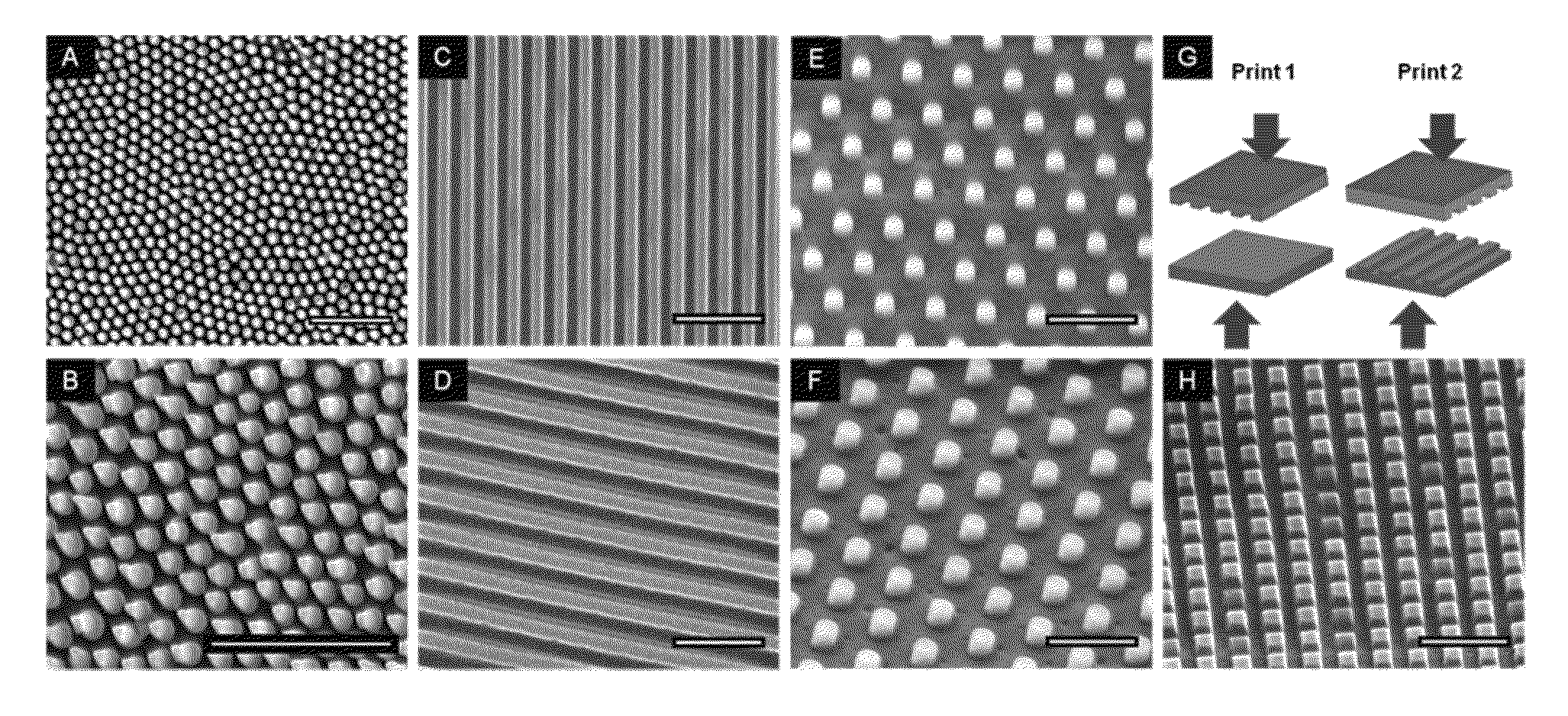
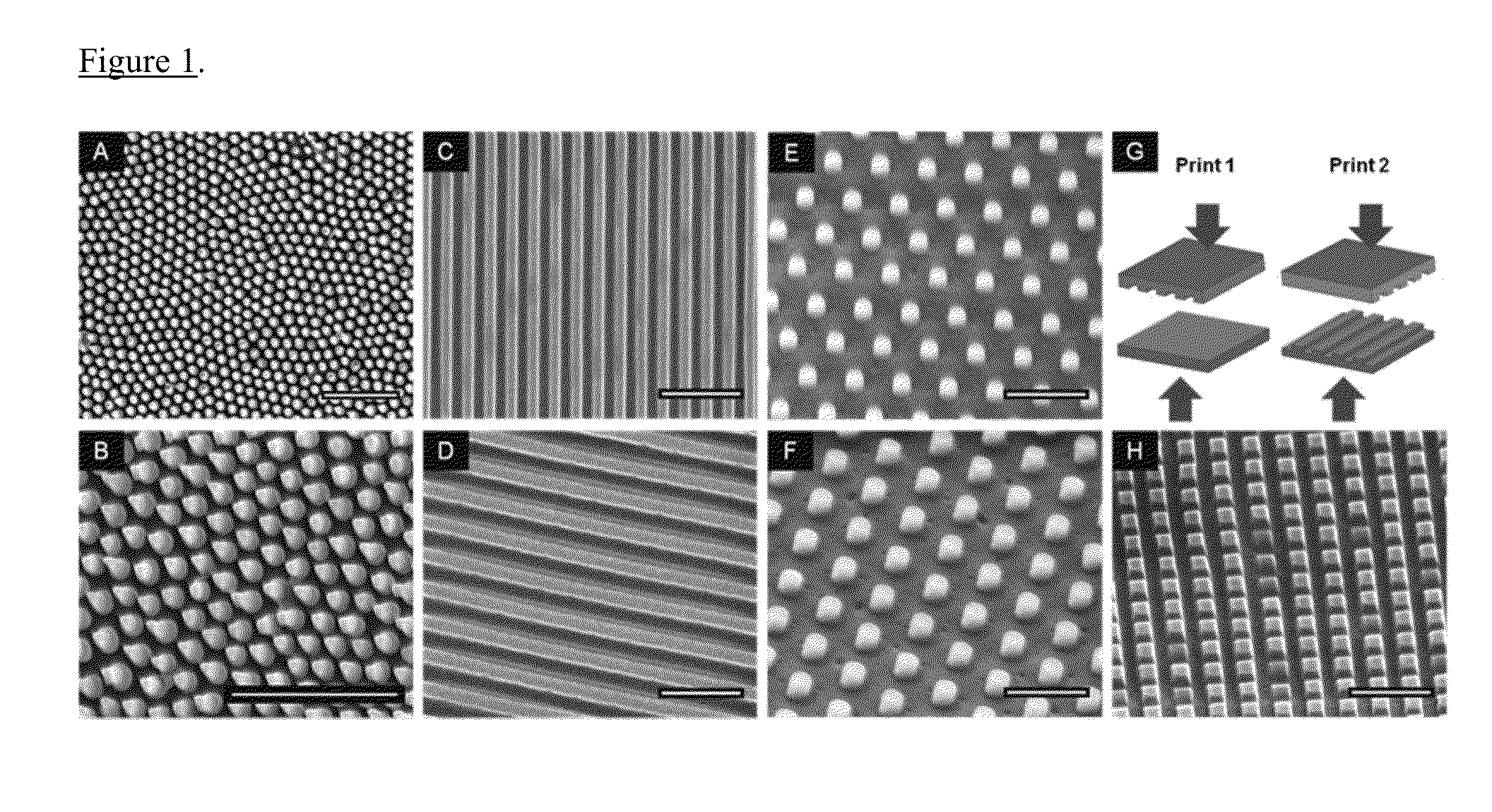
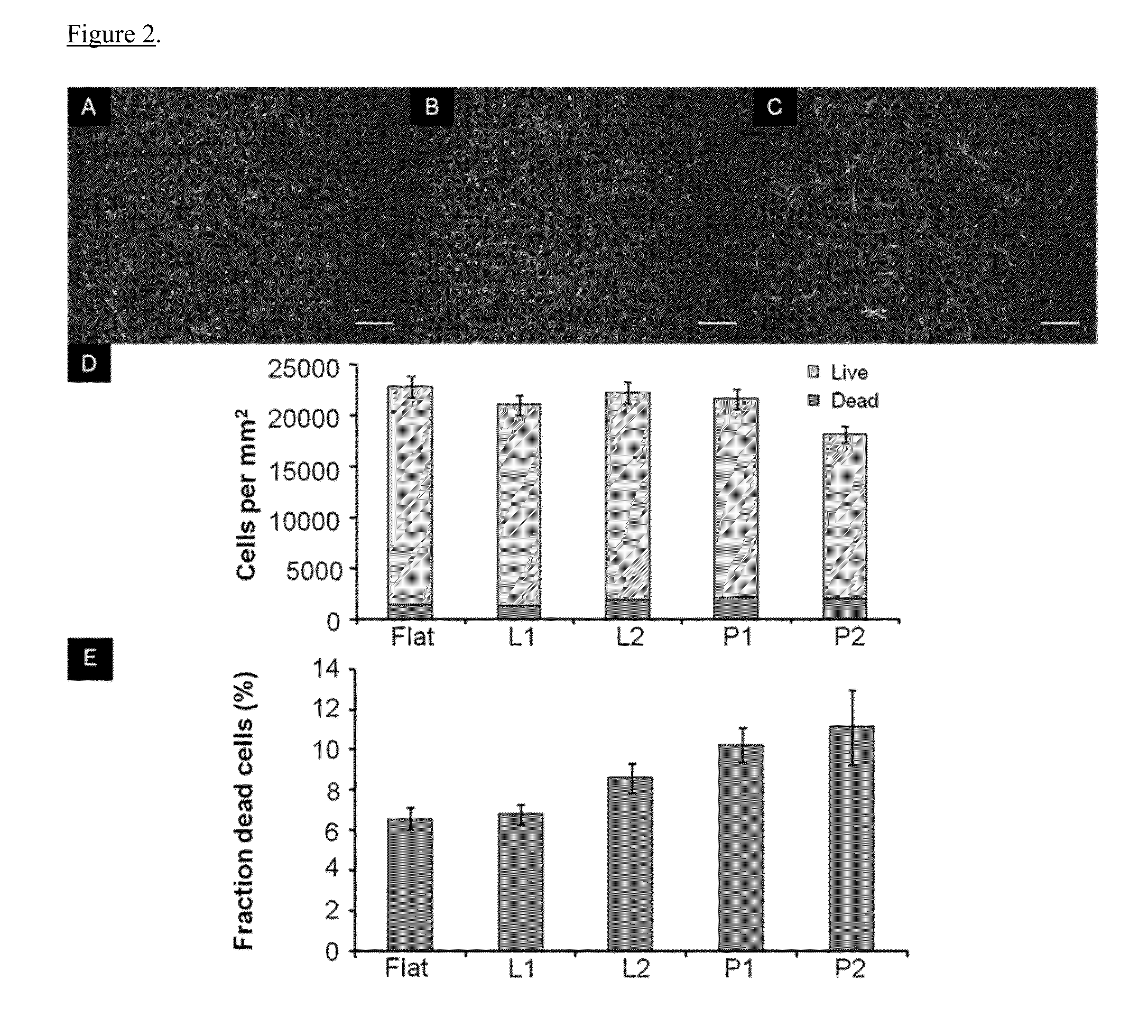
- A bactericidal surface with nanostructured nanopillars created using nanoimprint lithography on polymethylmethacrylate (PMMA) films, which prevents biofilm formation by physically inhibiting bacterial adhesion through surface nanotexture without chemical modifications.

Regulatory Framework for Antimicrobial Surface Technologies
The regulatory landscape for antimicrobial surface technologies represents a complex framework spanning multiple jurisdictions and oversight bodies. In the United States, the Environmental Protection Agency (EPA) regulates antimicrobial surface technologies under the Federal Insecticide, Fungicide, and Rodenticide Act (FIFRA), requiring manufacturers to register products that make public health claims. Concurrently, the Food and Drug Administration (FDA) oversees antimicrobial surfaces used in medical devices and food contact applications, implementing stringent safety and efficacy standards through premarket approval processes.
European regulations present a different approach through the Biocidal Products Regulation (BPR), which governs antimicrobial substances and requires comprehensive risk assessments before market authorization. The Medical Device Regulation (MDR) further controls antimicrobial surfaces incorporated into healthcare equipment, demanding robust clinical evidence and post-market surveillance.
International standards organizations play a crucial role in establishing testing protocols and performance benchmarks. ISO 22196 and JIS Z 2801 provide standardized methods for evaluating antimicrobial activity on surfaces, while ASTM E2180 specifically addresses antimicrobial activity in polymeric materials. These standards ensure consistency in efficacy claims and facilitate regulatory compliance across borders.
Recent regulatory trends indicate a shift toward more sustainable antimicrobial technologies with reduced environmental impact. Authorities increasingly scrutinize leaching antimicrobials due to concerns about antimicrobial resistance development and ecological effects. This has prompted greater interest in non-leaching surface modifications and physical antimicrobial mechanisms that present lower regulatory hurdles.
Market access considerations vary significantly by region and application sector. Healthcare applications face the most rigorous requirements, particularly for implantable devices, while consumer products may navigate less stringent pathways depending on specific claims made. The regulatory classification often hinges on whether a product claims to protect the surface itself or to provide broader public health benefits.
Compliance costs represent a significant factor in commercialization strategies. Testing requirements, documentation preparation, and regulatory review processes can extend development timelines by 12-36 months and add substantial costs, particularly for novel technologies without established regulatory precedents. Companies must carefully balance innovation with regulatory feasibility when developing new surface modification approaches to combat biofilm formation.
European regulations present a different approach through the Biocidal Products Regulation (BPR), which governs antimicrobial substances and requires comprehensive risk assessments before market authorization. The Medical Device Regulation (MDR) further controls antimicrobial surfaces incorporated into healthcare equipment, demanding robust clinical evidence and post-market surveillance.
International standards organizations play a crucial role in establishing testing protocols and performance benchmarks. ISO 22196 and JIS Z 2801 provide standardized methods for evaluating antimicrobial activity on surfaces, while ASTM E2180 specifically addresses antimicrobial activity in polymeric materials. These standards ensure consistency in efficacy claims and facilitate regulatory compliance across borders.
Recent regulatory trends indicate a shift toward more sustainable antimicrobial technologies with reduced environmental impact. Authorities increasingly scrutinize leaching antimicrobials due to concerns about antimicrobial resistance development and ecological effects. This has prompted greater interest in non-leaching surface modifications and physical antimicrobial mechanisms that present lower regulatory hurdles.
Market access considerations vary significantly by region and application sector. Healthcare applications face the most rigorous requirements, particularly for implantable devices, while consumer products may navigate less stringent pathways depending on specific claims made. The regulatory classification often hinges on whether a product claims to protect the surface itself or to provide broader public health benefits.
Compliance costs represent a significant factor in commercialization strategies. Testing requirements, documentation preparation, and regulatory review processes can extend development timelines by 12-36 months and add substantial costs, particularly for novel technologies without established regulatory precedents. Companies must carefully balance innovation with regulatory feasibility when developing new surface modification approaches to combat biofilm formation.
Environmental Impact and Sustainability of Surface Modification Methods
The environmental impact of surface modification techniques for biofilm prevention represents a critical consideration in their development and application. Traditional antimicrobial approaches often rely on toxic compounds that can accumulate in ecosystems, causing long-term environmental damage. Chemical leaching from modified surfaces presents particular concerns, as substances like heavy metals, quaternary ammonium compounds, and certain nanoparticles may persist in aquatic environments, potentially disrupting microbial communities that are essential for ecosystem functioning.
Recent sustainability assessments of various surface modification methods reveal significant differences in their environmental footprints. Physical modification techniques, such as laser texturing and mechanical roughening, generally demonstrate lower environmental impact compared to chemical approaches. These methods typically require less hazardous materials and produce fewer toxic byproducts, though their energy requirements during manufacturing may be substantial.
Bioinspired surface modifications have emerged as particularly promising from an environmental perspective. Techniques mimicking natural antifouling surfaces, such as lotus leaf-inspired superhydrophobic coatings or shark skin-patterned surfaces, often achieve biofilm reduction without relying on toxic compounds. These approaches work through physical deterrence rather than chemical killing, significantly reducing ecotoxicological concerns.
Life cycle assessment (LCA) studies comparing various surface modification techniques indicate that methods utilizing biodegradable polymers and naturally derived compounds generally outperform conventional approaches in environmental sustainability metrics. For instance, chitosan-based coatings derived from crustacean shells demonstrate favorable biodegradability profiles while maintaining effective biofilm inhibition properties.
The regulatory landscape surrounding environmental aspects of surface modifications continues to evolve, with increasing restrictions on persistent, bioaccumulative substances. This regulatory pressure has accelerated research into "green chemistry" approaches for surface modification, including enzyme-based strategies and plant-derived compounds with inherent antimicrobial properties.
Energy consumption during the manufacturing and application of surface modifications represents another significant environmental consideration. Techniques requiring high-temperature processing or extensive chemical synthesis typically have larger carbon footprints. Recent innovations in low-temperature plasma treatments and ambient-condition polymerization methods offer promising alternatives with reduced energy requirements.
Looking forward, the development of closed-loop systems for surface modification processes presents an opportunity to minimize waste and resource consumption. Advances in recovery and recycling of modification agents, particularly for precious metals and rare earth elements used in certain antimicrobial surfaces, will be crucial for improving the overall sustainability profile of these technologies.
Recent sustainability assessments of various surface modification methods reveal significant differences in their environmental footprints. Physical modification techniques, such as laser texturing and mechanical roughening, generally demonstrate lower environmental impact compared to chemical approaches. These methods typically require less hazardous materials and produce fewer toxic byproducts, though their energy requirements during manufacturing may be substantial.
Bioinspired surface modifications have emerged as particularly promising from an environmental perspective. Techniques mimicking natural antifouling surfaces, such as lotus leaf-inspired superhydrophobic coatings or shark skin-patterned surfaces, often achieve biofilm reduction without relying on toxic compounds. These approaches work through physical deterrence rather than chemical killing, significantly reducing ecotoxicological concerns.
Life cycle assessment (LCA) studies comparing various surface modification techniques indicate that methods utilizing biodegradable polymers and naturally derived compounds generally outperform conventional approaches in environmental sustainability metrics. For instance, chitosan-based coatings derived from crustacean shells demonstrate favorable biodegradability profiles while maintaining effective biofilm inhibition properties.
The regulatory landscape surrounding environmental aspects of surface modifications continues to evolve, with increasing restrictions on persistent, bioaccumulative substances. This regulatory pressure has accelerated research into "green chemistry" approaches for surface modification, including enzyme-based strategies and plant-derived compounds with inherent antimicrobial properties.
Energy consumption during the manufacturing and application of surface modifications represents another significant environmental consideration. Techniques requiring high-temperature processing or extensive chemical synthesis typically have larger carbon footprints. Recent innovations in low-temperature plasma treatments and ambient-condition polymerization methods offer promising alternatives with reduced energy requirements.
Looking forward, the development of closed-loop systems for surface modification processes presents an opportunity to minimize waste and resource consumption. Advances in recovery and recycling of modification agents, particularly for precious metals and rare earth elements used in certain antimicrobial surfaces, will be crucial for improving the overall sustainability profile of these technologies.
Unlock deeper insights with PatSnap Eureka Quick Research — get a full tech report to explore trends and direct your research. Try now!
Generate Your Research Report Instantly with AI Agent
Supercharge your innovation with PatSnap Eureka AI Agent Platform!