

Testing Protocols For Electrochemical Compressors Under Variable Temperature Conditions
SEP 3, 202510 MIN READ
Generate Your Research Report Instantly with AI Agent
PatSnap Eureka helps you evaluate technical feasibility & market potential.
Electrochemical Compressor Technology Background and Objectives
Electrochemical compressors represent a revolutionary approach to fluid compression that leverages electrochemical principles rather than mechanical components to achieve gas compression. The technology has evolved significantly since its conceptual introduction in the mid-20th century, with substantial advancements occurring in the past two decades. Unlike conventional mechanical compressors, electrochemical compressors utilize electrochemical cells to selectively transport gas molecules across a membrane when an electrical potential is applied, offering potential advantages in energy efficiency, reliability, and environmental impact.
The evolution of electrochemical compression technology has been closely tied to developments in fuel cell and electrolyzer technologies, particularly regarding membrane materials and electrode catalysts. Early systems demonstrated proof-of-concept but suffered from low efficiency and durability issues. Recent technological breakthroughs in proton exchange membranes, electrode materials, and system integration have significantly enhanced performance metrics, making electrochemical compressors increasingly viable for commercial applications.
Current research trends focus on optimizing electrochemical compressors for specific applications including refrigeration systems, heat pumps, hydrogen compression for fuel cell vehicles, and carbon capture technologies. The growing emphasis on decarbonization and energy efficiency has accelerated interest in this technology across multiple sectors, particularly as traditional vapor compression systems face regulatory challenges due to their environmental impact.
Temperature variation represents one of the most significant challenges for electrochemical compressor technology. Performance characteristics, including ionic conductivity, reaction kinetics, and membrane properties, are highly temperature-dependent. This sensitivity creates operational complexities in real-world applications where ambient and operating temperatures fluctuate considerably. Developing robust testing protocols for variable temperature conditions is therefore critical to advancing the technology's commercial readiness.
The primary objectives of electrochemical compressor technology development include enhancing compression efficiency across varying temperature ranges, improving durability under thermal cycling conditions, reducing system costs through materials innovation and manufacturing optimization, and establishing standardized performance metrics that enable fair comparison with conventional technologies. Additionally, there is significant interest in developing hybrid systems that combine electrochemical compression with traditional approaches to leverage the strengths of both technologies.
Looking forward, the technology trajectory suggests potential for electrochemical compressors to disrupt several established markets, particularly in applications where precise control, low noise, minimal vibration, and high efficiency are valued. However, realizing this potential requires overcoming significant technical hurdles, particularly regarding performance consistency under variable operating conditions.
The evolution of electrochemical compression technology has been closely tied to developments in fuel cell and electrolyzer technologies, particularly regarding membrane materials and electrode catalysts. Early systems demonstrated proof-of-concept but suffered from low efficiency and durability issues. Recent technological breakthroughs in proton exchange membranes, electrode materials, and system integration have significantly enhanced performance metrics, making electrochemical compressors increasingly viable for commercial applications.
Current research trends focus on optimizing electrochemical compressors for specific applications including refrigeration systems, heat pumps, hydrogen compression for fuel cell vehicles, and carbon capture technologies. The growing emphasis on decarbonization and energy efficiency has accelerated interest in this technology across multiple sectors, particularly as traditional vapor compression systems face regulatory challenges due to their environmental impact.
Temperature variation represents one of the most significant challenges for electrochemical compressor technology. Performance characteristics, including ionic conductivity, reaction kinetics, and membrane properties, are highly temperature-dependent. This sensitivity creates operational complexities in real-world applications where ambient and operating temperatures fluctuate considerably. Developing robust testing protocols for variable temperature conditions is therefore critical to advancing the technology's commercial readiness.
The primary objectives of electrochemical compressor technology development include enhancing compression efficiency across varying temperature ranges, improving durability under thermal cycling conditions, reducing system costs through materials innovation and manufacturing optimization, and establishing standardized performance metrics that enable fair comparison with conventional technologies. Additionally, there is significant interest in developing hybrid systems that combine electrochemical compression with traditional approaches to leverage the strengths of both technologies.
Looking forward, the technology trajectory suggests potential for electrochemical compressors to disrupt several established markets, particularly in applications where precise control, low noise, minimal vibration, and high efficiency are valued. However, realizing this potential requires overcoming significant technical hurdles, particularly regarding performance consistency under variable operating conditions.
Market Applications and Demand Analysis for Electrochemical Compression
Electrochemical compression technology is experiencing growing market demand across multiple sectors due to its unique advantages in energy efficiency and environmental sustainability. The global market for alternative compression technologies is projected to reach $7.5 billion by 2028, with electrochemical compression expected to capture a significant portion of this growth. This expansion is primarily driven by increasing regulatory pressure to reduce greenhouse gas emissions and the transition toward renewable energy systems.
The HVAC industry represents one of the largest potential markets for electrochemical compressors, particularly in regions with extreme temperature variations. Traditional vapor compression systems suffer significant efficiency losses under variable temperature conditions, creating a market gap that electrochemical solutions can fill. Commercial buildings and residential applications in climate zones with seasonal temperature swings of 40°C or more stand to benefit most from this technology.
Hydrogen infrastructure development constitutes another critical market application. As hydrogen fuel cell vehicles gain traction, the need for efficient compression technologies for hydrogen refueling stations is growing exponentially. Electrochemical compressors offer advantages in handling the high-pressure requirements (700 bar) while maintaining energy efficiency across varying ambient temperatures, addressing a key pain point in the hydrogen economy infrastructure.
The refrigeration sector presents substantial opportunities, especially in cold chain logistics where temperature stability during transport across different climate zones is essential. The global cold chain market, valued at $233 billion in 2021, faces challenges with conventional compression technologies that struggle to maintain optimal performance across temperature gradients. Electrochemical compression's ability to operate efficiently under variable conditions could revolutionize this sector.
Energy storage applications are emerging as another promising market. Grid-scale thermal energy storage systems utilizing electrochemical compression could provide efficient solutions for renewable energy integration. The technology's adaptability to fluctuating ambient conditions makes it particularly valuable for outdoor installations in regions with significant seasonal temperature variations.
Market research indicates that early adopters are likely to be in premium segments where efficiency and reliability outweigh initial cost considerations. The healthcare sector, particularly for temperature-sensitive pharmaceutical storage and transport, shows willingness to invest in advanced compression technologies that can maintain precise conditions regardless of external temperature fluctuations.
Consumer awareness of energy efficiency is driving demand for next-generation cooling technologies in high-end residential and commercial applications. This trend is particularly strong in regions with extreme climate conditions or high electricity costs, where the operational savings from electrochemical compression systems can offset higher initial investments.
The HVAC industry represents one of the largest potential markets for electrochemical compressors, particularly in regions with extreme temperature variations. Traditional vapor compression systems suffer significant efficiency losses under variable temperature conditions, creating a market gap that electrochemical solutions can fill. Commercial buildings and residential applications in climate zones with seasonal temperature swings of 40°C or more stand to benefit most from this technology.
Hydrogen infrastructure development constitutes another critical market application. As hydrogen fuel cell vehicles gain traction, the need for efficient compression technologies for hydrogen refueling stations is growing exponentially. Electrochemical compressors offer advantages in handling the high-pressure requirements (700 bar) while maintaining energy efficiency across varying ambient temperatures, addressing a key pain point in the hydrogen economy infrastructure.
The refrigeration sector presents substantial opportunities, especially in cold chain logistics where temperature stability during transport across different climate zones is essential. The global cold chain market, valued at $233 billion in 2021, faces challenges with conventional compression technologies that struggle to maintain optimal performance across temperature gradients. Electrochemical compression's ability to operate efficiently under variable conditions could revolutionize this sector.
Energy storage applications are emerging as another promising market. Grid-scale thermal energy storage systems utilizing electrochemical compression could provide efficient solutions for renewable energy integration. The technology's adaptability to fluctuating ambient conditions makes it particularly valuable for outdoor installations in regions with significant seasonal temperature variations.
Market research indicates that early adopters are likely to be in premium segments where efficiency and reliability outweigh initial cost considerations. The healthcare sector, particularly for temperature-sensitive pharmaceutical storage and transport, shows willingness to invest in advanced compression technologies that can maintain precise conditions regardless of external temperature fluctuations.
Consumer awareness of energy efficiency is driving demand for next-generation cooling technologies in high-end residential and commercial applications. This trend is particularly strong in regions with extreme climate conditions or high electricity costs, where the operational savings from electrochemical compression systems can offset higher initial investments.
Current Testing Challenges in Variable Temperature Environments
Testing electrochemical compressors (ECCs) under variable temperature conditions presents significant challenges that impede both research progress and commercial deployment. Current testing methodologies often fail to accurately simulate real-world operating environments where temperature fluctuations are common. Laboratory setups typically maintain constant temperatures during testing cycles, creating a substantial disconnect between test results and actual field performance.
The primary challenge lies in developing testing protocols that can reliably measure ECC performance across dynamic temperature ranges while maintaining experimental control. Temperature variations affect multiple aspects of electrochemical compression simultaneously, including membrane conductivity, electrode kinetics, and working fluid properties. This multivariable dependency makes it difficult to isolate and quantify individual temperature effects on overall system performance.
Standard testing equipment lacks integrated temperature control systems capable of precise temperature ramping and cycling. Most commercial testing platforms were designed for fuel cell or battery applications with different operational parameters, requiring significant modifications for ECC testing. These modifications often introduce inconsistencies between different research groups, making cross-validation and result comparison problematic.
Data acquisition during temperature transitions presents another major hurdle. Current sensor technologies struggle to maintain accuracy during rapid temperature changes, leading to measurement artifacts that can be misinterpreted as actual performance variations. The thermal mass of testing apparatus also introduces lag between programmed temperature profiles and actual conditions at the ECC membrane-electrode interface.
Accelerated life testing under variable temperatures remains particularly challenging. While constant-temperature durability protocols are well-established, methodologies for predicting long-term performance under cyclical temperature conditions are still underdeveloped. This gap significantly impacts reliability assessments for ECCs intended for applications with seasonal temperature variations or daily thermal cycling.
Industry standards specifically addressing variable temperature testing for ECCs are notably absent. While adjacent fields like refrigeration and fuel cells have established temperature-related testing protocols, these cannot be directly applied to ECCs due to fundamental differences in operating principles and performance metrics. This standardization gap creates barriers to market entry as manufacturers struggle to validate their products against consistent benchmarks.
Material compatibility issues often emerge only during variable temperature testing, as thermal expansion coefficients and chemical stability can vary significantly across operating ranges. Current testing approaches frequently fail to capture these effects until late-stage development, resulting in costly redesigns and delayed commercialization timelines.
The primary challenge lies in developing testing protocols that can reliably measure ECC performance across dynamic temperature ranges while maintaining experimental control. Temperature variations affect multiple aspects of electrochemical compression simultaneously, including membrane conductivity, electrode kinetics, and working fluid properties. This multivariable dependency makes it difficult to isolate and quantify individual temperature effects on overall system performance.
Standard testing equipment lacks integrated temperature control systems capable of precise temperature ramping and cycling. Most commercial testing platforms were designed for fuel cell or battery applications with different operational parameters, requiring significant modifications for ECC testing. These modifications often introduce inconsistencies between different research groups, making cross-validation and result comparison problematic.
Data acquisition during temperature transitions presents another major hurdle. Current sensor technologies struggle to maintain accuracy during rapid temperature changes, leading to measurement artifacts that can be misinterpreted as actual performance variations. The thermal mass of testing apparatus also introduces lag between programmed temperature profiles and actual conditions at the ECC membrane-electrode interface.
Accelerated life testing under variable temperatures remains particularly challenging. While constant-temperature durability protocols are well-established, methodologies for predicting long-term performance under cyclical temperature conditions are still underdeveloped. This gap significantly impacts reliability assessments for ECCs intended for applications with seasonal temperature variations or daily thermal cycling.
Industry standards specifically addressing variable temperature testing for ECCs are notably absent. While adjacent fields like refrigeration and fuel cells have established temperature-related testing protocols, these cannot be directly applied to ECCs due to fundamental differences in operating principles and performance metrics. This standardization gap creates barriers to market entry as manufacturers struggle to validate their products against consistent benchmarks.
Material compatibility issues often emerge only during variable temperature testing, as thermal expansion coefficients and chemical stability can vary significantly across operating ranges. Current testing approaches frequently fail to capture these effects until late-stage development, resulting in costly redesigns and delayed commercialization timelines.
Existing Temperature-Variable Testing Protocols
01 Performance testing protocols for electrochemical compressors
Testing protocols designed to evaluate the performance of electrochemical compressors under various operating conditions. These protocols include measurements of compression efficiency, power consumption, and output pressure. The testing procedures help in determining the optimal operating parameters and assessing the overall performance of the compressor system in different environmental conditions.- Performance testing protocols for electrochemical compressors: Testing protocols designed to evaluate the performance of electrochemical compressors under various operating conditions. These protocols include measurements of compression efficiency, power consumption, and output pressure. The tests are conducted under standardized conditions to ensure reproducibility and comparability of results across different compressor designs and applications.
- Reliability and durability testing methods: Methods for assessing the reliability and durability of electrochemical compressors through accelerated life testing, stress testing, and long-term operation analysis. These testing protocols focus on identifying potential failure modes, estimating service life, and evaluating performance degradation over time. The methods include cyclic testing, temperature variation tests, and continuous operation under extreme conditions.
- Diagnostic and monitoring systems for electrochemical compressors: Systems and methods for real-time monitoring and diagnostics of electrochemical compressors during operation. These protocols involve the use of sensors, data acquisition systems, and analytical algorithms to detect abnormalities, predict failures, and optimize performance. The monitoring systems track key parameters such as temperature, pressure, current density, and membrane hydration to ensure optimal operation.
- Electrochemical cell component testing protocols: Specific testing protocols focused on evaluating the performance and characteristics of individual components within electrochemical compressors, such as membranes, electrodes, and catalysts. These tests include conductivity measurements, gas permeability tests, and electrochemical impedance spectroscopy to assess component quality and suitability for use in compressor applications.
- Simulation and modeling techniques for electrochemical compressor testing: Advanced computational methods and simulation techniques used to predict and analyze the performance of electrochemical compressors before physical testing. These approaches include finite element analysis, computational fluid dynamics, and electrochemical modeling to optimize design parameters and testing protocols. The simulation results are validated against experimental data to improve the accuracy of predictive models.
02 Reliability and durability testing methods
Methods for testing the reliability and durability of electrochemical compressors through accelerated life testing, stress testing, and long-term operation assessment. These testing protocols focus on evaluating component degradation, system stability over time, and identifying potential failure modes. The methods help in predicting the service life of electrochemical compressors and improving their design for enhanced durability.Expand Specific Solutions03 Diagnostic and monitoring systems for electrochemical compressors
Systems and methods for real-time monitoring and diagnostics of electrochemical compressors during operation. These include sensors and data acquisition systems that track key performance indicators, detect anomalies, and provide early warning of potential failures. The monitoring protocols enable predictive maintenance and help optimize the operational efficiency of the compressor systems.Expand Specific Solutions04 Environmental and safety testing protocols
Testing protocols focused on environmental compatibility and safety aspects of electrochemical compressors. These include tests for emissions, chemical leakage, thermal management, and compliance with environmental regulations. The protocols also cover safety testing under extreme conditions, emergency shutdown procedures, and risk assessment methodologies to ensure safe operation in various applications.Expand Specific Solutions05 Standardization and certification testing frameworks
Frameworks and methodologies for standardized testing of electrochemical compressors to ensure compliance with industry standards and certification requirements. These protocols establish uniform testing procedures, performance metrics, and reporting formats that facilitate comparison between different compressor designs and technologies. The standardization efforts help in quality assurance and market acceptance of electrochemical compressor technologies.Expand Specific Solutions
Leading Research Institutions and Industrial Manufacturers
The electrochemical compressor testing protocols market is currently in an early growth phase, characterized by increasing R&D investments but limited commercial deployment. The global market size is estimated to be relatively modest but growing steadily as hydrogen technologies gain traction in clean energy applications. From a technical maturity perspective, the field remains developing, with major players demonstrating varying levels of expertise. Companies like Haier Smart Home and Midea Group are leveraging their HVAC experience to advance electrochemical compression technologies, while energy specialists such as Plug Power and GENVIA focus on hydrogen applications. Research institutions including China Electric Power Research Institute and Naval Research Laboratory provide critical fundamental research. Schlumberger and Ecopetrol represent growing interest from the energy sector in this technology for potential industrial applications under variable temperature conditions.
Qingdao Haier Air Conditioner Co., Ltd.
Technical Solution: Qingdao Haier has developed testing protocols specifically for electrochemical compressors integrated into heat pump and air conditioning systems operating under variable temperature conditions. Their approach focuses on evaluating performance across the typical operating range of HVAC systems (-20°C to 50°C) with particular attention to efficiency at temperature extremes. The company employs environmental chambers capable of precisely controlling both indoor and outdoor temperature conditions to simulate seasonal variations. Their protocols include coefficient of performance (COP) mapping across temperature ranges to identify optimal operating parameters and control strategies. Haier's methodology incorporates accelerated thermal cycling tests to evaluate long-term reliability and performance stability under fluctuating ambient conditions. The company has developed specialized test rigs that can simultaneously evaluate multiple performance parameters including compression ratio, energy consumption, and cooling/heating capacity across temperature gradients, enabling holistic system optimization. Their protocols also include noise and vibration analysis at different operating temperatures to ensure consumer comfort across all usage conditions.
Strengths: Direct integration of electrochemical compressor testing with complete HVAC system evaluation provides practical performance insights. Their protocols effectively address consumer-relevant metrics including efficiency, noise, and reliability. Weaknesses: Testing may be more focused on system-level performance rather than fundamental electrochemical characterization of the compression mechanism.
Hanon Systems
Technical Solution: Hanon Systems has developed comprehensive testing protocols for automotive electrochemical compressors operating under the extreme temperature variations encountered in vehicle environments. Their methodology encompasses performance evaluation from -40°C to 85°C with particular focus on cold-start capabilities and high-temperature efficiency. The company employs climate-controlled test chambers that can simulate rapid temperature transitions typical of automotive applications. Their protocols include drive cycle testing under variable temperature conditions to evaluate real-world performance and energy consumption across different climate scenarios. Hanon's approach incorporates thermal imaging and distributed temperature sensing to map temperature gradients within the compressor assembly during operation, identifying potential hotspots or cold zones that could impact performance. The company has pioneered accelerated thermal shock testing protocols that evaluate seal integrity and membrane durability under the rapid temperature changes encountered in automotive applications. Their methodology also includes vibration testing at different temperatures to evaluate the combined effects of mechanical stress and thermal variations on compressor performance and durability.
Strengths: Specialized expertise in automotive thermal management systems provides deep understanding of practical challenges in mobile applications. Their testing protocols effectively address the combined effects of temperature, vibration, and duty cycling typical in vehicle environments. Weaknesses: Automotive focus may limit direct applicability to stationary or industrial electrochemical compression applications with different operating profiles.
Critical Patents and Literature on Electrochemical Testing
Apparatus, system and method for testing an electrochemical cell under a controlled temperature condition
PatentWO2024000070A1
Innovation
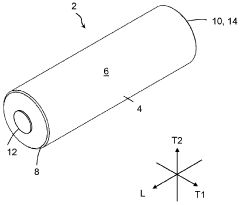
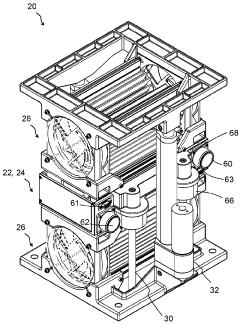
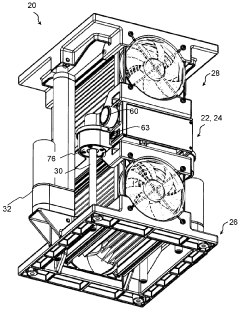
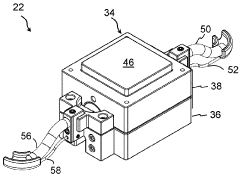
- An apparatus and system utilizing a pair of Peltier modules with a cell-contacting member and heat sink members to maintain a substantially isothermal state or controlled temperature condition, featuring a concave cylindrical cell-contacting surface and adjustable linear actuators for precise temperature control, along with temperature and heat flux sensors for feedback-based power control.
Compression device for electrochemical cells
PatentWO2024133106A1
Innovation
- A compression device with a mechanical pusher and biasing member, integrated with thermal protection features and sensors outside the thermal enclosure, allows for precise application and monitoring of compressive force, using materials with varying thermal conductivity to maintain component safety and functionality.


Environmental Impact and Sustainability Considerations
Electrochemical compressors represent a significant advancement in sustainable cooling and heating technologies, offering potential environmental benefits over conventional mechanical compression systems. The environmental impact of these systems is particularly relevant when considering their performance under variable temperature conditions, as these variations directly affect efficiency and emissions profiles.
The primary environmental advantage of electrochemical compressors lies in their potential to eliminate the use of hydrofluorocarbons (HFCs) and other refrigerants with high global warming potential (GWP). Traditional vapor compression systems rely on these compounds, which can have GWP values thousands of times greater than CO2. Testing protocols that accurately measure performance across temperature ranges are essential for quantifying these environmental benefits and ensuring they translate to real-world applications.
Energy efficiency considerations form another critical environmental dimension. Electrochemical compressors typically demonstrate higher theoretical efficiency than mechanical alternatives, particularly at partial loads and during temperature fluctuations. However, this advantage must be verified through rigorous testing under variable conditions that simulate actual operational environments. Current testing protocols often fail to capture the full spectrum of temperature-dependent performance characteristics, potentially underestimating lifetime environmental impacts.
Life cycle assessment (LCA) methodology should be integrated into testing protocols to provide a comprehensive environmental evaluation. This approach considers raw material extraction, manufacturing processes, operational energy consumption, and end-of-life disposal. Temperature variability significantly affects operational lifetime and degradation rates of electrochemical components, directly impacting the sustainability profile of these systems. Testing protocols must therefore incorporate accelerated aging tests under fluctuating temperature conditions to accurately predict environmental footprints.
Water consumption represents an often-overlooked environmental consideration for electrochemical compression systems. Many designs require water for electrolyte solutions or cooling purposes, and water usage patterns can vary significantly with temperature conditions. Testing protocols should measure water consumption efficiency across temperature ranges, particularly in applications intended for water-stressed regions.
Circular economy principles should also inform testing methodologies. The recoverability and recyclability of materials used in electrochemical compressors—particularly catalysts, membranes, and electrode materials—can be temperature-dependent. Testing protocols that assess material degradation under variable temperature conditions provide valuable data for designing systems with improved material recovery potential and reduced waste generation.
Carbon accounting frameworks must be applied to testing results to quantify the climate impact of these systems accurately. This includes measuring both direct emissions from system operation and indirect emissions from energy consumption under various temperature scenarios, enabling meaningful comparisons with conventional technologies and supporting evidence-based policy development for sustainable cooling and heating solutions.
The primary environmental advantage of electrochemical compressors lies in their potential to eliminate the use of hydrofluorocarbons (HFCs) and other refrigerants with high global warming potential (GWP). Traditional vapor compression systems rely on these compounds, which can have GWP values thousands of times greater than CO2. Testing protocols that accurately measure performance across temperature ranges are essential for quantifying these environmental benefits and ensuring they translate to real-world applications.
Energy efficiency considerations form another critical environmental dimension. Electrochemical compressors typically demonstrate higher theoretical efficiency than mechanical alternatives, particularly at partial loads and during temperature fluctuations. However, this advantage must be verified through rigorous testing under variable conditions that simulate actual operational environments. Current testing protocols often fail to capture the full spectrum of temperature-dependent performance characteristics, potentially underestimating lifetime environmental impacts.
Life cycle assessment (LCA) methodology should be integrated into testing protocols to provide a comprehensive environmental evaluation. This approach considers raw material extraction, manufacturing processes, operational energy consumption, and end-of-life disposal. Temperature variability significantly affects operational lifetime and degradation rates of electrochemical components, directly impacting the sustainability profile of these systems. Testing protocols must therefore incorporate accelerated aging tests under fluctuating temperature conditions to accurately predict environmental footprints.
Water consumption represents an often-overlooked environmental consideration for electrochemical compression systems. Many designs require water for electrolyte solutions or cooling purposes, and water usage patterns can vary significantly with temperature conditions. Testing protocols should measure water consumption efficiency across temperature ranges, particularly in applications intended for water-stressed regions.
Circular economy principles should also inform testing methodologies. The recoverability and recyclability of materials used in electrochemical compressors—particularly catalysts, membranes, and electrode materials—can be temperature-dependent. Testing protocols that assess material degradation under variable temperature conditions provide valuable data for designing systems with improved material recovery potential and reduced waste generation.
Carbon accounting frameworks must be applied to testing results to quantify the climate impact of these systems accurately. This includes measuring both direct emissions from system operation and indirect emissions from energy consumption under various temperature scenarios, enabling meaningful comparisons with conventional technologies and supporting evidence-based policy development for sustainable cooling and heating solutions.
Standardization and Certification Requirements
The standardization and certification landscape for electrochemical compressors (ECCs) operating under variable temperature conditions remains fragmented, presenting significant challenges for industry-wide adoption. Currently, no comprehensive international standard specifically addresses testing protocols for ECCs across diverse thermal environments. Organizations such as the International Electrotechnical Commission (IEC) and the American Society of Heating, Refrigerating and Air-Conditioning Engineers (ASHRAE) have established related standards for conventional compression technologies, but these frameworks require substantial adaptation for electrochemical systems.
Key certification requirements must address safety parameters, including hydrogen management protocols and electrical safety under temperature fluctuations ranging from -20°C to 60°C. Performance certification metrics should establish minimum efficiency standards across this temperature spectrum, with particular attention to coefficient of performance (COP) degradation at temperature extremes. The European Union's Ecodesign Directive and Energy-related Products (ErP) frameworks provide potential templates for such requirements.
Material compatibility certification represents another critical domain, as membrane and electrode materials in ECCs exhibit varying degradation patterns under thermal cycling. Standards must specify accelerated aging protocols that simulate real-world temperature variations to predict long-term reliability. The International Organization for Standardization (ISO) 16750 series offers relevant methodologies for environmental testing that could be adapted specifically for ECC applications.
Harmonization of testing methodologies across different regions presents additional challenges. The United States Department of Energy (DOE) and the European Committee for Standardization (CEN) employ different testing protocols, creating market barriers for global deployment. A unified approach would accelerate commercialization by reducing compliance costs and enhancing investor confidence in the technology.
Certification bodies must develop specialized expertise in electrochemical compression technology to effectively evaluate compliance. This requires training programs for certification personnel and the establishment of reference laboratories equipped with advanced thermal management capabilities for consistent test execution. The National Institute of Standards and Technology (NIST) in the US and the Physikalisch-Technische Bundesanstalt (PTB) in Germany have initiated preliminary work in this direction.
Emerging certification pathways should incorporate digital monitoring requirements to verify performance under variable temperature conditions throughout the product lifecycle. This approach aligns with broader Industry 4.0 trends and enables continuous compliance verification rather than point-in-time certification. Such dynamic certification models would better reflect the operational realities of ECCs in applications ranging from building climate control to transportation refrigeration systems.
Key certification requirements must address safety parameters, including hydrogen management protocols and electrical safety under temperature fluctuations ranging from -20°C to 60°C. Performance certification metrics should establish minimum efficiency standards across this temperature spectrum, with particular attention to coefficient of performance (COP) degradation at temperature extremes. The European Union's Ecodesign Directive and Energy-related Products (ErP) frameworks provide potential templates for such requirements.
Material compatibility certification represents another critical domain, as membrane and electrode materials in ECCs exhibit varying degradation patterns under thermal cycling. Standards must specify accelerated aging protocols that simulate real-world temperature variations to predict long-term reliability. The International Organization for Standardization (ISO) 16750 series offers relevant methodologies for environmental testing that could be adapted specifically for ECC applications.
Harmonization of testing methodologies across different regions presents additional challenges. The United States Department of Energy (DOE) and the European Committee for Standardization (CEN) employ different testing protocols, creating market barriers for global deployment. A unified approach would accelerate commercialization by reducing compliance costs and enhancing investor confidence in the technology.
Certification bodies must develop specialized expertise in electrochemical compression technology to effectively evaluate compliance. This requires training programs for certification personnel and the establishment of reference laboratories equipped with advanced thermal management capabilities for consistent test execution. The National Institute of Standards and Technology (NIST) in the US and the Physikalisch-Technische Bundesanstalt (PTB) in Germany have initiated preliminary work in this direction.
Emerging certification pathways should incorporate digital monitoring requirements to verify performance under variable temperature conditions throughout the product lifecycle. This approach aligns with broader Industry 4.0 trends and enables continuous compliance verification rather than point-in-time certification. Such dynamic certification models would better reflect the operational realities of ECCs in applications ranging from building climate control to transportation refrigeration systems.
Unlock deeper insights with PatSnap Eureka Quick Research — get a full tech report to explore trends and direct your research. Try now!
Generate Your Research Report Instantly with AI Agent
Supercharge your innovation with PatSnap Eureka AI Agent Platform!