Tungsten Technology Trends: Towards Greater Efficiency
Tungsten Tech Evolution
Tungsten technology has undergone significant evolution since its initial discovery and application. The journey of tungsten's technological advancement can be traced through several key stages, each marked by important breakthroughs and innovations.
In the early 20th century, tungsten's primary use was in incandescent light bulbs. The development of ductile tungsten wire by William D. Coolidge in 1908 revolutionized the lighting industry, enabling the mass production of longer-lasting and more efficient light bulbs. This marked the first major milestone in tungsten technology.
The mid-20th century saw tungsten's importance grow in the field of metallurgy. The development of tungsten carbide in the 1920s and its subsequent refinement led to significant advancements in cutting tools and wear-resistant materials. This period also witnessed the emergence of tungsten alloys, which found applications in aerospace and defense industries due to their high strength and heat resistance.
The late 20th century brought about a new era for tungsten technology with the rise of electronics. Tungsten's properties made it ideal for use in integrated circuits and semiconductor devices. The development of chemical vapor deposition (CVD) techniques for tungsten thin films in the 1980s was a crucial advancement, enabling the production of more compact and efficient electronic components.
In recent decades, the focus of tungsten technology has shifted towards sustainability and efficiency. Innovations in recycling techniques have improved the recovery and reuse of tungsten from scrap materials. Additionally, research into nanostructured tungsten materials has opened up new possibilities for enhancing the metal's properties and expanding its applications.
The latest trend in tungsten technology is the pursuit of greater energy efficiency. This includes the development of advanced tungsten-based thermoelectric materials for waste heat recovery and the exploration of tungsten's potential in next-generation nuclear fusion reactors. Furthermore, ongoing research into tungsten-based catalysts promises to improve the efficiency of various chemical processes.
As we move forward, the evolution of tungsten technology is likely to continue in directions that emphasize sustainability, miniaturization, and enhanced performance. The integration of tungsten with other advanced materials and the exploration of its properties at the nanoscale are expected to drive future innovations, potentially revolutionizing fields such as energy production, electronics, and advanced manufacturing.
Market Demand Analysis
The market demand for tungsten technology has been steadily increasing, driven by its unique properties and diverse applications across various industries. Tungsten's exceptional hardness, high melting point, and excellent thermal and electrical conductivity make it indispensable in numerous high-performance applications.
In the automotive sector, tungsten is witnessing growing demand for use in engine components, particularly in high-performance and racing vehicles. The material's ability to withstand extreme temperatures and maintain structural integrity under high stress conditions makes it ideal for valve stems, piston rings, and turbocharger rotors. As automotive manufacturers strive for greater fuel efficiency and reduced emissions, the demand for tungsten-based components is expected to rise further.
The aerospace industry represents another significant market for tungsten technology. The material's high strength-to-weight ratio and resistance to thermal expansion make it crucial for aircraft engine parts, rocket nozzles, and heat shields. With the increasing focus on space exploration and satellite launches, the demand for tungsten in aerospace applications is projected to grow substantially in the coming years.
In the electronics industry, tungsten plays a vital role in the production of integrated circuits and semiconductor devices. As the trend towards miniaturization and increased processing power continues, the demand for tungsten in this sector is expected to surge. Tungsten's ability to form thin films and its excellent electrical properties make it essential for creating interconnects and contact materials in microchips.
The energy sector, particularly in oil and gas exploration, relies heavily on tungsten carbide tools for drilling operations. The material's hardness and wear resistance significantly extend the lifespan of drilling equipment, reducing downtime and improving operational efficiency. As global energy demand rises and exploration moves into more challenging environments, the market for tungsten-based drilling tools is anticipated to expand.
The medical industry is another area where tungsten technology is gaining traction. Its high density and radiopacity make it ideal for use in radiation shielding and medical imaging applications. The growing prevalence of diagnostic imaging procedures and radiation therapy treatments is driving the demand for tungsten-based medical devices and equipment.
As industries worldwide focus on improving efficiency and sustainability, the market for tungsten recycling and recovery technologies is also expanding. The increasing emphasis on circular economy principles and the need to secure a stable supply of this critical material are driving investments in advanced recycling processes and technologies.
Current Challenges
Tungsten technology, despite its long history and widespread use, faces several significant challenges in its pursuit of greater efficiency. One of the primary obstacles is the material's inherently high melting point, which, while beneficial for many applications, complicates manufacturing processes and limits the ability to create complex shapes or structures. This characteristic also contributes to high energy consumption during production, raising both economic and environmental concerns.
Another critical challenge lies in tungsten's brittleness at room temperature, which restricts its use in certain applications requiring ductility or impact resistance. This limitation has spurred ongoing research into alloying and composite materials to enhance tungsten's mechanical properties without compromising its desirable high-temperature characteristics.
The scarcity and geopolitical concentration of tungsten resources present additional hurdles. With China controlling a significant portion of the global tungsten supply, concerns about supply chain stability and price volatility have emerged, prompting efforts to develop alternative sources and recycling technologies.
In the realm of energy efficiency, tungsten-based lighting technologies, such as incandescent bulbs, face increasing pressure from more energy-efficient alternatives like LEDs. This shift necessitates innovation in tungsten applications to maintain relevance in evolving markets.
Tungsten's high density, while advantageous in many scenarios, poses challenges in applications where weight reduction is crucial, such as in aerospace or portable electronics. Researchers are exploring ways to leverage tungsten's properties in composite materials or novel structures to address this issue.
Environmental concerns also loom large, particularly regarding the energy-intensive extraction and processing of tungsten. The industry faces pressure to develop more sustainable practices, reduce carbon footprints, and minimize waste throughout the production cycle.
In advanced technology sectors, such as semiconductor manufacturing, the demand for ultra-high purity tungsten presents technical challenges in refining processes. Meeting the stringent requirements of these industries while maintaining cost-effectiveness remains an ongoing struggle.
Lastly, the development of new applications for tungsten, especially in emerging fields like additive manufacturing and nanotechnology, is hindered by limitations in current processing techniques. Overcoming these barriers requires significant investment in research and development to unlock tungsten's full potential in cutting-edge technologies.
Efficiency Solutions
01 Tungsten thin film deposition techniques
Advanced deposition techniques for tungsten thin films, including chemical vapor deposition (CVD) and atomic layer deposition (ALD), are used to improve efficiency in semiconductor manufacturing. These methods allow for precise control of film thickness and uniformity, enhancing the performance of electronic devices.- Tungsten thin film deposition techniques: Advanced techniques for depositing thin tungsten films, including chemical vapor deposition (CVD) and atomic layer deposition (ALD), are used to improve efficiency in semiconductor manufacturing. These methods allow for precise control of film thickness and uniformity, enhancing the performance of electronic devices.
- Tungsten-based energy-efficient lighting: Innovations in tungsten filament technology for lighting applications focus on improving energy efficiency and longevity. This includes developing new alloys, optimizing filament designs, and incorporating advanced coatings to enhance light output while reducing power consumption.
- Tungsten in nuclear fusion technology: Tungsten plays a crucial role in nuclear fusion reactor components due to its high melting point and resistance to plasma erosion. Research focuses on optimizing tungsten-based materials for fusion reactor walls and divertors to improve overall reactor efficiency and durability.
- Tungsten recycling and resource efficiency: Developing efficient methods for recycling tungsten from end-of-life products and industrial waste streams. This includes innovative separation techniques, chemical processes, and remanufacturing approaches to improve resource utilization and reduce environmental impact.
- Tungsten-based thermoelectric materials: Research into tungsten-based compounds and nanostructures for thermoelectric applications aims to improve energy conversion efficiency. These materials can be used in waste heat recovery systems and power generation, contributing to overall energy efficiency in various industries.
02 Tungsten-based interconnect structures
Innovative designs for tungsten-based interconnect structures in integrated circuits aim to reduce resistance and improve overall efficiency. These structures may incorporate novel materials or geometries to enhance electrical performance and reliability in semiconductor devices.Expand Specific Solutions03 Tungsten alloys for improved efficiency
Development of tungsten alloys with enhanced properties, such as improved conductivity or thermal stability, contributes to increased efficiency in various applications. These alloys may be used in high-temperature environments or in components requiring superior electrical performance.Expand Specific Solutions04 Tungsten-based energy-efficient lighting
Advancements in tungsten-based lighting technologies, including improvements in filament design and gas-filling techniques, lead to more energy-efficient lighting solutions. These innovations aim to extend the lifespan of tungsten-based light sources while reducing energy consumption.Expand Specific Solutions05 Recycling and resource efficiency of tungsten
Development of efficient recycling processes and resource management strategies for tungsten aims to improve the overall sustainability and efficiency of tungsten usage. These methods focus on recovering tungsten from waste materials and optimizing its use in various applications.Expand Specific Solutions
Key Industry Players
The tungsten technology market is in a mature growth phase, with ongoing innovations driving efficiency improvements. The global market size for tungsten is substantial, expected to reach $5.7 billion by 2027. Technologically, the field is advancing rapidly, with key players like Applied Materials, Lam Research, and TSMC pushing boundaries in semiconductor applications. Companies such as Kennametal and A.L.M.T. Corp are focusing on enhancing tungsten's properties for industrial uses. Research institutions like Central South University and Beijing University of Technology are contributing to fundamental advancements. The competitive landscape is diverse, with established giants and specialized firms collaborating and competing to develop more efficient tungsten technologies across various sectors.
Applied Materials, Inc.
Beijing Tianlong Tungsten & Molybdenum Technology Co. Ltd.
Innovative Breakthroughs
- A method involving a first deposition step of tungsten using magnetron sputtering at low power density, followed by RF bias treatment under an inert gas atmosphere, and a second deposition step at higher power density, repeated 1 to 4 times, to control particle size, orientation, and stress of the tungsten film.


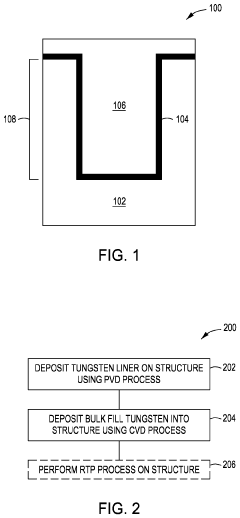
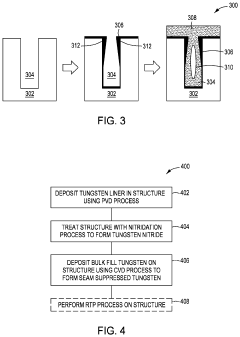
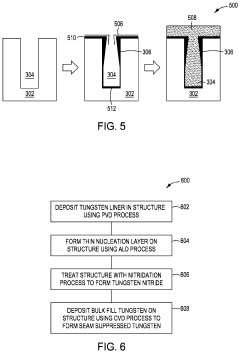
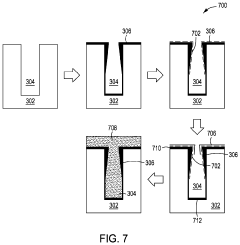
- The proposed method involves a physical vapor deposition of a tungsten liner, followed by an atomic layer deposition nucleation layer and a chemical vapor deposition bulk fill process, with a nitridation step and optional rapid thermal processing to reduce internal stresses and lower resistivity, using argon or krypton as ambient gases and optimizing temperature, pressure, and nitridation conditions.
Environmental Impact
The environmental impact of tungsten technology is a critical consideration as the industry moves towards greater efficiency. Tungsten's unique properties make it an essential material in various applications, but its extraction and processing can have significant environmental consequences.
Mining and processing of tungsten ore often involve energy-intensive operations and the use of chemicals, which can lead to soil and water pollution if not properly managed. The extraction process may also result in habitat destruction and biodiversity loss in mining areas. However, advancements in mining techniques and environmental regulations have led to more sustainable practices in recent years.
Tungsten's durability and high melting point contribute to its long lifespan in many applications, reducing the need for frequent replacements and thereby minimizing waste. This characteristic aligns well with circular economy principles and helps mitigate the environmental impact of tungsten-based products over their lifecycle.
The recycling of tungsten has become increasingly important in reducing the environmental footprint of the industry. Improved recycling technologies have made it possible to recover a significant portion of tungsten from scrap and used products, reducing the demand for primary mining and associated environmental impacts. This trend towards a more circular economy in the tungsten industry is expected to continue and expand.
In the context of energy efficiency, tungsten's role in lighting technology has had a positive environmental impact. The transition from traditional incandescent bulbs to more efficient tungsten halogen lamps and LED technologies has significantly reduced energy consumption and associated carbon emissions in the lighting sector.
The use of tungsten in cutting tools and wear-resistant components has indirect environmental benefits. These applications improve the efficiency and lifespan of machinery across various industries, leading to reduced energy consumption and material waste in manufacturing processes.
As the industry moves towards greater efficiency, research is focusing on developing tungsten-based materials with enhanced performance and reduced environmental impact. This includes exploring new alloys and composites that maximize tungsten's beneficial properties while minimizing the amount of raw material required.
The environmental impact of tungsten technology is closely tied to global efforts to reduce carbon emissions and promote sustainable industrial practices. As such, the industry is likely to see continued innovation in cleaner production methods, improved recycling technologies, and the development of more environmentally friendly tungsten-based products in the coming years.
Supply Chain Dynamics
The supply chain dynamics of tungsten technology are complex and multifaceted, influenced by various factors including geopolitical tensions, environmental regulations, and market demands. Tungsten, a critical raw material for many high-tech applications, has a concentrated supply chain with China dominating global production. This concentration has led to concerns about supply security and price volatility in the global market.
Recent trends indicate a shift towards diversification of tungsten sources, with increased exploration and mining activities in countries like Vietnam, Russia, and Australia. This diversification aims to reduce dependence on a single source and mitigate supply chain risks. However, the development of new tungsten mines faces challenges due to stringent environmental regulations and high capital costs.
The recycling of tungsten has gained significant importance in recent years, driven by sustainability concerns and the need for a circular economy. Advanced recycling technologies are being developed to recover tungsten from scrap materials, reducing the reliance on primary mining. This trend is expected to continue, with recycling playing an increasingly crucial role in the tungsten supply chain.
The COVID-19 pandemic has highlighted the vulnerabilities in the global tungsten supply chain, leading to increased efforts to establish more resilient and localized supply networks. Companies are now focusing on building strategic stockpiles and developing long-term partnerships with suppliers to ensure a stable supply of tungsten.
Technological advancements in tungsten processing and manufacturing are also shaping the supply chain dynamics. Innovations in powder metallurgy and additive manufacturing are enabling more efficient use of tungsten, potentially reducing overall demand and easing supply pressures. These advancements are particularly relevant in industries such as aerospace, automotive, and electronics, where tungsten's unique properties are highly valued.
The push for greater efficiency in tungsten technology is driving changes in the supply chain, with a focus on optimizing extraction processes, reducing waste, and improving material utilization. This efficiency drive is not only enhancing the sustainability of tungsten production but also contributing to cost reductions throughout the supply chain.