Introduction: What is Propionic Acid?
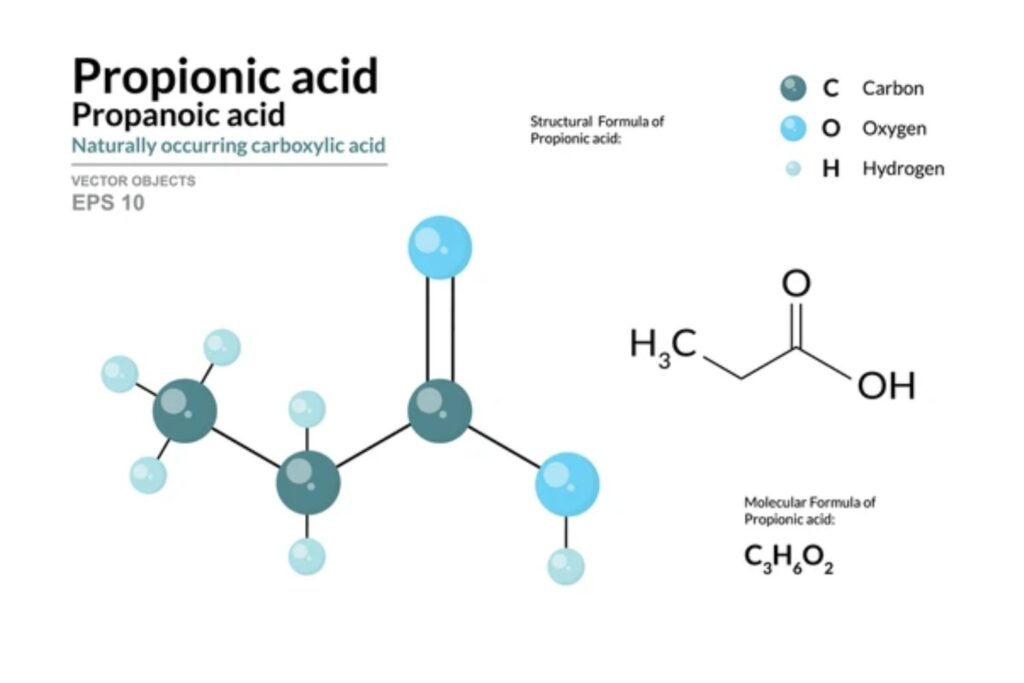
Propionic acid, also known as propanoic acid, is a naturally occurring carboxylic acid with the chemical formula C₃H₆O₂. It consists of a three-carbon chain with a terminal carboxyl group (-COOH), making it one of the simplest short-chain fatty acids. At room temperature, propionic acid is a colorless, oily liquid with a sharp, pungent odor often described as slightly sour or vinegar-like.

Chemical and Physical Properties
- Molecular formula: C₃H₆O₂
- Molar mass: 74.08 g/mol
- Melting point: −20.8 °C
- Boiling point: 141.2 °C
- Solubility: Miscible with water, ethanol, and ether
These properties allow propionic acid to interact well with both polar and non-polar substances, making it highly versatile in chemical processing and formulation design.
Food Preservation: A Cornerstone Use Case
From extending the shelf life of bread to ensuring microbial safety in dairy products, propionic acid plays a central role in modern food preservation.
This section explores its mechanisms, effectiveness, and regulatory status in the global food industry.

- Propionic Acid: Bridging Food Innovation and Sustainable Practices
- How to Lead Propionic Acid Innovations in Food Safety?
- How to Enhance Shelf Life Using Propionic Acid?
- Propionic Acid Advancements in Food Preservatives
- Future Trends in Propionic Acid for Bakery Products
Industrial and Manufacturing Innovations
Propionic acid contributes to high-performance manufacturing through its chemical reactivity and compatibility with various industrial materials.
This section highlights its roles in leather treatment, plasticizer production, textiles, adhesives, and more.
- Propionic Acid Energy Efficiency in Chemical Industries
- Propionic Acid Development for Leather Preservation Solutions
- Innovations in Propionic Acid Synthesis for Industrial Applications
- Tailoring Propionic Acid for Next-Generation Plasticizers
- How to Implement Propionic Acid in Construction Materials?
Pharmaceutical and Biomedical Roles
Due to its antimicrobial and metabolic properties, propionic acid has found applications in pharmaceutical preservation and therapeutic development.
This section explores its influence in drug formulation, microbiome research, and disease prevention.

- Optimizing Propionic Acid Applications in Pharmaceutical Industry
- Propionic Acid in Biomaterials: Latest Research Endeavors
- Propionic Acid in Biotechnology: Current & Emerging Applications
Cosmetics and Personal Care Applications
As consumer demand for safe and stable cosmetic products grows, propionic acid offers a functional and regulatory-compliant solution.
This section discusses its role in extending shelf life and maintaining hygiene in skincare and personal care formulations.

- Enhancing Cosmetic Products with Propionic Acid
- Propionic Acid’s Role in Advanced Coating Technologies
- Propionic Acid in Health and Nutrition: Emerging Applications
- Propionic Acid: Mechanisms and Effects on Human Health
Environmental Sustainability and Green Chemistry
Propionic acid is increasingly viewed as a valuable component in green chemistry, supporting circular economy models and low-impact production.
This section focuses on its use in eco-friendly solvents, waste management, and greenhouse gas mitigation strategies.

- Propionic Acid’s Role in Future Pollution Mitigation Strategies
- Innovating Propionic Acid for Future Sustainability Challenges
- Harnessing Propionic Acid for Environmental Sustainability Goals
- Exploring Eco-Friendly Applications of Propionic Acid
Biotechnology and Advanced Research Directions
Propionic acid is a key target in biotechnological innovation due to its role in microbial fermentation, bio-based synthesis, and energy systems.
This section outlines recent research in synthetic biology, nanotechnology, and sustainable biofuel pathways.
- Propionic Acid in Biotechnology: Current & Emerging Applications
- How to Harness the Power of Propionic Acid in Technological Domains?
- How to Drive Propionic Acid for Cutting-Edge Scientific Studies?
Future Trends and Outlook
As global industries pursue more sustainable and versatile chemical solutions, propionic acid is poised to become increasingly influential across multiple domains. Its combination of antimicrobial efficacy, chemical stability, and environmental adaptability supports a wide range of emerging applications.
A key trend is the transition to bio-based production, with fermentation methods using Propionibacterium species offering lower carbon emissions and compatibility with circular economy goals. Future manufacturing is expected to rely more on renewable feedstocks such as agricultural by-products and glycerol, aligning with green chemistry principles.
Beyond food preservation, propionic acid is expanding into cosmetics, bioplastics, alternative protein preservation, and climate-resilient agriculture. Its integration into sustainable systems—from eco-friendly packaging to methane-reducing animal feed—further highlights its role in environmental innovation.
In the fields of biotechnology and synthetic biology, propionic acid is being explored for its potential in developing custom chemical compounds and optimizing biological processes.
Looking ahead, its cross-sector versatility makes propionic acid a strategic component in future-ready manufacturing and sustainability frameworks. Continued investment in R&D, greener production technologies, and regulatory alignment will be essential to realizing its full potential in a low-carbon economy.
For more scientific explanations of Propionic Acid , try PatSnap Eureka AI Agent.