
Method for desertification control through salix bangongensis cuttage in high-altitude gobi wind-blown sand region
A high-altitude, Gobi technology, applied in the field of Bangong willow cuttings and sand control in the high-altitude Gobi wind beach area, can solve the problems of difficult ecological restoration, difficulty in success, high cost, etc., and achieve fewer natural constraints, convenient construction, and short cycle time. short effect
Patent Information
- Authority / Receiving Office
- CN · China
- Current Assignee / Owner
- Publication Date
- 2015-12-02
Smart Images
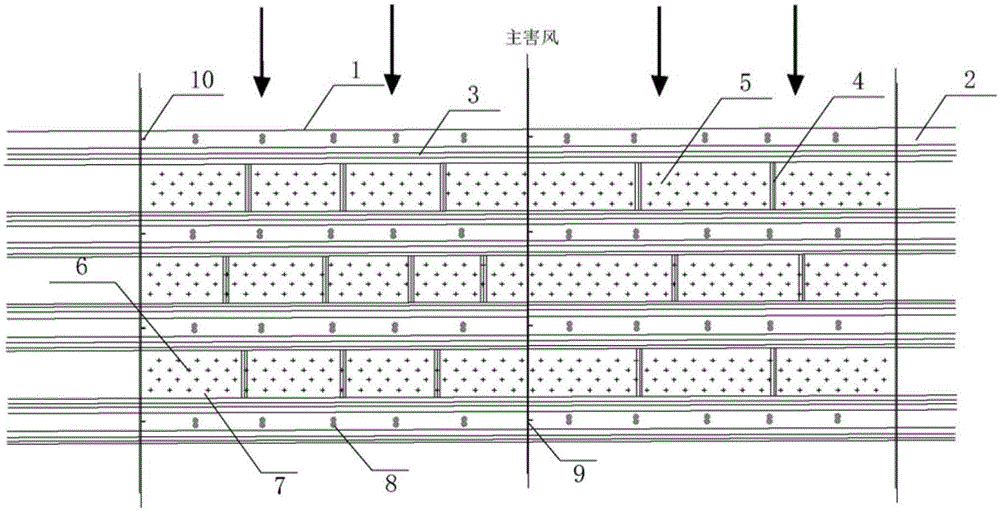
Figure 1 
Figure 2 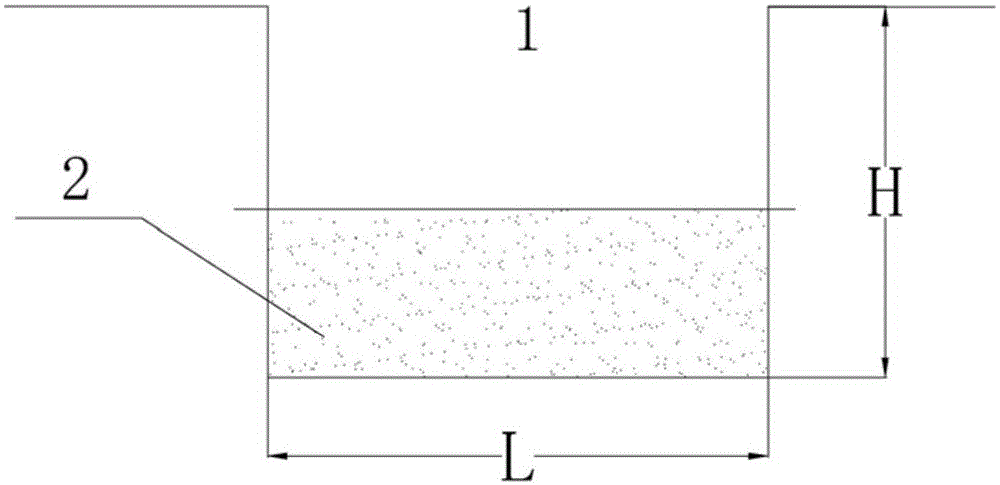
Figure 3
Abstract
Description
technical field
[0001] The invention relates to a method for controlling sand, in particular to a method for controlling sand by cutting Pangong willow in a high-altitude Gobi wind beach area. Background technique
[0002] Ngari area is located in the northern Tibetan Plateau, known as the roof of the world's roof, high altitude (average altitude up to 4500m above), high cold (annual average temperature 0 ℃), high drought (average annual rainfall of 50-100mm), thin air is The main natural features of this area are poor ecological environment and very scarce plant resources. Among them, Bangong willow (Salix bangongensis C. Wanget C. F. Fang) is one of the only two native tree species in this area. It has a wide distribution range and has long been adapted to the extremely dry Gobi desert environment. It is a unique and endangered species in Ngari area. Bangong willow is a small tree (big shrub) with many branches. It is a plant of the Salicaceae family Salix, generally 2-5 ...
Examples
Embodiment Construction
[0031] Embodiments of the present invention are described in further detail below in conjunction with the accompanying drawings:
[0032] see Figure 1 to Figure 7 , a method for controlling sand by Pangong willow cuttings in the windy beach area of the Gobi Gobi, comprising the following steps:
[0033] Step 1: In the high-altitude Gobi wind beach area, through site preparation, strip-shaped trenches 1 are evenly opened along the direction perpendicular to the main wind, and the topsoil is backfilled and leveled to form a trench cutting bed surface 2.
[0034] Step 2: Utilize the sand and gravel dug out of the trench to cultivate an isosceles trapezoidal ridge 3 on both sides of the trench 1, and set an isosceles triangular sand ridge perpendicular to the isosceles trapezoidal ridge 3 in the middle of two adjacent trenches 1. Ridge 4, forming gravel high ridge sand barrier 5;
[0035] Step 3: Flatten the windy sandy beach with high gravel ridges and sand barriers 5, open ...