
Method of treating ischemic injury using apoaequorin
Inactive Publication Date: 2011-06-02
QUINCY BIOSCIENCE LLC
View PDF2 Cites 18 Cited by
- Summary
- Abstract
- Description
- Claims
- Application Information
AI Technical Summary
Benefits of technology
[0008]In a first aspect, the present invention provides a composition for reducing neuronal cell death following an ischemic insult in a subject, c
Problems solved by technology
Neurons are continuously subjected to alterations in intracellular Ca2+ as a result of ongoing activity and these changes are necessary for certain normal neuronal processes to occur, however too much Ca2+ can be toxic (Bano et al., 2005; Choi, 1992; Lee et al., 1999).
However, there is a long recognized, unmet need in the field to identify compositions and treatments that provide neuroprotection when provided after an ischemic insult.
It can be appreciated that the pre-treatment of a subject is generally not feasible, as subjects generally seek medical aid only after an ischemic event has occurred.
Method used
the structure of the environmentally friendly knitted fabric provided by the present invention; figure 2 Flow chart of the yarn wrapping machine for environmentally friendly knitted fabrics and storage devices; image 3 Is the parameter map of the yarn covering machine
View moreImage
Smart Image Click on the blue labels to locate them in the text.
Smart ImageViewing Examples

Examples
Experimental program
Comparison scheme
Effect test
example 1
The Calcium Binding Protein Apoaequorin is Neuroprotective when Injected into Hippocampus Prior to Ischemia
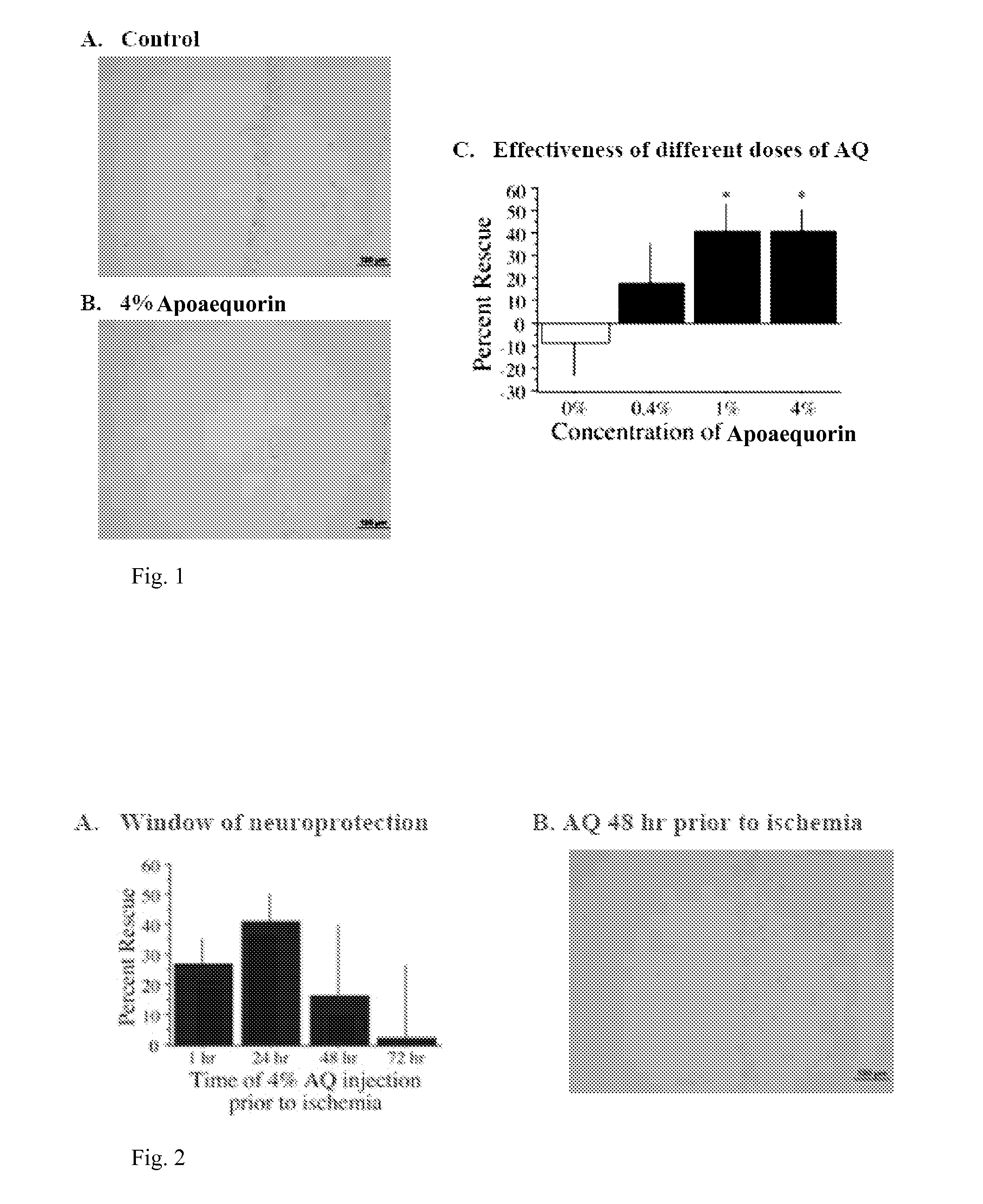
[0049]FIG. 1 illustrates that there were fewer dead cells in area CA1 of the hippocampus in the aequorin-injected hemisphere compared to the control-injected hemisphere
example 2
The Neuroprotective Effect of Apoaequorin is Time-Dependent
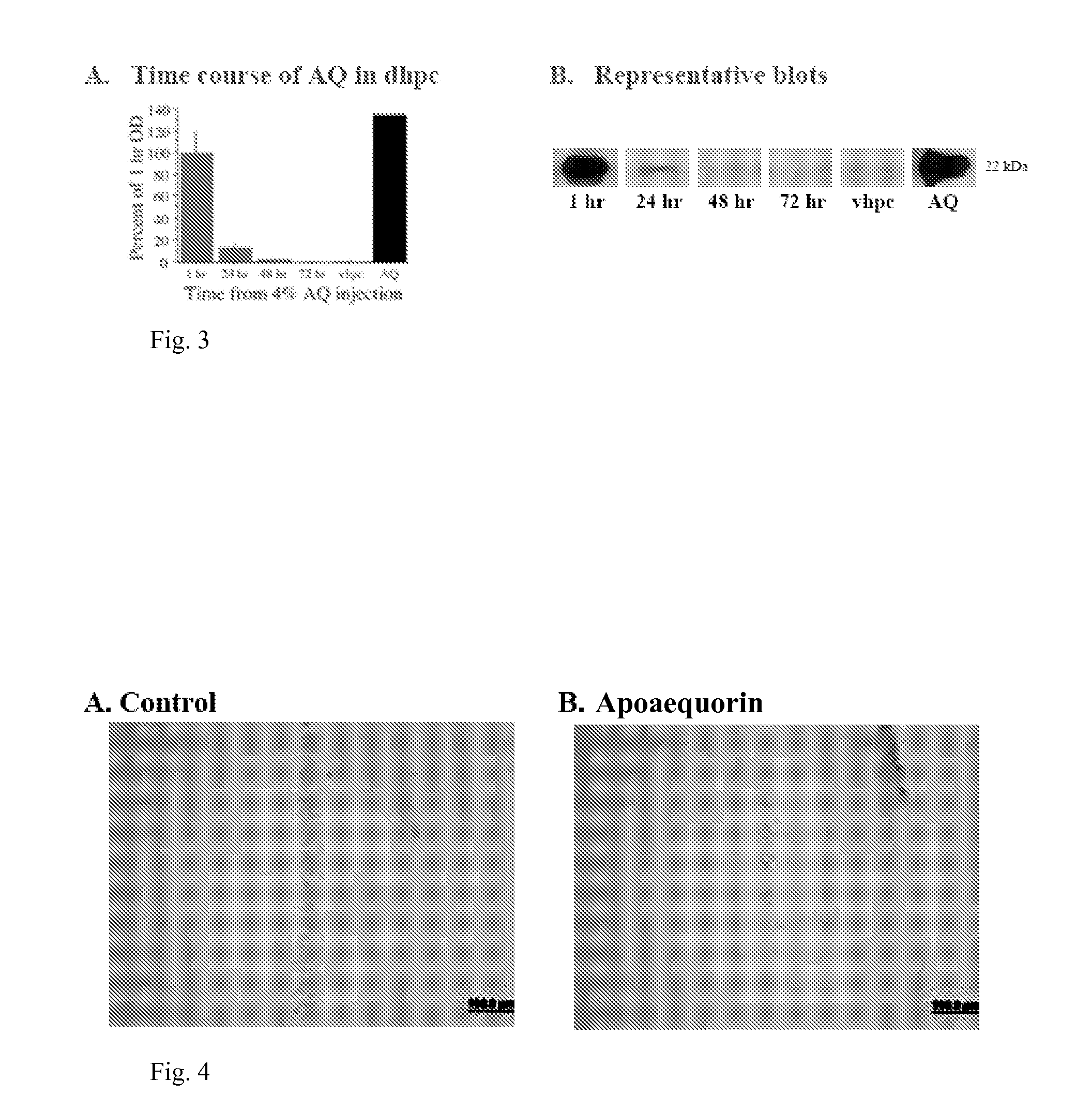
[0050]FIGS. 2 and 3 show that when injected 48 or 72 hrs prior to ischemia, apoaequorin was no longer neuroprotective.
example 3
Apoaequorin is Neuroprotective when Administered Post-Ischemia
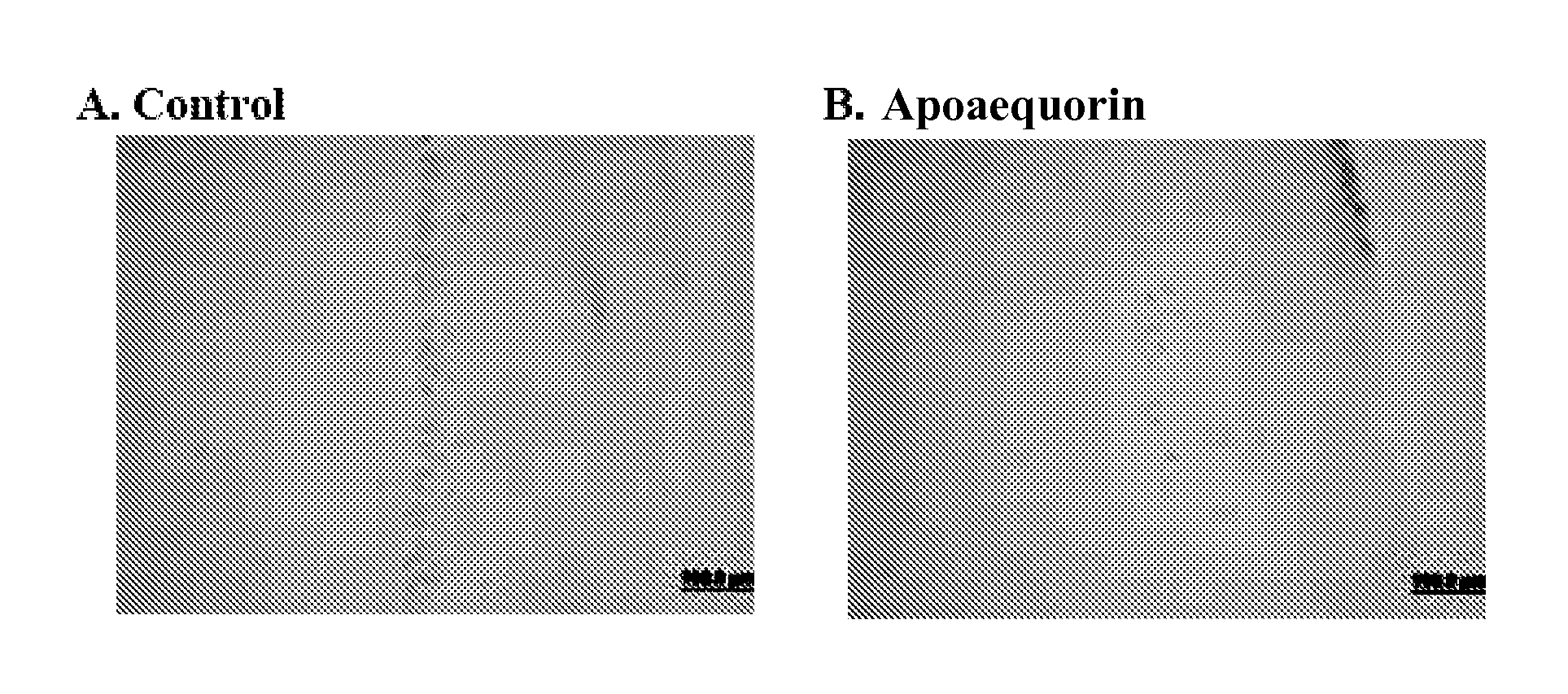
[0051]FIG. 4 illustrates data showing there were fewer dead cells in slices given apoaequorin immediately after 5 min OGD compared to slices given aCSF.
the structure of the environmentally friendly knitted fabric provided by the present invention; figure 2 Flow chart of the yarn wrapping machine for environmentally friendly knitted fabrics and storage devices; image 3 Is the parameter map of the yarn covering machine
Login to View More PUM
| Property | Measurement | Unit |
|---|---|---|
| Cell death | aaaaa | aaaaa |
Login to View More
Abstract
Compositions containing apoaequorin and methods for their use in treating ischemic injury, particularly reduction in neuronal cell death following ischemic insult, are provided by the present invention.
Description
CROSS-REFERENCE TO RELATED APPLICATIONS[0001]This application is a non-provisional utility application claiming the benefit of U.S. Application No. 61 / 252,344, filed Oct. 16, 2009, which is incorporated herein by reference in its entirety for all purposes.STATEMENT REGARDING FEDERALLY SPONSORED RESEARCH OR DEVELOPMENT[0002]Not Applicable.FIELD OF THE INVENTION[0003]This invention relates generally to methods for treatment of ischemic injury. In particular, this invention is directed to the use of apoaequorin to provide protection to neurons following an ischemic insult.BACKGROUND OF THE INVENTION[0004]Neurons are continuously subjected to alterations in intracellular Ca2+ as a result of ongoing activity and these changes are necessary for certain normal neuronal processes to occur, however too much Ca2+ can be toxic (Bano et al., 2005; Choi, 1992; Lee et al., 1999). As a result, the intracellular Ca2+ concentration in neurons is very tightly regulated (Kristian & Siesjo, 1998). Seve...
Claims
the structure of the environmentally friendly knitted fabric provided by the present invention; figure 2 Flow chart of the yarn wrapping machine for environmentally friendly knitted fabrics and storage devices; image 3 Is the parameter map of the yarn covering machine
Login to View More Application Information
Patent Timeline
 Login to View More
 IPC IPC(8): A61K38/17A61P25/00
CPCA61K38/17A61P25/00
InventorUNDERWOOD, MARK Y.
OwnerQUINCY BIOSCIENCE LLC