

Heart failure detecting medical device
a technology for detecting medical devices and heart failure, applied in the field of implantable medical devices, can solve the problems of affecting the ability of the heart to fill, difficult to spot the degradation before the patient, and already severely ill patients, so as to increase the chances of successful treatmen
Patent Information
- Authority / Receiving Office
- US · United States
- Patent Type
- Patents(United States)
- Current Assignee / Owner
- Publication Date
- 2013-06-04
- Estimated Expiration
- Not applicable · inactive patent
Smart Images
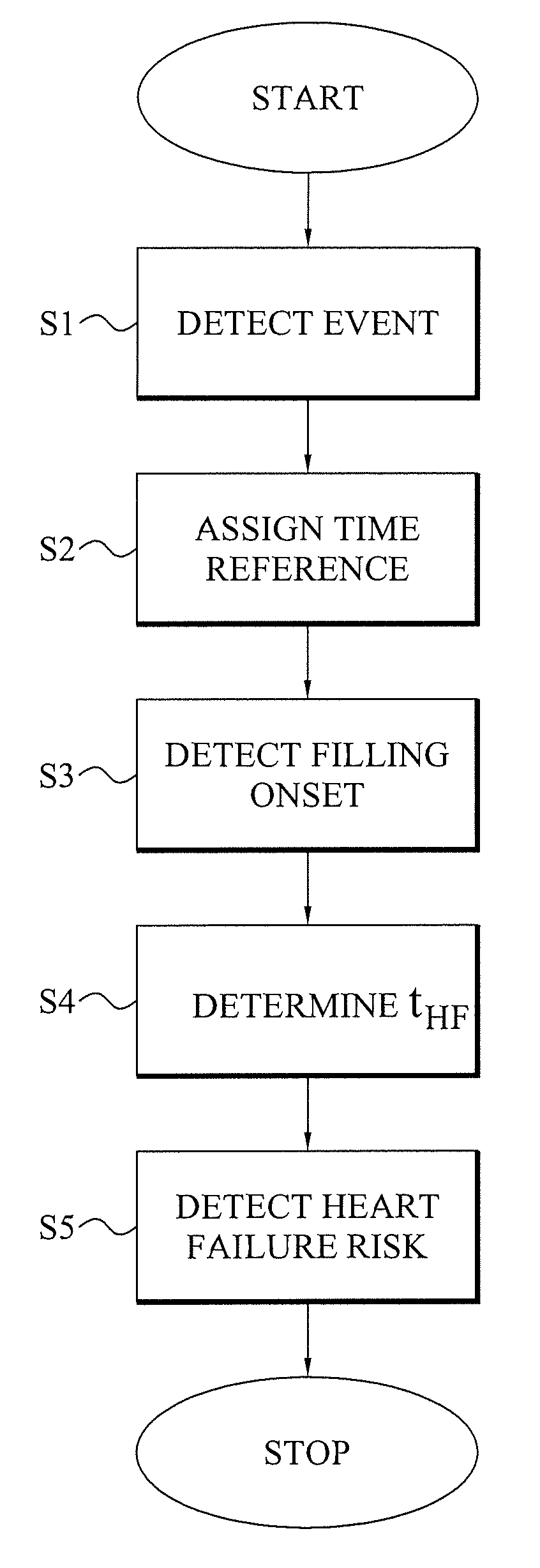
Figure 1 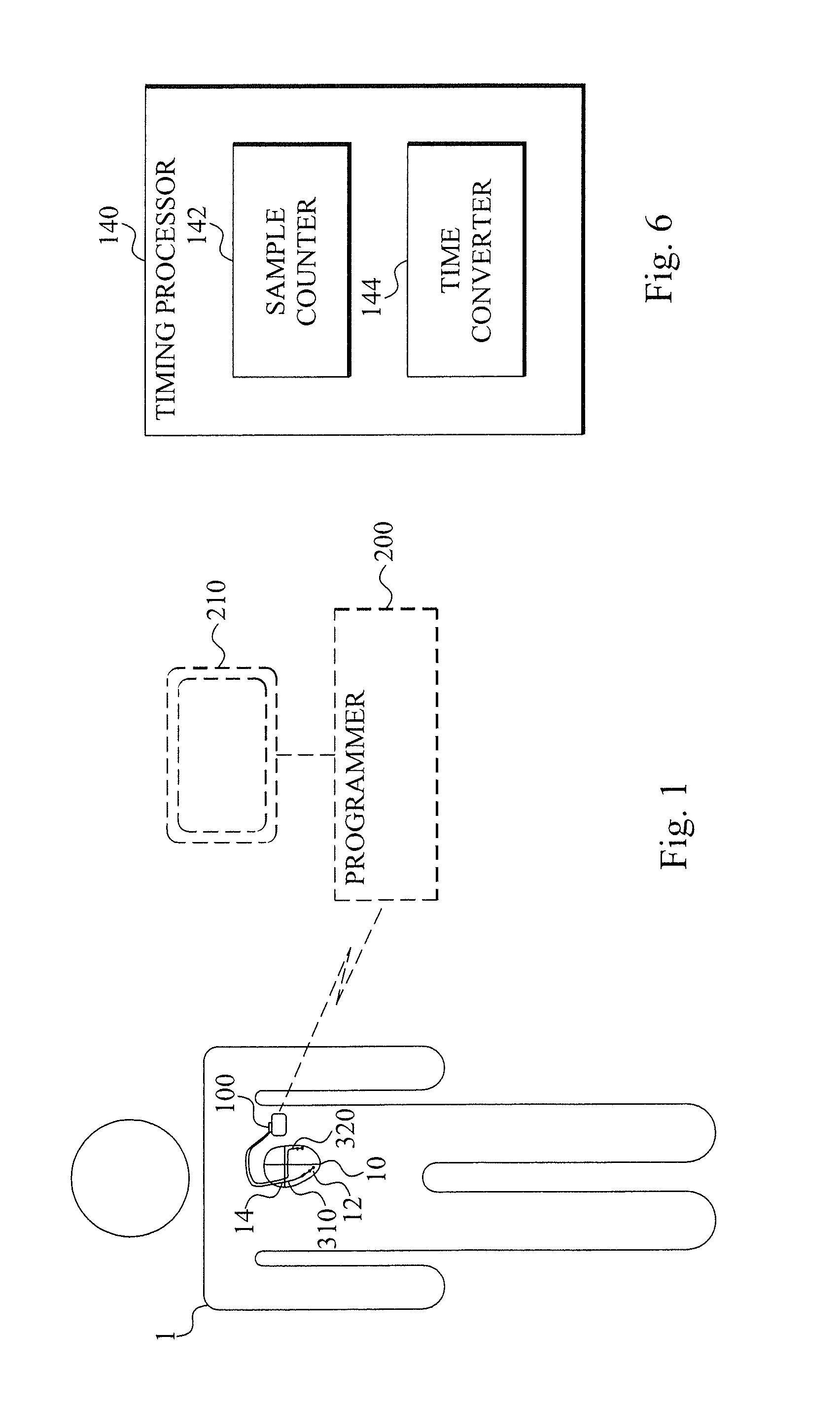
Figure 2 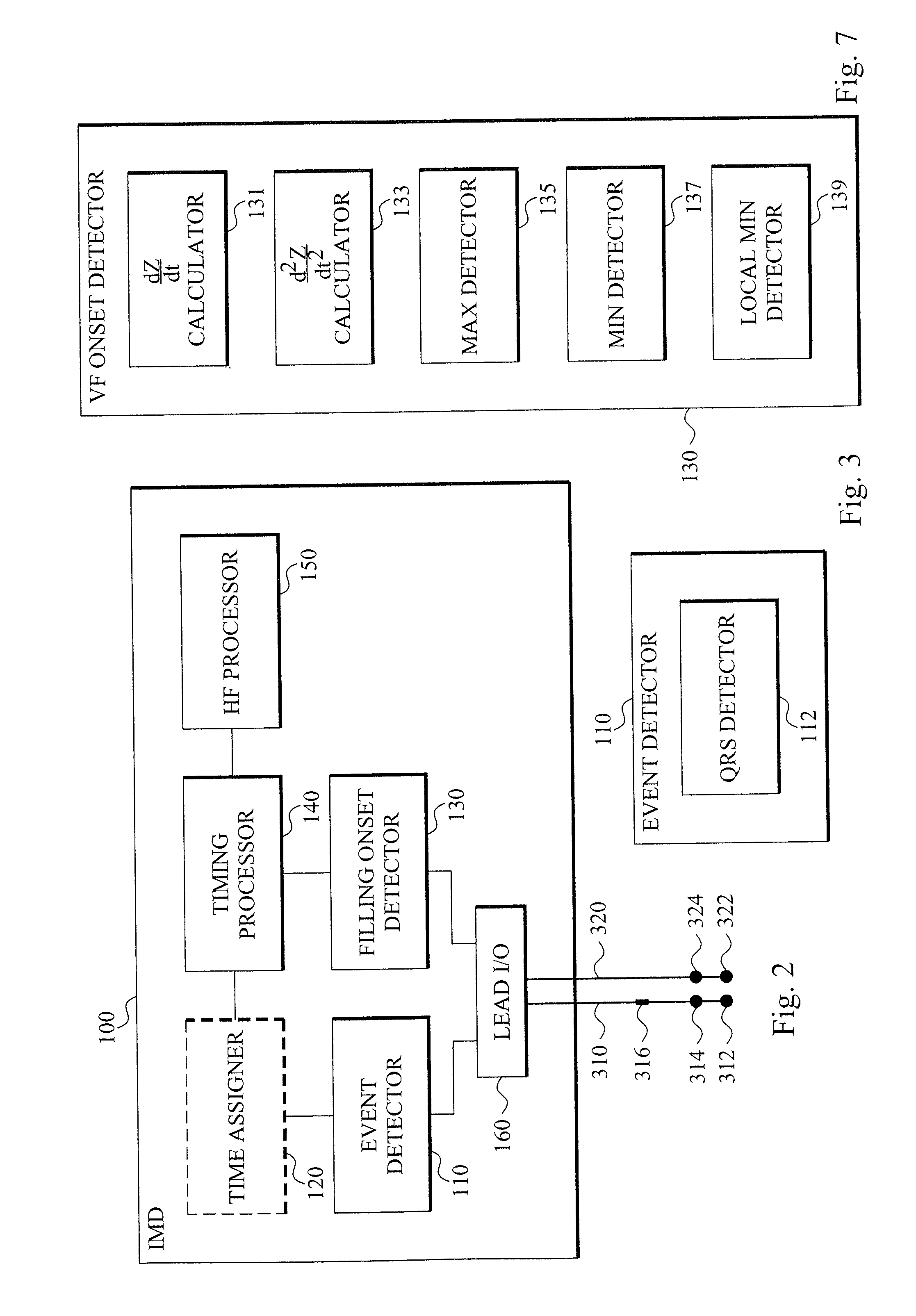
Figure 3
Abstract
Description
BACKGROUND OF THE INVENTION
[0001] 1. Field of the Invention
[0002] The present invention generally relates to implantable medical devices, and in particular such medical devices allowing an early detection of heart failure in subjects.
[0003] 2. Description of the Prior Art
[0004] The heart is an essential organ in humans and most animals, pumping blood throughout the human / animal body. As a consequence, it is fundamentally important that the mechanical pumping properties of the heart operate correctly.
[0005] Heart failure is a condition that can result from a structural or functional cardiac disorder that impairs the ability of the heart to fill with or pump a sufficient amount of blood through the body.
[0006] Today, ejection fraction (EF) is the measure most commonly associated with heart failure (HF) diagnostics. There is a large population of the heart failure patients who have a preserved ejection-fraction (HFPEF-HF with preserved EF, HFNEF-HF with normal EF, or DHF—diastolic heart fail...
Examples
Embodiment Construction
[0033]Throughout the drawings, the same reference characters will be used for corresponding or similar elements.
[0034]The present invention relates to implantable medical devices and methods having capability of detecting heart failure of an animal subject, preferably mammalian subject and more preferably a human subject, at a very early state of the heart failure progression. The invention uses a radically different approach than taken by the prior art ejection-fraction based detection techniques to achieve this early detection.
[0035]The invention is based on the effect that, following a subject's falling ill with heart failure and during the heart failure progression, the subject body and in particular the heart endeavors to compensate for the condition. This compensation involves increasing the time spent for mechanically filling of the ventricles during a heart cycle. The reason for this is to allow sufficient filling time to thereby increase the pre-load. According to Starling'...