

Quantum dot composition, resin composition, and wavelength conversion material
The quantum dot composition, with semiconductor nanoparticle cores and metal oxide coatings modified by phosphonic acid derivatives, addresses the stability and emission efficiency issues of non-toxic quantum dots, enabling stable and efficient fluorescence in wavelength conversion applications.
Patent Information
- Application Number
- PCT/JP2024/017020
- Authority / Receiving Office
- WO · WO
- Patent Type
- Applications
- Current Assignee / Owner
- Priority Date
- 2023-05-18
- Filing Date
- 2024-05-08
- Publication Date
- 2024-11-21
AI Technical Summary
Quantum dots without toxic elements like Cd and Pb face stability issues due to surface defects and oxidation, leading to deterioration of fluorescence emission efficiency, especially when used in wavelength conversion applications where they are exposed to light and heat, and existing stabilization methods like gas barrier films and oxide supports have limitations in preventing oxidation and thickness constraints.
A quantum dot composition featuring semiconductor nanoparticle cores without Cd and Pb, coated with a metal oxide and modified with phosphonic acid derivatives, which enhances stability and fluorescence emission efficiency by preventing surface oxidation and allowing for thinner wavelength conversion films.
The quantum dot composition effectively suppresses deterioration of fluorescence emission efficiency, improving stability and allowing for the use of thinner wavelength conversion films while maintaining high photostability even under prolonged exposure to light and heat.
Smart Images
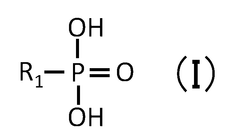
Figure JPOXMLDOC01-APPB-C000001 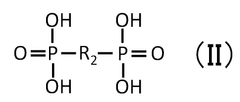
Figure JPOXMLDOC01-APPB-C000002 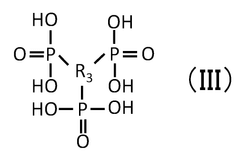
Figure JPOXMLDOC01-APPB-C000003
Abstract
Description
Quantum dot composition, resin composition, and wavelength conversion material
[0001] The present invention relates to a quantum dot composition, a resin composition, and a wavelength converting material.
[0002] Quantum dots, which are semiconductor particles with nanometer-sized particle diameters, have discrete energy levels due to the confinement of excitons generated by light absorption in nanometer-sized spaces, and their band gaps depend on the particle diameter. As a result, quantum dots have highly efficient fluorescence emission and sharp emission spectra. Furthermore, because the band gap changes depending on the particle diameter, quantum dots have the advantage of being able to control the emission wavelength, making them promising for use as wavelength conversion materials in solid-state lighting and displays (Patent Document 1).
[0003] Quantum dots containing Cd or Pb are examples of quantum dots that exhibit excellent fluorescence emission properties. However, because Cd and Pb are highly toxic to the human body and the environment, restrictions on their use are being considered around the world, including the European Union's RoHS Directive. Therefore, quantum dots that do not contain these toxic elements are being investigated.
[0004] Furthermore, as a mounting method using quantum dots as a wavelength conversion material, a method has been proposed in which quantum dots are dispersed in a resin material, and a resin composition containing the quantum dots is laminated onto a transparent film, thereby incorporating the resulting material into a backlight unit as a wavelength conversion film (Patent Document 2).
[0005] However, quantum dots are prone to instability due to their small nanometer-sized particle diameter, large specific surface area, high surface energy, and surface activity. Therefore, surface defects are likely to occur on the quantum dot surface due to dangling bonds and oxidation reactions, which cause deterioration of their fluorescence emission properties. Currently available quantum dots have such stability issues, and are known to cause deterioration of their emission properties due to heat, humidity, photoexcitation, and other factors.
[0006] To prevent this degradation, organic ligands are attached to the quantum dot surface after synthesis, which improves dispersibility in solvents and resins and passivates defects, thereby suppressing the degradation of fluorescence efficiency.
[0007] However, if an appropriate ligand is not selected for the quantum dot surface, the ligand may be detached from the quantum dot surface due to external influences such as heat or light irradiation, resulting in a deterioration in fluorescence emission efficiency.
[0008] The stability of quantum dots is an important issue because changes in the fluorescence efficiency of quantum dots over time can lead to defects such as uneven color and light emission and missing dots when used in displays.
[0009] Japanese Patent Application Laid-Open No. 2012-022028 Japanese Patent Application Laid-Open No. 2013-544018 Japanese Patent Application Laid-Open No. 2019-215516 Japanese Patent Application Laid-Open No. 5900720 Japanese Patent Application Laid-Open No. 2018-109141
[0010] To address these problems, methods have been investigated, such as supporting quantum dots on inorganic oxides (Patent Document 3) and improving the stability of quantum dots by using a gas barrier film with low oxygen and moisture permeability (Patent Document 4).
[0011] In the method of supporting quantum dots on oxide, direct contact of oxygen and water with the quantum dot surface is prevented, and oxidation reactions are suppressed, thereby suppressing deterioration of fluorescence emission efficiency.
[0012] However, in methods such as the general sol-gel method, in which metal oxide precursors are reacted in a liquid phase at low temperatures, many hydroxyl groups remain on the oxide surface after the reaction. These surface hydroxyl groups form hydrogen bonds with water molecules in the air, forming a thin nanometer-sized layer of adsorbed water, known as a hydration layer, on the oxide surface.
[0013] It is difficult to completely remove the hydroxyl groups on the oxide surface by heating. Therefore, when a composition in which quantum dots are supported on an oxide is used as a wavelength conversion material, the material is used in an environment where it is exposed to light and heat for a long time. Therefore, the adsorbed water that penetrates from the oxide surface to the interior gradually progresses the oxidation reaction on the quantum dot surface, resulting in a deterioration in the fluorescence emission efficiency.
[0014] Furthermore, stabilization using a barrier film also poses the problem of deterioration due to the diffusion of oxygen and water vapor from the film edge.
[0015] Furthermore, for mobile applications such as tablets and smartphones, there is a demand for thinner wavelength conversion films. However, barrier films generally have a thickness of about 20 to 200 μm, and in order to protect both sides of the film, the thickness becomes at least 40 μm or more, which places a limit on how thin the wavelength conversion film can be.
[0016] Furthermore, a method has been proposed in which quantum dots are used as color filters, rather than as wavelength conversion films, to directly convert blue excitation light into green and red (Patent Document 5). When quantum dots are used as color filters, barrier films, etc. cannot be used as in the wavelength conversion films described above, and deterioration of the fluorescence emission efficiency of the quantum dots due to curing of the quantum dot composition, subsequent manufacturing processes, and long-term use becomes an important issue.
[0017] Although quantum dots that do not contain toxic elements are being investigated, the degradation of fluorescence emission efficiency is a problem.
[0018] The present invention has been made to solve the above problems, and aims to provide a quantum dot composition that suppresses deterioration of fluorescence emission efficiency even when low-toxicity quantum dots are used, a resin composition containing the quantum dot composition, and a wavelength converting material.
[0019] The present invention has been made to achieve the above-mentioned object, and provides a quantum dot composition containing quantum dots that emit fluorescence when exposed to excitation light, wherein the quantum dots are composed of a semiconductor nanoparticle core and a semiconductor nanoparticle shell that do not contain Cd or Pb, the quantum dot surfaces are coated with a metal oxide, and the quantum dot surfaces or the metal oxide surfaces are modified with a phosphonic acid derivative.
[0020] Such a quantum dot composition can suppress the deterioration of fluorescence emission efficiency even when it is composed of quantum dots with low toxicity.
[0021] In this case, it is preferable that the quantum dot comprises the semiconductor nanoparticle core and one or more semiconductor nanoparticle shells covering the semiconductor nanoparticle core.
[0022] Such a quantum dot composition is preferable in terms of fluorescence emission properties and stability.
[0023] In this case, the semiconductor nanoparticle core may be ZnS, ZnSe, ZnTe, AlN, AlP, AlAs, AlSb, GaN, GaP, GaAs, GaSb, InN, InP, InAs, InSb, AgGaS 2 , AgInS 2 , AgGaSe 2 , AgInSe 2 , CuGaS 2 , CuGaSe 2 , CuInS 2 , CuInSe 2 , ZnSiP 2 , and ZnGeP 2 It is preferable that the compound is selected from the following compounds as a single crystal, a plurality of crystals or a mixed crystal.
[0024] Such a quantum dot composition is preferable in terms of fluorescence emission properties and stability.
[0025] At this time, the surface of the semiconductor nanoparticle core is GaCl 3 , GaI 3 , GaBr 3 , ZnCl 2 , ZnBr2 , ZnI 2 , InCl 3 , InBr 3 , InI 3 , AgCl, AgBr, AgI, KCl, KBr, KI, NaCl, NaBr, NaI, MgCl 2 , MgBr 2 , MgI 2 , CaCl 2 , CaBr 2 , CaI 2 , MnCl 2 , MnBr 2 , MnI 2 , FeCl 2 , FeBr 2 , FeI 2 , CuCl 2 , CuBr 2 , CuI 2 , ZrCl 4 , ZrBr 4 , ZrI 4 , GeCl 4 , GeBr 4 , GeI 4 It is preferable that the material is passivated with one or more compounds selected from the following:
[0026] Such a quantum dot composition is preferable in terms of fluorescence emission properties and stability.
[0027] In this case, it is preferable that the semiconductor nanoparticle shell is selected from ZnS, ZnSe, ZnTe, AlN, AlP, AlAs, AlSb, GaN, GaP, GaAs, GaSb, InN, InP, InAs, and InSb as a single crystal, a plurality of crystals, or a mixed crystal.
[0028] Such a quantum dot composition is preferable in terms of improved fluorescence emission efficiency and stability.
[0029] At this time, the metal oxide is TiO 2 , ZnO, Al 2 O 3 , SiO 2 , ZrO 2 , Fe 2 O 3 , MgO, Y 2 O3 , HfO 2 , CeO 2 , In 2 O 3 , SnO 2 , W.O. 3 , CrO 3 , Ta 2 O 3 , BaTiO 3 , V 2 O 5 , NiO, NbO, Cu 2 O, CuO, MoO 3 It is preferable that the compound is at least one compound selected from the following:
[0030] Such a quantum dot composition is preferable in terms of improved fluorescence emission efficiency and stability.
[0031] In this case, the phosphonic acid derivative is preferably represented by the following formula (I): (In formula (I), R 1 is a monovalent organic group having one or more carbon atoms.
[0032] Such a quantum dot composition suppresses deterioration in fluorescence emission efficiency and improves stability.
[0033] In this case, the phosphonic acid derivative may be 3-phenyl-2-propenylphosphonic acid, tenofovir, 2-phosphonobutane-1,2,4-tricarboxylic acid, 4-phosphonobenzoic acid, vinylphosphonic acid, n-octylphosphonic acid, (3-bromopropyl)phosphonic acid, (4-bromobutyl)phosphonic acid, (2-bromoethyl)phosphonic acid, (4-bromophenyl)phosphonic acid, 3-phosphonopropionic acid, (4-hydroxyphenyl)phosphonic acid, hexylphosphonic acid, Cylphosphonic acid, 4-phosphonobutyric acid, propylphosphonic acid, (4-aminobenzyl)phosphonic acid, (4-aminophenyl)phosphonic acid, 3-phosphonobenzoic acid, methylphosphonic acid, nonylphosphonic acid, benzhydrylphosphonic acid, octadecylphosphonic acid, (aminomethyl)phosphonic acid, (2-phenylethyl)phosphonic acid, ethylphosphonic acid, butylphosphonic acid, decylphosphonic acid, dodecylphosphonic acid, (2-chloroethyl)phosphonic acid, 4-Methoxyphenylphosphonic acid, hexadecylphosphonic acid, (4-hydroxybenzyl)phosphonic acid, phenylphosphonic acid, (1H,1H,2H,2H-heptadecafluorodecyl)phosphonic acid, tetradecylphosphonic acid, (1-aminoethyl)phosphonic acid, undecylphosphonic acid, heptylphosphonic acid, 10-carboxydecylphosphonic acid, 11-aminoundecylphosphonic acid hydrobromide, 11-hydroxyundecylphosphonic acid, 1 It is preferable that the phosphonic acid is one or more selected from the group consisting of 1H,1H,2H,2H-perfluoro-n-hexylphosphonic acid, 1H,1H,2H,2H-perfluorooctylphosphonic acid, 1H,1H,2H,2H-perfluoro-n-decylphosphonic acid, 11-{2-[2-(2-methoxyethoxy)ethoxy]ethoxy}undecylphosphonic acid, 12-mercaptodecylphosphonic acid, and [11-(acryloyloxy)undecyl]phosphonic acid.
[0034] Such phosphonic acid derivatives can be used in the quantum dot composition of the present invention, and the deterioration of the fluorescence emission efficiency is suppressed, resulting in improved stability.
[0035] In this case, the phosphonic acid derivative is preferably represented by the following formula (II): (In formula (II), R 2is a divalent organic group having one or more carbon atoms.
[0036] Such a quantum dot composition suppresses deterioration in fluorescence emission efficiency and improves stability.
[0037] In this case, the phosphonic acid derivative is preferably one or more selected from m-xylylene diphosphonic acid, o-xylylene diphosphonic acid, methylene diphosphonic acid, alendronic acid, 1,4-butylenediphosphonic acid, glycine-N,N-bis(methylenephosphonic acid), p-xylylene diphosphonic acid, zoledronic acid, 1,3-propylene diphosphonic acid, 1,5-pentylene diphosphonic acid, 1,4-phenylenediphosphonic acid, 1,2-ethylenediphosphonic acid, 1,6-hexylene diphosphonic acid, minodronate, and 1-hydroxyethane-1,1-diphosphonic acid.
[0038] Such phosphonic acid derivatives can be used in the quantum dot composition of the present invention.
[0039] In this case, the phosphonic acid derivative is preferably represented by the following formula (III): (In formula (III), R 3 is a trivalent organic group having one or more carbon atoms.
[0040] Such a quantum dot composition suppresses deterioration in fluorescence emission efficiency and improves stability.
[0041] In this case, the phosphonic acid derivative is preferably nitrilotris(methylene phosphonic acid).
[0042] Such phosphonic acid derivatives can be used in the quantum dot composition of the present invention.
[0043] In this case, the phosphonic acid derivative is preferably represented by the following formula (IV): (In formula (IV), R 4 is a divalent organic group having one or more carbon atoms.
[0044] Such a quantum dot composition suppresses deterioration in fluorescence emission efficiency and improves stability.
[0045] In this case, the phosphonic acid derivative is preferably N,N,N',N'-ethylenediaminetetrakis(methylenephosphonic acid).
[0046] Such phosphonic acid derivatives can be used in the quantum dot composition of the present invention.
[0047] At this time, the R 1 preferably contains at least one of a linear or branched alkyl group having one or more carbon atoms, a linear or branched alkylene group having one or more carbon atoms, an amino group, a carboxylic acid group, an ethoxy group, a bromo group, a chloro group, a phenol group, a perfluoroalkyl group, a hydroxyl group, a phenyl group, a thiol group, an acryloyl group, and an oligoethylene glycol group.
[0048] Such phosphonic acid derivatives can be used in the quantum dot composition of the present invention.
[0049] At this time, the R 2 preferably contains at least one of a linear or branched alkyl group having one or more carbon atoms, a linear or branched alkylene group having one or more carbon atoms, an amino group, a carboxylic acid group, an ethoxy group, a bromo group, a chloro group, a phenol group, a perfluoroalkyl group, a hydroxyl group, a phenyl group, a thiol group, an acryloyl group, and an oligoethylene glycol group.
[0050] Such phosphonic acid derivatives can be used in the quantum dot composition of the present invention.
[0051] At this time, the R 3preferably contains at least one of a linear or branched alkyl group having one or more carbon atoms, a linear or branched alkylene group having one or more carbon atoms, an amino group, a carboxylic acid group, an ethoxy group, a bromo group, a chloro group, a phenol group, a perfluoroalkyl group, a hydroxyl group, a phenyl group, a thiol group, an acryloyl group, and an oligoethylene glycol group.
[0052] Such phosphonic acid derivatives can be used in the quantum dot composition of the present invention.
[0053] At this time, the R 4 preferably contains at least one of a linear or branched alkyl group having one or more carbon atoms, a linear or branched alkylene group having one or more carbon atoms, an amino group, a carboxylic acid group, an ethoxy group, a bromo group, a chloro group, a phenol group, a perfluoroalkyl group, a hydroxyl group, a phenyl group, a thiol group, an acryloyl group, and an oligoethylene glycol group.
[0054] Such phosphonic acid derivatives can be used in the quantum dot composition of the present invention.
[0055] The present invention also provides a resin composition in which the quantum dot composition described above is dispersed in a resin.
[0056] Such a resin composition is one in which the deterioration of the fluorescence emission efficiency is suppressed.
[0057] In this case, the resin is preferably at least one selected from the group consisting of epoxy resins, acrylic resins, fluorine resins, silicone resins, carbonate resins, and glass resins.
[0058] Such resins can be used in the resin composition of the present invention.
[0059] The present invention also provides a wavelength converting material comprising a cured product of the resin composition described above.
[0060] Such a wavelength converting material suppresses deterioration of the fluorescence emission efficiency and improves reliability.
[0061] As described above, according to the quantum dot composition, the resin composition containing the quantum dot composition, and the wavelength converting material of the present invention, deterioration of the fluorescence emission efficiency is suppressed even when low-toxicity quantum dots are used.
[0062] The present invention will be described in detail below, but the present invention is not limited thereto.
[0063] As described above, there has been a demand for a quantum dot composition that suppresses the deterioration of fluorescence emission efficiency even when using quantum dots with low toxicity.
[0064] As a result of extensive research into the above-mentioned problems, the present inventors have discovered that a quantum dot composition containing quantum dots that emit fluorescence when exposed to excitation light, wherein the quantum dots are composed of a semiconductor nanoparticle core and a semiconductor nanoparticle shell that do not contain Cd or Pb, the quantum dot surfaces are coated with a metal oxide, and the quantum dot surfaces or the metal oxide surfaces are modified with a phosphonic acid derivative, can suppress deterioration in fluorescence emission efficiency even when low-toxicity quantum dots are used, and have completed the present invention.
[0065] As described above, there has been a demand for a resin composition containing a quantum dot composition that suppresses deterioration in fluorescence emission efficiency even when low-toxicity quantum dots are used.
[0066] As a result of extensive research into the above-mentioned problems, the present inventors have discovered that a resin composition characterized by having the quantum dot composition described above dispersed in a resin can suppress deterioration in fluorescence emission efficiency even when low-toxicity quantum dots are used, and have completed the present invention.
[0067] Furthermore, as mentioned above, there has been a demand for wavelength conversion materials that use quantum dots with low toxicity and that suppress deterioration in fluorescence emission efficiency.
[0068] As a result of extensive research into the above-mentioned problems, the present inventors have found that a wavelength converting material characterized by containing a cured product of the resin composition described above can suppress deterioration of fluorescence emission efficiency even when low-toxicity quantum dots are used, and have completed the present invention.
[0069] Hereinafter, embodiments of the present invention will be described, but in the present invention, the compositions, types, and production methods of the quantum dots, metal oxides, and phosphonic acid derivatives are not limited to the following embodiments.
[0070] That is, the present invention provides a quantum dot composition containing quantum dots that emit fluorescence when exposed to excitation light, the quantum dots comprising a semiconductor nanoparticle core and a semiconductor nanoparticle shell that do not contain Cd or Pb, the quantum dot surfaces being coated with a metal oxide, and the quantum dot surfaces or the metal oxide surface being modified with a phosphonic acid derivative.
[0071] [Quantum Dots] The structure of the quantum dots in the present invention is not particularly limited as long as they consist of a semiconductor nanoparticle core and a semiconductor nanoparticle shell. Such quantum dots have excellent fluorescence emission properties and stability. For example, in semiconductor nanoparticles with a core / shell structure in which a nano-sized semiconductor particle serves as the core and a semiconductor particle with a larger band gap and lower lattice mismatch than the core serves as the shell, excitons generated in the shell are confined inside the core particle, improving fluorescence emission efficiency, and further improving stability because the core surface is covered by the shell.
[0072] Furthermore, it is preferable that the quantum dots are composed of a semiconductor nanoparticle core and one or more semiconductor nanoparticle shells covering the semiconductor nanoparticle core. With such a quantum dot composition, the deterioration of the fluorescence emission efficiency is further suppressed.
[0073] The material for the semiconductor nanoparticle core of the core / shell semiconductor nanoparticle is not particularly limited as long as it does not contain the elements Cd or Pb from the viewpoint of toxicity. For example, a material selected from the group consisting of II-VI compounds, III-V compounds, I-III-VI compounds, II-IV-V compounds, and alloys or mixed crystals thereof can be used.
[0074] Specifically, the materials for the semiconductor nanoparticle core include ZnS, ZnSe, ZnTe, AlN, AlP, AlAs, AlSb, GaN, GaP, GaAs, GaSb, InN, InP, InAs, InSb, and AgGaS. 2 , AgInS 2 , AgGaSe 2 , AgInSe 2 , CuGaS 2 , CuGaSe 2 , CuInS 2 , CuInSe 2 , ZnSiP 2 , and ZnGeP 2 Among these materials, ZnSe, ZnTe, and InP are particularly preferable in terms of fluorescent emission characteristics and stability.
[0075] Furthermore, the surface of the core particle of the core / shell semiconductor nanoparticles is preferably passivated with an inorganic compound, which inactivates defects on the surface of the core particle, improves the fluorescence emission efficiency, and suppresses deterioration of the fluorescence emission efficiency over time.
[0076] The inorganic compound for passivation is not particularly limited, but examples thereof include metal halides, and from the viewpoint of improving the fluorescent light emission efficiency, GaCl 3 , GaI 3 , GaBr 3 , ZnCl 2 , ZnBr 2 , ZnI 2 , InCl 3 , InBr 3 , InI 3 , AgCl, AgBr, AgI, KCl, KBr, KI, NaCl, NaBr, NaI, MgCl 2 , MgBr 2 , MgI 2 , CaCl 2 , CaBr 2 , CaI 2 , MnCl 2 , MnBr 2 , MnI 2 , FeCl 2 , FeBr2 , FeI 2 , CuCl 2 , CuBr 2 , CuI 2 , ZrCl 4 , ZrBr 4 , ZrI 4 , GeCl 4 , GeBr 4 , GeI 4 Particularly preferred is at least one compound selected from
[0077] The material for the semiconductor nanoparticle shell is not particularly limited as long as it does not contain the elements Cd or Pb from the viewpoint of toxicity. However, it is preferable that the material has a large band gap and low lattice mismatch with respect to the core material, and a material selected from the group consisting of alloys and mixed crystals of II-VI compounds and III-V compounds can be used.
[0078] Specific shell materials that can be used include ZnS, ZnSe, ZnTe, AlN, AlP, AlAs, AlSb, GaN, GaP, GaAs, GaSb, InN, InP, InAs, and InSb, selected alone, in combination, or as a mixed crystal. Of these materials, ZnSe and ZnS are particularly preferred in terms of improving fluorescence emission efficiency and stability.
[0079] There are various methods for producing semiconductor nanoparticles, such as a liquid phase method or a gas phase method, but the present invention is not particularly limited to these. From the viewpoint of exhibiting high fluorescence emission efficiency, it is preferable to use semiconductor nanoparticles obtained by a hot soap method or a hot injection method, in which precursor species are reacted at high temperature in a high-boiling-point nonpolar solvent.
[0080] In order to reduce surface defects during and after synthesis, the quantum dots preferably have organic ligands, called ligands, coordinated to their surfaces.
[0081] The ligand preferably contains an aliphatic hydrocarbon from the viewpoint of suppressing aggregation of the quantum dots. Examples of such ligands include oleic acid, stearic acid, palmitic acid, myristic acid, lauric acid, decanoic acid, octanoic acid, oleylamine, stearyl (octadecyl)amine, dodecyl (lauryl)amine, decylamine, octylamine, octadecanethiol, hexadecanethiol, tetradecanethiol, dodecanethiol, decanethiol, octanethiol, trioctylphosphine, trioctylphosphine oxide, triphenylphosphine, triphenylphosphine oxide, tributylphosphine, and tributylphosphine oxide, and these may be used alone or in combination.
[0082] [Quantum dot surface coating with metal oxide] The quantum dots of the present invention have their surfaces coated with a metal oxide, which is thought to prevent oxygen and water in the atmosphere from coming into direct contact with the quantum dot surface and suppress oxidation reactions, thereby suppressing deterioration of the fluorescence emission efficiency.
[0083] In the present invention, the "coating" of the quantum dot surface with metal oxide may be in the form of a partial or complete coating, as long as the deterioration of the fluorescence emission efficiency over time is suppressed. Furthermore, the coating may be a uniform coating layer such as a core-shell structure, or a non-uniform coating layer, or may have a structure in which multiple semiconductor nanoparticles are coated with metal oxide. The thickness of the metal oxide film is not particularly limited, but is preferably 200 nm or less from the viewpoint of light transmittance.
[0084] In the present invention, the type of oxide coating layer is not particularly limited, but TiO 2 , ZnO, Al 2 O 3 , SiO 2 , ZrO 2 , Fe 2 O 3 , MgO, Y 2 O 3 , HfO 2 , CeO 2 , In 2 O 3 , SnO 2, W.O. 3 , CrO 3 , Ta 2 O 3 , BaTiO 3 , V 2 O 5 , NiO, NbO, Cu 2 O, CuO, MoO 3 In order to improve the stability of the quantum dots, at least one compound selected from the group consisting of TiO 2 , Al 2 O 3 , SiO 2 , ZrO 2 is more preferred.
[0085] The method for forming the metal oxide coating layer is not particularly limited, but from the viewpoint of allowing the reaction to proceed selectively on the quantum dot surface, a method in which a metal oxide precursor is reacted in a liquid phase is preferred.
[0086] In the present invention, as an example, a method for forming an oxide coating layer using microwave treatment is exemplified. By using microwaves, the metal oxide precursor is directly heated from the inside, allowing the reaction to proceed selectively in a shorter time, thereby forming an oxide layer on the quantum dot surface.
[0087] Here, "microwaves" generally refer to electromagnetic waves having a frequency of 300 MHz to 3 THz. Examples of microwave irradiation methods include, but are not limited to, a method using flexi WAVE manufactured by Milestone General.
[0088] In this case, the coating step is preferably carried out in the presence of quantum dots and a metal oxide precursor, and the metal oxide precursor in the presence of the quantum dots is irradiated with microwaves to coat the surfaces of the semiconductor nanoparticles with the metal oxide, thereby efficiently forming a metal oxide coating layer and suppressing deterioration of the fluorescence emission efficiency.
[0089] In this case, it is preferable to select one or more of polar solvents, non-polar solvents, and ionic liquids as the dispersion medium for the quantum dots and metal oxide precursor, and form the coating layer in that solvent.
[0090] The solvent used in the coating step is preferably one or more of toluene, hexane, cyclohexane, benzene, and diethyl ether, as these non-polar solvents can further improve the dispersibility of the semiconductor nanoparticles.
[0091] If the solvent is a non-polar solvent, a microwave-absorbing heating element called Weflon, a type of PTFE resin containing a carbon component manufactured by Milestone, may optionally be used during the coating process.
[0092] The precursor of the metal oxide is not particularly limited, but it is preferable to use one or more selected from metal alkoxides, metal halides, and metal complexes. From the viewpoint of stability, silicon alkoxides, aluminum alkoxides, zirconium alkoxides, and titanium alkoxides are particularly preferable as the metal oxide precursor.
[0093] In this case, it is preferable to use a catalyst to promote the reaction of the metal oxide precursor during the coating step. In particular, when a metal alkoxide is used, it is desirable to use a catalyst to promote the sol-gel reaction. Examples of the catalyst include an acidic aqueous solution and a basic aqueous solution, and a basic aqueous solution is particularly preferable from the viewpoint of the film thickness of the coating layer.
[0094] Furthermore, a surfactant may be added during the coating step from the viewpoint of dispersibility of the metal oxide precursor. The surfactant is not particularly limited, but examples thereof include quaternary ammonium salts such as cetyltrimethylammonium bromide, which are cationic surfactants; carboxylates and sulfonates, which are anionic surfactants; and polyoxyethylene alkyl ethers and cetyltrimethylammonium bromide, which are nonionic surfactants. Cationic surfactants are particularly preferred from the viewpoint of dispersibility of the metal oxide precursor.
[0095] It is also preferable to carry out the coating step in the presence of alcohol. If coating is carried out in the presence of alcohol, the dispersibility of the metal oxide precursor is better. Furthermore, when a surfactant is added, dissolving it in a polar solvent such as alcohol can further improve the dispersibility.
[0096] In this case, the reaction temperature in the microwave irradiation treatment varies depending on the solvent, but is preferably 40 to 200°C, more preferably 50 to 110°C, from the viewpoint of preventing deterioration of the fluorescence emission efficiency.
[0097] Although microwave treatment is used as an example of the oxide coating step in this embodiment, there are no particular limitations on the method as long as the quantum dot surfaces are "coated" with an oxide layer.
[0098] [Phosphonic Acid Derivative] As described above, in this embodiment, a metal oxide precursor is reacted in a solution to form a metal oxide coating layer on the quantum dot surface, thereby preventing water and oxygen in the atmosphere from coming into direct contact with the quantum dot surface and suppressing deterioration of the fluorescence emission efficiency.
[0099] However, after the oxide coating layer is formed, many hydroxyl groups remain on the outer surface of the oxide. When these hydroxyl groups come into contact with water in the atmosphere, hydrogen bonds form on the oxide surface, forming a thin layer of adsorbed water on the nanometer order, called a hydration layer.
[0100] When the composition in which the quantum dot surface is coated with an oxide as described above is used as a wavelength converting material, the adsorbed water gradually penetrates to the internal quantum dot surface due to the long-term exposure to external stimuli such as light and heat, and this accelerates surface oxidation, which is thought to result in a deterioration of the fluorescence emission efficiency over long-term use. In order to suppress this deterioration of the fluorescence emission efficiency, it is preferable to remove as many hydroxyl groups as possible from the oxide surface.
[0101] However, it is difficult to completely remove the hydroxyl groups on the surface of this metal oxide by heating. Heating at approximately 500°C or higher is necessary, although this depends on the composition of the metal oxide. Heating at this temperature range causes changes in the shape of the quantum dots and a deterioration or deactivation of their luminescence efficiency, making it difficult to remove the hydroxyl groups by heating alone.
[0102] Therefore, a modifying agent useful in the present invention and necessary for removing hydroxyl groups on the oxide surface is a phosphonic acid derivative, and the quantum dot composition in this embodiment is composed of the quantum dots, an oxide that covers the quantum dot surfaces, and a phosphonic acid derivative that modifies the quantum dot surfaces or the oxide surface.
[0103] The phosphonic acid derivatives themselves are stable compounds and do not self-polymerize, so they do not precipitate in the bulk and selectively adhere to and modify oxide surfaces or quantum dot surfaces.
[0104] In particular, on oxide surfaces, heat treatment at several tens of degrees causes a dehydration condensation reaction between the hydroxyl groups of the metal oxide and the phosphonic acid derivative, resulting in the removal of the hydroxyl groups on the oxide surface and the modification of the oxide surface with the phosphonic acid derivative.
[0105] Furthermore, the OH group of the phosphonic acid derivative reacts with the dangling oxygen bond on the oxide surface to form a hydrogen atom. + Since protons are continuously donated, the above dehydration condensation reaction is repeated, and the oxide surface is densely modified with the phosphonic acid derivative.
[0106] In this embodiment, "modification" refers to a state in which phosphonic acid is attached to the metal oxide surface or quantum dot surface. The attachment of a phosphonic acid derivative to a surface by "modification" includes partial and full-surface attachment, and refers to a state in which the phosphonic acid derivative is attached to at least a part of the surface.
[0107] The term "adhesion" in the above context may refer to physical adsorption or chemical bonding, and may broadly refer to, for example, covalent bonding, ionic bonding, or hydrogen bonding, or may be a combination of these. Furthermore, as an example, the quantum dot composition described above, which is comprised of quantum dots, an oxide coating layer, and modification with a phosphonic acid derivative, may be in a state in which the organic ligands attached to the metal oxide or quantum dot surface during synthesis and the phosphonic acid derivative coexist.
[0108] The type of phosphonic acid derivative is not particularly limited, but for example, the structure of this compound is preferably one represented by at least one of the following formulas (I), (II), (III), and (IV).
[0109] (In formula (I), R 1 is a monovalent organic group having one or more carbon atoms.
[0110] (In formula (II), R 2 is a divalent organic group having one or more carbon atoms.
[0111] (In formula (III), R 3 is a trivalent organic group having one or more carbon atoms.
[0112] (In formula (IV), R 4 is a divalent organic group having one or more carbon atoms.
[0113] In certain embodiments of compounds of Formulas (I)-(IV), R 1 ~R 4 preferably contains at least one of a linear or branched alkyl group having one or more carbon atoms, a linear or branched alkylene group having one or more carbon atoms, an amino group, a carboxylic acid group, an ethoxy group, a bromo group, a chloro group, a phenol group, a perfluoroalkyl group, a hydroxyl group, a phenyl group, a thiol group, an acryloyl group, and an oligoethylene glycol group.
[0114] Specific examples of compounds represented by formula (I) include 3-phenyl-2-propenylphosphonic acid, tenofovir, 2-phosphonobutane-1,2,4-tricarboxylic acid, 4-phosphonobenzoic acid, vinylphosphonic acid, n-octylphosphonic acid, (3-bromopropyl)phosphonic acid, (4-bromobutyl)phosphonic acid, (2-bromoethyl)phosphonic acid, (4-bromophenyl)phosphonic acid, 3-phosphonopropionic acid, (4-hydroxyphenyl)phosphonic acid, Hexylphosphonic acid, 4-phosphonobutyric acid, propylphosphonic acid, (4-aminobenzyl)phosphonic acid, (4-aminophenyl)phosphonic acid, 3-phosphonobenzoic acid, methylphosphonic acid, nonylphosphonic acid, benzhydrylphosphonic acid, octadecylphosphonic acid, (aminomethyl)phosphonic acid, (2-phenylethyl)phosphonic acid, ethylphosphonic acid, butylphosphonic acid, decylphosphonic acid, dodecylphosphonic acid, (2-chloroethyl ) phosphonic acid, 4-methoxyphenylphosphonic acid, hexadecylphosphonic acid, (4-hydroxybenzyl)phosphonic acid, phenylphosphonic acid, (1H,1H,2H,2H-heptadecafluorodecyl)phosphonic acid, tetradecylphosphonic acid, (1-aminoethyl)phosphonic acid, undecylphosphonic acid, heptylphosphonic acid, 10-carboxydecylphosphonic acid, 11-aminoundecylphosphonic acid hydrobromide, 11-hydroxy undecylphosphonic acid, 1H,1H,2H,2H-perfluoro-n-hexylphosphonic acid, 1H,1H,2H,2H-perfluorooctylphosphonic acid, 1H,1H,2H,2H-perfluoro-n-decylphosphonic acid, 11-{2-[2-(2-methoxyethoxy)ethoxy]ethoxy}undecylphosphonic acid, 12-mercaptodecylphosphonic acid, and [11-(acryloyloxy)undecyl]phosphonic acid.
[0115] Specific examples of compounds represented by formula (II) include m-xylylenediphosphonic acid, o-xylylenediphosphonic acid, methylenediphosphonic acid, alendronic acid, 1,4-butylenediphosphonic acid, glycine-N,N-bis(methylenephosphonic acid), p-xylylenediphosphonic acid, zoledronic acid, 1,3-propylenediphosphonic acid, 1,5-pentylenediphosphonic acid, 1,4-phenylenediphosphonic acid, 1,2-ethylenediphosphonic acid, 1,6-hexylenediphosphonic acid, minodronate, and 1-hydroxyethane-1,1-diphosphonic acid.
[0116] Specific examples of the compound represented by formula (III) include nitrilotris(methylene phosphonic acid).
[0117] A specific example of the compound of formula (IV) is N,N,N',N'-ethylenediaminetetrakis(methylenephosphonic acid).
[0118] The above phosphonic acid derivatives can be used alone or in combination of two or more.
[0119] The heating temperature when modifying the quantum dot surface or metal oxide surface with the phosphonic acid derivative is not particularly limited, but in order to achieve efficient modification, the heating temperature is preferably in the range of 50 to 300° C., more preferably in the range of 80 to 200° C. Within such a range, the quantum dot surface can be modified more efficiently.
[0120] The amount of the phosphonic acid derivative added as the surface modifier is not particularly limited as long as it is within a range in which the phosphonic acid derivative modifies the quantum dot surfaces or the metal oxide surfaces; however, for example, an amount of 30 wt % or less is preferable because it can suppress aggregation of the quantum dots and precipitation of the phosphonic acid derivative, and an amount of 0.01 wt % or more can fully exert the effect of modifying the quantum dot surfaces or the metal oxide surfaces; therefore, the added weight of the surface modifier is preferably in the range of 0.01 to 30 wt %, and more preferably in the range of 0.05 to 20 wt %, relative to the solid weight of the quantum dots.
[0121] [Quantum dot composition] In a quantum dot composition in which the surfaces of quantum dots are coated with the oxide layer and the surfaces of the quantum dots or the oxide layer are modified with phosphonic acid, the oxidation reaction on the surfaces of the quantum dots is suppressed, thereby suppressing deterioration in fluorescence emission efficiency and improving stability.
[0122] [Resin Composition] The quantum dot composition can be used as a resin composition dispersed in a resin. The resin material is not particularly limited, but is preferably one that does not cause aggregation of the quantum dot composition or deterioration of the fluorescence emission efficiency, and examples thereof include at least one selected from epoxy resins, acrylic resins, fluorine resins, silicone resins, carbonate resins, and glass resins.
[0123] These resin compositions preferably have high transmittance in order to increase the fluorescent light emission efficiency, and a transmittance of 80% or more is particularly preferred.
[0124] Furthermore, the concentration of quantum dots contained in the resin composition is not particularly limited, and can be appropriately adjusted according to the film thickness, the luminous efficiency of the quantum dots, and the properties of the intended wavelength converting material.
[0125] Furthermore, the resin composition may contain substances other than the quantum dot composition, and may contain fine particles of silica, zirconia, alumina, titania, or the like as light scatterers, or may contain inorganic or organic fluorescent materials.
[0126] Examples of inorganic phosphors include YAG, LSN, LYSN, CASN, SCASN, KSF, CSO, β-SIALON, GYAG, LuAG, and SBCA, and examples of organic phosphors include perylene derivatives, anthraquinone derivatives, anthracene derivatives, phthalocyanine derivatives, cyanine derivatives, dioxazine derivatives, benzoxazinone derivatives, coumarin derivatives, quinophthalone derivatives, benzoxazole derivatives, and pyrarizone derivatives.
[0127] [Wavelength converting material] The present invention also provides a wavelength converting material containing a cured product of the above-mentioned resin composition. The wavelength converting material may be used as is or may be processed. One form is a wavelength converting film in which the quantum dot composition is dispersed in a resin by processing the wavelength converting material into a sheet and then curing it.
[0128] The method for producing the wavelength converting material is not particularly limited. For example, a resin composition in which a quantum dot composition is dispersed in a resin can be applied to a transparent film such as PET or polyimide, cured, and laminated to obtain the wavelength converting material.
[0129] The resin layer can be formed by coating onto the transparent film using a spraying method such as spraying or inkjet, or by spin coating, bar coating, or doctor blade. The thickness of the resin layer and the transparent film is not particularly limited and can be selected appropriately depending on the application. Such a wavelength converting material suppresses deterioration of the fluorescence emission efficiency and improves reliability.
[0130] The present invention will be specifically explained below using Production Examples, Examples, and Comparative Examples, but the present invention is not limited to these.
[0131] (Evaluation of Light Emission Properties) In the Production Examples, Examples, and Comparative Examples, the fluorescence emission properties of the quantum dots, quantum dot compositions, and wavelength conversion materials were evaluated by measuring the fluorescence emission efficiency (internal quantum efficiency) at an excitation wavelength of 450 nm using a quantum efficiency measurement system (QE-2100) manufactured by Otsuka Electronics Co., Ltd.
[0132] (Production of quantum dots) (Production Example 1) 0.070 g (0.24 mmol) of indium acetate, 0.256 g (0.72 mmol) of palmitic acid, and 4.0 mL of 1-octadecene were placed in a flask, and the mixture was heated and stirred at 100°C under reduced pressure to dissolve and degas for 1 hour.
[0133] After cooling the flask to room temperature and purging with nitrogen, 0.50 mL (0.17 mmol) of a 10 vol% (tris)trimethylsilylphosphine / octadecene solution was added to the flask, and the flask was heated to 300°C and stirred for 20 minutes to synthesize InP semiconductor core particles.
[0134] Next, after the flask was cooled to 200° C., 0.10 mL (0.02 mmol) of a gallium (III) chloride / octadecene solution was added, and the mixture was heated for 30 minutes to passivate the surfaces of the InP semiconductor core particles.
[0135] The flask was then heated to 240°C, and 4.0 mL (1.2 mmol) of a 0.30 M zinc stearate / octadecene solution was added, followed by stirring for 30 minutes. 0.60 mL (0.90 mmol) of a 1.5 M selenium / trioctylphosphine solution was then added to the flask, followed by stirring for 30 minutes.
[0136] Next, after the flask was cooled to room temperature, 0.22 g (1.1 mmol) of zinc acetate was added, and the mixture was heated and stirred under reduced pressure at 100°C for 1 hour while dissolving. After purging the flask with nitrogen, the mixture was heated to 230°C, and 0.48 mL (2.0 mmol) of 1-dodecanethiol was added, followed by stirring for 30 minutes.
[0137] The resulting solution was cooled to room temperature, ethanol was added, and the mixture was centrifuged to precipitate quantum dots consisting of an InP core, a ZnSe shell, and a ZnS shell, and the supernatant was removed.
[0138] Toluene was further added to the precipitate to disperse it, and ethanol was added again, followed by centrifugation. The supernatant was removed and the precipitate was redispersed in toluene to prepare an InP / ZnSe / ZnS dispersion.
[0139] The resulting InP / ZnSe / ZnS toluene dispersion had a fluorescence emission wavelength peak of 535 nm and an internal quantum efficiency of 84%. Furthermore, the InP / ZnSe / ZnS toluene dispersion was irradiated with blue light having a wavelength of 450 nm using a blue LED light source (HL-36, manufactured by AS ONE Corporation) for 12 hours in an air atmosphere, and then the fluorescence emission efficiency was measured. The internal quantum efficiency was found to be 68%.
[0140] (Production Example 2) 0.033 g (0.20 mmol) of silver (I) acetate, 0.058 g (0.20 mmol) of indium acetate, 0.65 mL (2.7 mmol) of 1-dodecanethiol, and 4.0 mL of oleylamine were added to a flask, and the mixture was heated and stirred at 100°C under reduced pressure and degassed for 1 hour. Nitrogen was then purged into the flask, and the mixture was heated to 200°C and maintained at this temperature for 20 minutes to obtain AgInS 2 Semiconductor core particles were synthesized.
[0141] Next, 0.014 g (0.1 mmol) of zinc chloride was dissolved in 1.0 ml of trioctylphosphine solution, and the solution was added to a flask heated to 200° C. to obtain AgInS 2 The surface of the semiconductor core particles was passivated.
[0142] Next, the flask was heated to 230°C, and 1.0 mL of a 1.25 M sulfur / trioctylphosphine solution was prepared and added to the reaction solution, followed by stirring for 1 hour. Finally, a zinc precursor solution prepared by dissolving 0.099 g (0.54 mmol) of zinc acetate in 0.24 mL (0.76 mmol) of oleic acid and 0.15 mL of oleylamine was added to the flask, and the mixture was heated and stirred at 230°C for 1 hour.
[0143] The resulting solution was cooled to room temperature, ethanol was added, and the solution was centrifuged to precipitate the quantum dots. The supernatant was removed. Toluene was then added to disperse the quantum dots, ethanol was added again, the solution was centrifuged, the supernatant was removed, and the precipitate was redispersed in toluene to obtain AgInS. 2 A ZnS / ZnS dispersion was prepared.
[0144] The obtained AgInS 2 The fluorescence emission wavelength peak of the AgInS / ZnS toluene dispersion was 599 nm, and the internal quantum efficiency was 68%. 2 The / ZnS dispersion was irradiated with blue light having a wavelength of 450 nm using a blue LED light source (HL-36, manufactured by AS ONE Corporation) in an air atmosphere for 12 hours, and then the fluorescence emission efficiency was measured. As a result, the internal quantum efficiency was 49%.
[0145] (Formation of Metal Oxide Coating Layer) (Production Example 3) 10 g of the toluene solution of 1.0 wt % InP / ZnSe / ZnS quantum dots (semiconductor nanoparticles) obtained in Production Example 1, 110 μL of tetraethyl orthosilicate, 50 μL of 25% aqueous ammonia solution, and 0.010 g / 100 μL of cetyltrimethylammonium bromide / ethanol solution were mixed and placed in a high-pressure reaction vessel.
[0146] Thereafter, a microwave synthesis reaction apparatus (flexi WAVE, manufactured by Milestone General Co.) was used to heat the mixture at 2450 MHz at 60°C for 5 minutes, thereby forming SiO on the InP / ZnSe / ZnS surface. 2 Ethanol was added to the resulting nanoparticles, which were then centrifuged to separate them, and the supernatant was removed. Toluene or octadecene was then added, and the nanoparticles were redispersed by ultrasonic irradiation.
[0147] The resulting InP / ZnSe / ZnS / SiO 2 The internal quantum efficiency of the toluene dispersion was 81%. 2 The toluene dispersion was irradiated with blue light having a wavelength of 450 nm using a blue LED light source (HL-36, manufactured by AS ONE Corporation) for 12 hours in an air atmosphere, and then the fluorescence emission efficiency was measured. As a result, the internal quantum efficiency was 71%.
[0148] (Production Example 4) 10 g of the toluene solution of 1.0 wt % InP / ZnSe / ZnS quantum dots (semiconductor nanoparticles) obtained in Production Example 1, 0.10 g of aluminum isopropoxide, 50 μL of a 25% aqueous ammonia solution, and 0.010 g / 100 μL of a cetyltrimethylammonium bromide / ethanol solution were mixed and placed in a high-pressure reaction vessel.
[0149] Thereafter, a microwave synthesis reaction apparatus (flexi WAVE, manufactured by Milestone General Co.) was used to heat the mixture at 2450 MHz at 60° C. for 5 minutes, thereby forming Al on the InP / ZnSe / ZnS surface. 2 O 3Ethanol was added to the resulting nanoparticles, which were then centrifuged to precipitate them, the supernatant was removed, and the nanoparticles were redispersed by adding toluene or octadecene and subjecting them to ultrasonic irradiation.
[0150] The resulting InP / ZnSe / ZnS / Al 2 O 3 The internal quantum efficiency of the toluene dispersion was 83%. 2 O 3 The toluene dispersion was irradiated with blue light having a wavelength of 450 nm using a blue LED light source (HL-36, manufactured by AS ONE Corporation) for 12 hours in an air atmosphere, and then the fluorescence emission efficiency was measured. As a result, the internal quantum efficiency was 72%.
[0151] (Production Example 5) 10 g of the toluene solution of 1.0 wt % InP / ZnSe / ZnS quantum dots (semiconductor nanoparticles) obtained in Production Example 1, 0.16 g of zirconium (IV) isopropoxide, 50 μL of 25% aqueous ammonia solution, and 0.010 g / 100 μL of cetyltrimethylammonium bromide / ethanol solution were mixed and placed in a high-pressure reaction vessel.
[0152] Thereafter, a microwave synthesis reaction apparatus (flexi WAVE, manufactured by Milestone General Co.) was used to heat the mixture at 2450 MHz at 60° C. for 5 minutes, thereby forming ZrO on the InP / ZnSe / ZnS surface. 2 Ethanol was added to the resulting nanoparticles, which were then centrifuged to precipitate them, the supernatant was removed, and the nanoparticles were redispersed by adding toluene or octadecene and subjecting them to ultrasonic irradiation.
[0153] The resulting InP / ZnSe / ZnS / ZrO 2 The internal quantum efficiency of the toluene dispersion was 83%. 2 The toluene dispersion was irradiated with blue light having a wavelength of 450 nm using a blue LED light source (HL-36, manufactured by AS ONE Corporation) for 12 hours in an air atmosphere, and then the fluorescence emission efficiency was measured. As a result, the internal quantum efficiency was 73%.
[0154] (Production Example 6) 10 g of the toluene solution of 1.0 wt % InP / ZnSe / ZnS quantum dots (semiconductor nanoparticles) obtained in Production Example 1, 0.14 g of titanium tetraisopropoxide, 50 μL of a 25% aqueous ammonia solution, and 0.010 g / 100 μL of a cetyltrimethylammonium bromide / ethanol solution were mixed and placed in a high-pressure reaction vessel.
[0155] Thereafter, a microwave synthesis reaction apparatus (flexi WAVE, manufactured by Milestone General) was used to heat the mixture at 2450 MHz at 60°C for 5 minutes, thereby forming TiO on the InP / ZnSe / ZnS surface. 2 A coating layer was formed.
[0156] Ethanol was added to the obtained nanoparticles, which were then precipitated by centrifugation, the supernatant was removed, and the nanoparticles were redispersed by adding toluene or octadecene and subjecting to ultrasonic irradiation.
[0157] The resulting InP / ZnSe / ZnS / TiO 2 The internal quantum efficiency of the toluene dispersion was 78%. 2 The toluene dispersion was irradiated with blue light having a wavelength of 450 nm using a blue LED light source (HL-36, manufactured by AS ONE Corporation) for 12 hours in an air atmosphere, and then the fluorescence emission efficiency was measured. As a result, the internal quantum efficiency was 70%.
[0158] (Production Example 7) 1.0 wt % AgInS obtained in Production Example 2 2 10 g of a toluene solution of ZnS / ZnS quantum dots (semiconductor nanoparticles), 0.10 g of aluminum isopropoxide, 50 μL of a 25% aqueous ammonia solution, and 0.010 g / 100 μL of a cetyltrimethylammonium bromide / ethanol solution were mixed and placed in a high-pressure reaction vessel.
[0159] Thereafter, a microwave synthesis reaction apparatus (flexi WAVE, manufactured by Milestone General Co.) was used to perform heating at 2450 MHz at 60° C. for 5 minutes to obtain AgInS 2 / Al on the ZnS surface 2 O 3Ethanol was added to the resulting nanoparticles, which were then centrifuged to precipitate them, the supernatant was removed, and the nanoparticles were redispersed by adding toluene or octadecene and subjecting them to ultrasonic irradiation.
[0160] The obtained AgInS 2 / ZnS / Al 2 O 3 The internal quantum efficiency of the toluene dispersion was 64%. 2 / ZnS / Al 2 O 3 The toluene dispersion was irradiated with blue light having a wavelength of 450 nm using a blue LED light source (HL-36, manufactured by AS ONE Corporation) for 12 hours in an air atmosphere, and then the fluorescence emission efficiency was measured. As a result, the internal quantum efficiency was 54%.
[0161] (Production Example 8) 1.0 wt % AgInS obtained in Production Example 2 2 10 g of a toluene solution of ZnS / ZnS quantum dots (semiconductor nanoparticles), 0.16 g of zirconium (IV) isopropoxide, 50 μL of 25% aqueous ammonia, and 0.010 g / 100 μL of a cetyltrimethylammonium bromide / ethanol solution were mixed and placed in a high-pressure reaction vessel.
[0162] Thereafter, a microwave synthesis reaction apparatus (flexi WAVE, manufactured by Milestone General Co.) was used to perform heating at 2450 MHz at 60° C. for 5 minutes to obtain AgInS 2 / ZnS surface ZrO 2 Ethanol was added to the resulting nanoparticles, which were then centrifuged to precipitate them, the supernatant was removed, and the nanoparticles were redispersed by adding toluene or octadecene and subjecting them to ultrasonic irradiation.
[0163] The obtained AgInS 2 / ZnS / ZrO 2 The internal quantum efficiency of the toluene dispersion was 63%. 2 / ZnS / ZrO 2 The toluene dispersion was irradiated with blue light having a wavelength of 450 nm using a blue LED light source (HL-36, manufactured by AS ONE Corporation) in an air atmosphere for 12 hours, and then the fluorescence emission efficiency was measured. As a result, the internal quantum efficiency was 53%.
[0164] (Surface Modification with Phosphonic Acid Derivative) (Example 1) In a nitrogen atmosphere, 31 mg of hexadecylphosphonic acid (HDPA) was weighed into a 20 ml vial, and 5 ml of toluene and 1 ml of ethanol were added and stirred to prepare a hexadecylphosphonic acid solution.
[0165] Further, under a nitrogen atmosphere, the three-neck flask was charged with 1.0 wt % InP / ZnSe / ZnS / SiO obtained in Production Example 3. 2 10 g of the octadecene dispersion and 6 ml of the hexadecylphosphonic acid solution were added.
[0166] Next, the flask was heated and stirred at 50°C under reduced pressure and degassed for 10 minutes. Next, nitrogen was purged into the flask, and the mixture was heated to 150°C and stirred for 3 hours to obtain InP / ZnSe / ZnS / SiO 2 A quantum dot composition modified with HDPA was obtained. The resulting solution was cooled to room temperature, ethanol was added, and the mixture was centrifuged to precipitate the quantum dot composition, and the supernatant was removed.
[0167] Toluene was further added to the precipitate to disperse it, and ethanol was added again, followed by centrifugation. The supernatant was removed and the mixture was redispersed in toluene to prepare a toluene dispersion of the quantum dot composition.
[0168] The internal quantum efficiency of the resulting toluene dispersion of the quantum dot composition was 81%. Furthermore, the toluene dispersion of the resulting quantum dot composition was irradiated with blue light having a wavelength of 450 nm using a blue LED light source (HL-36, manufactured by AS ONE Corporation) for 12 hours in an air atmosphere, and then the fluorescence emission efficiency was measured. The internal quantum efficiency was 76%.
[0169] Example 2 In a nitrogen atmosphere, 31 mg of hexadecylphosphonic acid (HDPA) was weighed into a 20 ml vial, and 5 ml of toluene and 1 ml of ethanol were added thereto and stirred to prepare a hexadecylphosphonic acid solution.
[0170] Further, under a nitrogen atmosphere, the three-neck flask was charged with 1.0 wt % InP / ZnSe / ZnS / Al obtained in Production Example 4. 2 O 310 g of the octadecene dispersion and 6 ml of the hexadecylphosphonic acid solution were added.
[0171] Next, the flask was heated and stirred at 50°C under reduced pressure and degassed for 10 minutes. Next, the flask was purged with nitrogen, heated to 150°C, and stirred for 3 hours to obtain InP / ZnSe / ZnS / Al 2 O 3 For example, a quantum dot composition modified with HDPA was obtained.
[0172] The resulting solution was cooled to room temperature, ethanol was added, and the mixture was centrifuged to precipitate the quantum dot composition. The supernatant was removed. Toluene was added to the precipitate, and the mixture was dispersed. Ethanol was added again, and the mixture was centrifuged. The supernatant was removed, and the mixture was redispersed in toluene to prepare a toluene dispersion of the quantum dot composition.
[0173] The internal quantum efficiency of the obtained toluene dispersion of the quantum dot composition was 82%. Furthermore, the toluene dispersion of the obtained quantum dot composition was irradiated with blue light having a wavelength of 450 nm using a blue LED light source (HL-36, manufactured by AS ONE Corporation) for 12 hours in an air atmosphere, and then the fluorescence emission efficiency was measured. The internal quantum efficiency was 80%.
[0174] Example 3 In a nitrogen atmosphere, 31 mg of hexadecylphosphonic acid (HDPA) was weighed into a 20 ml vial, and 5 ml of toluene and 1 ml of ethanol were added and stirred to prepare a hexadecylphosphonic acid solution.
[0175] Further, under a nitrogen atmosphere, the three-necked flask was charged with 1.0 wt % InP / ZnSe / ZnS / ZrO obtained in Production Example 5. 2 10 g of the octadecene dispersion and 6 ml of the hexadecylphosphonic acid solution were added to the flask. Then, the flask was heated and stirred at 50° C. under reduced pressure, and degassed for 10 minutes.
[0176] Next, the flask was purged with nitrogen, heated to 150° C., and stirred for 3 hours to obtain InP / ZnSe / ZnS / ZrO 2 Quantum dot compositions modified with HDPA were obtained.
[0177] The resulting solution was cooled to room temperature, ethanol was added, and the mixture was centrifuged to precipitate the quantum dot composition. The supernatant was removed. Toluene was added to the precipitate, and the mixture was dispersed. Ethanol was added again, and the mixture was centrifuged. The supernatant was removed, and the mixture was redispersed in toluene to prepare a toluene dispersion of the quantum dot composition.
[0178] The internal quantum efficiency of the obtained toluene dispersion of the quantum dot composition was 82%. Furthermore, the toluene dispersion of the obtained quantum dot composition was irradiated with blue light having a wavelength of 450 nm using a blue LED light source (HL-36, manufactured by AS ONE Corporation) for 12 hours in an air atmosphere, and then the fluorescence emission efficiency was measured. The internal quantum efficiency was 79%.
[0179] Example 4 In a nitrogen atmosphere, 31 mg of hexadecylphosphonic acid (HDPA) was weighed into a 20 ml vial, and 5 ml of toluene and 1 ml of ethanol were added thereto and stirred to prepare a hexadecylphosphonic acid solution.
[0180] Further, under a nitrogen atmosphere, the three-neck flask was charged with 1.0 wt % InP / ZnSe / ZnS / TiO 2 10 g of the octadecene dispersion and 6 ml of the hexadecylphosphonic acid solution were added.
[0181] Next, the flask was heated and stirred at 50°C under reduced pressure and degassed for 10 minutes. Next, the flask was purged with nitrogen, heated to 150°C, and stirred for 3 hours to obtain InP / ZnSe / ZnS / TiO 2 Quantum dot compositions modified with HDPA were obtained.
[0182] The resulting solution was cooled to room temperature, ethanol was added, and the mixture was centrifuged to precipitate the quantum dot composition. The supernatant was removed. Toluene was added to the precipitate, and the mixture was dispersed. Ethanol was added again, and the mixture was centrifuged. The supernatant was removed, and the mixture was redispersed in toluene to prepare a toluene dispersion of the quantum dot composition.
[0183] The internal quantum efficiency of the obtained toluene dispersion of the quantum dot composition was 78%. Furthermore, the toluene dispersion of the obtained quantum dot composition was irradiated with blue light having a wavelength of 450 nm using a blue LED light source (HL-36, manufactured by AS ONE Corporation) for 12 hours in an air atmosphere, and then the fluorescence emission efficiency was measured. The internal quantum efficiency was 77%.
[0184] Example 5 In a nitrogen atmosphere, 31 mg of hexadecylphosphonic acid (HDPA) was weighed into a 20 ml vial, and 5 ml of toluene and 1 ml of ethanol were added thereto and stirred to prepare a hexadecylphosphonic acid solution.
[0185] Further, under a nitrogen atmosphere, the three-neck flask was charged with 1.0 wt % AgInS obtained in Production Example 7. 2 / ZnS / Al 2 O 3 10 g of the octadecene dispersion and 6 ml of the hexadecylphosphonic acid solution were added.
[0186] The flask was then heated and stirred at 50°C under reduced pressure and degassed for 10 minutes. Next, nitrogen was purged into the flask, and the flask was heated to 150°C and stirred for 3 hours to obtain AgInS 2 / ZnS / Al 2 O 3 Quantum dot compositions modified with HDPA were obtained.
[0187] The resulting solution was cooled to room temperature, ethanol was added, and the mixture was centrifuged to precipitate the quantum dot composition. The supernatant was removed. Toluene was added to the precipitate, and the mixture was dispersed. Ethanol was added again, and the mixture was centrifuged. The supernatant was removed, and the mixture was redispersed in toluene to prepare a toluene dispersion of the quantum dot composition.
[0188] The internal quantum efficiency of the obtained toluene dispersion of the quantum dot composition was 63%. Furthermore, the toluene dispersion of the obtained quantum dot composition was irradiated with blue light having a wavelength of 450 nm using a blue LED light source (HL-36, manufactured by AS ONE Corporation) for 12 hours in an air atmosphere, and then the fluorescence emission efficiency was measured. The internal quantum efficiency was 61%.
[0189] Example 6 In a nitrogen atmosphere, 31 mg of hexadecylphosphonic acid (HDPA) was weighed into a 20 ml vial, and 5 ml of toluene and 1 ml of ethanol were added thereto and stirred to prepare a hexadecylphosphonic acid solution.
[0190] Further, under a nitrogen atmosphere, the three-neck flask was charged with 1.0 wt % AgInS obtained in Production Example 8. 2 / ZnS / ZrO 2 10 g of the octadecene dispersion and 6 ml of the hexadecylphosphonic acid solution were added.
[0191] The flask was then heated and stirred at 50°C under reduced pressure and degassed for 10 minutes. Next, nitrogen was purged into the flask, and the flask was heated to 150°C and stirred for 3 hours to obtain AgInS 2 / ZnS / ZrO 2 Quantum dot compositions modified with HDPA were obtained.
[0192] The resulting solution was cooled to room temperature, ethanol was added, and the mixture was centrifuged to precipitate the quantum dot composition. The supernatant was removed. Toluene was added to the precipitate, and the mixture was dispersed. Ethanol was added again, and the mixture was centrifuged. The supernatant was removed, and the mixture was redispersed in toluene to prepare a toluene dispersion of the quantum dot composition.
[0193] The internal quantum efficiency of the obtained toluene dispersion of the quantum dot composition was 65%. Furthermore, the toluene dispersion of the obtained quantum dot composition was irradiated with blue light having a wavelength of 450 nm using a blue LED light source (HL-36, manufactured by AS ONE Corporation) for 12 hours in an air atmosphere, and then the fluorescence emission efficiency was measured. The internal quantum efficiency was 62%.
[0194] Example 7 In a nitrogen atmosphere, 25 mg of dodecylphosphonic acid (DDPA) was weighed into a 20 ml vial, and 5 ml of toluene and 1 ml of ethanol were added and stirred to prepare a dodecylphosphonic acid solution.
[0195] Further, under a nitrogen atmosphere, the three-neck flask was charged with 1.0 wt % InP / ZnSe / ZnS / Al obtained in Production Example 4. 2 O 310 g of the octadecene dispersion and 6 ml of the dodecylphosphonic acid solution were added.
[0196] Next, the flask was heated and stirred at 50°C under reduced pressure and degassed for 10 minutes. Next, the flask was purged with nitrogen, heated to 150°C, and stirred for 3 hours to obtain InP / ZnSe / ZnS / Al 2 O 3 DDPA-modified quantum dot compositions were obtained.
[0197] The resulting solution was cooled to room temperature, ethanol was added, and the mixture was centrifuged to precipitate the quantum dot composition. The supernatant was removed. Toluene was added to the precipitate, and the mixture was dispersed. Ethanol was added again, and the mixture was centrifuged. The supernatant was removed, and the mixture was redispersed in toluene to prepare a toluene dispersion of the quantum dot composition.
[0198] The internal quantum efficiency of the obtained toluene dispersion of the quantum dot composition was 82%. Furthermore, the toluene dispersion of the obtained quantum dot composition was irradiated with blue light having a wavelength of 450 nm using a blue LED light source (HL-36, manufactured by AS ONE Corporation) for 12 hours in an air atmosphere, and then the fluorescence emission efficiency was measured. The internal quantum efficiency was 79%.
[0199] Example 8 In a nitrogen atmosphere, 22 mg of (4-bromobutyl)phosphonic acid (BBPA) was weighed into a 20 ml vial, and 5 ml of toluene and 1 ml of ethanol were added and stirred to prepare a (4-bromobutyl)phosphonic acid solution.
[0200] Further, under a nitrogen atmosphere, the three-neck flask was charged with 1.0 wt % InP / ZnSe / ZnS / Al obtained in Production Example 4. 2 O 3 10 g of the octadecene dispersion and 6 ml of the (4-bromobutyl)phosphonic acid solution were added.
[0201] Next, the flask was heated and stirred at 50°C under reduced pressure and degassed for 10 minutes. Next, the flask was purged with nitrogen, heated to 150°C, and stirred for 3 hours to obtain InP / ZnSe / ZnS / Al 2 O 3BBPA-modified quantum dot compositions were obtained.
[0202] The resulting solution was cooled to room temperature, ethanol was added, and the mixture was centrifuged to precipitate the quantum dot composition. The supernatant was removed. Toluene was added to the precipitate, and the mixture was dispersed. Ethanol was added again, and the mixture was centrifuged. The supernatant was removed, and the mixture was redispersed in toluene to prepare a toluene dispersion of the quantum dot composition.
[0203] The internal quantum efficiency of the obtained toluene dispersion of the quantum dot composition was 81%. Furthermore, the toluene dispersion of the obtained quantum dot composition was irradiated with blue light having a wavelength of 450 nm using a blue LED light source (HL-36, manufactured by AS ONE Corporation) for 12 hours in an air atmosphere, and then the fluorescence emission efficiency was measured. The internal quantum efficiency was 78%.
[0204] Example 9 In a nitrogen atmosphere, 16 mg of phenylphosphonic acid (PhPA) was weighed into a 20 ml vial, and 5 ml of toluene and 1 ml of ethanol were added thereto and stirred to prepare a phenylphosphonic acid (PhPA) solution.
[0205] Further, under a nitrogen atmosphere, the three-neck flask was charged with 1.0 wt % InP / ZnSe / ZnS / Al obtained in Production Example 4. 2 O 3 10 g of the octadecene dispersion and 6 ml of the phenylphosphonic acid solution were added to the flask. Then, the flask was heated and stirred at 50° C. under reduced pressure, and degassed for 10 minutes.
[0206] Next, the flask was purged with nitrogen, heated to 150° C., and stirred for 3 hours to obtain InP / ZnSe / ZnS / Al 2 O 3 A PhPA-modified quantum dot composition was obtained.
[0207] The resulting solution was cooled to room temperature, ethanol was added, and the mixture was centrifuged to precipitate the quantum dot composition. The supernatant was removed. Toluene was added to the precipitate, and the mixture was dispersed. Ethanol was added again, and the mixture was centrifuged. The supernatant was removed, and the mixture was redispersed in toluene to prepare a toluene dispersion of the quantum dot composition.
[0208] The internal quantum efficiency of the resulting toluene dispersion of the quantum dot composition was 82%. Furthermore, the toluene dispersion of the resulting quantum dot composition was irradiated with blue light having a wavelength of 450 nm using a blue LED light source (HL-36, manufactured by AS ONE Corporation) for 12 hours in an air atmosphere, and then the fluorescence emission efficiency was measured. The internal quantum efficiency was 78%.
[0209] Example 10 In a nitrogen atmosphere, 25 mg of dodecylphosphonic acid (DDPA) was weighed into a 20 ml vial, and 5 ml of toluene and 1 ml of ethanol were added and stirred to prepare a dodecylphosphonic acid solution.
[0210] Further, under a nitrogen atmosphere, the three-neck flask was charged with 1.0 wt % AgInS obtained in Production Example 7. 2 / ZnS / Al 2 O 3 10 g of the octadecene dispersion and 6 ml of the dodecylphosphonic acid solution were added.
[0211] The flask was then heated and stirred at 50°C under reduced pressure and degassed for 10 minutes. Next, nitrogen was purged into the flask, and the flask was heated to 150°C and stirred for 3 hours to obtain AgInS 2 / ZnS / Al 2 O 3 DDPA-modified quantum dot compositions were obtained.
[0212] The resulting solution was cooled to room temperature, ethanol was added, and the mixture was centrifuged to precipitate the quantum dot composition. The supernatant was removed. Toluene was added to the precipitate, and the mixture was dispersed. Ethanol was added again, and the mixture was centrifuged. The supernatant was removed, and the mixture was redispersed in toluene to prepare a toluene dispersion of the quantum dot composition.
[0213] The internal quantum efficiency of the obtained toluene dispersion of the quantum dot composition was 63%. Furthermore, the toluene dispersion of the obtained quantum dot composition was irradiated with blue light having a wavelength of 450 nm using a blue LED light source (HL-36, manufactured by AS ONE Corporation) for 12 hours in an air atmosphere, and then the fluorescence emission efficiency was measured. The internal quantum efficiency was 60%.
[0214] Example 11 In a nitrogen atmosphere, 22 mg of (4-bromobutyl)phosphonic acid (BBPA) was weighed into a 20 ml vial, and 5 ml of toluene and 1 ml of ethanol were added and stirred to prepare a (4-bromobutyl)phosphonic acid solution.
[0215] Further, under a nitrogen atmosphere, the three-neck flask was charged with 1.0 wt % AgInS obtained in Production Example 7. 2 / ZnS / Al 2 O 3 10 g of the octadecene dispersion and 6 ml of the (4-bromobutyl)phosphonic acid solution were added.
[0216] The flask was then heated and stirred at 50°C under reduced pressure and degassed for 10 minutes. Next, nitrogen was purged into the flask, and the flask was heated to 150°C and stirred for 3 hours to obtain AgInS 2 / ZnS / Al 2 O 3 A BBPA-modified quantum dot composition was obtained.
[0217] The resulting solution was cooled to room temperature, ethanol was added, and the mixture was centrifuged to precipitate the quantum dot composition. The supernatant was removed. Toluene was added to the precipitate, and the mixture was dispersed. Ethanol was added again, and the mixture was centrifuged. The supernatant was removed, and the mixture was redispersed in toluene to prepare a toluene dispersion of the quantum dot composition.
[0218] The internal quantum efficiency of the obtained toluene dispersion of the quantum dot composition was 61%. Furthermore, the toluene dispersion of the obtained quantum dot composition was irradiated with blue light having a wavelength of 450 nm using a blue LED light source (HL-36, manufactured by AS ONE Corporation) for 12 hours in an air atmosphere, and then the fluorescence emission efficiency was measured. The internal quantum efficiency was 59%.
[0219] Example 12 In a nitrogen atmosphere, 22 mg of phenylphosphonic acid (PhPA) was weighed into a 20 ml vial, and 5 ml of toluene and 1 ml of ethanol were added and stirred to prepare a phenylphosphonic acid solution.
[0220] Further, under a nitrogen atmosphere, the three-neck flask was charged with 1.0 wt % AgInS obtained in Production Example 7. 2 / ZnS / Al 2 O 3 10 g of the octadecene dispersion and 6 ml of the phenylphosphonic acid solution were added.
[0221] The flask was then heated and stirred at 50°C under reduced pressure and degassed for 10 minutes. Next, nitrogen was purged into the flask, and the flask was heated to 150°C and stirred for 3 hours to obtain AgInS 2 / ZnS / Al 2 O 3 A PhPA-modified quantum dot composition was obtained.
[0222] The resulting solution was cooled to room temperature, ethanol was added, and the mixture was centrifuged to precipitate the quantum dot composition. The supernatant was removed. Toluene was added to the precipitate, and the mixture was dispersed. Ethanol was added again, and the mixture was centrifuged. The supernatant was removed, and the mixture was redispersed in toluene to prepare a toluene dispersion of the quantum dot composition.
[0223] The internal quantum efficiency of the obtained toluene dispersion of the quantum dot composition was 63%. Furthermore, the toluene dispersion of the obtained quantum dot composition was irradiated with blue light having a wavelength of 450 nm using a blue LED light source (HL-36, manufactured by AS ONE Corporation) for 12 hours in an air atmosphere, and then the fluorescence emission efficiency was measured. The internal quantum efficiency was 60%.
[0224] The results are shown in Table 1.
[0225]
[0226] When the internal quantum yield values after blue light irradiation were compared for the toluene dispersion of quantum dots in Production Example 1 and the toluene dispersion of quantum dots coated with metal oxides in Production Examples 3 to 6, and the toluene dispersion of quantum dot compositions coated with oxides and treated with phosphonic acid in Examples 1 to 4 and 7 to 9, it was shown that the quantum dot compositions in Examples 1 to 4 and 7 to 9 maintained higher internal quantum yield values.
[0227] Furthermore, when the internal quantum yield values after blue light irradiation were compared for the toluene dispersion of quantum dots in Production Example 2, the toluene dispersion of quantum dots coated with metal oxides in Production Examples 7 and 8, and the toluene dispersion of quantum dot compositions coated with oxides and treated with phosphonic acid in Examples 5, 6, and 10 to 12, it was shown that the quantum dot compositions in Examples 5, 6, and 10 to 12 maintained higher internal quantum yield values.
[0228] These results confirmed that quantum dots whose surfaces were modified with a metal oxide layer and a phosphonic acid derivative suppressed the decrease in internal quantum yield due to blue light irradiation and improved photostability.
[0229] (Preparation of resin composition and wavelength converting material) (Example 13) A wavelength converting material was prepared using the quantum dot composition obtained in Example 1. 2.5 g of a 20 wt % toluene solution of the quantum dot composition was mixed with 5.0 g of an acrylic resin (Acrydic BL-616-BA, manufactured by DIC Corporation), and the mixture was heated to 60°C with stirring to remove the solvent under reduced pressure.
[0230] The mixture was then vacuum degassed and applied to a 50 μm thick polyethylene terephthalate (PET) film using a bar coater to form a resin composition layer. A PET film was then laminated onto the resin composition layer. The film was heated at 60° C. for 2 hours and then at 150° C. for 4 hours to cure the resin composition layer, thereby producing a wavelength converting material.
[0231] The thickness of the obtained wavelength converting material was 97 μm. The internal quantum efficiency of the obtained wavelength converting material was 44%. The obtained wavelength converting material was treated under conditions of 85° C. and 85% RH (Relative Humidity) for 500 hours, and then the fluorescence emission efficiency was measured. As a result, the internal quantum efficiency was 41%.
[0232] Example 14 A wavelength conversion material was produced using the quantum dot composition obtained in Example 2. 2.5 g of a 20 wt % toluene solution of the quantum dot composition was mixed with 5.0 g of acrylic resin (Acrydic BL-616-BA, manufactured by DIC Corporation), and the mixture was heated to 60°C with stirring to remove the solvent under reduced pressure.
[0233] The mixture was then vacuum degassed and applied to a 50 μm thick polyethylene terephthalate (PET) film using a bar coater to form a resin composition layer. A PET film was then laminated onto the resin composition layer. The film was heated at 60° C. for 2 hours and then at 150° C. for 4 hours to cure the resin composition layer, thereby producing a wavelength converting material.
[0234] The thickness of the obtained wavelength converting material was 99 μm. The internal quantum efficiency of the obtained wavelength converting material was 47%. The obtained wavelength converting material was treated under conditions of 85° C. and 85% RH for 500 hours, and then the fluorescence efficiency was measured. As a result, the internal quantum efficiency was 46%.
[0235] Example 15 A wavelength conversion material was produced using the quantum dot composition obtained in Example 3. 2.5 g of a 20 wt % toluene solution of the quantum dot composition was mixed with 5.0 g of acrylic resin (Acrydic BL-616-BA, manufactured by DIC Corporation), and the mixture was heated to 60°C with stirring to remove the solvent under reduced pressure.
[0236] The mixture was then vacuum degassed and applied to a 50 μm thick polyethylene terephthalate (PET) film using a bar coater to form a resin composition layer. A PET film was then laminated onto the resin composition layer. The film was heated at 60° C. for 2 hours and then at 150° C. for 4 hours to cure the resin composition layer, thereby producing a wavelength converting material.
[0237] The thickness of the obtained wavelength converting material was 99 μm. The internal quantum efficiency of the obtained wavelength converting material was 45%. The obtained wavelength converting material was treated under conditions of 85° C. and 85% RH for 500 hours, and then the fluorescence efficiency was measured. As a result, the internal quantum efficiency was 44%.
[0238] Example 16 A wavelength converting material was produced using the quantum dot composition obtained in Example 4. 2.5 g of a 20 wt % toluene solution of the quantum dot composition was mixed with 5.0 g of acrylic resin (Acrydic BL-616-BA, manufactured by DIC Corporation), and the mixture was heated to 60°C with stirring to remove the solvent under reduced pressure.
[0239] The mixture was then vacuum degassed and applied to a 50 μm thick polyethylene terephthalate (PET) film using a bar coater to form a resin composition layer. A PET film was then laminated onto the resin composition layer. The film was heated at 60° C. for 2 hours and then at 150° C. for 4 hours to cure the resin composition layer, thereby producing a wavelength converting material.
[0240] The thickness of the obtained wavelength converting material was 99 μm. The internal quantum efficiency of the obtained wavelength converting material was 43%. The obtained wavelength converting material was treated under conditions of 85° C. and 85% RH for 500 hours, and then the fluorescence efficiency was measured. As a result, the internal quantum efficiency was 41%.
[0241] Example 17 A wavelength conversion material was produced using the quantum dot composition obtained in Example 5. 2.5 g of a 20 wt % toluene solution of the quantum dot composition was mixed with 5.0 g of acrylic resin (Acrydic BL-616-BA, manufactured by DIC Corporation), and the mixture was heated to 60°C with stirring to remove the solvent under reduced pressure.
[0242] The mixture was then vacuum degassed and applied to a 50 μm thick polyethylene terephthalate (PET) film using a bar coater to form a resin composition layer. A PET film was then laminated onto the resin composition layer. The film was heated at 60° C. for 2 hours and then at 150° C. for 4 hours to cure the resin composition layer, thereby producing a wavelength converting material.
[0243] The thickness of the obtained wavelength converting material was 98 μm. The internal quantum efficiency of the obtained wavelength converting material was 33%. The obtained wavelength converting material was treated under conditions of 85° C. and 85% RH for 500 hours, and then the fluorescence emission efficiency was measured. As a result, the internal quantum efficiency was 32%.
[0244] Example 18 A wavelength converting material was produced using the quantum dot composition obtained in Example 6. 2.5 g of a 20 wt % toluene solution of the quantum dot composition was mixed with 5.0 g of acrylic resin (Acrydic BL-616-BA, manufactured by DIC Corporation), and the mixture was heated to 60°C with stirring to remove the solvent under reduced pressure.
[0245] The mixture was then vacuum degassed and applied to a 50 μm thick polyethylene terephthalate (PET) film using a bar coater to form a resin composition layer. A PET film was then laminated onto the resin composition layer. The film was heated at 60° C. for 2 hours and then at 150° C. for 4 hours to cure the resin composition layer, thereby producing a wavelength converting material.
[0246] The thickness of the obtained wavelength converting material was 100 μm. The internal quantum efficiency of the obtained wavelength converting material was 32%. The obtained wavelength converting material was treated under conditions of 85° C. and 85% RH for 500 hours, and then the fluorescence emission efficiency was measured. As a result, the internal quantum efficiency was 31%.
[0247] Example 19 A wavelength converting material was produced using the quantum dot composition obtained in Example 7. 2.5 g of a 20 wt % toluene solution of the quantum dot composition was mixed with 5.0 g of acrylic resin (Acrydic BL-616-BA, manufactured by DIC Corporation), and the mixture was heated to 60°C with stirring to remove the solvent under reduced pressure.
[0248] The mixture was then vacuum degassed and applied to a 50 μm thick polyethylene terephthalate (PET) film using a bar coater to form a resin composition layer. A PET film was then laminated onto the resin composition layer. The film was heated at 60° C. for 2 hours and then at 150° C. for 4 hours to cure the resin composition layer, thereby producing a wavelength converting material.
[0249] The thickness of the obtained wavelength converting material was 99 μm. The internal quantum efficiency of the obtained wavelength converting material was 47%. The obtained wavelength converting material was treated under conditions of 85° C. and 85% RH for 500 hours, and then the fluorescence efficiency was measured. As a result, the internal quantum efficiency was 45%.
[0250] Example 20 A wavelength converting material was produced using the quantum dot composition obtained in Example 8. 2.5 g of a 20 wt % toluene solution of the quantum dot composition was mixed with 5.0 g of acrylic resin (Acrydic BL-616-BA, manufactured by DIC Corporation), and the mixture was heated to 60°C with stirring to remove the solvent under reduced pressure.
[0251] The mixture was then vacuum degassed and applied to a 50 μm thick polyethylene terephthalate (PET) film using a bar coater to form a resin composition layer. A PET film was then laminated onto the resin composition layer. The film was heated at 60° C. for 2 hours and then at 150° C. for 4 hours to cure the resin composition layer, thereby producing a wavelength converting material.
[0252] The thickness of the obtained wavelength converting material was 99 μm. The internal quantum efficiency of the obtained wavelength converting material was 45%. The obtained wavelength converting material was treated under conditions of 85° C. and 85% RH for 500 hours, and then the fluorescence efficiency was measured. As a result, the internal quantum efficiency was 43%.
[0253] Example 21 A wavelength converting material was produced using the quantum dot composition obtained in Example 9. 2.5 g of a 20 wt % toluene solution of the quantum dot composition was mixed with 5.0 g of acrylic resin (Acrydic BL-616-BA, manufactured by DIC Corporation), and the mixture was heated to 60°C with stirring to remove the solvent under reduced pressure.
[0254] The mixture was then vacuum degassed and applied to a 50 μm thick polyethylene terephthalate (PET) film using a bar coater to form a resin composition layer. A PET film was then laminated onto the resin composition layer. The film was heated at 60° C. for 2 hours and then at 150° C. for 4 hours to cure the resin composition layer, thereby producing a wavelength converting material.
[0255] The thickness of the obtained wavelength converting material was 98 μm. The internal quantum efficiency of the obtained wavelength converting material was 46%. The obtained wavelength converting material was treated under conditions of 85° C. and 85% RH for 500 hours, and then the fluorescence efficiency was measured. As a result, the internal quantum efficiency was 45%.
[0256] Example 22 A wavelength conversion material was produced using the quantum dot composition obtained in Example 10. 2.5 g of a 20 wt % toluene solution of the quantum dot composition was mixed with 5.0 g of acrylic resin (Acrydic BL-616-BA, manufactured by DIC Corporation), and the mixture was heated to 60°C with stirring to remove the solvent under reduced pressure.
[0257] The mixture was then vacuum degassed and applied to a 50 μm thick polyethylene terephthalate (PET) film using a bar coater to form a resin composition layer. A PET film was then laminated onto the resin composition layer. The film was heated at 60° C. for 2 hours and then at 150° C. for 4 hours to cure the resin composition layer, thereby producing a wavelength converting material.
[0258] The thickness of the obtained wavelength converting material was 96 μm. The internal quantum efficiency of the obtained wavelength converting material was 33%. The obtained wavelength converting material was treated under conditions of 85° C. and 85% RH for 500 hours, and then the fluorescence emission efficiency was measured. As a result, the internal quantum efficiency was 31%.
[0259] Example 23 A wavelength converting material was produced using the quantum dot composition obtained in Example 11. 2.5 g of a 20 wt % toluene solution of the quantum dot composition was mixed with 5.0 g of acrylic resin (Acrydic BL-616-BA, manufactured by DIC Corporation), and the mixture was heated to 60°C with stirring to remove the solvent under reduced pressure.
[0260] The mixture was then vacuum degassed and applied to a 50 μm thick polyethylene terephthalate (PET) film using a bar coater to form a resin composition layer. A PET film was then laminated onto the resin composition layer. The film was heated at 60° C. for 2 hours and then at 150° C. for 4 hours to cure the resin composition layer, thereby producing a wavelength converting material.
[0261] The thickness of the obtained wavelength converting material was 99 μm. The internal quantum efficiency of the obtained wavelength converting material was 32%. The obtained wavelength converting material was treated under conditions of 85° C. and 85% RH for 500 hours, and then the fluorescence emission efficiency was measured. As a result, the internal quantum efficiency was 30%.
[0262] Example 24 A wavelength converting material was produced using the quantum dot composition obtained in Example 12. 2.5 g of a 20 wt % toluene solution of the quantum dot composition was mixed with 5.0 g of acrylic resin (Acrydic BL-616-BA, manufactured by DIC Corporation), and the mixture was heated to 60°C with stirring to remove the solvent under reduced pressure.
[0263] The mixture was then vacuum degassed and applied to a 50 μm thick polyethylene terephthalate (PET) film using a bar coater to form a resin composition layer. A PET film was then laminated onto the resin composition layer. The film was heated at 60° C. for 2 hours and then at 150° C. for 4 hours to cure the resin composition layer, thereby producing a wavelength converting material.
[0264] The thickness of the obtained wavelength converting material was 99 μm. The internal quantum efficiency of the obtained wavelength converting material was 33%. The obtained wavelength converting material was treated under conditions of 85° C. and 85% RH for 500 hours, and then the fluorescence emission efficiency was measured. As a result, the internal quantum efficiency was 30%.
[0265] Comparative Example 1 A wavelength conversion material was produced using the quantum dots obtained in Production Example 1. 2.5 g of a 20 wt % toluene solution of the quantum dots was mixed with 5.0 g of acrylic resin (Acrydic BL-616-BA, manufactured by DIC Corporation), and the mixture was heated to 60° C. with stirring to remove the solvent under reduced pressure.
[0266] The mixture was then vacuum degassed and applied to a 50 μm thick polyethylene terephthalate (PET) film using a bar coater to form a resin composition layer. A PET film was then laminated onto the resin composition layer. The film was heated at 60° C. for 2 hours and then at 150° C. for 4 hours to cure the resin composition layer, thereby producing a wavelength converting material.
[0267] The thickness of the obtained wavelength converting material was 96 μm. The internal quantum efficiency of the obtained wavelength converting material was 48%. The obtained wavelength converting material was treated under conditions of 85° C. and 85% RH for 500 hours, and then the fluorescence emission efficiency was measured. As a result, the internal quantum efficiency was 27%.
[0268] Comparative Example 2 A wavelength conversion material was produced using the quantum dots obtained in Production Example 2. 2.5 g of a 20 wt % toluene solution of the quantum dots was mixed with 5.0 g of acrylic resin (Acrydic BL-616-BA, manufactured by DIC Corporation), and the mixture was heated to 60° C. with stirring to remove the solvent under reduced pressure.
[0269] The mixture was then vacuum degassed and applied to a 50 μm thick polyethylene terephthalate (PET) film using a bar coater to form a resin composition layer. A PET film was then laminated onto the resin composition layer. The film was heated at 60° C. for 2 hours and then at 150° C. for 4 hours to cure the resin composition layer, thereby producing a wavelength converting material.
[0270] The thickness of the obtained wavelength converting material was 98 μm. The internal quantum efficiency of the obtained wavelength converting material was 34%. The obtained wavelength converting material was treated under conditions of 85° C. and 85% RH for 500 hours, and then the fluorescence emission efficiency was measured. As a result, the internal quantum efficiency was 20%.
[0271] Comparative Example 3 A wavelength conversion material was produced using the oxide-coated quantum dots obtained in Production Example 3. 2.5 g of a 20 wt % toluene solution of the quantum dots was mixed with 5.0 g of acrylic resin (Acrydic BL-616-BA, manufactured by DIC Corporation), and the solvent was removed under reduced pressure while stirring and heating at 60°C.
[0272] The mixture was then vacuum degassed and applied to a 50 μm thick polyethylene terephthalate (PET) film using a bar coater to form a resin composition layer. A PET film was then laminated onto the resin composition layer. The film was heated at 60° C. for 2 hours and then at 150° C. for 4 hours to cure the resin composition layer, thereby producing a wavelength converting material.
[0273] The thickness of the obtained wavelength converting material was 97 μm. The internal quantum efficiency of the obtained wavelength converting material was 44%. The obtained wavelength converting material was treated under conditions of 85° C. and 85% RH for 500 hours, and then the fluorescence efficiency was measured. As a result, the internal quantum efficiency was 33%.
[0274] Comparative Example 4 A wavelength conversion material was produced using the oxide-coated quantum dots obtained in Production Example 4. 2.5 g of a 20 wt % toluene solution of the quantum dots was mixed with 5.0 g of acrylic resin (Acrydic BL-616-BA, manufactured by DIC Corporation), and the solvent was removed under reduced pressure while stirring and heating at 60°C.
[0275] The mixture was then vacuum degassed and applied to a 50 μm thick polyethylene terephthalate (PET) film using a bar coater to form a resin composition layer. A PET film was then laminated onto the resin composition layer. The film was heated at 60° C. for 2 hours and then at 150° C. for 4 hours to cure the resin composition layer, thereby producing a wavelength converting material.
[0276] The thickness of the obtained wavelength converting material was 99 μm. The internal quantum efficiency of the obtained wavelength converting material was 47%. The obtained wavelength converting material was treated under conditions of 85° C. and 85% RH for 500 hours, and then the fluorescence emission efficiency was measured. As a result, the internal quantum efficiency was 36%.
[0277] Comparative Example 5 A wavelength conversion material was produced using the oxide-coated quantum dots obtained in Production Example 5. 2.5 g of a 20 wt % toluene solution of the quantum dots was mixed with 5.0 g of acrylic resin (Acrydic BL-616-BA, manufactured by DIC Corporation), and the solvent was removed under reduced pressure while stirring and heating at 60°C.
[0278] The mixture was then vacuum degassed and applied to a 50 μm thick polyethylene terephthalate (PET) film using a bar coater to form a resin composition layer. A PET film was then laminated onto the resin composition layer. The film was heated at 60° C. for 2 hours and then at 150° C. for 4 hours to cure the resin composition layer, thereby producing a wavelength converting material.
[0279] The thickness of the obtained wavelength converting material was 97 μm. The internal quantum efficiency of the obtained wavelength converting material was 46%. The obtained wavelength converting material was treated under conditions of 85° C. and 85% RH for 500 hours, and then the fluorescence efficiency was measured. As a result, the internal quantum efficiency was 36%.
[0280] Comparative Example 6 A wavelength conversion material was produced using the oxide-coated quantum dots obtained in Production Example 6. 2.5 g of a 20 wt % toluene solution of the quantum dots was mixed with 5.0 g of acrylic resin (Acrydic BL-616-BA, manufactured by DIC Corporation), and the solvent was removed under reduced pressure while stirring and heating at 60°C.
[0281] The mixture was then vacuum degassed and applied to a 50 μm thick polyethylene terephthalate (PET) film using a bar coater to form a resin composition layer. A PET film was then laminated onto the resin composition layer. The film was heated at 60° C. for 2 hours and then at 150° C. for 4 hours to cure the resin composition layer, thereby producing a wavelength converting material.
[0282] The thickness of the obtained wavelength converting material was 99 μm. The internal quantum efficiency of the obtained wavelength converting material was 42%. The obtained wavelength converting material was treated under conditions of 85° C. and 85% RH for 500 hours, and then the fluorescence emission efficiency was measured. As a result, the internal quantum efficiency was 34%.
[0283] Comparative Example 7 A wavelength conversion material was produced using the oxide-coated quantum dots obtained in Production Example 7. 2.5 g of a 20 wt % toluene solution of the quantum dots was mixed with 5.0 g of acrylic resin (Acrydic BL-616-BA, manufactured by DIC Corporation), and the solvent was removed under reduced pressure while stirring and heating at 60°C.
[0284] The mixture was then vacuum degassed and applied to a 50 μm thick polyethylene terephthalate (PET) film using a bar coater to form a resin composition layer. A PET film was then laminated onto the resin composition layer. The film was heated at 60° C. for 2 hours and then at 150° C. for 4 hours to cure the resin composition layer, thereby producing a wavelength converting material.
[0285] The thickness of the obtained wavelength converting material was 100 μm. The internal quantum efficiency of the obtained wavelength converting material was 33%. The obtained wavelength converting material was treated under conditions of 85° C. and 85% RH for 500 hours, and then the fluorescence emission efficiency was measured. As a result, the internal quantum efficiency was 23%.
[0286] Comparative Example 8 A wavelength conversion material was produced using the oxide-coated quantum dots obtained in Production Example 8. 2.5 g of a 20 wt % toluene solution of the quantum dots was mixed with 5.0 g of acrylic resin (Acrydic BL-616-BA, manufactured by DIC Corporation), and the solvent was removed under reduced pressure while stirring and heating at 60°C.
[0287] The mixture was then vacuum degassed and applied to a 50 μm thick polyethylene terephthalate (PET) film using a bar coater to form a resin composition layer. A PET film was then laminated onto the resin composition layer. The film was heated at 60° C. for 2 hours and then at 150° C. for 4 hours to cure the resin composition layer, thereby producing a wavelength converting material.
[0288] The thickness of the obtained wavelength converting material was 98 μm. The internal quantum efficiency of the obtained wavelength converting material was 32%. The obtained wavelength converting material was treated under conditions of 85° C. and 85% RH for 500 hours, and then the fluorescence emission efficiency was measured. As a result, the internal quantum efficiency was 24%.
[0289] The results are shown in Table 2.
[0290]
[0291] The wavelength converting materials prepared in Example 13 and Comparative Examples 1 and 3, Examples 14, 19 to 21 and Comparative Examples 1 and 4, Example 15 and Comparative Examples 1 and 5, Example 16 and Comparative Examples 1 and 6, Examples 17, 22 to 24 and Comparative Examples 2 and 7, and Example 18 and Comparative Examples 2 and 8 were compared in terms of internal quantum efficiency after treatment for 500 hours under conditions of 85°C and 85% RH. As a result, it was confirmed that the wavelength converting materials prepared in Examples 13 to 24 using the quantum dot composition of the present invention, which had a metal oxide layer formed thereon and was surface-modified with a phosphonic acid derivative, exhibited higher internal quantum efficiency values than quantum dots and quantum dots having only a metal oxide layer formed thereon.
[0292] As described above, it has been confirmed that the quantum dot composition, the resin composition using the quantum dot composition, and the wavelength converting material obtained by curing the same, which are produced in the present invention, are highly reliable and exhibit reduced deterioration in fluorescence emission efficiency under high temperature and high humidity conditions, even when low-toxicity quantum dots are used.
[0293] This specification includes the following aspects. [1]: A quantum dot composition comprising quantum dots that emit fluorescence when exposed to excitation light, the quantum dots comprising a semiconductor nanoparticle core and a semiconductor nanoparticle shell that do not contain Cd or Pb, the quantum dot surfaces being coated with a metal oxide, and the quantum dot surface or the metal oxide surface being modified with a phosphonic acid derivative. [2]: The quantum dot composition according to [1] above, wherein the quantum dots comprise the semiconductor nanoparticle core and one or more semiconductor nanoparticle shells covering the semiconductor nanoparticle core. [3]: The semiconductor nanoparticle core is selected from the group consisting of ZnS, ZnSe, ZnTe, AlN, AlP, AlAs, AlSb, GaN, GaP, GaAs, GaSb, InN, InP, InAs, InSb, and AgGaS. 2 , AgInS 2 , AgGaSe 2 , AgInSe 2 , CuGaS 2 , CuGaSe 2 , CuInS 2 , CuInSe 2 , ZnSiP 2 , and ZnGeP 2 The quantum dot composition according to the above [1] or [2], characterized in that the semiconductor nanoparticle core surface is selected from the following as a single crystal, a plurality of crystals, or a mixed crystal. 3 , GaI 3 , GaBr 3 , ZnCl 2 , ZnBr 2 , ZnI 2 , InCl 3 , InBr 3 , InI 3 , AgCl, AgBr, AgI, KCl, KBr, KI, NaCl, NaBr, NaI, MgCl2 , MgBr 2 , MgI 2 , CaCl 2 , CaBr 2 , CaI 2 , MnCl 2 , MnBr 2 , MnI 2 , FeCl 2 , FeBr 2 , FeI 2 , CuCl 2 , CuBr 2 , CuI 2 , ZrCl 4 , ZrBr 4 , ZrI 4 , GeCl 4 , GeBr 4 , GeI 4 The quantum dot composition according to any one of [1] to [3], characterized in that the semiconductor nanoparticle shell is passivated with one or more compounds selected from the group consisting of ZnS, ZnSe, ZnTe, AlN, AlP, AlAs, AlSb, GaN, GaP, GaAs, GaSb, InN, InP, InAs, and InSb. [6]: The quantum dot composition according to any one of [1] to [4], characterized in that the semiconductor nanoparticle shell is selected from the group consisting of ZnS, ZnSe, ZnTe, AlN, AlP, AlAs, AlSb, GaN, GaP, GaAs, GaSb, InN, InP, InAs, and InSb, in the form of a single crystal, a plurality of crystals, or a mixed crystal. 2 , ZnO, Al 2 O 3 , SiO 2 , ZrO 2 , Fe 2 O 3 , MgO, Y 2 O 3 , HfO 2 , CeO 2 , In 2 O 3 , SnO 2 , W.O. 3 , CrO 3 , Ta 2 O 3 , BaTiO 3 , V 2 O 5 , NiO, NbO, Cu 2 O, CuO, MoO 3The quantum dot composition according to any one of [1] to [5] above, wherein the phosphonic acid derivative is at least one compound selected from the group consisting of: [7]: The quantum dot composition according to any one of [1] to [6] above, wherein the phosphonic acid derivative is represented by the following formula (I): (In formula (I), R 1is a monovalent organic group having one or more carbon atoms.) [8]: The phosphonic acid derivative is 3-phenyl-2-propenylphosphonic acid, tenofovir, 2-phosphonobutane-1,2,4-tricarboxylic acid, 4-phosphonobenzoic acid, vinylphosphonic acid, n-octylphosphonic acid, (3-bromopropyl)phosphonic acid, (4-bromobutyl)phosphonic acid, (2-bromoethyl)phosphonic acid, (4-bromophenyl)phosphonic acid, 3-phosphonopropionic acid, (4-hydroxyphenyl)phosphonic acid, hexylphosphonic acid, phosphonic acid, 4-phosphonobutyric acid, propylphosphonic acid, (4-aminobenzyl)phosphonic acid, (4-aminophenyl)phosphonic acid, 3-phosphonobenzoic acid, methylphosphonic acid, nonylphosphonic acid, benzhydrylphosphonic acid, octadecylphosphonic acid, (aminomethyl)phosphonic acid, (2-phenylethyl)phosphonic acid, ethylphosphonic acid, butylphosphonic acid, decylphosphonic acid, dodecylphosphonic acid, (2-chloroethyl)phosphonic acid, 4-methoxyphenyl Phosphonic acid, hexadecylphosphonic acid, (4-hydroxybenzyl)phosphonic acid, phenylphosphonic acid, (1H,1H,2H,2H-heptadecafluorodecyl)phosphonic acid, tetradecylphosphonic acid, (1-aminoethyl)phosphonic acid, undecylphosphonic acid, heptylphosphonic acid, 10-carboxydecylphosphonic acid, 11-aminoundecylphosphonic acid hydrobromide, 11-hydroxyundecylphosphonic acid, 1H,1H,2H,2H-perf The quantum dot composition according to the above [7], characterized in that the phosphonic acid derivative is one or more selected from the group consisting of 1H,1H,2H,2H-perfluoro-n-hexylphosphonic acid, 1H,1H,2H,2H-perfluorooctylphosphonic acid, 1H,1H,2H,2H-perfluoro-n-decylphosphonic acid, 11-{2-[2-(2-methoxyethoxy)ethoxy]ethoxy}undecylphosphonic acid, 12-mercaptodecylphosphonic acid, and [11-(acryloyloxy)undecyl]phosphonic acid. [9]: The quantum dot composition according to any one of the above [1] to [6], characterized in that the phosphonic acid derivative is represented by the following formula (II): (In formula (II), R 2is a divalent organic group having one or more carbon atoms.)
[10] : The quantum dot composition of [9] above, wherein the phosphonic acid derivative is one or more selected from m-xylylene diphosphonic acid, o-xylylene diphosphonic acid, methylene diphosphonic acid, alendronic acid, 1,4-butylene diphosphonic acid, glycine-N,N-bis(methylenephosphonic acid), p-xylylene diphosphonic acid, zoledronic acid, 1,3-propylene diphosphonic acid, 1,5-pentylene diphosphonic acid, 1,4-phenylene diphosphonic acid, 1,2-ethylene diphosphonic acid, 1,6-hexylene diphosphonic acid, minodronate, and 1-hydroxyethane-1,1-diphosphonic acid.
[11] : The quantum dot composition of any of [1] to [6] above, wherein the phosphonic acid derivative is represented by the following formula (III): (In formula (III), R 3 is a trivalent organic group having one or more carbon atoms.)
[12] : The quantum dot composition according to the above
[11] , characterized in that the phosphonic acid derivative is nitrilotris(methylenephosphonic acid).
[13] : The quantum dot composition according to any one of the above [1] to [6], characterized in that the phosphonic acid derivative is represented by the following formula (IV): (In formula (IV), R 4 is a divalent organic group having one or more carbon atoms.)
[14] : The quantum dot composition according to
[13] above, characterized in that the phosphonic acid derivative is N,N,N',N'-ethylenediaminetetrakis(methylenephosphonic acid).
[15] : The R 1 The quantum dot composition according to the above [7], characterized in that R contains at least one of a linear or branched alkyl group having one or more carbon atoms, a linear or branched alkylene group having one or more carbon atoms, an amino group, a carboxylic acid group, an ethoxy group, a bromo group, a chloro group, a phenol group, a perfluoroalkyl group, a hydroxyl group, a phenyl group, a thiol group, an acryloyl group, and an oligoethylene glycol group. 2The quantum dot composition according to the above [9], characterized in that R contains at least one of a linear or branched alkyl group having one or more carbon atoms, a linear or branched alkylene group having one or more carbon atoms, an amino group, a carboxylic acid group, an ethoxy group, a bromo group, a chloro group, a phenol group, a perfluoroalkyl group, a hydroxyl group, a phenyl group, a thiol group, an acryloyl group, and an oligoethylene glycol group. 3 The quantum dot composition according to the above
[11] , characterized in that R contains at least one of a linear or branched alkyl group having one or more carbon atoms, a linear or branched alkylene group having one or more carbon atoms, an amino group, a carboxylic acid group, an ethoxy group, a bromo group, a chloro group, a phenol group, a perfluoroalkyl group, a hydroxyl group, a phenyl group, a thiol group, an acryloyl group, and an oligoethylene glycol group. 4 The quantum dot composition according to
[13] above, characterized in that it contains at least one of a linear or branched alkyl group having one or more carbon atoms, a linear or branched alkylene group having one or more carbon atoms, an amino group, a carboxylic acid group, an ethoxy group, a bromo group, a chloro group, a phenol group, a perfluoroalkyl group, a hydroxyl group, a phenyl group, a thiol group, an acryloyl group, and an oligoethylene glycol group.
[19] : A resin composition characterized in that the quantum dot composition according to any of [1] to
[18] above is dispersed in a resin.
[20] : The resin composition according to
[19] above, characterized in that the resin is at least one selected from epoxy-based resins, acrylic-based resins, fluorine-based resins, silicone-based resins, carbonate-based resins, and glass resins.
[21] : A wavelength converting material characterized in that it contains a cured product of the resin composition according to
[20] above.
[0294] The present invention is not limited to the above-described embodiments. The above-described embodiments are merely examples, and anything that has substantially the same configuration as the technical idea described in the claims of the present invention and that exhibits similar effects is included within the technical scope of the present invention.
Claims
1. A quantum dot composition comprising quantum dots that emit fluorescence when exposed to excitation light, the quantum dots comprising a semiconductor nanoparticle core and a semiconductor nanoparticle shell that do not contain Cd or Pb, the quantum dot surfaces being coated with a metal oxide, and the quantum dot surfaces or the metal oxide surfaces being modified with a phosphonic acid derivative.
2. The quantum dot composition according to claim 1, wherein the quantum dot comprises the semiconductor nanoparticle core and one or more semiconductor nanoparticle shells surrounding the semiconductor nanoparticle core.
3. The semiconductor nanoparticle core is ZnS, ZnSe, ZnTe, AlN, AlP, AlAs, AlSb, GaN, GaP, GaAs, GaSb, InN, InP, InAs, InSb, AgGaS 2 , AgInS 2 , AgGaSe 2 , AgInSe 2 , CuGaS 2 , CuGaSe 2 , CuInS 2 , CuInSe 2 , ZnSiP 2 , and ZnGeP 2 2. The quantum dot composition according to claim 1, wherein the quantum dot composition is selected from the group consisting of:
4. The surface of the semiconductor nanoparticle core is GaCl 3 , GaI 3 , GaBr 3 , ZnCl 2 , ZnBr 2 , ZnI 2 , InCl 3 , InBr 3 , InI 3 , AgCl, AgBr, AgI, KCl, KBr, KI, NaCl, NaBr, NaI, MgCl 2 , MgBr 2 , MgI 2 , CaCl 2 , CaBr 2 , CaI 2 , MnCl 2 , MnBr 2 , MnI 2 , FeCl 2 , FeBr 2 , FeI 2 , CuCl 2 , CuBr 2 , CuI 2 , ZrCl 4 , ZrBr 4 , ZrI 4 , GeCl 4 , GeBr 4 , GeI 4 2. The quantum dot composition according to claim 1, wherein the quantum dot composition is passivated with one or more compounds selected from the group consisting of:
5. The quantum dot composition of claim 1, wherein the semiconductor nanoparticle shell is selected from the group consisting of ZnS, ZnSe, ZnTe, AlN, AlP, AlAs, AlSb, GaN, GaP, GaAs, GaSb, InN, InP, InAs, and InSb, as a single crystal, multiple crystals, or mixed crystals.
6. The metal oxide is TiO 2 , ZnO, Al 2 O 3 , SiO 2 , ZrO 2 , Fe 2 O 3 , MgO, Y 2 O 3 , HfO 2 , CeO 2 , In 2 O 3 , SnO 2 , W.O. 3 , CrO 3 , Ta 2 O 3 , BaTiO 3 , V 2 O 5 , NiO, NbO, Cu 2 O, CuO, MoO 3 2. The quantum dot composition according to claim 1, wherein the compound is at least one selected from the group consisting of:
7. The quantum dot composition according to claim 1, wherein the phosphonic acid derivative is represented by the following formula (I): (In formula (I), R 1 is a monovalent organic group having one or more carbon atoms.
8. The phosphonic acid derivative is 3-phenyl-2-propenylphosphonic acid, tenofovir, 2-phosphonobutane-1,2,4-tricarboxylic acid, 4-phosphonobenzoic acid, vinylphosphonic acid, n-octylphosphonic acid, (3-bromopropyl)phosphonic acid, (4-bromobutyl)phosphonic acid, (2-bromoethyl)phosphonic acid, (4-bromophenyl)phosphonic acid, 3-phosphonopropionic acid, (4-hydroxyphenyl)phosphonic acid, hexylphosphonic acid, 4-Phosphonobutyric acid, propylphosphonic acid, (4-aminobenzyl)phosphonic acid, (4-aminophenyl)phosphonic acid, 3-phosphonobenzoic acid, methylphosphonic acid, nonylphosphonic acid, benzhydrylphosphonic acid, octadecylphosphonic acid, (aminomethyl)phosphonic acid, (2-phenylethyl)phosphonic acid, ethylphosphonic acid, butylphosphonic acid, decylphosphonic acid, dodecylphosphonic acid, (2-chloroethyl)phosphonic acid, 4-methoxyphenylphosphonic acid Sulfonic acid, hexadecylphosphonic acid, (4-hydroxybenzyl)phosphonic acid, phenylphosphonic acid, (1H,1H,2H,2H-heptadecafluorodecyl)phosphonic acid, tetradecylphosphonic acid, (1-aminoethyl)phosphonic acid, undecylphosphonic acid, heptylphosphonic acid, 10-carboxydecylphosphonic acid, 11-aminoundecylphosphonic acid hydrobromide, 11-hydroxyundecylphosphonic acid, 1H,1H,2H,2H-perf 8. The quantum dot composition according to claim 7, wherein the quantum dot composition is one or more selected from the group consisting of 1H,1H,2H,2H-perfluoro-n-hexylphosphonic acid, 1H,1H,2H,2H-perfluorooctylphosphonic acid, 1H,1H,2H,2H-perfluoro-n-decylphosphonic acid, 11-{2-[2-(2-methoxyethoxy)ethoxy]ethoxy}undecylphosphonic acid, 12-mercaptodecylphosphonic acid, and [11-(acryloyloxy)undecyl]phosphonic acid.
9. The quantum dot composition according to claim 1, wherein the phosphonic acid derivative is represented by the following formula (II): (In formula (II), R 2 is a divalent organic group having one or more carbon atoms.
10. The quantum dot composition according to claim 9, wherein the phosphonic acid derivative is one or more selected from the group consisting of m-xylylenediphosphonic acid, o-xylylenediphosphonic acid, methylenediphosphonic acid, alendronic acid, 1,4-butylenediphosphonic acid, glycine-N,N-bis(methylenephosphonic acid), p-xylylenediphosphonic acid, zoledronic acid, 1,3-propylenediphosphonic acid, 1,5-pentylenediphosphonic acid, 1,4-phenylenediphosphonic acid, 1,2-ethylenediphosphonic acid, 1,6-hexylenediphosphonic acid, minodronate, and 1-hydroxyethane-1,1-diphosphonic acid.
11. The quantum dot composition according to claim 1, wherein the phosphonic acid derivative is represented by the following formula (III): (In formula (III), R 3 is a trivalent organic group having one or more carbon atoms.
12. The quantum dot composition according to claim 11, wherein the phosphonic acid derivative is nitrilotris(methylenephosphonic acid).
13. The quantum dot composition according to claim 1, wherein the phosphonic acid derivative is represented by the following formula (IV): (In formula (IV), R 4 is a divalent organic group having one or more carbon atoms.
14. The quantum dot composition according to claim 13, wherein the phosphonic acid derivative is N,N,N',N'-ethylenediaminetetrakis(methylenephosphonic acid).
15. The above R 1 The quantum dot composition according to claim 7, characterized in that it contains at least one of the following: a linear or branched alkyl group having one or more carbon atoms, a linear or branched alkylene group having one or more carbon atoms, an amino group, a carboxylic acid group, an ethoxy group, a bromo group, a chloro group, a phenol group, a perfluoroalkyl group, a hydroxyl group, a phenyl group, a thiol group, an acryloyl group, and an oligoethylene glycol group.
16. The above R 2 The quantum dot composition according to claim 9, characterized in that it contains at least one of the following: a linear or branched alkyl group having one or more carbon atoms, a linear or branched alkylene group having one or more carbon atoms, an amino group, a carboxylic acid group, an ethoxy group, a bromo group, a chloro group, a phenol group, a perfluoroalkyl group, a hydroxyl group, a phenyl group, a thiol group, an acryloyl group, and an oligoethylene glycol group.
17. The above R 3 The quantum dot composition according to claim 11, characterized in that it contains at least one of the following: a linear or branched alkyl group having one or more carbon atoms, a linear or branched alkylene group having one or more carbon atoms, an amino group, a carboxylic acid group, an ethoxy group, a bromo group, a chloro group, a phenol group, a perfluoroalkyl group, a hydroxyl group, a phenyl group, a thiol group, an acryloyl group, and an oligoethylene glycol group.
18. The above R 4 The quantum dot composition according to claim 13, characterized in that it contains at least one of the following: a linear or branched alkyl group having one or more carbon atoms, a linear or branched alkylene group having one or more carbon atoms, an amino group, a carboxylic acid group, an ethoxy group, a bromo group, a chloro group, a phenol group, a perfluoroalkyl group, a hydroxyl group, a phenyl group, a thiol group, an acryloyl group, and an oligoethylene glycol group.
19. A resin composition, characterized in that the quantum dot composition according to any one of claims 1 to 18 is dispersed in a resin.
20. The resin composition according to claim 19, characterized in that the resin is at least one selected from the group consisting of epoxy resins, acrylic resins, fluorine resins, silicone resins, carbonate resins, and glass resins.
21. A wavelength converting material comprising a cured product of the resin composition according to claim 20.
Citation Information
Patent Citations
Semiconductor structure having a nanocrystalline core and a nanocrystalline shell
JP2014534322A
Low cadmium nanocrystal quantum dot heterostructure
JP2018534784A
Composition for forming luminescent film, luminescent film and electroluminescence element
JP2020041080A
Bridged Ligands
JP2021522397A
Semiconductor nanoparticle assembly and method for producing same
WO2015190257A1