
Electrostatic-resisting rubber board and production thereof
A rubber sheet, anti-static technology, applied in chemical instruments and methods, other chemical processes, etc., can solve the problems of unstable electrical properties, poor anti-static effect, low heat resistance, etc., to achieve low heat resistance, anti-static Good performance and smooth surface effect
Patent Information
- Authority / Receiving Office
- CN · China
- Patent Type
- Patents(China)
- Current Assignee / Owner
- Publication Date
- 2009-07-08
Smart Images
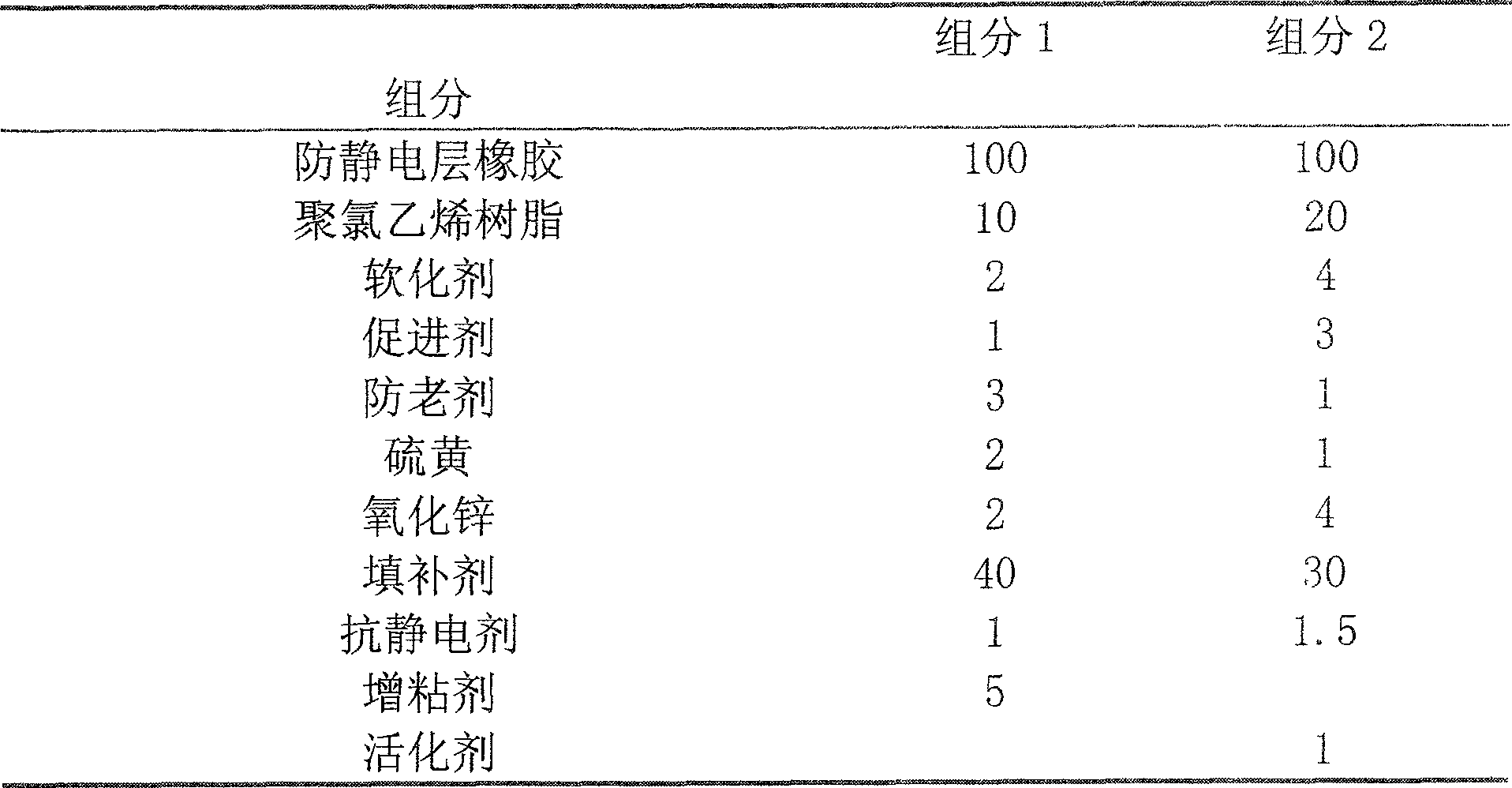
Figure 1 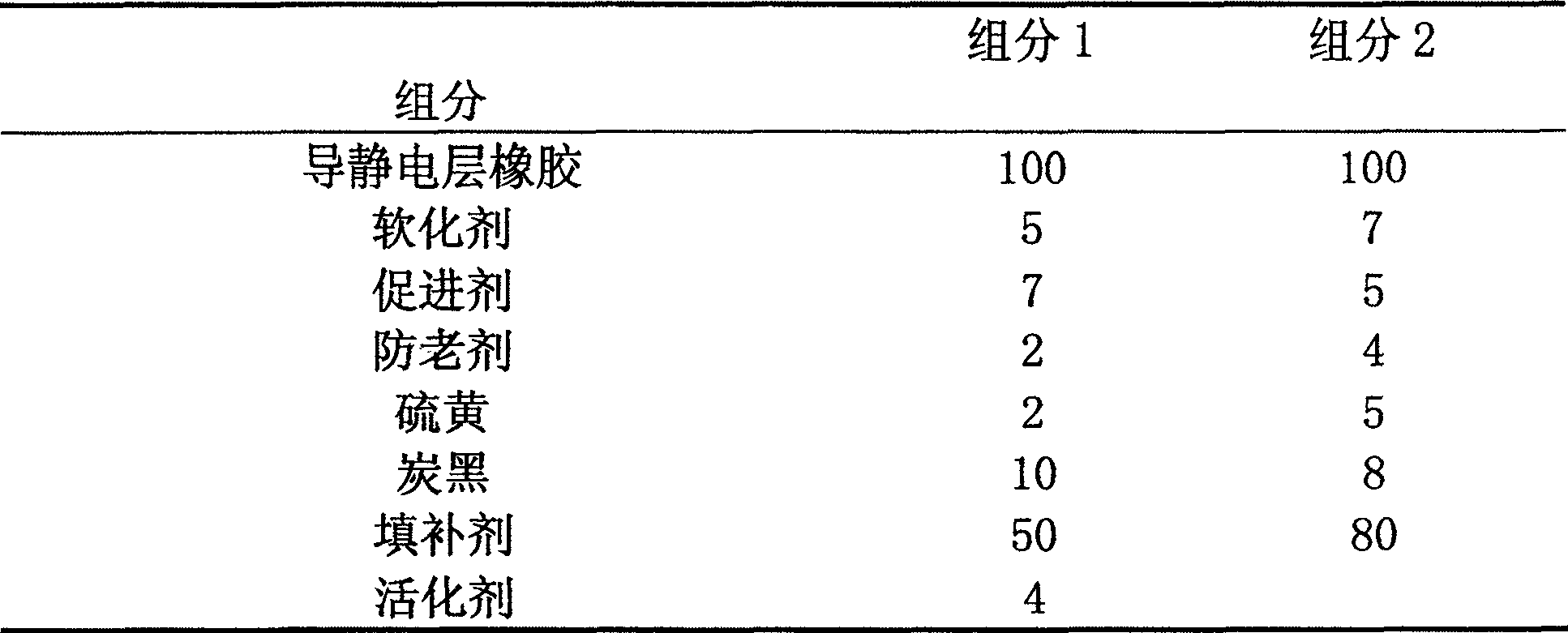
Figure 2 
Figure 3
Abstract
Description
technical field
[0001] The invention relates to an antistatic product and a production method thereof. Specifically, the invention relates to an antistatic rubber sheet (such as a table mat and a floor mat) and a production method thereof; it belongs to the technical field of composite materials. Background technique
[0002] Anti-static rubber sheet is a new product that emerged and developed in the 1990s. Its function is to form a conductive layer on the surface of rubber macromolecules through conductive materials to form a static discharge channel to effectively remove static electricity caused by equipment rotation and object friction. It is important for protecting human health and preventing fire accidents. It plays an important role in maintaining the normal movement of equipment and the high sensitivity of instruments and instruments; therefore, anti-static equipment will be used in computer rooms, motor rooms, electronic product production and assembly lines, venue...
Examples
Embodiment 1
[0026]Example 1 According to the antistatic layer components in Table 1, take the antistatic layer rubber and polyvinyl chloride resin and fuse them at a temperature of 100°C to form a rubber-plastic mixture, and combine the above-mentioned rubber-plastic mixture and antistatic The other components of the layer are internally mixed on the internal mixer, the internal mixing temperature is 100°C, and the internal mixing time is 40min; 40Min; after rubber mixing, the calender is discharged, and the antistatic layer film is made after irradiating with light intensity of 60 lux for 5 minutes; according to the components of the static conductive layer in Table 2, take the static conductive layer rubber and the static conductive layer The other components are internally mixed on the internal mixer, the internal mixing temperature is 100°C, and the internal mixing time is 40min; after internal mixing, the internal mixing is carried out on the open mixer, the initial mixing temperature...
Embodiment 2
[0035] Example 2 According to the antistatic layer components in Table 4, take the antistatic layer rubber and polyvinyl chloride resin and fuse them at a temperature of 150°C to form a rubber-plastic mixture. The above-mentioned rubber-plastic mixture and antistatic The other components of the layer are internally mixed on the internal mixer, the internal mixing temperature is 110°C, and the internal mixing time is 37min; 37Min; After rubber mixing, the calender is discharged and the antistatic layer film is made after being irradiated with light of 80 lux light intensity for 4 minutes; according to the static conductive layer components in Table 5, take the static conductive layer rubber and the static conductive layer The other components are internally mixed on the internal mixer, the internal mixing temperature is 110°C, and the internal mixing time is 37min; after internal mixing, the internal mixing is carried out on the open mixer, the initial mixing temperature is 80°C...
Embodiment 3
[0044] Example 3 According to the antistatic layer components in Table 7, take the antistatic layer rubber and polyvinyl chloride resin and fuse them at a temperature of 180°C to form a rubber-plastic mixture. The above-mentioned rubber-plastic mixture and antistatic The other components of the layer are internally mixed on the internal mixer, the internal mixing temperature is 130°C, and the internal mixing time is 35min; 35Min; after rubber mixing, the calender is discharged and then irradiated with light of 120 lux intensity for 3 minutes to make an antistatic layer film; according to the static conductive layer components in Table 8, take the static conductive layer rubber and the static conductive layer The other components are internally mixed on the internal mixer, the internal mixing temperature is 130°C, and the internal mixing time is 35min; after internal mixing, the internal mixing is carried out on the open mixer, the initial mixing temperature is 90°C, and the int...