

Wide angle liquid crystal display and method thereof for producing effect of wide angle
A liquid crystal display, wide viewing angle technology, used in static indicators, instruments, nonlinear optics, etc., to achieve the effect of simple and easy-to-achieve preparation process steps
Patent Information
- Authority / Receiving Office
- CN · China
- Current Assignee / Owner
- Publication Date
- 2007-08-15
- Estimated Expiration
- Not applicable · inactive patent
Smart Images
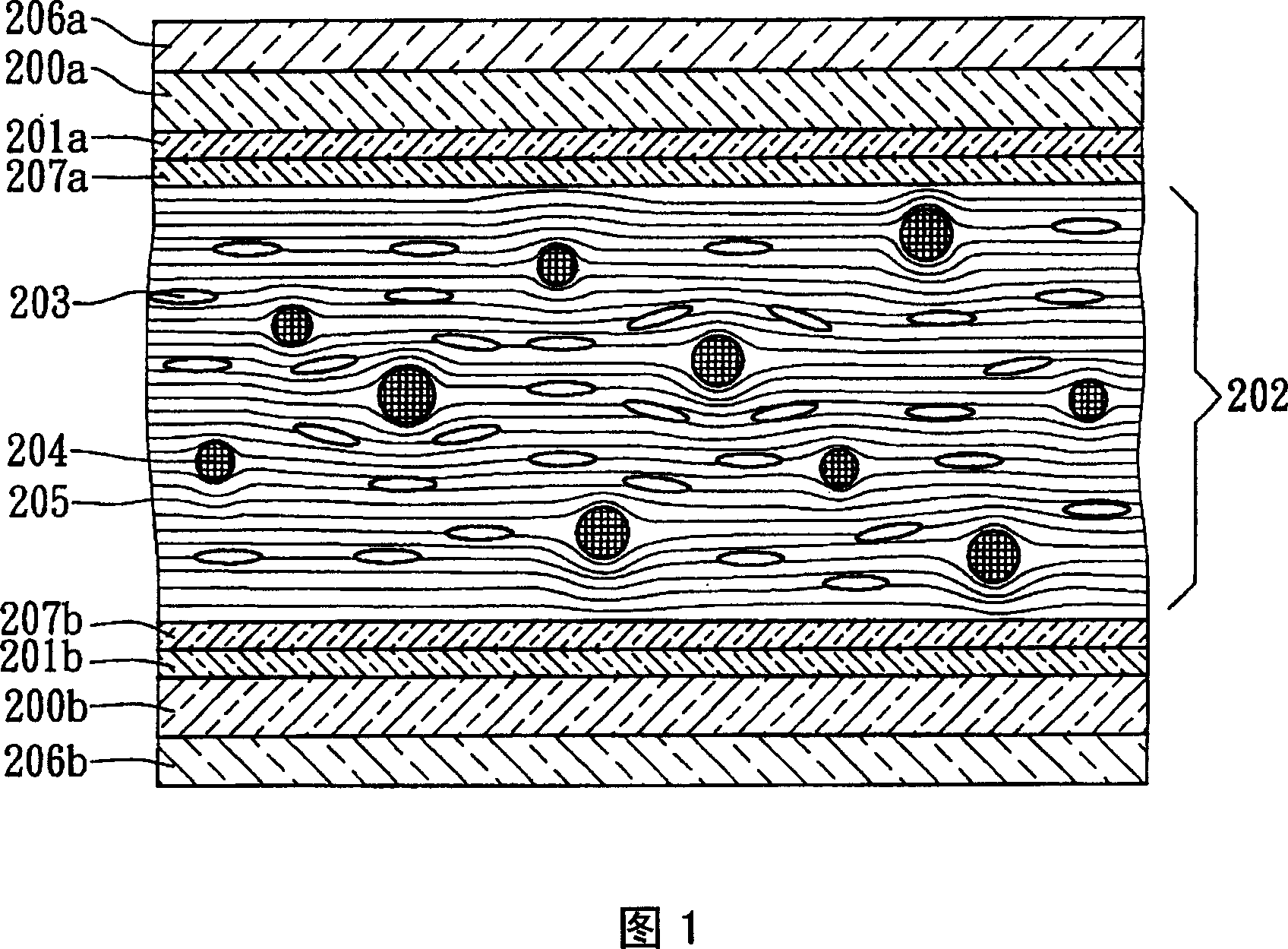
Figure 1 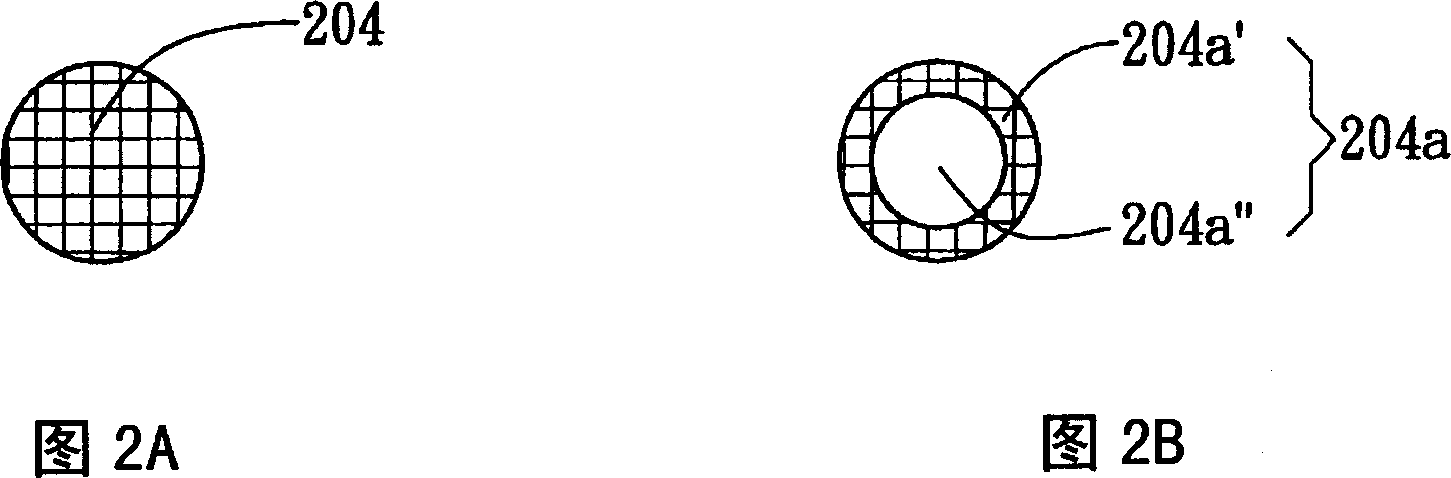
Figure 2 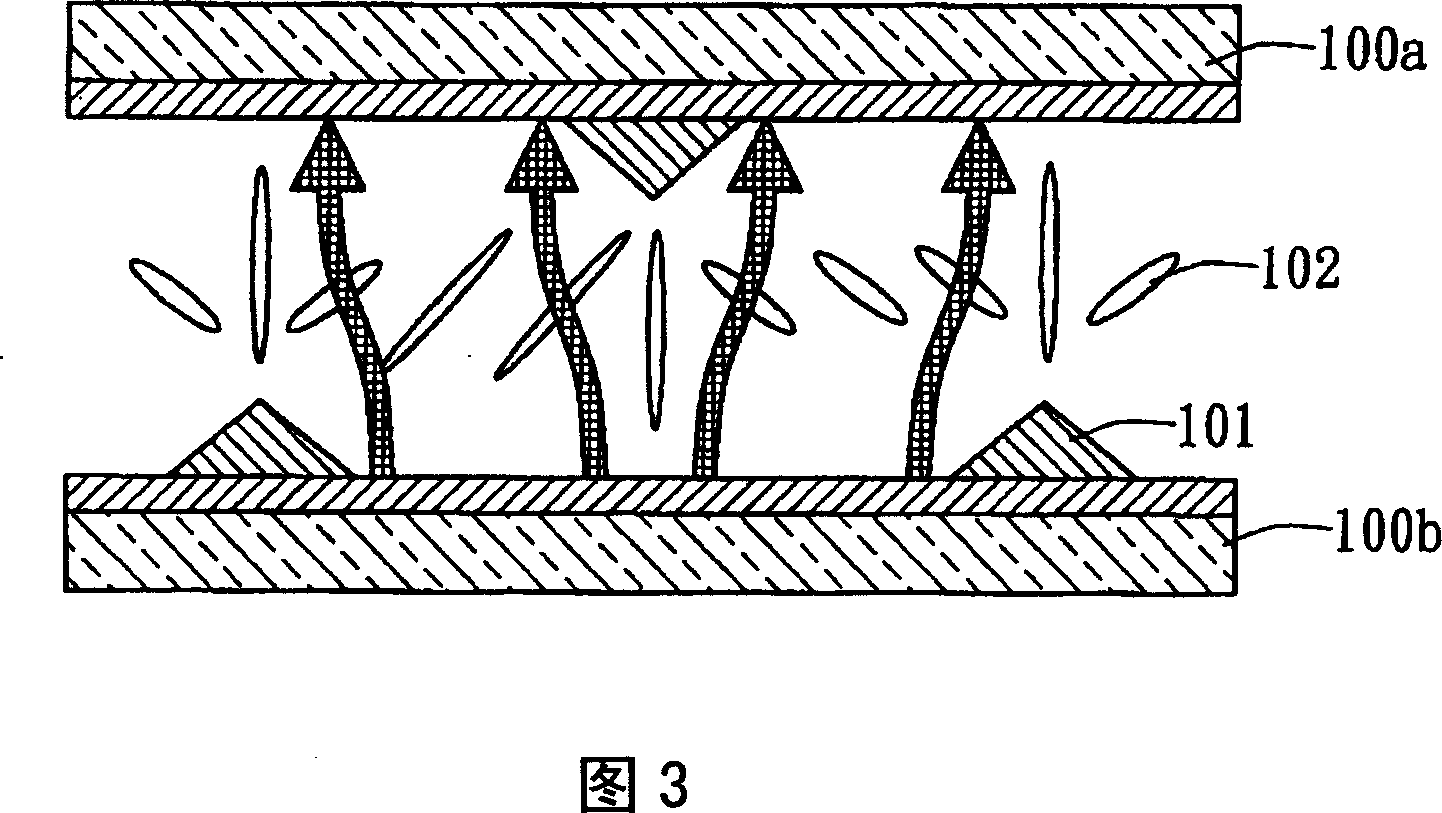
Figure 3
Abstract
Description
technical field
[0001] The present invention relates to a liquid crystal display device, in particular to a liquid crystal display device with a wide viewing angle. Background technique
[0002] Liquid Crystal Displays (LCDs) have become popular display components, yet research into many different types of display technologies is still ongoing. Traditional liquid crystal displays have a congenital defect of insufficient viewing angles. With consumers' demands for high-quality displays, wide viewing angle liquid crystal displays have become the mainstream trend in research and manufacturing. In addition to attaching a compensation film to improve the light leakage in the dark state, in the bright state of the applied electric field, in order to make the liquid crystal tilting arrangement have optical symmetry to enhance the wide viewing angle effect, some methods to achieve wide viewing angles such as: Multi-Domains Split Vertical Alignment (Multi-Domains Vertical Alignment ...
Examples
Embodiment Construction
[0029] A wide viewing angle liquid crystal display provided by the present invention mainly includes a first substrate, a second substrate corresponding to the bottom of the first substrate, a first optical film and a first electrode are arranged on the upper surface of the first substrate layer, a second electrode layer is arranged on the upper surface of the second substrate and a second optical film is arranged on the lower surface, and corresponding to the first electrode layer on the first substrate, a first electrode layer is arranged below the first electrode layer An alignment layer, a second alignment layer is arranged above the second electrode layer, and a liquid crystal layer is formed between the first alignment layer and the second alignment layer, and conductive nanoparticles (conductive nanoparticles) are added in the liquid crystal layer ), so that when a driving voltage is applied to the first electrode layer and the second electrode layer, the nano-conductive...