
Complementary type metal oxidizing layer semiconductor noise generator
A noise generator and oxide layer technology, applied in the direction of noise generation, differential amplifiers, DC-coupled DC amplifiers, etc., can solve the problems of high power consumption of noise generators, shortening the working distance of labels, and insufficient noise, etc., to achieve reduction Power consumption, effects of eliminating magnetic modulation effects
Patent Information
- Authority / Receiving Office
- CN · China
- Patent Type
- Patents(China)
- Current Assignee / Owner
- Publication Date
- 2010-06-23
Smart Images
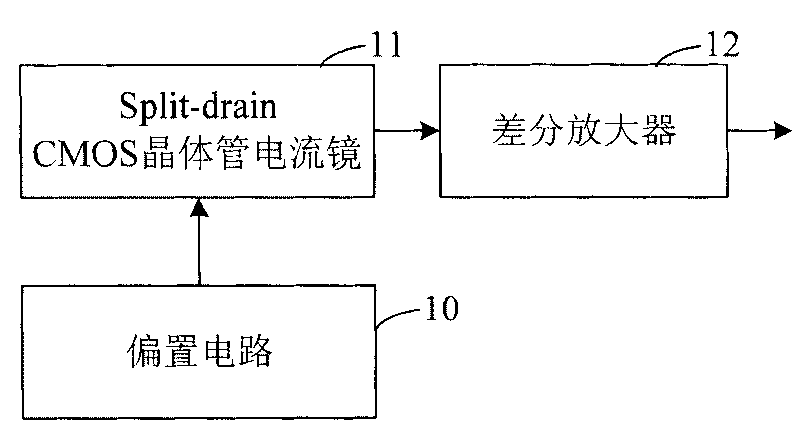
Figure 1 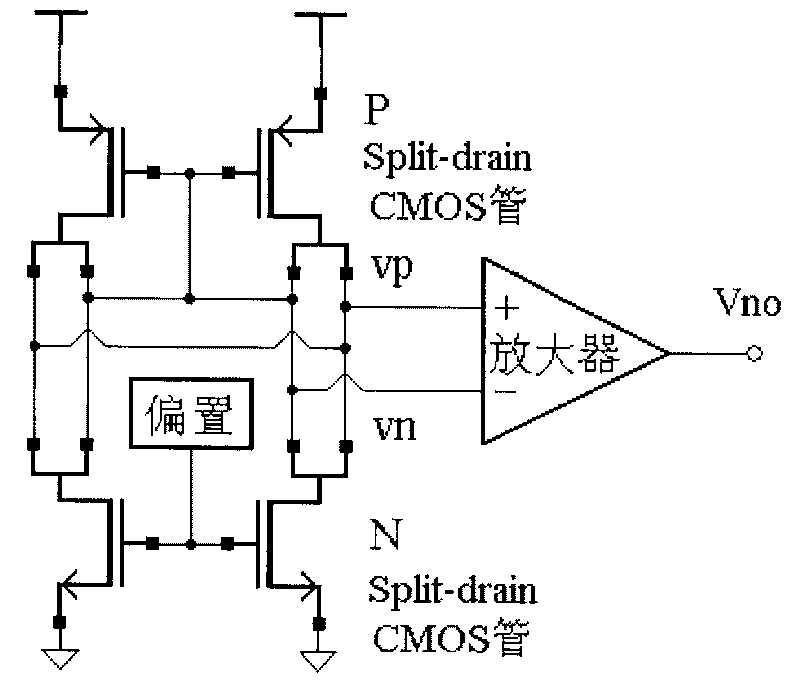
Figure 2 
Figure 3
Abstract
Description
technical field
[0001] The invention relates to the technical field of noise generators, in particular to a low power consumption complementary metal oxide semiconductor (CMOS) noise generator. Background technique
[0002] The noise generator is the most important component of a random number generator. The noise generator on the low-power CMOS process is a necessary part of the design of a low-power CMOS true random number generator, especially in the true random number generator used in RFID tags, which is a key technology.
[0003] RFID tags have strict requirements on power consumption, especially passive RFID tags. The noise generator composed of ordinary CMOS transistors as the noise source consumes a lot of power. Because the noise of ordinary CMOS tubes is not large enough, complex circuits are needed to effectively amplify the noise to a usable range, so more energy is consumed.
[0004] For passive radio frequency identification tags, the power consumption of ...
Examples
Embodiment Construction
[0027] In order to make the object, technical solution and advantages of the present invention clearer, the present invention will be described in further detail below in conjunction with specific embodiments and with reference to the accompanying drawings.
[0028] Such as figure 1 as shown, figure 1 A block diagram of a low power consumption CMOS noise generator provided by the present invention, the noise generator includes: a bias circuit 10 , a split-drain CMOS transistor current mirror 11 and a differential amplifier 12 .
[0029] Wherein, the bias circuit 10 is used to provide a DC operating point for the split-drain CMOS transistor current mirror and the differential amplifier. The split-drain CMOS transistor current mirror 11 is used to convert and amplify the tiny noise current signal into a larger differential voltage signal and output it to the differential amplifier. The differential amplifier 12 is used to convert the differential double-ended signal input by t...