
Method for developing latent fingerprints by adopting nano zinc oxide
A nano-zinc oxide and latent fingerprint technology is applied in the field of fingerprint identification, which can solve the problems of insufficiency of Stokes shift, poor selective binding ability, and difficulty in showing detailed features, and achieves easy popularization, simple display process, and production. low cost effect
Patent Information
- Authority / Receiving Office
- CN · China
- Patent Type
- Applications(China)
- Current Assignee / Owner
- Publication Date
- 2010-04-28
- Estimated Expiration
- Not applicable · inactive patent
Smart Images
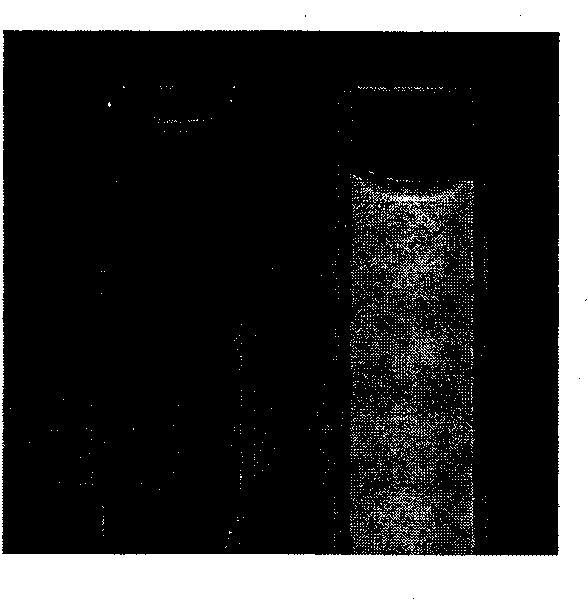
Figure 1 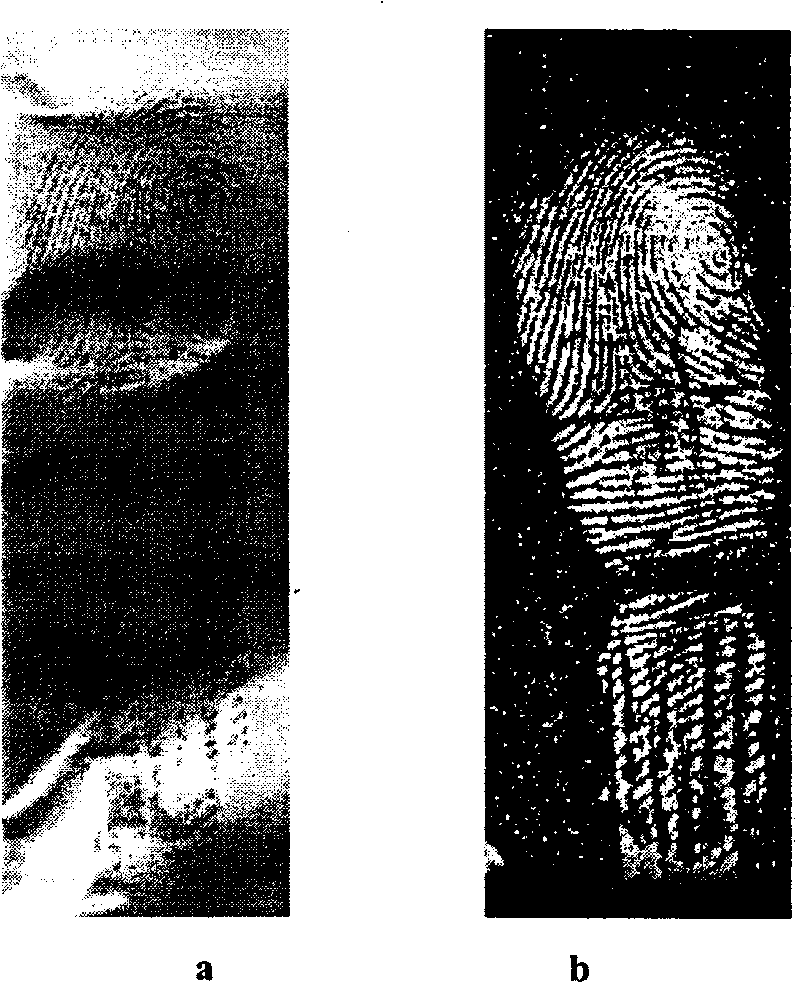
Figure 2 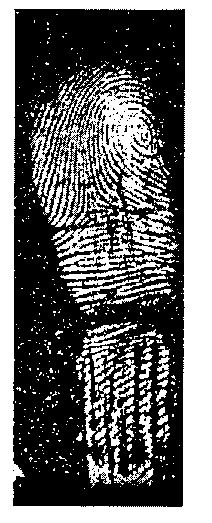
Figure 3
Abstract
Description
technical field
[0001] The invention belongs to the technical field of fingerprint identification, in particular to a method for displaying latent fingerprints by ultraviolet-visible photoluminescence of nanometer zinc oxide. Background technique
[0002] Mudra is the skin pattern of human hands, including mastoid pattern (fingerprint, knuckle pattern and palm pattern), flexor folds, wrinkles and scars on the palm surface. It is currently the most commonly used personal identification method and evidence form in the world, and it plays an important role in the investigation and trial process of many cases. So far, there is no method that can completely replace its comprehensive features such as accuracy, safety, and convenience.
[0003] In the development history of more than 100 years of handprint display, photoluminescence method is a new type of handprint display method developed in the past 20 years. Because of its obvious advantages such as low cost, high safety, str...
Examples
Embodiment Construction
[0034] The present invention will be further described below in conjunction with examples, and these examples are only for illustration, and do not limit the practical application scope of the present invention.
[0035] The present invention adopts the embodiment of the method for revealing latent fingerprints of nanometer zinc oxide, comprises the following steps:
[0036] 1) take zinc acetate, lithium hydroxide as raw material, make nanometer zinc oxide powder;
[0037] (11) Under normal pressure, add 0.55-2.20 g of zinc acetate to 25-100 mL of boiling ethanol, and place the resulting mixture in an ice-water mixture to cool under magnetic stirring conditions to obtain solution 1;
[0038] (12) In another container, dissolve 0.15-0.58g of lithium hydroxide in 25-100mL of ethanol, ultrasonicate for 10-30min, and cool in ice-water mixture to obtain solution 2;
[0039] (13) Slowly add solution 1 to solution 2 dropwise at -1°C to 1°C with a stirring speed of 1000 to 1200rpm un...