
Process for forming generator claw pole of vehicle
A generator claw pole and forming process technology, which is applied in the direction of manufacturing tools, metal processing equipment, forging/pressing/hammering machinery, etc., can solve the problems of reducing forming force, low material utilization rate, and large number of equipment, and achieve simplification The effect of forging process, high material utilization rate and high product precision
Patent Information
- Authority / Receiving Office
- CN · China
- Patent Type
- Patents(China)
- Current Assignee / Owner
- Publication Date
- 2013-04-17
- Estimated Expiration
- Not applicable · inactive patent
Smart Images
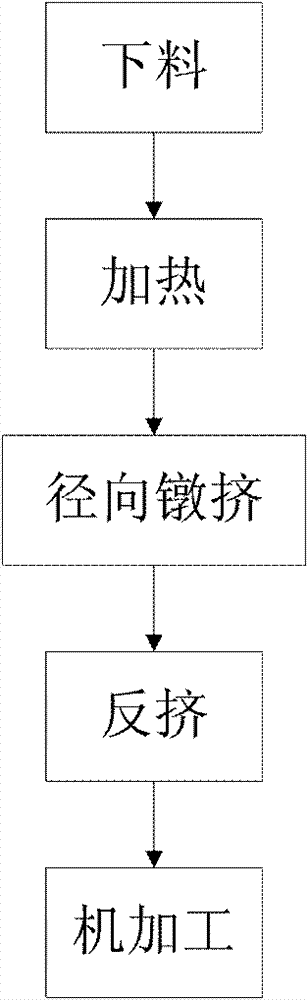
Figure 1 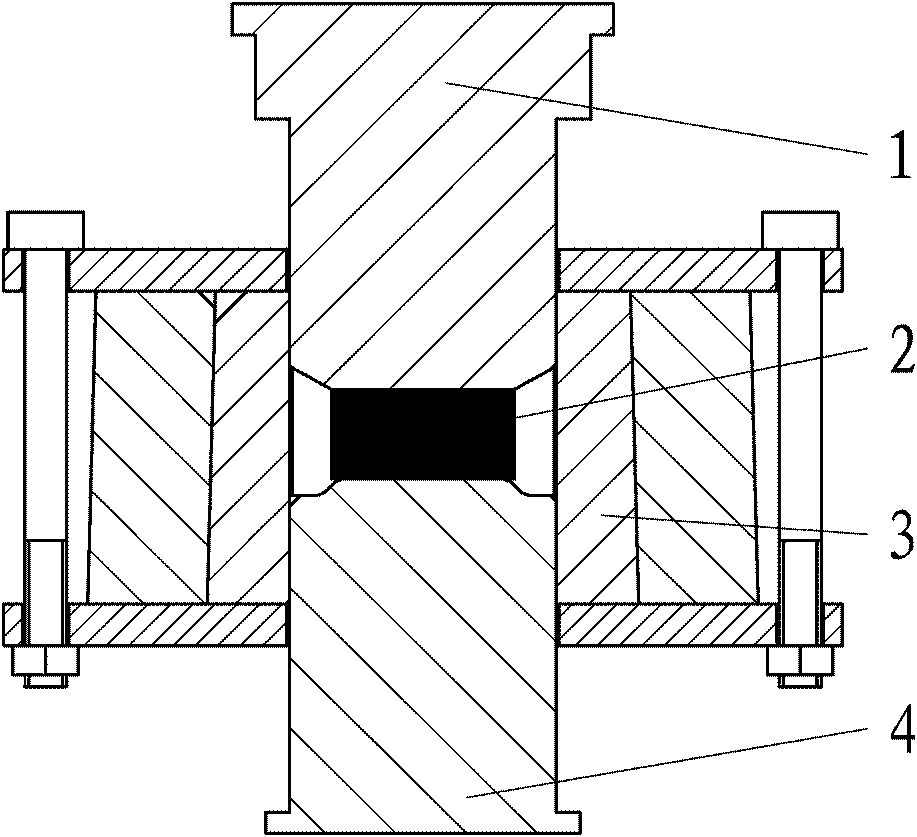
Figure 2 
Figure 3
Abstract
Description
technical field
[0001] The invention relates to the technical field of precision forging of automobile claw poles, in particular to a forming process for automobile claw poles of generators. Background technique
[0002] At present, the claw pole forming processes of automobile generators at home and abroad include: 1. Machining process after precision casting. The claws produced by this process are extremely prone to defects such as looseness, shrinkage, inclusions, and chemical composition instability, resulting in magnetic resistance. Increase, poor electromagnetic performance, which affects the power of the generator; 2. Sheet metal stamping, the process flow is: blanking ~ finishing R ~ punching ~ bending ~ claw finishing ~ overall finishing, during the punching process The selected plate thickness is the thickness of the claw pole parts required by the design. The production process steps are simple, and the requirements for workshops and machining equipment are not hi...
Examples
Embodiment Construction
[0030] specific implementation plan
[0031] The present invention will be described in detail below in conjunction with the accompanying drawings.
[0032] refer to figure 1 , an automotive generator claw pole forming process, comprising the following steps:
[0033] a. blanking, select pure iron or low-carbon steel as raw material, and use a sawing machine to blank to obtain a blank;
[0034] b. Heating, heating the billet to 1100℃~1200℃ with an induction furnace;
[0035] c. Radial upsetting extrusion, put the heated billet into the radial upsetting extrusion mold, and upsetting and extruding it into intermediate parts;
[0036] d. Back-extrusion claws, put the intermediate piece obtained by upsetting extrusion into the back-extrusion die, and back-extrude it into a final forging;
[0037] e. Machining: Machining the reverse extruded final forgings to make finished workpieces.
[0038] refer to figure 2 , image 3 , Figure 4 , Figure 5 , the radial upsetting die...