
Novel moisture absorption temperature regulation antibacterial summer quilt and production technology thereof
A production process and cooling quilt technology, applied in textile, application, fabric, etc., can solve the problems of poor hygienic performance, weak perspiration ability, poor moisture release performance, etc., to improve the ability of moisture absorption and perspiration, and strong moisture absorption ability , good snag resistance
Patent Information
- Authority / Receiving Office
- CN · China
- Patent Type
- Patents(China)
- Current Assignee / Owner
- Publication Date
- 2013-09-25
- Estimated Expiration
- Not applicable · inactive patent
Smart Images
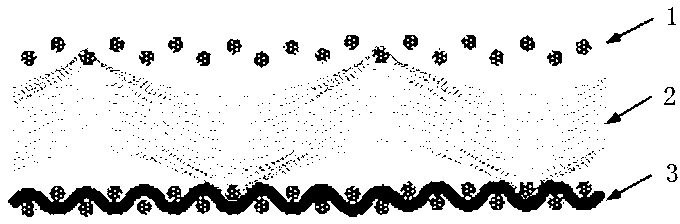
Figure 1 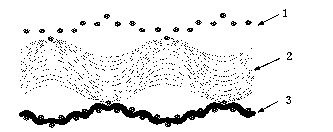
Figure 2 
Figure 3
Abstract
Description
technical field
[0001] The invention belongs to the field of textiles, and in particular relates to a novel moisture-absorbing, temperature-regulating, antibacterial summer cool quilt and a production process thereof. Background technique
[0002] Bedding is a product that people come into contact with every day in their daily lives. The comfort and functionality of bedding is the focus of modern consumers.
[0003] Regardless of work or rest, the human body always generates heat and emits heat continuously, keeping the human body temperature between 36-37 degrees to maintain the thermal balance of the human body. When the body is out of thermal balance, it will feel uncomfortable. The metabolism of the human body slows down during sleep, and the heat dissipation becomes less. To maintain the normal body temperature of the human body, it is generally necessary to use a quilt to cover the body surface of the human body. In summer, human body sleep still needs to use summer ...
Examples
Embodiment 1
[0048] Raw materials: surface warp and weft: Outlast acrylic 32s; inner warp and weft: bamboo pulp fiber 32s; middle warp and middle weft: 150D moisture-absorbing and sweat-wicking polyester untwisted filament.
[0049] Warp and weft yarn density: warp density 635 / 10cm, weft density 600.
[0050] Weave: Twill weave is used for surface weave and inner weave, and variable concave-convex weave is used for middle weave. See the picture on the machine Figure 4 ,in Figure 4 (1) is an organization chart, Figure 4 (2) is the threading diagram, Figure 4 (3) is the cardboard diagram, Figure 4 (4) For side organization. Figure 4 (1) A and B are junction points. The distance between adjacent nodes is 10 tissue points.
[0051] Key points of production process:
[0052] Warping process: thread the outer and inner warp yarns and the middle warp yarns on different warp beams respectively, the outer and inner warp yarns have high tension, and the winding density is controlled at ...