
Method for the preparation of 2,5-furandicarboxylic acid and for the preparation of the dialkyl ester of 2,5-furandicarboxylic acid
A technology of furandicarboxylic acid and dialkyl esters, which is applied in chemical instruments and methods, physical/chemical process catalysts, metal/metal oxide/metal hydroxide catalysts, etc., and can solve problems such as not being able to obtain FDCA
Patent Information
- Authority / Receiving Office
- CN · China
- Patent Type
- Applications(China)
- Current Assignee / Owner
- Publication Date
- 2012-09-12
Smart Images
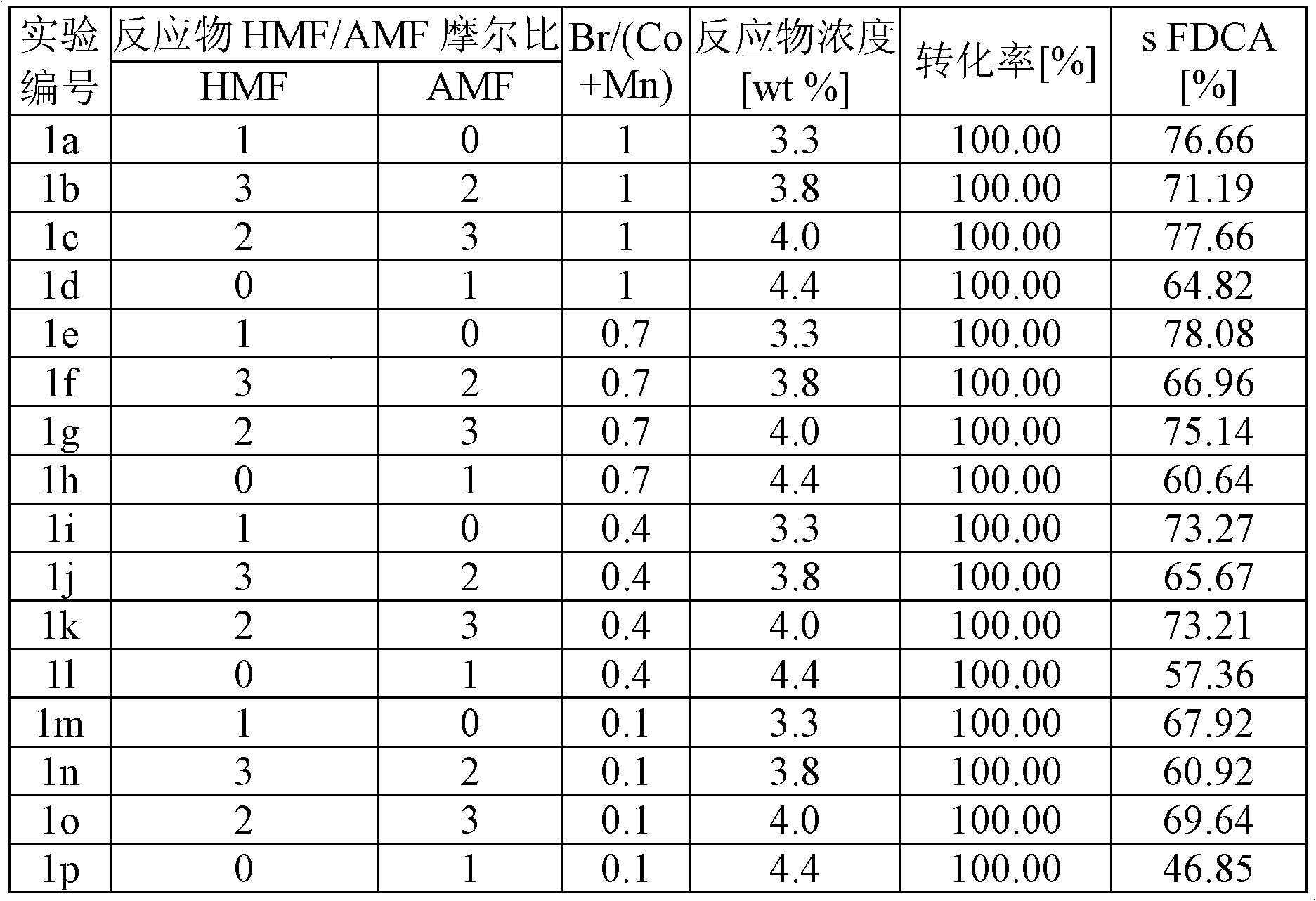
Figure 1 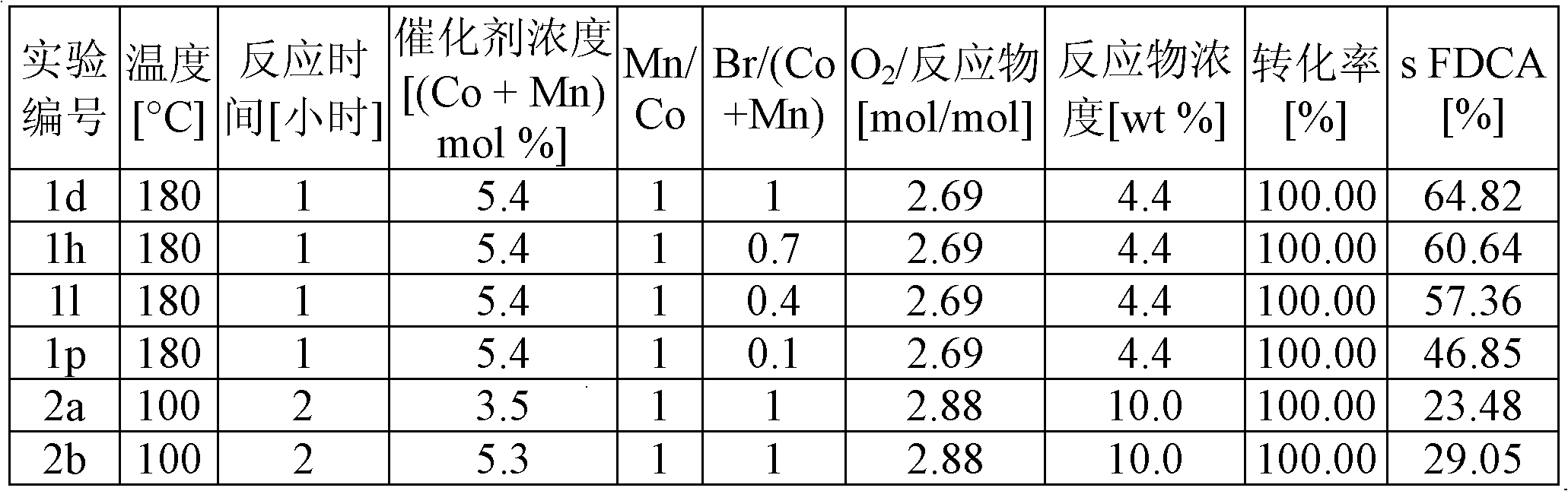
Figure 2 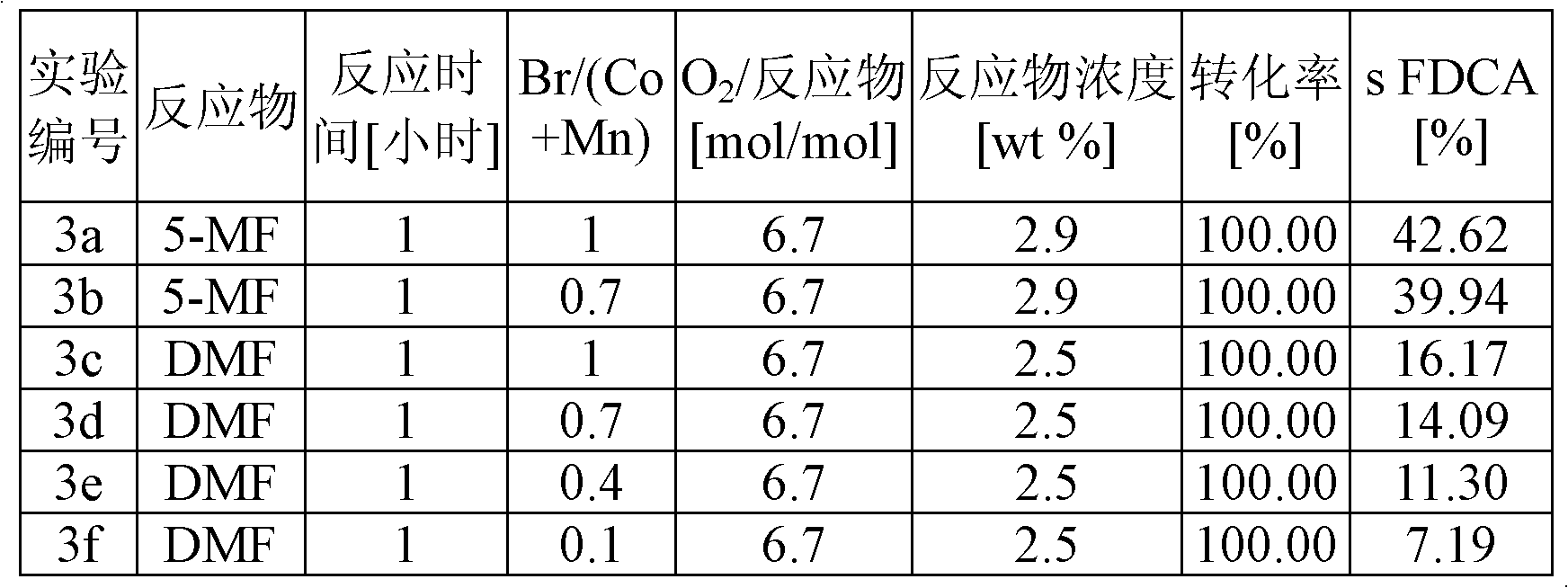
Figure 3
Abstract
Description
technical field
[0001] The present invention relates to a method for preparing 2,5-furandicarboxylic acid (FDCA) from 5-hydroxymethylfurfural (HMF) and / or its derivatives. FDCA may especially be prepared from esters of HMF (eg 5-acetoxymethylfurfural (AMF)) or mixtures of one or more of these compounds with HMF (eg mixtures of AMF and HMF). The present invention also relates to a preparation method of dialkyl ester of 2,5-furandicarboxylic acid. Background technique
[0002] 2,5-furandicarboxylic acid, also known as dehydromucic acid, is a furan derivative. This organic compound was first obtained by Fittig and Heinzelmann in 1876. Henry Hill published the first review in 1901 (Am. Chem. Journ. 25, 439). It took more than 125 years for FDCA to be identified by the U.S. Department of Energy as one of 12 priority chemicals for building the "green" chemical industry of the future. However, to date there is no commercially available process for the preparation of this produc...
Examples
Embodiment 1
[0039] Example 1 shows the selectivity of FDCA in the oxidation of HMF, a 3 / 2 mixture of HMF / AMF, a 2 / 3 mixture of HMF / AMF, and AMF, respectively, with 2.7 mol% cobalt catalyst (relative to reactants) , and the cobalt / manganese molar ratio is 1 / 1, so that the total catalyst concentration (Co+Mn) is 5.4 mol%. The molar ratios of Br / (Co+Mn) were 1.0, 0.7, 0.4 and 0.1, the concentration of reactants in acetic acid was 0.26M, and the reaction was carried out at 180° C. and 20 bar air pressure for 1 hour. The oxygen content was 2.69 mol oxygen / mol reactant. Under these conditions, the higher the bromine content, the higher the yield, but when Br / (Co+Mn) > 1, there will be corrosion problems on an industrial scale. HMF gave slightly higher yields than AMF at one hour reaction time. The results of these experiments are listed in Table 1.
Embodiment 2
[0041] Example 2 shows the selectivity of the oxidation of AMF to FDCA of Example 1 and a comparative example based on the experimental conditions described in US 2009 / 0156841. In those comparative examples (2a and 2b), 10wt / wt% AMF in acetic acid was oxidized at 100°C and 30bar pressure for 2 hours with 1.75 and 2.65mol% cobalt catalysts and Br / (Co The molar ratio of +Mn) was fixed at 1.0, and the Co / Mn molar ratio was 1.0. The oxygen content was 2.88 mol oxygen / mol reactant. Under these conditions, the yield of FDCA was lower than the results presented in US 2009 / 0156841 and also lower than those obtained at higher temperatures. The results of these experiments are listed in Table 2.
Embodiment 3
[0043] Example 3 shows the yield of FDCA in the oxidation of 5-methylfurfural (5MF) and 2,5-dimethylfurfural (DMF) at 180°C with 2.7 mol% cobalt catalyst (relative to reactants) , and the cobalt / manganese molar ratio is 1 / 1, so that the total catalyst concentration (Co+Mn) is 5.4 mol%. The molar ratios of Br / (Co+Mn) were 1.0, 0.7, 0.4 and 0.1. The concentration of the reactants in acetic acid was 0.26M. The reaction temperature was 180°C, and the reaction was carried out under an air pressure of 50 bar. The oxygen content was 6.7 mol oxygen / mol reactant. Under these conditions, the higher the bromine content, the higher the yield, but when Br / (Co+Mn) > 1, there will be corrosion problems on an industrial scale. The reaction with 5-MF gave higher yields than the reaction with DMF. The results of these experiments are listed in Table 3.
[0044] Table 1
[0045]
[0046] Table 2
[0047]
[0048] table 3
[0049]