

A test device for static load characteristics of motorcycle rear shock absorber
A technology of characteristic test and shock absorber, applied in the direction of vehicle suspension/shock absorber mechanism test, etc., can solve the problems of difficulty for users, high price, test and other problems, and achieve the effect of convenient installation, simple structure and reasonable test method.
Patent Information
- Authority / Receiving Office
- CN · China
- Patent Type
- Patents(China)
- Current Assignee / Owner
- Publication Date
- 2015-10-28
- Estimated Expiration
- Not applicable · inactive patent
Smart Images
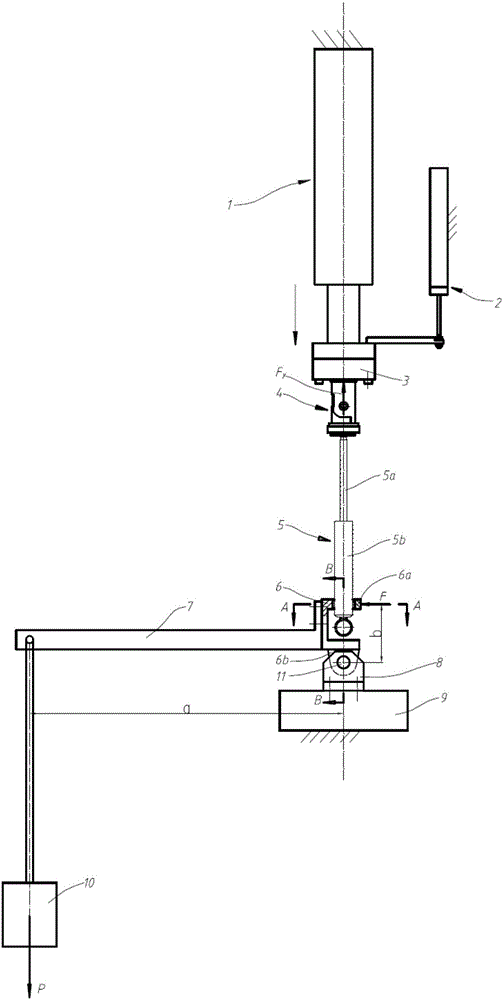
Figure 1 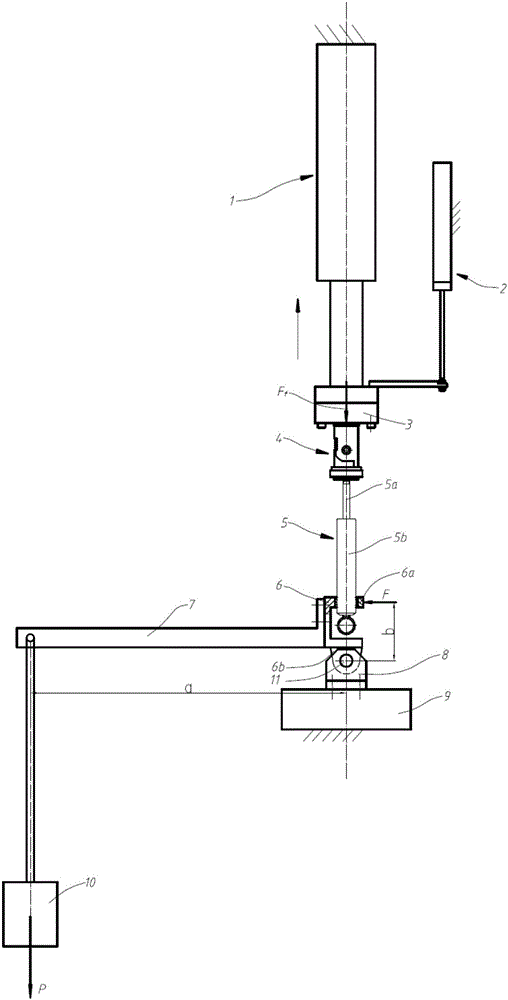
Figure 2 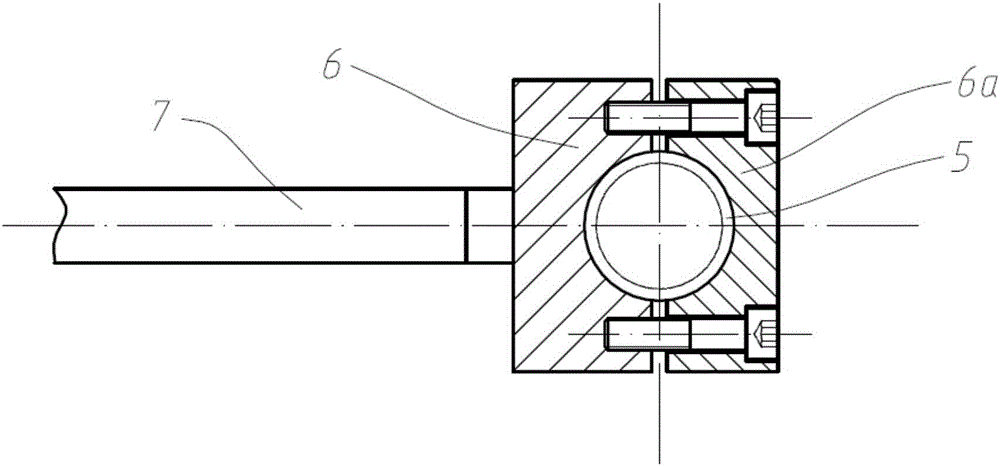
Figure 3
Abstract
Description
technical field
[0001] The invention relates to product performance testing and testing technology, in particular to a method and device for testing static load characteristics of rear shock absorbers of motorcycles. Background technique
[0002] As a key component in a driving vehicle, the shock absorber plays an important role in the comfort, safety and maneuverability of the driving vehicle. The purpose of the Static Load Characteristics test is to test the static resistance of the shock absorber other than the damping force. The static load characteristics include the static friction force between the relative moving parts inside the shock absorber, the resistance of the air chamber volume change and Due to the additional frictional resistance caused by the force deformation of the oblique installation (especially the front shock absorber), it is the dimensional processing accuracy, geometric shape accuracy, structural rigidity, material strength, fit accuracy, assembly ...
Examples
Embodiment
[0022] figure 1 with figure 2 A schematic diagram of the test method structure, figure 1 is the compression stroke, figure 2 In order to restore the stroke, it expresses the test method and the structure diagram of the test device for implementing the static load characteristic test of the rear shock absorber 5. The test device includes a driving mechanism 1, a displacement sensor 2, a force sensor 3, a threaded jacket 4, and a Vibrator 5, clamping seat 6, clamping block 6a, lever 7, mounting pin seat 8, machine base 9, weight 10 and bearing pin 11.