
Chargeable cell energy feedback detection device being capable of series connection and parallel connection
An energy feedback type and detection device technology, which is applied to battery circuit devices, measurement devices, circuit devices, etc., can solve problems such as energy waste, loss of manufacturers, and idle equipment
Patent Information
- Authority / Receiving Office
- CN · China
- Patent Type
- Applications(China)
- Current Assignee / Owner
- Publication Date
- 2015-10-28
- Estimated Expiration
- Not applicable · inactive patent
Smart Images
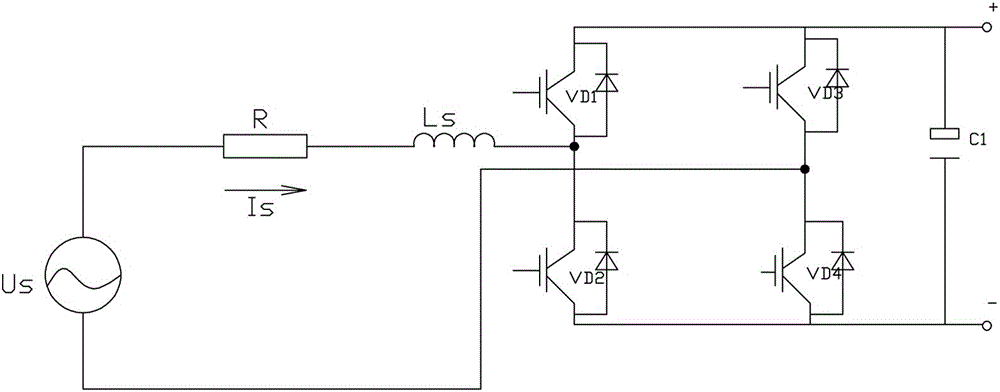
Figure 1 
Figure 2 
Figure 3
Abstract
Description
technical field
[0001] The invention relates to a detection device which is used for series and parallel connection of rechargeable battery detection circuits and can realize energy feedback. Background technique
[0002] At present, with the increasing shortage of renewable energy in the world, rechargeable batteries are attracting more and more attention as a kind of clean energy. Growing. Strict regulations on carbon emissions by the governments of countries and regions such as Europe, North America, and China are also driving the market. The development of the rechargeable battery industry further drives the development of rechargeable battery testing equipment, and promotes the improvement of matching testing methods, standards and equipment development.
[0003] The traditional rechargeable battery detection circuit system is complex and bulky, which increases the cost virtually, and has poor stability and large inrush current, which can cause incalculable damage...
Examples
Embodiment
[0017] The present invention will be further elaborated below with reference to the accompanying drawings.
[0018] The rechargeable battery energy feedback module designed by the present invention adopts a single-phase PWM rectification / inversion circuit, and its principle diagram is as follows figure 1 shown. Its working principle is: by controlling the switching tubes VD1, VD2, VD3 and VD4, a sine modulation wave Uab can be generated at the AC input end of the rectifier bridge. Uab does not contain low-order harmonic components, but only contains fundamental wave components with the same frequency and amplitude proportional to the sinusoidal signal wave and high-frequency harmonics related to the triangular carrier wave. Due to the filtering effect of the inductance Ls, these high-order harmonic voltages will only cause small ripples in the AC current Is. When the AC power supply voltage is constant, the amplitude and phase of Is are determined by the amplitude of the fun...