
Multi-base station multi-user proportional fair scheduling method with guaranteed quality of service
A proportional fair scheduling and quality of service technology, applied in electrical components, wireless communications, etc., can solve the problems of not considering the situation of multiple base stations, not considering the business needs of users, and the difficulty of allocating resources to meet business needs, etc., to improve efficiency, computing low-complexity effects
Patent Information
- Authority / Receiving Office
- CN · China
- Patent Type
- Patents(China)
- Current Assignee / Owner
- Publication Date
- 2018-08-21
Smart Images
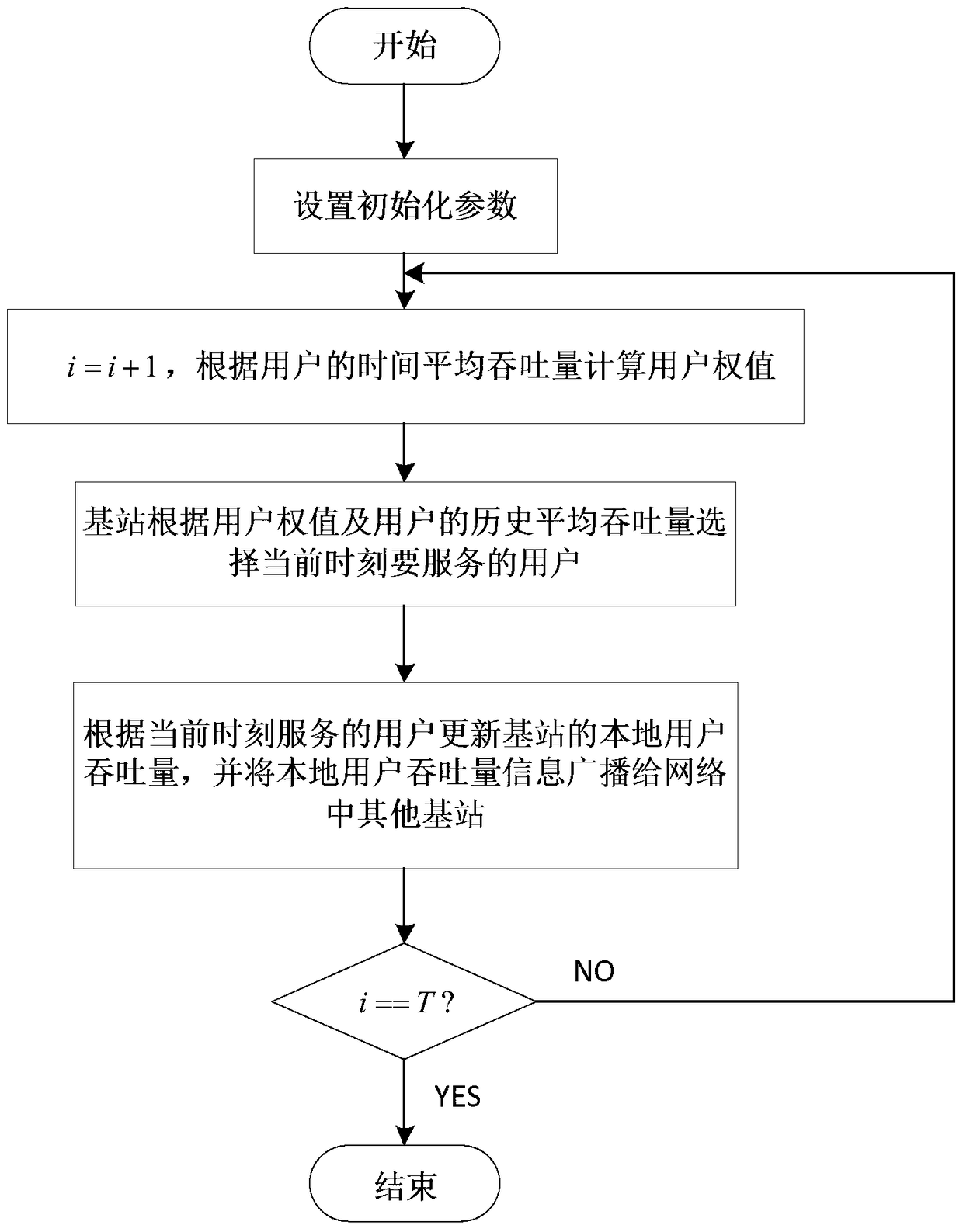
Figure 1 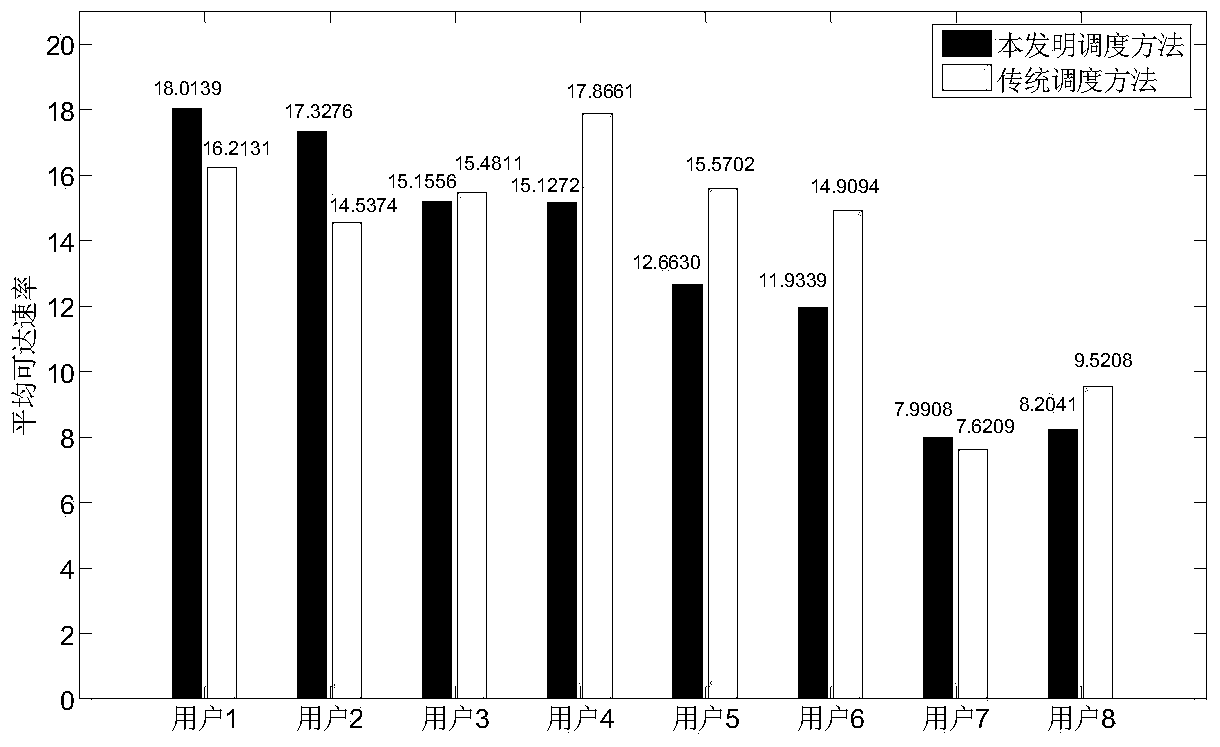
Figure 2 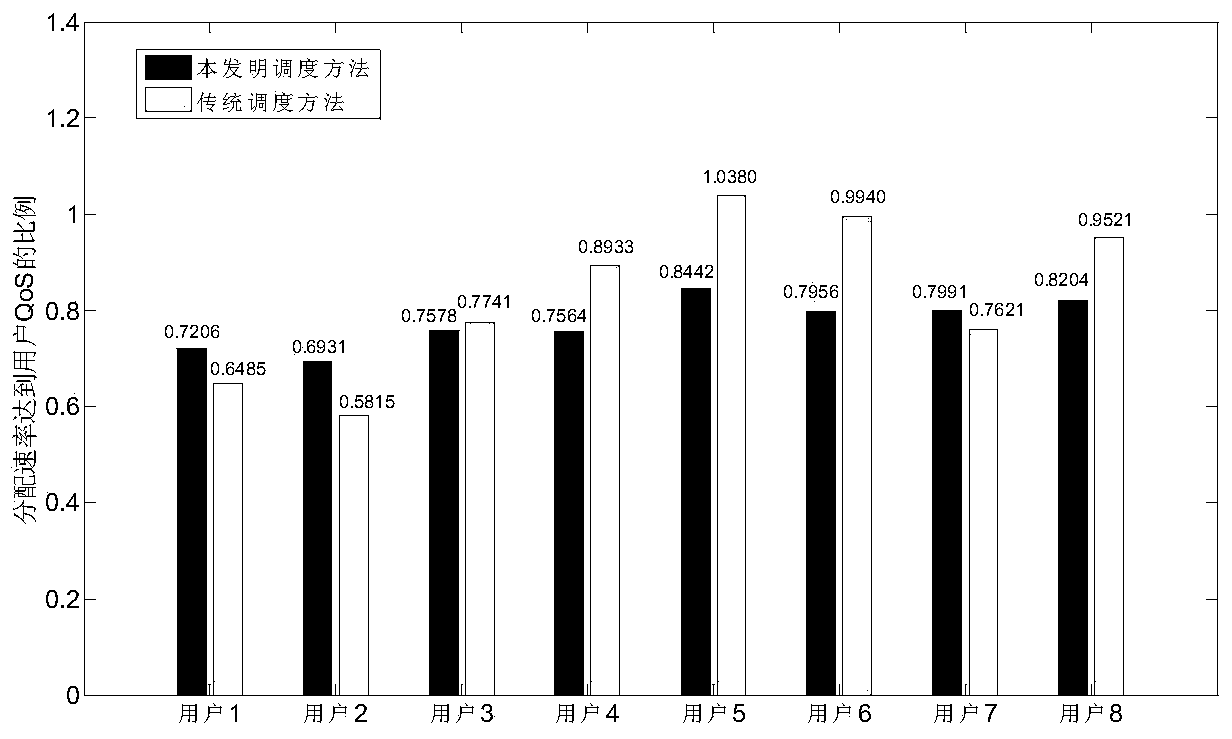
Figure 3
Abstract
Description
technical field
[0001] The invention belongs to the technical field of wireless communication, and relates to a multi-base station multi-user proportional fair scheduling method that guarantees service quality QoS, and can be applied to a large-scale wireless local area network with a plurality of adjacent wireless routers. technical background
[0002] With the continuous development of mobile communication technology, the number of users is increasing year by year, and the requirements of mobile services are also increasingly diverse. In the fourth-generation mobile communication system, in addition to the traditional voice service, multi-rate multimedia service is added. Therefore, how the base station can schedule data flow resources for users with different business needs fairly and effectively has become a hot issue in current research.
[0003] Most resource allocation algorithms mainly focus on the efficient use of wireless resources and seldom care about the user's ...
Examples
Embodiment Construction
[0044] refer to figure 1 , the specific implementation steps of the present invention are as follows:
[0045] Step 1, set the initialization parameters.
[0046] Suppose the number of base stations in the system is N, and the number of users to be served is M, where 1<N≤10, 0<M≤50;
[0047] Set the user's service quality set S=[S 1,...,S m ,...,S M ], where S m Indicates the service quality requirement of the mth user;
[0048] Set M users to keep the service quality requirement S unchanged in K time slots;
[0049] In the 1st to i-th time slots, the time-average throughput obtained by the m-th user from the n-th base station is expressed as T n,m (i), where n=1,2,...,N, m=1,2,...,M, i represents the number of time slots, initialized to i=1, and let the average throughput of all links T n,m (1)=1 / N.
[0050] Step 2, calculate the user weight according to the user's time average throughput.
[0051] Let time slot i=i+1, according to the time average throughput T of ...