
Unmanned aerial vehicle obstacle avoidance method and device based on 3D camera
A UAV and camera technology, applied in image communication, three-dimensional position/channel control, vehicle position/route/altitude control, etc., can solve the problems of inability to know the distance information of obstacles, poor real-time performance of obstacle avoidance, and heavy load, etc. Achieve the effect of strong real-time algorithm, low efficiency and light weight
Patent Information
- Authority / Receiving Office
- CN · China
- Current Assignee / Owner
- Publication Date
- 2016-07-13
Smart Images
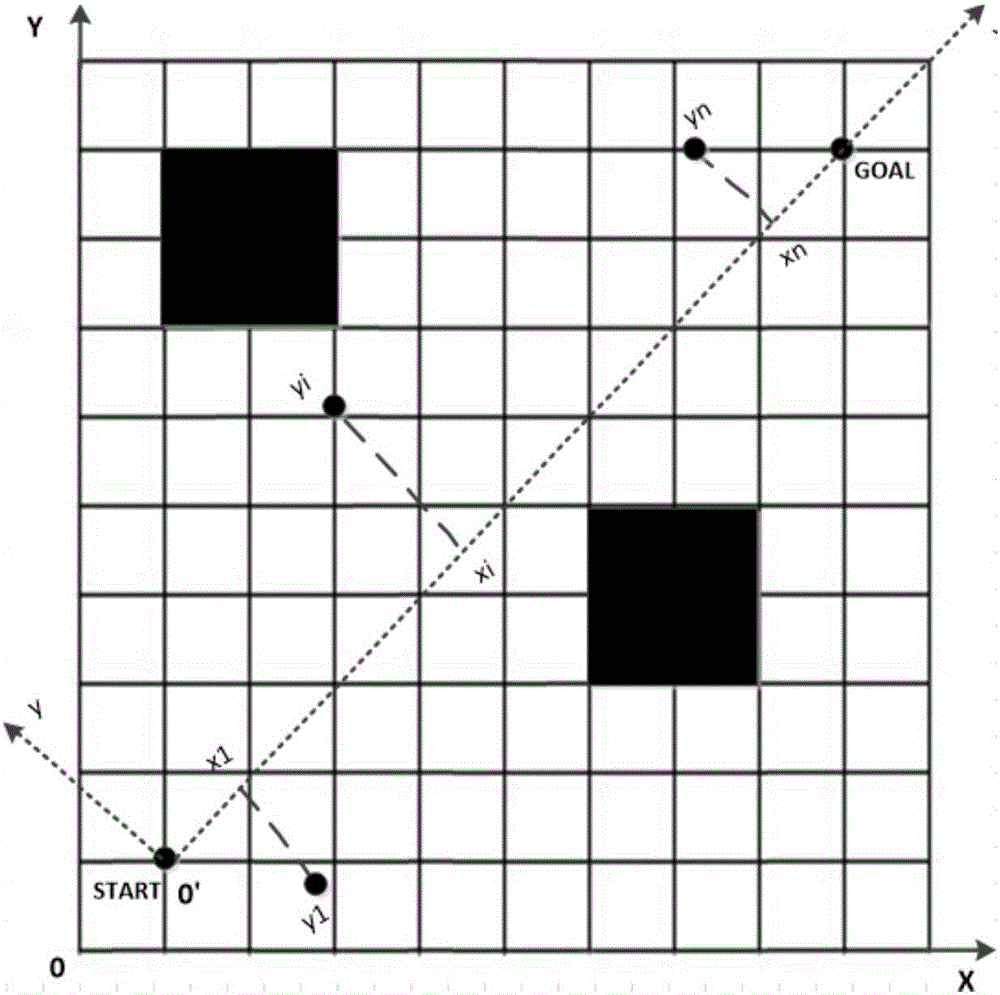
Figure 1 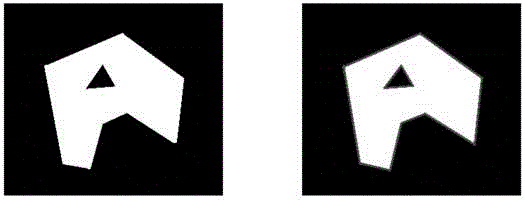
Figure 2 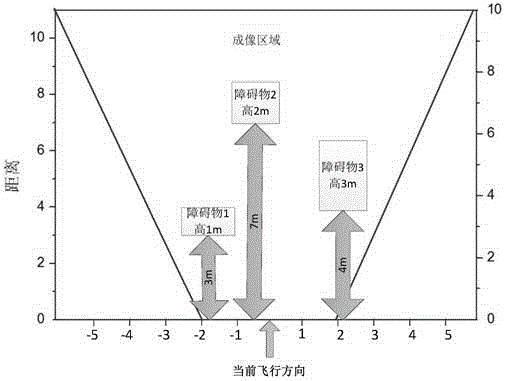
Figure 3
Abstract
Description
Technical field:
[0001] The present invention relates to the field of intelligent aircraft systems, in particular to a 3D camera-based unmanned aerial vehicle obstacle avoidance technology, which can be applied to automatic navigation and obstacle avoidance of various unmanned aerial vehicles. Background technique:
[0002] The research of Unmanned Aerial Vehicles (UAV) has made great progress in recent years, and its application fields are becoming wider and wider. It can be used for communication relay, meteorological detection, disaster monitoring, pesticide spraying, geological survey, map surveying, Traffic control, border control and many other fields.
[0003] In the field of aviation navigation applications, a set of navigation control points (waypoints) of the UAV are usually given offline, and the aircraft flies straight between the waypoints. The short-range route planning between the waypoints needs to consider the visibility between the planning points. Will it...
Examples
Embodiment Construction
[0045] The present invention will be described in further detail below in conjunction with the accompanying drawings.
[0046] A 3D camera-based UAV obstacle avoidance technology, which consists of a 3D camera 1, a visual analysis module 2, a flight control main module 3 and an inertial navigation module 4.
[0047] During the flight of the UAV, firstly, the 3D camera 1 takes pictures of the front of the flight at a certain frequency, which is used to perform 3D modeling of the obstacles in front, and obtain the position, shape, size and distance information of the obstacles. The 3D camera can be based on a dual visible light camera, or a visible light camera + an infrared laser projector. Dual visible light camera ranging uses the principle of parallax to process two images of the same scene acquired under different viewing angles, thereby recovering the three-dimensional geometric information of the object and measuring the spatial distance. Visible light camera + infrared ...