
Method using oak barrels to store Fen flavor liquor so as to improve quality of liquor
A kind of fragrant liquor and oak barrel technology, which is applied in the field of liquor storage
Patent Information
- Authority / Receiving Office
- CN · China
- Current Assignee / Owner
- Publication Date
- 2016-09-14
- Estimated Expiration
- Not applicable · inactive patent
Smart Images
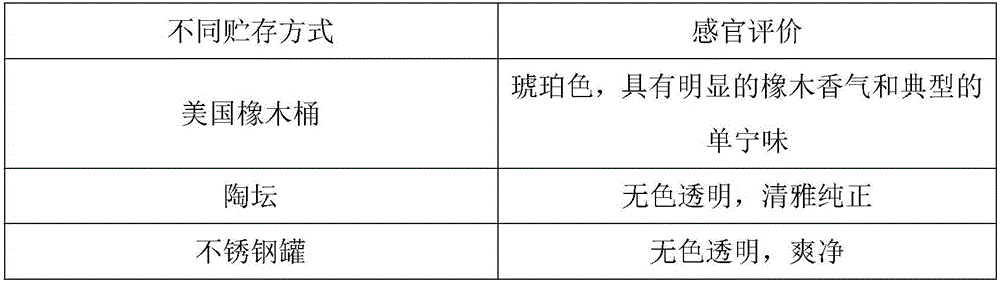
Figure 1 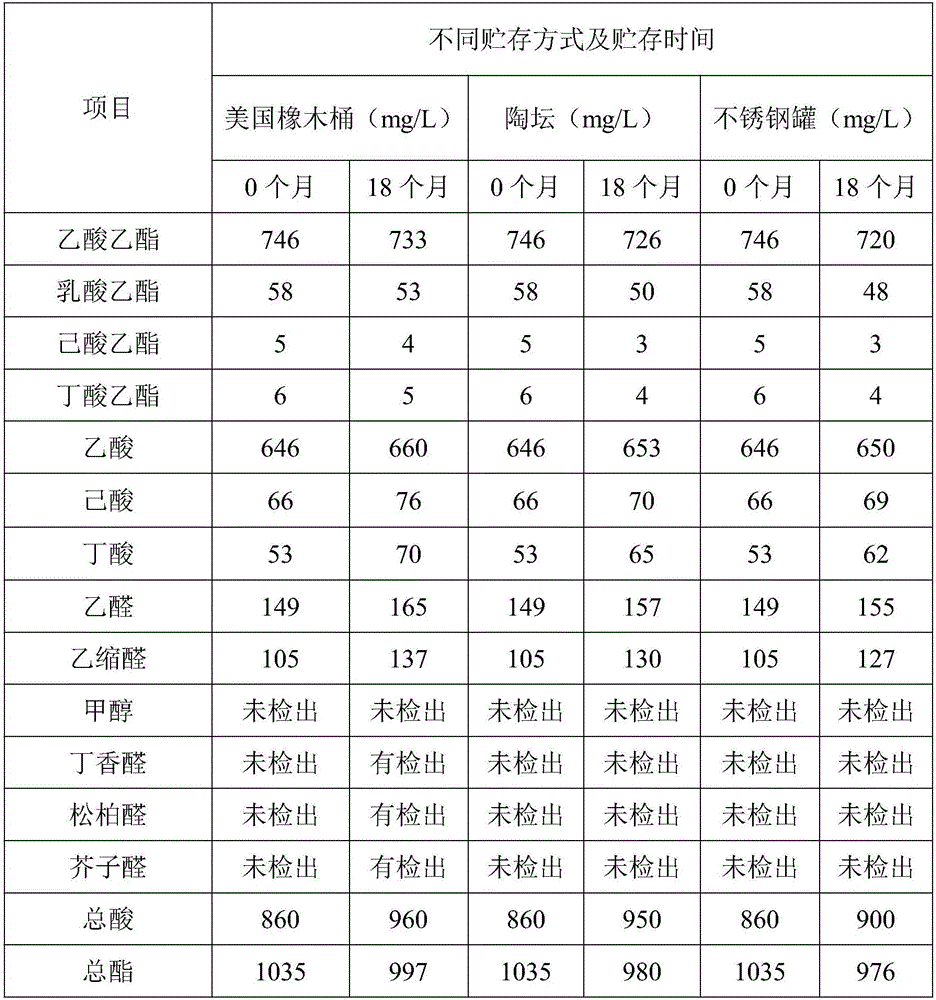
Figure 2 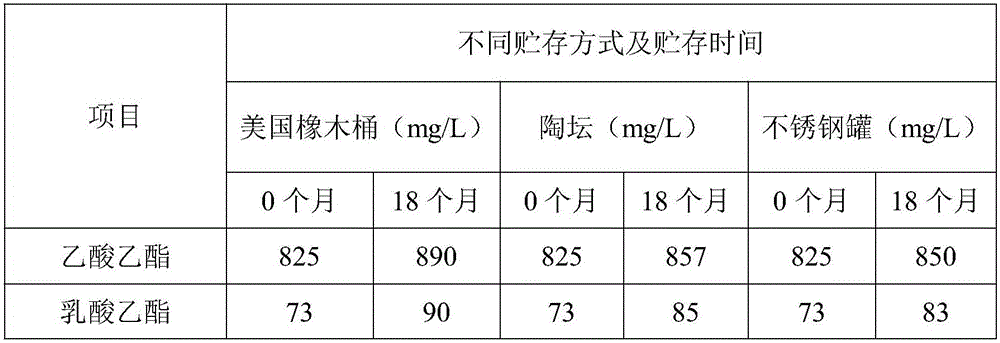
Figure 3
Abstract
Description
technical field
[0001] The invention relates to a method for storing fragrance type liquor in oak barrels to improve liquor quality, and belongs to the technical field of liquor storage. Background technique
[0002] Traditionally, liquor is generally stored in pottery jars or food-grade stainless steel tanks to allow it to age naturally, but it cannot increase the aroma and taste substances in liquor. The pottery altar has the characteristics of good air permeability, various metal oxides contained in the wine are dissolved in the wine during the storage process, which can promote the aging of the liquor, and the production cost is low. However, the pottery altar is made of microporous mesh Structural composition, if the quality of the glaze coating is not good, there will be leakage of wine, the annual loss rate is about 2%, and the volume of the pottery container is small, and the storage of wine occupies a large area of the warehouse; the volume of the stainless steel ...
Examples
Embodiment 1
[0022] Store liquor in 225L new American oak barrels, cover the oak barrel lid (not completely sealed) for the first 2 days, then completely seal the barrel lid of the oak barrel, and place it in a cool and dry room with a temperature of 25°C and a humidity of 70%. , stored for a total of 6 months, then transferred to old oak barrels and stored in the same environment for 1 year, and then taken out into the post-processing process, filled and packaged into finished wine. Liquor stored in oak barrels and liquor stored in ceramic altars and stainless steel tanks for the same period of time were tasted and evaluated, the loss rate was calculated and the main aroma components were determined. The results are shown in Table 1, Table 2, Table 3, Table 4 and Table 5 .
[0023] Table 1. Sensory evaluation results of liquor stored in different containers
[0024]
[0025] Table 2. Loss rate after storage in different containers
[0026] different storage methods
Attri...
Embodiment 2
[0037] Store liquor in 350L new French oak barrels, cover the oak barrel lid (not completely sealed) for the first 2 days, then completely seal the barrel lid of the oak barrel, and place it in a cool and dry room with a temperature of 22°C and a humidity of 65%. , stored for a total of 6 months, then transferred to old oak barrels and stored in the same environment for 1 year; then taken out into the post-processing process, filled and packaged into finished wine. Liquor stored in oak barrels and liquor stored in pottery jars and stainless steel tanks for the same period of time were tasted and evaluated, the loss rate was calculated and the main aroma components were determined. The results are shown in Table 6, Table 7, Table 8, Table 9 and Table 10. .
[0038] Table 6. Sensory evaluation results of liquor stored in different containers
[0039]
[0040] Table 7. Loss rate after storage in different containers
[0041]
[0042]
[0043] Table 8. Changes of main a...