
A kind of ascending aorta endoluminal isolation and transplantation device
An ascending aorta and intraluminal isolation technology, applied in the field of medical devices, can solve problems such as surgical failure, difficulty in anchoring, and covering blood vessel branches, so as to reduce the risk of blood vessel damage, facilitate delivery, and avoid re-rupture.
Patent Information
- Authority / Receiving Office
- CN · China
- Patent Type
- Patents(China)
- Current Assignee / Owner
- Publication Date
- 2018-05-25
Smart Images
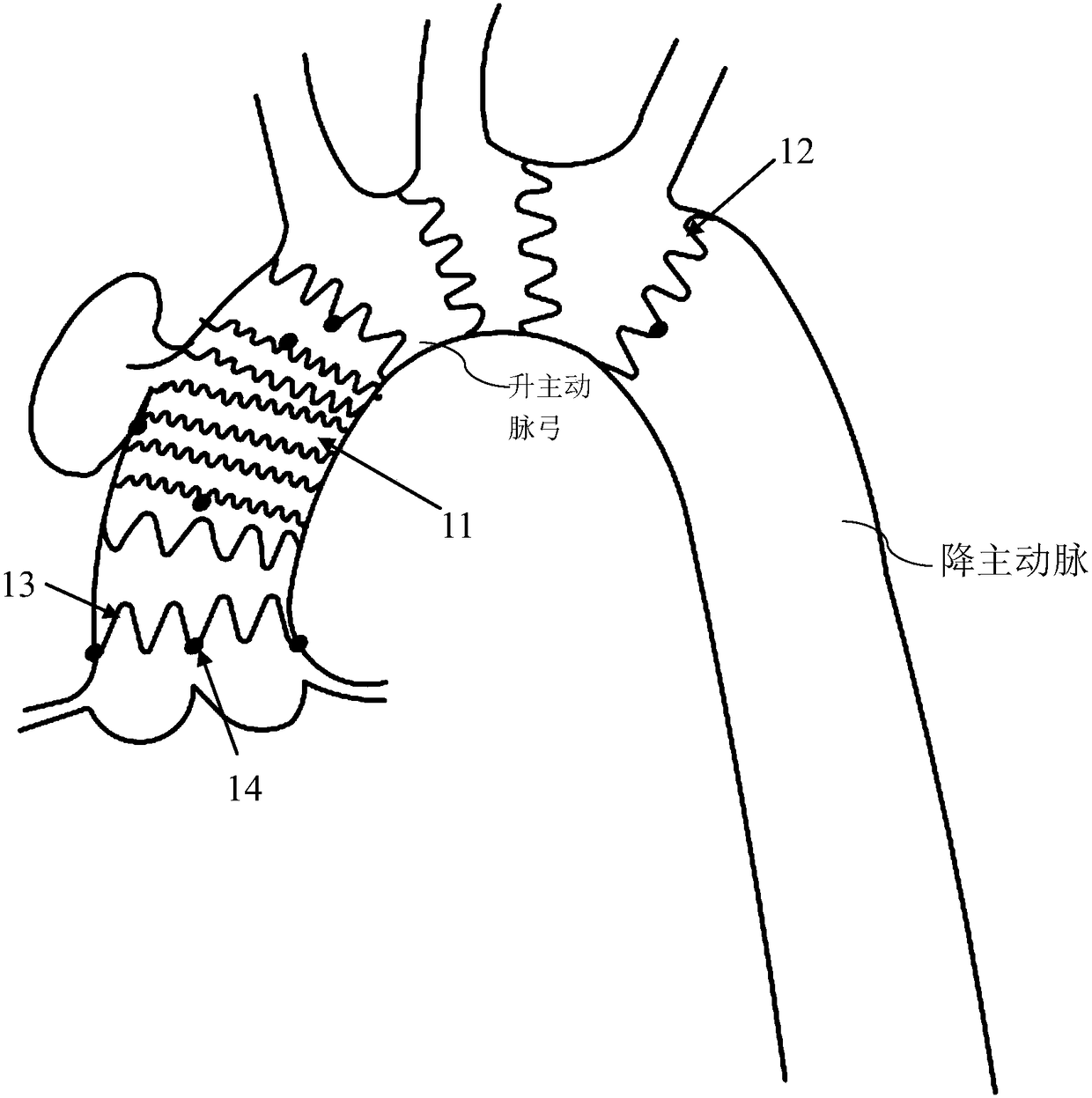
Figure 1 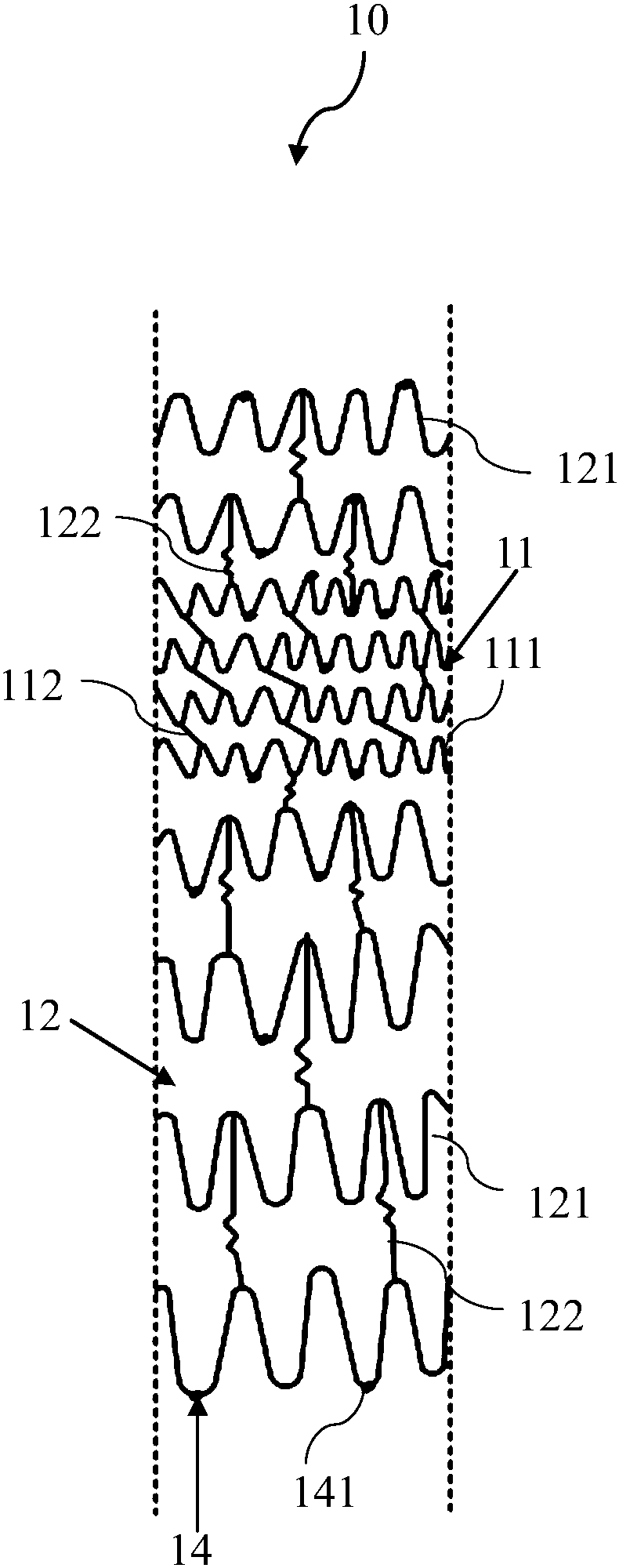
Figure 2
Abstract
Description
technical field
[0001] The invention belongs to the field of medical devices, and in particular relates to an ascending aorta intraluminal isolation transplantation device specially suitable for ascending aorta dissection. Background technique
[0002] In recent years, the incidence of aortic dissection has increased significantly, and there is a trend of younger age. The so-called aortic dissection (AD) refers to a partial tear of the inner wall of the aorta. Axial expansion, thus forming a pathological change of true and false aortic lumens. The blood supply of important branches of the aorta is interrupted during the formation of the dissection, resulting in the loss of severe ischemic function of important organs, and even serious complications or death. In addition, the direct rupture of the false lumen or the rupture after the formation of an aneurysm may also cause Hemorrhage to death.
[0003] In response to this situation, endovascular exclusion of aortic dissect...
Examples
Embodiment Construction
[0023] The specific implementation manners of the present invention will be described below in conjunction with the accompanying drawings.
[0024] figure 1 It is a structural schematic diagram of the ascending aorta endoluminal isolation graft device installed in the ascending aorta lumen in this embodiment; figure 2 It is a structural schematic diagram of the ascending aortic endoluminal isolation grafting device in the embodiment of the present invention.
[0025] Such as figure 1 and figure 2 As shown, the ascending aortic endoluminal isolation grafting device 10 is a metal tubular bare stent, which is used for minimally invasive treatment of ascending aortic dissection, and includes a reset adjusting part 11, an anchoring part 12, an auxiliary anchoring part 13 and a developing marking part 14.
[0026] The reset adjustment part 11 includes a plurality of first Z-shaped stent rings 111 and a first elastic metal rod 112 connecting two adjacent first Z-shaped stent ri...