
A strain of Bacillus amyloliquefaciens and its application in the control of anthracnose of camellia oleifera
A technology for dissolving starch spores and bacilli, applied in the field of microbial engineering, can solve problems such as poor tolerance and poor adaptability, and achieve the effects of reducing pesticide residues, promoting plant growth, and ensuring quality and safety.
Patent Information
- Authority / Receiving Office
- CN · China
- Patent Type
- Patents(China)
- Current Assignee / Owner
- Publication Date
- 2021-09-24
Smart Images
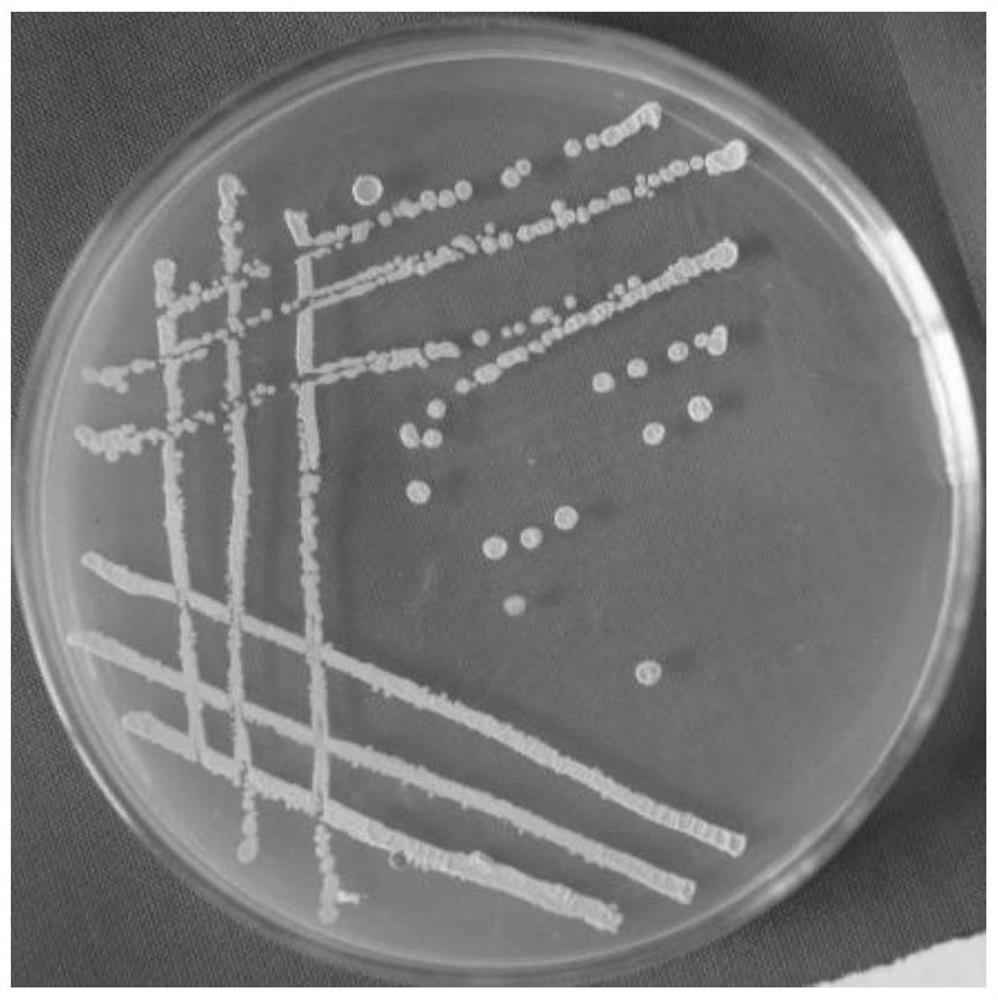
Figure 1 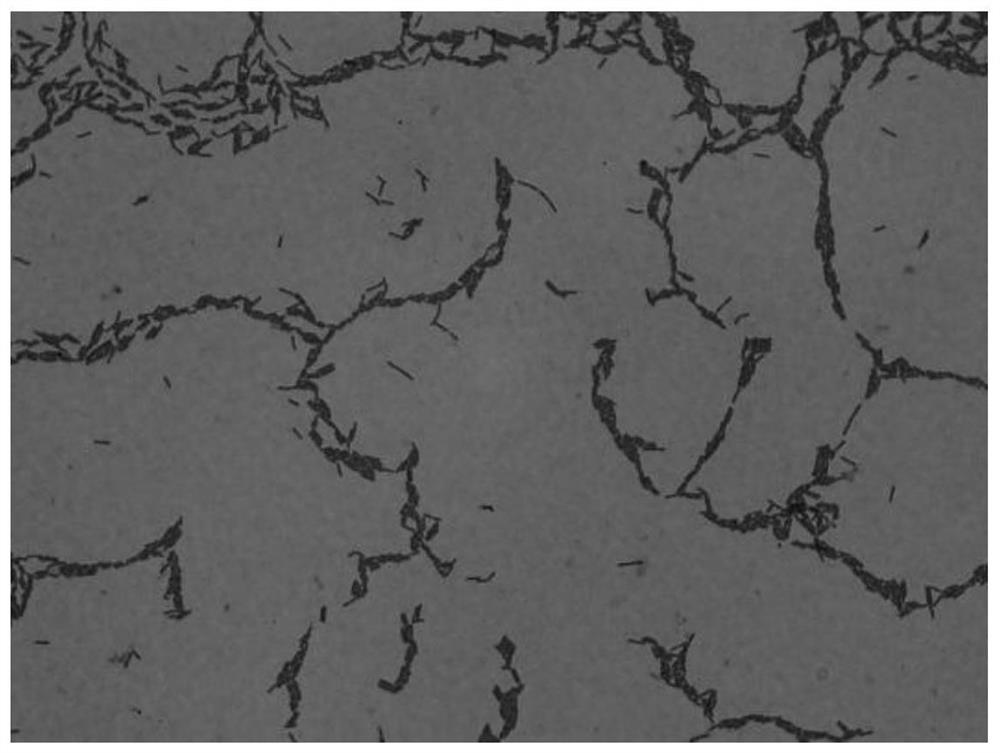
Figure 2 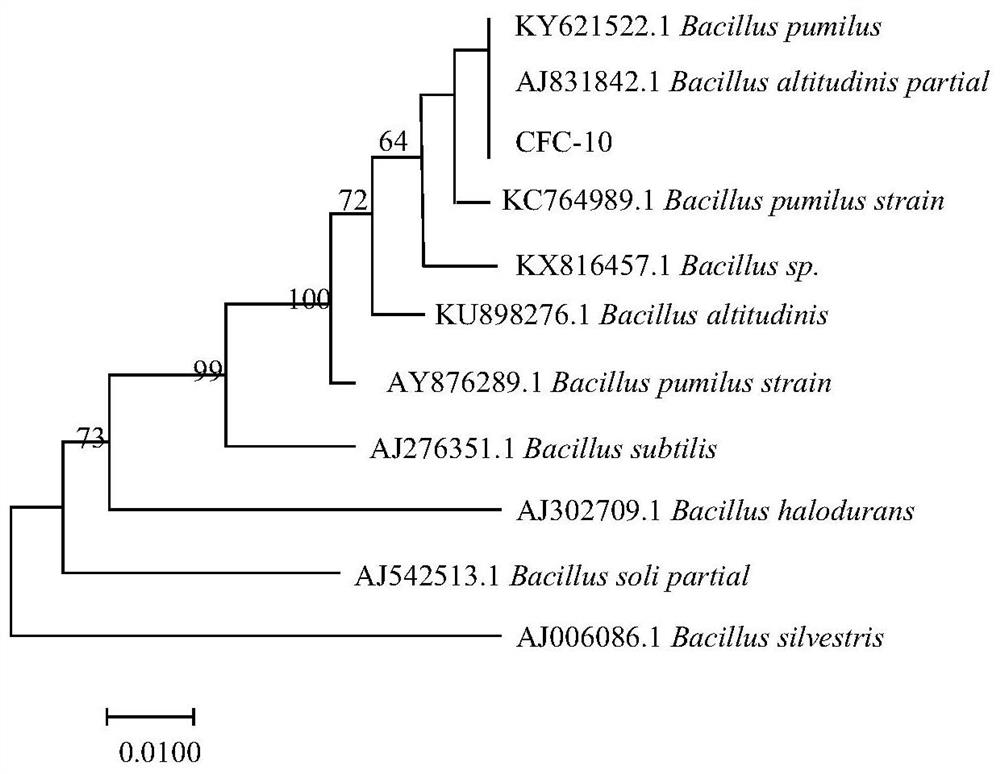
Figure 3
Abstract
Description
technical field
[0001] The invention belongs to the technical field of microbial engineering, and in particular relates to a strain of bacillus amyloliquefaciens and its application in preventing and treating anthracnose disease of camellia oleifera. Background technique
[0002] Camellia oleifera (Camellia Oleifera Aabel) is a plant of the genus Camellia in the family Theaceae, which originated in China and has a long history of cultivation. Camellia oleifera in my country is rich in resources, mainly distributed in Hunan, Jiangxi, Guangxi, Zhejiang, Fujian, Anhui, Guizhou and other provinces in the south. According to statistics, there are about 4 million ha of Camellia oleifera forests in China 2 With an annual output of 600,000 tons of camellia seed. The impact of camellia oleifera diseases on its yield is also becoming more and more prominent. Among them, anthracnose of camellia oleifera is one of the most important diseases, which often leads to the death of camellia...
Examples
Embodiment
[0036] A strain of Bacillus amyloliquefaciens provided by the present invention, which is named Bacillus amyloliquefaciens CFC-10 (Bacillus amyloliquefaciens CFC-10), is preserved in Guangdong Microbial Culture Collection Center (abbreviated as GDMCC), and it is listed in Guangdong Microbial Culture Collection Center. The preservation number of the species preservation center is GDMCC No: 60394, and the preservation time is June 25, 2018. The address of the preservation unit is located at the Guangdong Institute of Microbiology, 5th Floor, Building 59, Compound, No. 100 Xianlie Middle Road, Guangzhou City.
[0037] 1. Screening of bacterial strains
[0038] S01: Collect rhizosphere soil samples of healthy plants in Camellia oleifera anthracnose-affected areas by multi-point sampling method, and grind the collected soil samples;
[0039] S02: Put the finely ground soil sample into a centrifuge tube filled with sterile water and shake fully to obtain a soil suspension;
[0040]...