

Method for obtaining tumor specific T cell receptor
A cell receptor and specific technology, applied in the field of biomedicine, can solve problems such as side effects and the inability of CAR-T cells to accurately locate
Patent Information
- Authority / Receiving Office
- CN · China
- Patent Type
- Applications(China)
- Current Assignee / Owner
- Publication Date
- 2019-03-19
- Estimated Expiration
- Not applicable · inactive patent
Smart Images
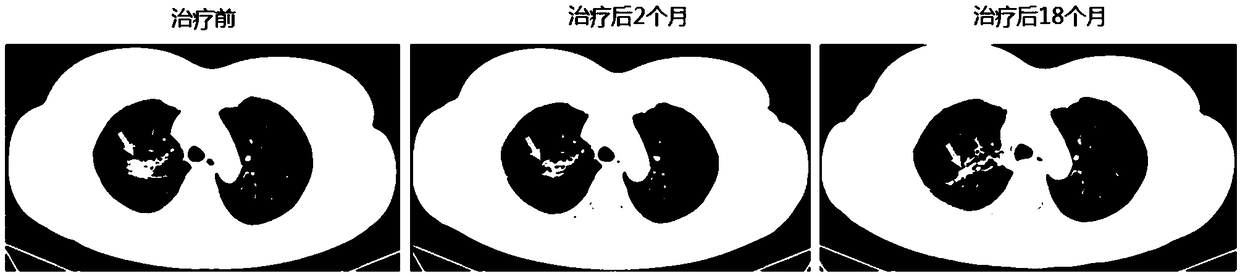
Figure 1 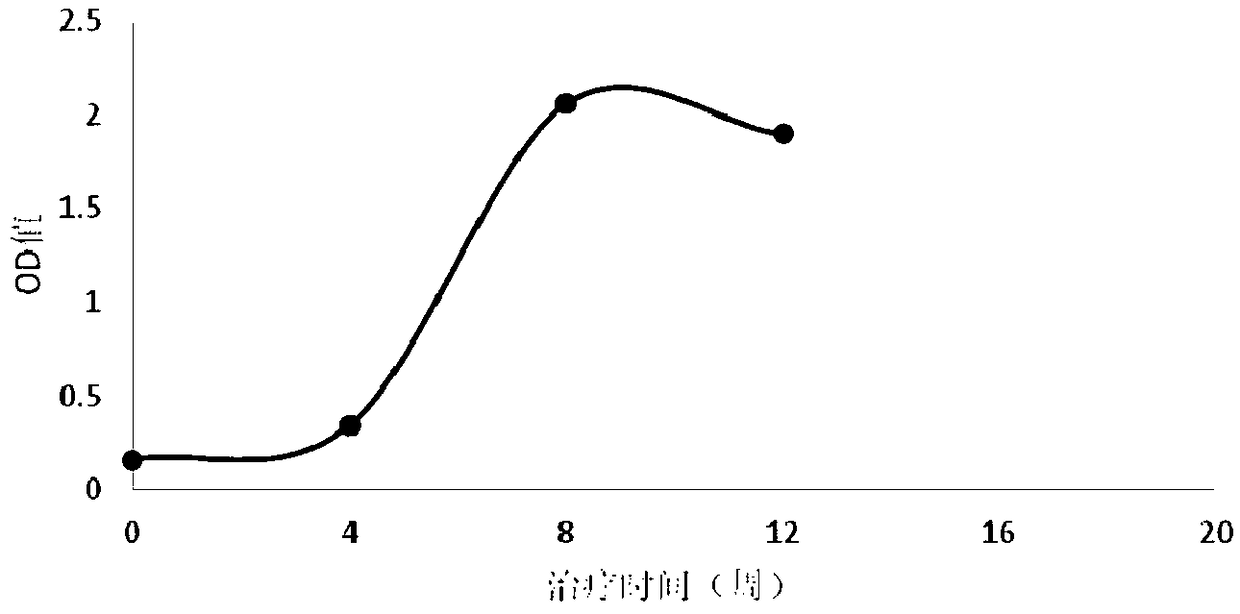
Figure 2 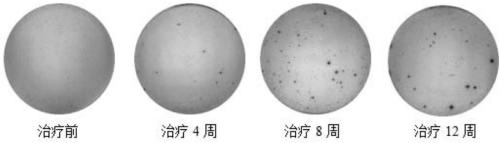
Figure 3
Abstract
Description
technical field
[0001] The present invention relates to a method for obtaining tumor-specific T cell receptors in the field of biomedicine. Background technique
[0002] The T cell receptor (TCR) is a characteristic marker on the surface of all T cells and has the ability to recognize complexes of processed peptides associated with MHC molecules on antigen presenting cells (APCs). TCR is a heterodimer composed of α and β peptide chains, each peptide chain is divided into several parts such as variable region (V region), constant region (C region), transmembrane region and cytoplasmic region; Its cytoplasmic region is very short, and the signal transmission is mainly carried out through the non-covalently bound CD3 molecule. The TCR molecule belongs to the immunoglobulin superfamily, and its antigen specificity exists in the V region; the V region has three hypervariable regions, CDR1, CDR2, and CDR3. Among them, CDR3 has the greatest variation, which directly determines the...
Examples
Embodiment 1
[0095] Example 1. Acquisition and application of lung adenocarcinoma antigen peptide-specific T cell receptors
[0096] Subject: Right lung adenocarcinoma patient, female, 46 years old.
[0097] The treatment of patients
[0098] The gene mutation and HLA typing of the patient's right lung adenocarcinoma cells were obtained by sequencing, and it was found that the patient's right lung adenocarcinoma cells had EGFR Exon21c.2573T>G p.L858R mutation, with a mutation frequency of 5.3%.
[0099] HLA classification is: A*11:01:01A*23:01:01, B*15:01:01B*45:01:01, C*01:02C*06:02:01, DRB1*07:01DRB1 *14:54:01, DQB1*02:02:01DQB1*05:02:01.
[0100] According to patient gene mutation and HLA type, according to HLA-peptide prediction algorithm NetMHC3.4 (http: / / www.cbs.dtu.dk / services / NetMHC-3.4 / ) and NetMHC2.2 (http: / / www.cbs .dtu.dk / services / NetMHCII / ), predict the affinity of HLA class I and class II molecules and polypeptides in patients, and select polypeptides with high affinity as...
Embodiment 2
[0149] Example 2. Acquisition and application of colorectal cancer antigen peptide-specific T cell receptors
[0150] Subject: Right-sided colorectal cancer patient, male, 63 years old.
[0151] The gene mutation and HLA typing of the patient's tumor cells were obtained by sequencing. The patient was found to have the gene mutation EGFR746_750DEL with a mutation frequency of 12%. HLA classification is A*03:01:01A*11:01:01, B*07:02B*40:02:01, C*07:02:01C*15:02:01, DRB1*01:01DRB1* 16:02:01, DQB1*05:01DQB1*05:02.
[0152] According to patient gene mutation and HLA type, according to HLA-peptide prediction algorithm NetMHC3.4 (http: / / www.cbs.dtu.dk / services / NetMHC-3.4 / ) and NetMHC2.2 (http: / / www.cbs .dtu.dk / services / NetMHCII / ), to predict the affinity of HLA class I and class II molecules and polypeptides in patients, and select the polypeptides with the highest affinity as antigenic peptides for personalized therapy. The obtained antigenic peptide is shown in SEQ ID NO: 6 in ...
Embodiment 3
[0159] Example 3. Acquisition and application of gastric cancer antigen peptide-specific T cell receptors
[0160] Subject: Gastric cancer patients, female, 51 years old.
[0161] The gene mutation and HLA typing of the patient's tumor cells were obtained by sequencing. The patient was found to have the gene mutation TP53G105V with a mutation frequency of 5.2%. HLA classification is A*11:01:01A*31:01:02, B*15:02B*51:02, C*08:01:01C*15:02:01, DRB1*09:01:02DRB1* 12:02:01, DQB1*03:01:01DQB1*03:03:02.
[0162] According to patient gene mutation and HLA type, according to HLA-peptide prediction algorithm NetMHC3.4 (http: / / www.cbs.dtu.dk / services / NetMHC-3.4 / ) and NetMHC2.2 (http: / / www.cbs .dtu.dk / services / NetMHCII / ), to predict the affinity of HLA class I and class II molecules and polypeptides in patients, and select the polypeptides with the highest affinity as antigenic peptides for personalized therapy. The obtained antigenic peptide is shown in SEQ ID NO: 11 in the sequence...