
An Adaptive Signal Control Method Based on Prediction of Flow Difference Between Adjacent Periods
An adaptive signal, adjacent period technology, applied in traffic flow detection, traffic control system of road vehicles, control of traffic signals, etc., can solve the problems of low prediction accuracy, low reliability, and weak vehicle arrival distribution regularity. , to achieve the effect of increasing the system feedback function, improving system reliability, and improving system real-time performance.
Patent Information
- Authority / Receiving Office
- CN · China
- Patent Type
- Patents(China)
- Current Assignee / Owner
- Publication Date
- 2021-07-20
Smart Images
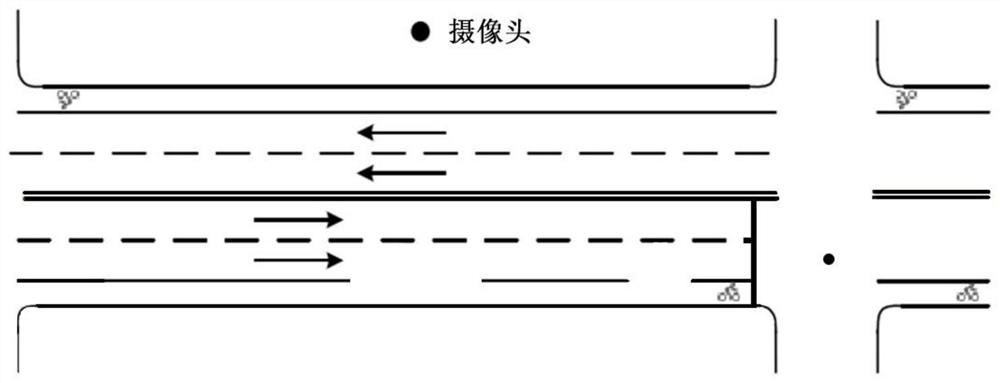
Figure 1 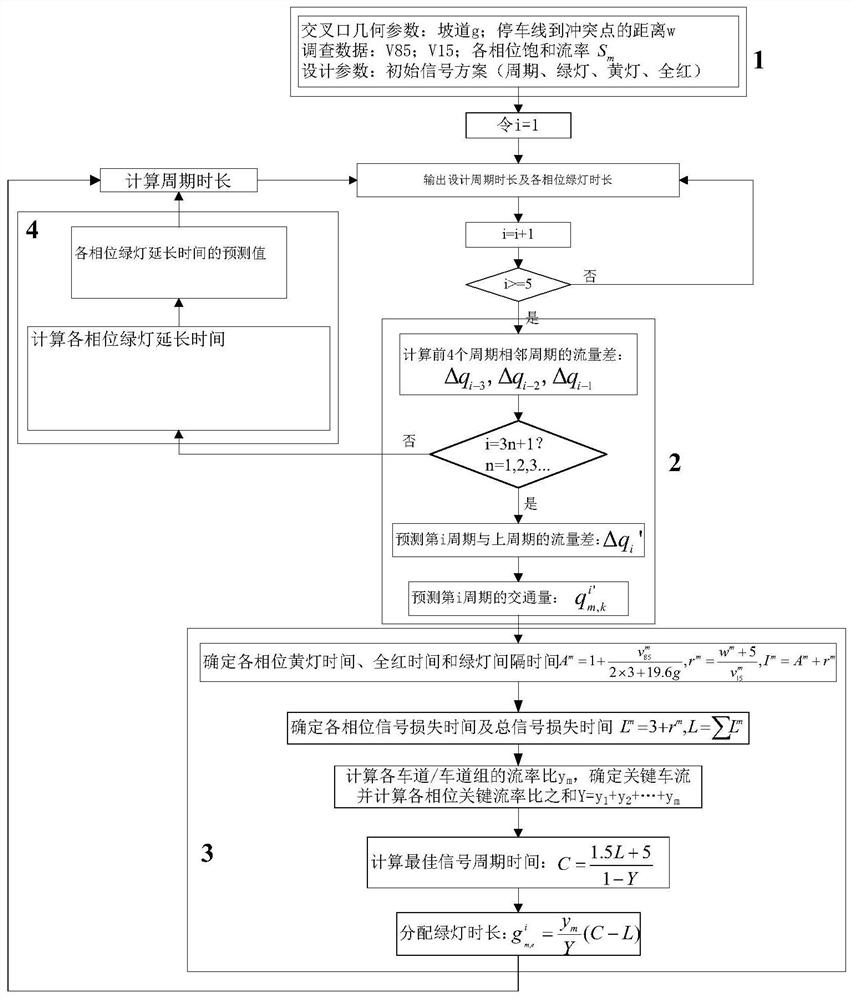
Figure 2 
Figure 3
Abstract
Description
technical field
[0001] The invention belongs to the field of traffic design and signal control, and in particular relates to an adaptive signal control method based on prediction of flow difference between adjacent periods. Background technique
[0002] Traffic signal control is the guarantee for the scientific allocation of road rights, the separation of time and space for motorized workshops, and the orderly and efficient operation of the traffic system. At present, traffic signal control methods at home and abroad mainly include timing control, inductive control and adaptive control. The traffic flow has the characteristics of uneven time, day and month in the time distribution; in the space distribution, it has the characteristics of uneven direction, uneven lanes, and uneven road sections. Considering the above factors, the traditional fixed time distribution can no longer meet the current traffic demand, while the inductive signal control system is suitable for inters...
Examples
Embodiment Construction
[0092] In order to facilitate those of ordinary skill in the art to understand and implement the present invention, the present invention will be described in further detail below in conjunction with the accompanying drawings and embodiments. It should be understood that the implementation examples described here are only used to illustrate and explain the present invention, and are not intended to limit this invention.
[0093] According to the above technical scheme, an adaptive signal control method based on the prediction of flow difference between adjacent periods, such as figure 1 As shown, the video detector is installed about 60m in front of the stop line, 5.5-7m above the exit road, and the installation angle is appropriate to see the historical maximum queue length of the specific intersection. like figure 2 As shown, its calculation process includes 1-data input link, 2-traffic flow forecast link, 3-Webster timing link and 4-green time step increase and decrease l...