
Method and system for supervising improvement of study habits
A habit and processor technology, applied in the field of teaching management, which can solve the problems of inaccurate test data, uncomfortable promotion, and children's learning letting go.
Patent Information
- Authority / Receiving Office
- CN · China
- Patent Type
- Patents(China)
- Current Assignee / Owner
- Publication Date
- 2021-07-06
Smart Images
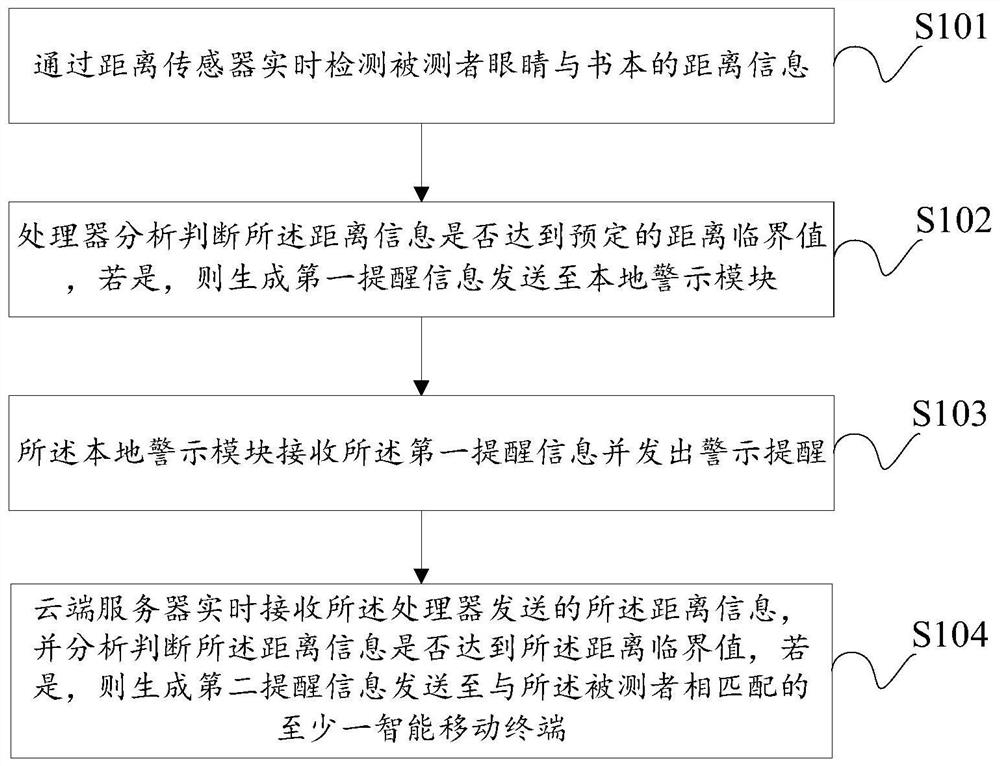
Figure 1 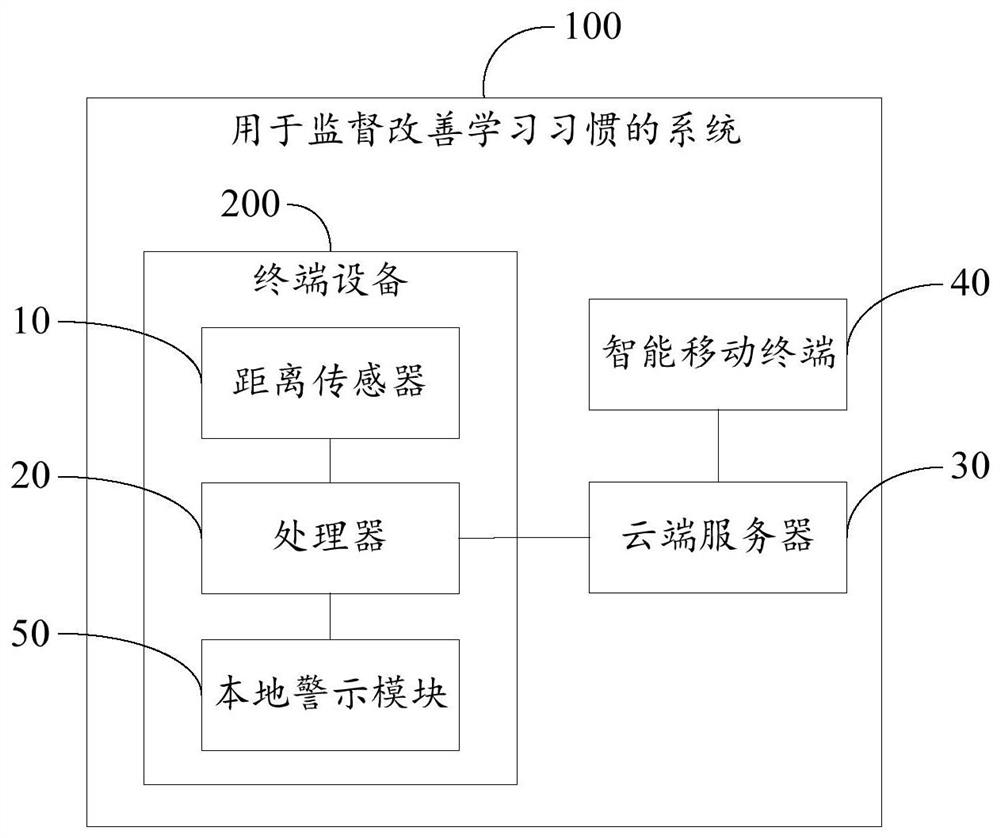
Figure 2 
Figure 3
Abstract
Description
technical field
[0001] The invention relates to the technical field of teaching management, in particular to a method and system for supervising and improving learning habits. Background technique
[0002] Due to the fierce competition in today's society, parents and teachers often have high expectations for their children, so that children face huge pressures such as school selection, admission to higher education, and grade examinations from kindergarten. Children have a heavy learning burden and a huge amount of homework, causing many family and social problems. On the whole, it is mainly manifested in the following aspects:
[0003] Myopia, spinal curvature, hunchback and other health problems caused by poor sitting posture during long-term study, according to the data released by the Shanghai Eye Disease Prevention and Control Center on June 3, 2018, the myopia rate in primary schools in Shanghai has reached 47.2%. In the high school stage, the myopia rate has been as ...
Examples
Embodiment Construction
[0047] In order to make the object, technical solution and advantages of the present invention clearer, the present invention will be further described in detail below in conjunction with the accompanying drawings and embodiments. It should be understood that the specific embodiments described here are only used to explain the present invention, not to limit the present invention.
[0048] figure 2 The system 100 for supervising and improving learning habits described in the preferred embodiment of the present invention is shown, including:
[0049] The distance sensor 10, the distance information between the subject's eyes 300 and the book for real-time detection;
[0050] The processor 20 is connected to the distance sensor 10 and is used for analyzing and judging whether the distance information reaches a predetermined distance critical value, if so, generating a first reminder message and sending it to the local warning module 50;
[0051] The local warning module 50 is...